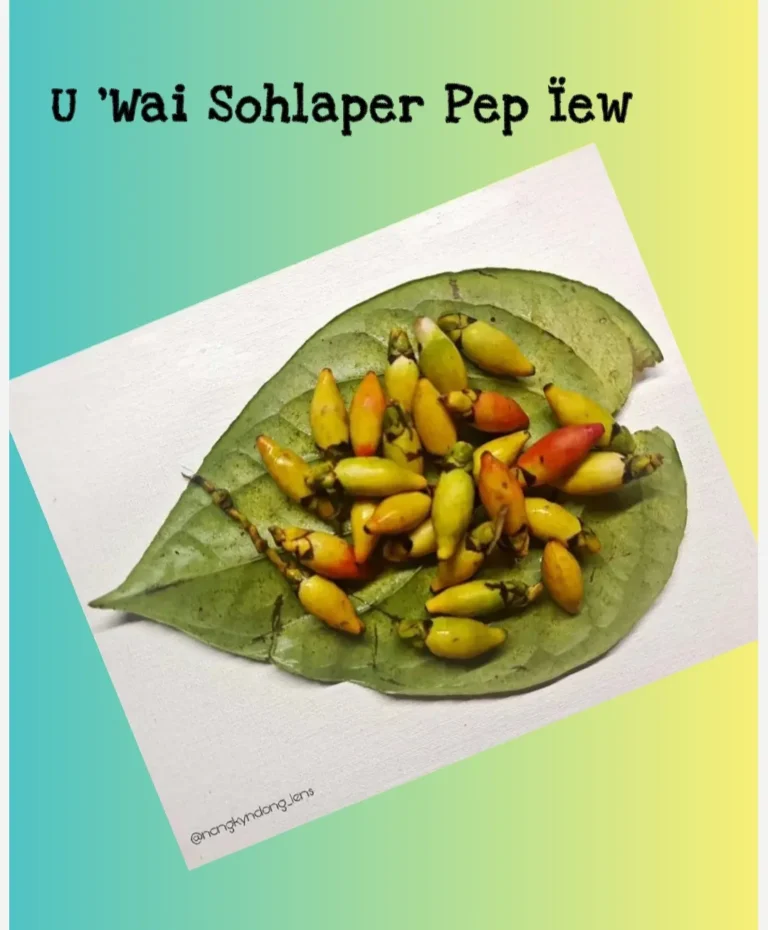
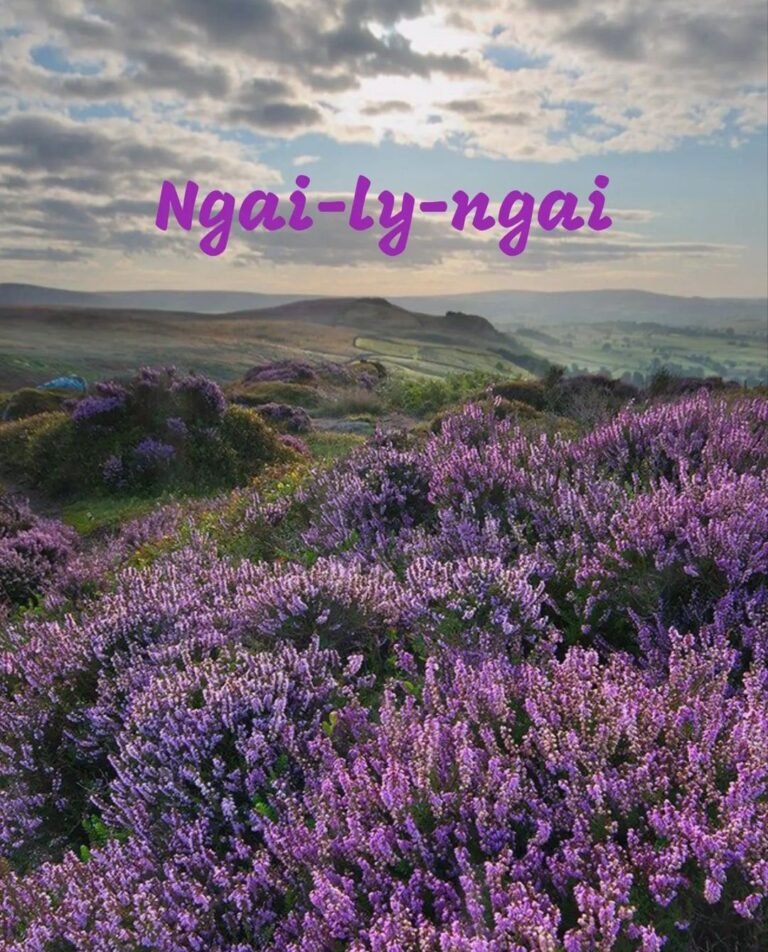
Ishhhh ka por shoh kba! 😍😍🌾🌾 Katno ngut na ngi ngi dang ïoh ban mad ïa kane?
Ka sngi ba syaid 🌤️ Ka lyer ba beh jem jai 🌬️ U soh ka jingtreishitom lah jan ïoh mad 💛💚
Khublei Shibun @aibianghundkhar ba phi la phah ïa kine ki dur! ❤️🤗


Ishhhh ka por shoh kba! 😍😍🌾🌾 Katno ngut na ngi ngi dang ïoh ban mad ïa kane?
Ka sngi ba syaid 🌤️ Ka lyer ba beh jem jai 🌬️ U soh ka jingtreishitom lah jan ïoh mad 💛💚
Khublei Shibun @aibianghundkhar ba phi la phah ïa kine ki dur! ❤️🤗


"U Salah Chet Sngat" u dei ka rukom shet phan jong ki Pnar. U dei u phan/ sohlah uba shet sboh da kaba kylla bad u neiïong 🥔🥔 Khlem u phan te ym lah mutdur ban bam ja mo! 😄😄
"U Salah Chet Sngat" is a Pnar recipe of potato cooked with black sesame seeds 🥔🥔 Potato is a major staple next to rice for the Khasi and Pnar communities.
@foodie_northeast Please tell us more about this recipe. There is a secret ingredient to this too which I don't want to mention 😄😂


Ka jingong "Ym don pyrthei shuh" ka pynpaw ïa ka jingsngew kaba lah poi shaba palat u pud. Kane ka jingong ka thew ban pynsngew ïa kaba lah long "katta katta" ne "shibun". Kum haba ngi ong "Nga lah thait palat, ym sngew don pyrthei shuh."
Kane ka rukom ong ka ïa syriem bad "ym long briew shuh" kaba mut ba kano kano ka kam kaba ngi leh ka la pynlong ba ngim lah shah shuh da ka bor briew, namar ka lah shon palat ym tang ïa ka bor met hynrei ïa ka bor pyrkhat ruh.
The Khasi phrase "ym don pyrthei shuh" is literally translated as "there is no more world". But a literal translation such as this does not really explain what the phrase means.
The phrase expresses a feeling or an emotion that has reached beyond a bearable limit. It aims at articulating a feeling that something has become too much to bear. As if "there is no more world" or to use the sense of the phrase in a sentence: "I have no more strength (or consciousness) to bear this".
This phrase is similar in meaning to "ym long briew shuh" which also expresses the unbearable nature of something, to the extent that one does not have the physical strength nor the mental strength anymore to endure it.
Haba ngi ong "Ani ngam sngew don pyrthei shuh!", kam long kaba suk ban pynkylla sha kiwei pat ki ktien. Ki jingong "ym don pyrthei shuh" bad "ym long briew shuh" ki long kum kita. Kine ki pyni ïa ka jingïar bad jingsngewtynnat jong ka ktien Khasi. 🅰️🆎🅱️
Khublei Shibun @janicepariat ba phi la kren shaphang kane bad ba phi la pynsngew ruh ïa ka jingïar jong ka ktien Khasi 😄❤️🙏
There are some words or phrases which escape being translated at all because they express a feeling that perhaps contains a particular worldview of a community. That's the beauty of language, it can never really be fully translated.
🟡 Khasi and English explication by @speakyourroots


Ko Meirad, phi leh aïu?
Nga wad thyrnia…
Ban leh aïu thyrnia?
Ban suh ka pla…
Ban leh aïu ka pla?
Ban thep pisa…
Ban leh aïu pisa?
Ban thied khanshi…
Ban leh aïu khanshi?
Ban khap shñiuh ïa phi!
Oh granny, what are you doing?
I'm searching for a needle…
What do you need the needle for?
To stitch a bag…
What do you need the bag for?
To keep money in it…
What do you need the money for?
To buy scissors…
What do you need the scissors for?
To cut you hair!
"Ko Meirad phi leh aïu?…" ka dei sa kawei ka jingïalehkai kaba ngi shait ïalehkai. 😄😄 Don ki por ba ngi shait ai da ki jubab kiba komik ruh 😂🤡 I dei ito iba dei Meirad em iba beh ïa kiwei ha kaba kut? 🤔
Khublei Shibun @sandrahynniewta ba phi la pynkynmaw ïa kane 🙏
This is another childhood game that most of us played when we were children. I've said this before and I'll say it again: We don't hear kids playing these games anymore 😢😢
🟡 English translation by @speakyourroots


U ’Nai-it u dei u bnai uba shiphew jong ka snem, u dei u bnai uba ar jong ka Synrai. U bnai ba nyngkong jong ka Synrai u dei u 'Nailar. U 'Nai-it u don saw taïew lane arphew phra sngi.
Une u bnai u wan long kyrteng na ka jingpah u kbeit bad kiwei pat ki jait sim kiba her ha suiñ bneng. Ha une u bnai haba u kbeit u swait ha suiñ bneng ban kem sim ne kem khnai u ju pah ‘it it-it it’.
U long u bnai ba ki sim laiphew jait ki sngewtynnat ban her suwari ha suiñ bneng ban kem khnai ne khñiang. Baroh ki jait khñiang, ki dkhiew bad kiwei pat ki kynja ba im ki sngewtynnat ban paw pyrthei ha une u bnai. Ki ïa mih na la ki jong ki jong ki trep ban ïalehkai bad rynsied sngewbha ha sla khyndew namar ka bneng ka la rang itynnat bad u kba u la sdang saw doh.
"U 'Nai-it" is the tenth month of the year and it is the second month of Autumn. The first month of Autumn is " 'Nailar" (which roughly corresponds with September). "U 'Nai-it" has four weeks or twenty-eight days.
This month gets its name from from the chirping of a bird called "u kbeit" (which the Khasi dictionary calls "a kind of hawk") and other kinds of birds. During this month "u kbeit" while hunting smaller birds and rats makes an "it it-it it" sound.
Different types of birds go around flying everywhere during this month to hunt rats and insects. Many kinds of insects, ants and others like to emerge during this time. Animals and insects enjoy this time of the year as the weather is warm and sunny and paddy also begins to redden.
It is interesting that the Khasi calendar has 13 months of 28 days (except in a leap year). The calculation of the months corresponds to the phases of the moon.
Source: Rev. Dr. Ïarington Kharkongngor
English translation by @speakyourroots


Ki kyntien "Bira-biri" ki mut ba lamwir jingmut, ba lyngngoh, ba kulmar, ne ba lynrum lynram.
The Khasi adjective "Bira-biri" elaborates on a state of confusion, of feeling perplexed, of chaos and disorder.
Ki don ki kyntien kiba ngim ju kham pyndonkam kum ki kyntien "Bira-biri" 🤓🤓
Phi lah ju pyndonkam ïa kane?🟡 Art by Robert Carter
🟡 English translation by @speakyourroots


Pateng la pateng, ka jaitbynriew ka tip ban burom la U Thawlang uba wan pynroi ïa ka jait ka khong. U shynrang uba leit shongkha nyngkong ha ka jait ki khot ïa u, U Thawlang.
Kumba paw na ki long jait manjait, ki thawlang ki long ki briew kiba tip bha ïa la ka dustur, shibun ki la long lypa ki kynja kñi ha ka kur bad ka ïing, ki ri la ka burom bad ki burom ïa ka jait ka khong jong kiwei ruh khamtam lei lei ïa ka kur ka jait jong ka tnga bad ki khun.
Ha ka kolshor ki Khasi, u Thawlang u ïoh ka jaka bakyrpang…..Ki don bun ki jingleh niam-kur ha kiba ki khunkha ki dei ban pyndep na ka bynta ka meikha, namar ba ki dap rynïeng da ka jingsngewnguh ba ka la ai ha ka kur jong ki ïa u Thawlang.
U P. R. T. Gurdon ruh kumba u lyngngoh ban lap ïa ka jingburom kyrpang jong ki Khasi ïa u Thawlang, u ong: "Notwithstanding the strong influence of the matriarchate, we find that U Thawlang, the first father and the husband of Ka lawbei is also revered. To him on occasions of domestic trouble a cock is sacrificed, and a Jymphong, or sleeveless coat is offered. This puja is called "Ka Tap Thawlang"."
Ka jingbatai u Gurdon ka pynphalang sa kawei pat ka liang, jong ki paid Khasi, ka pyni ba ki ngeit ba u Thawlang u lah ban ïarap ïa ki na ki jingeh. Ka jingduwai ba u ïoh lum na ki Khasi ka ong: "Oh. father, Thawlang, who has enabled me to be born, who hast given me my stature and my life, I have wronged thee, oh father, be not offended for I have given thee a pledge and a sign, (a red and white sleeveless coat). Do not deliver me into the power of illness, I have offered thee propitiatory cock that thou mayest carry me in thine arms, and that I may be aware of thee, my father Thawlang."
U Thawlang u don ka hok ban ri ban sumar namar u la pynkha bad u la buh ïa u sohpet u ksai…Naduh nangne na pyrthei la pynbynta lypa ïa ka bhah jong u kpa bad jong u kñi-rangbah-kur. U kpa u long u nongpynkha u nongbuh ia u sohpet u ksai jong ki khun kynthei khun shynrang. U kpa u long u nongkamai nongkajih ban ym don ka thngan ka shah jingit, ban ym don ka lymboit lymbiang jong ka tnga bad ki khun.
Na kine ngi sngewthuh ba u kpa u la don lypa ka deiti longkñi ha ïing kur la jong bad u la don bynta ruh ha la ka jong ka nongtymmen. Kumta ha ka kur u long uba tip ïa ka ïap ka im bad ha ïing khun, uba lah uba ïai.
.
.
.
.
Generation after generation, the Khasis know how to revere their "Thawlang" who has come to grow and multiply the clan. The man who is the first to marry into a clan is called "U Thawlang".
As is shown and understood in the working of clans, "U Thawlang" is a person who knows and understands his culture and custom well, many of them are already maternal uncles in their families and clans. "U Thawlang" preserves his honour and dignity and respects the clans of others especially the clan of his wife and children.
In Khasi culture, "U Thawlang" has a special position… There are many rituals pertaining to the clans which the children of "U Thawlang" have to fulfil towards their paternal grandmother, because they are grateful to her for giving their clan "U Thawlang".
P.R.T. Gurdon expresses his surprise on finding that the Khasis have a special reverence for "U Thawlang" and says: "Notwithstanding the strong influence of the matriarchate, we find that U Thawlang, the first father and the husband of Ka Ïawbei is also revered. To him on occasions of domestic trouble a cock is sacrificed, and a Jymphong, or sleeveless coat is offered. This puja is called "Ka Tap Thawlang"."
Gurdon's analysis illuminates another important aspect of Khasi life and that is, the belief that U Thawlang can help in times of trouble. The prayer that Gurdon was able to collect goes as follows: "Oh, father, Thawlang, who has enabled me to be born, who hast given me my stature and my life, have wronged thee, oh father, be not offended for I have given thee a pledge and a sign, (a red and white sleeveless coat). Do not deliver me into the power of illness, I have offered thee propitiatory cock that thou mayest carry me in thine arms, and that I may be aware of thee, my father Thawlang."
"U Thawlang" has the right to take care of his family because he has helped the clan grow and symbolically placed the navel and the thread. From this earthly world, there is a division of rights and duties of the father and the maternal uncle. The father facilitates the growth of the clan and he has symbolically placed the navel and the thread of his female and male children. The father is the breadwinner of the family, protecting them from hunger, looking after the well-being of his wife and children.
Thus, we understand that the father in a Khasi family is already bestowed with the rights and duties of a maternal uncle and he also has his share of inheritance. In his own clan, the father takes care of affairs of life and death, while in his family he is their strong and reliable support.
Ka long kaba sngewtynnat shikatdei ban pule shaphang "U Thawlang" bad ban tip ïa ka jingkordor jong u kpa ha ka longïing longsem Khasi 👫🧑🤝🧑❤️
Wow! It's been great reading about "U Thawlang" and learning about the value of a father in a Khasi family 👫🧑🤝🧑❤️
🟡 Source: Dr. Sr. Philomena Kharakor
🟡 Adapted and collated by @speakyourroots
🟡 English translation by @speakyourroots