Category: Khasi Words Usage

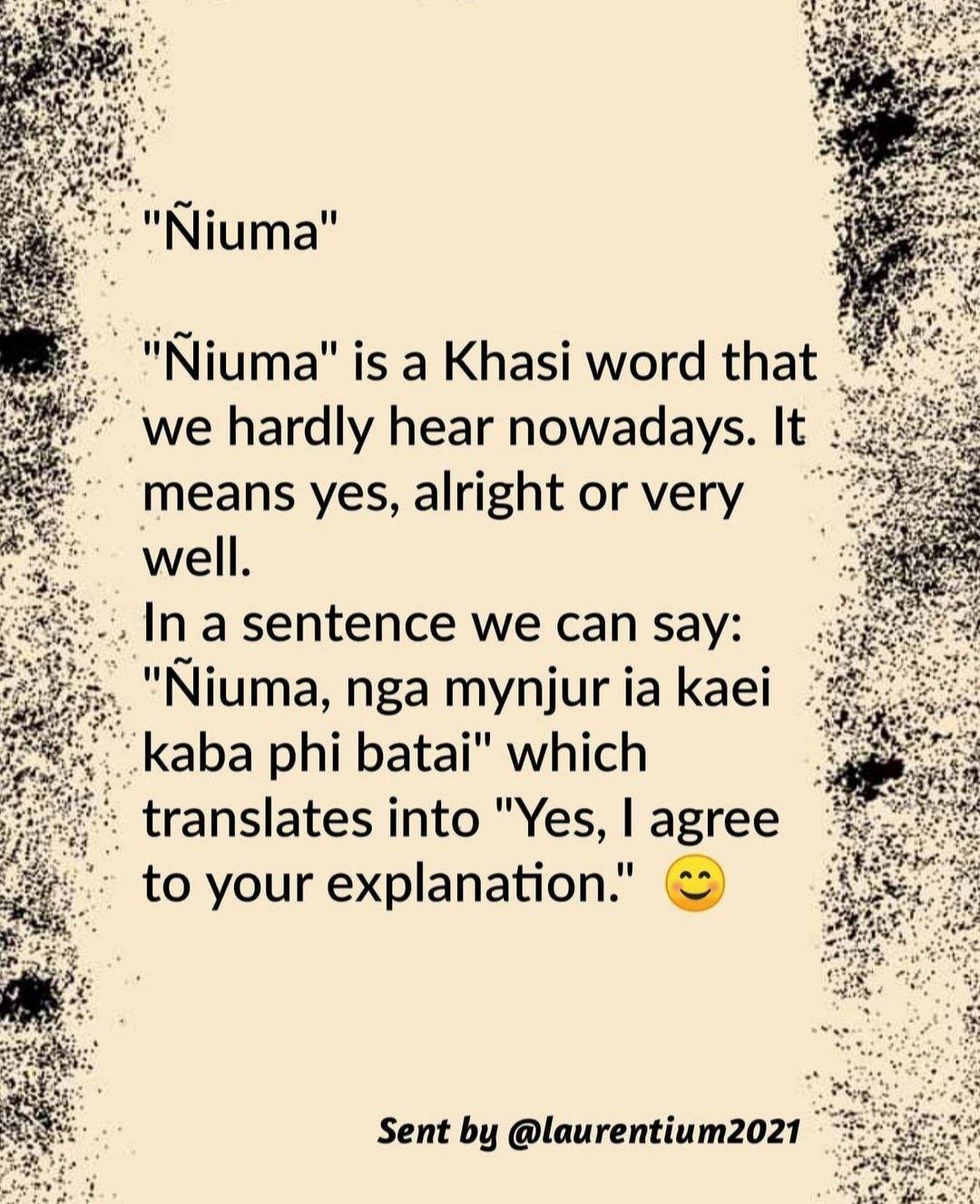
  • Ñiuma

    Ka ktien "Ñiuma" ka dei ka ktien kaba pyndonkam haba mut ban ong ym lei lei ne koit. Kum haba ong “Ñiuma, nga mynjur ïa kaei kaba phi batai".

    Ñiuma is a Khasi word that we hardly hear nowadays. It means yes, alright or very well. In a sentence we can say: “Ñiuma, nga mynjur ïa kaei kaba phi batai" which translates into "Yes, I agree to your explanation."

    Ñiuma" sent by @laurentium2021 😄 Thank you!
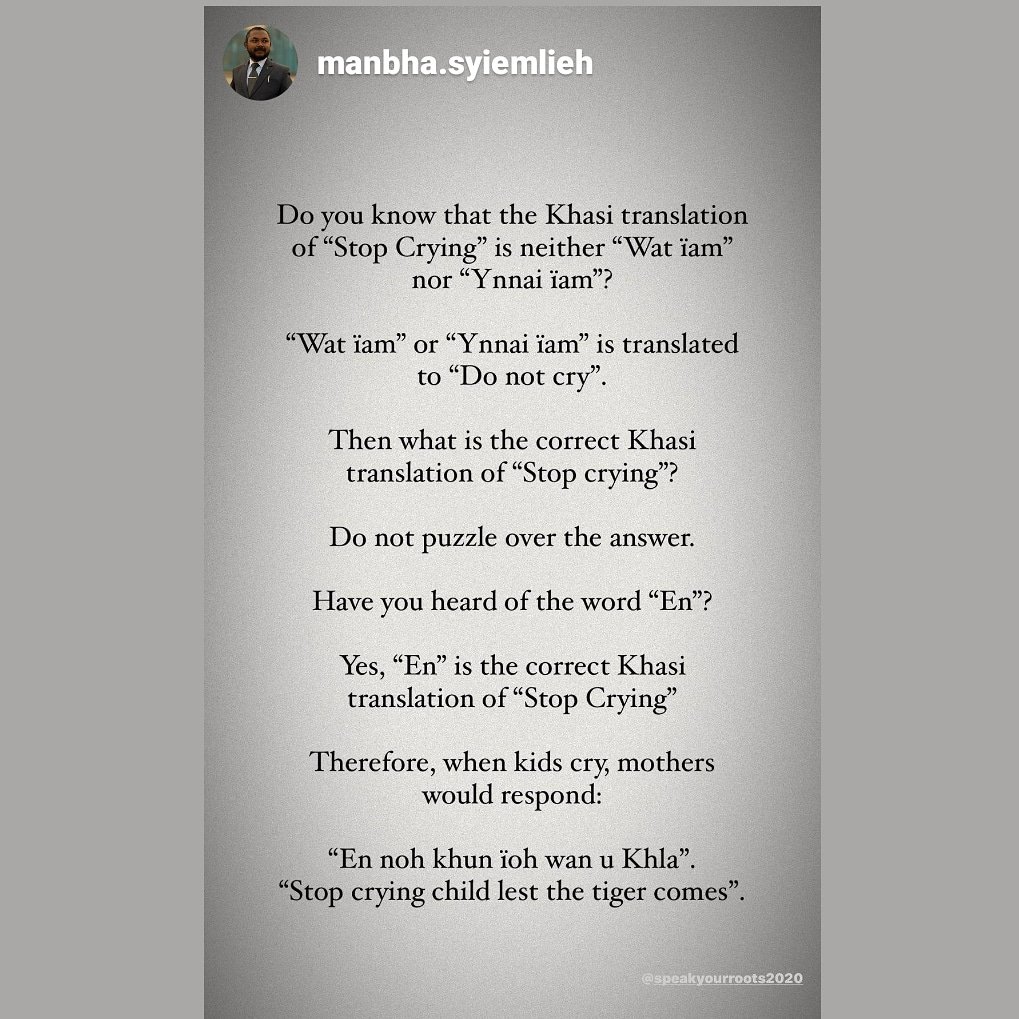
  • En

    Do you know that the Khasi translation of "Stop Crying" is neither "Wat ïam" nor "Ynnai ïam"? "Wat ïam" or "Ynnai ïam" is translated to "Do not cry". Then what is the correct Khasi translation of "Stop crying"? Do not puzzle over the answer. Have you heard of the word "En"? Yes, "En" is the correct Khasi translation of "Stop Crying" Therefore, when kids cry, mothers would respond: "En noh khun ïoh wan u Khla". "Stop crying child lest the tiger comes".

    "En" sent by @manbha.syiemlieh Khublei Shibun for an interesting entry! 😄

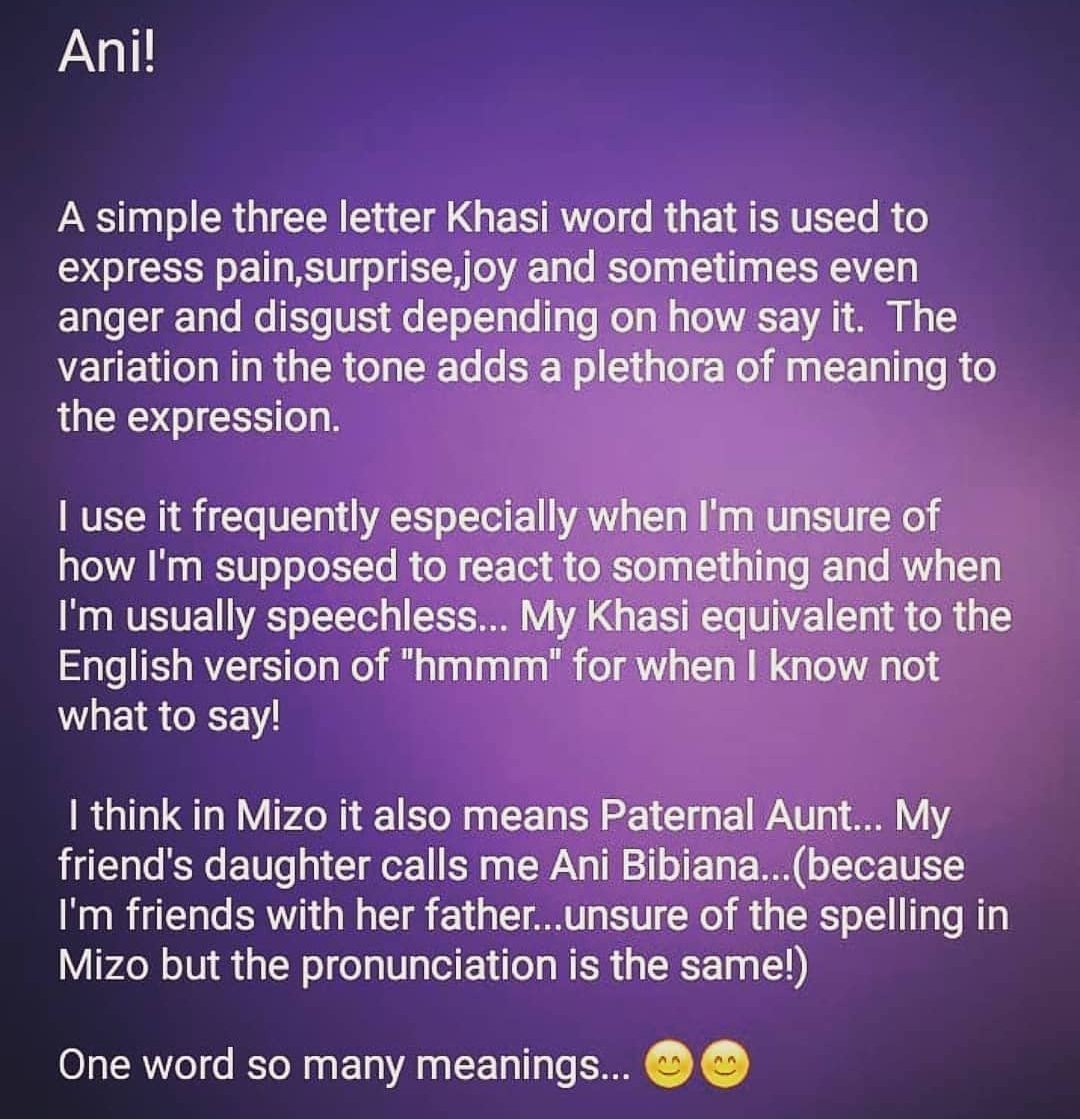
  • Ani!

    A simple three letter Khasi word that is used to express pain, surprise, joy and sometimes even anger and disgust depending on how it is said. The variation in the tone adds a plethora of meaning to the expression, I use it frequently especially when I am unsure of how I am supposed to react to something and when I am usually speechless. My Khasi equivalent to the English version of “hmmm” for when I do not know what to say. I think in Mizo it also means paternal aunt. My friend’s daughter calls me Ani Bibiana (because I am friends with her father). Unsure of the spelling in Mizo, but the pronunciation is the same. One word, so many meanings.

    Ani!" sent by @bibianaryntathiang 😳😨😰😱😫😓😖 Ani! Thank you for sending this! 😂😂

    Bibiana Ryntathiang is an Assistant Professor in the Department of English, St Mary's College, Shillong, Meghalaya.

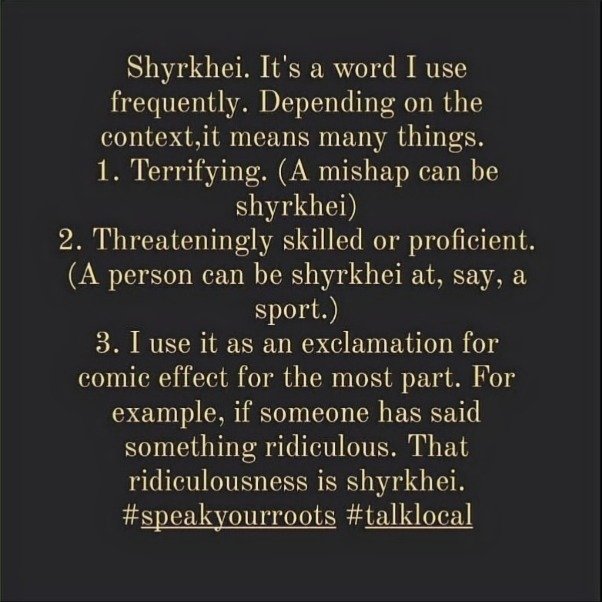
  • Shyrkhei

    @laurette_dkhar says:

    It's a word I use frequently. Depending on the context, it means many things.

    1. Terrifying. (A mishap can be shyrkhei)

    2. Threateningly skilled or proficient. (A person can be shyrkhei at, say, a sport.)

    3. I use it as an exclamation for comic effect for the most part. For example, if someone has said something ridiculous. That ridiculousness is shyrkhei.

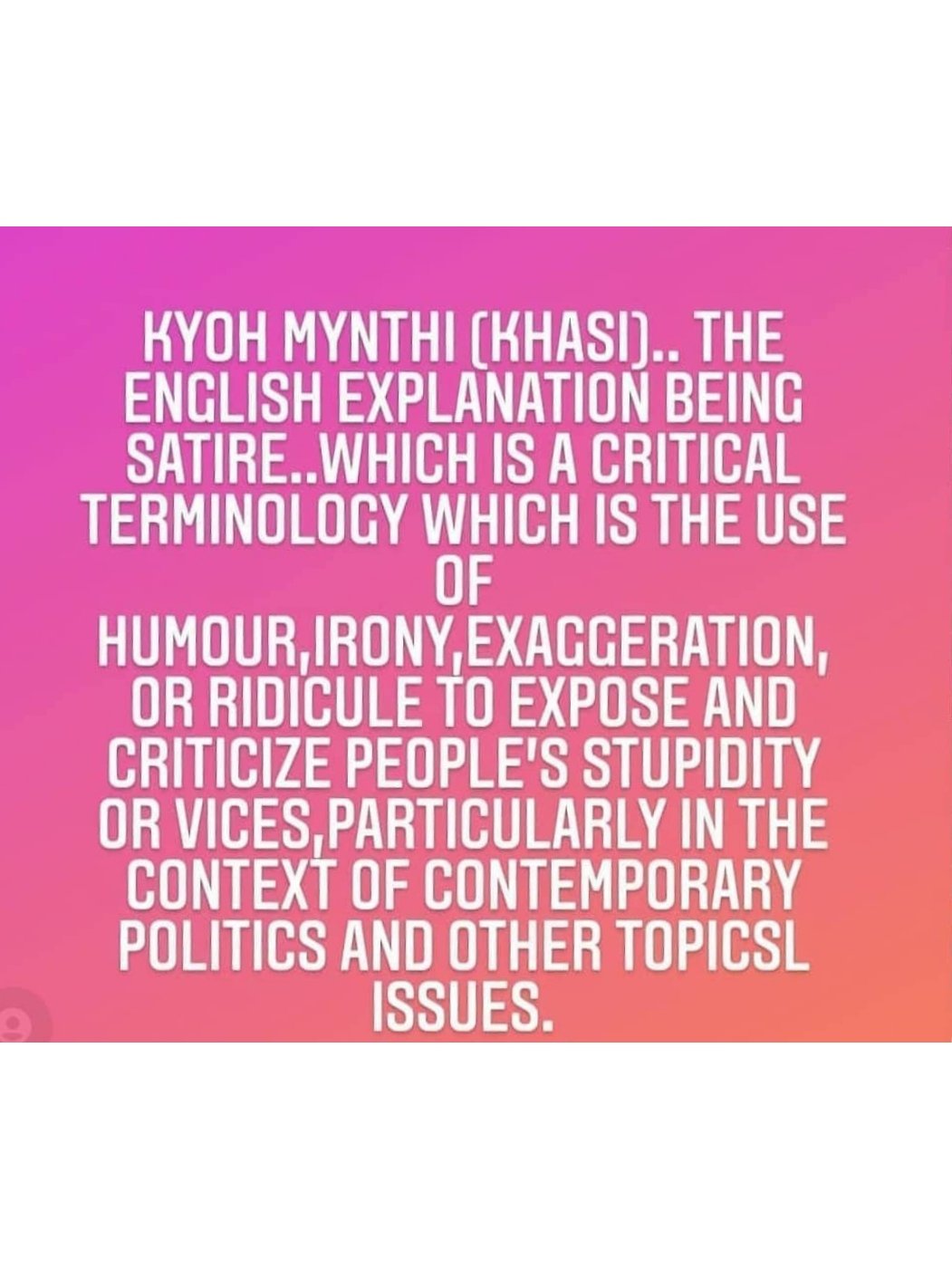
  • Kyoh Mynthi

    @indariwarjri says:

    In English, "kyoh mynthi" would be explained as being satire, which is a critical terminology used for humour, irony, exaggeration, or ridicule to expose and criticise people’s stupidity, or vices, particularly in the context of contemporary politics and other topical issues.

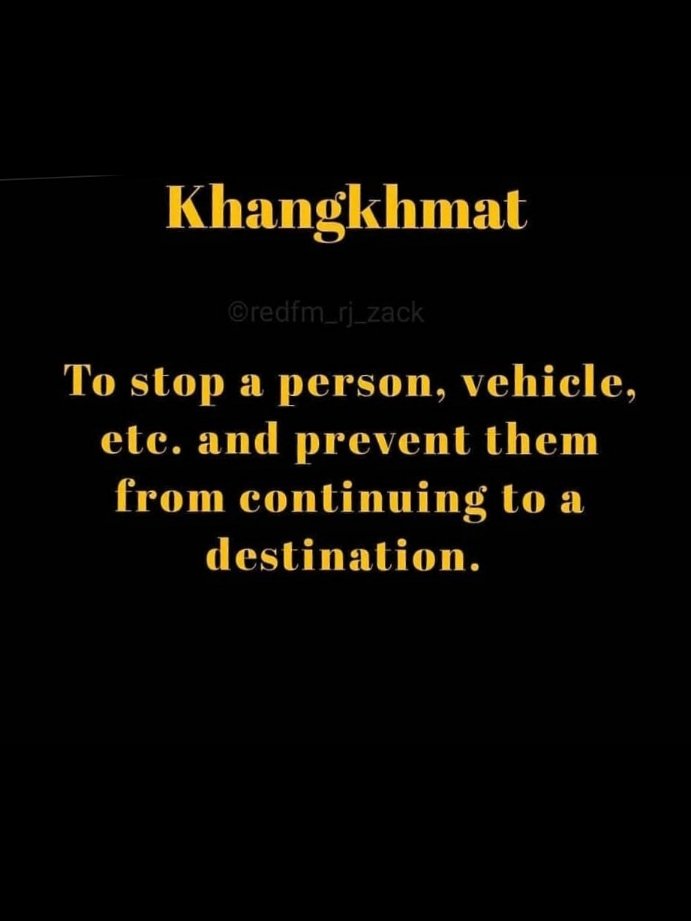
  • Khangkhmat

    "Khangkhmat" meaning to stop a person, vehicle, etc. and prevent them from continuing to a destination.

    Sent by @redfm_rjzack