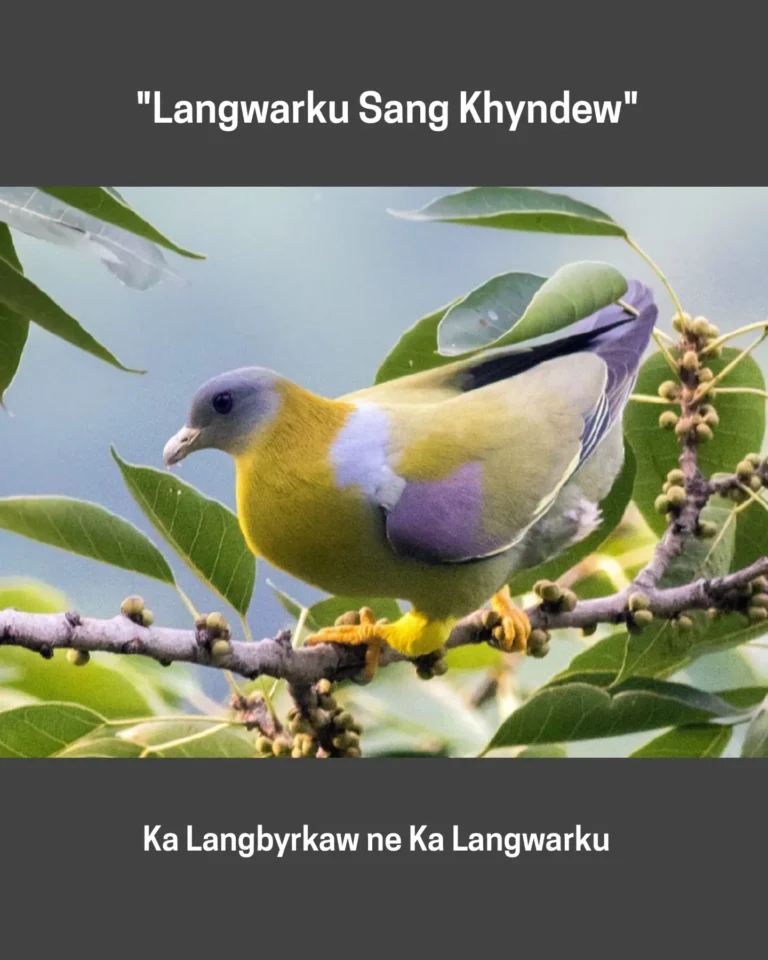
Category: Nature, Animals, Birds

  • Lap U Slap

    U lap u slap ïa phi mynnin ne mynne? 😄🌧️⛈️

    U slap u lah long kum u briew uba beh ïa ngi ha kine ki sngi ba jur bad slap bad lyer 🌪️☔⚡

    .

    .

    .

    Living in a place which holds the record for the wettest place in the world has led to the Khasi language having names for different kinds of rain and phrases or idioms about rain 😄🌧️❤️

    #lapuslap #slap #khasirain #khasimonsoon #khasisummer #wettestplaceonearth #speakyourroots #speakyourrootschallenge #talklocal

  • Herbarium Sheet Series 3: Mulberry/ Sohlyngdkhur/ Miskuri

    HERBARIUM SHEET SERIES 3 by @micromotives

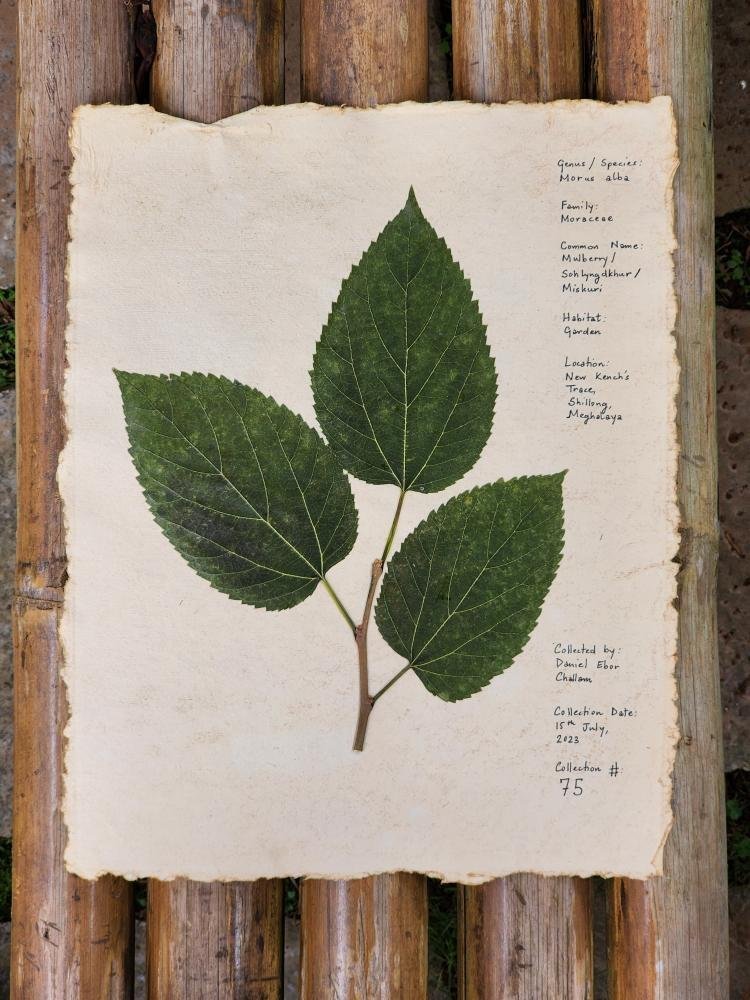
    The third in the Herbarium Sheet series is the leaf of the Mulberry tree or Dieng Sohlyngdkhur as it is called in Khasi.

    "U Sohlyngdkhur u dei u soh ba bang ban bam bad ba lam rong sawdum. Ïa ki sla jong u la ju pyndonkam ha kaba bsa ïa ki khñiang kha ksai". – Ka Dienshonhi: The Khasi Encyclopaedic Dictionary

    Genus / Species: Morus alba

    Family: Moraceae

    Common Name: Mulberry/ Sohlyngdkhur/ Miskuri

    Habitat: Garden

    Location: New Kenche's Trace, Shillong, Meghalaya

    Collected by: Daniel Ebor Challam

    Collection Date: 15th July, 2023

    Collection #: 75

    Khublei Shibun @micromotives for another of these beautiful herbarium sheets! 🙏🌿🍃

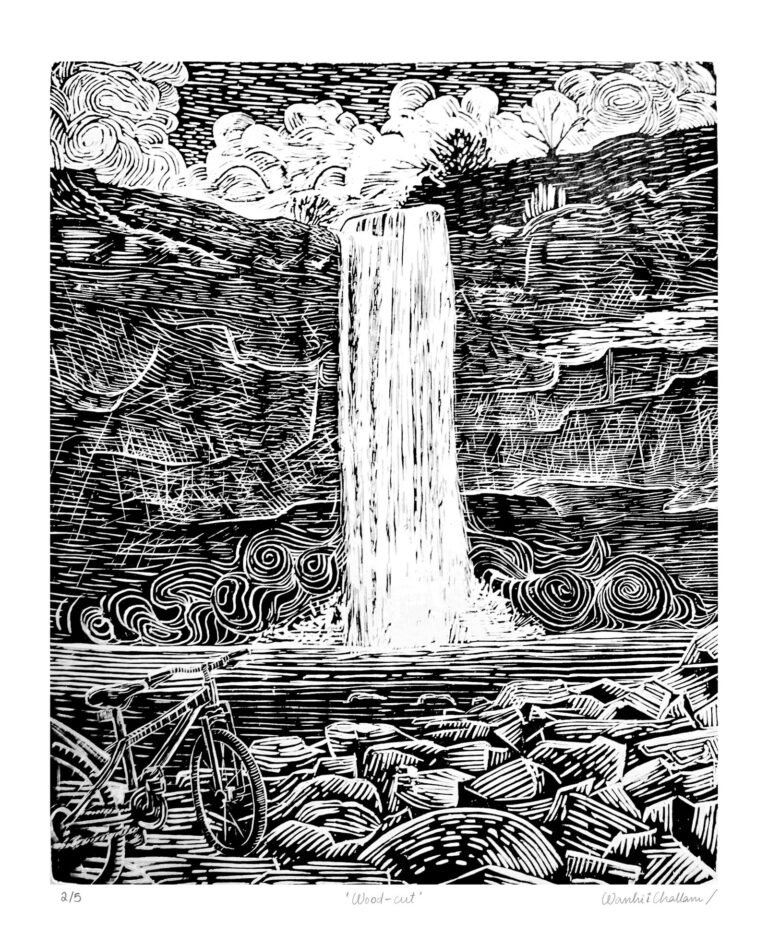
  • Woodcut of Phe Phe Falls by Wanhi-i Challam

    International Day of the World's Indigenous Peoples 2023 🌱🌲

    Contribution by @wanhii.psd 😃

    Title – "Untitled"

    Medium – Woodcut

    Editions – 5

    Year – 2023

    Size – 19'5'' x 24'

    Artist – Wanhi-i Challam

    He says: "This is a woodcut of a waterfall near by my home town – 'PHE PHE falls'. I chose to be very spontaneous with this one. Initially, it was intended to be just a simple, realistic landscape woodcut. However, as I worked on it, I chose to have some freedom in the techniques of cutting the wood and to allow the composition to evolve organically as I worked on it. I allowed the wood to guide me and fused the original form of the waterfall with my personal interpretation. I find it very meditative to work this way, not strictly following the realistic image of the waterfall, but instead capturing the emotions and feeling the rhythm of the waterfall with all its force, aggressiveness, daring, serenity, and stillness, while still conveying a sense of calmness and beauty."

    Khublei Shibun @wanhii.psd ba phi la phah ïa kane ka jingshna oh dur kaba itynnat! 🏞️

  • Herbarium Sheet Series 2: Hyacinth Bean/ Rymbai Lyngkhap/ Toh Tari/ Na.kap

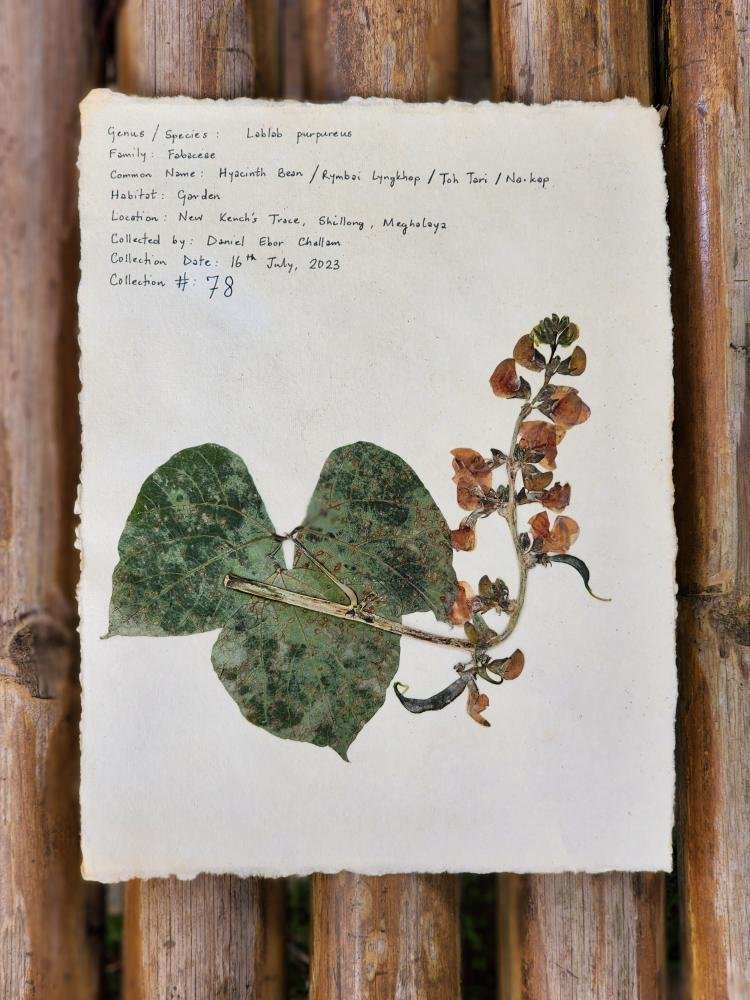
    Kum shi bynta jong ka jingrakhe ïa ka International Day of the World's Indigenous Peoples, kane ka dei ka herbarium sheet jong u sla Ri ne u Rymbai Lyngkhap ne u Toh Tari (Pnar). Une u dei u jhur uba bunsien ngi ju shet kylla bad ka dohkha.

    Genus/ Species: Lablab purpureus

    Family: Fabaceae

    Common Name: Hyacinth Bean/ Rymbai Lyngkhap/ Toh Tari/ Na.kap

    Habitat: Garden

    Location: New Kenche's Trace, Shillong, Meghalaya

    Collected by: Daniel Ebor Challam

    Collection Date: 16th July, 2023

    Collection#: 78

    Khublei Shibun @micromotives ïa kine ki herbarium sheet ki ban sa post ha kane ka taïew! 🌱😄🍃

    As part of the celebration of International Day of the World's Indigenous Peoples, this is a herbarium sheet of the leaf of Hyacinth Bean sent by @micromotives. The Khasi community usually cooks Hyacinth Bean as a curry with fish.

  • Herbarium Sheet Series 1: Tree Tomato/ Sohsaw Dieng/ Sohbaingon Dieng

    HERBARIUM SHEET SERIES 1

    by @micromotives

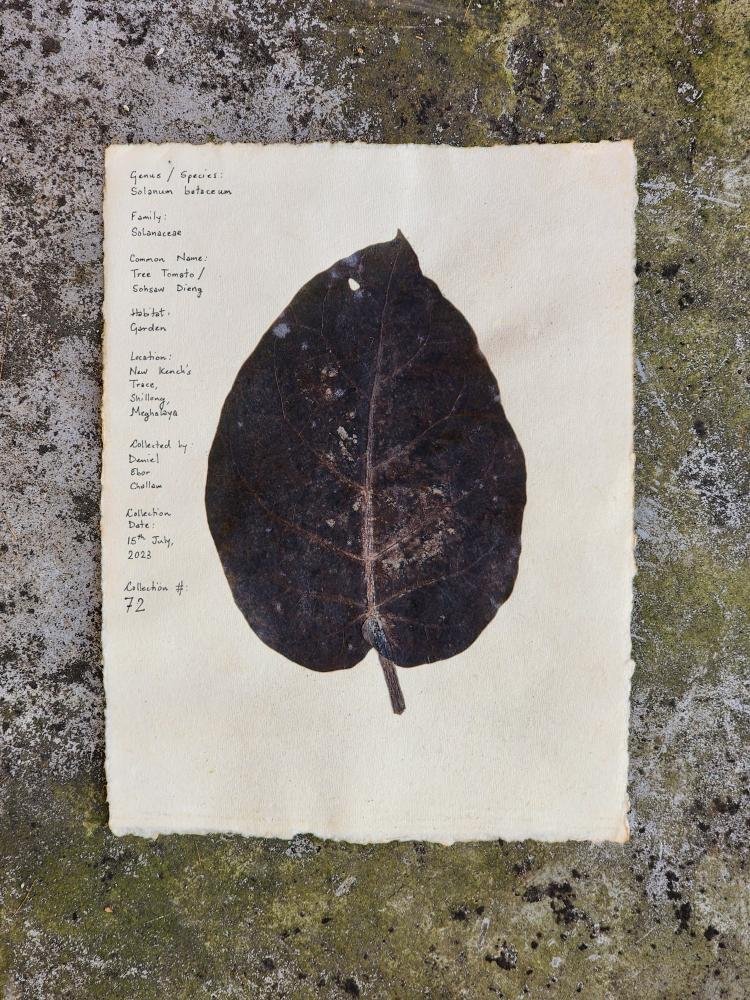
    Kum shi bynta jong ka jingrakhe ïa ka International Day of the World's Indigenous Peoples, kane ka dei ka herbarium sheet jong u sla Sohbaingon dieng ne u Sohsaw Dieng. Une u dei u jhur ba baroh ngi ju bang ban bam, uba ju ïoh ha ki bnai Risaw bad Naiwieng. 😄😋

    Genus/ Species: Solanum betaceum

    Family: Solanaceae

    Common Name: Tree Tomato/ Sohsaw Dieng

    Habitat: Garden

    Location: New Kenche's Trace, Shillong, Meghalaya.

    Collected by: Daniel Ebor Challam

    Collection Date: 15th July, 2023

    Collection#: 72

    Khublei Shibun @micromotives ïa kine ki herbarium sheet ki ban sa post ha kane ka taïew! 😃🙏🌱🍃

    As part of the celebration of International Day of the World's Indigenous Peoples, this is a herbarium sheet of the leaf of Tree Tomato or Tamarillo sent by @micromotives. The Khasi community eats tree tomato as a salad with onion and chilli after roasting it over the fire. It is usually available in the months of October and November.

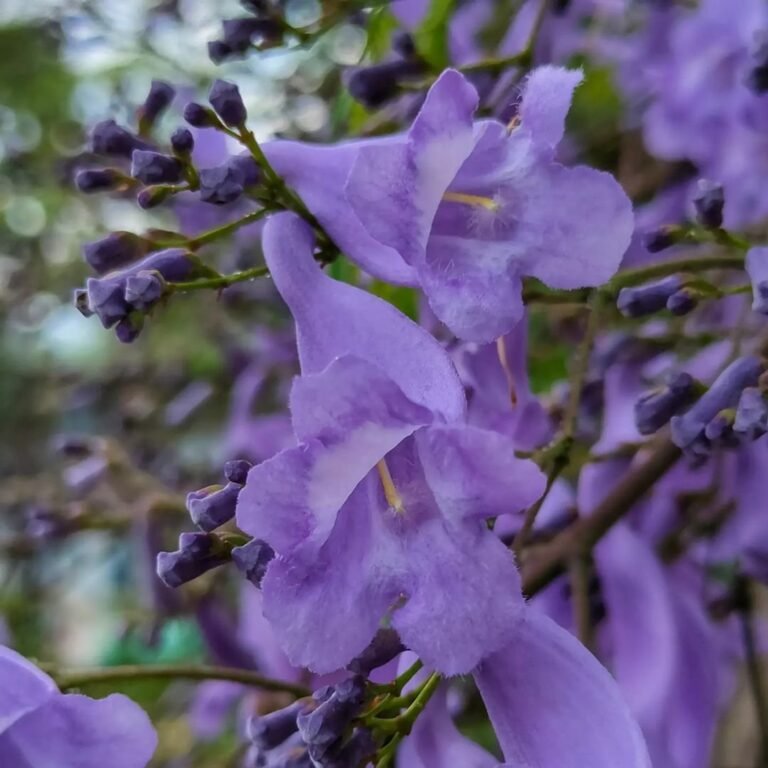
  • The blue Jacaranda or Jacaranda mimosifolia

    The scientific name of the blue Jacaranda is Jacaranda mimosifolia. The name Jacaranda as it is commonly known as, comes from the Tupi-Guarani languages, which means fragrant or sweet smelling; though the tree's flowers lack a distinct fragrance. Mimosifolia alludes to the Mimosa tree like dark green leaves which look similar to fern leaves , being bi-pinnately compound.

    The tree is reported to be endemic to a bioregion known as the Yungas, which are a narrow band of piedmont (French for foot hill) forests along the eastern slope of Peru, Bolivia extending into north-west Argentina.

    The tree belongs to Bignoniaceae family or Trumpet vine family which mostly consists of woody plants, with a few very well known avenue tree genera like Tabebuia, Spathodea( tulip tree) and Tecoma all of which like the Jacaranda are planted for their colorful blooms. The hallmark of the family is their Trumpet or tube like flowers with fused petals.( Pic1)

    From Pretoria in South Africa to New South Wales in Australia; from Shillong, Meghalaya to Munnar in Kerala, Jacarandas have been planted in many cities and towns for their violet blooms. The presence of this tree in many former British colonies is thought to be attributed to Allan Cunningham, a 19th century English Botanist and explorer.

    A visual of synchronous flowering violet canopies of these otherwise inconspicuous trees dotting the city symbolises a change of season. This feathery leaved, grey barked subtropical tree which prefers slightly acidic soil is very much at home in Shillong as evident by the profuse flowering, the likes of which I have never seen elsewhere. The end of April and early May is the peak flowering time here in Shillong.

    Despite the colonial origins of this alien tree, it is claimed as being a part of the urbanscapes that it has been planted in. For the countries in the Southern Hemisphere like Australia and South Africa, the Jacarandas bloom during October and November, and it is marked as the herald of spring season. This also coincides with year end University exams in these places, which has earned the jacaranda the moniker as "Exam tree".

    There is even a popular aphorism among students of University of Queensland that "If you haven’t started studying when the jacarandas bloom, you will fail your exams!" Being a common tree in many cities, the paradox is that the Jacaranda in its native range is threatened by habitat loss and logging and wild populations are deemed vulnerable.

    Khublei Shibun @treesofshillong for this great post!

    Picture credit: @treesofshillong

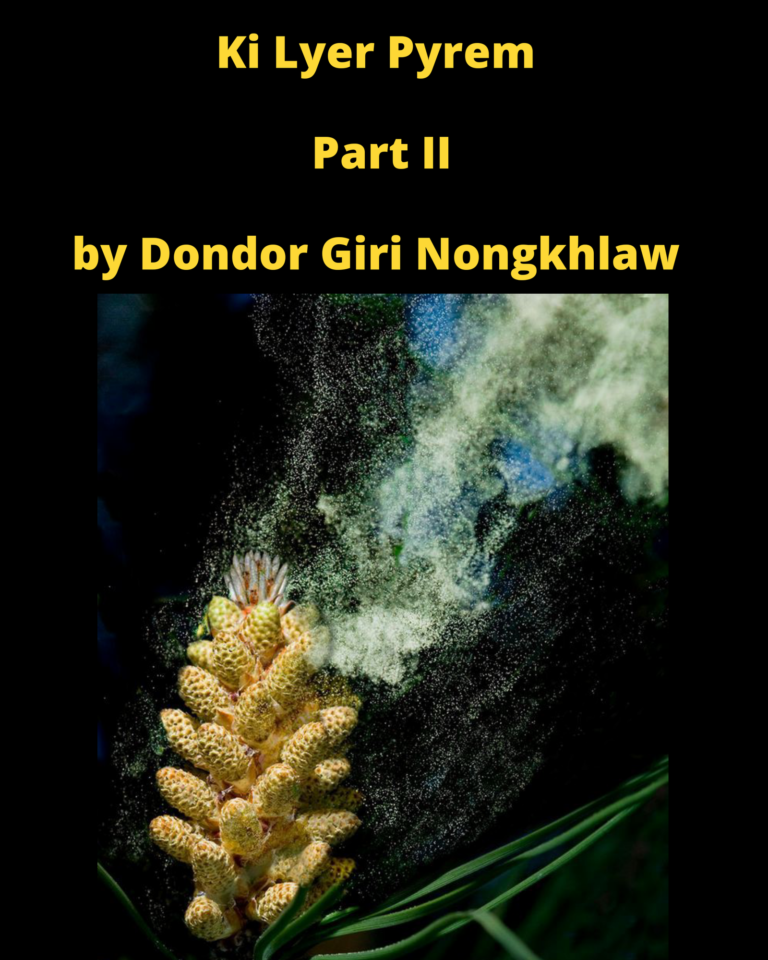
  • Ka lyer Pyrem bad ki lyer u Lber

    Andrew says:

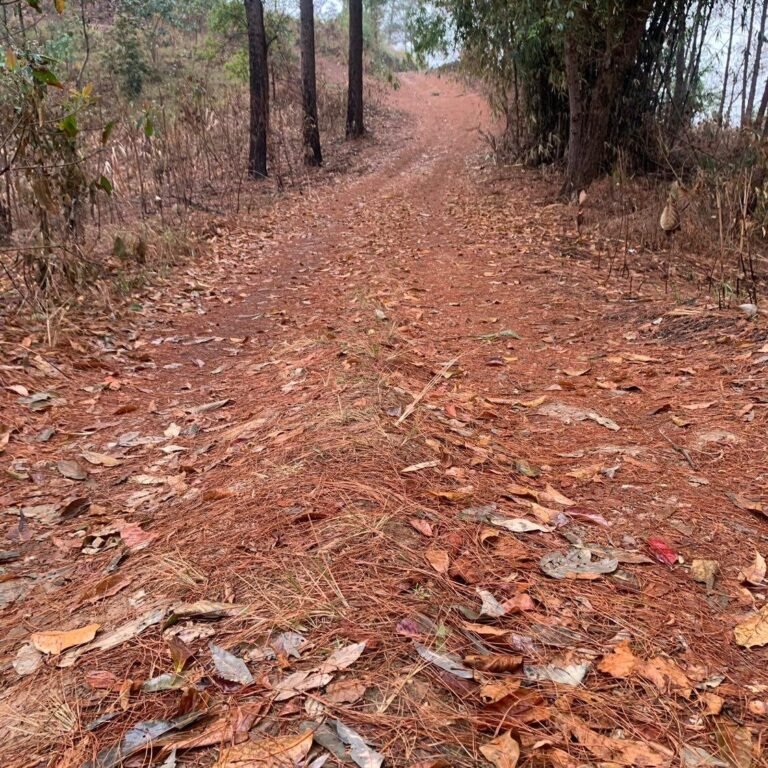
    " "Lber" ka mut ba mih. Hadien jong ka jingtyrkhong ka mariang, ha une u bnai ne aïom, u slap u la sdang ban hap malu mala bad pyntngen pat ïa ka mariang bad ki jingthung jingtep ba la sah khyrdong ha ki bun, bad ki lyngkha ruh ki sdang sa ban mih pat, ki syntiew ki skud ki la sdang ban phuh ban pynïap bieid ïa ka mariang. Ki diengsoh diengpai ruh ki la sdang shylluit khnang ban sei ïa ki soh kiba kynsai jong ka snem ha ka mariang. Kine ki dur ki dei ha Mawlai Umsaw. Ka dur kaba nyngkong ka dei ha ka por ba dang dep rang u slap. Ha ka dur ba ar dang shu dep thang bun."

    " In "Lber" or March after the dry weather of winter, rain starts to fall giving respite to the earth and plants. Life and growth begins again with crops, flowers and fruits beautifying the face of spring. These pictures have been taken in Mawlai Umsaw, Shillong. The first picture was taken just after a shower of rain and the second picture is the burned turf that has been arranged for manure."

    Khublei Shibun @andrewjana_ ïa kine ki dur bad ïa ka jingbatai ruh kumjuh! 😄

    Ka lyer Pyrem bad ki lyer u Lber ki wanrah ïa ka jingthymmai bad ka jingseisoh. 🌱🌼🍃

    🟡 English translation by @speakyourroots

  • U Slap

    U slap haba u hap ha sla khyndew u hap syngngeit bad hap lynsher. Ha ki jaka bym don phlang ne kino kino ki jynthung, u slap u don ka bor kaba khlaiñ ban ksam bad pynmong ïa ka khyndew. Mar ïa slap ki symboh khyndew ne shyiap ki shah kynting kumba Iai haduh san inshi na sla khyndew shalor bad shah bret sharud na ka jaka ba kine ki symboh ki don mynshuwa. La ïoh jingkheiñ da ki riewstad ba u lapbah u lah ban pynkynriah jaka ïa ki symboh khyndew symboh shyiap haduh shispah ton ha ka shi akar ha ka shikynta.

    When rain falls on the earth it falls in a forceful beating or grinding motion. In a place with no grass or plants, rain has the strong power to punch through and pound the soil. The instant it rains, soil or sand are thrown up about three to five inches from the ground and then they fall on a different place from where they were. Scientists have discovered that heavy rain can move 100 tons of soil from one acre in one hour.

    Haba u slap u hap halor ka khyndew bym don jynthung ki symboh khyndew symboh shyiap bani bin bin ki set noh ïa ki thliew ki syar (pores) jong ka syrtap khyndew syrtap maw. Ka umslap ba bun ka tuid noh wut tang nalor sla khyndew bad tang khyndiat eh ka ngam shapoh ñiamra. Ïa kane ka jingtuid umslap nalor ki jaka bym don ne duna jynthung la khot "ka tuid wut" (run off) katba ïa ka jingtuid umslap ha sla khyndew ha baroh ki jaka ba don khlaw ne bym don khlaw la khot "ka tuid lor" (overland flow).

    Kane ka tuid wut bad tuid lor jong ka umslap ki long ki bor bashyrkhei ban khrud bad pynkhoi ïa ka sla khyndew.

    When rain falls on a place that is empty of plants, the fine soil or sand that is moved by the rain covers and blocks the pores of the earth and of rocks. Most of the rain water flows quickly over the ground and only a little seeps through into the earth. This flow of rain water in a place where there is less or no vegetation is called run off, while the rain water that flows in a forested area or a non-forested area is called overland flow.

    Run off and overland flow of rain water are dangerous forces which scrub and erode the top soil.

    U slap bad ka rukom hap jong u…Sngewtynnat ban pule ïa kane ka jingthoh ha ka kot i Dr. Dondor Giri Nongkhlaw. 🌦️🌧️

    Rain and the way it falls…It is always a good idea to read books written by Dr. Dondor Giri Nongkhlaw. 🌦️🌧️

    Dr. Dondor Giri Nongkhlaw is a Geomorphologist who has written several Khasi books focussing on the elements of the environment and their bond with Khasi life and culture.

    🟡 English translation by @speakyourroots

  • Jylliew or June

    “Jylliew" ka thew ïa ka jingdap miar ka um ha ki jylli jong ka wah. "Jyl" ka mut ka “jingjrong" bad " 'liew" ka mut ka "thliew" ne ka "them khohruh-khohram". Haba ong "jylliew" ka mut ba ka um ka la dap miar ïa ka them ne ka thliew khohruh-khohram. Nalor kata, ka ktien "jylliew" ka don ka jingïadei kaba jan eh bad ka "phylliew".

    "Jylliew" ka mut ka jingpyndap um da ka mariang ïa ka them ne thliew khohruh-khohram, katba ka ktien ‘phylliew’ ka mut ka jingpyndap um ha u khiew u bym don ne uba duna um da ka kti u briew ne da kano-kano ka tiar. Ha u Jymmang, ka um ka la sdang ban kiew ha ki jylli jong ka wah katba ha u Jylliew ka um ka la dap miar ha ka phudwah ne wah bah.

    The Khasi word "Jylliew" refers to the fullness of water in parts of a river. "Jyl" means the length of something and " 'liew" means a hole or uneven crevices. When we say "jylliew" it means that water is filled to the brim in a hole or crevice. Besides that, the word "jylliew" has a close connection to the word "phylliew" which means to pour water into a vessel.

    "Jylliew" means the filling up of water by Nature in valleys or uneven crevices, while "phylliew" means the filling up of a vessel with water by hand or using a mug or other utensils. In May, the water rises and fills in the circles of water, while in June water is full to the brim in river beds and rivers.

    This gives a new understanding of the Khasi word "Jylliew" which is the name of the month of June. 🌦️⛈️🌧️🏞️ Jylliew is the swirling depth of water that fills to the brim!

    🟡 Source: Rev. Dr. Ïarington Kharkongor
    🟡 English translation by @speakyourroots

  • Kshaid, Ticha, Dare

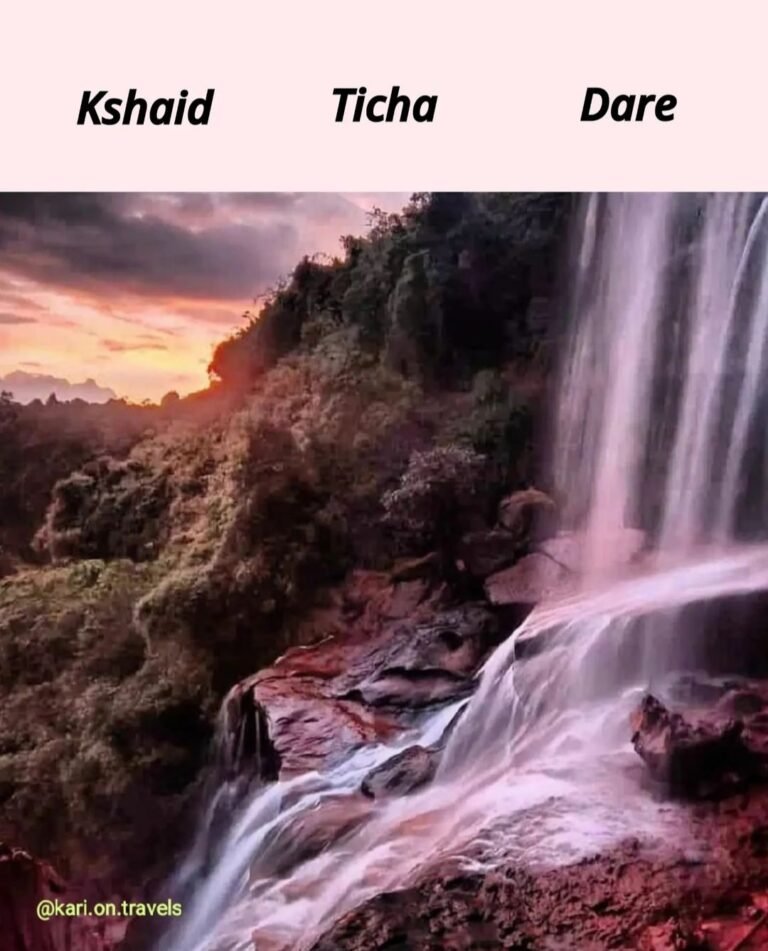
    Waterfall

    Indigenous words for the English word "waterfall"

    In Khasi a waterfall is called "Kshaid"

    In Pnar a waterfall is called "Ticha"

    In Garo a waterfall is called "Dare" (pronounced as "Daare")

    The word that most of us will not have heard of is the Pnar word "Ticha" for waterfall 😄 Khublei Chiboon Anvil R. Laloo for telling us about this word! 😄🙏

    Khublei Shibun @kari.on.travels for your pictures! 🙏🙏 Congratulations on your page!

    1st picture: Prut falls is located in Laitlyndop, Sohra. This waterfall emerges from Urwan river formed by the inflowing stream from Khliehshnong Laitlyndop, Umkrem and Madan Umkrem. The Urwan river flows to Mawsiang and reaches upto Shyngoid under Sohra Syiemship. (Source: https://theshillongtimes.com/2021/09/27/sohra-adds-new-waterfall-to-its-list-of-tourist-spots/)

    2nd picture: Weinia Falls is one of the falls located on the Namlang River which, along with the Kynshi river encircles the Nongkhnum River Island – the second largest river island in Asia after the magnificent Majuli. The falls lies on the northern periphery of the river island, about 13km from Nongstoiñ town, the district headquarters of West Khasi Hills. (Source: https://youtu.be/EPIl4nOFz8w by @kari.on.travels )