Category: Nature, Animals, Birds

  • Jymmang, Jympa

    U Jymmang, u bnai uba san jong ka snem, u dei u bnai pyrem. Kumba long kiwei pat ki bnai, u Jymmang u don saw taïew lane arphew phra sngi pura.

    Baroh ar ki ktien "Jympa" bad "Jymmang" ki ïa ïaid ryngkat ryngkat. Ka ktien "jym" ka long ka ktien tynrai. "Pa" bad "Mang" ki long ki ktien bynrap. "Pa" ka mut "per" ne "jngi" halor um bad "mang" ka thew ïa ka "rmiang shyntur" jong ka wah. Namar kata, ka ktien 'Jympa" ka mut kaba per ne jngi halor um katba ka ktien "Jymmang" ka thew ïa ka jingsdang ka um ne ka wah.

    Ha u Ïaiong u slap u la sdang ban hap. U shu hap teng teng tang ban ai um ïa ka khyndew bad ïa ki jynthung. Ka khyndew ha kawei pat ka liang, ban pynum ïalade, ka kjit lut ïa ka um slap baroh kaba hap ha une u bnai. Ki wah bad ki duid ruh haba ki ïoh slap teng-teng ki la sang ban tngen naba la tyrkhong eh baroh shi aiom tlang.

    Ha u Jymmang u slap u la sdang ban ther bad ki wah ruh ki la sdang ban nang kiew. Ki khynnah ap masi bad ki nongrep kumjuh ki sngewtynnat eh ban sum bad "jympa" ha une u bnai namar la "jymmang" ka um. Baroh ar ki ktien "jympa" bad "jymmang" ki thew ïa ka um tangba ki ïapher ha ka rukom jingpyndonkam.

    "Jymmang" or May, the fifth month of the year is a spring month. As the other months, May has four weeks or twenty eight days.

    Both words "Jympa" and "'Jymmang" go hand in hand. The word "jym" is a root word. "Pa" and "mang" are the supplementary words. "Pa" means to float or swim in water and "mang" refers to the mouth of a river. Thus, the word "Jympa" means to float or swim in water, while the word "Jymmang" refers to the beginning of a mass of water or a river.

    In April the rain begins to fall. It arrives intermittently so as to provide water for the earth and plants. The earth, to water and replenish itself, takes in all the rain water in this month. Rivers and streams who have received rainfall are rejuvenated since the dry months of the winter season.

    In May the rain begins to fall heavily with river levels rising. Cow herders and farmers enjoy to bathe and swim or float in water because of the increase in water level. Both words "Jympa" and "Jymmang" refer to water with the only difference being the way they are used.

    The Khasi names for the month of May have multiple meanings 🌦️⛅🌤️🌱🌿
    A knowledge of the seasons and what they entail is important for broadening our understanding of culture and practice. 😃🏞️🌄

    🟡 Source: Rev. Dr. Ïarington Kharkongor
    🟡 English translation by @speakyourroots

  • Ïaïong

    U bnai Ïaïong u long u bnai uba saw ha ki Khasi uba hap ha ka aïom Pyrem. Ha une u bnai ka ju don ka jinghap slap kaba wan poi, ha kaba ka wan ka jingïong ngit ngit jong ka suiñbneng bad ki lyoh ba dum, ka lyer kaba jur kaba beh bad teng teng u hap u phria ruh.

    Ka don ka jingong ne ka jingkheiñ jong ki Khasi kaba ong ba ym bit ban ïathoh shongkurim ne shna ïing ne ban sdang kano kano ka kam ha u bnai Ïaïong. Hato dei na ka daw jong ka suiñbneng ba la adong kumne ne don kiwei kiwei pat ki daw?

    Hato ngi lah ban ong ba ka ktien Ïaïong ka thew ïa ka ïa ne ka por kaba ïong, kaba dum haba wan poi u slap?

    The month of "Ïaïong" or April is the fourth month for the Khasis which falls in the season of Spring. In "Ïaïong" there is the falling of rain, accompanied by a rapid cover of darkness brought about by grey clouds with strong wind and sometimes hail too.

    There is a saying among the Khasis which prohibits them from getting married or building a house or starting any other work in the month of "Ïaïong". Is the reason because of the sudden dark rainy weather that these prohibitions were uttered or are there any other reasons?

    Can it be said that the word "Ïaïong" refers to a time of darkness (Ïong means black) represented by the sudden approach and falling of rain?

    We all wonder about Ïaïong don't we? Please tell us what you think of this in the comment section. 🌦️⛈️

    Khublei Shibun @carey_lynz for your video of the rain in the afternoon yesterday! 😄🙏 The video was taken on the 9th of April 2022, while approaching North-Eastern Hill University, Shillong. 🌩️🌧️

    Video was made on #InShot

  • Ki Lyer Pyrem (Part II)

    Ka 'Erkhwasi

    Ka 'Erkhwasi ka dei ka jait Iyer kaba kham beh jur ha ki bynta sepngi jong ka bri u Hynñiewtrep khamtam ha ki thaiñ Ri Lyngngam bad Khadsawphra. Haba wan kane ka lyer ki dieng ruh ki khyllem, ki mrad ruh ki her lamwir ha khlaw. La ïoh kyrteng ïa kane ka lyer na u Lum Nokrek u lum uba ki briew jong ngi ha Ri Lyngngam ki khot u Lum Khwasi.

    "Ka 'Erkhwasi" is a strong wind that blows in the west of the Khasi hills, especially in the Lyngngam and Khadsawphra areas. This wind is so powerful that it uproots trees and sends animals into a frenzy. "Er Khwasi'" gets its name from Nokrek Hill which the Lyngngam people call Khwasi Hill.

    Ka 'Erkyllang

    Ka 'Erkyllang ka long ka lyer kaba jur bad khlaiñ bha. Ha ki por ki por ba ka beh jur bad khlaiñ ka jynrat wat ïa ki ïing bad ïa ki dieng ruh. Ka tyllong jong kane ka lyer ka sdang na ka them Umkhrisynñia bad ka rukom beh ka long nangtei sepngi shatai sha mihngi bad ka jah ha ka them jong ka Wah Myntang. Ka 'erkyllang ka wan hadien ar taïew jong a 'erpyrhaw.

    "Ka 'Erkyllang" is another powerful wind, denoted by its name, "kyllang" meaning cyclone. This wind uproots not only trees but houses as well. The root of this wind starts from the Umkhrisynñia valley and the direction in which it blows is from the west to the east and it is absorbed into the valley of Myntang river. "Ka'Erkyllang" arrives two weeks after 'Erpyrhaw".

    Ka 'Erbatesi

    Hadien jong ka jingkhyrwit jong ka "'erkyllang, ka suiñbneng ka long jai jai bad duna lyoh. Ka lyer kaba beh ha kane ka por shuwa ban wan ka lyiur ka long suki jai jai. La ïoh kyrteng ïa ka 'erbatesi na ka jinglong jai jai ne tipsngi jong ka.

    Ïa kitei baroh ki Iyer lakdun haka lyer Pyrem.

    After the intensity of "ka 'erkyllang", the weather is calm with less clouds. "Ka 'erbatesi" blows gently during this time and arrives before the season of summer. "Ka 'erbatesi" gets its name from its calm and tranquil nature.

    All these winds are categorised under the winds of Spring.

    This is Part II of "Ki Lyer Pyrem" or Spring Winds from the book Ka Meirisawkun, Ki Skid Jingim bad Ki Deiriti written by Dr. Dondor Giri Nongkhlaw. 🍃🌻🌀

    The books written by Dr. Nongkhlaw, who is a Geomorphologist, are treasures that contain research that has been meticulously explained in Khasi. What is even better are the words that he has coined using the different dialects of the Khasi language!

    Khublei Shibun Babu Nongkhlaw ïa ki jingthoh jong phi kiba ai jingtip bad jingshai shaphang ka ri jong ngi! 😃🙏

    🟡 English translation by @speakyourroots

  • Ka Um Bad Ki Deiriti haka Meirisawkun, Part 2

    Ki kyntien na Ka Um Bad Ki Deiriti ha ka Meirisawkun (2008) ba thoh da i Dr. Dondor Giri Nongkhlaw.

    Words from Ka Um Bad Ki Deiriti ha ka Meirisawkun (Water and Culture In The Environment) (2008) by Dr. Dondor Giri Nongkhlaw.

    Desert – Ri Shriaw

    Condensation – Saiñ umtli

    Chlorophyll – Bseng jyrngam

    Water table – Thar shong um

    Run off – Tuid wut

    Watershed – Domphiahslap

    Precipitation – Hap brum

    Here is the second list of unique words from the book Ka Um Bad Ki Deiriti ha ka Meirisawkun by Dr. Dondor Giri Nongkhlaw. 🌊🌊🌀🌀

    Dr. Dondor Giri Nongkhlaw is a Geomorphologist who has written several Khasi books focussing on the elements of the environment and their bond with Khasi life and culture.

  • Langwarku Sang Khyndew

    Langwarku Sang Khyndew

    (Ka Langbyrkaw ne Ka Langwarku)

    Ïa ka "Langbyrkaw"/ "Langwarku" ju ïohsngew ïa ka ba ka pah wat la ka long kaba kham ñiar ban ïohi ha ki lawbah lawsan. Kane ka sim kam ju kham hiar sha khyndew.

    Ïa ki briew kiba juh ban shong bad pynlut por ha la marwei bad kiba salia ban ïashem ïakynduh ïa kiwei la ju sin ka "langwarku sang khyndew".

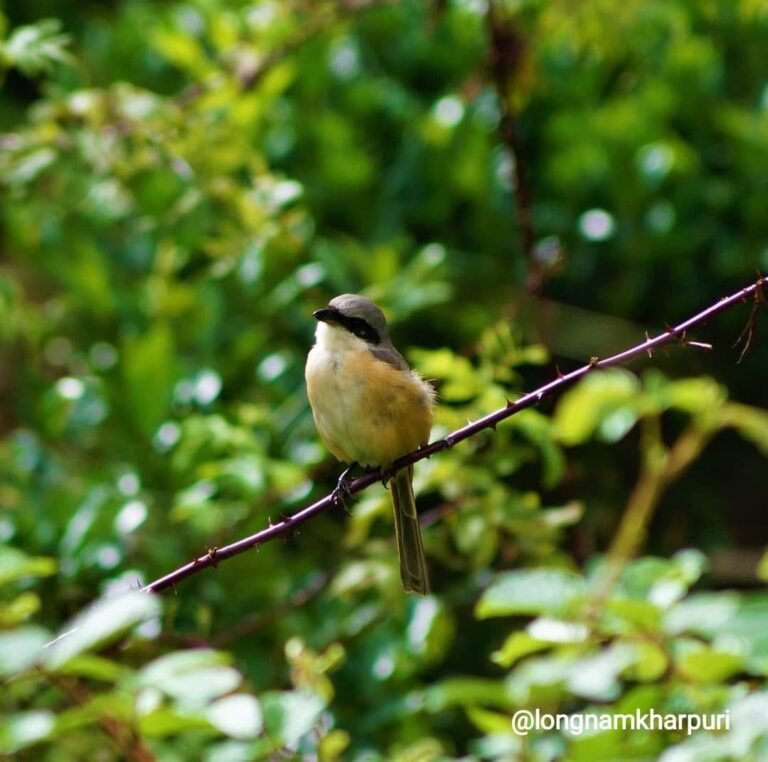
    The "Langbyrkaw" or the Blue Throated Barbet is heard in deep forests even though it is difficult to be sighted. This bird never sets foot on the ground.

    If there are individuals who like to be alone and to spend time by themselves, not wanting or liking to meet other people, they are nicknamed "langwarku sang khyndew".

    Kane ka dei ka "Langbyrkaw" ne "Langwarku" 😄😄

    In English it is called the Yellow-footed Green Pigeon. This is corroborated by H. O. Mawrie in his book "The Khasi Milieu" (1981).

    The Yellow-footed Green Pigeon has a bright coloration and possesses yellow legs and an orange-yellow neck. It can be identified by its gray-colored strip present on each shoulder. Both males and females look similar to each other. This bird is not really vocal, but it gives cooing whistles on occasion. (Source: https://kidadl.com/animal-facts/yellow-footed-green-pigeon-facts)

    Photo credit: https://ebird.org/species/yefpig1

    Khublei Shibun @longnamkharpuri ba phi la ïarap ban ïoh ïa ka dur bad ïa ka jingtip kaba dei 🙏🙏 Khublei Shibun @duwaki9 ïa phi ruh 😄

  • Ki Lyer Pyrem, Part I

    Ka 'Erpyrhaw

    "Ka 'Erpyrhaw" ka dei ka lyer khlaiñ kaba beh nyngkong jong ka snem. Kane ka lyer ka neh ha ka jingkhlaiñ bad jingjur tang haduh ar ne lai sngi, ka beh jur mynsngi bad teng teng mynmiet ruh. Ka lyer pyrhaw ka long ka lyer kaba pyrsad bad pynkyan syntiew khamtam ïa ki diengsoh kiba pynmih soh ha ki por lyiur. Ka suiñbneng ha ki sngi ba bud ka long jur lyer bad khriat. Ka lyer pyrhaw ka long ruh ka lyer kaba pynrkhiang lut ïa ki ñuit bad stong ha ki jaka rep bun. Ka erpyrhaw ka wan rah ruh ïa ka leilieh, pyrthat bad slap ba nyngkong jong ka snem. Kane ka lyer ka wan ha ka taïew khadduh jong u bnai Rymphang ne taïew nyngkong jong u Lber.

    Ka 'erpyrhaw ka kynther bad pynhap lut ïa ki pui pui (pollen) jong ki syntiew na ki diengmet bad diengjem bad ynda la hap u slap nyngkong, kine ki pui pui ki satah bad pynstem ïa ka Iynti khlaw lynti shnong. Ju don u snem ba hadien ka lyer pyrhaw wan sa ka jingbeh 'erkyllang kaba jur ha u 'nai Lber ha kaba ki dieng, ki ïing ki shah rat bad ki briew ki mrad ruh ki mynsaw bad ïap da ka jingjur than ka beh Iyer. Hadien jong kane wan sa u slap ba ju hap phria kiba heh bad kane ka pynjulor shibun ïa ki jynthung. Ka suiñbneng, lada jur lyer bad slap kumne ka long khriat bad daitthah. Hynrei ha ki snem ba bud, hooid, ju don ka jingbeh ka 'erpyhaw tangba ka suiñbneng ka shit bad khluit bad ka umbam umdih ne tyllong um ki duna lane tyrkhong.

    "Ka 'erpyrhaw" is a strong wind which blows at the beginning of the year, in the last week of February or the first week of March. It brings lightning, thunder and the first rain of the year. The intensity of this wind lasts for about two or three days and is stronger during the afternoon and sometimes at night too. "Ka 'erpyrhaw" causes the blossoming of fruit trees whose fruit will arrive in the summer. The weather is windy and also cold at times, with this wind drying weeds and grass in the places where they follow "bun" agriculture.

    "Ka 'erpyrhaw" causes pollen to fall from the flowers of trees and when the first rain falls, pollen covers everything in yellow. There are years when after " 'er pyrhaw" comes a cyclonic wind ('er kyllang) in March arrives where trees and houses are blown away and people and animals die. After this, hail falls in big sizes causing the destruction of agriculture. The weather becomes even more chilly because of the rain and wind. However there are years when "ka 'erpyrhaw" brings hot weather with water sources becoming less or drying up.

    It is always rewarding to read the books of Dr. Dondor Giri Nongkhlaw who is an erudite Geomorphologist. 🏞️⛰️🌲 These paragraphs are excerpts from his book Ka Meirisawkun, Ki Skid Jingim bad Ki Deiriti (2007).

    🟡 English translation by @speakyourroots

  • Meghalaya Rivers by Joe Rea-Dickins, Dan Rea-Dickins and Zorba Laloo

    'This book does justice to the fabulous find that Meghalaya is for the global whitewater community. This is pretty much the best guidebook I have ever seen and it indeed has lived up to and beyond what I expected with this book.

    -Shalabh Gahlaut, pioneer of Indian whitewater

    'This guidebook is an awesome resource which has put Meghalaya on the whitewater world map. It is colourful, detailed and well-researched – both in content and photos. It is the Lonely Planet for whitewater in Meghalaya!'

    -Anvesh Singh Thapa, Expeditions India.

    'Good river guidebooks are a joy. They excite the reader with the possible, explain and describe the probable. They tell histories, both natural and personal. They inform and entice their readers without giving it all away. This guide to Meghalaya's whitewater satisfies all these prerequisites, and does it in colour with engaging maps too. It's enough to send any whitewater enthusiast to this tropical paddling paradise.

    -Roman Dial, author of Packrafting! An Introduction and How-to Guide

    'The' "must-get" guidebook for anyone going to Meghalaya. This guide is simply the best tool to discover the rivers of this magical whitewater territory that is Meghalaya. Culture, flora, fauna, medical hazards, history and rivers, of course–it is all in there!'

    -Philippe Doux, publisher, Kayak Session magazine

    Praise and Reviews for "Meghalaya Rivers"

    A joy of a guidebook; on the rivers, it tells you just enough so as to leave you that feeling of exploring and off the rivers, it answers the questions you will want to ask. Add to this anecdotes, descriptions of descents, tales of terror and exhilaration and sections on the botany, geology, geography, wildlife and culture folktales of Meghalaya and you have the complete works.'

    -Dave Manby, pioneer of whitewater exploration

    'Much more than just your typical kayak guidebook: an immersion in Indian culture with many interesting and useful facts both on and off the river. These three individuals have worked very hard finding and documenting these river gems. The knowledge they have in the area is unmatched by anyone and I am stoked to see all their work put together in this epic guidebook of Meghalaya.'

    -Aniol Serrasolses, 2016 kayak world champion

    Author Profile: Zorba Laloo

    After his studies in Shillong and Darjeeling, Zorba worked with independent documentary film-makers for the BBC, National Geographic, and other leading Indian and European television. He was researcher and cameraman for the "Darjeeling Himalayan Railway", a documentary that received an award from the Royal Television Society, UK, in 2010. As a crew member for the Swiss-owned expedition company Ribexpeditions, he completed several source-to-sea expeditions under the tutelage of seasoned leaders. Inspired by rivers, he started paddling in Meghalaya and Northeast India with friends for sport and exploration. They were the first in India, and among the first in Asia, to start using packrafts. In 2012, he received the 'Golden Paddle Award' from the American Packrafting Association for his contribution in promoting paddlesports and river conservation. Disappointed by the lack of opportunities for students to experience the outdoors in Meghalaya, Zorba co-founded Campfire Trails, which has, to date, catered to almost 2000 students. Campfire Trails also works closely with villages to help design and develop sustainable eco-rural tourism projects, for which, it received the NEDFi Award for social entrepreneurship in 2015.

    Author Profile:

    Dan Rea-Dickins Dan has worked as a river guide in Scotland, Kenya, Uganda, Iceland and Switzerland. He has some notable descents to his name, the first and only descent of Charnia Falls in Kenya, being a safety kayaker and photographer for the first commercial rafting descent of the Murchison section of the White Nile and he also crossed Iceland by traversing the Vatnajökull glacier and packrafting the Jökulsá á Fjöllum river. Dan achieved all of this in between seasons in India. He has now shifted his focus and is training to be a paramedic in Liverpool, enjoying regular laps on the rivers of North Wales during his time off.

    Author Profile:

    Joe Rea-Dickins At age eighteen, Joe headed to India to work as a journalist for the New Indian Express, and with that his love affair with India began. After a second gap year, Joe moved to Aberystwyth, a secluded Welsh town to study international politics. In his second year of studies he was selected for the British Universities Kayak Expedition team and travelled to Venezuela for his first taste of expedition kayaking. In the years since graduating from university, Joe has spent almost as much time in South Asia as he has in Europe. Joe has raised money for women's education in Northern Pakistan through the release of two British-made kayak films "High" and "Too High'. He has worked in Delhi as a video editor for the Outdoor Journal, India's first international active-lifestyle and adventure magazine. Joe shot, edited and directed "The All India Kayak Expedition", a six-month rolling expedition to explore many un-paddled rivers in India. In 2016, Joe was part of a team that kayaked the Panjshir river in Afghanistan. They paddled around 130 km of whitewater and since the trip, he has raised awareness about the unique and often-misunderstood region. Now in the UK, Joe runs an aerial-photography business while formulating grand plans for more exploratory trips to far-flung locations.

    About the book:

    East India is the small culturally rich hill state of Meghalaya. Meghalaya receives the heaviest rainfall anywhere on Earth and all this water creates rivers that are some of the steepest and most powerful on the planet. Its rivers are steeped in a folklore that was shared over campfires and hearths back in a time when its people had no written word. These rivers are the bedrock of folklore and are surrounded by diverse natural beauty. This wild frontier has recently caught the attention of whitewater paddlers from all over the world. Six years of research by international and local paddlers has culminated into this one-of-a-kind book. More than just a guidebook, Meghalaya Rivers shares previously unpublished folk stories, personal accounts from river descents, detailed maps, insights into the unique culture, history, flora, fauna, environment and geography of this enchanting part of the globe. Not only is this book full of breathtaking photography from some of the most difficult-to-reach corners of Meghalaya, it is also packed with all the information needed to take you to these wild places. Now all you need to do is go and see them for yourself.

    "Meghalaya Rivers" (2018) is a valuable book that everyone of us should have! 🏞️

    Khublei Shibun @z.meghalaya for sending this! 😄🙏

    Ki um ki wah ka ri Khasi ki long ki jingai ba kordor bad ba kyrhai jong ka mariang kiba la pynphuh bad pynim ïa ka jymbriew, ki riti ki dustur, ki khanatang, ki khanaparom bad ka rukom im jong ka jaitbynriew hi baroh kawei.

    Ki dei ki kot kum ka "Meghalaya Rivers" kiba la pyni sha ka pyrthei ïa ka jingriewspah jong ka mariang ha ka ri Khasi. Ki dei kine ki thied jingim kiba ngi dei ban ri ban sumar na ka bynta ka mynta bad ka lawei ruh kumjuh. Kumba la lam lynti ha ka kot, ngi dei ban sngewthuh ïa ka jingkynsai jong ki um ki wah jong ngi. Ka shong ha ngi ban pyrshang katba lah ban pynman pynneh ïa ki ym tang kum ki jingitynnad jong ka mariang, hynrei kum ki jingmyntoi kiban kyrshan ïa ki shnong ki thaw ha kiba kine ki wah ki tuid.

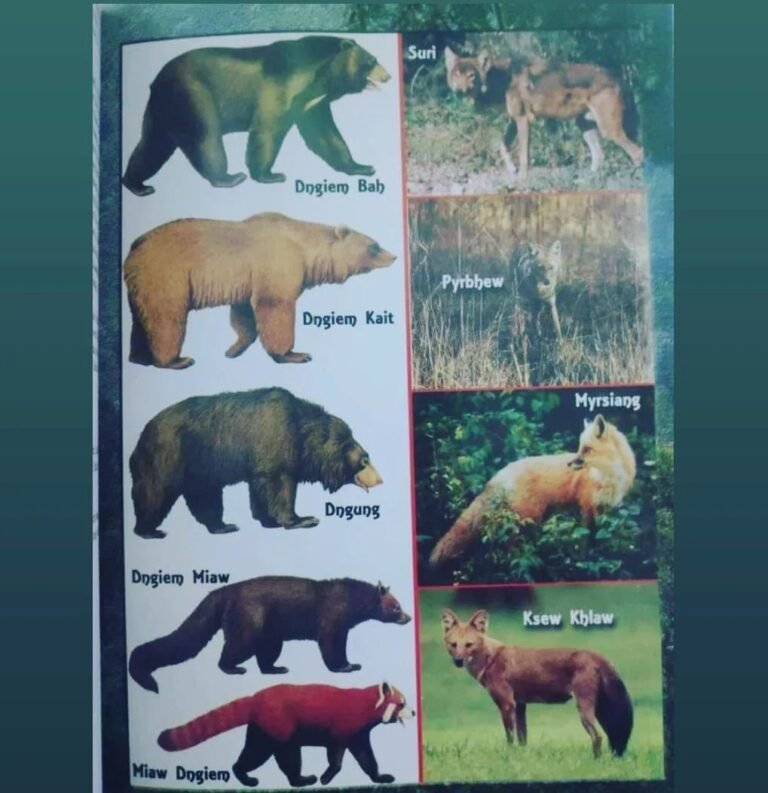
  • Different animal names in Khasi

    Different Khasi animal names sent by @ecology_boi 🐯🦊🐵

    These pictures are from the book "Ki Mrad Khlaw ka Meghalaya" by Shining Star Laloo. Khublei Shibun for sending these pictures! 🙏😀

    If you know the English names of the animals please mention them in the comments section!

  • Bam Hynroh u Bnai

    Mano ba ju kynmaw ïa ka bam hynroh u bnai? Phi ju tied pliang ne kumno? Por hyndai hynthai, ki bun na ki khasi ki ju tied pliang ban beh noh ïa kaba sniew.

    Ka por ba kah dum ia ka jingshai u bnai, ka pynlong ia U Khasi ban ong, "bam hynroh u bnai" kaba pyni ïa ka nemsniew. Kat kum ka jingbatai ki nongtymmen, ka lah ban ïasnoh ruh bad ki puriskam Khasi hyndai.

    Ka hynroh ka dei ka kynja jakoid. Ka long thoh rew bad soh-khruh. Ha ka jingbatai ki nongtymmen, ka long kaba sniew dur bha. Kumta sa ïoh kynnoh "bam hynroh" lada ïa ka Sngi ne u Bnai.

    Who recalls Ka Bam Hynroh u Bnai or the Lunar Eclipse? Have you ever participated in the frenzy beating of plates? In the olden days, many of the Khasis would beat their enamel or steel plates to ward off anything that is bad or evil.

    At the time of the lunar eclipse, the Khasis used the term, "bam hynroh u bnai" which literally means the frog/toad has consumed the moon. It also seems to be linked with the belief that an ill omen or some plague will occur. According to forefathers, it is also linked to an old story that has been narrated for ages!

    Ka hynroh is a kind of frog or toad with a distinctive feature. It has warty skin. According to the description given by forefathers, it is a very ugly frog or toad. Therefore, they connected the frog/toad to the term "bam hynroh" or "eaten by the frog/toad." It has become an expression that describes a lunar or solar eclipse.

    "Ka Bam Hynroh U Bnai" or a lunar eclipse contains cultural significance that many of us may have forgotten. Khublei Shibun @carey_lynz for sending this! 😀🙏

    "Ka Hynroh" has a gland near it's eyes which is poisonous. It has short legs, no teeth and its body is covered by ugly bumps. It is about 20 cms in length.

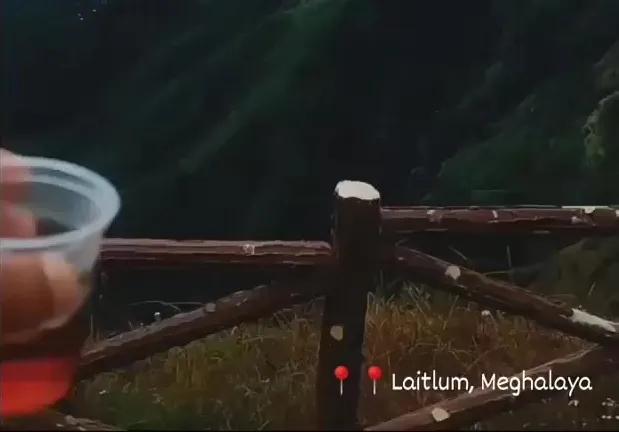
  • Red tea in Laitlum

    Wow! This is so captivating 🤩🤩 and that cup of red tea is the perfect accompaniment to the view! 🌲🏞️🌄 The location is Laitlum, Meghalaya.

    Khublei Shibun @dapp_theguyfromthehills sa ïa kawei ka post kaba itynnat! 🙏🙏