Category: Nature, Animals, Birds

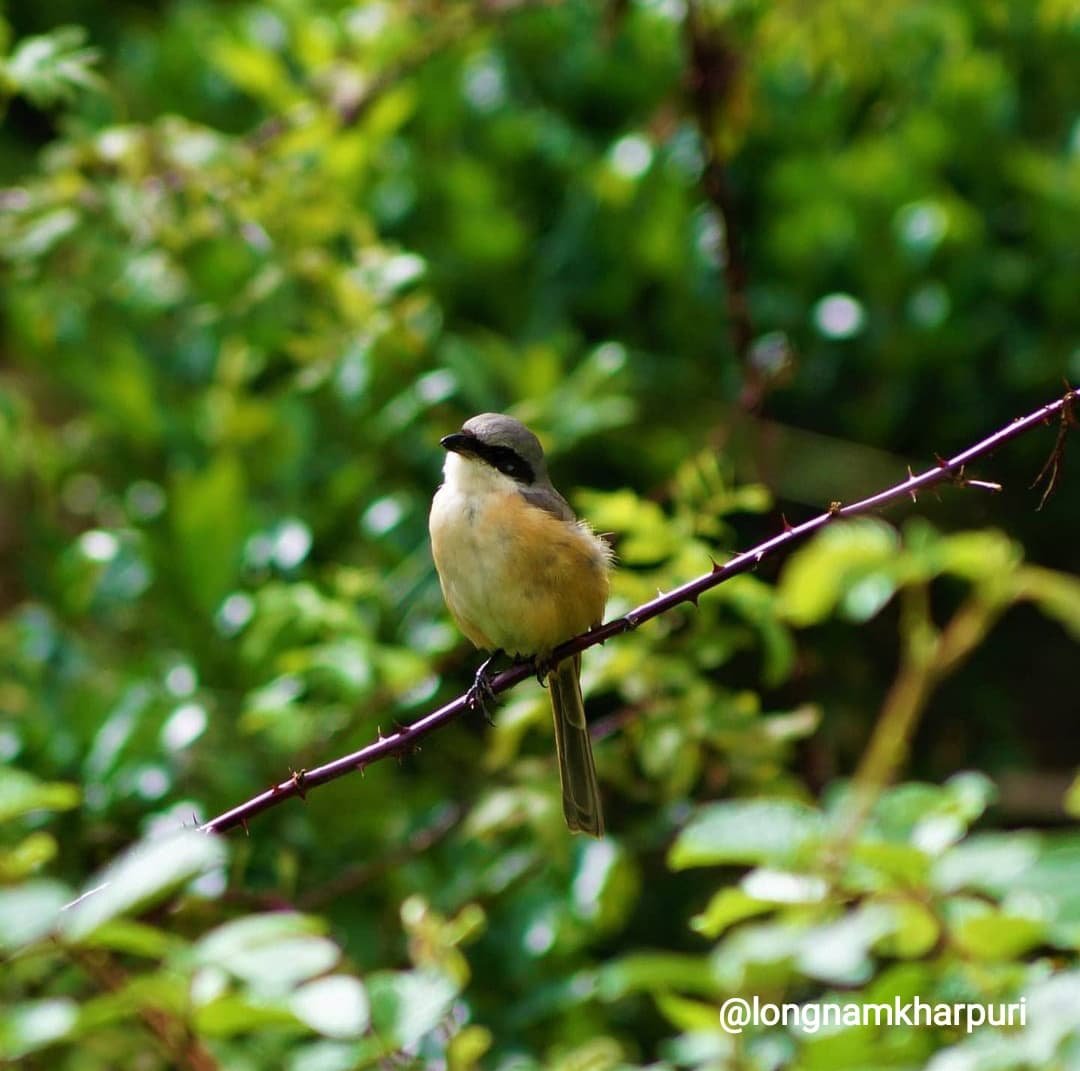
  • Ka Lorni or the Grey-backed Shrike

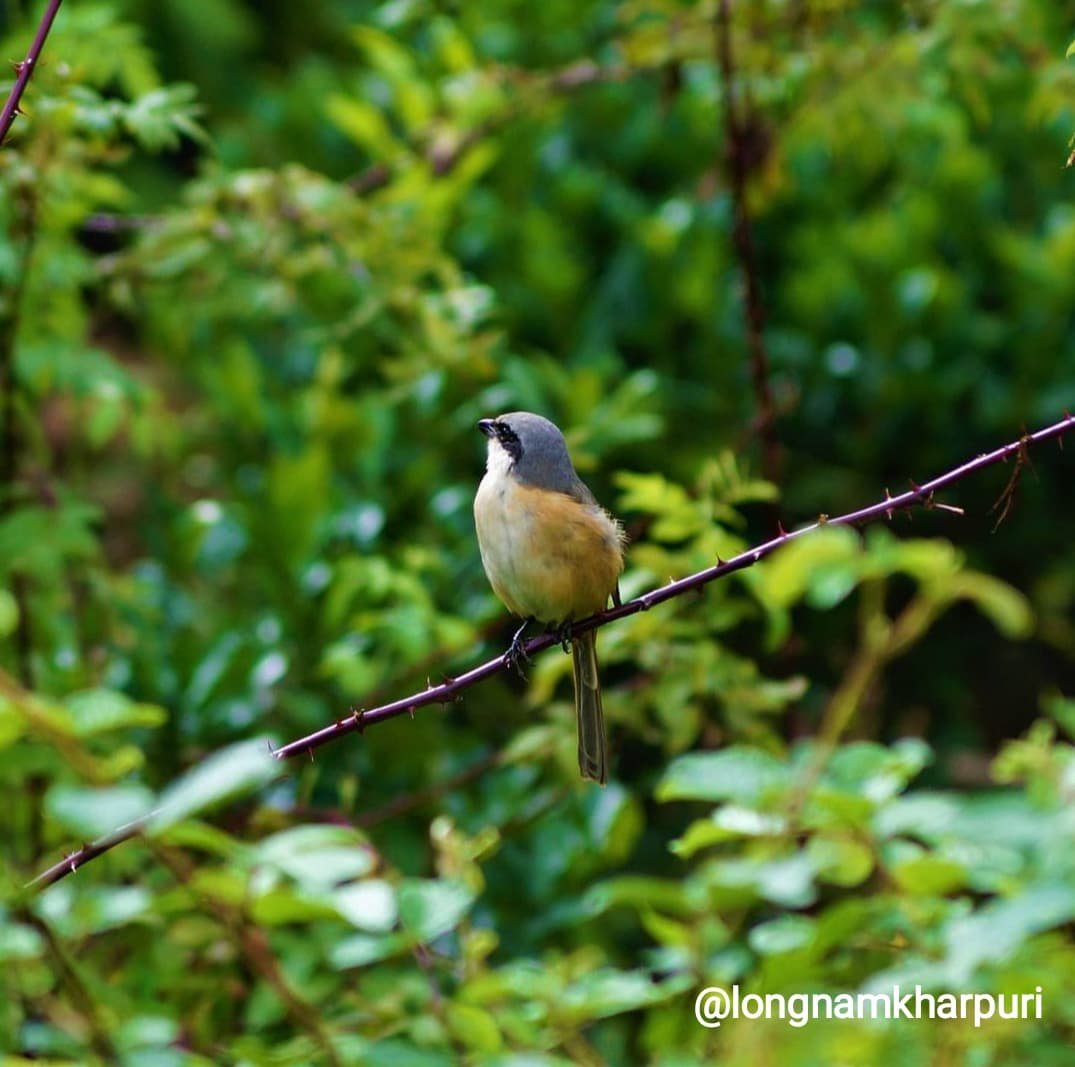
    "Ka Lorni" or the Grey-backed Shrike sighted by @longnamkharpuri in Mawlai Mawroh, Shillong. Thank you for this! 🙏

    She says: "Shrikes really enjoy sitting on wires and poles and just staring. This one was easy to capture because it just sat there for almost 15 minutes." She also added that they have shrieky calls. Like we say in Khasi "Ki dei kiba pah kaw kaw".

    Maybe that's how the name "Lorni" came into being because the Shrike sits and observes and then shrieks loudly? Or was it that the bird's nature suited the word? 😂😂

  • U Diengbah Ïam Briew (Excerpt from “Ka Jingphylla Ka Ri” by Sumar Sing Sawian)

    Ha ka shnong Nongkynrih ha Hima Khyrim, u ïeng uwei u dieng bah dieng san uba la rim bha. Haduh kine ki sngi ba mynta une u dieng uba la tip kum u dieng "Sping Wait", ju mih ka sur bad ka jingsawa kumba ïam briew, lada don kano kano ka jingïap briew tymmen lane kano kano ka jingïap mynsaw jong ki nongshong shnong. Ïa kane ka jingsawa ïam briew kaba mih na ka jngkhynñiuh jong ki sla jong une u dieng, ju ïohsngew da baroh kawei ka shnong.

    Ki ong ba ym ju bit ban pynthut ïa une u dieng ne pynmong ïa u. Ka la don ka sien, ba uwei u briew uba la sngew nang sngew stad, u la ong ba kane ka long tang ka jingngeit bieit. Kumta u la rah da ka wait bnoh bad khet ïa uwei na ki jyrmi kiba kyllaiñ ïa une u dieng. Hadien kane, la ïathuh ba uta u briew um shym la lait shuh ban leit pynjhieh, wat la u sam tyngeh. Kane ka la pynpisa bad pynlynga ïa uta u briew haduh katta katta, haduh ba um lah shah shuh, bad um banse ban leit pan map, na uta u dieng, bad u sa lait na kata ka sohsat kaba shyrkhei.

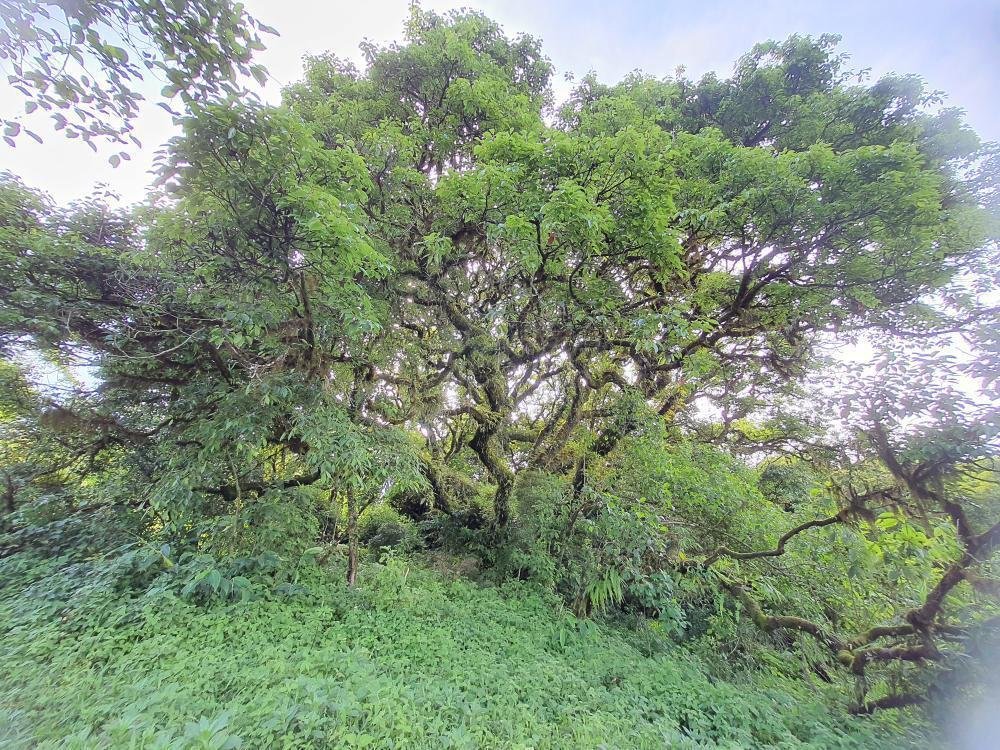
    In the village of Nongkynrih in Hima Khyrim, there stands a massive tree known as a "Sping Wait" tree, whose age is said to be very old. To this day, the voice and the sound of a weeping human being can be heard from it. This can be heard when there is the death of an elderly person or if there is a death caused by injury, with these persons being residents of the village. The weeping sound produced by the trembling leaves of the tree can be heard throughout the village.

    They say that the tree should not be disturbed nor hurt. There was once man who felt he had enough knowledge and know-how, so he declared the belief about the tree to be superstition. He took a "wait bnoh" which is a large bladed knife with a crooked head with the aim of cutting off one of the creeping plants that spread and grew on the tree. After this happened, it was told that this man could not urinate even when he desperately needed to. The man suffered horribly, that ultimately, he was forced to go to the tree and apologise to it so that he would be free of the affliction.

    "U Diengbah Ïam Briew" or "The Weeping Tree" feels like a cautionary tale of what can happen if we feel more powerful than nature. 🌲🌳

    The picture is of U Diengbah Ïam Briew located in Nongkynrih, Hima Khyrim. Khublei Shibun @bashngainrynjah for sending the picture!

    🟡 English translation by @speakyourroots

  • Tracing the course of Wah Umkhrah through Shillong city by Baston Singh Lyngdoh

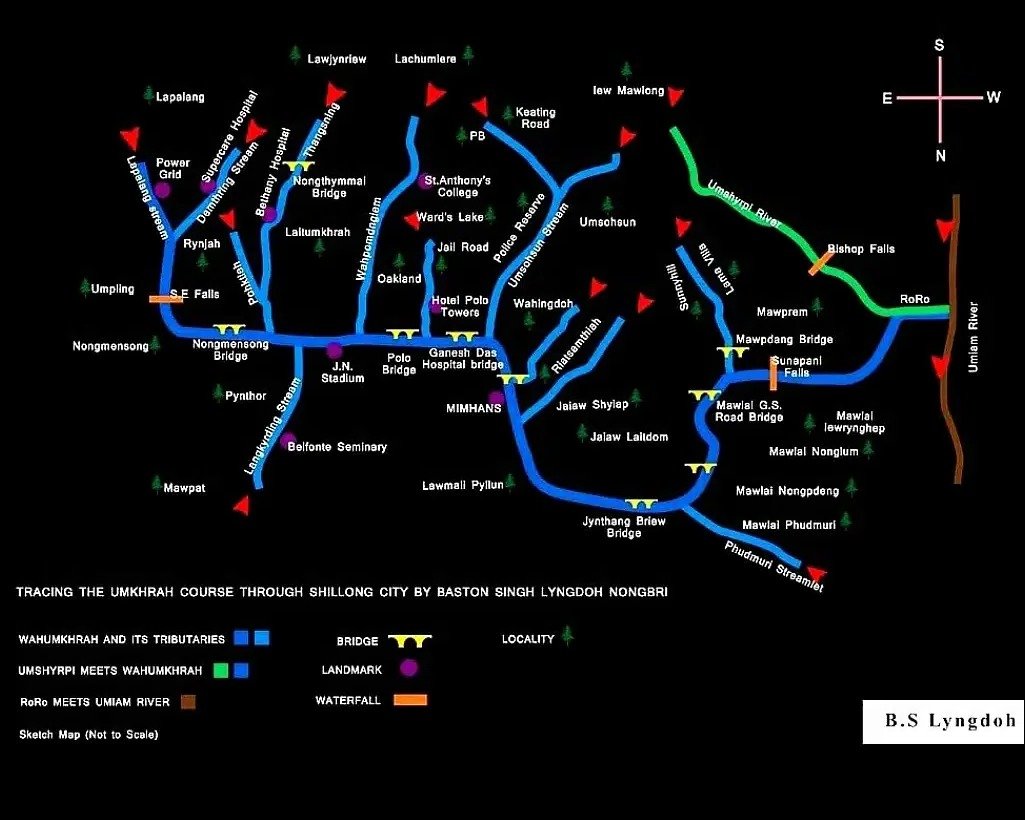
    This map showing the course of Wah Umkhrah has been drawn by Baston Singh Lyngdoh as part of the creative research for the production "Ngan Hiar Sha Wah" (I'm Going Down to the River) by Lapdiang Syiem and team under REFUNCTION 2020-2021 awarded by Goethe Institut/Max Mueller Bhavan, New Delhi.

    No part of this work may be reproduced in any form without the permission of the author. All material for this content has been researched by Baston Singh Lyngdoh.

    The tributaries of Ka Wah Umkhrah as shown by Baston Singh Lyngdoh (from left in the map) in "Ngan Hiar Sha Wah" are as follows:

    Wah Lapalang

    Urkaliar

    S.E. Falls

    Wah Demthring

    Wah Pohktieh

    Wah Thangsning

    Wah Pomdngiem

    Ward's Lake

    Umsohsun

    Wahingdoh

    Wah Golflink

    Polo

    Wah Mawpdang

    Wah Kdait

    Wah Langkyrding

    Wah Phudmawri

    Wah Roro

    Ka Wah Umkhrah is mostly an eyesore to us but imagine what it could be like if it was pristine and clear, like in the days of our grandparents! 🌅🌅 Please zoom to take a clearer look at the tributaries of Ka Wah Umkhrah.

    Khublei Shibun Baston S. Lyngdoh, @lapdiangsyiem and team for your tremendous work with highlighting the importance of Ka Wah Umkhrah! 🙏🙏

    Umkhrah River is one of the major perennial rivers originating from the foothill of Shillong peak and flows across the Shillong city from Northeast to Northwest direction and passes through some heavily congested localities viz. Nongthymmai, Rynjah, Lapalang, Umpling, Umkaliar, Nongmynsong, Polo, Wahingdoh, Jaiaw, Mawlai and Mawpdang areas. On its way the river is joined by many streams/drains which pass through some localities viz Nongrah-Poktieh, part of Mawlynrei, Nongrim hills, Laitumkhrah, Lachumiere.The Umkhrah River joins with Umshyrpi River at the northwest direction of Shillong city to form the Wah Ro-Ro. The Wah Ro-Ro finally discharges itself into the Umiam River, which is the main source of water to Umiam reservoir. (From https://megspcb.gov.in)

  • Nongwar village

    These pictures of Nongwar village have been sent by @dapp_theguyfromthehills 😀😀😀🌄🌄 Thank you for sending your beautiful pictures!

    Before we travel the world, let's travel our own homeland!

    @dapp_theguyfromthehills says "Nongwar is situated 18 kilometres from the Sub-district headquarter of Shella Bholaganj. The village has a population of 750 people and about 301 houses. Nongwar is surrounded by hills on three sides. The hills of Mawsynram and Nongtrai and the plains of Bangladesh can clearly be seen from the village."

  • “Ka Um Bad Ki Deiriti Ha Ka Meirisawkun” (Water and Culture In the Environment) (Volume II, 2008)

    Ïa kine la sot na ka lynnong "Ka Um bad Ka Tynrai ki Kyrteng Kur" (Water and Origin Of Clan Names) na ka kot Ka Um bad ki Deiriti ha ka Meirisawkun by Dondor Giri Nongkhlaw (2008):

    Katkum u Spiton Kharakor (1981) ha ka kot jong u "Ki Khun ki Ksiew a Hynñiewtrep" la shem ba don ki kur ba la ïoh kyrteng na ka um, ka wah, ka myn bad ka am.

    Ki kur ba la sdang da ka 'um' na khmat ki don khadlai kur bad kine ki long ka kur Umbah, Umblah, Umdong, Umdoh, Umdor, Umdung, Umyiap, Umladkur, Umlong, Umsong, Umsohbar, Umthlu bad Umwai.

    Ki kur ba la sdang da ka ktien 'wah' ki don khaddar kur bad kine ki long ka kur Wahksi, Wahksing, Wahlang, Wahlang mawleiñ, Wahlang pahsyntiew, Wahlang ryntathiang, Wahrait, Wahrih, Wahrit, Wahshah, Wahshrieh bad Wahspeh.

    Ki kur ba la sang da ka 'am' na khmat ki don shiphew kur bad kine ki long ka kur Amkhlaw, Amkhlow, Amksang, Amkoi, Amded, Amdep, Amora, Amse bad Amwai.

    Nangta sa ki kur ba sang da ka 'myn' ki don jin haduh arphew hynñiew kur bad kine ki long ka kur Mynbah, Mynbon, Mynkseh, Mynieng, Mynjar, Mynnar, Myniar, Mynrap, Mynriang, Mynrieng, Mynriem, Mynring, Mynsang, Mynskut, Mynsni, Mynso, Mynso-shangpung, Mynsong, Myntdu, Mynteng, Mynthang, Mynthliang, Mynthlong, Mynthlu, Mynthong, Mynthui bad Myntlang.

    Ban sngewthuh ïa kane ka jingïasnoh ka kyrteng kur bad ki jnit ka mariang bad ruh bad ki deiriti ngin ïa shim tang kawei ar tylli ki kur kum ka nuksa.Tharai, lada ngi shim da ka kur Amkhlaw, Umyiap, Wahksing bad Mynthlong ka biang ban ïa batai bad pyni nia.

    Kat kum ka tyllong kyntien ka kur Amkhlaw ka long ka kyntien ba la oh na ka 'am' bad 'khlaw'. Kane ka pyni ba ka kur ka don jingïadei bad ka um bad ka khlaw. Baroh ar, ka um ne am bad khlaw, ki dei ki jnit ka meirisawkun, kaba mut, lehse, ba ka kur Amkhlaw ka long ka kur kaba la buhai nyngkong ha ka jaka ba jan ka um bad ka khlaw.

    Ka kur Umyiap, katkum ka tyllong kyntien, ka thew ka um bad u shyiap kiba baroh ar ki long ki jnit ka meirisawkun, ha kaba lah ban long ba kine ki kur ki la buhai nyngkong ha ki jaka ba don ka um bad u shyiap.

    Nangta, ka kur Wahksing, katkum ka tyllong kyntien, ka long ka kur ba la ïoh kyrteng na ka wah bad ka ksing. Hangne, ka wah ka long ka jnit jong ka meirisawkun, katba ksing pat ka dei ka bynta jong ka deiriti. Kumta kane ka kur ka la oh kyrteng kur na ka wah bad ka ksing. Hangne ksing ka thew ïa ka deiriti put deiriti tem.

    Nangta ka kur Mynthlong, ka pyni ba ka kur ka long kaba pyndonkam um, kaba pyndonkam thlong ruh. Hangne thlong ka thew ïa ka deiriti dung kum ka dung kba, dungnei, dungsoh bad ter ter. Namarkata ngi donkam ban nang ïaleh ban wad ban thud ïa ki kyrteng, ïa ki jingmut bad thymmei ki kyrteng kur.

    The following is taken from the chapter entitled "Ka Um bad ka Tynrai Ki Kyrteng Kur" (Water and Origin of Clan Names) from the book Ka Um bad ki Deiriti ha ka Meirisawkun by Donor Giri Nongkhlaw (2008).

    Nongkhlaw cites Spiton Kharakor (1981) from his book Ki Khun Ki Ksiew u Hynñiewtrep where he discusses how some clans received their names from the words "um", "wah", "myn" bad "am".

    The clan names that start with the word "um" are 13 in number and some of them are Umbah, Umsong, Umyiap and Umthlu.

    The clan names that start with the word "wah" are 12 in number and some of them are Wahlang, Wahrait, Wahshrieh and Wahksing.

    The clan names that start with the word "am" are 10 in number and some of them are Amkhlaw, Amkoi, Amdep and Amksang.

    Finally, the clan names that start with the word "myn" are 27 in number and some of them are Mynring, Mynsong, Mynrieng and Mynthlong.

    To understand the connection between the clan name and the elements of nature, Nongkhlaw looks at four clans to discuss this.

    The clan name Amkhlaw comes from the words "am" and "khlaw". This shows that this clan must have settled near "um" or "am" which is water and "khlaw" which is forest.

    The clan name Umyiap refers to "um" that is water and "shyiap" which is sand. This shows that the clan must have settled in a place which has water and sand.

    The clan name Wahksing comes from the words "wah" which means river and "ksing" which means drum. "Wah" is connected to the environment and "ksing" is related to the tradition of music.

    Finally, the clan name Mynthlong comes from the words "myn" which is connected to the use of water and "thlong" which is the traditional mortar for pounding and grinding used by the Khasis. The mortar is a symbol for the traditions of pounding rice, sesame seeds, fruits and others.

    Ka Um Bad Ki Deiriti Ha Ka Meirisawkun (Water and Culture On the Environment)(Volume II, 2008) by Dondor Giri Nongkhlaw is such an interesting book with great information on the intrinsic value of water and the environment to Khasis! 🌅🌅

    🟡 English translation by @speakyourroots
  • The river Phot

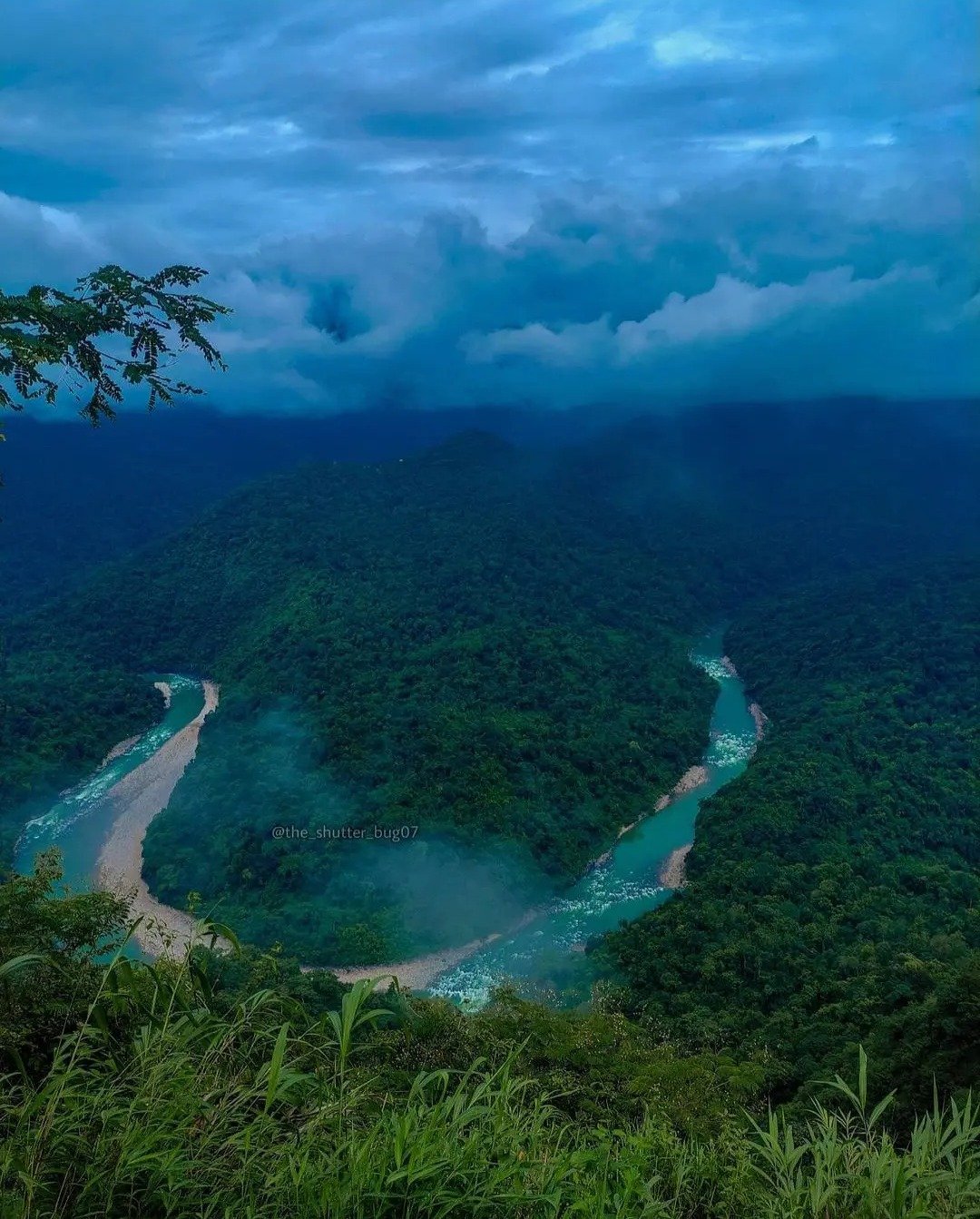
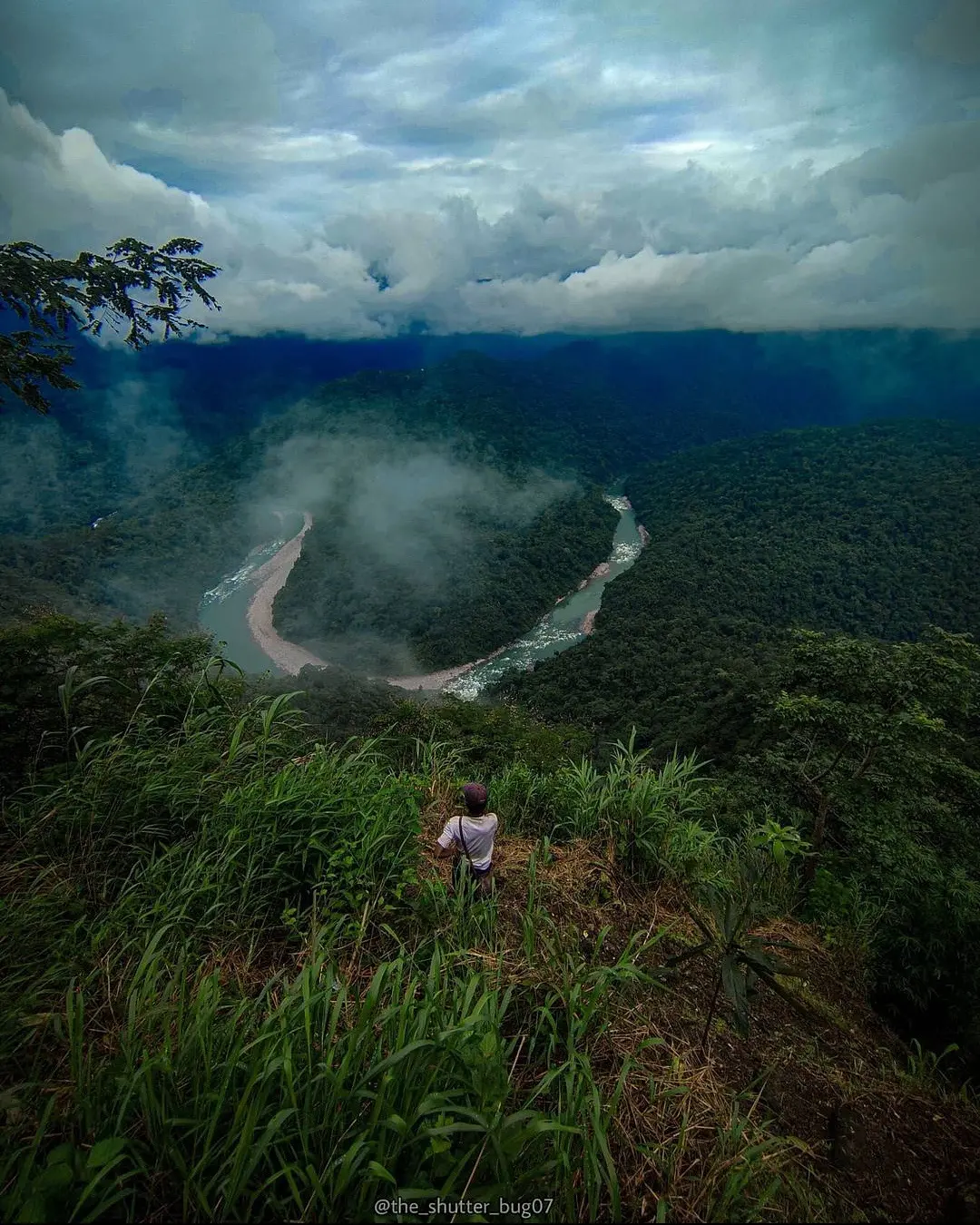
    These beautiful pictures have been sent by @the_shutter_bug07 😃😃 Thank you!

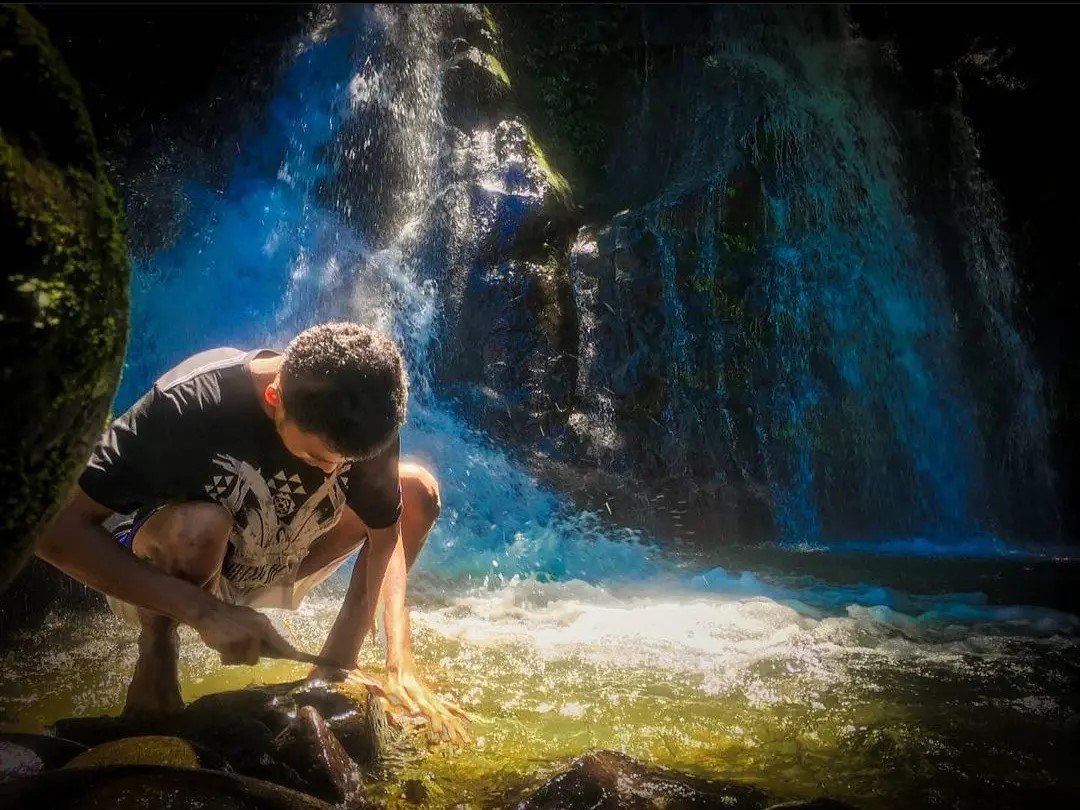
    He says about the river: "Ngi shait ong ka Phot. Ka dei ka wah ba wan na Mawsynram, na Nohkalikai, Daiñthlen…lai pateng khohsiew. Ka iaid lyngba ka shnong Nongriat bad ka poi ha kjat Nongwar bad ka leit mih sha Shella."

    "We call the river Phot. It comes from Mawsynram village, from Nohkalikai and Daiñthlen falls…It passes through the village of Nongriat and then Nongwar and finally flows to Shella."

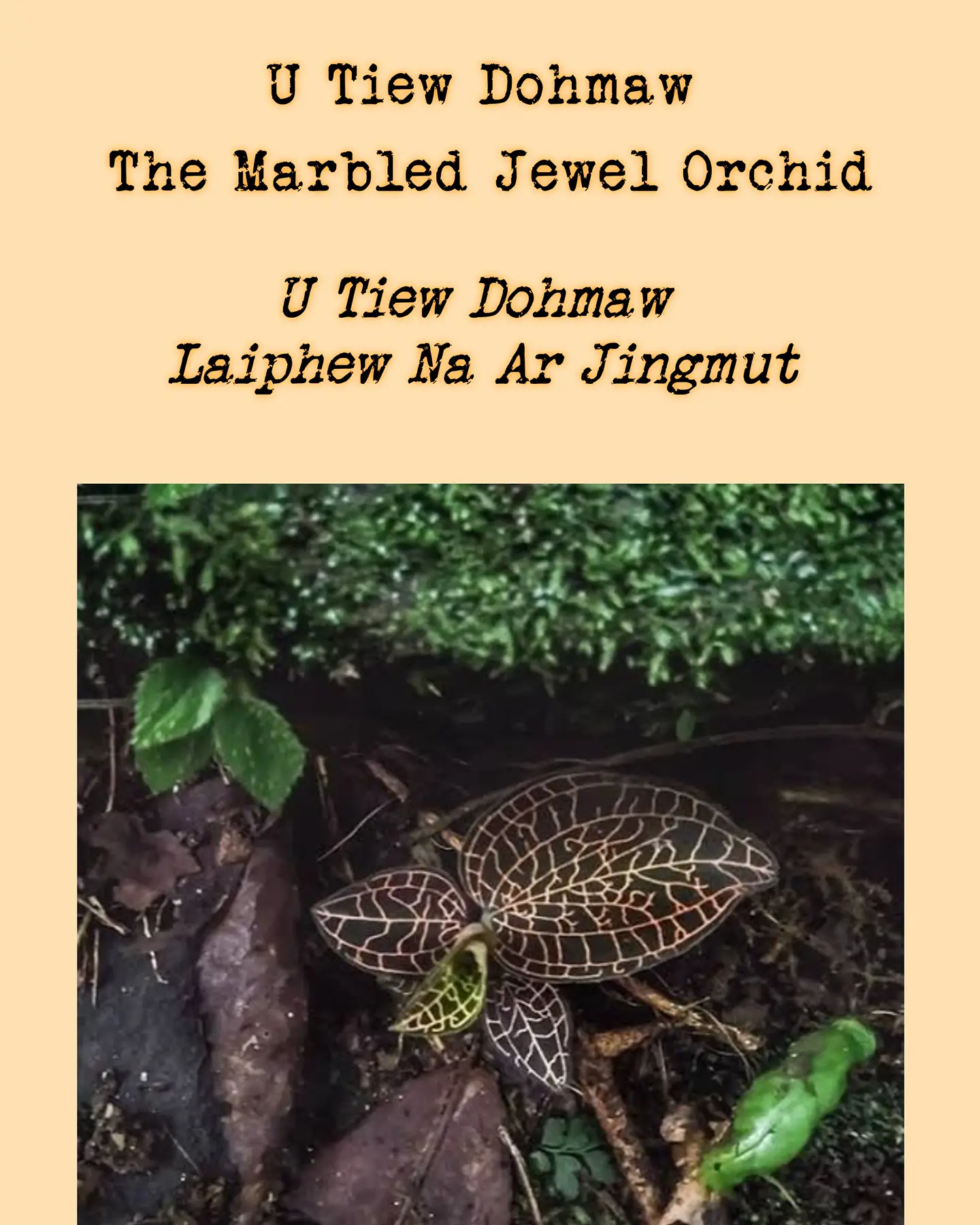
  • U Tiew Dohmaw or The Marbled Jewel Orchid: Tiew Dohmaw Laiphew Na Ar Jingmut

    U Tiew Dohmaw u dei u kynja tiewsla uba proh itynnad ki jingthoh ha ki sla jong u. U dei u syntiew uba rit bha, ki sla ki lam jngum ka rong bad thoh rong ksiar. Ka scientific name jong U Tiew Dohmaw ka dei Anoectochilus brevilabris.

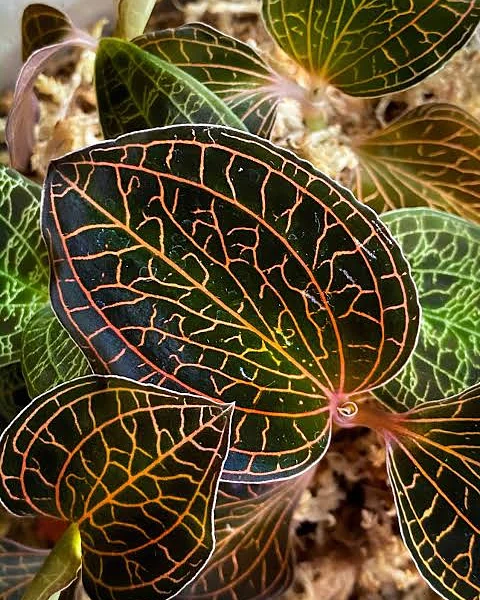
    U Tiew Dohmaw or the Marbled Jewel Orchid is a small flower which is dark green in colour with contrasting goldenish marks like veins on it. The scientific name of U Tiew Dohmaw is Anoectochilus brevilabris.

    U Tiew Dohmaw grows under the shade of trees which is typical of where orchids grow and has to be searched for properly if we are to find it. Its beauty is a rare treasure. U Tiew Dohmaw has been mentioned by Khasi Poet Laureate U Soso Tham and by popular Khasi singer and composer (L) Skendrowell Syiemlieh.

    Ka don ka jingong ha Khasi kaba ong "U Tiew Dohmaw laiphew na ar jingmut". Kane ka thew ïa u briew uba khraw pyrkhat, uba proh jabieng, uba stad bad shemphang bad uba long ruh uba sngewrit bad kham rieh na ka pyrthei. Namar kata kum une u jait briew u syriem ia U Tiew Dohmaw.

    There is a Khasi phrase which goes "U Tiew Dohmaw laiphew na ar jingmut". The saying symbolically refers to a person who is a great thinker of high intelligence and wisdom but who is humble and unassuming at the same time, thus resembling U Tiew Dohmaw.

    U Tiew Dohmaw or the Marbled Jewel Orchid 💛💚💛💚💛💚 A rare and beautiful flower, it is found in Meghalaya, Sikkim, Assam, Nepal and Vietnam.

    It is an orchid with a saying of its own in Khasi: "U Tiew Dohmaw Laiphew Na Ar Jingmut".

    🟡Slide 1: https://www.picuki.com/tag/natureitsbest

    🟡Slide 5: https://www.doodlebirdterrariums.com/listing/753798713/free-shipping-terrarium-plant-jewel

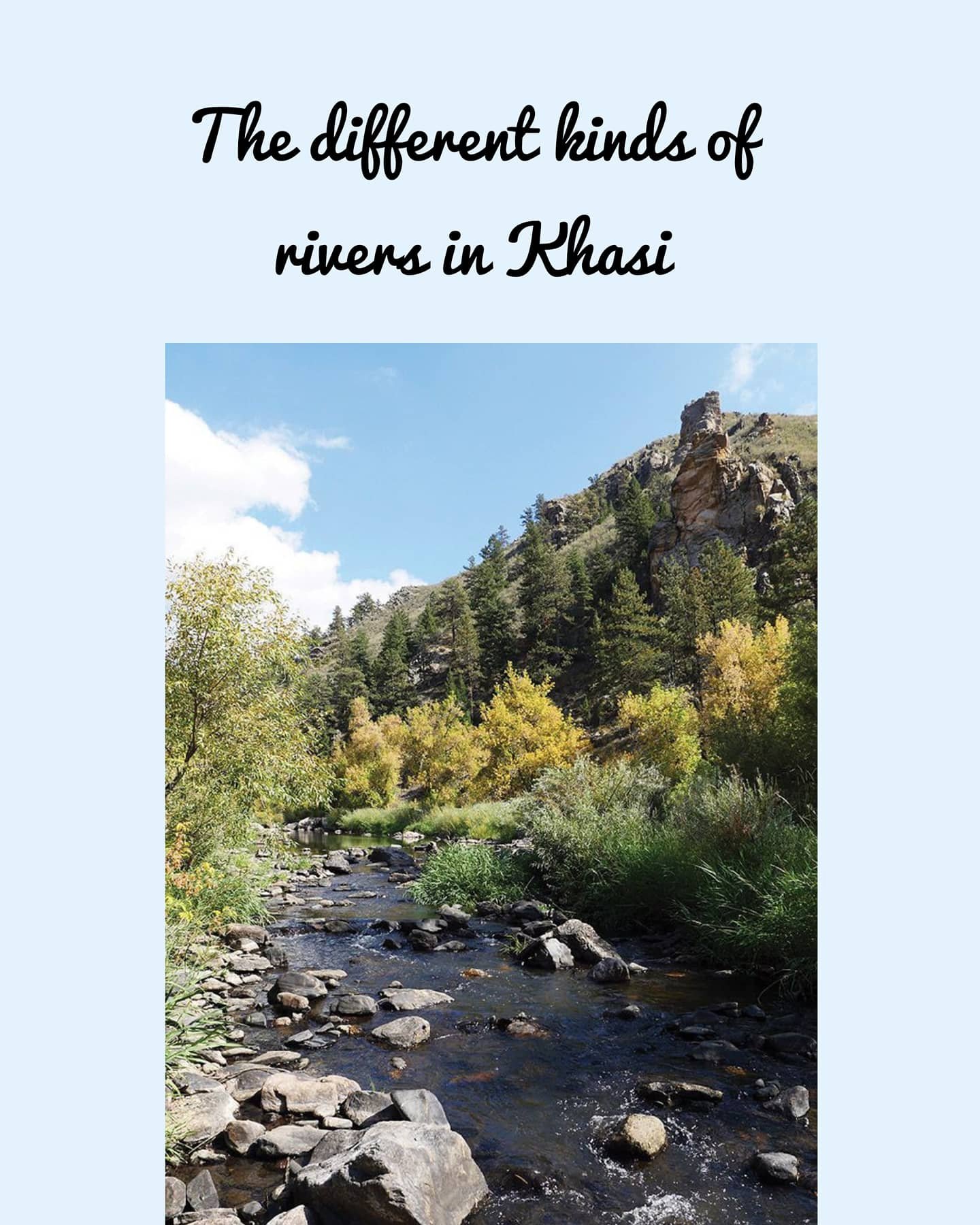
  • The different kinds of rivers in Khasi

    "Wah" is the usual name for a river or a stream.

    "Wahbah" is a large river.

    "Wahkaba" is a roaring and raging river which flows rapidly during the summer in Sohra.

    "Wahduid" is a streamlet or a rivulet.

    "Wahrupa" is a river whose water shines and shimmers like silver in the sunlight.

    In fact, a part of the Umngot river in Meghalaya is called "rupa tylli" as it is likened to a broad, flat silver necklace work by Khasi women.

    Our rivers are so many, so beautiful and so precious. Yet in Shillong, the most well known "Ka Wah Umkhrah" is perhaps a dying river. We made a hue and cry about the trees being cut but what will we do about our rivers in and around Shillong city? 🏞️🏞️

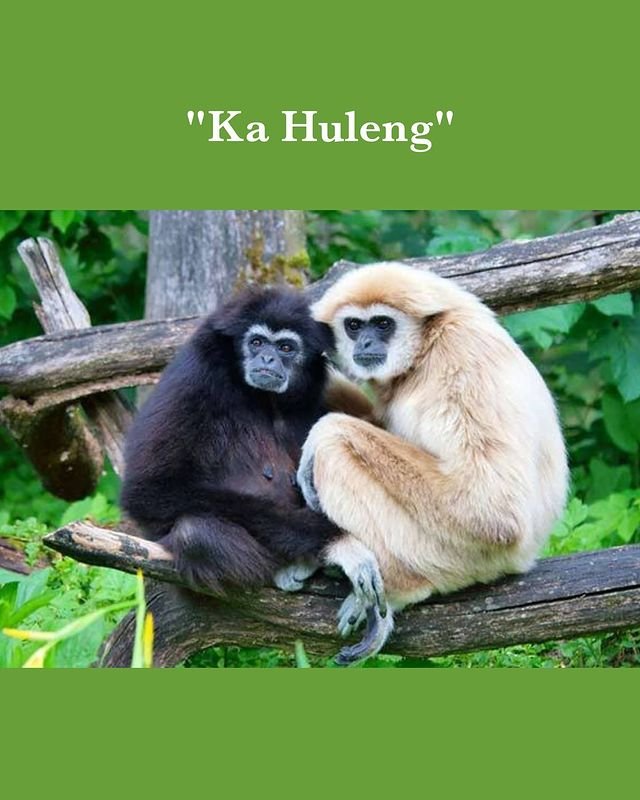
  • Ka Huleng

    The village of Phlangwanbroi which is located in Mawsynram, Tehsil, of East Khasi Hills District, Meghalaya is home to the Western Hoolock Gibbon or what we call "Ka Huleng" in Khasi. Hoolocks are three primate species of genus Hoolock in the Gibbon family, Hylobatidae, native to eastern Bangladesh, Northeast India, Myanmar, and Southwest China. Hoolock gibbons are India's lone ape species. They are both rare and endangered, found only in the forests of Northeast India.

    Phlangwanbroi, four neighbouring villages and an adjoining community forest make up the Khasi native state of Hima Malai Sohmat, one of 25 traditionally ruled Khasi enclaves in Meghalaya that are formally recognised by the Indian Constitution. The 40-sq-km community forest of Hima Malai Sohmat has been home to western hoolock gibbons since "time immemorial", villagers say. The males are black with white brows, while the females have a copper-brown fur, which is darker at the chest and neck. White rings around their eyes and mouths give their faces a mask-like appearance.

    With long and slender arms, hoolock gibbons are swift creatures, swinging from tree to tree at speeds upto 55 km/hr, covering upto six meters in just one swing! Hoolocks are famous for their emotive call that echoes across the forest which is used to attract mates. In Phlangwanbroi, the morning starts with the melodious series of whoops, hoots and tones of "Ka Huleng" that rise in a crescendo. The residents refer to it as "jingrwai huleng" – the hoolock gibbon's song. There is a local saying that as long as you hear the gibbon's song, you are within the boundary of Hima Malai Sohmat.

    "Ka Huleng" or the Western Hoolock Gibbon is found in the village of Phlangwanbroi, Mawsynram, Tehsil in East Khasi Hills District. This is the only ape species in India and we are extremely lucky to have it in our state. 😃😃

    Sources:

    https://www.google.co.in/amp/s/amp.scroll.in/article 926439in-meghalaya-tribal-communities-join-hands-to-ensure-that-the-hoolock-gibbons-song-stays-alive

    https://en.m.wikipedia.org/wiki/Hoolock_gibbon

    https://www.wwfindia.org/about_wwf/priority_species/lesser_known_species/hoolock_gibbons_/

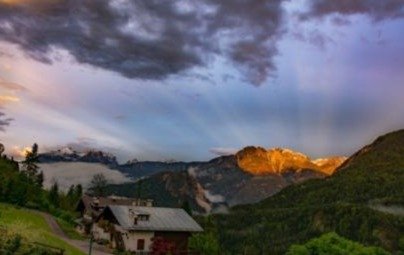
  • Thad kba u chrieh

    Esra says:

    This is an old narration of the Bhois which literally translates to "the monkey is drying his paddy".

    It is used to describe a natural phenomenon wherein the sunbeams diverge through the clouds and fall focally on the hilltop; while the remaining areas are without sunshine and dark. This is when old people say, the monkey is drying his harvested paddy on that hilltop during this time.

    "Thad kba u Chrieh" 🐵🐵🌾🌾 sent by @esra_syiem 😃😃 This is a Bhoi saying which is translated into the monkey is drying his paddy. As explained by Esra, this saying owes its origin to the natural phenomenon of the sun's rays hitting a specific area of a hilltop while other parts remain dark.

    Thank you for another interesting entry! And as Esra says it's #justabhoithing 😄😄