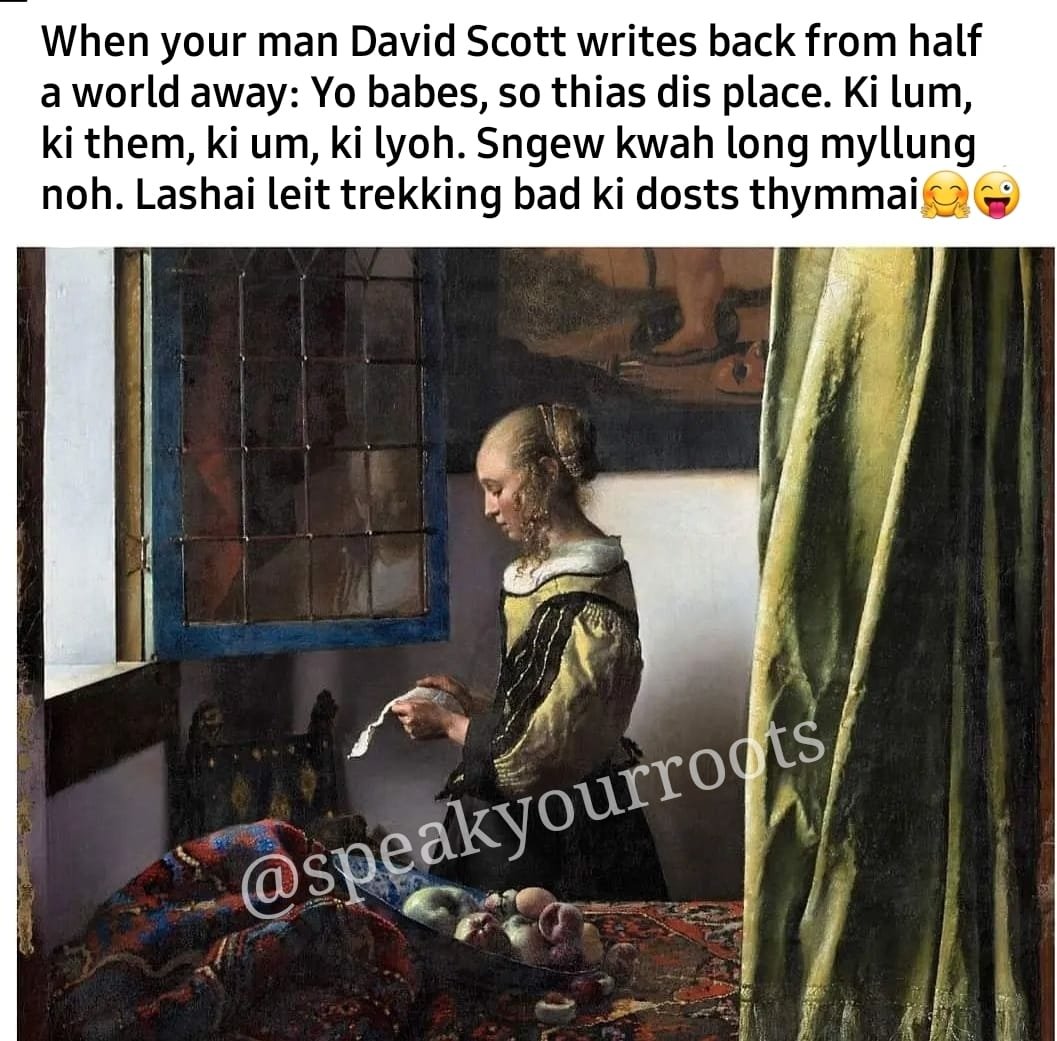
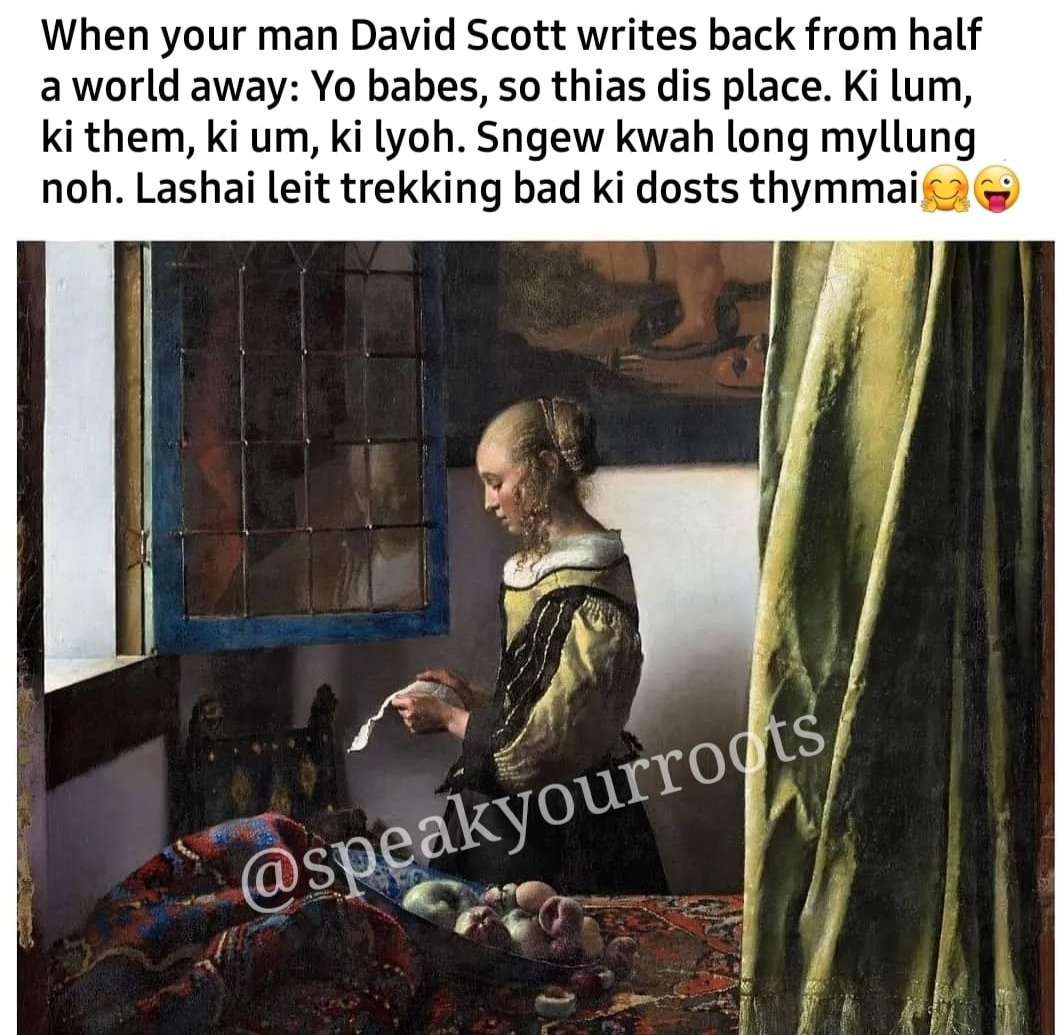
For all you hard core trekkers! 🏞️🌄🌦️🌥️ If David Scott wrote a letter to his wife 😂😂😂
Ha ka jaka ban leitkai jngai sha ki ri ka pyrthei, dang bun bah ki jaka kiba ithiang itynnat shisha kiba ngi dei ban ïohi ha ka ri la jong!
For all you hard core trekkers! 🏞️🌄🌦️🌥️ If David Scott wrote a letter to his wife 😂😂😂
Ha ka jaka ban leitkai jngai sha ki ri ka pyrthei, dang bun bah ki jaka kiba ithiang itynnat shisha kiba ngi dei ban ïohi ha ka ri la jong!
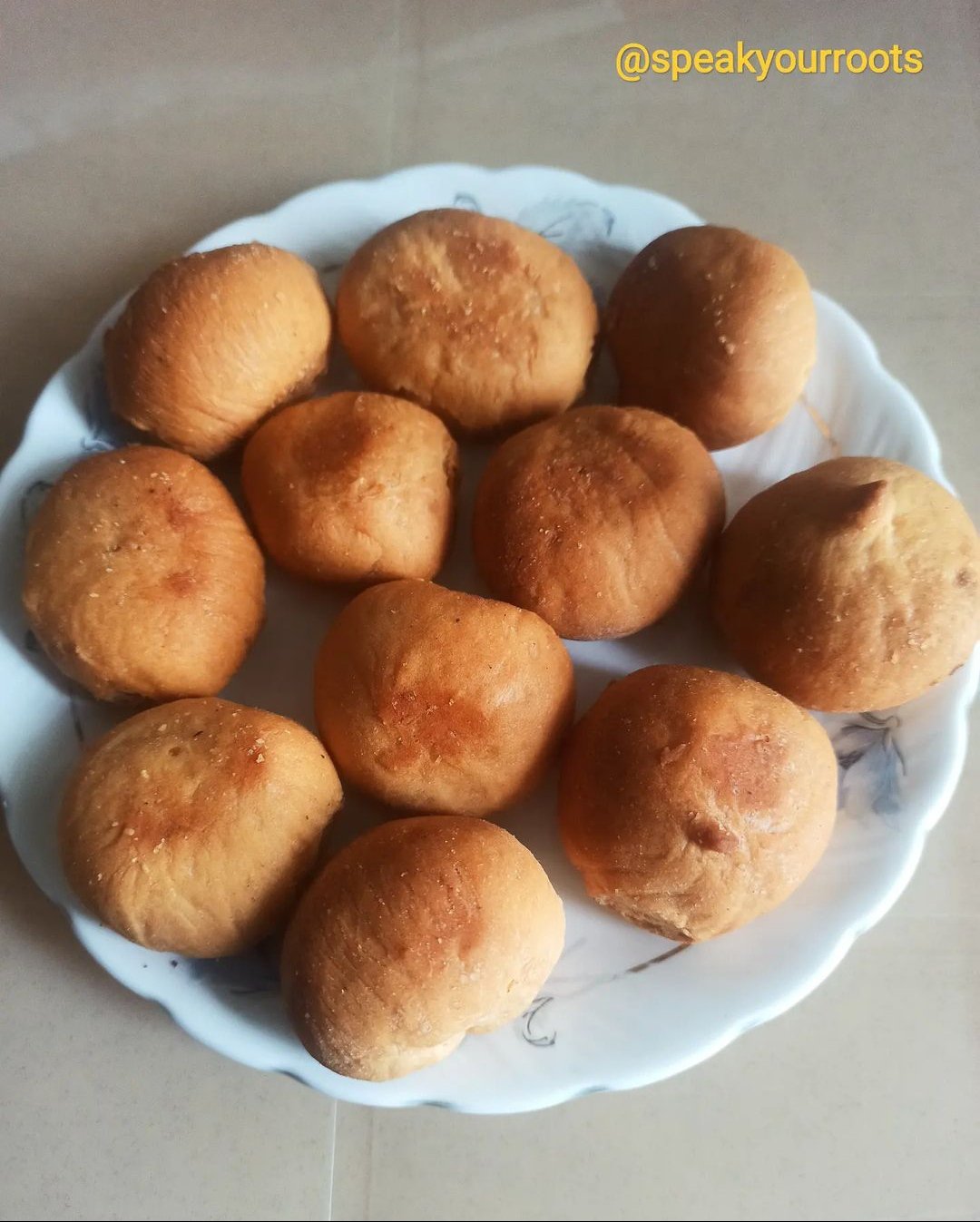
Phi lah ïa dep dih sha? 😄☕
Kine ki dei ki jingbam dih sha kiba ngi ju khot "Pyllon Shroiñ". Lada dih tang ka sha saw bad kine ruh, katno ka dap ka mynsiem 😌😌 Ka jingkhlaiñ jong ka sha saw bad ka jingiwbih, ka jingshroiñ jong ki pyllon shroiñ ki pynkynmaw ïa ki nohphaisngi ksiar bad i Meiieit bad Paieit, katba ngi dang ïa dih sha. 🌦️❤️✨
Have you had your evening tea? 😄☕
These are Khasi tea snacks called "Pyllon Shroiñ", round toasts whose name literally translates into "Round Crunchies" 😄😄 What joy it is to eat these round crunchies with a cup of red tea. The strong tea and the flavour and crunch of the toasts reminds me of those golden afternoons with my grandparents as we sipped our tea 🌦️❤️✨
You can get "Pyllon Shroiñ" or "Round Toast" at @the.ec.restaurant 😄

Mano ba kynmaw ïa ka jingrwai "A B K D" jong i Bah Skendrowell Syiemlieh? 😄 Ngi leh sawangka da kane ka jingrwai ha skul mynshuwa.
Who remembers the "A B K D" song of Bah Skendrowell Syiemlieh? 🎶🎶🆎 We performed a skit with this song in school.
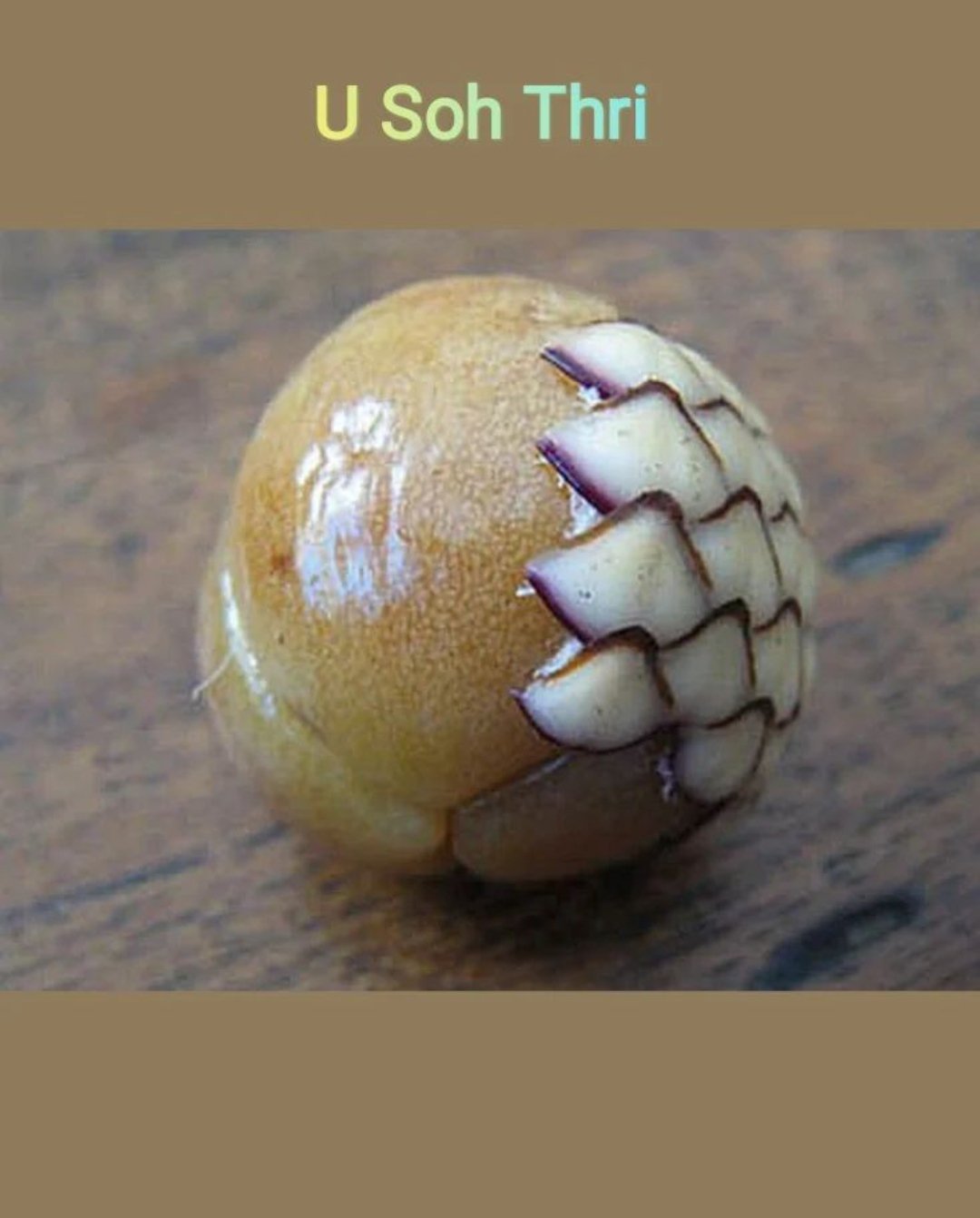
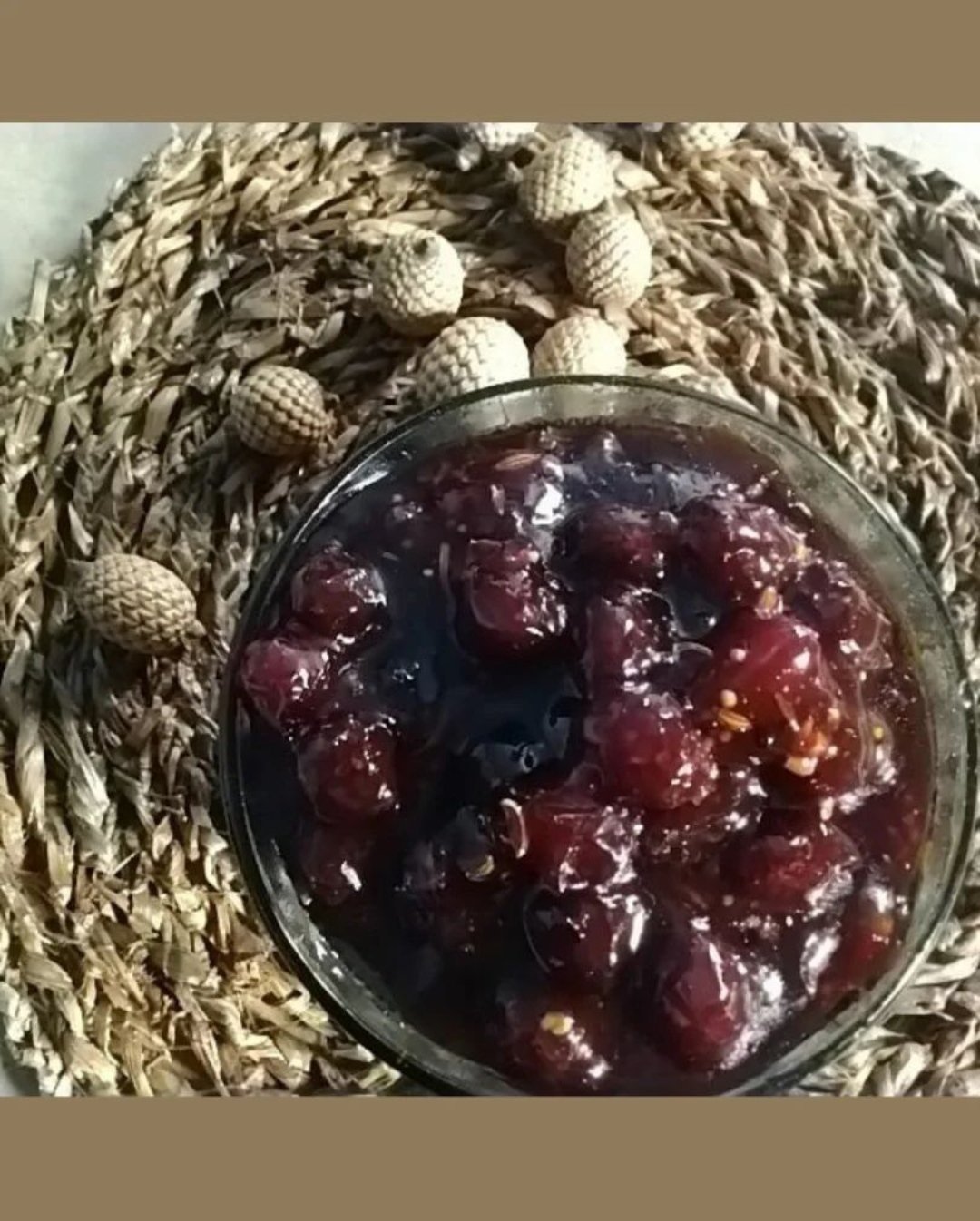
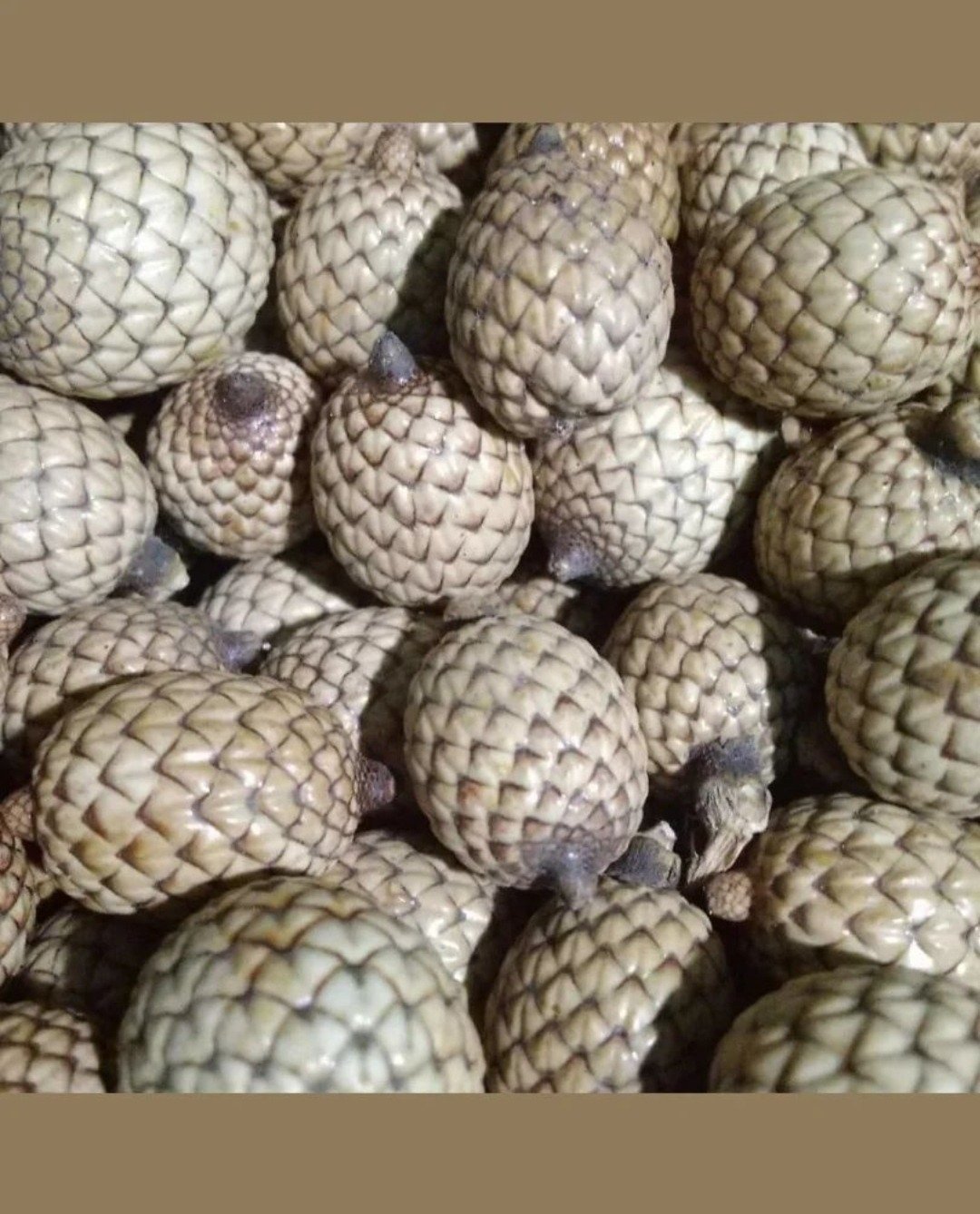
Has anyone eaten this fruit? 😄 It is called "Sohthri" in Khasi and its scientific name is "Calamus manillensis" 🍍🥭🍎 "Sohthri" is known to be quite sour but once you get used to it, it's a great summer fruit!
Khublei Shibun @maggie_arie_nongrum for sending this! 😄🙏
Slide 2 and Slide 3: @maggie_arie_nongrum
Ban siew kylliang shisha ngim lah
Da lei lei ruh ïa phi
Mynsiem phim hun kum u Rangbah
Phi wad ki lad lynti.
Mynsiem basbun ki paw ha phi
La jingeh khia ki ban
Na ki phim ai lad ba kin tan
Ban shu iehnoh ïa ngi.
Ki riat ki ram ki krem phi rung
Ïalade hi kheiñ duh
Ki shiah ba nep ia phi ki dung
Katta phi hem shuh shuh.
La buit la bor katba don ei
Da mynsiem ieit phi bet
Katno phi kmen ba kam la dep
Dak thoh Khasi phi sei.
-Kyrshan W Mawlong
An original Khasi poem on Thomas Jones by @kyrshan_611 📝📝 Khublei Shibun @kyrshan_611 for sending the poem! 😄🙏
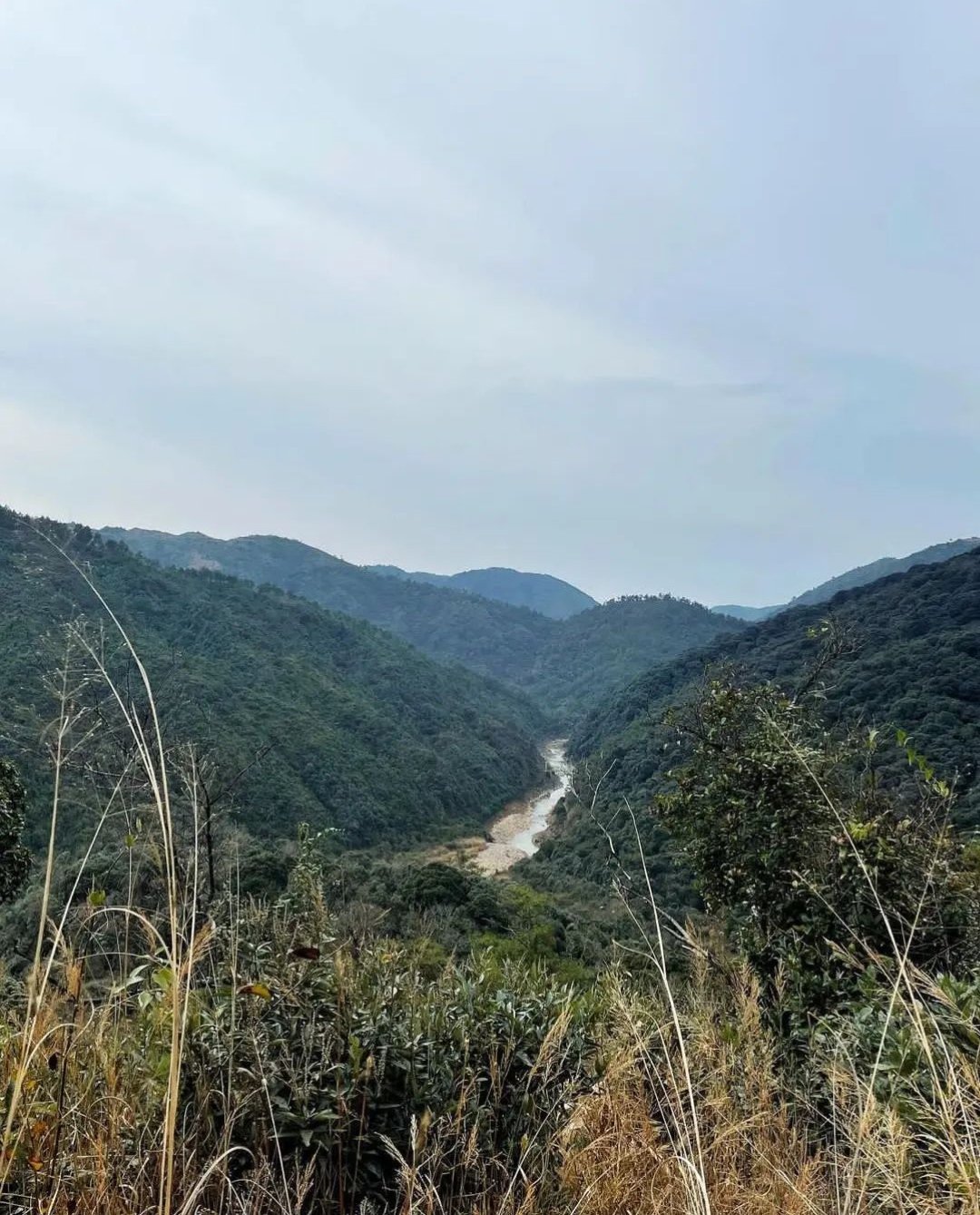
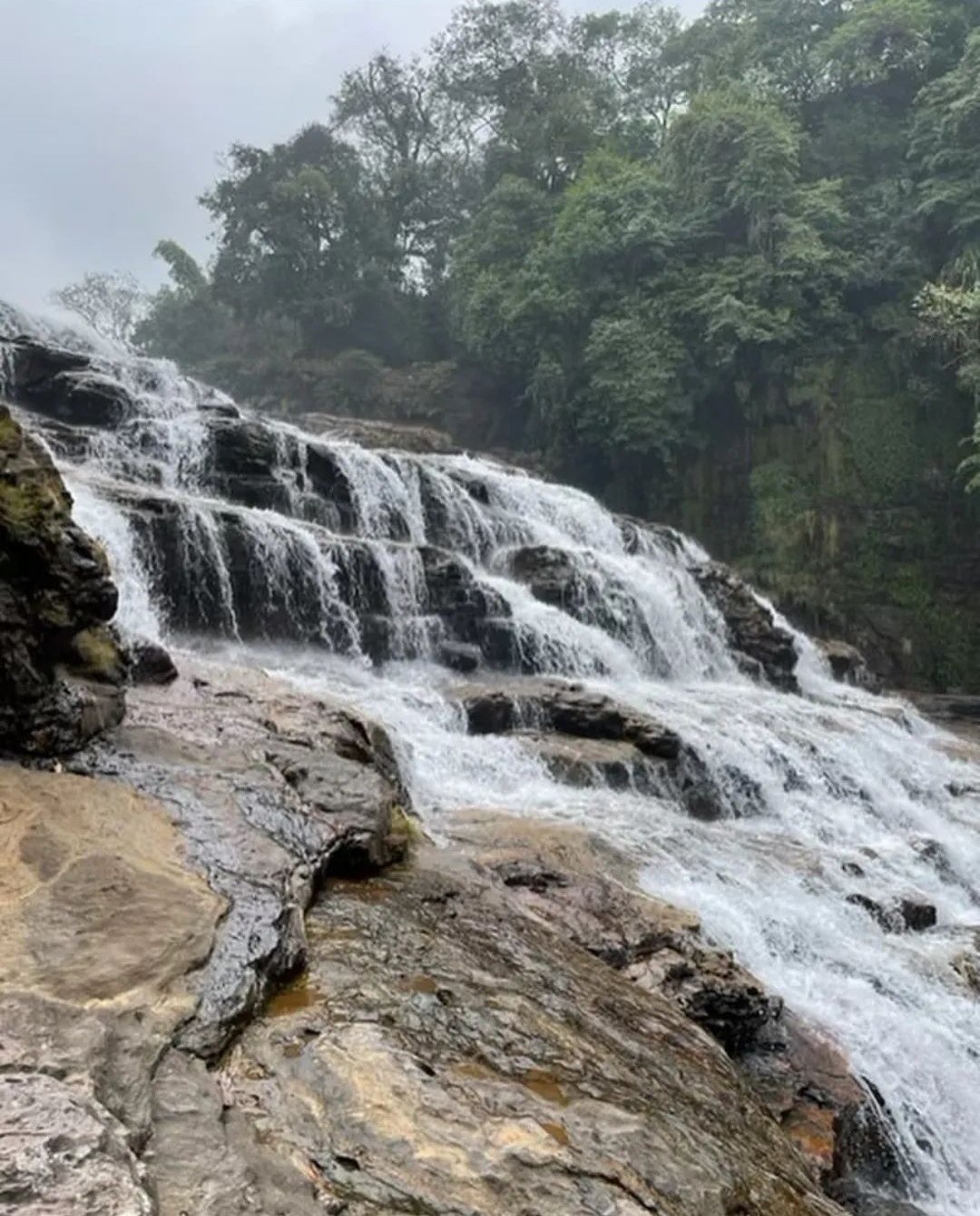
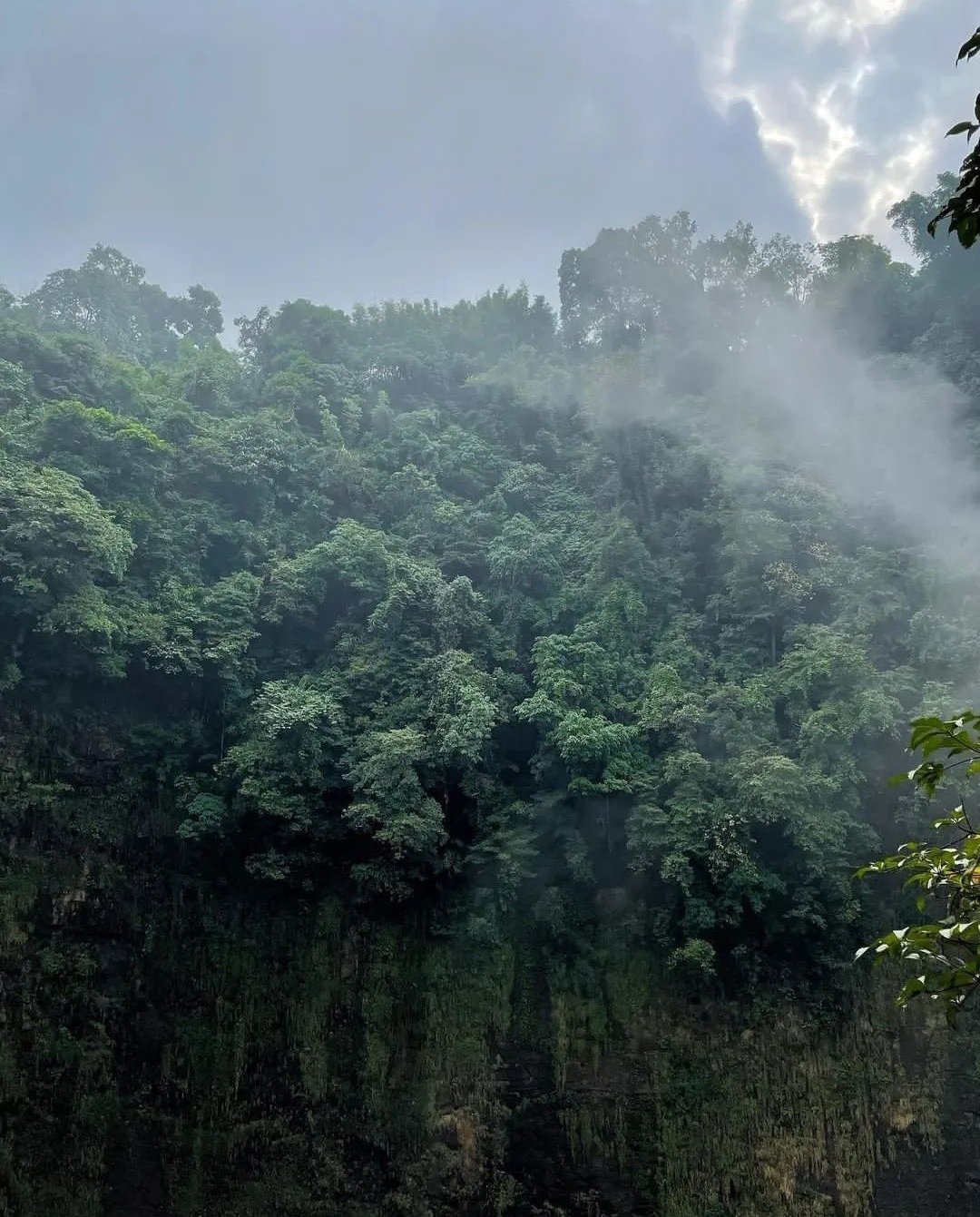
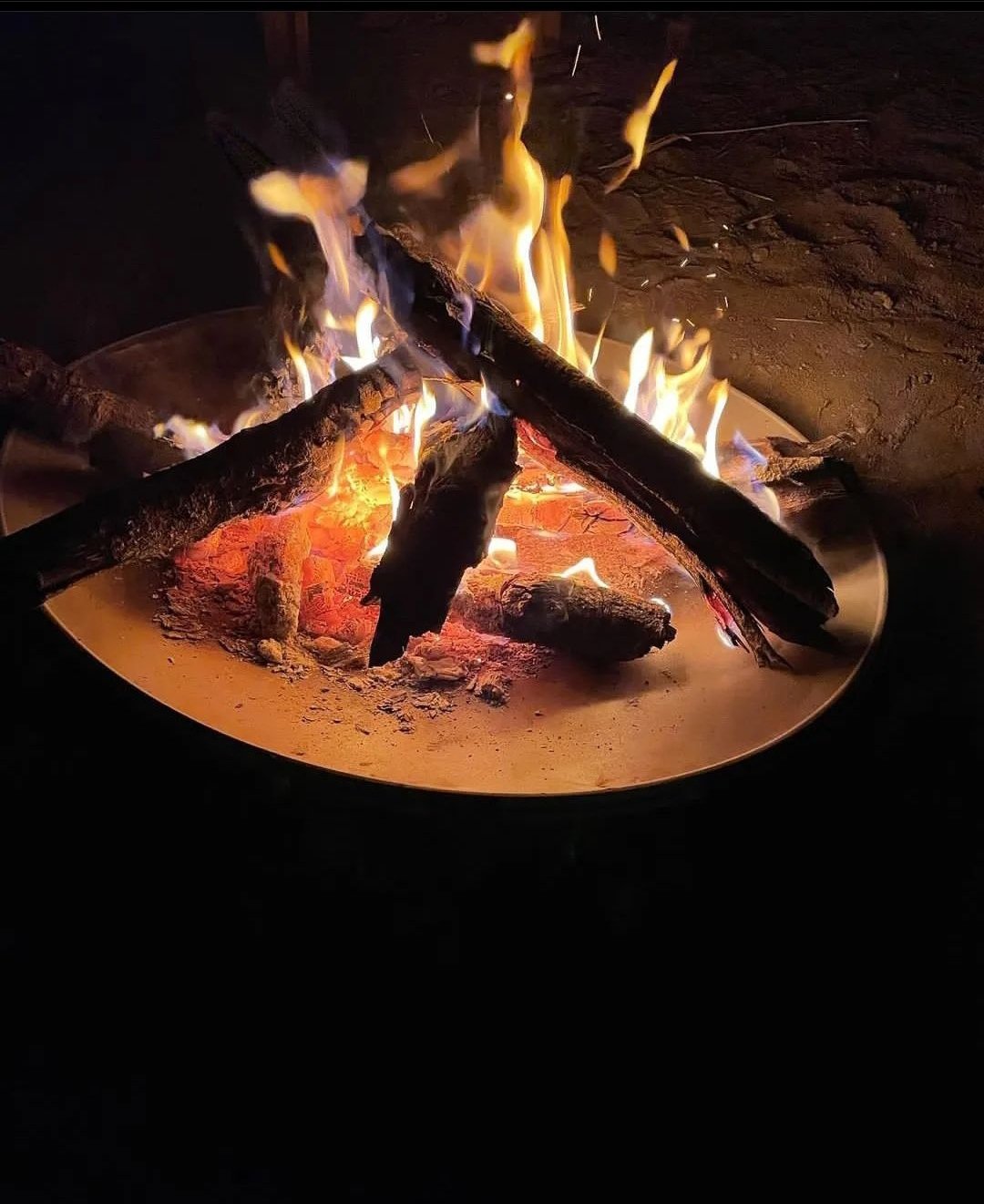
How do I explain the word? "Ka ktien".
Say it. Out loud. Ka ktien. The first, a short, sharp thrust of air from the back of your throat. The second, a lift of the tongue and a delicate tangle of tip and teeth.
For I mean not what's bound by paper. Once printed, the word is feeble and carries little power. It wrestles with ink and typography and margins, struggling to be what it was originally. Spoken. Unwritten, unrecorded. Old, they say, as the first fire. Free to roam the mountains, circle the heath, and fall as rain.
We, who had no letters with which to etch our history, have married our words to music, to mantras, that we repeat until lines grow old and wither and fade away. Until they are forgotten and there is silence.
How do I explain something untraceable? The perfect weapon for a crime. Light as pine dust. Echoing with alibis. Conjuring out of thin air, the ugly, the beautiful, the terrifying.
Eventually, like all things, it is unfathomable. So, how do I explain?
Perhaps it's best, as they did in the old days, to tell a story.
……………………….
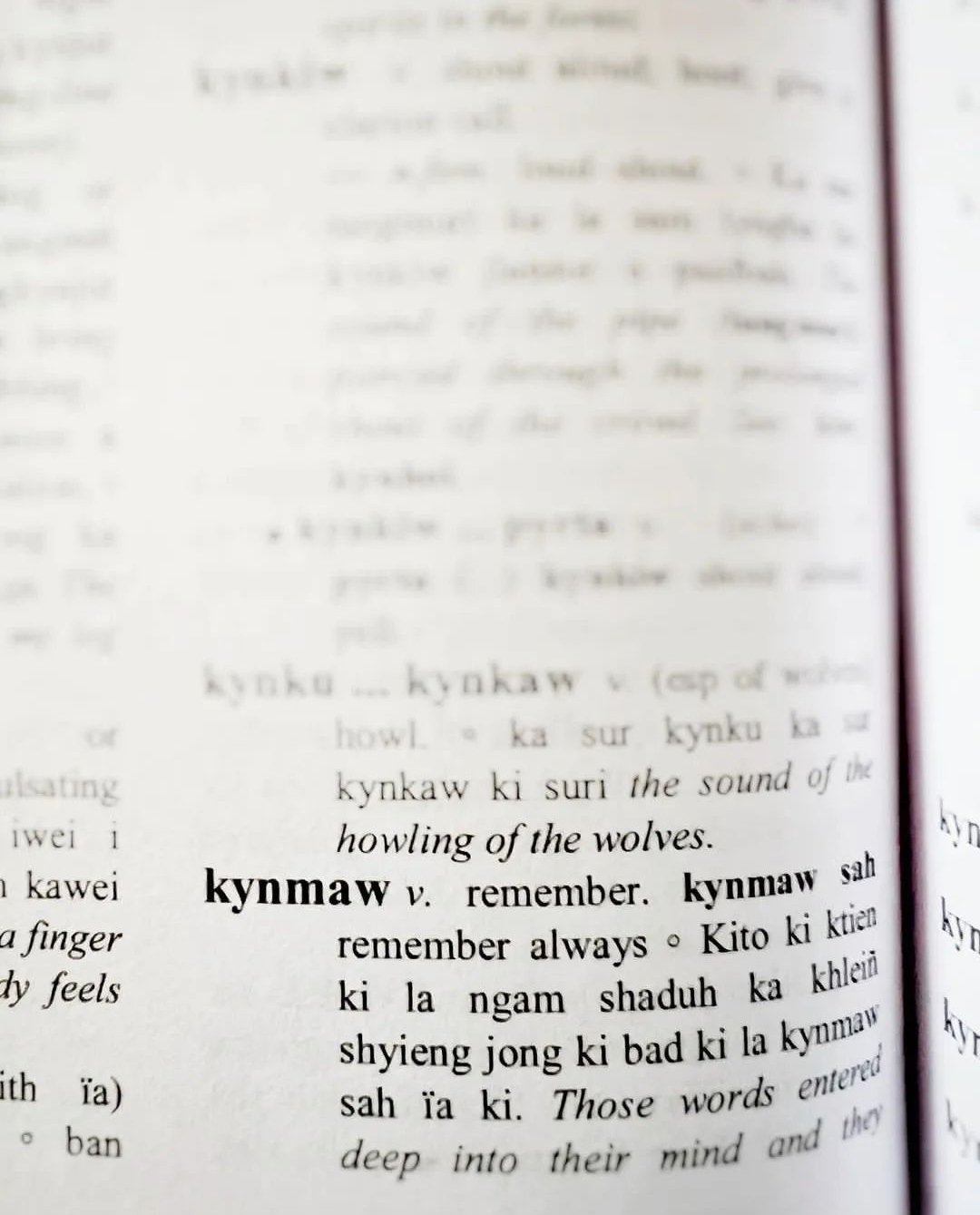
I was asked recently, what's your favourite word in Khasi? Usually, I find "favourite" questions very difficult–favourite book, song, movie. So many, I reply helplessly, it's impossible to pick just one. But not this time. It came to me easily, immediately, and while there are many delicious words in Khasi (rympei, the hearth; 'lap praw praw, rain on a tin roof), this one is closest to my heart.
Kynmaw.
To remember.
And not merely because of its rich and resonant meaning, but also because of its etymology. For the longest time, the people of these hills nourished an oral culture–one replete with song and story–and while there were attempts to "give" the languages here a script (using the Bengali alphabet), it was the British missionaries who succeeded. In particular a missionary named Thomas Jones, who travelled to Sohra in 1841, at a time when conversion to Christianity was at its slow beginning. What would help was to disseminate the word of God through the Bible–except how to publish an edition in a scriptless language?
Today, in Meghalaya, is Thomas Jones Day. And so we remember him. For his diligence and good deeds, of which there were many–how complicated are our colonial histories!–but I choose to remember also how the languages here, at heart, are languages of the wind, the
mountains, and waterfalls and forests. How they once sprung from land and tongue and remained untethered to page and pen and ink.
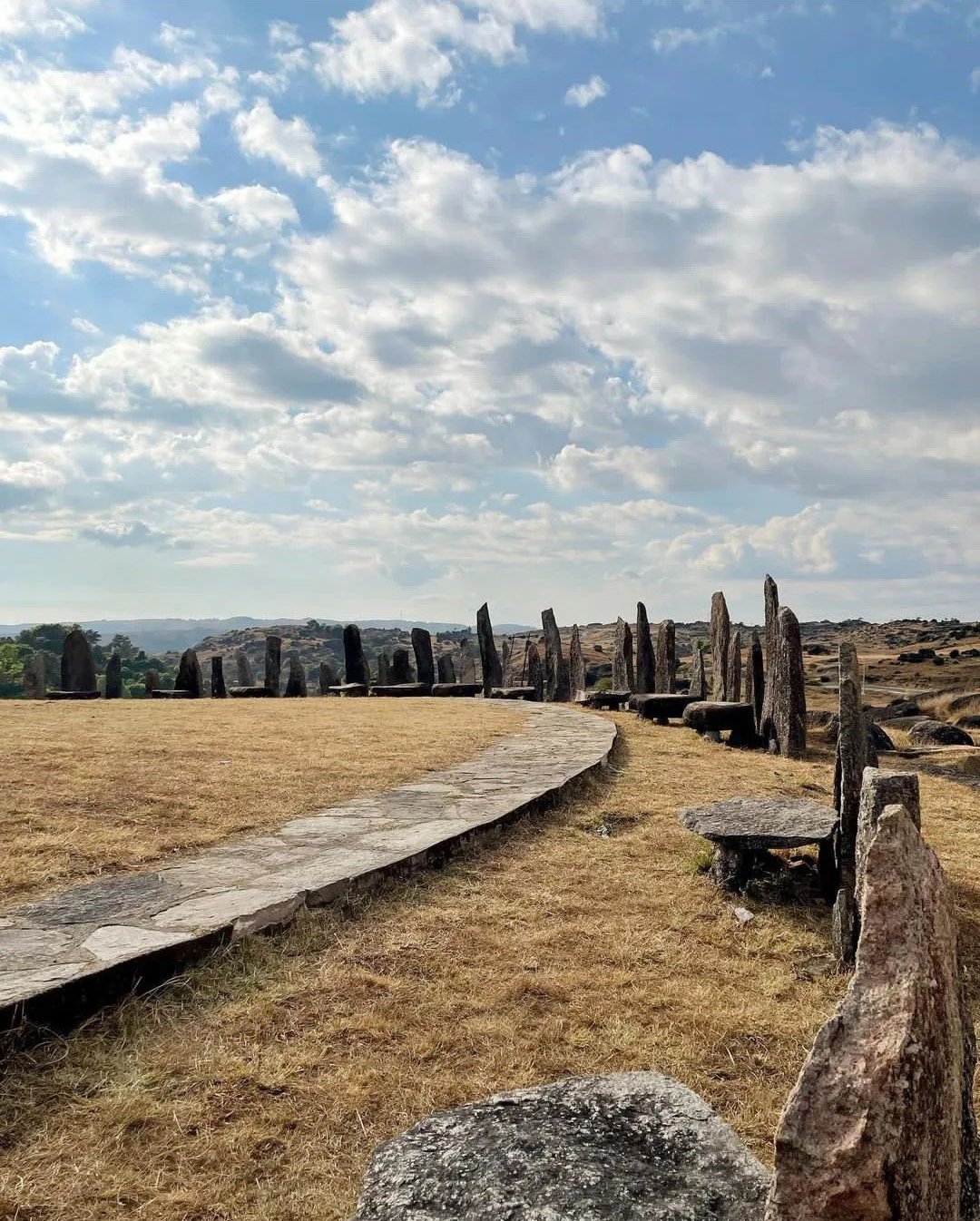
How did we remember? Through song and story, of course, and stone. We computed our histories through stone–choosing to raise monoliths to mark lives and events and relationships. And so even our word for remember-kynmaw–means to "carry like stone". Here, remembering is not taken lightly. It is borne on our backs like stone–unwavering even in the face of (colonial) beliefs that the oral is light and frivolous and inauthentic. The spoken is as much true as the written. When we have no preservatory documents, remembering, to kynmaw, becomes all the more pressing, more important. The spoken does not forget."
Khublei Shibun @janicepariat for your beautiful and profound thoughts! 🤗❤️🙏
The era of the spoken word and of Khasi orality is vast, moving in the many sunrises and sunsets of history. This history which is our heritage pleads to be preserved as we move forward.
As it is the course of things, we were given the Khasi alphabet by Welsh missionary, Rev. Thomas Jones. The Khasi alphabet has brought us to another chapter in Khasi orality, as our stories, teachings and values are transcribed onto paper. Yet as Janice Pariat has asserted, ban kynmaw ka long kaba kongsan, ban kynmaw ka long kaba kumba ngi dei ban long, namar ïa ka ktien la thaw, la shon nyngkong ha ki jylliew ka pyrkhat ka pyrdaiñ; la thaw la shon ïa ka ktien ha ki tyllun u thylliej bad ka shyntur. Kumba ki ong ki longshuwa, ka ktien kaba tam. Ka ktien ka long kaba maïan, ka ktien ka long kaba nylla!
📸 All photos are from @janicepariat 🙏
Nga ïaid hapdeng ka kper syntiew,
Ïa phi nga khmih lynti,
La jingiwbih ba bun ki wan,
Nga kynmaw tang ïaphi.
Man ka sienjam haba ïaid,
Suki suki nga ïuh,
Dohnud dik dik tang i ïaphi
Thar shiah ruh ym sngew shuh.
Haba ïaphi nga ïa kynduh,
Ïanga phi kdup phi snoh,
Jingieit janai ruh phi ïai ai,
Phim klet khamtam ban doh.
Jadu aïu sha ba phi don,
Ba pynrah ïa mynsiem,
Phi pynlong ba ngan shad mastieh
Ka ong ka men tieng thliem.
Ka poitri shoh jingieit ba phah da i @mebatei_l_khongsti 😄🤭🥳🥳 Dei ban phah kum kine keiñ ban kham ïa shongshit! 😁
Khublei Shibun @mebatei_l_khongsti ba phi la phah ïa kine ki symboh pyrkhat jong phi 📝
Ha ki thapniang basyaid i piam
Watla im pynpaw eh
Jingieit i theh ba palat liam
Dei i Pa baieid eh.
– Kyrshan W Mawlong
A Father's Day poem from @kyrshan_611 😄😄 But Father's Day should be everyday!
Khublei Shibun @kyrshan_611 ! 🙏🙏

Pnar explanation:
Ha Jaiñtia hi waroh kawi ym jooh em u leh ki ya ka ni ka li e Ja Khonbo. Kani toh ka rakom ki pnar wa sah ha Jwai næ du ki Jwai wa pynjooh ya ini i rakom li e Ja Khonbo.
I rakom li e "Ja Khonbo" toh i rakom, iwa, da i ja jooh lai e sñiawbha ki wahaïung wahasem, ki lok ki jor ïa ka manbei hadien wada kha khon ko. Ini man i kam chi wynta na i pyn-eh bok pyn-eh rngu ya ka bei wa ya'i khon wa dang kha.
Ki waheh nachua sikai ki u pynmlien u li e jakhonbo da'iwa u li e da iwon iwon i wada chet kynsaai næ i wa bang dooh. Ki waheh nachua leh da pynjooh ki da'iwa u song lang ha'itæ i jakhonbo toh ka "pylleiñ chet", "i jadoh", i "dohseiñ" wa i "dohsyiar chet sngat", "dai chet sngat" wa kiwi kiwi.
Khasi explanation:
Ïa ka rukom ai "Ja Khonbo" ym ju leh ha ka ri Jaiñtia baroh kawei. Kane ka dei ka rukom jong ki Pnar kiba sah ha Jowai, ki dei ma ki kiba pynmlien bad pynjuh ïa kane ka rukom.
Ka rukom leit ai "Ja Khonbo" ka dei ka rukom ha kaba ki bahaïing bahasem, ki lok ki jor ki ai sngewbha da ka ja ïa ka longkmie kaba kha khun. Kane ka long shi bynta na ka pyneh bok pyneh rngiew ïa ka kmie bad i khun ba dang kha. Ka ktien "Khonbo" ka mut khyllung.
Kiba rangbah naduh mynshuwa ki la hikai ban pynmlien ïa ka leit ai "Ja Khonbo" da kano kano kaba la shet kynsai bad kaba bang duh. Kiba rangbah ki la pynmlien ruh ban song lang ha ka Ja Khonbo da ka pylleng phon, ka jadoh, ka dohsniang neiïong bad ka dohsyiar kylla, u dai sboh neiïong bad kiwei kiwei.
English explanation:
The custom of "Ja Khonbo" is not prevalent all over the Jaiñtia Hills. This custom is practiced only in the town of Jowai and it is the people of Jowai who have established this custom.
In the custom of "Ja Khonbo" the relatives and friends gift rice that has been cooked well, especially for a mother who has birthed a child. This is part and parcel to strengthen the good fortune and fortify the essence of the mother and her child. The word "Ja" means rice and the word "Khonbo" means baby.
Elders have taught that only the most special and most delicious food are to be given as "Ja Khonbo". Elders have also taught that boiled eggs, jadoh (rice cooked with meat), dohsniang neiïong (pork cooked with black sesame), chicken curry, dai sboh neiïong (dal cooked with black sesame) and others are included in "Ja Khonbo".
"Ja Khonbo" is a custom practiced by the Pnar people of Jowai. It is a wonderful custom that expresses care for a mother and welcomes a child into the world. 🤱🧑🍼👼 🙏
Khublei Chiboon Anvil ya i e jingmut yong phi hawa thaw ya kani ka post! 😄🙏
🟡 Source: Anvil Ritre Laloo
🟡 Khasi and English translation by @speakyourroots
U slap haba u hap ha sla khyndew u hap syngngeit bad hap lynsher. Ha ki jaka bym don phlang ne kino kino ki jynthung, u slap u don ka bor kaba khlaiñ ban ksam bad pynmong ïa ka khyndew. Mar ïa slap ki symboh khyndew ne shyiap ki shah kynting kumba Iai haduh san inshi na sla khyndew shalor bad shah bret sharud na ka jaka ba kine ki symboh ki don mynshuwa. La ïoh jingkheiñ da ki riewstad ba u lapbah u lah ban pynkynriah jaka ïa ki symboh khyndew symboh shyiap haduh shispah ton ha ka shi akar ha ka shikynta.
When rain falls on the earth it falls in a forceful beating or grinding motion. In a place with no grass or plants, rain has the strong power to punch through and pound the soil. The instant it rains, soil or sand are thrown up about three to five inches from the ground and then they fall on a different place from where they were. Scientists have discovered that heavy rain can move 100 tons of soil from one acre in one hour.
Haba u slap u hap halor ka khyndew bym don jynthung ki symboh khyndew symboh shyiap bani bin bin ki set noh ïa ki thliew ki syar (pores) jong ka syrtap khyndew syrtap maw. Ka umslap ba bun ka tuid noh wut tang nalor sla khyndew bad tang khyndiat eh ka ngam shapoh ñiamra. Ïa kane ka jingtuid umslap nalor ki jaka bym don ne duna jynthung la khot "ka tuid wut" (run off) katba ïa ka jingtuid umslap ha sla khyndew ha baroh ki jaka ba don khlaw ne bym don khlaw la khot "ka tuid lor" (overland flow).
Kane ka tuid wut bad tuid lor jong ka umslap ki long ki bor bashyrkhei ban khrud bad pynkhoi ïa ka sla khyndew.
When rain falls on a place that is empty of plants, the fine soil or sand that is moved by the rain covers and blocks the pores of the earth and of rocks. Most of the rain water flows quickly over the ground and only a little seeps through into the earth. This flow of rain water in a place where there is less or no vegetation is called run off, while the rain water that flows in a forested area or a non-forested area is called overland flow.
Run off and overland flow of rain water are dangerous forces which scrub and erode the top soil.
U slap bad ka rukom hap jong u…Sngewtynnat ban pule ïa kane ka jingthoh ha ka kot i Dr. Dondor Giri Nongkhlaw. 🌦️🌧️
Rain and the way it falls…It is always a good idea to read books written by Dr. Dondor Giri Nongkhlaw. 🌦️🌧️
Dr. Dondor Giri Nongkhlaw is a Geomorphologist who has written several Khasi books focussing on the elements of the environment and their bond with Khasi life and culture.
🟡 English translation by @speakyourroots