Blog

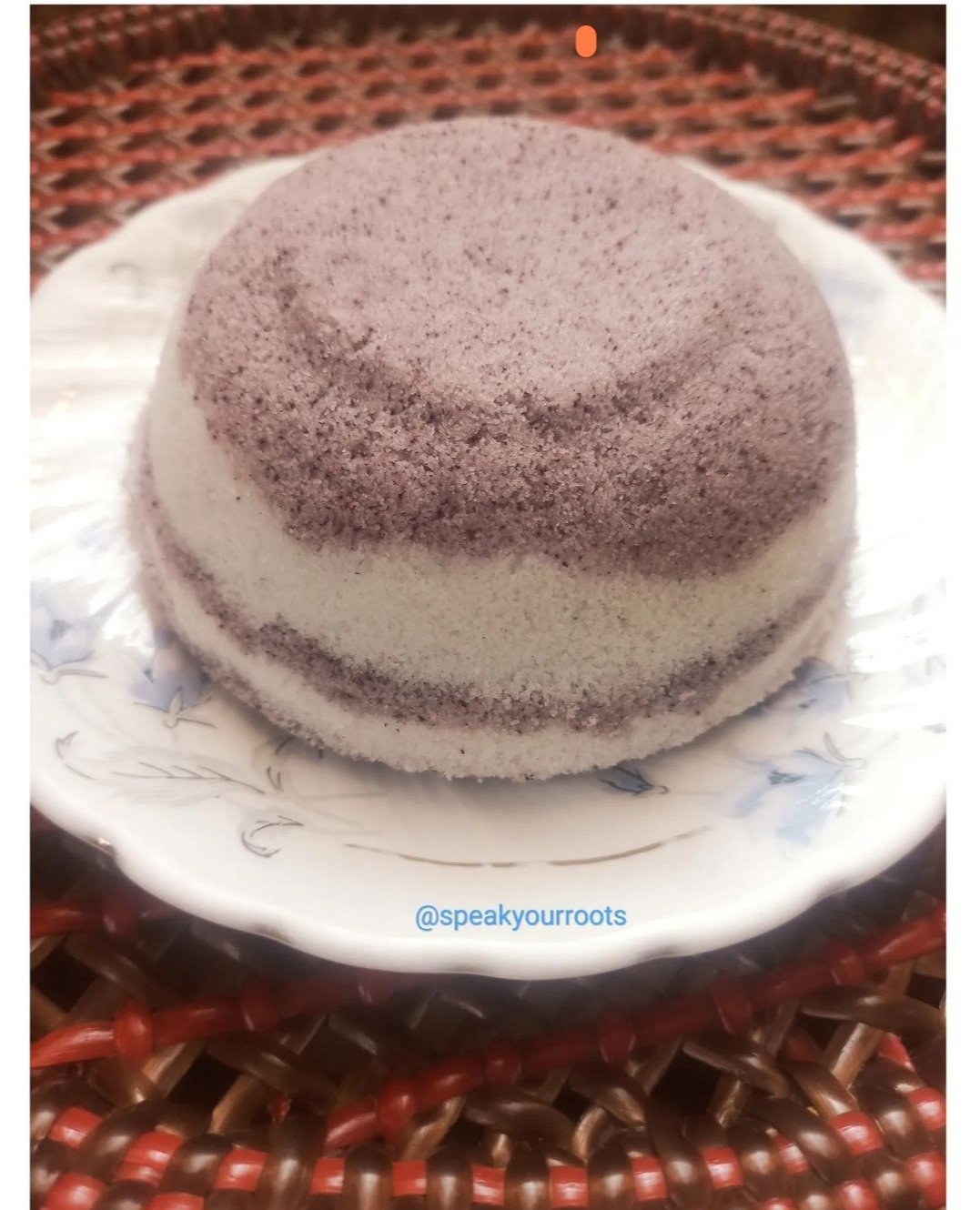
  • U Pumaloi ne u pizza

    😄😄 Ka dei ka jingshisha ba wat ma ngi kiba lah ïa samla, lah rangbah ruh ngi bang da kiwei ki jait jingbam. Tangba ki jingbam Khasi jong ngi ki dei kiba bha shikatdei, ki long kiba bsa bad tei ïa ka met.

    "Pu maloi" is another kind of steamed rice cake of the Khasi and Pnar people. It is generally eaten with tea or dipped in tea. ☕🍚

    Slow food is carefully prepared using traditional cooking methods and organic ingredients. It is produced or prepared in accordance with local culinary traditions, typically using high-quality locally sourced ingredients.

    Please tell us your favourite indigenous food or snacks! 😋😋

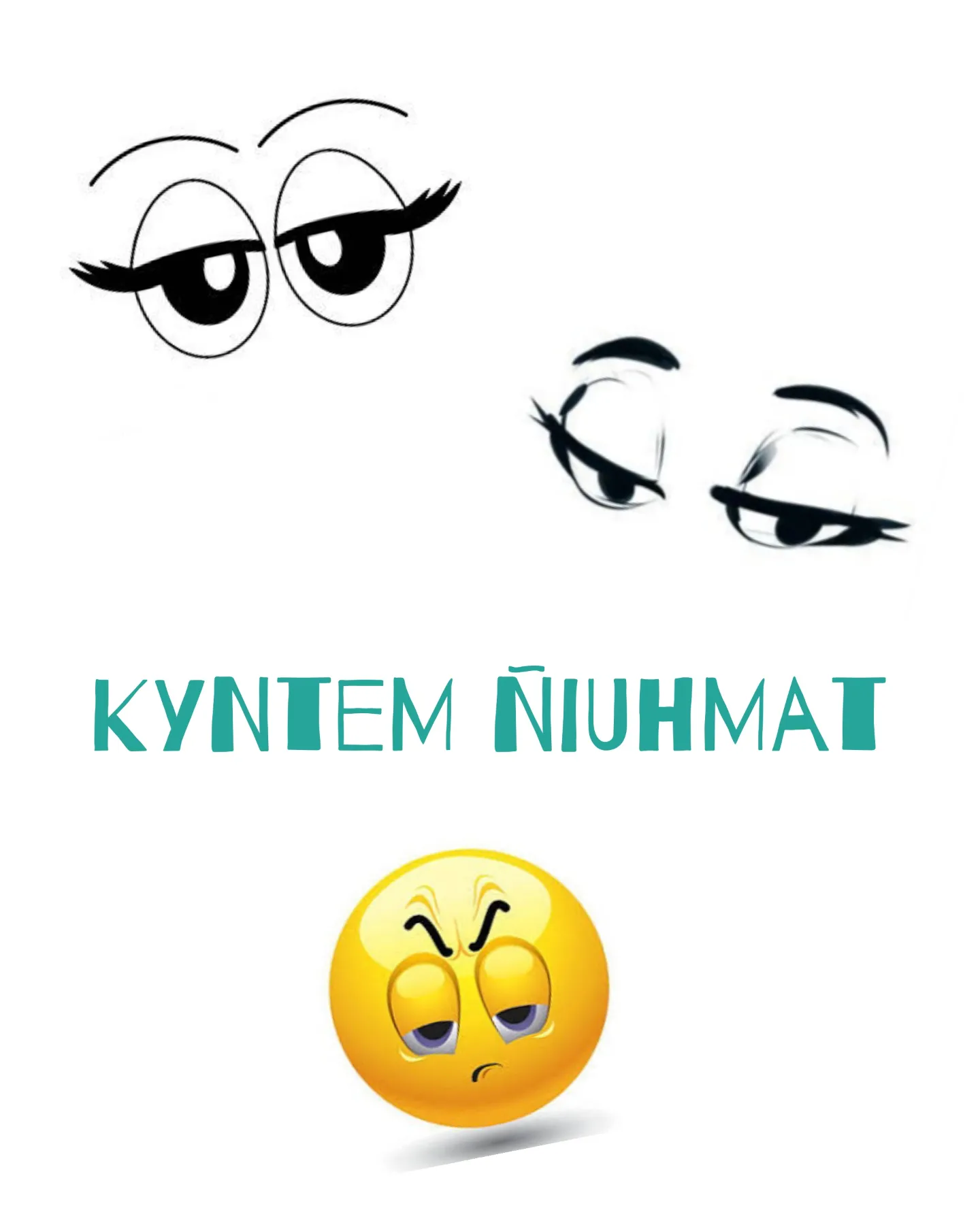
  • Kyntem ñiuhmat

    Ka ktien Khasi "kyntem ñiuhmat" ka mut haba ïa u briew uba i jaipdeh ne haba ka jingjaituh la ithuh na ka jingnoh bad jinghiar u ñuihmat shapoh khyndew. Lah ban ong ruh ba ka "kyntem ñiuhmat" ka pynwan ïa ka jingnoh jaituh jong ka dur bad ka met baroh kawei. Kam don ka jingsngew smat sngew sting bad kam don ka jingkyntu nalade ban leh eiei.

    The Khasi phrase "kyntem ñiuhmat" refers to instances when the laziness and indolence of a person is evident in the downward bend of the eyebrows or in long drooping eyelashes. It may be said that "kyntem ñiuhmat" creates an image of a lethargic and sluggish person. There is no spring of activity and there is also no motivation to do anything.

    "Kyntem ñiuhmat" is a Khasi description of a facial expression that we have all made 😄😅 Hopefully "kyntem ñiuhmat" is only a temporary phase 😜

    Ha ka Khasi ngi lah ban ong: "U la kyntem ñiuhmat haba u la ïohi ïa ka lyngkha ka bym pat dep puh."

    🟡 English translation by @speakyourroots

  • Ka Dienshonhi

    Ka kyntien "Dienshonhi" ka thew ïa ka "Dak-Thoh-La-Jong". Da lah phiah ïa ka, ka long kumne harum:

    Ka kyntien "Dien" ka mut ïa kano-kano kaba paw haba la ïuh ne kano-kano ka jingpynsah dak ïa kiba bud nadien khnang ba kin lait na ka jingshah ïalam bakla. Ka kyntien “Shon” ka wan na kaba pynskhem ban nym jah ka dien na kaba shim nuksa na ka dien ban dang ïai pynmih dien shuh. Ka kyntien “Hi” ka thew ïa uno-uno ne kano-kano kaba pynmih dien namar kata, ka wan ka ktien “Dien-Shon-Hi”.

    The Khasi word "Dienshonhi" refers to "Dak-Thoh-La-Jong" which may be translated as that which is written by oneself. When it is broken up it means as follows:

    The word "Dien" means something that is seen or formed like a footprint or any other imprint or a sign that is placed to help people not get lost. The word "Shon" means to press down on something to leave a permanent imprint. Thus "shon" will strengthen that which is imprinted, to avoid it being lost. "Shon" will also take the example of the imprint to produce more imprints in the future. The word "Hi" refers to anything or anyone who produces an imprint. Thus, the word "Dien-Shon-Hi" is coined.

    Ka Dienshonhi: The Khasi Encyclopaedic Dictionary by Rev. Dr. Iarington Kharkongngor

    Ka kyntien "Dienshonhi" ka dei ka kyntien kaba la sot bad pynsaiñ dur na laitylli ki kyntien, kita ka "Dien", "Shon" bad "Hi". La pynïamir jingmut ïa kine lai ban long kawei ka kyntien, khnang ban pynshynna ïa ka jingmut jong ka kyntien nongwei kaba long "Dictionary". Namar kata, ngi lah ban ong ba ka kyntien "Dienshonhi" ka long ka kyntien ïamir, ka kyntien saiñ ne kaba ki ong ha ka ktien nongwei "coinage".

    The word "Dienshonhi" is a word that has been coined from three words, that is, "Dien", "Shon" and "Hi". The three words have been blended and brought together to express one meaning, so as to make clear the meaning of the English word "Dictionary". Thus, we can say that the word "Dienshonhi" is a coined word or coinage.

    Coining new words is one sure way for a language to grow! 😃🗣️🗣️📝 Two Khasi words in the post above which have been coined to explain the meaning of the English word "coinage" are 🟢 "kyntien ïamir" and 🟢 "kyntien saiñ".

    #kyntienïamir #kyntiensaiñ

    La ha ka kren ne ka thoh, ngi lah ban pynwandur bad saiñ dur ïa ki kyntien ki ban pynroi bad pynïar ïa ka ktien Khasi 🙏😃🗣️📝

    🟡 Source: Rev. Dr. Ïarington Kharkongor

    🟡 Translation and further elaboration by @speakyourroots

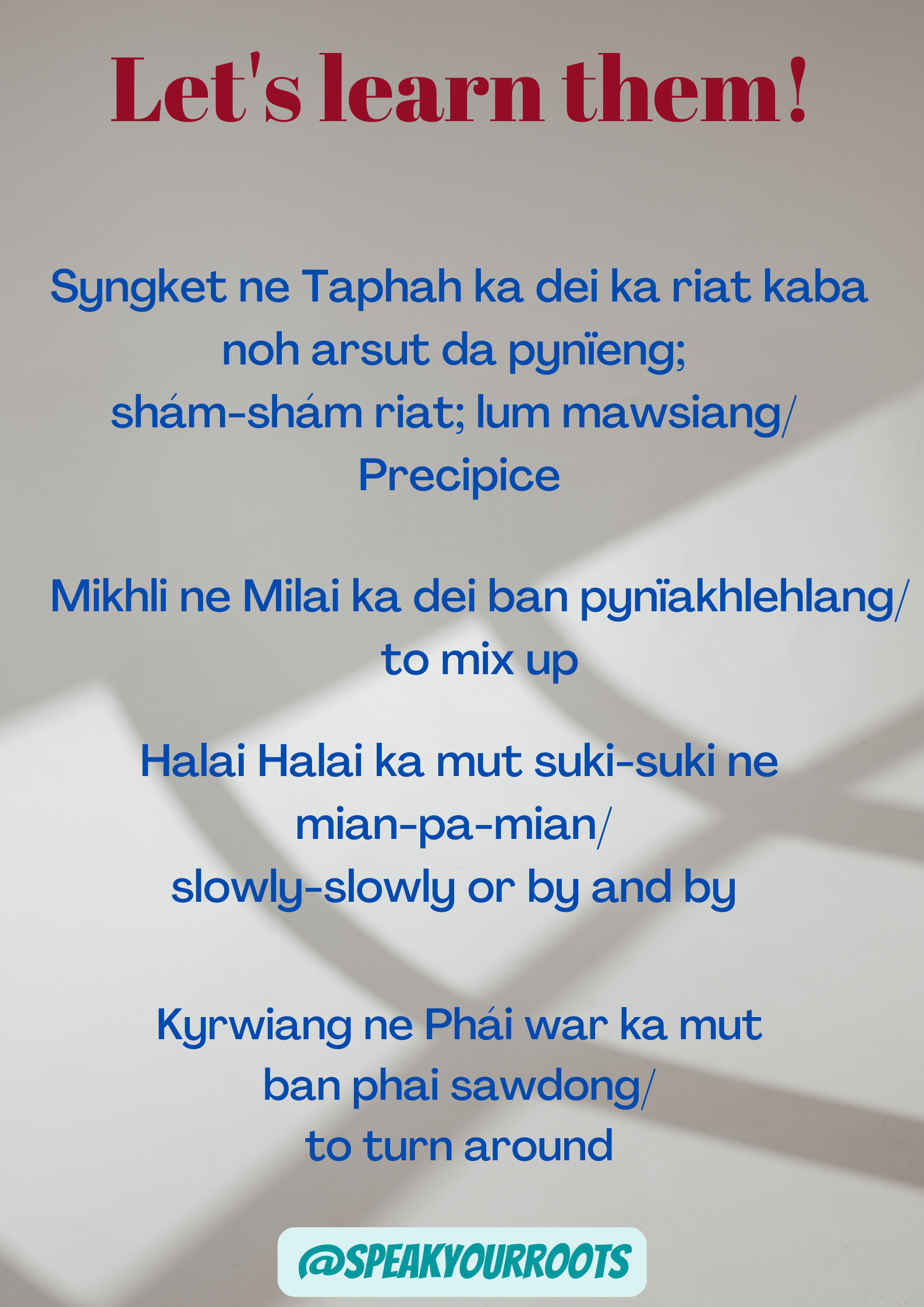
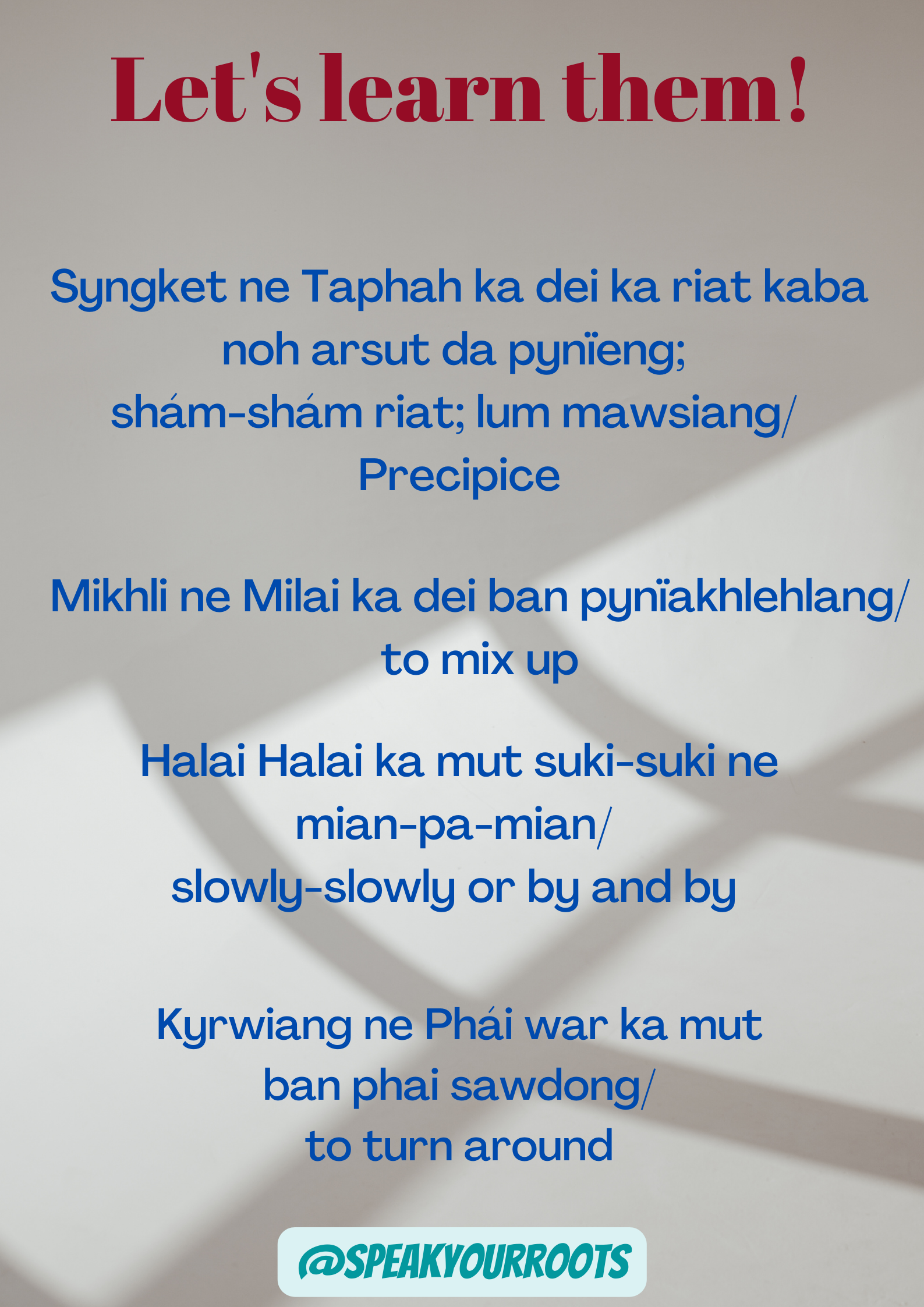
  • Lets learn them!

    Syngket ne Taphah ka dei ka riat kaba noh arsut da pynïeng; shám-shám riat; lum mawsiang/ Precipice

    Mikhli ne Milai ka dei ban pynïakhlehlang/ to mix up

    Halai Halai ka mut suki-suki ne mian-pa-mian/ slowly-slowly or by and by

    Kyrwiang ne Phái war ka mut ban phai sawdong/ to turn around

    Ngi hap ban ïa leh ban kren ne ban thoh da ki kyntien ki ban pynïar ïa ka ktien Khasi. Ki symboh kiba kynshew man ka sngi kin kyrbah ïa ka jingmut bad jingleh jong ngi 😄🙏

    Here are some Khasi words which we can try to use everyday. Grain collected everyday will sustain our thoughts and actions 🌾🌬️

  • Ka lyngknot, ka borti bad ka mok

    Da stai katno katno ruh, m don shuh ha pyrthel kum ka lyngknot, ka borti bad ka mok. Kumno kumto klet noh sa ïa u sohprew bad u mawshut met! 😂 🧖🧽🧼🪒🪥

    I can hear my grandmother calling me from the bathroom: "Bih heh wan shut met ïa nga!" 😂😂

  • Jylliew or June

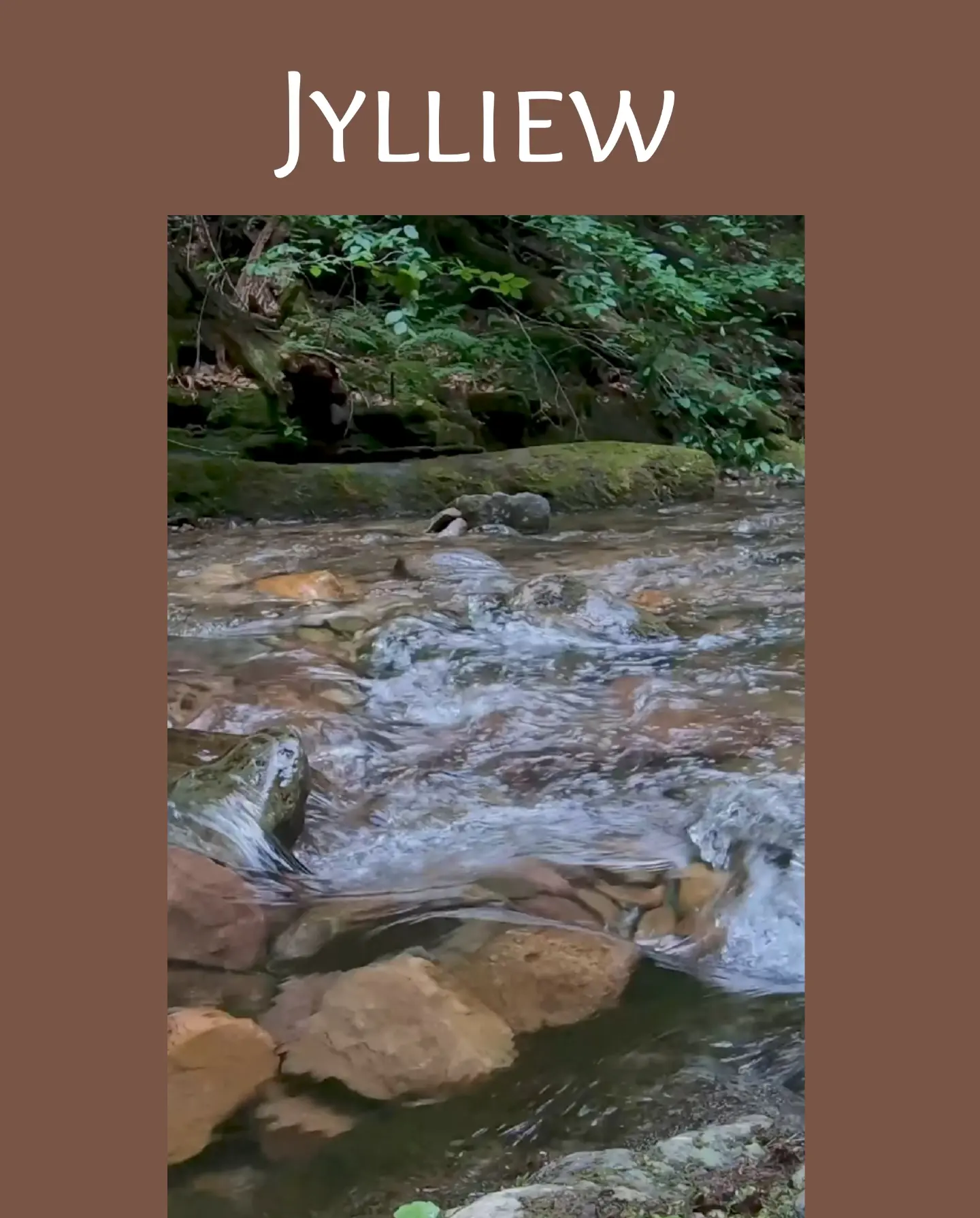
    “Jylliew" ka thew ïa ka jingdap miar ka um ha ki jylli jong ka wah. "Jyl" ka mut ka “jingjrong" bad " 'liew" ka mut ka "thliew" ne ka "them khohruh-khohram". Haba ong "jylliew" ka mut ba ka um ka la dap miar ïa ka them ne ka thliew khohruh-khohram. Nalor kata, ka ktien "jylliew" ka don ka jingïadei kaba jan eh bad ka "phylliew".

    "Jylliew" ka mut ka jingpyndap um da ka mariang ïa ka them ne thliew khohruh-khohram, katba ka ktien ‘phylliew’ ka mut ka jingpyndap um ha u khiew u bym don ne uba duna um da ka kti u briew ne da kano-kano ka tiar. Ha u Jymmang, ka um ka la sdang ban kiew ha ki jylli jong ka wah katba ha u Jylliew ka um ka la dap miar ha ka phudwah ne wah bah.

    The Khasi word "Jylliew" refers to the fullness of water in parts of a river. "Jyl" means the length of something and " 'liew" means a hole or uneven crevices. When we say "jylliew" it means that water is filled to the brim in a hole or crevice. Besides that, the word "jylliew" has a close connection to the word "phylliew" which means to pour water into a vessel.

    "Jylliew" means the filling up of water by Nature in valleys or uneven crevices, while "phylliew" means the filling up of a vessel with water by hand or using a mug or other utensils. In May, the water rises and fills in the circles of water, while in June water is full to the brim in river beds and rivers.

    This gives a new understanding of the Khasi word "Jylliew" which is the name of the month of June. 🌦️⛈️🌧️🏞️ Jylliew is the swirling depth of water that fills to the brim!

    🟡 Source: Rev. Dr. Ïarington Kharkongor
    🟡 English translation by @speakyourroots

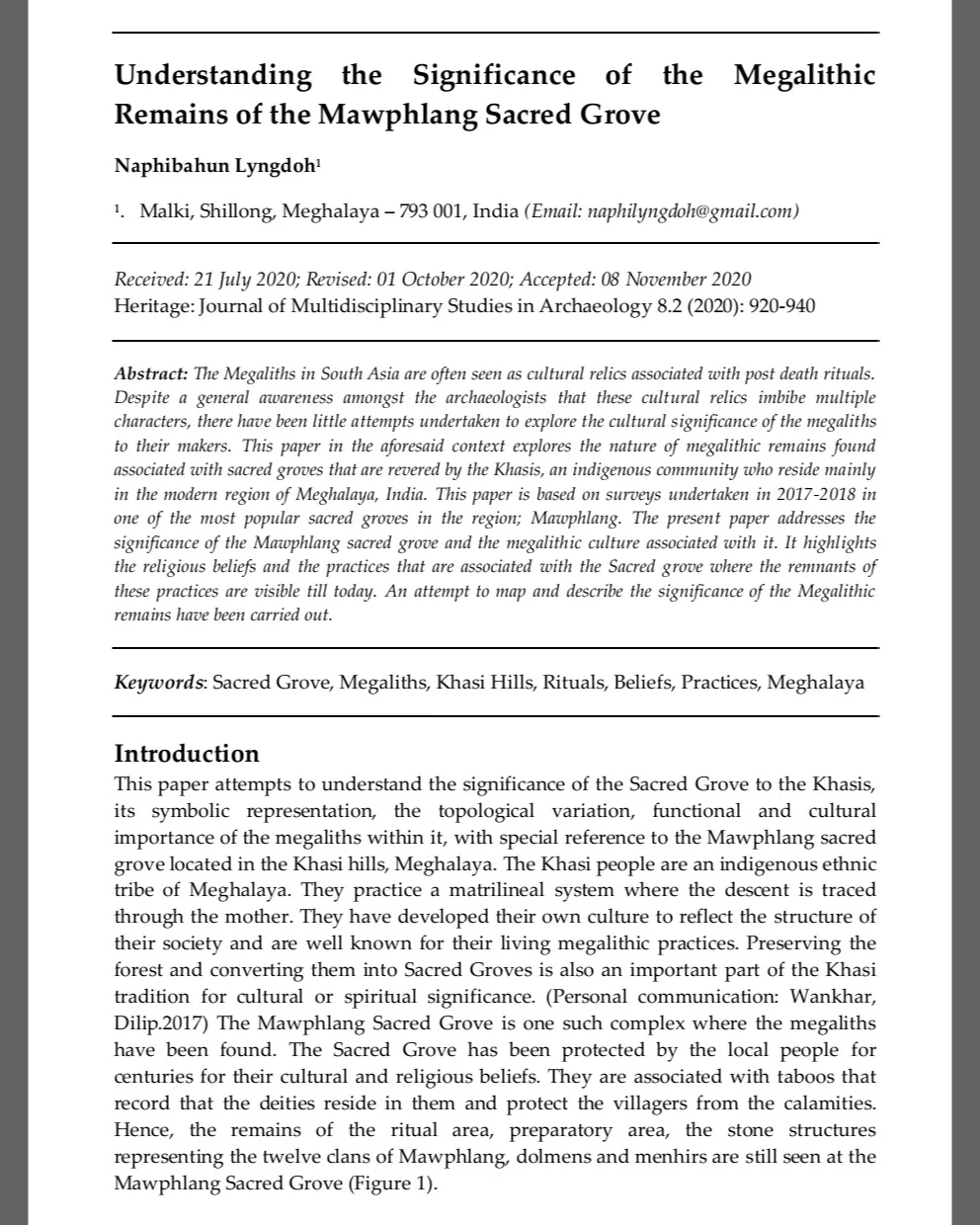
  • Understanding the Significance of the Megalithic Remains of the Mawphlang Sacred Grove by N. Lyngdoh

    The research article by @naphi_lyngdoh entitled:
    "Understanding the Significance of the Megalithic Remains of the Mawphlang Sacred Grove" has been published in Heritage: Journal of Multidisciplinary Studies in Archaeology 8.2 (2020): 920-940 📝⛏️⚒️📏

    🟡 Please click on the link below to read the research article

    http://www.heritageuniversityofkerala.com/CurrentIssue.aspx?VID=82

    🟡 No part of this article may be reproduced in any form without the consent of the author. If used for citing in research, proper acknowledgement and citation which is accepted should be adhered to. All material for this content has been researched by @naphi_lyngdoh

    The article is a wonderful and interesting read on the megalith culture of the world famous Mawphlang Sacred Grove. Congratulations on your hard work. We wish you more success in the future! 👏👏

    Ngi sngew kmen bad sngew sarong ba ki khun samla jong ngi ki la khih la ksar ban nang pynïar ïa ka jingtip shaphang ka histori bad ka jymbriew la jong 😄🙏

    Naphibahun Lyngdoh is continuing with her research and work. She has completed her Master's in Archaeology and Bachelor's in History. Naphibahun is an alumna of St. Mary's College, Shillong, Meghalaya.

  • Khap tyrsim mynmiet

    Baroh ngi tip ïa kane. 😄😄 Wat lada dang don ngai-ly-ngai ka por ruh ngin ap beit ban khap tyrsim da lah step 💅

    We all know this 😄😄 Even if we have all the time in the world we'll wait for the morning to cut our nails 💅

    The Khasis have a belief that says we should not cut our nails at night. What are your thoughts? 😄

    #khasibelief #khasimemes #speakyourroots #speakyourrootschallenge #talklocal

  • Blooh Tayaw

    "Blooh tayaw" toh i rukom klam yong ki Puar iwa mut ya iwon iwon i kám iwa u bru sñiawsuk u u leh, kat kam i jingsñiaw yong o.

    Ye i u ong kamni: "I lai khwe tœ toh i blooh tayaw wot u sœ!"

    Tanqwa toh u kûnmo wa klam ki ki ini i ktien du hawa klam ke hi eh.

    "Blooh tayaw" ka dei ka jingong Pnar kaba lah ban pynkylla sha ka Khasi kum ka "Mluh taïew". Kane ka mut ïa kano kano ka kam kaba u briew u sngewtynnat ban leh kat kum ka jingsngew jong u.

    Ngi lah ban pyndonkam kumne: "Ka leit khwai te ka dei ka blooh tayaw jong u keiñ!"

    Tangba dei ban kynmaw ba kane ka jingong ka dei tang ka rukom kren kai bad haba kren biria.

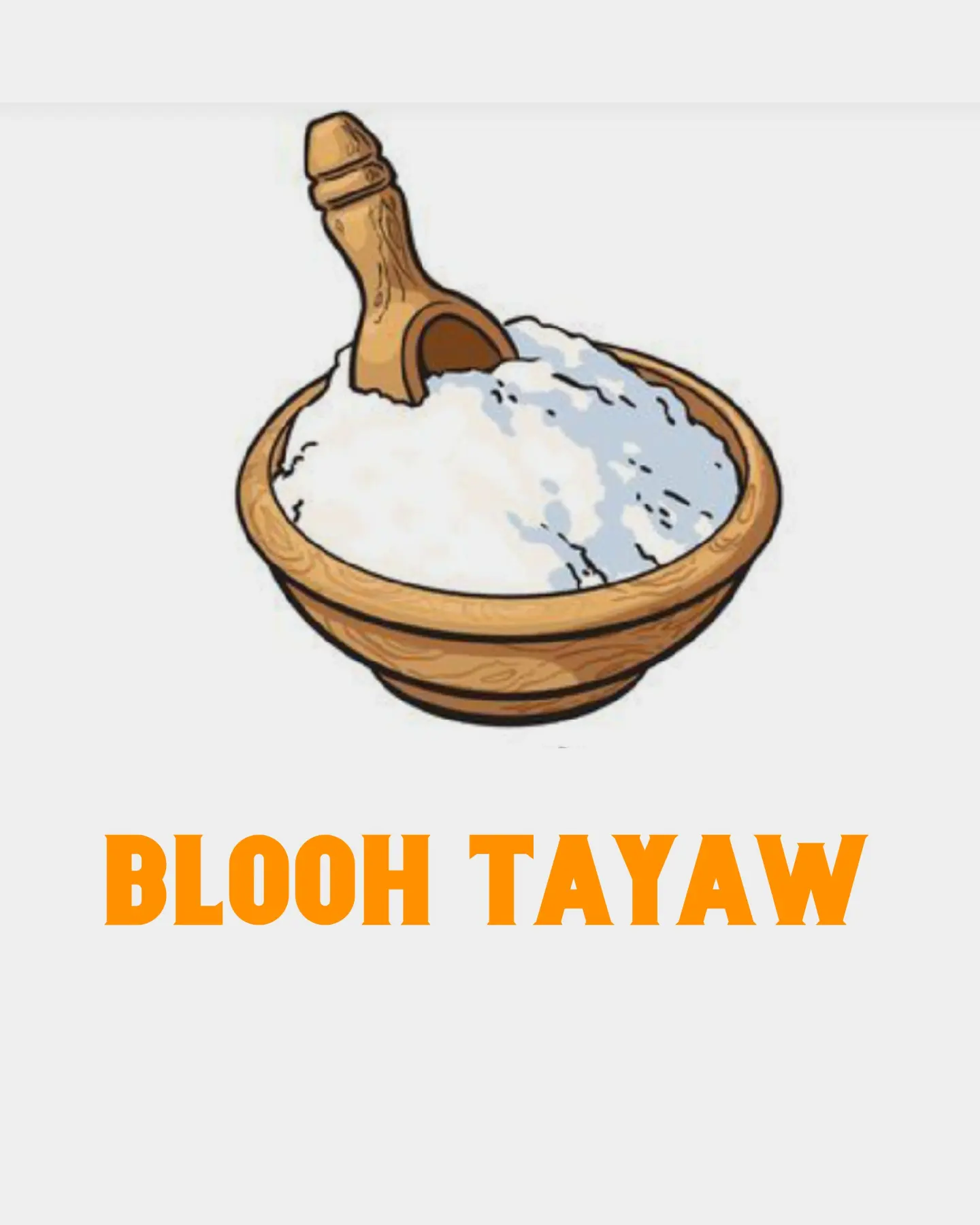
    "Blooh tayaw" is a Pnar phrase which means any task or hobby a person is fond of and likes to do. It is literally translated as "a weekly salt".

    We can say for instance that if someone is fond of angling, then that is his "blooh tayaw".

    It should be remembered that this phrase is used only in colloquial and casual conversation and not in formal speech.

    Here is a Pnar phrase which is a witty way of referring to a person's hobby or something that he likes to do 🚴⛹️💃🤹 "Blooh tayaw" thus becomes a significant part of someone's way of life and personality. 😄😄

    🟡 Pnar, Khasi and English explication given by @speakyourroots

  • Dapkynthei and Dapshynrang

    Ki kyntien "Dapkynthei" bad "Dapshynrang" ki mut haba biang bad pura ka jinglong kynthei ne shynrang.

    Ngi lah ban bynrap shuh shuh da kaba ong ba ki kyntien "Dapkynthei" bad "Dapshynrang" ki thew ïa ka jinglong bad ka maiñ kynthei ne shynrang kaba dappura ha ka jingkoit jingkhiah, ka jingitynnad, ka jingshongkun bad met bad mynsiem.

    Ka dei ka jinglong jingman kynthei ne shynrang kaba pynpaw shynna ïa ka hok, ka bor bad ka jingstad jong ka kynthei ne u shynrang.

    The words "Dapkynthei" and "Dapshynrang" mean the full and ideal essence of being a woman or a man respectively.

    It may be added that the words "Dapkynthei" and "Dapshynrang" refer to an entirety of charismatic presence in health, in beauty and in the dignity of heart and mind. It is a state of embodying the essence of woman or man, in integrity, strength and wisdom.

    The Khasi words "Dapkynthei" and "Dapshynrang" build an image of a woman and a man both in physical, as well as emotional and mental terms. They imply the roles of woman and man in a distinct way, pointing to their well-being in Khasi society. ♀️♂️

    🟡 Khasi and English explication by @speakyourroots