This is the tune and the lyrics to the chanting song "Choh Jamalung" (The Call of the Cicada) performed by @esra_syiem . The tune is endearing and draws in a nostalgia for those crisp village evenings. 🌤️🌲
This chanting song is sung by children at dusk as described in the post. It is popular in Raid Nongtluh of Ri Bhoi District, Meghalaya. Thank you @esra_syiem for sending this unique entry! 😃😃
Blog
-
Ka Choh Jamalung (The Call of the Cicada)
-
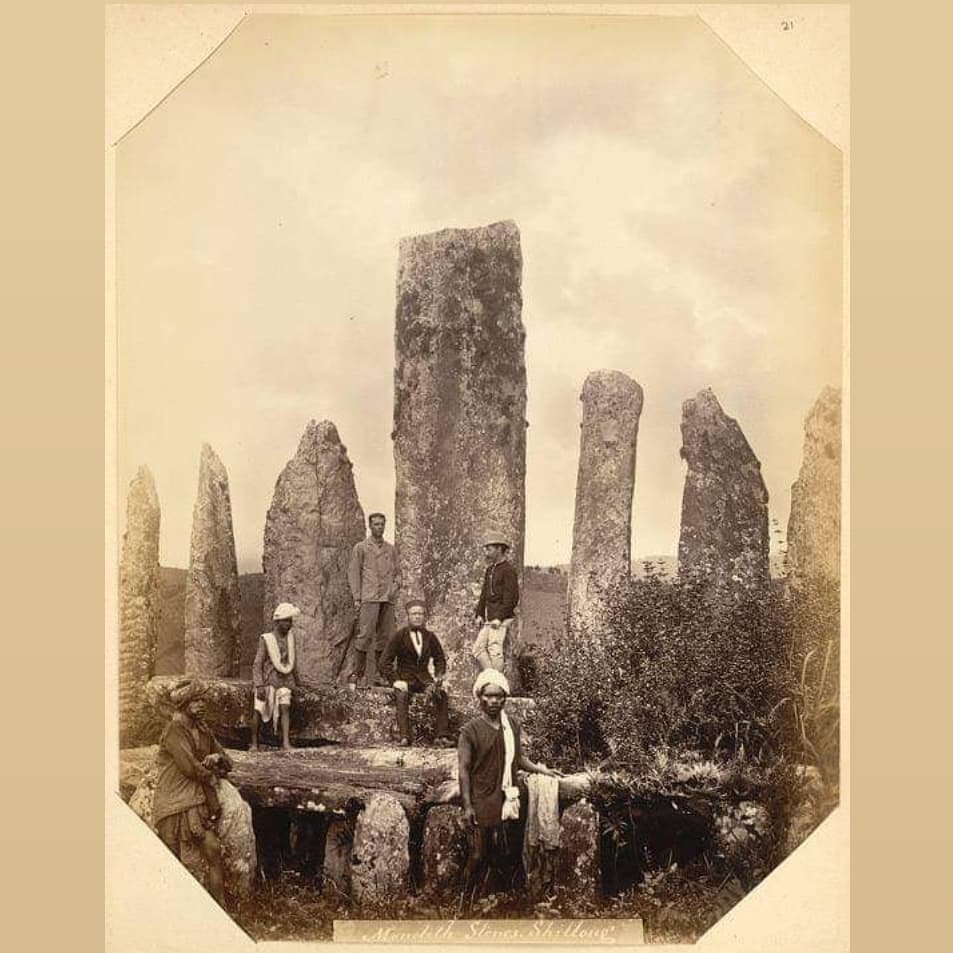
“Monolith Stones Shillong” as shown in Jean Baptiste Oscar Mallitte’s 1870s photograph
Nathaniel Majaw says:
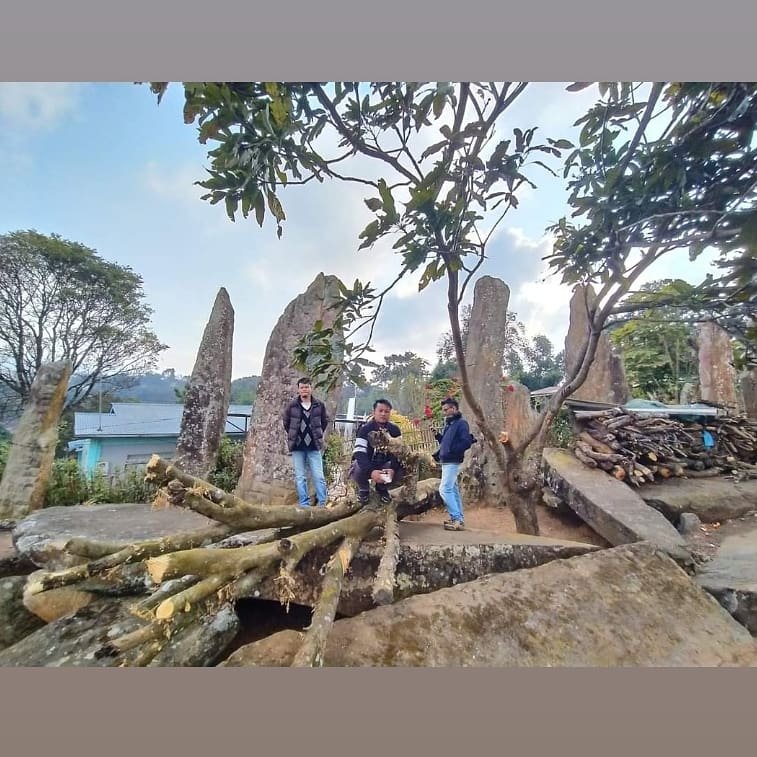
We finally located the magnificent stones as shown in Jean Baptiste Oscar Mallitte's 1870s photo "Monolith Stones Shillong". These memorial stones are tucked away in a quaint property in the beautiful and peaceful Nongkseh Rim.
The Khasi "Mawbynna" or monoliths/ megaliths are markers of history, culture, tradition and religion. Writers see language and literature emanate from them; indeed they are a repository of the past, present and future.
Many monoliths and megaliths were destroyed in the great Assam earthquake of 12th June 1897. Thus, it is such a great joy to find these structures still standing after so many years.
Congratulations to @nathanielmajaw and his team on finding these particular megaliths. 👋👋👋 These pictures were posted on Twitter on the 4th of February 2021. Thank you for giving permission to post these pictures! 🙏🙏🙏
-
Syiem Latympang–The Queen of Hima Manar by Daohi Manar
From the base of 'U loom kyndong',
I applaud her bravery – the queen of Manar Kingdom;
Though "suri kup snieh langbrot" tends to trap,
Queen with extraordinary powers,
Her real name was Latympang Shadap.
Dei tang u khnam bad ka ryntieh ba lam lynti,
Na ka jingdum, sha jingshai ka sngi.
'Loom-ti-niang', Pûnthor Latuba", Loom Mu-pdang', 'Loom Letno'
told this story of grit,
Of how she fought like a man every bit.
Neibhah yong pha, Miat rynsut na hali da jngai:
A! Maya wa sakhiat, da pûnsakhi wa kylla moo ki masi blai.
A woman fearless and defiant was she,
Defined by no man, you are your own story;
Amid of happiness, 'Ko Syiem phi jngai na ngi!'
The queen of 'u khnam ka ryntieh',
Immortal your name shall ever be.
"Syiem Latympang–The Queen of Hima Manar" sent by @xdtnoahjupejackllthmanar 😃😃😃 Thank you for being a regular contributor to the page!
This poem is about Ka Syiem Latympang, her courage and fearlessness. English, Khasi and Pnar have been used to write the poem and this is an innovative idea because others who do not understand Khasi or Pnar will be able to know about this wonderful Queen.
Daohi says: "Interestingly, apart from stories of the Jaiñtia male legends or kings, the Jaiñtias also have a beautiful story about a Queen with extraordinary powers whose name is 'Latympang Shadap' of Ka Hima Manar (adjacent to Shangpung Village). From beneath the darkened valley she wears her "Muka" and "Loket" on her land. Like a rising sun she seems to be shining above us, she was the great lady! "I am Syiem Latympang Shadap and I will bow to no man" For us, Latympang was not just a queen ,but she was a daughter, a sister and a Mother.❣️She used her bow and arrows as her own unique weapon set."
👉"suri kup snieh langbrot"—A wolf in sheep's clothing.
👉"u khnam ka ryntieh" — An arrow and a bow.
-
A group of Khasi women
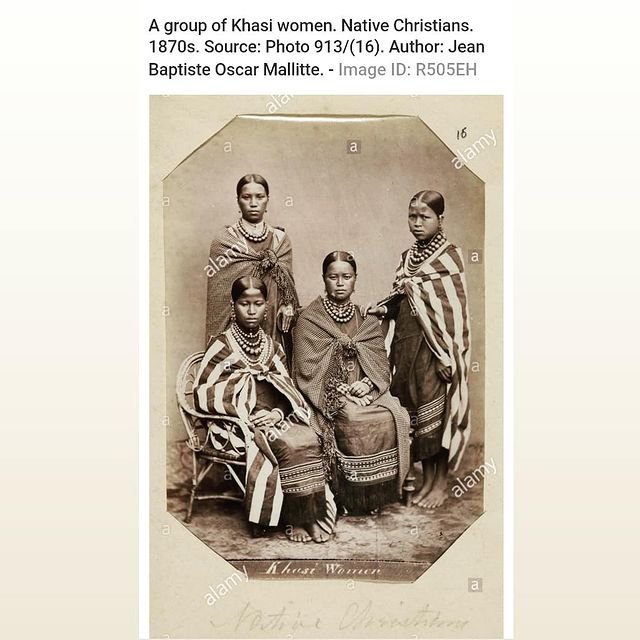
A group of Khasi women. Native Christians.
1870s. Source: Photo 913/(16). Author: Jean
Baptiste Oscar Mallitte. – Image ID: R505EH
This is a striking and regal picture of four Khasi women taken by Jean Baptiste Oscar Mallitte during the 1870s. The title states they are "Native Christians", who are perhaps a mother and her daughters? 😃😃
Ladies, please notice the simple yet sleek middle-parted hair, the layers of gorgeous "paila" (traditional coral and gold necklace), the traditional ear loop earrings, the "jaiñkup" (traditional shawl) of two women seems to be the "ryndia thoh rew stem" (eri silk shawl), the "nara" (traditional silk jaiñsem) with the beautiful intricate weaving at the bottom and those long tassels 😍😍😍😍 ❤️❤️❤️
If designers could recreate this look, it would be sensational!! 🔥🔥🔥
Does anyone know the name of the striped "jaiñkup" of the other two ladies? Also what is the traditional name of those lovely earrings?
Source: Google
-
Siklai
The word "Siklai" has a number of meanings which include to lie, fool, trick, deceive or exaggerate with the aim of making a joke. The word may be described as an urban slang and according to teachers of Khasi literature and language, it may have been borrowed from Hindi or vice versa.
For example: "Mynta dry day dei? Flop leh."
"Ïoh te me da me dial 1234567 home delivery."
"Me ynnai siklai than."
"Siklai" 😀😀😀A Khasi word that has gained the status of an urban slang. We have all been "siklai-ed" at some point. 🤡🤡🤡🤡 Tag all your "Siklai" Malois! 😂😂
-
U Swet Titiaw
Have you ever met a person who says no but they actually mean yes? If you offer them something they refuse and act as if they don't want it but in reality they do. In the Pnar language, they have a name for people like this. They call them "Swet Titiaw".
The story goes that "U Swet Titiaw" is a farmer from Jowai. He has a peculiar quality and that is when people ask him something he acts as if he doesn't want to answer or when they offer him something he refuses but in his heart he wants to answer and he wants to accept the offer.
In Pnar they say: "Leh u kam u wym bien tangwa napoh napoh kwah u naduh mynsien. Neite i daw haduh katni leh ia ki bru wa man kam o juh sin ki ki dei pyrtuid u 'Swet Titiaw'."
"U ong tae ym bien ym bien
tangwa ki kti ner ner nei dien.”
"He will say no, no but his hands
are already open from behind.”
The Pnar nickname "U Swet Titiaw" sent by @laloorisa 😅😅😂😂 Thank you for your entry!
"U Swet Titiaw" is quite the satiric nickname for someone who says no but actually means yes…🤡🤡
-
Ka Syiem Jitlakhai
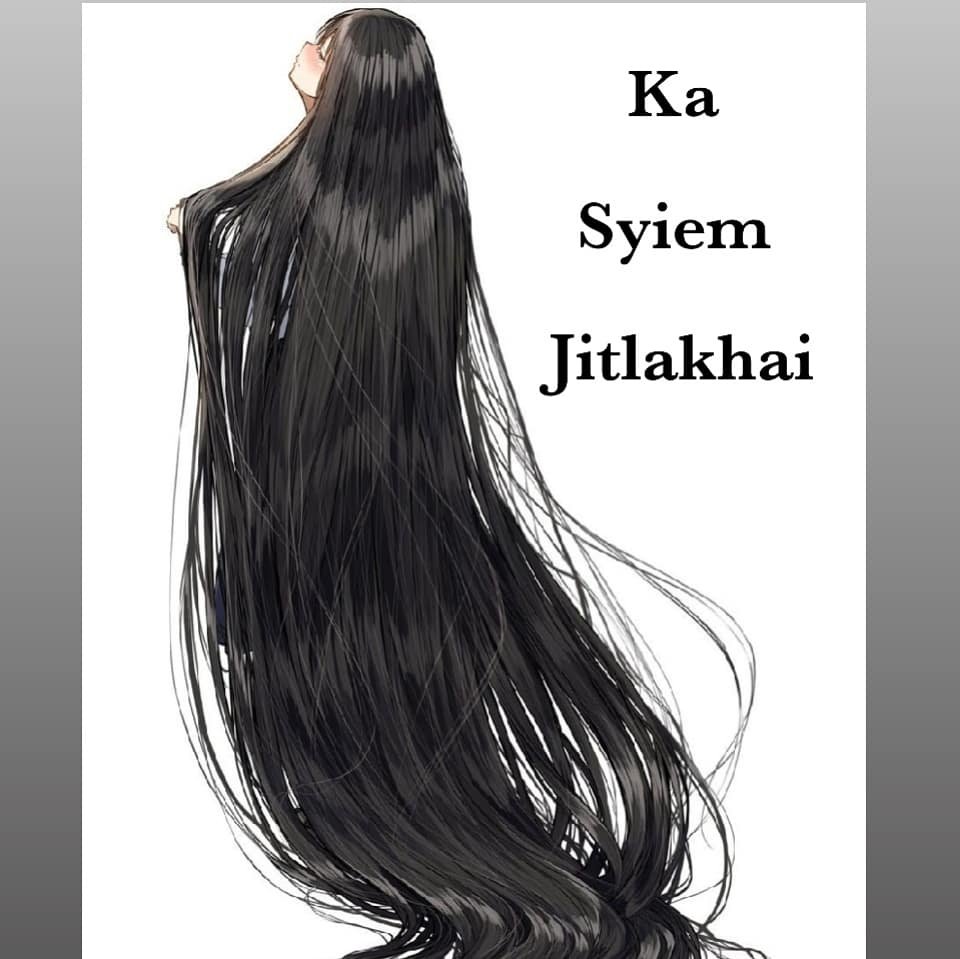
U Maw Shyllaitbit lies to the west of the town of Mustoh and it is a huge rock that can be seen from parts of Shella District. It is believed that this was where the Queen-Goddess Jitlakhai lived along with her subjects.
Queen Jitlakhai was an extremely beautiful woman, whose hair was golden in colour, long and enchanting. Queen Jitlakhai used to bathe in the Umbloi river and her hair being very long, flowed downstream and reached the plains. It so happened that her hair was found by a fakir. He was taken aback by the golden colour of the hair and its mind-boggling length! The fakir rolled some of the hair and took it to his king. The king was baffled and determined to find the woman to whom the hair belonged. He thus prepared an army with soldiers, elephants and tigers. The king followed the Umbloi river upwards till he reached Shella. But when he reached Shella nobody told him about where Queen Jitlakhai was. There was a deep trench between Shella and Mustoh which the King wanted to cross. The King schemed to bribe a poor man into telling him where Queen Jitlakhai lived. The man took the King to where the Queen lived.
On seeing her subject, Queen Jitlakhai appeared and it was then that the King asked her to marry him. She refused his offer of marriage and when the King saw that she would not relent, his soldiers held her by force hoping to take her away. At that moment Queen Jitlakhai screamed and prayed. It was then that she turned into "rngai” which can be translated as an apparition or a ghost. Instantaneously her castle also turned into stone. It was from then onwards that people called this rock "Maw Shyllaitbit". To this day the appearance of a metal door can be seen on the rock. People believe that Queen Jitlakhai turned into "rngai” and no one has ever seen her since.
"Ka Syiem Jitlakhai" is an engrossing Khasi folktale that tells the story of a queen with long golden hair. 👸
Reference: 'Ka Jitlakhai' written by E. Weston Dkhar (1978)
-
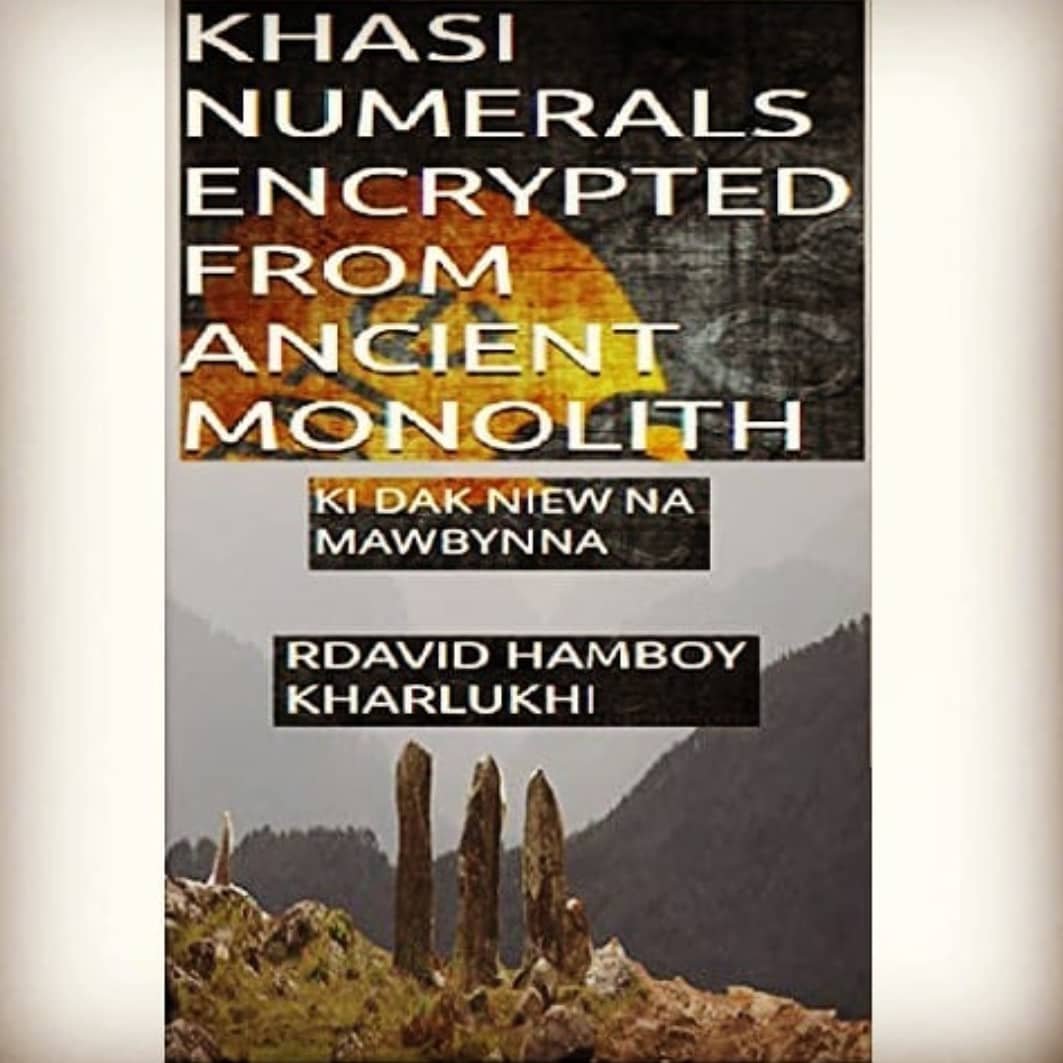
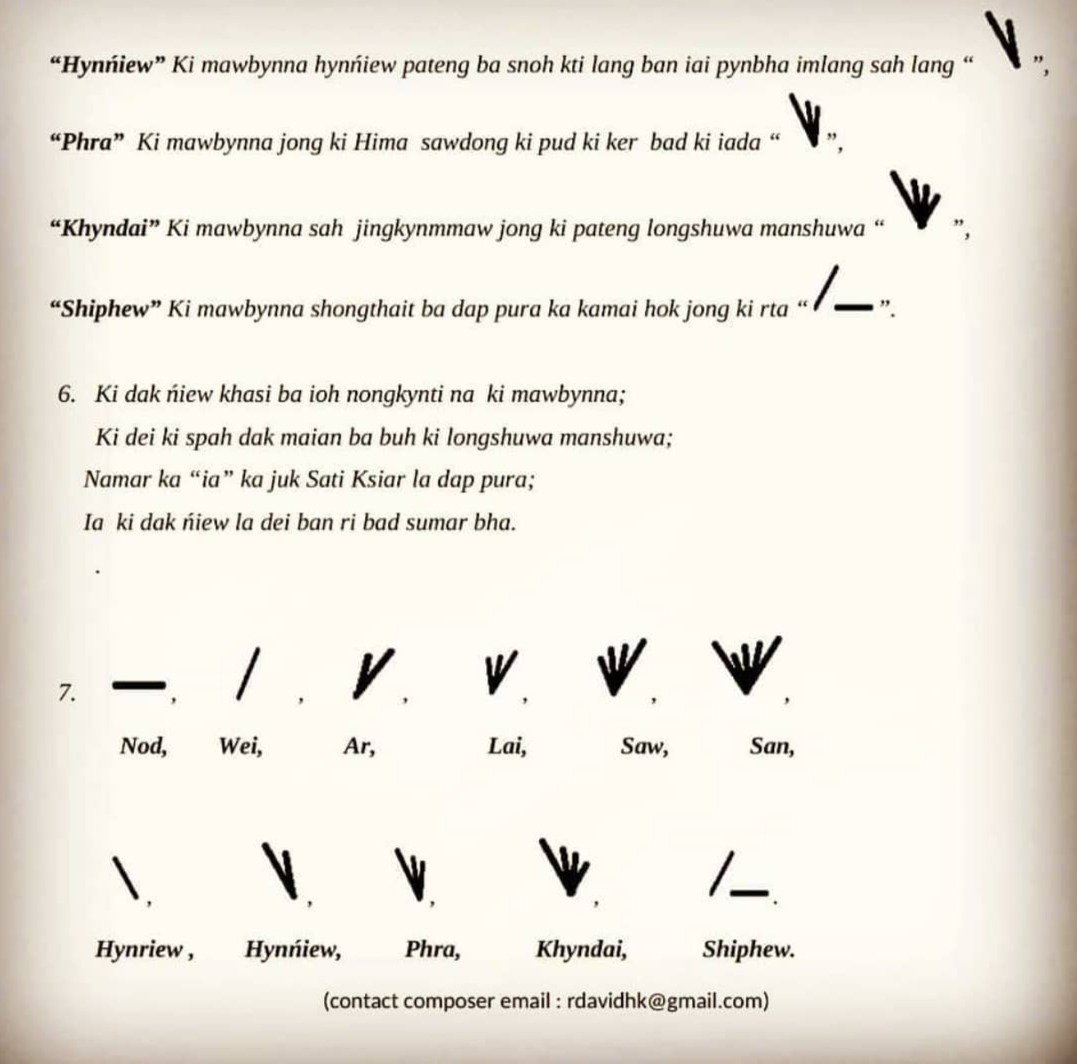
Ki Dak Ñiew na Mawbynna by R.David Hamboy Kharlukhi
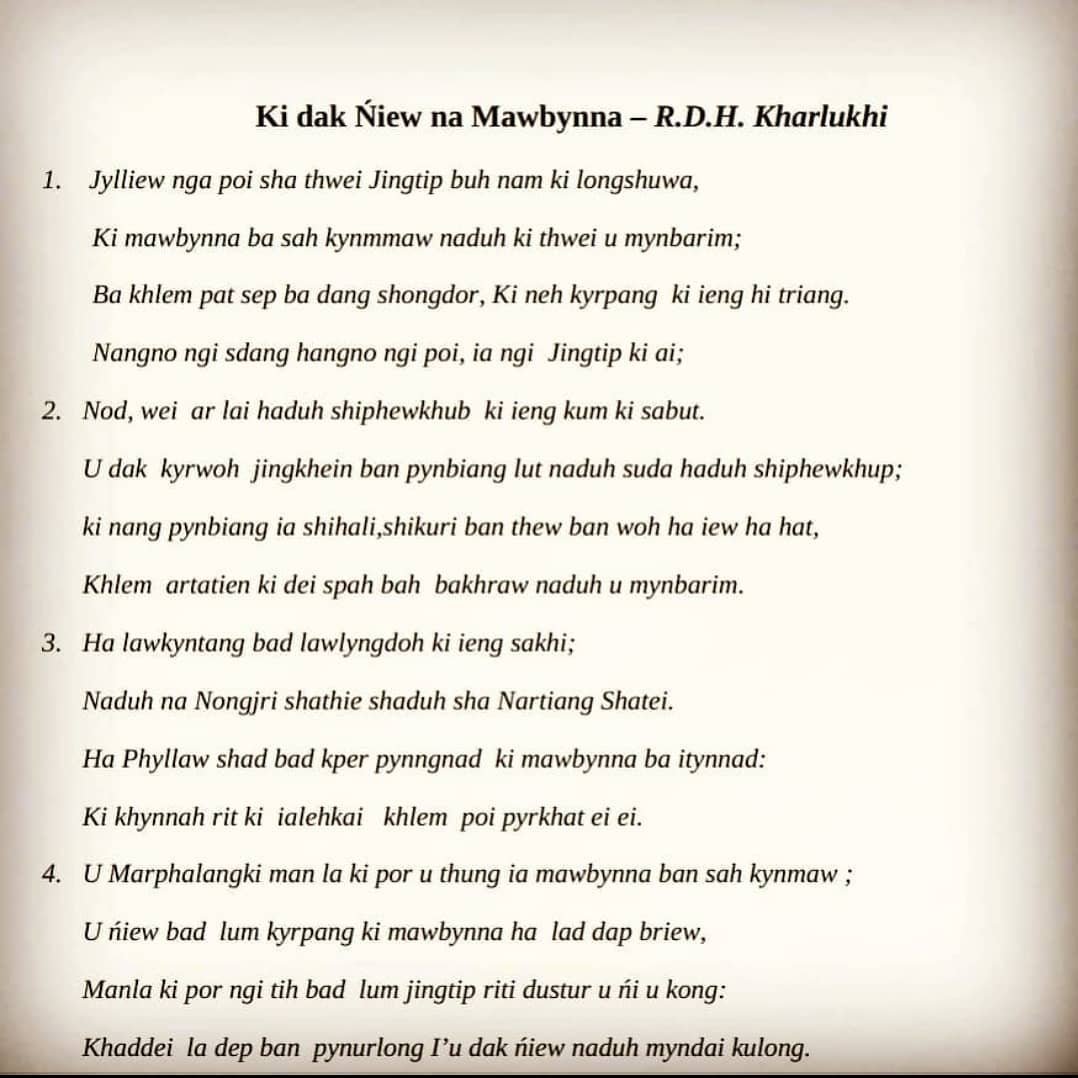
1. Jylliew nga poi sha thwei Jingtip buh nam ki longshuwa,
Ki mawbynna ba sah kynmmaw naduh ki thwei u mynbarim;
Ba khlem pat sep ba dang shongdor, Ki neh kyrpang ki ieng hi triang.
Nangno ngi sdang hangno ngi poi, ia ngi Jingtip ki ai;
2. Nod, wei ar lai haduh shiphewkhub ki ieng kum ki sabut.
U dak kyrwoh jingkhein ban pynbiang lut naduh suda haduh shiphewkhup;
ki nang pynbiang ia shihali, shikuri ban thew ban woh ha iew ha hat,
Khlem artatien ki dei spah bah bakhraw naduh u mynbarim.
3. Ha lawkyntang bad lawlyngdoh ki ieng sakhi;
Naduh na Nongjri shathie shaduh sha Nartiang Shatei.
Ha Phyllaw shad bad kper pynngnad ki mawbynna ba itynnad:
Ki khynnah rit ki ialehkai khlem poi pyrkhat ei ei.
4. U Marphalangki man la ki por u thung a mawbynna ban sah kynmaw;
U ñiew bad lum kyrpang ki mawbynna ha lad dap briew,
Manla ki por ngi tih bad lum jingtip riti dustur u ñi u kong:
Khaddei la dep ban pynurlong I'u dak ñiew naduh myndai kulong.
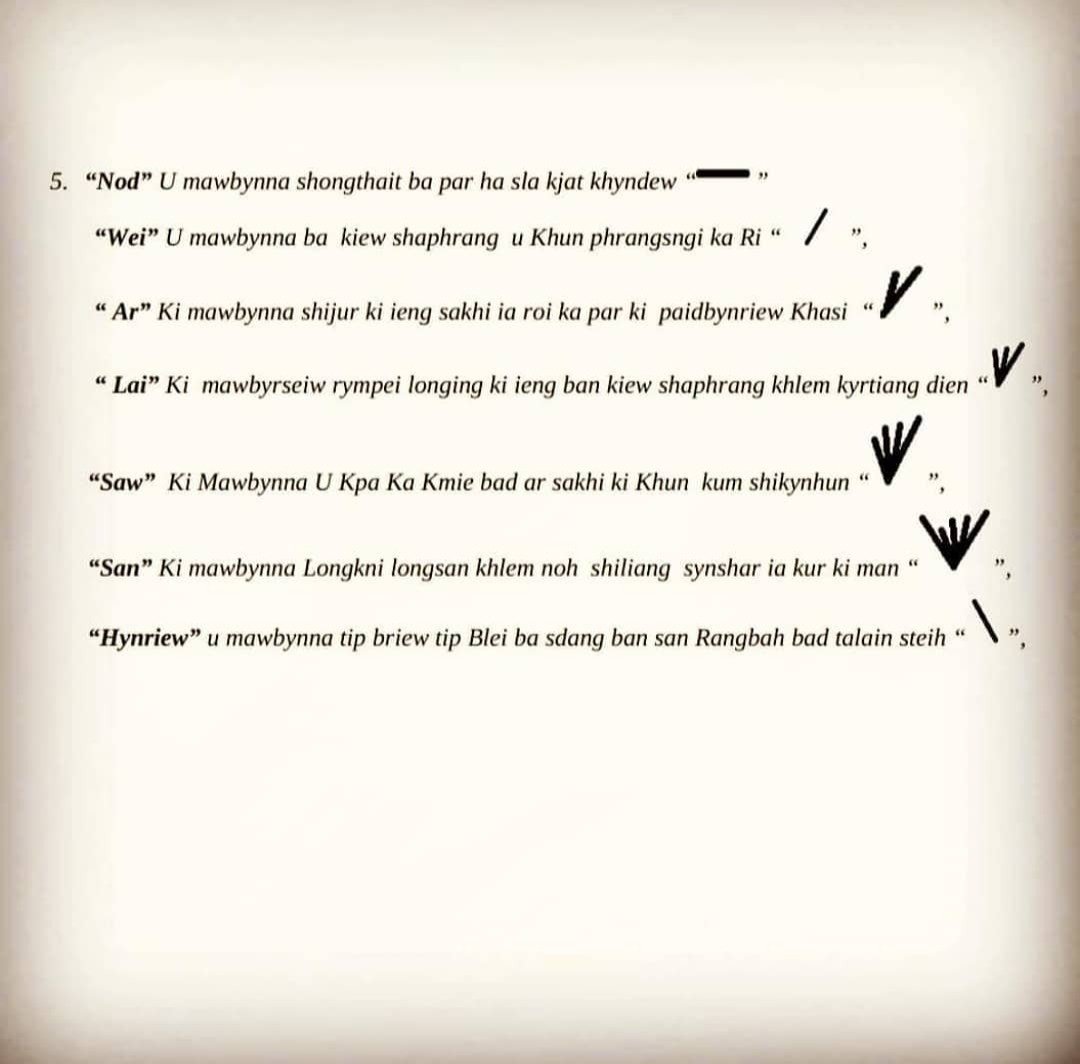
5. "Nod" U mawbynna shongthait ba par ha sla kjat khyndew
"Wei" U mawbynna ba kiew shaphrang u Khun phrangsngi ka Ri
" Ar" Ki mawbynna shijur ki ieng sakhi i-a roi ka par ki paidbynriew Khasi
" Lai" Ki mawbyrseiw rympei longing ki ieng ban kiew shaphrang khlem kyrtiang dien
"Saw" Ki Mawbynna U Kpa Ka Kmie bad ar sakhi ki Khun kum shikynhun
"San" Ki Mawbynna Longkni longsan khlem noh shiliang synshar ia kur ki man
"Hynriew" u mawbynna tip briew tip Blei ba sdang ban san Rangbah bad talain stieh
"Hynñiew" Ki mawbynna hynñiew pateng ba snoh kti lang ban iai pynbha imlang sah lang
"Phra" Ki mawbynna jong ki Hima sawdong ki pud ki ker bad ki iada
"Khyndai" Ki mawbynna sah jingkynmmaw jong ki pateng longshuwa manshuwa
"Shiphew" Ki mawbynna shongthait ba dap pura ka kamai hok jong ki rta
6. Ki dak ñiew khasi ba ioh nongkynti na ki mawbynna;
Ki dei ki spah dak maian ba buh ki longshuwa manshuwa;
Namar ka "ia" ka juk Sati Ksiar la dap pura;
Ia ki dak ñiew la dei ban ri bad sumar bha.
"Ki Dak Ñiew Na Mawbynna” by R. D. H. Kharlukhi @davidkharlukhi is an original Khasi poem.
This beautiful and well-crafted poem brings together Khasi numbers and the different kinds of "mawbynna" (monoliths) that Khasi and Pnar culture possess, to create an ingenious symbolism. It is a significant effort to create an awareness of the deep, inextricable bond between man and nature. Most importantly, the poem highlights the lessons encrypted in nature which many of us do not perceive.
Thank you to Mr. R. D. H. Kharlukhi @davidkharlukhi for giving the permission to post his poem! This poem is available on amazon.in.
-
“Panur” (War) and “Diñ Kum” (Pnar)
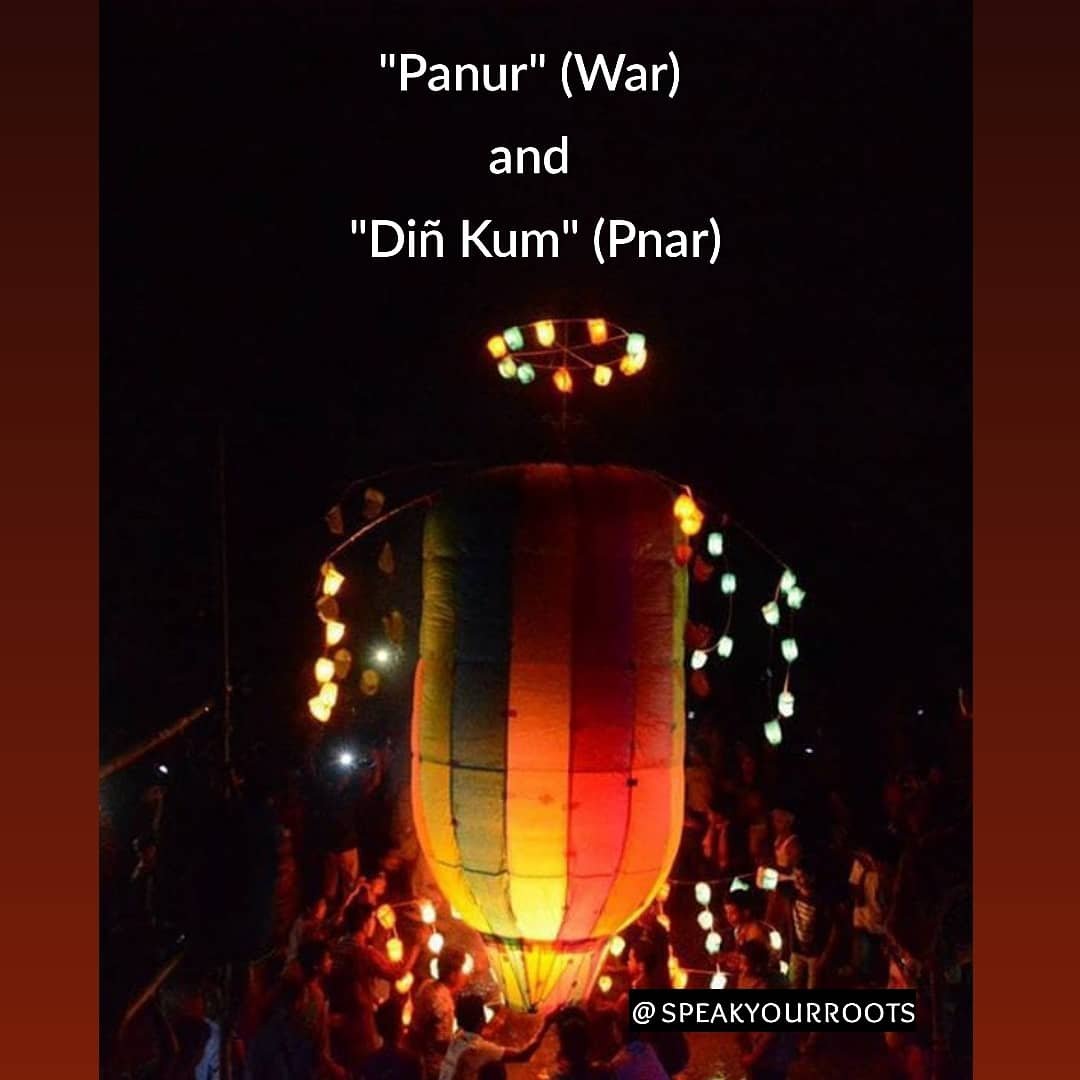
"Panur" (War) and "Diñ Kum" (Pnar) are traditional sky lanterns made by the War and Pnar communities. These particular sky lanterns are however different in appearance from the usual sky lanterns.
"Panur" and "Din Kum" are long and cylindrical in shape and are made of many rectangular pieces of kite paper joined together. The main lantern is called "Ka Kmie" (mother) and there are smaller lanterns called "Ki Khun" (children) as shown in the picture. "Panur" and "Diñ Kum" are made when there are festivals or any festive occasion. Alighting and flying them is done with great fervour and excitement.
"Panur" (War) and Diñ Kum (Pnar) are traditional sky lanterns that are painstakingly made by the members of the community. They look beautiful when they are lighted up and create a feeling of oneness and belonging, accompanied with chants and "phawar".🎈🎈🎈
Picture credit: @speakyourroots. Location: Nongjri, East Khasi Hills District.
-
When English words appear in Khasi sentences
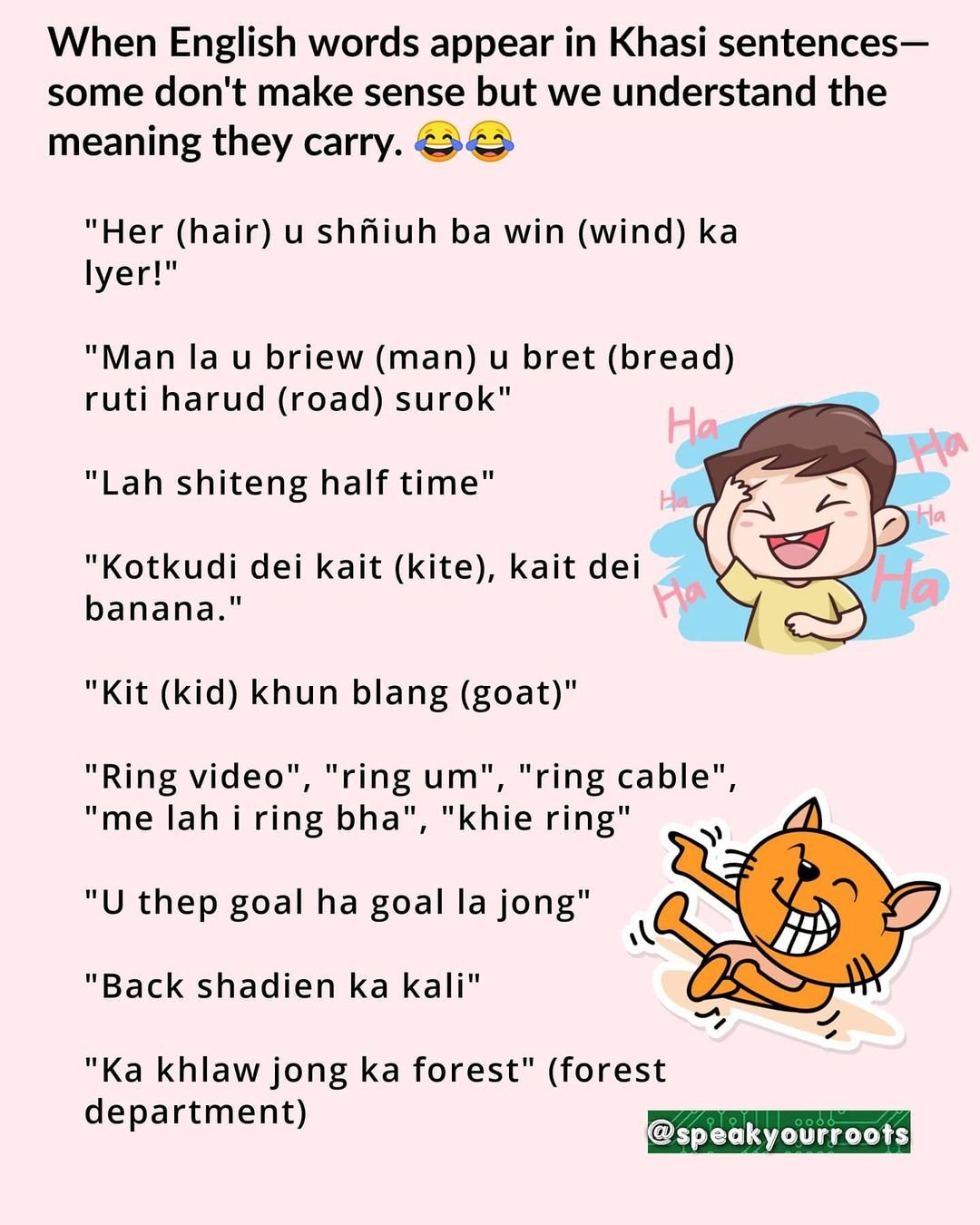
When English words appear in Khasi sentences, some don't make sense but we understand the
meaning they carry. Here are a few examples:
"Her (hair) u shniuh ba win (wind) ka lyer!"
"Man la u briew (man) u bret (bread) ruti harud (road) surok."
"Lah shiteng half time."
"Kotkudi dei kait (kite), kait dei banana."
"Kit (kid) khun blang (goat)"
"Ring video", "ring um", "ring cable", "me lah i ring bha", "khie ring."
"U thep goal ha goal la jong."
"Back shadien ka kali."
"Ka khlaw jong ka forest." (forest department)
The merging of languages is bound to happen and creates funny and interesting expression! 😂😂😂
Thank you @_catherinemelam @esra_syiem @shillongftw @jeanrichardmawa @a_pocketful_of_plums @courageaity @longnamkharpuri @wthongnj for your contributions! 😆😆😆