Tag: indigenouslanguageconservation

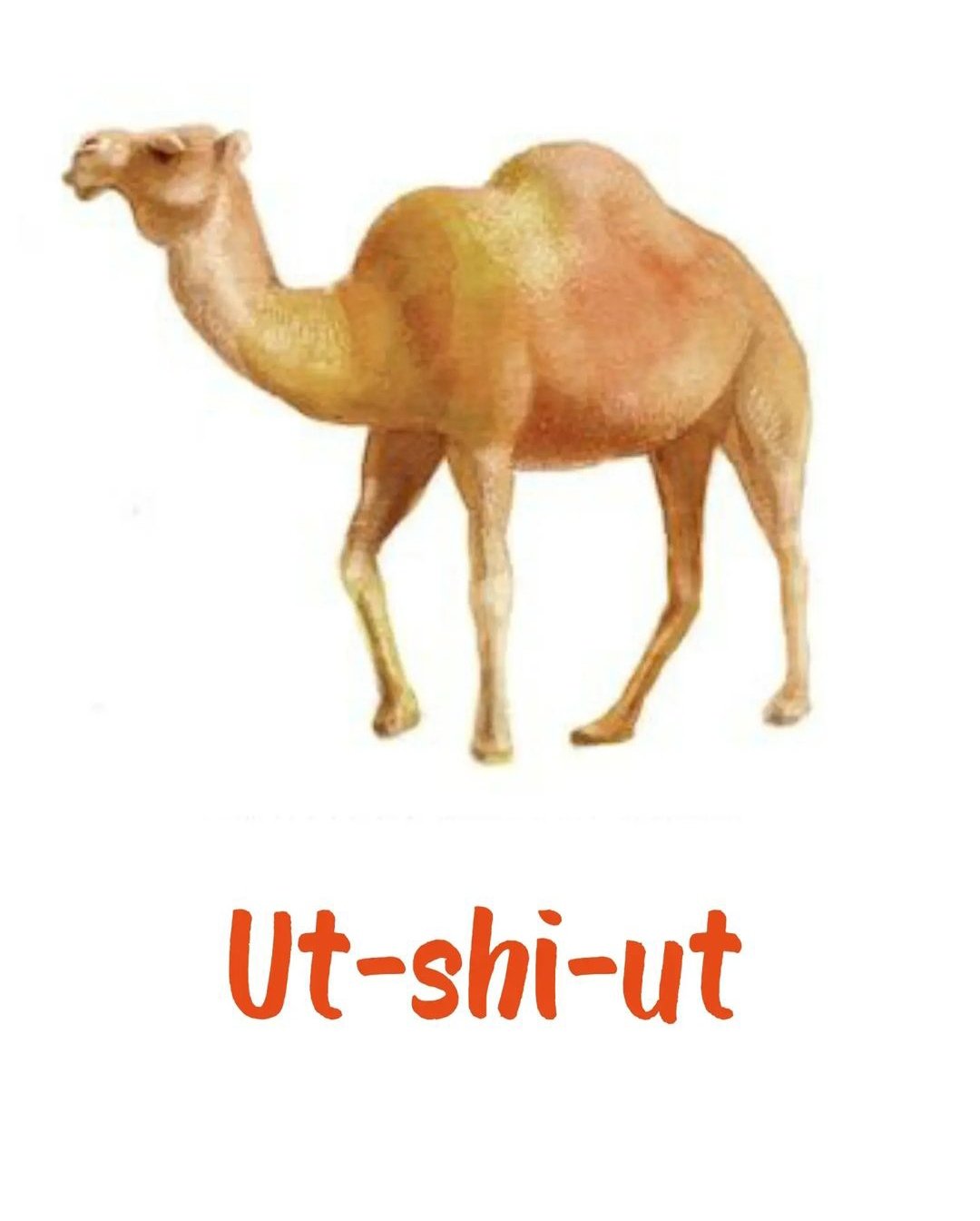
  • Ut-shi-ut

    "Ut-shi-ut" ka mut haba suki jai ne haba ïai buh teng. Ha ka senten ngin ong, "U trei ut-shi-ut ïa ka kam khlem dep shuh".

    "Ut-shi-ut" is an adverb which means someone who is slow and sluggish in doing things or someone who procrastinates.

    "Ut" also means "camel" in Khasi, so "ut-shi-ut" may be a reference to the rhythm and measured pace at which a camel walks.

    Khasi adverbs are witty and visually descriptive, along with an emphasis on the aural quality of words. 🗣️👌

    🟡 English translation by @speakyourroots

  • Bia

    Bia [adverb] The formal union of a man and a woman, typically recognized by law, by which they become husband and wife, a marriage

    This meaning of the word "bia" has been taken from the Pnar-English Dictionary by Sajeki Passah (2013).

    Bia [noun] marriage; wedding. -verb. bia ka•a to marry; to wed;

    This meaning of the word "bia" has been taken from the Garo-English Dictionary by P. R. Marak (2010).

    Khublei Chiboon @micromotives for quite an interesting observation! 😄👍

    Who would have thought that a word in the Pnar and Garo languages would be the same and have the same meaning too.

    Sngew kmen ba lah nang bun na ngi kiba pule ïa ki dictionary ne ki dienshonhi, ki ban ai bun ki jingtip ïa ngi. 👏👏

  • Phlanduman and Thlandaman

    "Phlanduman" ka dei ka kyntien Khasi kaba mut kaba kren ban ïalam bakla ïa ka jingmut da kaba kren kumne kumtai. Ka thew ruh ïa kaba shukor ne thok da ka rukom kaba leh mynleh hok.

    "Thlandaman" toh i kyntien Pnar i wa mut ha wa klam tyngkleiñ yow pynsñiawthooh bakla ya i yïumut wa sakhiat. Jooh ong i pyn thlandaman hawa thok næ chukor da iwa pynyoo kam iwa sakhiat.

    Both "Phlanduman" (Khasi) and "Thlandaman" (Pnar) mean to talk in a roundabout way so as to deliberately make a person misunderstand something or to deliberately divert the person's train of thought. The words refer to the act of lying or deceiving so as to make something appear true.

    "Phlanduman" ( Khasi) and "Thlandaman" (Pnar) are such interesting words 🤓🤓
    They both testify to the dichotomy between appearance and reality, a dichotomy that marks human life, but which is not easily perceived.

    English, Khasi and Pnar expilcation by @speakyourroots

  • Janai-Jaton

    Janai: Babeit ne babit bha, ka thew ïa ka jinglong kaba thikna bad kaba paka bha.

    Jaton: Ïa ka ktien jaton la pyndonkam lang bad ka ktien janai. Haba ong Janai-Jaton, ka mut khnang khnang lane wat pep, kum haba ong "sngewbha wan janai-jaton".

    Janai: What is wholesome, bearing clarity and goodness. Consequently this refers to the quality of being certain, satisfactory and the best.

    Jaton: The word "jaton" is used with the word "janai". When we say "Janai-Jaton" it means without fail, implying the certainty with which something needs to happen or to be done. For example, when it is said "Please come janai-jaton", it means that the person has to come, with no excuses for not showing up.

    "Janai-jaton" is a Khasi "ktien kynnoh", two similar meaning words that form a phrase, containing a two-fold significance. 🔡💭

    🟡 English translation by @speakyourroots

  • Tep eit miaw

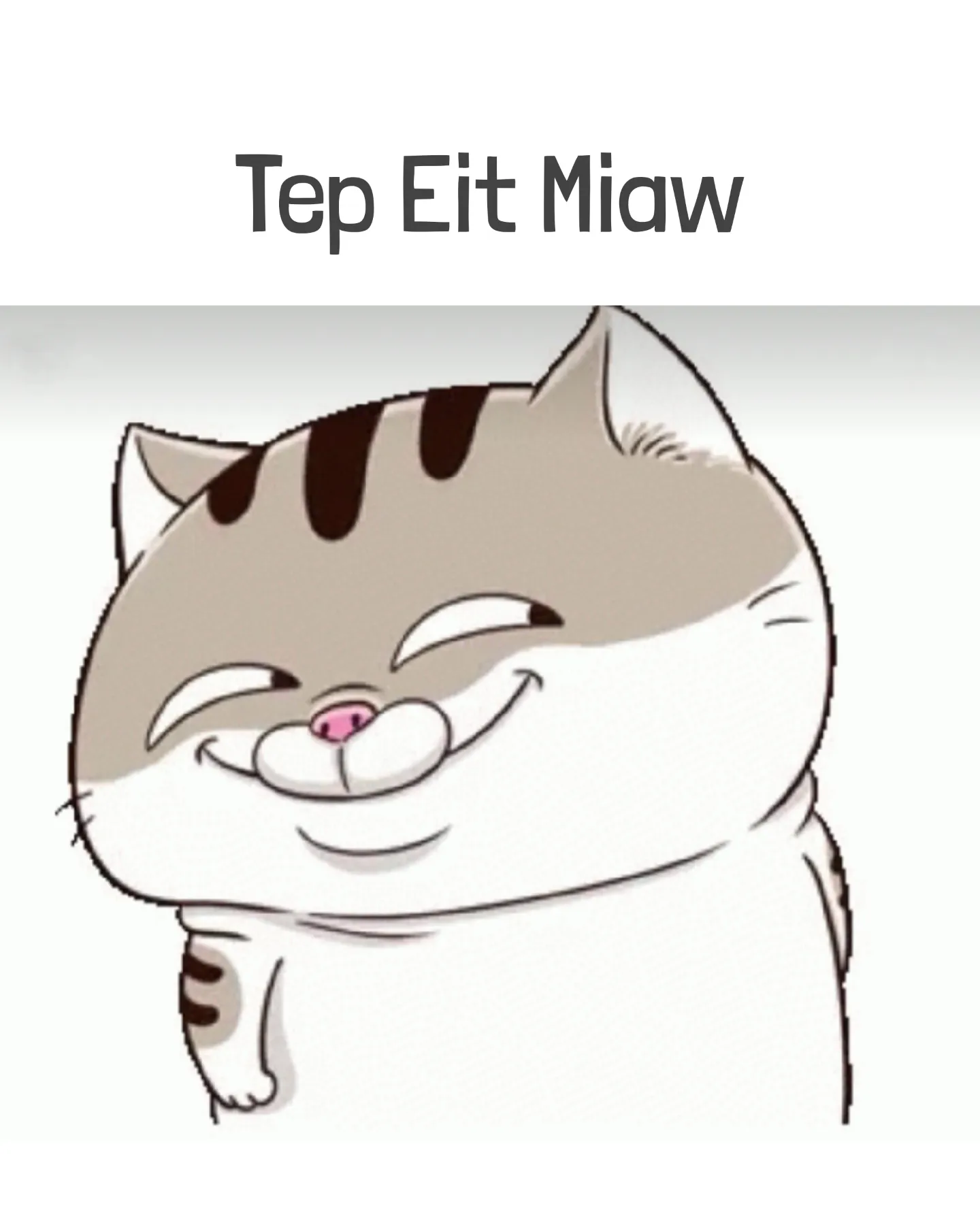
    Ka jingong "Tep eit miaw" ka don ar jingmut.

    Ka jingmut kaba nyngkong ka long ban leh klet ïa kaei kaei.

    Ka jingmut kaba ar ka long kaba pyrshang ban tap noh ïa ka jingshisha jong kaei kaei da kaba pyni daw da kumne kumtai.

    The Khasi phrase "tep eit miaw" has two meanings.

    The first meaning is to pretend to be forgetful of something.

    The second meaning is the attempt to cover up the truth about something with frivolous reasons or excuses.

    "Tep eit miaw" is a Khasi phrase that literally means to bury cat poop 😸💩 Love the graphic imagery of Khasi phrases! 😂

    We've all definitely been in such a situation 😂😅 And there's nothing like indigenous sayings to drive home a point.

    🟡 English translation by @speakyourroots

  • English to Khasi translation

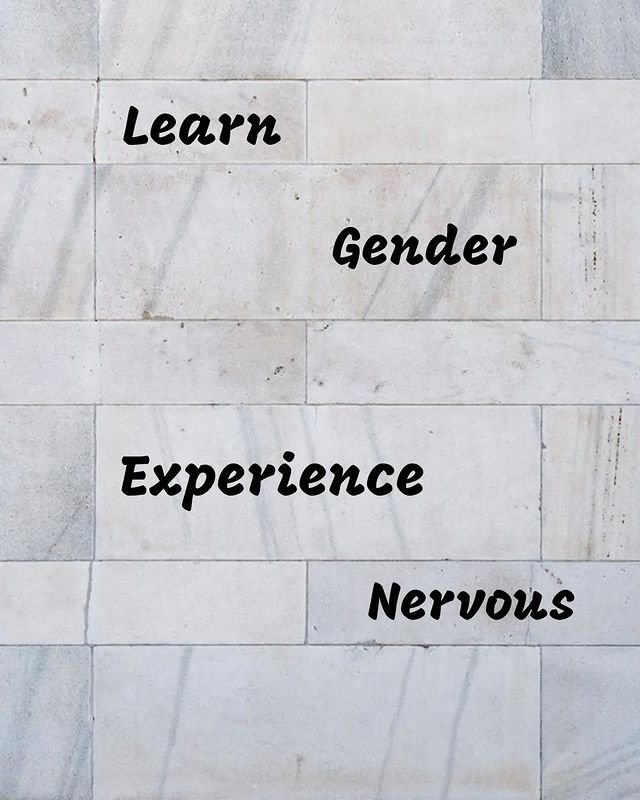
    Gender – Ka jingsngew ba dei kynthei ne ka jingsngew ba dei shynrang, kat kum ka rukom im, ka rukom pyrkhat bad kat kum ki jingngeit bad jinghikai ka iymbriew.

    Experience – Ki jingjia bad jingshem ha ka jingim kiba ai ka jingsngewthuh shaphang ka longbriew manbriew.

    Learn – Ban ksoh ia ka jingtip, ka jingsngewthuh bad ka jingstad.

    Nervous – Ka jingtieng kaba wan bad ka sngew syier bad ka pisa jingmut.

    Lah bun na ki nongbud jong ka page kiba la kylli kumno ban buh ha ka ktien Khasi ïa kine ki kyntien English. 🔡💭 La pyrshang ban pynkylla sha ka ktien Khasi ha ka rukom ban pynwan ïa ka jingmut jong kitei ki kyntien. 😄🙏

    Many followers of the page have asked how to translate these English words. 🔡💭 This is an attempt to place the right Khasi words so as to get the meaning of the words correctly. 😄🙏

    🟡 Khasi translation by @speakyourroots

  • Ka Jingduwai Blei U Khasi/ The Prayer of The Khasi

    Ka Jingduwai Blei U Khasi, The Prayer Of The Khasi

    from U Khasi Hyndai (1959) written by Rash Mohon Roy Nongrum

    Naduh mynhyndai ba la mih la don ki symbai bynriew halor snieh i Mei Ramew, ma ngi ki Khasi haba ngi duwai ngi kyrpad ha ki pokjat U Pa Blei Trai Kynrad U Nongthaw Uba dap lut baroh sawdong, Uba ïohi lut baroh sawdong, ngi phai ka khmat sha mihngi bad la ki kti baroh arti, ngi dem khrup bad ngi duwai kyrpad ba Un ai ka jingkyrkhu ka jingisynei halor jong ngi ki symbai bynriew. Im ju dei ban phai khmat sha sepsngi.

    Kane ka long naduh kiba mynhyndai ba ki riewtymmen jong ngi haba ki duwai, ki phai khmat sha mihngi, haba ki jer kyrteng ïa i khunlung iba dang kha ba in koit in shait bha, ki duwai ha ki pohjat U Pa Blei Kyurad U Nongthaw da kaba phai sha mihngi. Ma ngi ki Khasi ngi ong ba kaba sang ban thaw dur ne ban mane ïa ka maw ka dieng ne ïa u para briew ba dang thaw dang buh hi U Pa Blei Trai Kynrad.

    Ngi leh bad ngi tip tang ka duwai da ka ktien kaba khuid kaba sugur ha U Pa Blei Trai Kynrad ka long kaba dei kaba biang.

    Since time immemorial with the existence of human beings on Mother Earth, we Khasis pray to God the Father the Creator who fills all space, who sees all things, by facing towards the east, with folded hands, bending and kneeling down, beseeching for blessings and mercy over humanity. It is forbidden to face the west while praying.

    This has been established since ancient times with elders facing the east while praying. During the naming ceremony for a baby too, performed for the health and well-being of the child, prayers are delivered at the feet of God the Father the Creator by facing towards the east. Khasis deem it sacrilegious as well as forbidden to create idols and to worship stones or trees or other fellow human beings created by God the Father the Creator. What is done and known by the Khasis is that, the words of a prayer are honest and pure, that this is right and deserving to be expressed to God the Father.

    An earnest prayer lightens the heart and clears the mind 😌✨ Many cultures and religions face the east while praying and this is found among the Khasis too 🙏🌞☀️🌄

    Ka jingduwai ka mih na ka mynsiem kaba sngew nguh, kaba dap da ka jingieit bad ka jingkyrmen 🙏✨

    🟡 English translation by @speakyourroots
  • Kurwan!

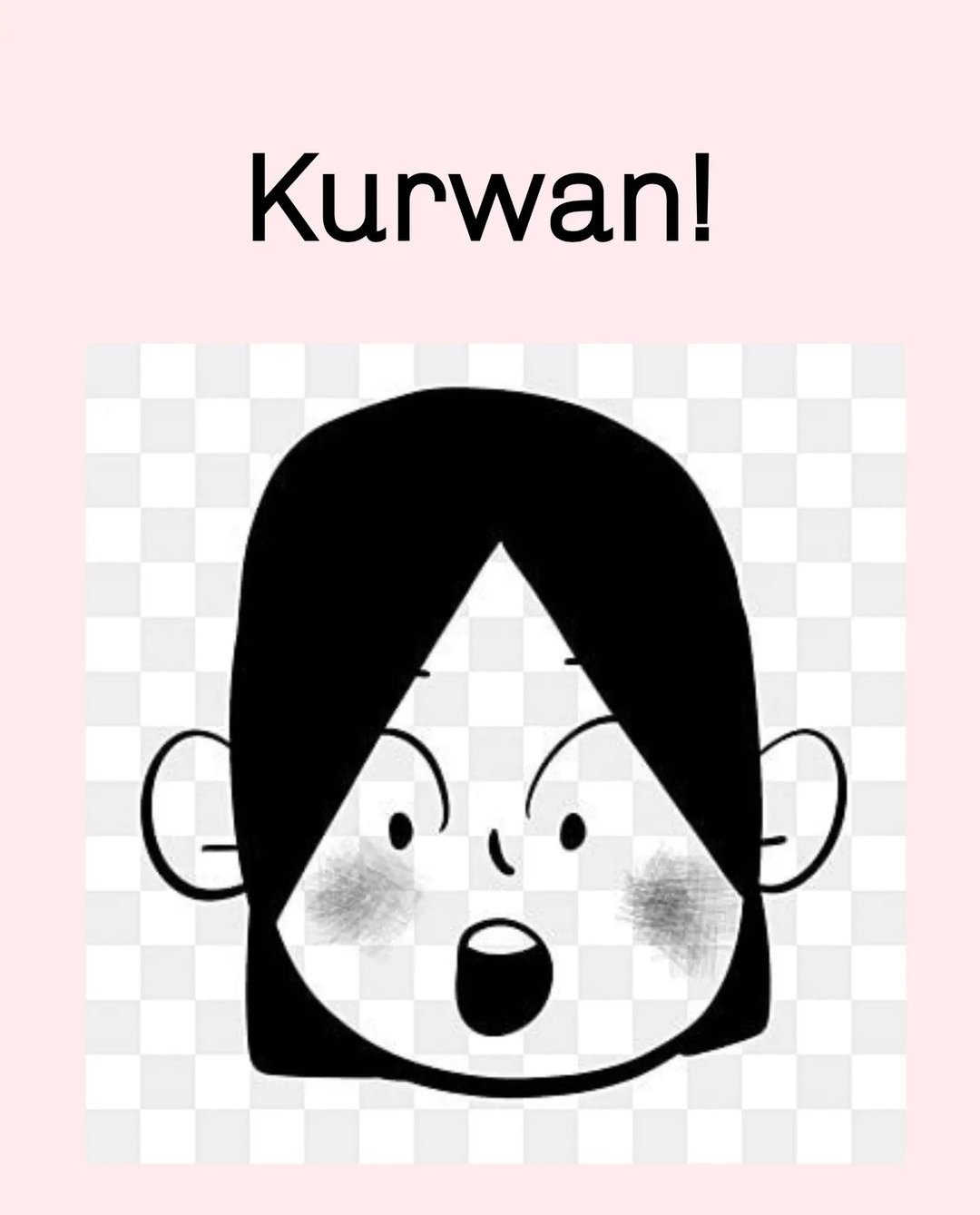
    Ka ktien "kur" toh hawa khut næ pah ïa yi ïa yi, khamtaam hawa khut syiar, kam wa jooh ong i "kur kur". Ka ktien "wan" mut wada lai tæ wan biang. Ka ktien "kurwan" man kam wa khut biang ïa iwon iwon i iwa da laai yo'u man biang i jooh i rakom man kamwa dang dæp. Da'i wa ong kurwan man kam wa pynstiñ ya i man i long wa khia ha i tu por wa dang dap jia won iwon hawa khyrngiat næ phylla.

    Ka ktien "kur" ka dei kaba khot ne wer, kum haba khot syiar ngi ong "kur kur". Hangne ka ktien "wan" ka thew ïa kaei kaei kaba leit tangba kaba la wan biang. Ka ktien "Kurwan" ka long kum ban khot biang ïa ka jinglong jingman kaba la dep, ban oh ïa ka jinglong jai jai. Da kaba ong kurwan ka pynsting ïa ka jingkhia jong kano kano ka jingjia kaba dang jia shen shen haba kyndit ne phylla.

    The word "kur" is used when we call out to something, like when we call out to chicken we say "kur kur". In the context of "kurwan" the word "wan" refers to something that has gone but has come back again. The Pnar word "Kurwan" is used in order to recall or retrieve a moment which has gone, so that one feels calm and tranquil again. When the word "kurwan" is used, it is meant to lighten the effect of something that has happened, which caused shock or wonder.

    Ka ktien "kurwan" ka dei ka ktien kaba don ha ka ïa ka jingmut kaba pher bad la pyndonkam ïa ka ban thew ïa ka jingsngew kaba kyrpang. Ka pher na ka jingmut jong "kyndit" (Khasi) bad "khyrngiat" (Pnar). 😯😨😲😮

    The word "kurwan" has a specific meaning and usage. Its meaning is different from the Khasi word "kyndit" and the Pnar word "khyrngiat". 😦😧😱😯

    Khublei Shibun Anvil R. Laloo for sending this!

  • Ka interview kaba pura bad i Kong Alma M. Syiem, International Mother Language Day 2022

    Ka interview bad i Kong Alma M. Syiem ka dei sa kawei ka bynta jong ka rakhe ïa ka International Mother Language Day, kaba la ïa snoh kti lang da ka Speak Your Roots bad ka Big FM Radio, Shillong! 🗣️🗯️

    Kane ka dei interview kaba pura bad i Kong Alma M. Syiem ha ka jingrakhe ïa ka International Mother Language Day, kaba la pynlong ha ka 21 tarik u Rymphang 2022. 🗯️🗣️

    I Kong Alma M. Syiem i lah dei i nonghikai ïa kiba bun na ngi bad i don shibun kiei kiei kiba i la lap bad shem kum i nonghikai. Khublei Shibun Kong Syiem na ka bynta ka jingbate ïa ka jingtip bad jingshemphang jong phi! 🙏🙏

    This is the complete interview with Kong Alma M. Syiem on International Mother Language Day, the 21st of February 2022. 🗣️🗣️

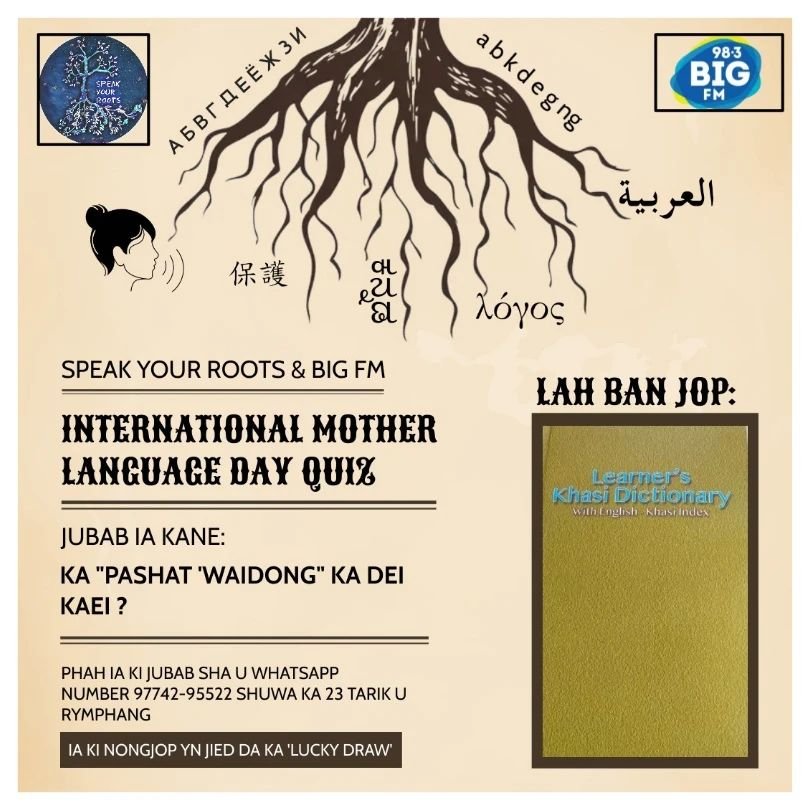
  • International Mother Language Day Quiz 4

    Kane ka dei ka jingkylli kaba khatduh jong ka International Mother Language Day Quiz! 😀

    Kum shi bynta jong ka jingrakhe ïa ka International Mother Language Day, ka Big FM Radio bad ka Speak Your Roots ki wallam ha phi ïa ka International Mother Language Day

    Quiz! 🗯️🗯️

    Phah ïa ka jubab jong katei ka jingkylli ba phin jop ïa ka Learner's Khasi Dictionary kaba la pynmih da ka Don Bosco Publications. Wat nym duh ïa kane ka lad ban ïoh ïa kane ka kot kaba kordor!

    This is the last question of the International Mother Language Day Quiz! 😀

    As part of the celebration of International Mother Language Day, Big FM Radio and Speak Your Roots bring to you the International Mother Language Day Quiz! 🗣️🗣️

    Send your answers to the question to the phone number given in order to win the Learner's Khasi Dictionary published by Don Bosco Publications. Don't miss the chance of winning this well-researched and valuable book!