Tag: khasi

  • Khasi language accepted in Calcutta University

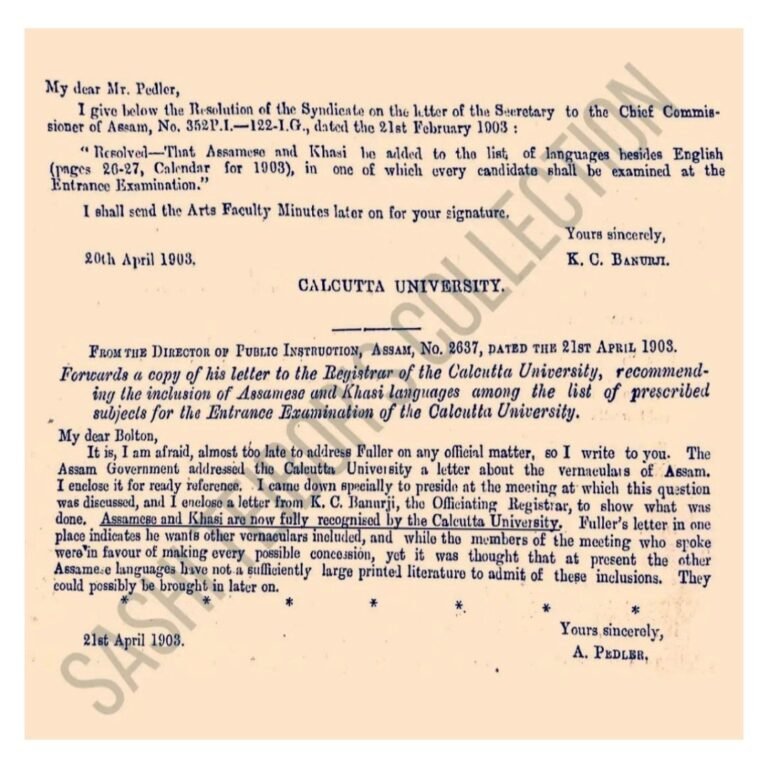
    In 1903, the Khasi language was accepted as one of the languages that could be used during entrance examinations in Calcutta University, West Bengal.

    Some information about Sir Pedler who is mentioned in the letter is here below (Source: https://en.m.wikisource.org/wiki/The_Indian_Biographical_Dictionary_(1915)/Pedler,_Sir_Alexander):

    Sir Alexander Pedler, F.R.S., C.I.E. (1901), Director of Public Instruction, Bengal (retired);

    Son of late John Standbury Pedler of Drilwich; Born in 1819;

    Education: City of London School and at the Royal College of Chemistry, London; Joined service, 1873; Meteorological Reporter to Bengal Government, 1889; Principal, Presidencv College, Calcutta, 1896; Director of Public Instruction, Bengal, 1899; Additional Member, Supreme Legislative Council, 1903; Vice-Chancellor, Calcutta University, 1904; retired, 1906. Address: 28, Stanhope Gardens, London.

    Khublei Shibun @historian_to_be for this contribution! 😀🙏 It is great to know that the Khasi language was acknowledged by the then British government as a language for entrance examinations.

  • United Nations Declaration on the Rights of Indigenous Peoples (UNDRIP) (Khasi translation)

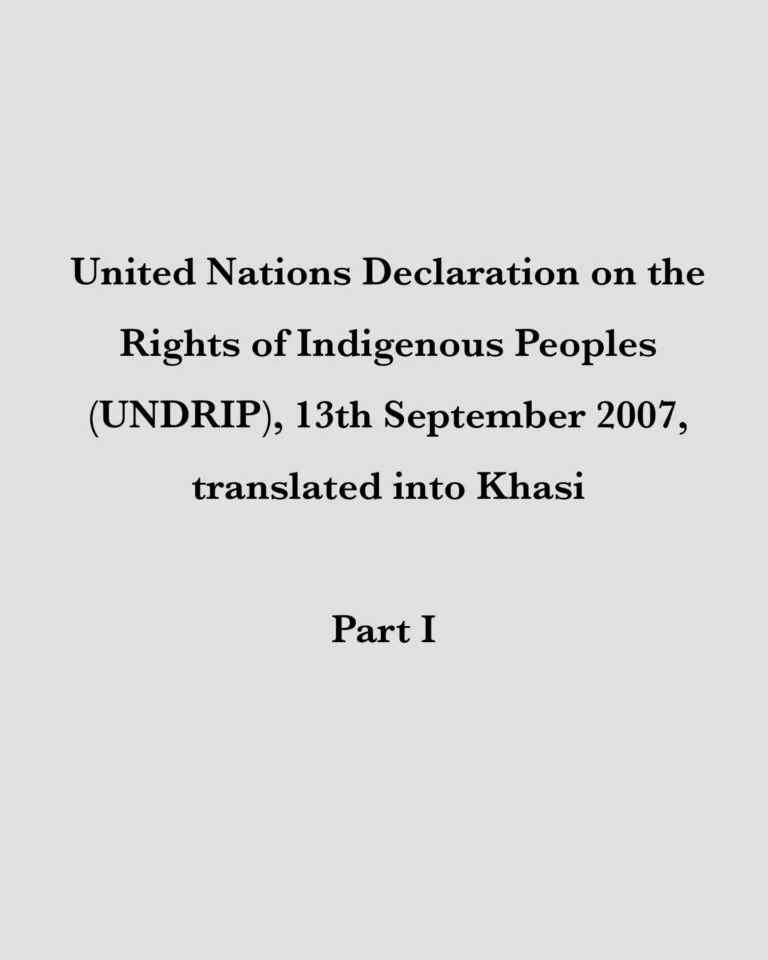
    Sngewbha ñion ha ka link hapoh ba phin lah ban pule ïa KA DULIR UNITED NATIONS HALOR KA HOK KI TRAI MULUK-TRAI JAKA

    https://grassrootshillong.org/publications/

    Ïa ka United Nations Declaration on the Rights of Indigenous Peoples (UNDRIP), ngi dei ban tip bad ban pule bniah bha ïa ka. ✍️🤓

    Khublei Shibun Kong @joypathaw ba phi la phah ïa kane ka jingpynkylla sha ka Khasi lyngba ka sengbhalang @grassrootshillong . Ngi ai khublei bad kitbok kitrwiang ïa ki kam jong phi bad jong ka seng. 👏👏👏

    The United Nations Declaration on the Rights of Indigenous Peoples (UNDRIP) is a legally non-binding resolution passed by the United Nations in 2007. It delineates and defines the individual and collective rights of Indigenous peoples, including their ownership rights to cultural and ceremonial expression, identity, language, employment, health, education, and other issues. Their ownership also extends to the protection of their intellectual and cultural property. The Declaration "emphasizes the rights of Indigenous peoples to maintain and strengthen their own institutions, cultures and traditions, and to pursue their development in keeping with their own needs and aspirations." It "prohibits discrimination against indigenous peoples," and it "promotes their full and effective participation in all matters that concern them and their right to remain distinct and to pursue their own visions of economic and social development".

    The goal of the declaration is to encourage countries to work alongside indigenous peoples to solve global issues, such as development, multicultural democracy, and decentralization.

    On Thursday, September 13, 2007, the United Nations voted by a vast majority of 144 in favor (4 against, 11 abstained) of the Declaration.

    Source: https://en.m.wikipedia.org/wiki/Declaration_on_the_Rights_of_Indigenous_Peoples

  • U diengshaiñ-doh da i Ribait Phawa

    Ha u ban ot-dkhot ne ot-lyngkhai,

    la mon-sngewbha ne haba donkam.

    Jingshlur nabar la shah ring-stai,

    Jingmut bakhraw na lyndet ki ksam.

    Ki jingkylli watla u jubab,

    U ïai pyrshang da jing-artatien,

    Watla long kumba leh jyndad

    U tieng bym ïohsngew haba phai-ktien.

    U rymmuiñ bad kohnguh khlieh,

    Da um sngew-thuh sngew-thaw;

    U Dieng shaiñ-doh ïoh kum shah thlieh

    U ai-nguh ï'u Nongthaw.

    NB** Dieng Shaiñ-doh: U briew uba shah ban beiñ eh.

    Khublei Chiboon @b.a.i.t_phawa_ wa thoh phi ya kani ka poitri kawa man ka rukom watai wa pher chaphang u dieñcheiñ doh 🙏🙏

    U nongthoh u thew ïa ka jingsngew bym-kot bor, jingsngew bym-lah kaba ksam ïa ki jingpyrkhat jong u briew bad kaba pyntlot ïa u. U "Diengshaiñ Doh" u don ha u ka jingmut kaba ha lyndet kaba jylliew. Ïa une u tiar ba ngi pyndonkam la pynsyriem ïa u briew uba shah kren beiñ ne shah lehbeiñ jyndei, hynrei u bym don ka mynsiem leh kylliang.

    U Diengshaiñ Doh or the meat chopping block is a telling presence of how much Khasis love their meat 😄😄 For Khasis "U Diengshaiñ Doh" bears a deep meaning behind its function. The chopping block is likened to an individual who experiences cruel words said towards him or her, which in other words amount to revile and who is also a victim of ill-treatment. Thus, "U Diengshaiñ Doh" is a person who is a victim to abuse in many forms.

  • Bia

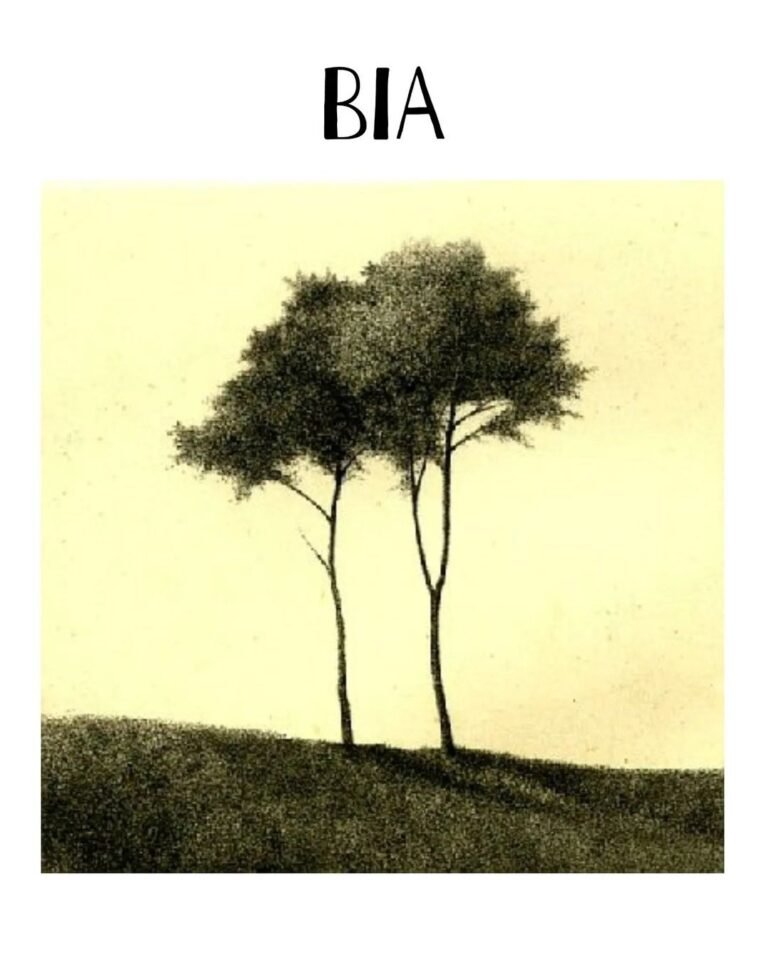
    Bia [adverb] The formal union of a man and a woman, typically recognized by law, by which they become husband and wife, a marriage

    This meaning of the word "bia" has been taken from the Pnar-English Dictionary by Sajeki Passah (2013).

    Bia [noun] marriage; wedding. -verb. bia ka•a to marry; to wed;

    This meaning of the word "bia" has been taken from the Garo-English Dictionary by P. R. Marak (2010).

    Khublei Chiboon @micromotives for quite an interesting observation! 😄👍

    Who would have thought that a word in the Pnar and Garo languages would be the same and have the same meaning too.

    Sngew kmen ba lah nang bun na ngi kiba pule ïa ki dictionary ne ki dienshonhi, ki ban ai bun ki jingtip ïa ngi. 👏👏

  • Happy International Mother Language Day 2022

    Ka International Mother Language Day kaba kmen ïa phi baroh! 🌄🌧️🌈💫

    Ka ktien kaba sawa

    na ka mariang

    na ka khyndew

    na ki mawbynna

    na ki um

    ka dei kaba ngi kren

    ka dei kaba ai bor ïa ngi!

    The word that echoes

    from nature

    from the earth

    from monoliths

    from the waters

    is what we speak

    is what empowers us!

    🎶 Music by Anvil Ritre Laloo

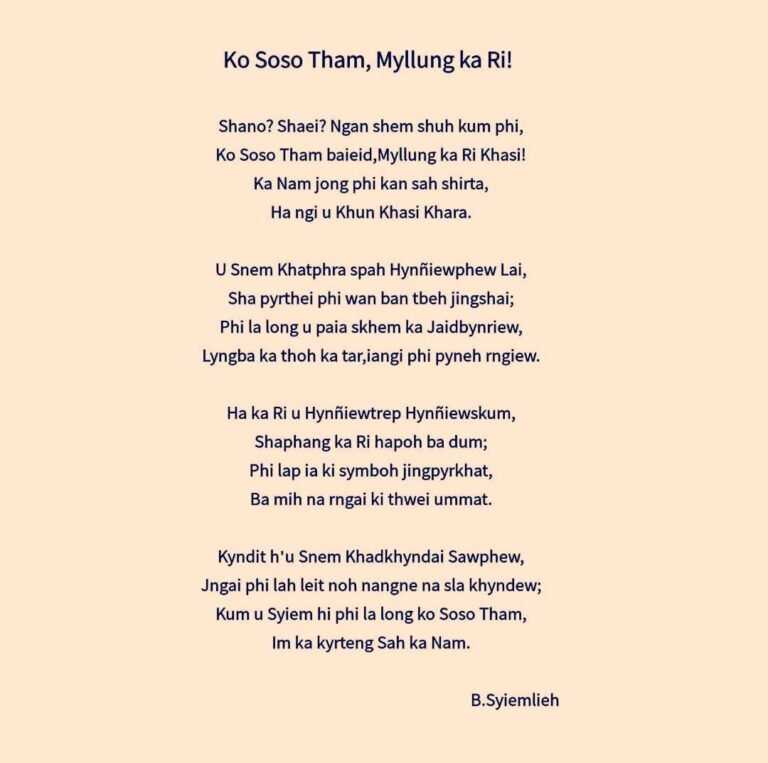
  • Ko Soso Tham, Myllung Ka Ri! da i Bawanshwa Syiemlieh

    Ko Soso Tham, Myllung ka Ri!

    Shano? Shaei? Ngan shem shuh kum phi,

    Ko Soso Tham baieid, Myllung ka Ri Khasi!

    Ka Nam jong phi kan sah shirta,

    ha ngi u Khun Khasi Khara.

    U Snem Khatphra spah Hynñiewphew Lai,

    Sha pyrthei phi wan ban tbeh jingshai;

    Phi la long u païa shlem ka Jaidbynriew

    Lyngba ka thoh ka tar, iangi phi pyneh rngiew.

    Ha ka ri u Hynñiewtrep Hynñiewskum

    Shaphang ka Ri hapoh ba dum;

    Phi lap ïa ki symboh jingpyrkhat,

    Ba mih na rngai ki thwei ummat.

    Kyndit h'u Snem Khadkhyndai Sawphew,

    Jngai phi lah leit noh nangne na sla khyndew;

    kum u Syiem hi phi la long ko Soso Tham,

    Im ka kyrteng sah ka nam.

    – Bawanshwa Syiemlieh

    Mynta ka taïew ngin kynmaw ïa ka lyngkhuh sngi ïap jong u myllung ba radbah ka ri Khasi u Soso Tham ha ka 18 tarik u Nohprah 1940, da kaba ngin post ïa ki poitri ba lah noh synñiang da ki paralok followers jong ngi. ✏️✒️🙏

    Ai ba ka jingshem mynsiem, ka jingshemphang bad ka jingieit ri jong u myllung Soso Tham, kan long ruh ka jingïohkynti jong ngi ka ban pynkhlaiñ ïa ngi kum ka jaitbynriew. 🏞️🌄

    This week we commemorate the death anniversary of Khasi Poet Laureate U Soso Tham, on the 18th of December 1940, by posting poetry that has been generously contributed by our dearest followers. ✒️✏️🙏

    May the inspiration, conviction, wisdom and love for the Khasi land and people of the poet U Soso Tham be our inheritance that strengthens us as a community. 🏞️🌄

    We kick off this week's poetry with an original Khasi poem entitled "Ko Soso Tham, Myllung Ka Ri!" written by @bawanshwa_syiemlieh
    Khublei Shibun for sending this heartfelt poem! 😄😄🙏🙏

    @bawanshwa_syiemlieh says: "Ka jingthrang ka jong nga ka long ban kyrsiew ïa la ki para Khasi ki jong ngi ba kin ieid ïa kaei kaba dei ka jong lajong shuwa."

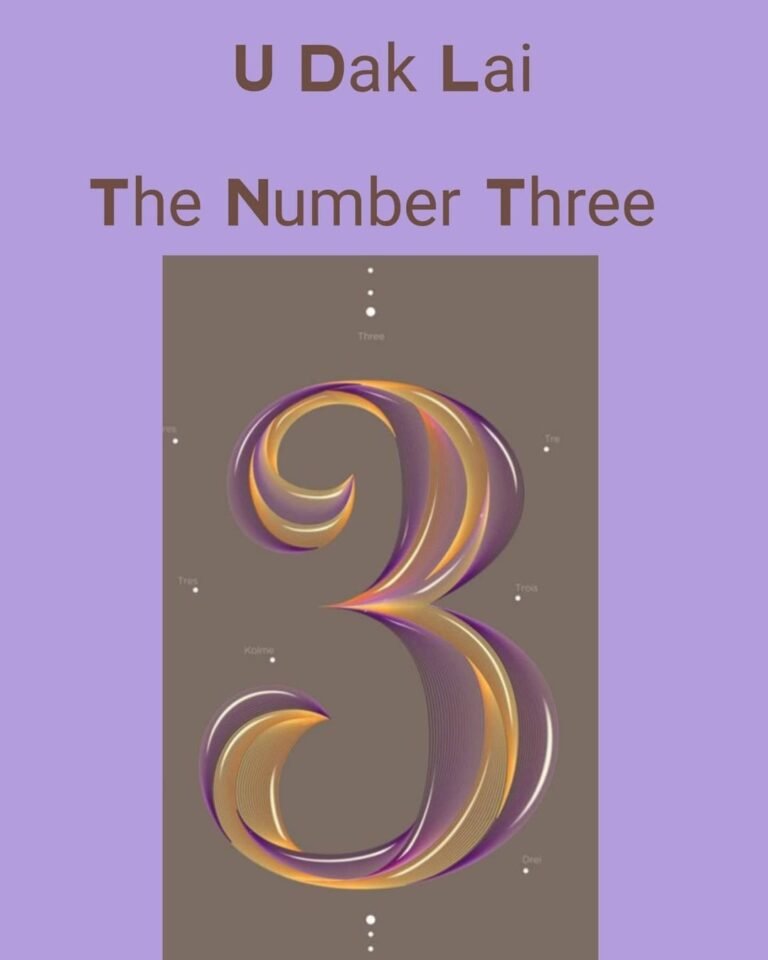
  • U Dak Lai, The Number Three

    U Khasi u don ka rukom pyrkhat kaba kham kyrpang ha ka jingïadei bad ki dak "Lai". Haba thung mawbyrsiew, u pynïeng lai tylli ki maw ban shet jingshet. Haba phah khubor na kawei ka jaka sha kawei pat, u pyndonkam lai tylli ki ksah ne kyrwoh. Haba jer khun shynrang, u pyndonkam lai tylli ki kyrteng bad lai tylli ki khnam. Haba thang briew, u pyndonkam lai tylli ki 'nam tympem ban siat ha ka kpep ha ka por thang briew. Haba pyrta shnong, u pyrta lai sien lai wat. Haba thung mawbynna kur, ki thung lai tylli ki mawbynna na ka bynta u kñi bad ar ngut ki pyrsa. Haba poikha poiman lane haba iap briew, ki ap lai sngi lai miet ban trei ia kiwei pat ki kam.

    The Khasis have a unique perception and regard for the number "3" When they erect a "mawbyrsiew" which is the stone used as support for cooking in the hearth they use three stones. When they send a message or news from one place to another, they use three "ksah" or "kyrwoh" which are rings made from threads of bamboo. When they choose a name for a son during the name ceremony, they choose from three names and also keep three arrows. At the cremation, the Khasis shoot three arrows called " 'nam tympem" in the place belonging to a specific clan for cremations. When there is a public announcement, the "sangot" addresses the people three times before making the actual announcement. When they erect the clan moniliths, there are three moniliths: one for the maternal uncle and the other two for his nieces or nephews. When there is a wedding or a funeral, the Khasis wait for three days to perform other work.

    The number "3" has a significance that is wide ranging for Khasis and Pnars. Here is an excerpt from U Khasi Bad Ka Mariang by Rev. Dr. Ïarington Kharkongor. 3️⃣3️⃣3️⃣

    🟡 English translation by @speakyourroots

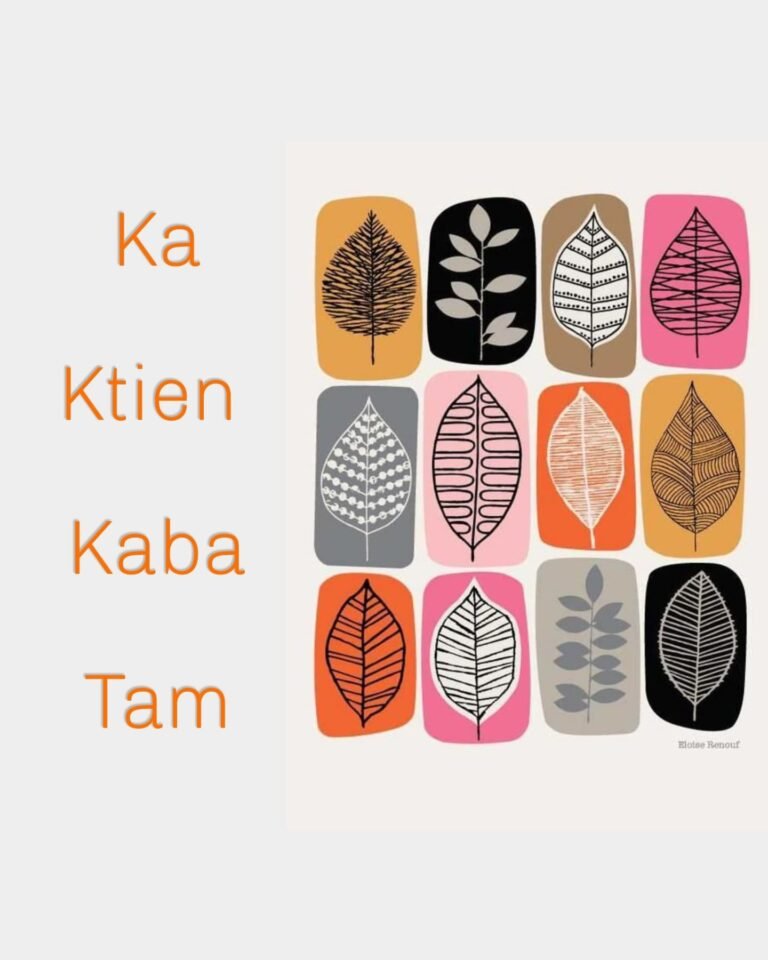
  • Ka ktien kaba tam

    "Ka ktien kaba tam" ka dei ka jingong kaba ngi ju ïohsngew na ka por sha ka por. Ngi lah ban batai ba kane ka thew ïa ka jingshai, ka jingkordor, ka jingbha, ka jingdonburom bad ka jingshongkhia jong ka rukom kren jong no jong no. Kine ki kyntien namar ki long kiba la mih na ka jingbha ki kham kordor ban ïa kano kano ka jingai ne ka kam.

    Namar ba ki Khasi ki kheiñ kynsai ïa ka ktien, ka ktien kaba kren ka long kaba donkam bha. Ym lah ban don ka jjngbymsuidñiew ne jingkhlemakor haba kren ïa kaei kaei. Kawei pa kawei ka kyntien ka dei ban long kaba shongsbai bad shongnia da ka jingmut bad ka jingshisha.

    Ha kawei pat ka liang, ka ktien ruh ka donkam ïa ka jingsngewthuh. Lada u nongsngap um sngewthuh ïa u nongkren kata ka long ka jinglehnohei. Ka bor jong ka ktien kan neh tang lada u nongsngap u pyrkhat bad sngewthuh ïa ka. Ha kane ka rukom u nongsngap u ban sa long u nongkren ïa ki pateng ki ban nang wan, u bat ïa ka bynta kaba kyrpang.

    "Ka ktien kaba tam" is a phrase that refers to the clarity, value, goodness, honour and dignity in the way a person speaks. Because of the quality of these words they are held to be more valuable than any gift or deed.

    As Khasis hold the spoken word in high esteem, anything that is spoken is deemed as important. There should be no carelessness or indifference when speaking to others. Each word is worth its weight in gold, possessing a depth of meaning and truth.

    On the other hand, the spoken word requires understanding. If the listener does not understand the speaker then it is useless. The power of the spoken word will endure if the listener thinks about and understands what is being said. In this way, the listener who will be a speaker to future generations, also plays an important role.

    Here is an attempt to explain the Khasi phrase "Ka ktien kaba tam" 🗣️🗣️Sometimes words are stronger than any action or gesture and this is why Khasis emphasise on the intrinsic value of the spoken word. 🌈💫

    Please feel free to add more in the comments!

    🟡 Khasi and English explication by @speakyourroots

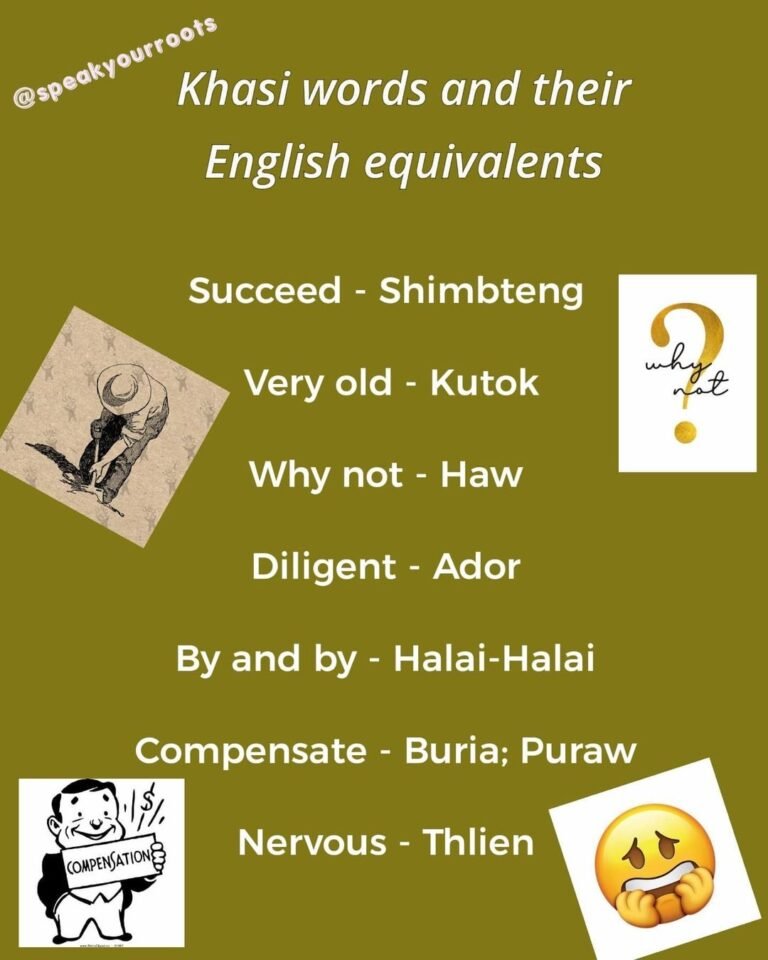
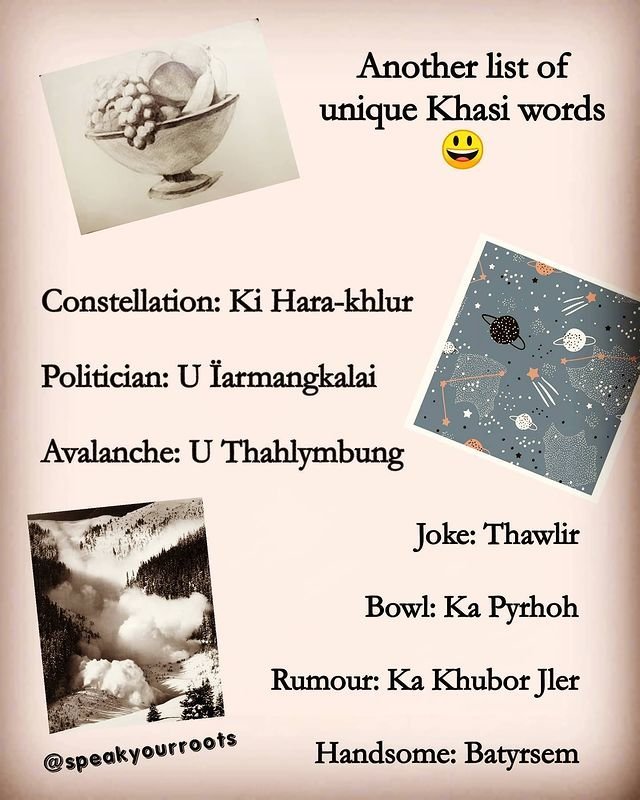
  • Khasi words with their English equivalents

    Succeed – Shimbteng

    Very old -Kutok

    Why not – Haw

    Diligent – Ador

    By and by – Halai-Halai

    Compensate – Buria; Puraw

    Nervous – Thlien

    Here is another list of Khasi words with their English equivalents 🤓🤓

    #habaimkaktienimkajaitbynriew

    A people are alive when their language is alive!

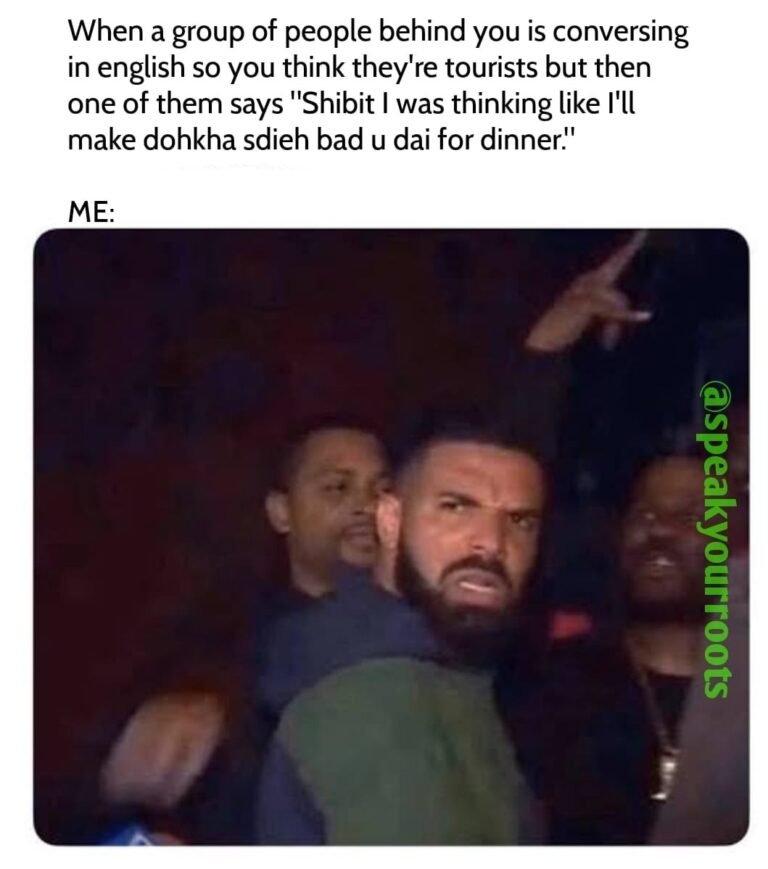
  • Khalish

    Kane ka thew ïa ngi baroh 🤭🤭😂😂😅😅

    Bun na ngi, ngi khleh lang ïa ka ktien Khasi bad ka ktien phareng haba ïa kren ne ngi shu ïa kren beit tang da ka phareng suda ruh.

    Kaei kaba ngi dei ban sngew ka long ba ngi dei ban pyrshang ban kren tang da ka ktien lajong lada ngi don para ma ngi. Ngin lap ba kin don bun ki ktien kiba ngim tip ha ka Khasi. Ngin lap ruh ïa ka jingshongkhia, ka bor bad ka jingïar kaba don ha ka ktien la jong haba ngi kren ïa ka.

    Kito kiba sah sha jngai na la ri, ki lap ba katno kata jingkwah ban kren da ka ktien la jong. Bad ba da lah ïoh ban kren, ki da sngew hun shisha! Ka ktien ka pynjan ïa ngi sha ki lyer, ki lum ki wah, ki dieng ki siej bad ka pynskhem ruh ïa ki thied tynrai bad ki nongrim longbriew manbriew jong ngi! 💚🙏