Tag: khasi

  • Legal Terms in Khasi

    Lawyer – Muktiar

    Lawsuit – Ka Mokotduma

    Deed – Ka Dulir Khyndew

    Gift deed – Ka Jingaisngewbha/ Ka Dulir Jingaisngewbha

    Lease deed – Ka Dulir Ai Wai

    Fine – Ka Jarimana/ Ka Daiñkuna

    Judge – Nongbishar

    Magistrate – Majistor

    Court house- Ka Ïingkashari/ Ka Ïingbishar

    Witness – Nongsakhi

    Boundary description – Pud Sawdong

    Court appearance – Hajir

    Signature – Jingsoi

    Judgement/ Order – Ka Jingbishar/ Ka Rai

    Bailor – Bahjamin

    Divorce – Pyllait San Shyieng

    Maintenance – Bai Bam

    Defamation – Ka Jingpynbudnam

    Plaintiff / Petitioner – Nongmudui

    Defendant/ Respondent- Nongshahmudui

    Offence/ Illegal act – Ka Kam Be-aiñ

    Tax/ Royalty – Musur

    Cross-examine – Swar

    Petition – Dorkhad

    Mortgage – Ka Bynda

    Many of us might not know the correct legal terms in Khasi. 📃🖋️ So here they are!

    Khublei Shibun @nisha_daphi for sharing your legal know-how! 😀🙏

  • Ïasuh Marïap

    Ka jingong "Ïasuh marïap" ka mut kaba rai kut ïa la ka jingim da kaba pynmih lut ïa la ka bor ha kano kano ka thong ne jingpyrshang khatduh artat.

    Shuh shuh, lah ban batai ba ka dei ka jingïaleh kheiñduh ïalade bad kata ka jingïaleh ka dei kaba khatduh ïawai artat.

    The phrase "Ïasuh marïap" refers to an irreversible decision that is taken with regards to oneself, where there is an absolute and complete expending of power or energy in any competition, challenge or endeavour.

    This competition, challenge or endeavour may be the last or final one in the life of this particular individual. The phrase "do or die" may partially describe this situation.

    The Khasi phrase "Ïasuh Marïap" reflects the grit and determination that we need in our lives. ⚡⚡⚡

    🟡 English translation by @speakyourroots

  • Gender in the Khasi language

    The English language does not have a grammatical gender as many other languages do. This means that it does not have a masculine gender or a feminine gender for nouns. The Khasi language however, gives gender to nature and objects. The two genders are distinguished only by means of the articles "U" for masculine and "Ka" for feminine in the case of singular nouns. For example, Cooked rice is "Ka ja" (feminine), A tree is "U dieng" (masculine), A road is "Ka surok" (feminine), A bed is "Ka jingthiah" (feminine), Chilli is "U sohmynken" (masculine), Cough is "U jyrhoh" (masculine) and Fever is "Ka shitmet/ jingshit" (feminine).

    Many other languages also give gender to animate and inanimate objects. Some of these include German, Hebrew, French and Kashmiri.

    Here are some words to compare:

    Spoon: In Khasi "ka shamoit" is feminine, while in German "der Löffel" is masculine.

    Salt: In Khasi "ka mluh" is feminine, while in French "le sel" is masculine.

    Crow: In Khasi "ka tyngngab" is feminine, while in Kashmiri "کاو" [ka.w] is masculine.

    Book: In Khasi "ka kot" is feminine, while in Hebrew "סֵפֶר" I/'sefer/I is masculine.

    In the Khasi language, nature and objects are given a gender. This is present in the French language too and is mentioned by Rev. H. Roberts in his book A Grammar of the Khasi Language (1891). Thank you @naphisabet1303 for initiating this in our conversations! ♂️♀️♂️♀️

    If anyone has studied Linguistics, we welcome your thoughts and observations in the comments section! 😀

  • Biah Phongrai

    Ka "Biah Phongrai" ka dei ka pylleng ba kha u skaiñ ha ka kynja doh.

    The Khasi phrase "Biah Phongrai" literally refers to eggs a fly lays on flesh.

    Ka jingong "Biah Phongrai" ka dei ka jingpynbud nam sniew, jingpynjah burom bad ka jingleh ñiewbeiñ ïa uno uno u briew da u riewpoh, da kaba pyndonkam da ki ktien khlem akor bad ki ktien lamler.

    Metaphorically, the phrase describes an attempt to defame, dishonour, humiliate and insult someone. The guilty individual works to maliciously tarnish the reputation of someone, to create slander and commits what is stated to be character assassination.

    "Biah Phongrai" is a Khasi phrase which means to taint someone's reputation with malicious slander. Thank you @pyndap_r for bringing this up. 😊😊

  • Another list of unique Khasi words

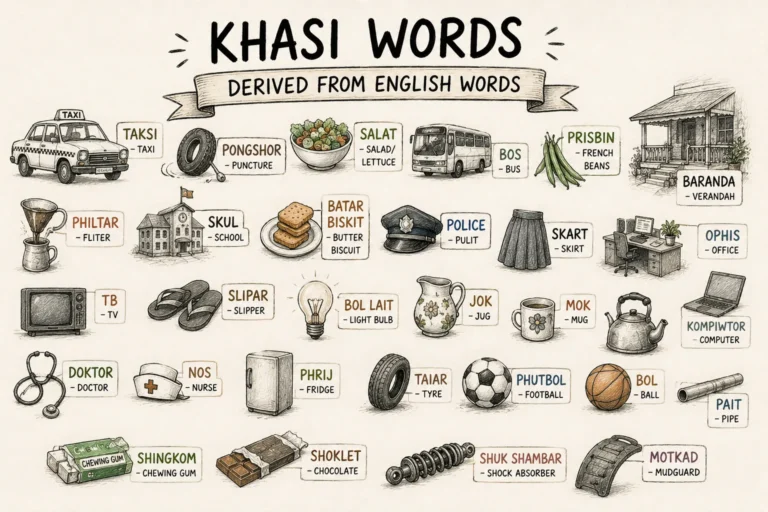
    Constellation: Ki Hara-khlur

    Politician: U Ïarmangkalai

    Avalanche: U Thahlymbung

    Joke: Thawlir

    Bowl: Ka Pyrhoh

    Rumour: Ka Khubor Jler

    Handsome: Batyrsem

    Here is another collection of unique words in Khasi! 🤩🤩🤩 The more we dig, the more we find. So men aren't "bhabriew" anymore, you are "batyrsem" 😎😎🤵🤵

    Source: Ka Dienshonhi: The Khasi Encyclopaedic Dictionary by Rev. Dr. Ïarington Kharkongor

  • Janor

    The Khasi word "Janor" means the mind and its reasoning power. In colloquial conversation it may refer to the brain. The actual word for brain is "Jabieng".

    Covid times conversation: a guy was frustrated trying to explain vaccination and said: "Uuuuu, ka janor ba kot tang shi peris! Ba lah ong ruh sa katno ban ong biang, ban iada ialade, ka iada ia kiwei ruh!”

    Rough translation: "Uuuuu, a brain that has the depth of a saucer! I've said that it will protect you and it will protect others too!”

    "Janor" sent by @longnamkharpuri 😂😂😂 The "Janor" is inside the "Maloi" and so is the "Jabieng". Thank you for bringing this up in the "Maloi" comments! 💀💀💀

    Loving the analogy between the mind and the saucer! 🤣🤣

  • Bam Hati, Kit Kulai

    Ka jingong "Bam hati, kit kulai" ka kren shaphang u briew uba pynlut ïa ka pisa palat ïa ka jingkamai kajih jong u. Ka rukom im ka long kaba im pahuh, khlem pyrwa ïa ka jingduna ka pisa tang ban ïoh pynhun ïa ka jingkwah bad jingtynneng ka bym donkam ha ka jingshisha.

    The Khasi phrase "Bam hati, kit kulai" describes a person who lives off more than he earns or someone who spends more than he can afford. The phrase is "Bam hati, kit kulai" and is translated as "Eat like an elephant, slog like a horse". So one literally eats more than he can buy, with the burden of not having the means to continue living in the same lavish lifestyle.

    When you don't bother about the budget and go overboard spending it all 😅😅 "Bam hati, kit kulai" 🐘🐎🐘🐎 sent by @reuben_lamiaki_kynta Thank you for this entry!

    Khasi and English explication by @speakyourroots

  • U Symphut/ U Suid Tynjang

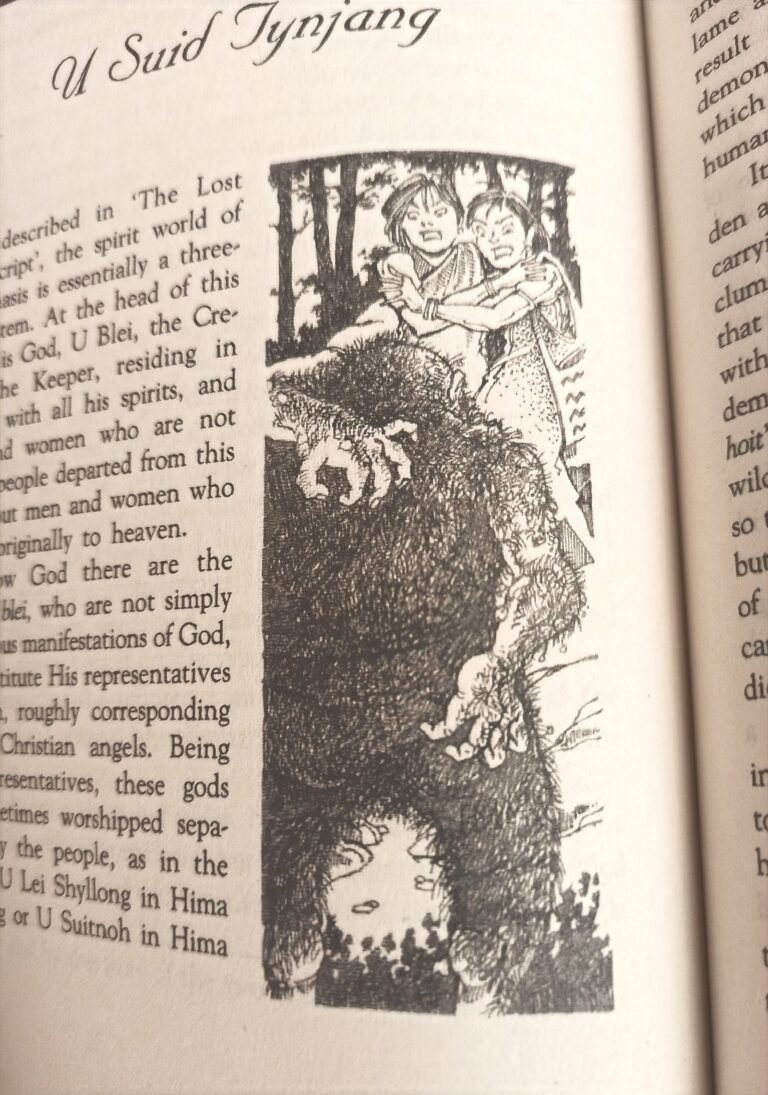
    U Symphut (Pnar) and U Suid Tynjang (Khasi) is an apparition/ ghost who captures an individual, carries him to places far and wide leaving him at the top of a cliff, or a tree, by the side of a river or a stream and even to a completely new and foreign land.

    Daohi Manar says:

    "I am not sure whether 'Symphut' is a ghost or an animal, but one thing I am sure about is that 'Symphut' never harms or injures its victims. During our childhood, incidents of someone being carried by the 'Symphut' occurred quite frequently with men usually being the victims! According to Khasi-Jaiñtia myth, 'Symphut' is a phantom or a ghost who snatches or captures an individual and carries him to places. The person who is in a daze is unaware of what is happening to him. He will come back to his senses only when an apparition wills it and departs or at times when the man is confronted or touched by another person. He then wakes up from this trance, not feeling hungry or in pain or even loses his sense of fear, realising his plight while still clueless of what happened to him and how he reached there. 'Symphut' supposedly never harms his victims and thus there is no tragic end to the story."

    What is said about "U Symphut" or "U Suid Tynjang" is that it is an imp who lives in a deep forest. His appearance is horrifying as his body is covered in sores. Thus, his skin is marked by scabs which torment him with an undying itch. This itch can be relieved by the scratching of a human hand. "Symphut" lures his victims by imitating the human call "Kaw hoit" for those travellers who are lost and exhausted. In this way he captures them and if they do not comply, they are tickled to death or left on the edge of a gorge or in a tree to die.

    "U Symphut" (Pnar) or "U Suid Tynjang" (Khasi) sent by Daohi Manar @xdtnoahjupejackllthmanar 👻👻👻 Thank you for this entry! 😅😅

    Picture and reference: Around the Hearth: Khasi Legends (Folktales of India) (2007) by Kynpham Sing Nongkynrih.

  • Kren amrang

    Ka jingong "Kren amrang" ka batai ïa ka jinglong jong u ne ka briew, ha kaba ki saitlah rhing tang ban lah ka nia la jong. Kiba kren amrang ki pyneh ïa la ki jong ki nia khlem pynjem ïano ïano ruh bad ka jingïohi jong ki ïa kiei kiei ruh ki neh pyrkhing beit kum kaba ki mut. Ïa ka ktien "amrang" la ju pyndonkam ruh ha ka die ka thied ïa ki briew kiba pyneh ïa ka dor jong ki tiar ki tar.

    "Kren amrang" is a Khasi phrase which describes a person who doggedly sticks to his argument; someone who has a rigid perception and who will not compromise to what others say. The word "amrang" also means being inflexible about the price of a commodity.

    "Kren amrang" is a Khasi phrase which describes an unrelenting and unyielding outlook.

  • Thomas Jones Day

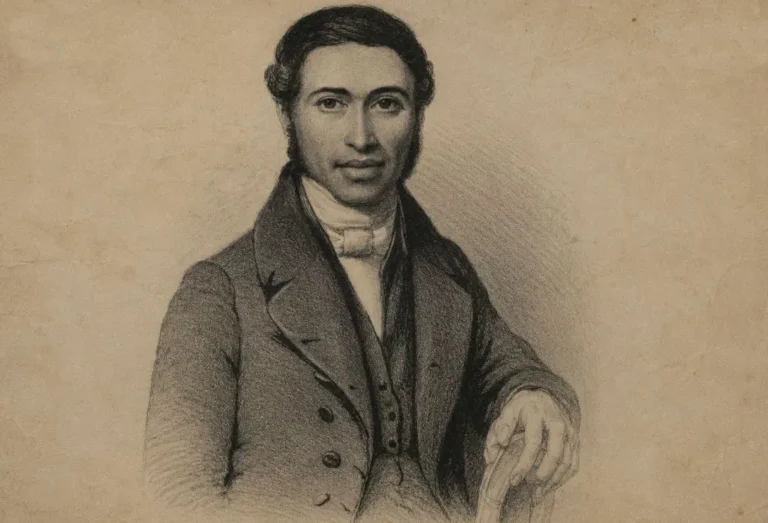
    Reverend Thomas Jones kum kpa ki dak thoh khasi,

    Dak a, b, k, d ba ngi nang dei ba

    phi hikai ïa ngi.

    -Daohi Manar

    The 22nd of June, the day that marks the arrival of Thomas Jones in Sohra is commemorated as Thomas Jones Day in Meghalaya. Thank you @xdtnoahjupejackllthmanar for sending this!

    Thomas Jones was a Welsh Christian missionary, who worked among the Khasi people of Meghalaya and Assam in India and of Bangladesh. He recorded the Khasi language in Roman script and the inscription on his gravestone calls him "The founding father of the Khasi Alphabet and literature".