Tag: speakyourroots

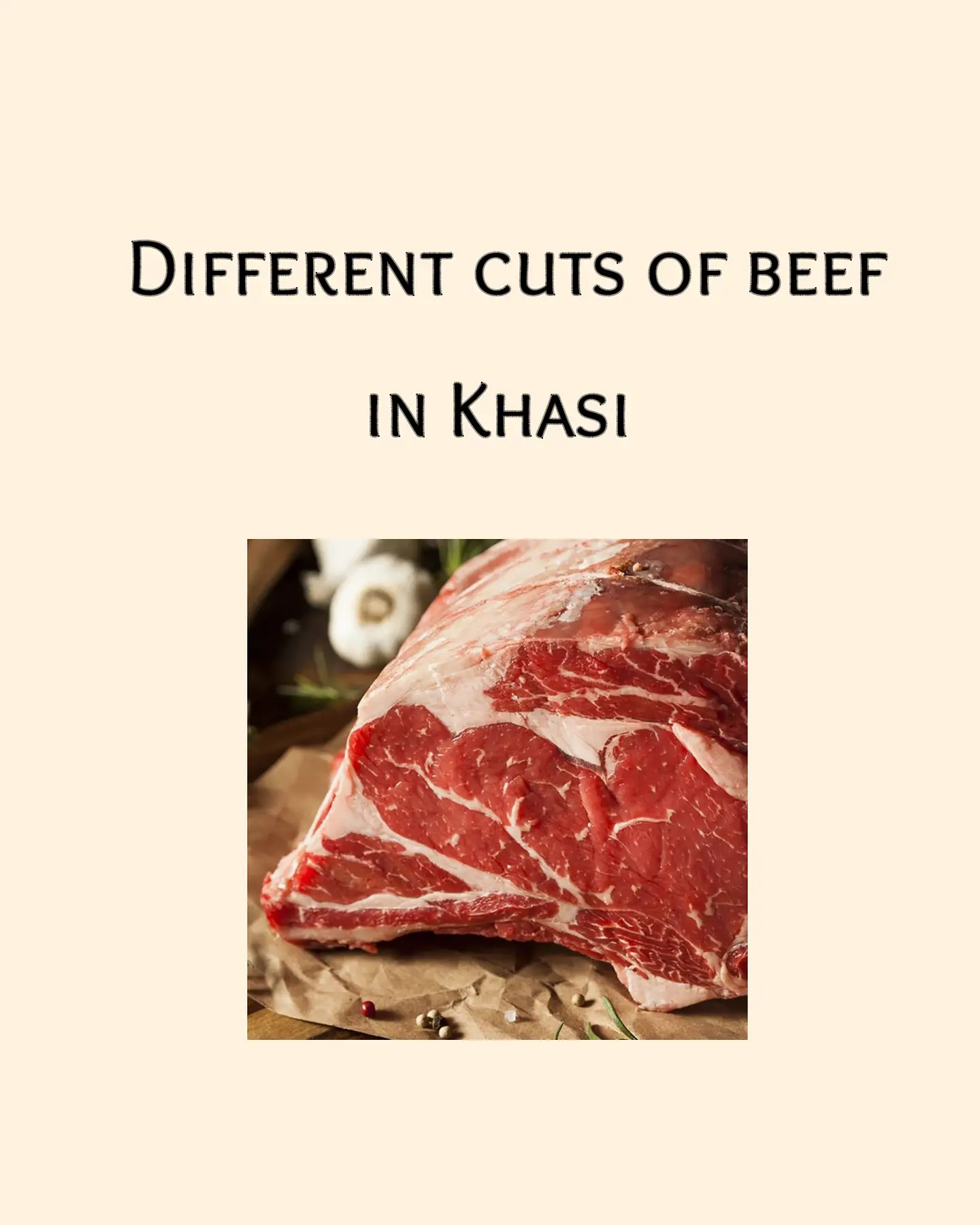
  • Different Cuts of Beef in Khasi

    Khmat Lbong – Thigh

    Tdong rben – Rump

    Tdong stang – Sirloin/ T-bone

    Syntai – Hump

    Lamjew – Chuck

    Shyieng sohkhia- Brisket

    Bung – Leg/ Calf

    Tdong kaweh – Oxtail

    Shyieng krung – Ribs

    Pyllon – Round

    Thylliej masi – Tongue

    Khlieh masi – Head

    Dohnud – Liver

    Doh klong – Heart

    Khyllai – Kidney

    Dohlab – Spleen

    Doh tawel /doh khu – Tripe

    Nier khyndai syrtap – Part of the intestine with nine layers

    Beef or "Doh masi" constitutes an important part of the Khasi diet 🥩🥩 There are stews, soups and curries which are oh so yum! Here are the different cuts of beef in Khasi 😃😃

    Ban kham tip, kham suk ka leit ïew da lah lait lashai 😁😁

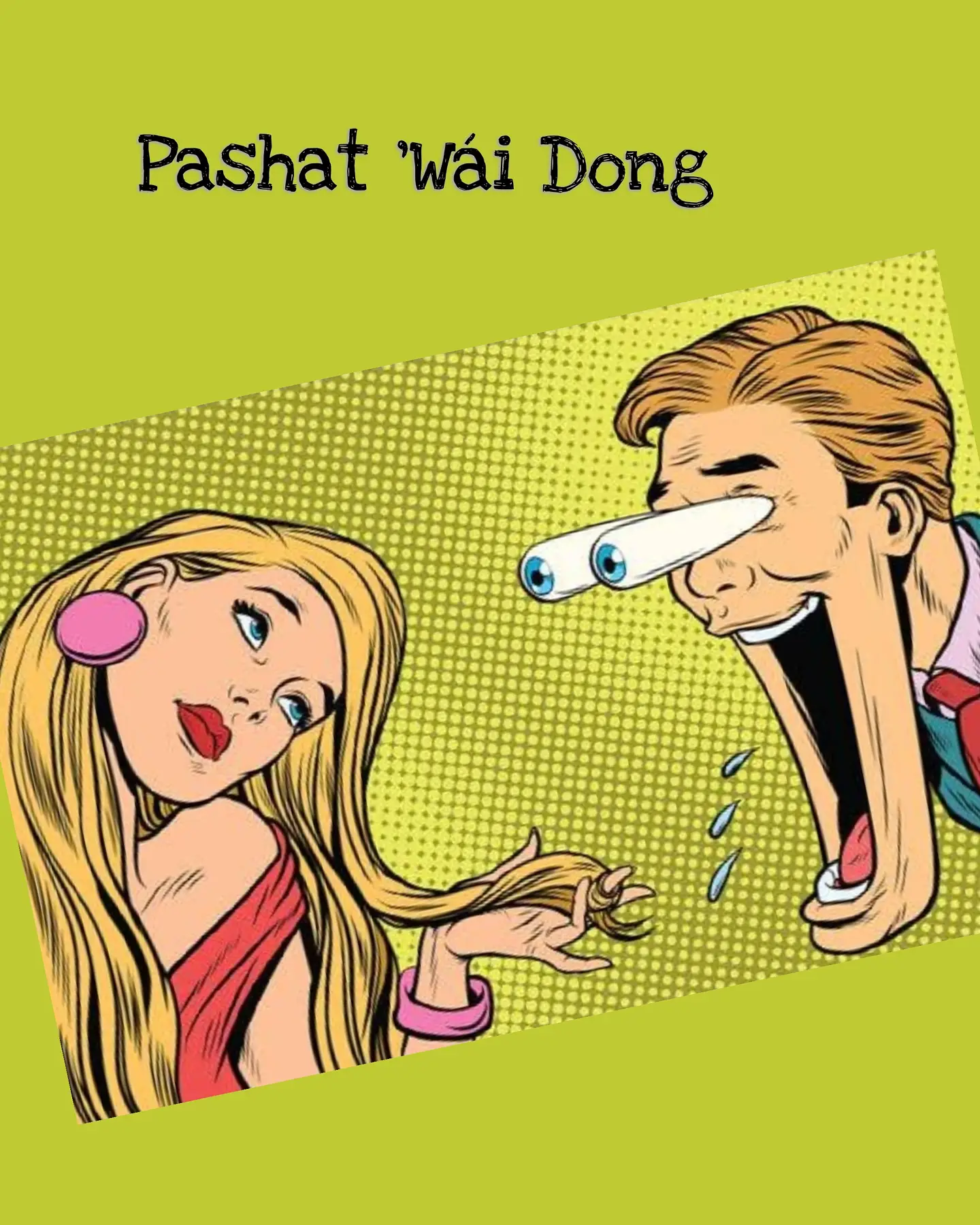
  • Pashat ‘Wáidong

    Pashat 'waidong ka dei ka jingaidak ka samla kynthei ïa u samla shynrang da kaba ai 'wai dong. Ka long ka rukom ai sngewbha ka samla ïa u briew uba ka ïapmat. Ïa kane la ju leh da kiba khraw bad ki syiem hyndai.

    "Pashat 'waidong" is an old practice where the woman gives betel nut that has been cut and rolled with betel leaf to the man with whom she is enamoured. This indicates her liking of him. The 'waidong is presented as a gift from the woman to the man and this was mainly practised by royal and noble families.

    "Pashat 'Wáidong" is an old Khasi practice (which may be described as a courtship practice) where the woman chooses and shows to all the man whom she is besotted with. 😁🤩😁🤩

    Te haba kumta phei ki Thei ba stad to pynkhreh noh u 'wáidong haba phei lah iohi ia u Rang ba biang nadong shadong 😂😂 Phei ki Rangkynsai roh, donbok phin ia ioh u 'wáidong ba kynsai kum ma phei! 😄😄

    Source: Ka Dienshonhi: The Khasi Encyclopaedic Dictionary by Rev. Dr. Ïarington Kharkongor

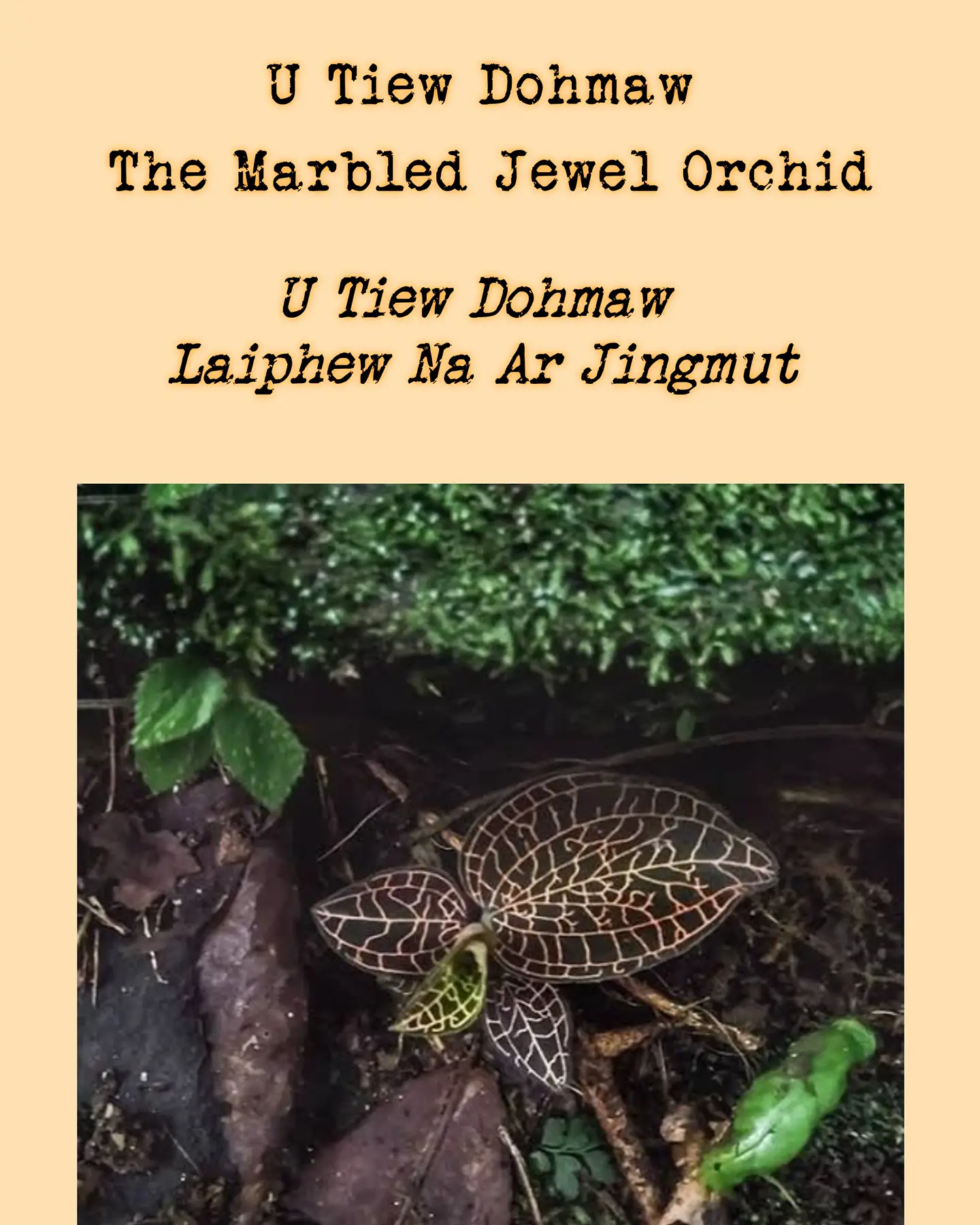
  • U Tiew Dohmaw or The Marbled Jewel Orchid: Tiew Dohmaw Laiphew Na Ar Jingmut

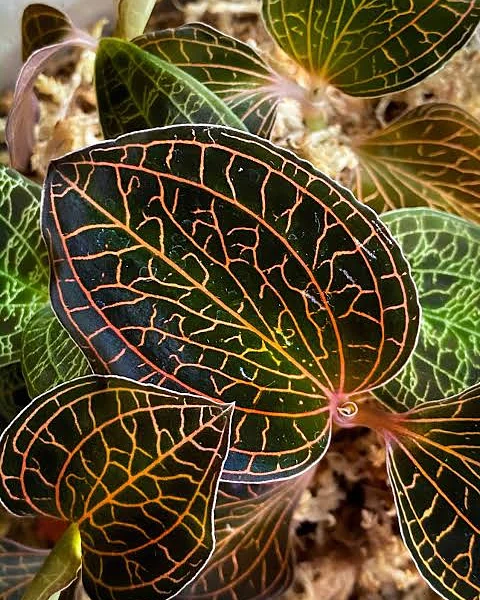
    U Tiew Dohmaw u dei u kynja tiewsla uba proh itynnad ki jingthoh ha ki sla jong u. U dei u syntiew uba rit bha, ki sla ki lam jngum ka rong bad thoh rong ksiar. Ka scientific name jong U Tiew Dohmaw ka dei Anoectochilus brevilabris.

    U Tiew Dohmaw or the Marbled Jewel Orchid is a small flower which is dark green in colour with contrasting goldenish marks like veins on it. The scientific name of U Tiew Dohmaw is Anoectochilus brevilabris.

    U Tiew Dohmaw grows under the shade of trees which is typical of where orchids grow and has to be searched for properly if we are to find it. Its beauty is a rare treasure. U Tiew Dohmaw has been mentioned by Khasi Poet Laureate U Soso Tham and by popular Khasi singer and composer (L) Skendrowell Syiemlieh.

    Ka don ka jingong ha Khasi kaba ong "U Tiew Dohmaw laiphew na ar jingmut". Kane ka thew ïa u briew uba khraw pyrkhat, uba proh jabieng, uba stad bad shemphang bad uba long ruh uba sngewrit bad kham rieh na ka pyrthei. Namar kata kum une u jait briew u syriem ia U Tiew Dohmaw.

    There is a Khasi phrase which goes "U Tiew Dohmaw laiphew na ar jingmut". The saying symbolically refers to a person who is a great thinker of high intelligence and wisdom but who is humble and unassuming at the same time, thus resembling U Tiew Dohmaw.

    U Tiew Dohmaw or the Marbled Jewel Orchid 💛💚💛💚💛💚 A rare and beautiful flower, it is found in Meghalaya, Sikkim, Assam, Nepal and Vietnam.

    It is an orchid with a saying of its own in Khasi: "U Tiew Dohmaw Laiphew Na Ar Jingmut".

    🟡Slide 1: https://www.picuki.com/tag/natureitsbest

    🟡Slide 5: https://www.doodlebirdterrariums.com/listing/753798713/free-shipping-terrarium-plant-jewel

  • Different colours in Khasi, Part I

    Orange – rong sohñiamtra/ rong khleh saw khleh stem

    Red – rong saw

    Scarlet – rong saw kyrang/ rong saw haiñ haiñ

    Maroon/ Plum – rong saw bthuh

    Crimson – rong saw syngiang

    Indigo – rong lir

    Blue/ Azure – rong suiñ bneng

    Navy blue – rong jngum synñia

    Dark blue – rong thwei

    Pink/ Magenta – rong saw jngum

    Purple/ violet – rong sohbaingon/ rong saw jngum

    Grey – rong bthuh/ rong dpei

    Green – rong jyrngam/ rong tympew

    Yellow – rong stem/ rong khangai pylleng

    Peach – rong sohphareng

    Brown – rong ktieh/ rong dumasla

    Silver – rong rupa

    Gold – rong ksiar

    Black – rong iong/ rong iong synñia

    White – rong lieh

    Coral – rong paila

    Beige/ Khaki – rong skei

    Bronze/ Copper – rong tama

    There are so many colours we can name in English, so here they are in Khasi. 🌈☔🌄🌧️

    Please feel free to mention more colours in Khasi if you know them! 😀

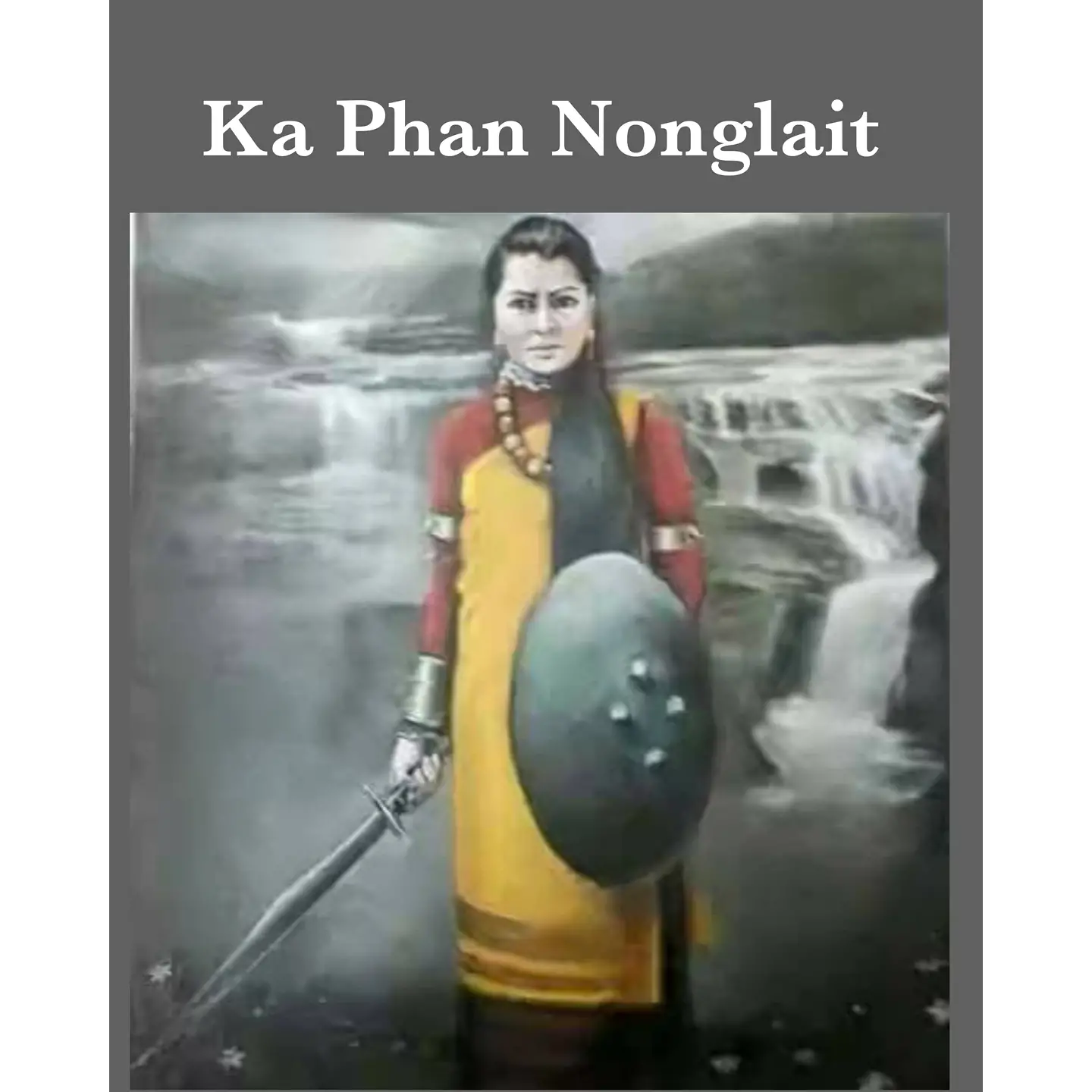
  • Ka Phan Nonglait by Tony Slong

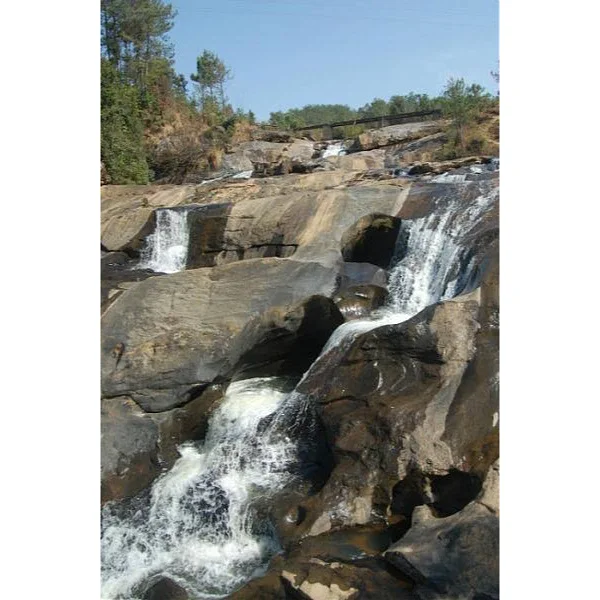
    Ka Phan Nonglait is one of the Khasi women freedom fighters and is considered one of the bravest women of that time. Most women were either raped, molested or ill-treated by the British soldiers. This made Ka Phan Nonglait and some women from Hima Khatsawphra to take matters into their own hands with the help of Mon Bhut. With his help Ka Phan Nonglait was able to trap the British soldiers by offering them alcohol. When they were inebriated, she took all the weapons of the soldiers and threw them into one of the rock holes in the Nongrmai falls (now known as Phan Nonglait Falls). Due to this act, she is remembered in the stories that have been retold for generations. Then U Mon Bhut along with other soldiers killed 32 British soldiers. This was in the year 1829.

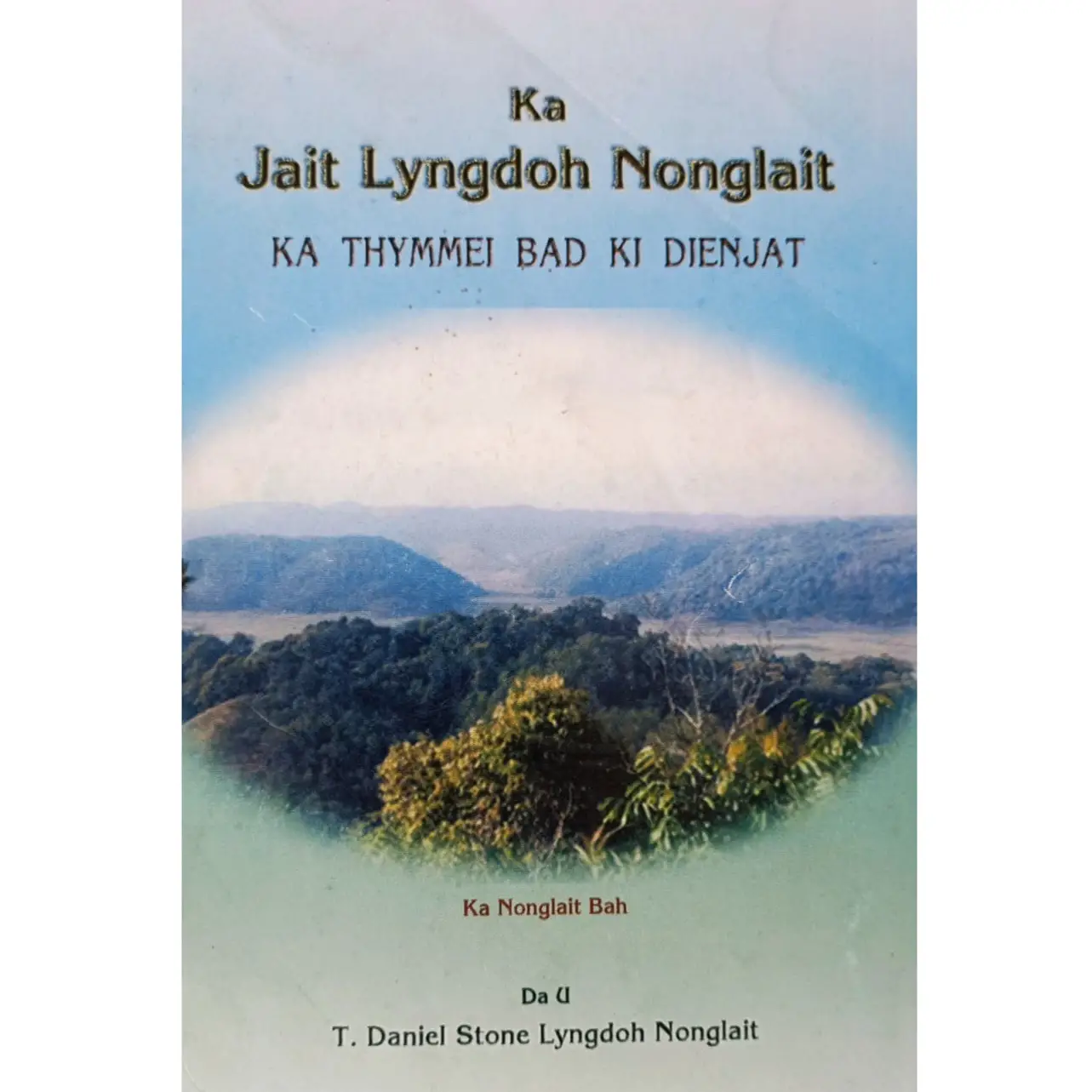
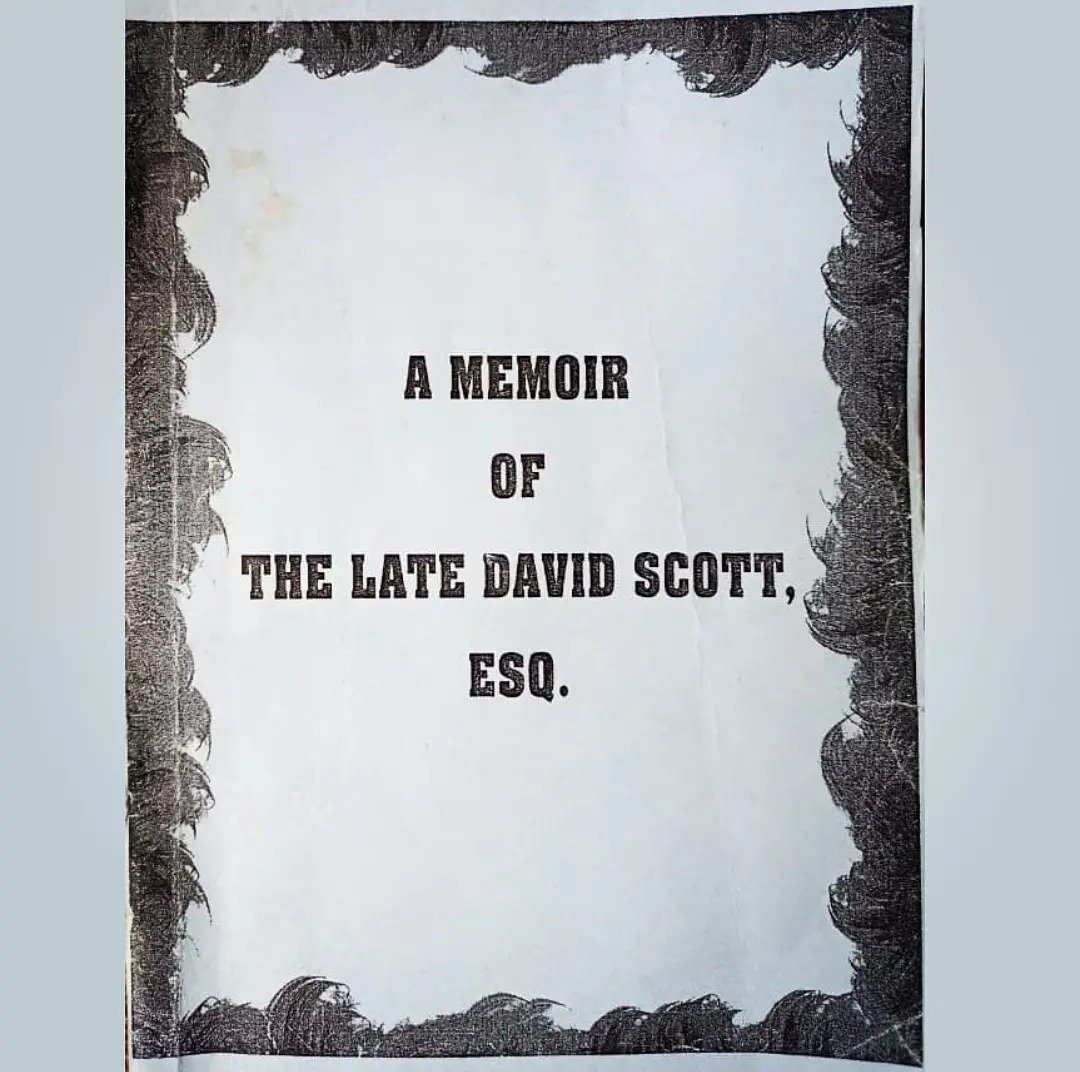
    In Ka Jait Nonglait: Ka Thymmei bad ki Dienjat written by T. Daniel Stone Lyngdoh Nonglait, the historical contexts of the Nonglait Clan has been given. Since ours is a society that relies on oral narratives, I have heard of the valour and bravery of ka Phan Nonglait. It has intrigued me to do further research upon this narrative. Yet, there is more to be unearthed. From the British perspective, the only record made was on U Mon Bhut who fought gallantly against the British. He was U Tirot Sing's most trusted general. The records about the Nongkhlaw incident were said to be the first spark that led to the war of the Khasis against the British. Among those killed, two British officers named Lieutenant Bedingfeld and Lieutenant Burlton were killed. In a letter to Lamb by David Scott, dated 10th April 1829, he mentioned that this fateful incident happened either on the 4th or 5th of April, 1829. This incident shook the Britishers and was recorded in the memoir of the Late David Scott, esq.

    On this Independence Day we remember Ka Phan Nonglait as the first Khasi woman freedom fighter. The achievements of Khasi women who fought against the British are often not recorded by history. Ka Phan Nonglait is remembered as one of those freedom fighters who have made a mark on Khasi history.

    This entry has been contributed by @carey_lynz Thank you so much! 🙏🙏 Our gratitude also goes to @tonyslong 😃🙏

    🟡 Picture 1: Painting of Ka Phan Nonglait by @tonyslong

    🟡 Picture 2: http://wikimapia.org/21065891/Phan-Nonglait-Falls-Nongrmai

    🟡 Picture 3: Ka Jait Lyngdoh Nonglait: Ka Thymmei bad ki Dienjat written by T. Daniel Stone Lyndoh Nonglait.

    🟡 Picture 4: A Memoir of the Late David Scott, Esq. written by Major Adam White (1831, 1st edition)

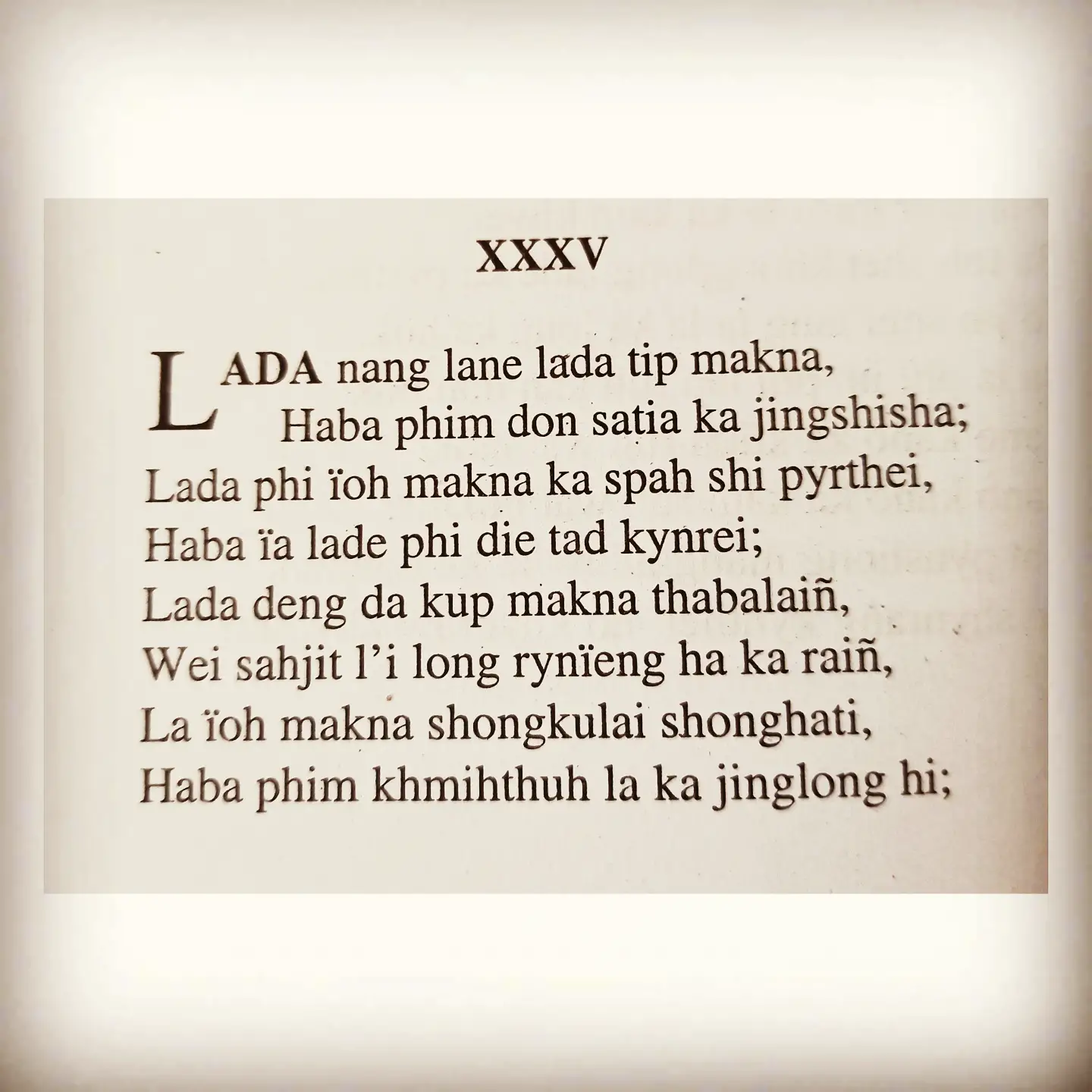
  • “Ka Jingsneng Tymmen Shaphang ka Akor Khasi ha ka Rukom Rwai Phawar”, Part I (1902) & Part Il (1903)

    Lada nang lane lada tip makna,

    Haba phim don satia ka jingshisha;

    Lada phi їoh makna ka spah shi pyrthei,

    Haba їa lade phi die tad kynrei;

    Lada deng da kup makna thabalaiñ,

    Wei sahjit l'i long rynїeng ha ka raiñ,

    La їoh makna shongkulai shonghati,

    Haba phim khmihthuh la ka jinglong hi;

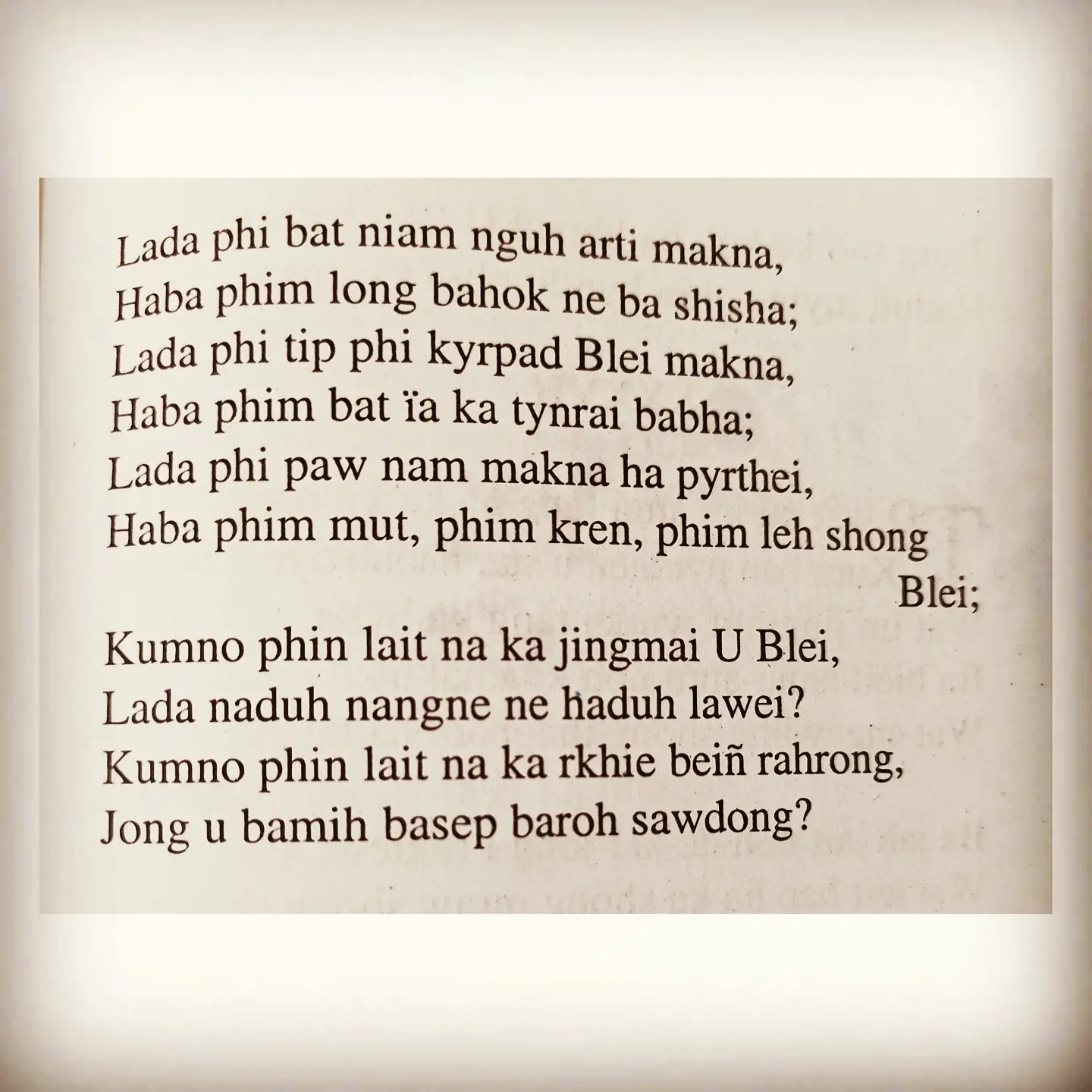
    Lada phi bat niam nguh arti makna,

    Haba phim long bahok ne ba shisha;

    Lada phi tip phi kyrpad Blei makna,

    Haba phim bat їa ka tynrai babha;

    Lada phi paw nam makna ha pyrthei,

    Haba phim mut, phim kren, phim leh shong Blei;

    Kumno phin lait na ka jingmai U Blei,

    Lada naduh nangne ne haduh lawei?

    Kumno phin lait na ka rkhie beiñ rahrong,

    Jong u bamih basep baroh sawdong?

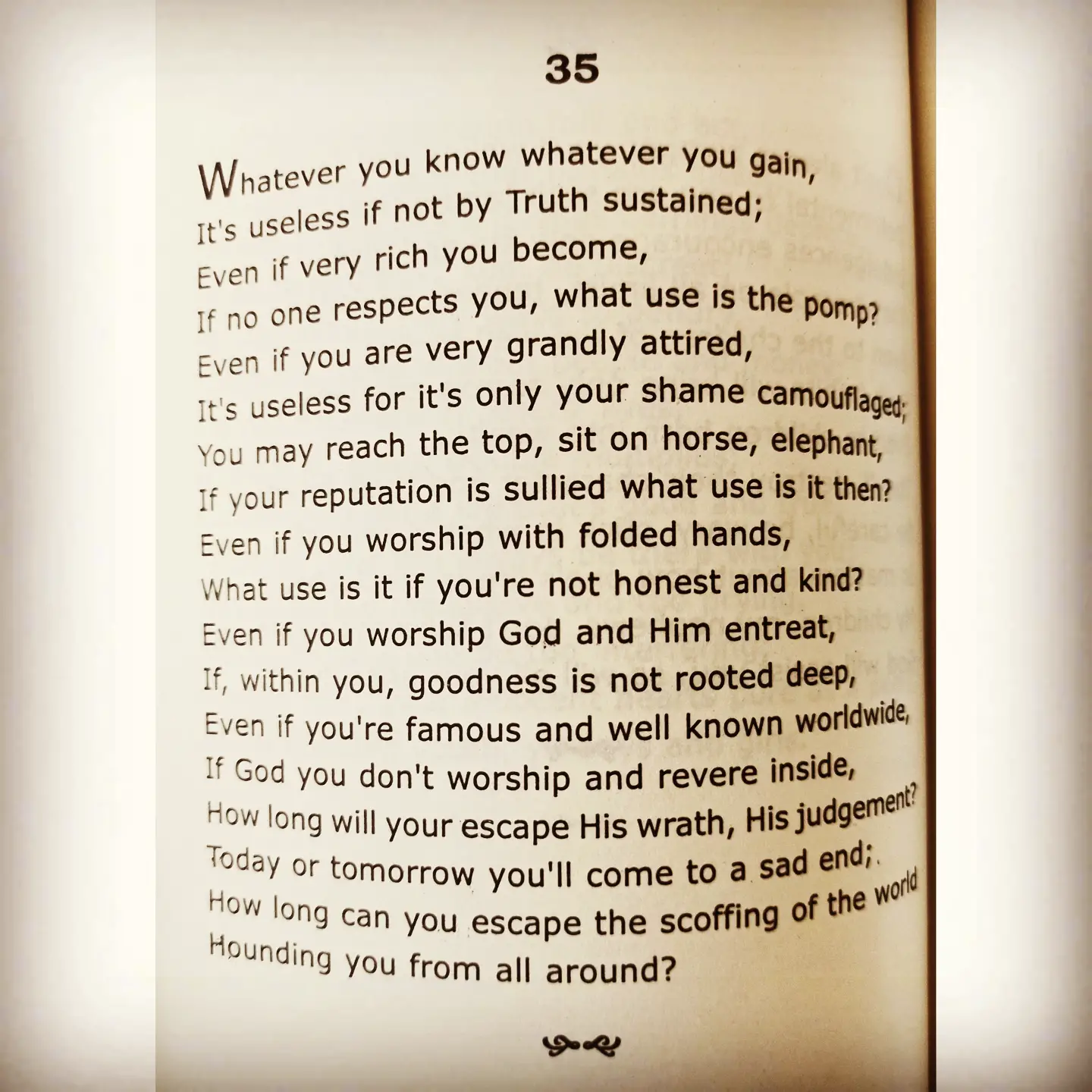
    Whatever you know whatever you gain,

    It's useless if not by Truth sustained;

    Even if very rich you become,

    If no one respects you, what use is the pomp?

    Even if you are very grandly attired,

    it's useless for it's only your shame camouflaged:

    You may reach the top, sit on horse, elephant,

    If your reputation is sullied what use is it then?

    Even if you worship with folded hands,

    What use is it if you're not honest and kind?

    Even if you worship God and Him entreat,

    If, within you, goodness is not rooted deep,

    Even if you're famous and well known worldwide,

    If God you don't worship and revere inside,

    How long will your escape His wrath, His judgement

    Today or tomorrow you'll come to a sad end;

    How long can you escape the scoffing of the world

    Hounding you from all around?

    Ka Jingsneng Tymmen Shaphang ka Akor Khasi ha ka Rukom Rwai Phawar, Part I (1902) & Part Il (1903) by Radhon Sing Berry Kharwanlang is a unique collection of valuable lessons and teaching on how to live a good and moral life. 🌻🌻

    The teachings are given in the form of "phawar” where two lines follow the same rhyme scheme, that is, aa bb.

    Both Part I and Part II have been translated into English by Bijoya Sawian @sawianbijoya in her book The Teachings of Elders: Ka Jingsneng Tymmen, Parts I and II (1997).

    Picture 1&2: Ka Jingsneng Tymmen Shaphang ka Akor Khasi ha ka Rukom Rwai Phawar, Part I (1902)

    Picture 3: The Teachings of Elders: Ka Jingsneng Tymmen, Parts I and II (1997).
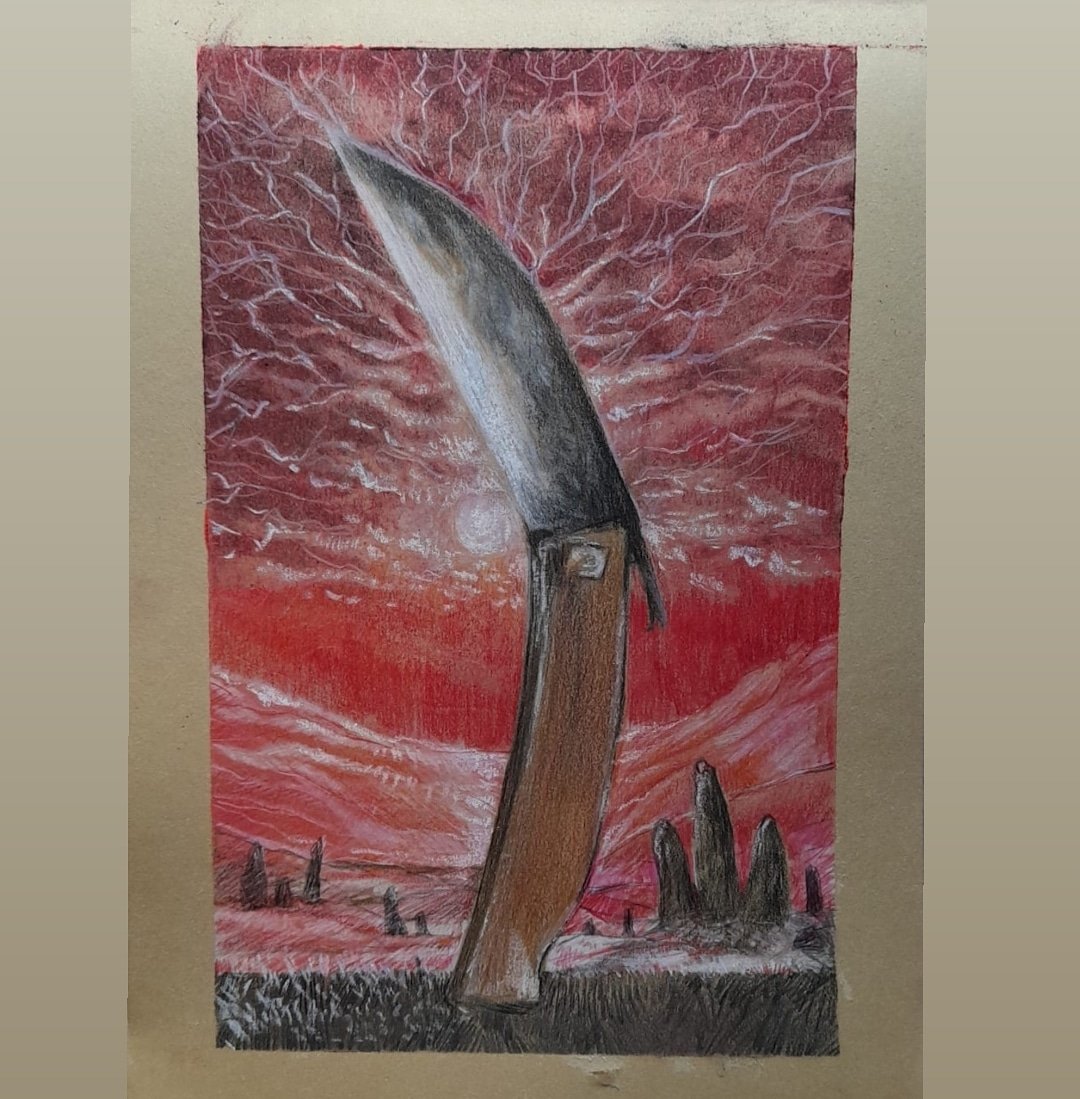
  • Ka Tari Dab by Careen J. Langstieh

    This painting by @careenjoplinlangstieh shows "Ka Tari Dab" which is a typical kitchen knife, present in each and every Khasi household. It comes in different sizes and is also carried by women in their "bek" (bag).

    In the artist's mind, the most common objects are given new life, meaning and power. 🔥 🎨🖌️

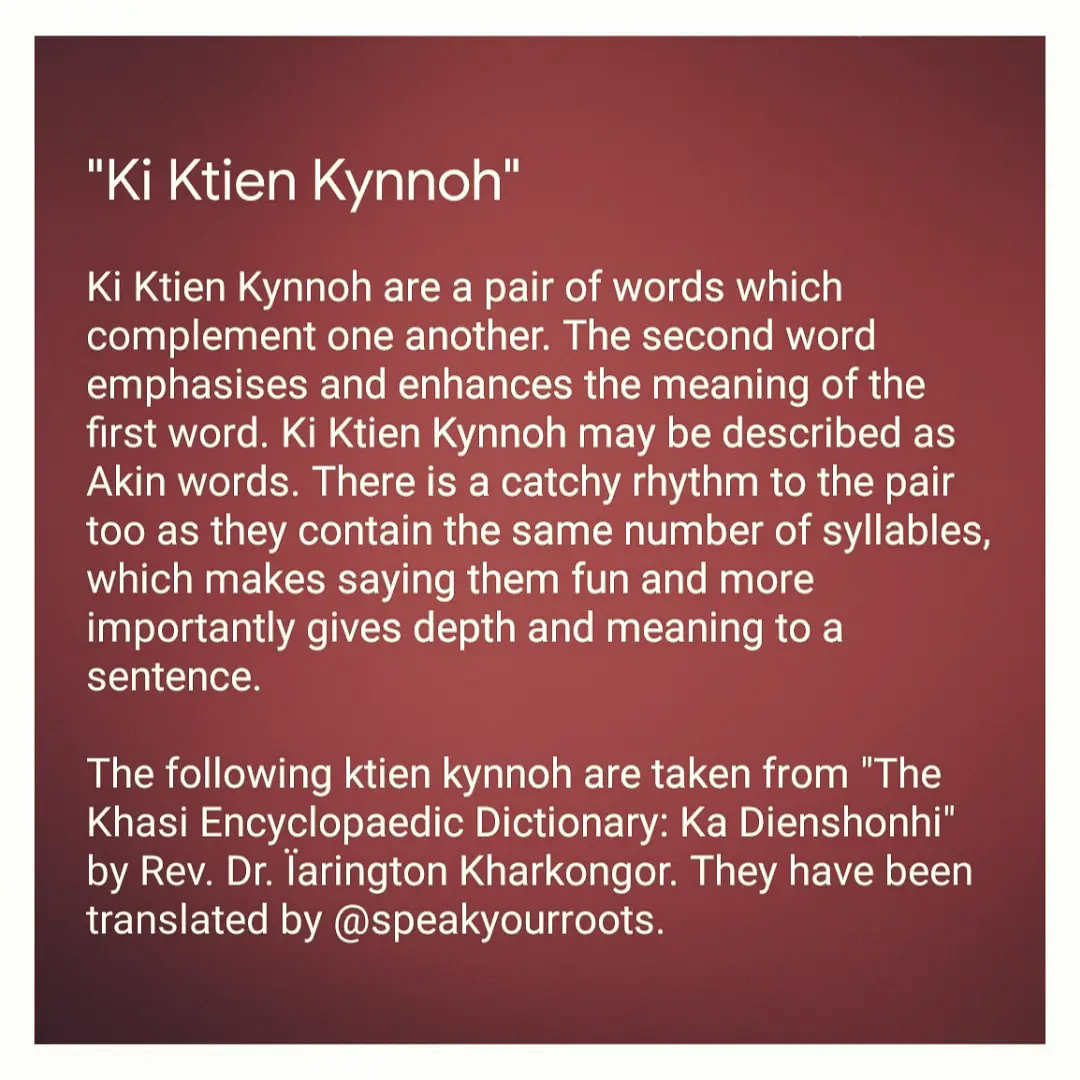
  • Ki Ktien Kynnoh

    Ki Ktien Kynnoh are a pair of words which complement one another. The second word emphasises and enhances the meaning of the first word. Ki Ktien Kynnoh may be described as Akin words. There is a catchy rhythm to the pair too as they contain the same number of syllables, which makes saying them fun and more importantly gives depth and meaning to a sentence. The following ktien kynnoh are taken from The Khasi Encyclopedic Dictionary: Ka Dienshonhi by Rev. Dr. Ïarington Kharkongor. They have been translated by @speakyourroots.

    Danda – Phulit

    Danda: Ka mut ka jingkren ne jingïathuh ïa kiei kiei ki bym shisha da kaba pyndonkam ïa ki ktien ne ki khana nangno nangno bad sa pynkut ha kata ka rukom tang ban ïoh ban pynsngewbha ïa ki briew.

    Phulit: Ka thew ïa ka rukom kren biria kai te hynrei don ki biria kiba ïa jinghikai bad jingmyntoi.

    Danda is a conversation or the telling of a story that is not based on real fact, but is taken from many sources, with the purpose of making people laugh at the end.

    Phulit is a particular way of talking humourously with a lesson at the end of the story.

    Ngiah – Shoin

    Ngiah: Ka dei ka ktien kyllum kaba mut ba la dap ne pura bha lane bym sngewtynnat shuh ïa kiei kiei.

    Shoin: Ka kham thew ïa ka jingbam kaba la bam bad la dap pura haduh ryndang ne rmiang shyntur bym long shuh ban pynrung jingbam. Ïa ka jingbam haba dang ngiah dang long ban bam hynrei haba la dap shoin ym long shuh ban bam. Haba ngi ong pat 'ngiah shoin' ka mut kaba la palat ban ïa kaba ju long.

    Ngiah is a feeling of fullness and satiation or having had enough of something, which might also cause unpleasantness.

    Shoin is more of a reference to food that cannot be eaten anymore. In the case of 'ngiah' food can still be eaten but when we use the word 'shoin', it means there is no chance of being able to eat.

    Maitang – Maitait

    Maitang: Ka mut ba kyndiah ne ieh noh shisyndon khamtam ïa ka jingmlien kaba sniew.

    Matait: Ka mut ka jingkular ne jingsmai ban iehnoh ne kyntait shi syndon ïa kaei kaei ka bym ïadei bad ka jingim longbriew manbriew.

    Maitang is to abstain from or completely leave something, especially a bad habit.

    Maitait is a promise or oath to avoid or reject that which hampers or damages the balance of our physical, emotional and mental well-being.

    "Ki Ktien Kynnoh" lend so much quality and character to the Khasi language! They are really quite a unique feature of the language. 😃😃 We have tried to find the English word for them but it appears there is none. "Akin words" seems to describe them best.

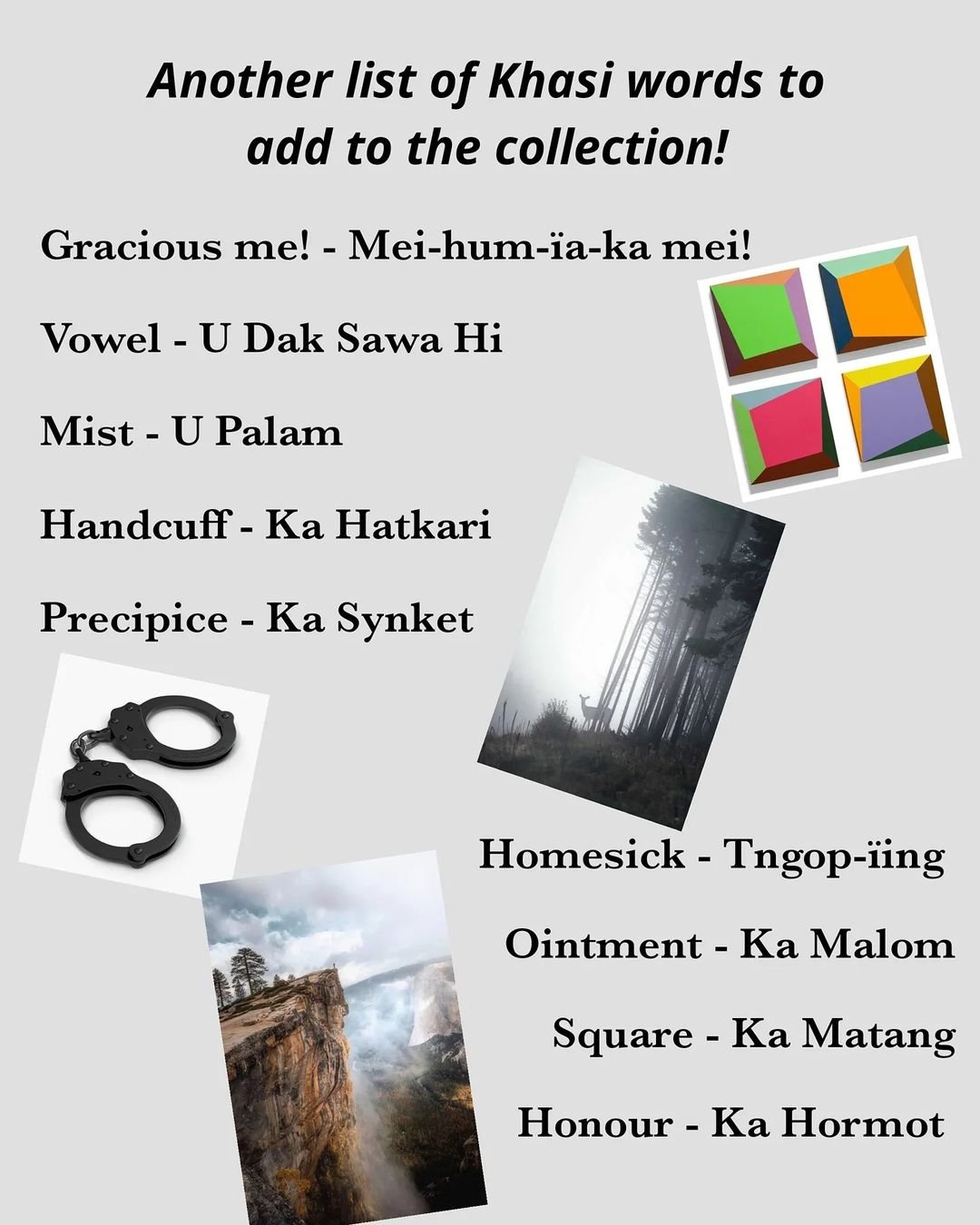
  • Another list of Khasi words to add to the collection!

    Gracious me! – Mei-hum-їa-ka mei!

    Vowel – U Dak Sawa Hi

    Mist – U Palam

    Handcuff – Ka Hatkari

    Precipice – Ka Synket

    Homesick – Tngop-їing

    Ointment – Ka Malom

    Square – Ka Matang

    Honour – Ka Hormot

    Here is another list of Khasi words to start using! 😃🤓🗣️🗣️

    🟡 Source: Ka Dienshonhi: The Khasi Encyclopaedic Dictionary by Rev. Dr. Ïarington Kharkongor

  • Beiñ kiwa beiñ

    "Beiñ kiwa beiñ.

    Roh kiwa roh.

    Ïei їong kiwi,

    ym їe i u pyntoh."

    "Let those who criticise, criticise.

    Let those who praise, praise.

    Other people's opinions,

    cannot be catered to."

    Here's what may be described as a Pnar quote or chant sent by @laloorisa 😎😎😎 (translated by @speakyourroots)

    The lines urge us not to let people's words, either praise or criticism, affect us. Lest we fall prey to pride or feelings of inadequacy. We should just march to the beat of our own drum and do what makes us happy! 🌬️🌬️🌻🌼🌾

    Ham pynsñiaw ai ki! Wat pynsngew eh ia ki!