Tag: speakyourrootschallenge

  • Jymmang, Jympa

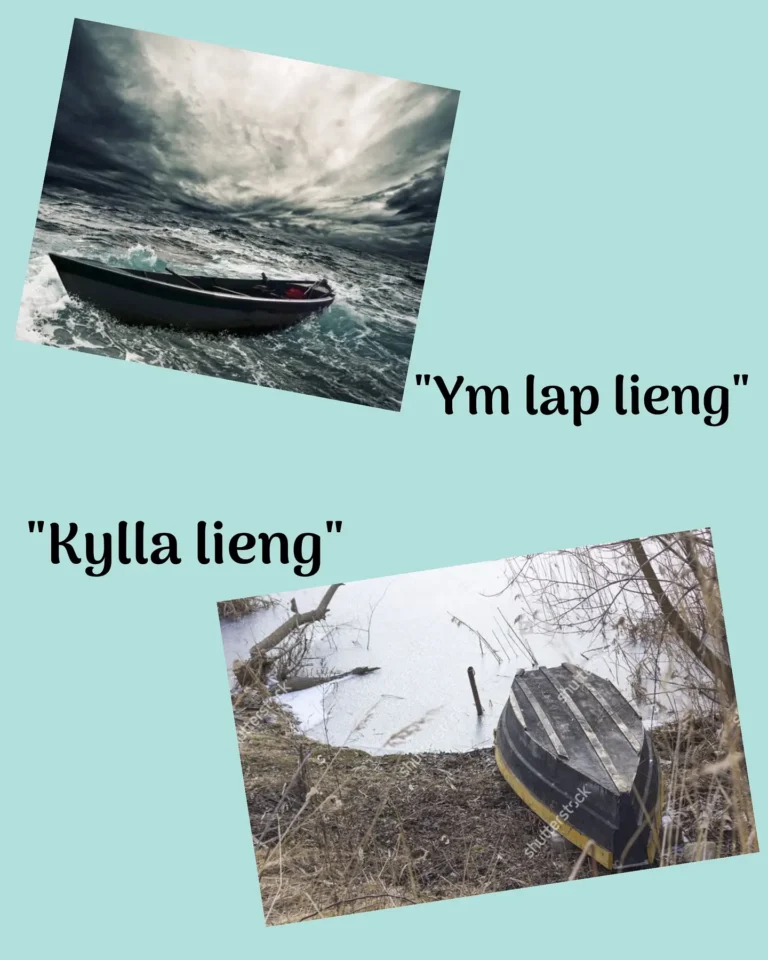
    U Jymmang, u bnai uba san jong ka snem, u dei u bnai pyrem. Kumba long kiwei pat ki bnai, u Jymmang u don saw taïew lane arphew phra sngi pura.

    Baroh ar ki ktien "Jympa" bad "Jymmang" ki ïa ïaid ryngkat ryngkat. Ka ktien "jym" ka long ka ktien tynrai. "Pa" bad "Mang" ki long ki ktien bynrap. "Pa" ka mut "per" ne "jngi" halor um bad "mang" ka thew ïa ka "rmiang shyntur" jong ka wah. Namar kata, ka ktien 'Jympa" ka mut kaba per ne jngi halor um katba ka ktien "Jymmang" ka thew ïa ka jingsdang ka um ne ka wah.

    Ha u Ïaiong u slap u la sdang ban hap. U shu hap teng teng tang ban ai um ïa ka khyndew bad ïa ki jynthung. Ka khyndew ha kawei pat ka liang, ban pynum ïalade, ka kjit lut ïa ka um slap baroh kaba hap ha une u bnai. Ki wah bad ki duid ruh haba ki ïoh slap teng-teng ki la sang ban tngen naba la tyrkhong eh baroh shi aiom tlang.

    Ha u Jymmang u slap u la sdang ban ther bad ki wah ruh ki la sdang ban nang kiew. Ki khynnah ap masi bad ki nongrep kumjuh ki sngewtynnat eh ban sum bad "jympa" ha une u bnai namar la "jymmang" ka um. Baroh ar ki ktien "jympa" bad "jymmang" ki thew ïa ka um tangba ki ïapher ha ka rukom jingpyndonkam.

    "Jymmang" or May, the fifth month of the year is a spring month. As the other months, May has four weeks or twenty eight days.

    Both words "Jympa" and "'Jymmang" go hand in hand. The word "jym" is a root word. "Pa" and "mang" are the supplementary words. "Pa" means to float or swim in water and "mang" refers to the mouth of a river. Thus, the word "Jympa" means to float or swim in water, while the word "Jymmang" refers to the beginning of a mass of water or a river.

    In April the rain begins to fall. It arrives intermittently so as to provide water for the earth and plants. The earth, to water and replenish itself, takes in all the rain water in this month. Rivers and streams who have received rainfall are rejuvenated since the dry months of the winter season.

    In May the rain begins to fall heavily with river levels rising. Cow herders and farmers enjoy to bathe and swim or float in water because of the increase in water level. Both words "Jympa" and "Jymmang" refer to water with the only difference being the way they are used.

    The Khasi names for the month of May have multiple meanings 🌦️⛅🌤️🌱🌿
    A knowledge of the seasons and what they entail is important for broadening our understanding of culture and practice. 😃🏞️🌄

    🟡 Source: Rev. Dr. Ïarington Kharkongor
    🟡 English translation by @speakyourroots

  • U ashar soh mylleng/ Gooseberry pickle

    U ashar soh mylleng or gooseberry pickle cooked by @kamra_shetja_khasi 🫕🫕

    This looks so good, mynta ba lah shit lei 😋😋

    Khublei Shibun @kamra_shetja_khasi for allowing us to post your pictures! 😄😃🙏🙏 Congratulations on your beautiful page with so many indigenous Khasi recipes!

  • Janai-Jaton

    Janai: Babeit ne babit bha, ka thew ïa ka jinglong kaba thikna bad kaba paka bha.

    Jaton: Ïa ka ktien jaton la pyndonkam lang bad ka ktien janai. Haba ong Janai-Jaton, ka mut khnang khnang lane wat pep, kum haba ong "sngewbha wan janai-jaton".

    Janai: What is wholesome, bearing clarity and goodness. Consequently this refers to the quality of being certain, satisfactory and the best.

    Jaton: The word "jaton" is used with the word "janai". When we say "Janai-Jaton" it means without fail, implying the certainty with which something needs to happen or to be done. For example, when it is said "Please come janai-jaton", it means that the person has to come, with no excuses for not showing up.

    "Janai-jaton" is a Khasi "ktien kynnoh", two similar meaning words that form a phrase, containing a two-fold significance. 🔡💭

    🟡 English translation by @speakyourroots

  • “Nga dei ka Nam…”

    "Nga dei ka Nam; ka briew kaba la shah tim naduh ba nga dang don ha kpoh jong i mei. Ka briew ka bym don kur, bym don kha, bym don man. Nga la im marwei bad marwei ngan ïeng!"

    -Ka Nam ha U 'Lur Mangkara na Ka Nam, ka drama ba la thoh da ka Esther Syiem (2006)

    "I am Nam; a woman who was cursed from her mother's womb. A woman with no relatives, no clan. I live and exist alone and alone I will stand."

    -Nam to 'Lur Mangkara from Ka Nam, a play written by Esther Syiem (2006)

    The story of "Ka Nam" is a story we have listened to since we were children. Have you told this story to the present generation? "Nam" denoting the perpetual strength of dignity, integrity and a good name.

    The adaptation of the folktale by Dr. Esther Syiem in the Khasi langauge is interesting and thought-provoking, weaving a feminist approach, together with themes of freedom, abandonment and the self. 🗣️📜

    Dr. Esther Syiem is a Professor in the Department of English, North-Eastern Hill University, Shillong.

    🟡 English translation by @speakyourroots

  • Tep eit miaw

    Ka jingong "Tep eit miaw" ka don ar jingmut.

    Ka jingmut kaba nyngkong ka long ban leh klet ïa kaei kaei.

    Ka jingmut kaba ar ka long kaba pyrshang ban tap noh ïa ka jingshisha jong kaei kaei da kaba pyni daw da kumne kumtai.

    The Khasi phrase "tep eit miaw" has two meanings.

    The first meaning is to pretend to be forgetful of something.

    The second meaning is the attempt to cover up the truth about something with frivolous reasons or excuses.

    "Tep eit miaw" is a Khasi phrase that literally means to bury cat poop 😸💩 Love the graphic imagery of Khasi phrases! 😂

    We've all definitely been in such a situation 😂😅 And there's nothing like indigenous sayings to drive home a point.

    🟡 English translation by @speakyourroots

  • Ka Chad Sukra: The Happiest and Joyous Dance of the Heart

    Ka Chad Sukra: The Happiest and Joyous Dance of the Heart

    Hachua u li hiar rep, hachua u bet u thung, kiwa heh nûnde da pûnjōh ki dei e ngooh e dem, i leh warm, deilang i kûrpad kûrpōn nau tre ki rot (Blai). Ka Chad Sukra toh ka chad e ngooh ya ka Bei rymaw, man ko ka chad e warom ya i kyrkhu-kyrdoh yong u tre kirot, u Blai (God) wa hakhlieh tam. Ka Chad Sukra man ko ka chad kûrpad na u kûnrad heiwõw ker-da ya u sûmbe yoh u man miat man bha, yoh u dap u thiar-u dap u túllu.

    Ka kûntien "Chad" (dance) mut ne thaw ko ya i ka-it, iwa em hapoh mûnsien yong uwi pa kawi. Ka kûntien "Sukra" yæ u phiah ha ki ar bûnta, "Suk" (Happy) thaw ko yei sñauhun ne i sñausuk ha i mûnsien hadien wa da pûnkhreh pûnkhrum ya ki tiar emkaam hei wõw rep wõw riang. Katwa "Ra" (Joy) mut ne thaw ko yei emkaam hei wõw rep wõw riang. Katwa "Ra" (Joy) mut ne thaw ko yei sñaukara-sñauchait yong i doh i pran hadien wa da dep thung dep bet yow sûmbe u kba. Ha ka juk wa katni, yæ u pûnyahap waka Chad Sukra toh ka chadkmen ka wau lait nei niawliar-niawtang yong i pûrkhat-pûrdaiñ, kamjõh na i chah teh-chah kdoh, i eh i khõ wa yatakhõh hei jingim wa man ka sngi. Man ko ka chad wõw pûnka-it-kasar yei mûnsien, dei wa suk-wa kara, dei sñau-laitlooid!

    "U kdup-pûllang, yei wa hikai nûnde,

    Hapoh ki thawaner ka Seinraij da kune".

    Ka "Chad Sukra" ka dei ka shad ai burom ïa u Blei Nongbuh Nongthaw, ka dei ka shad ai burom ïa ka Meiramew. Ïa kane ka shad la ju pynlong man la u snem ha ka jingkhmih jong ka Seiñraij, kaba dei ka seng jong ki khun ki paid u Hynñiiew trep-Hynñiew skum, kiba dang bat ïa ka tynrai jong u Pnar. Ka jingmut jong kane ka shad ka long ban pan ban nguh ban dem na u Blei (Tre-kirot) ba un da un ri ïa u symbai ha shuwa ban leit thung leit tep sha ki pynthor ki hali.

    "Chad" mut ban shad ban kmen, katba ka kyntien "Sukra" pat lah ban bynta ha ki ar bynta. "Suk" ka thew ïa ka jingkmen kaba don hapoh dohnud hadien ba la dep pynkhreh ïa ki tiar donkam ha ka ban rep ban riang. Katba ka kyntien "Ra" ka thew ïa ka jinghun ka dohnud, ka jingsngew shait sngew khlaiñ ka met ka phad, hadien ba la dep bet dep thung. Ha ka juk ba mynta ngi lah ban ong ba ka "Chad Sukra" kam mut eh tang ban shad ai nguh ïa ka Mei-mariang, ka dei ruh ka shad laitluid jong ka mynsiem, da kaba klet ïa ki jingeh, ki jingtynjuh kiba ngi ïa kynduh ha ka jingim ba man ka sngi. Ka dei ka jingshad jong ka mynsiem ban klet ïa ki jingeh ba lah dep bad ban sdang da ka jingim ba thymmai. Ba ngin bet da u symbai ba thymmai, ba ngin roi ngin par, ngin man miat man bha ha ki sngi ki por kiba dang wan.

    Ka Chad Sukra wa suk wa kmen ya phi waroh! 🌤️🌤️🌈🌈 Khublei Chiboon @xdtnoahjupejackllthmanar for sending this 🙏🙏

    🟡 Note: This work is based solely on the understanding of the writer.
    🟡 Khasi translation by @xdtnoahjupejackllthmanar

  • “Nga sngew”

    "Nga sngew"…."I feel". So much depends on how we feel 😄
    When we say "nga sngew" it might be the beginning or end of many situations 😂😅

  • Syntiew Khmut

    Ha i syntiew khmut

    don ki sma ba har rukom,

    don ki sngew ba har rukom.

    La shoh ka sngi kyrang

    ne la pashat u slap kynriang.

    La ha ka rkhie sahuh

    ne la ha ka ïam pangnud,

    i dei i syntiew khmut

    iba bun ki kam ban phuh!

    Ha ka Khasi ïa ka tduh jong ka khmut, ngi khot "Syntiew khmut".

    In Khasi, the tip of the nose is called "Syntiew khmut" or literally "the flower of the nose".

    Don ba kylli balei ki ong "syntiew khmut" mo? 😄😂

    Khublei Shibun @__scorpio__girl @sonitakhongwir
    @uneikin_wanlam bad @badamarboh ba phi la ai ïa ka jubab 😄🙏🙏

  • English to Khasi translation

    Gender – Ka jingsngew ba dei kynthei ne ka jingsngew ba dei shynrang, kat kum ka rukom im, ka rukom pyrkhat bad kat kum ki jingngeit bad jinghikai ka iymbriew.

    Experience – Ki jingjia bad jingshem ha ka jingim kiba ai ka jingsngewthuh shaphang ka longbriew manbriew.

    Learn – Ban ksoh ia ka jingtip, ka jingsngewthuh bad ka jingstad.

    Nervous – Ka jingtieng kaba wan bad ka sngew syier bad ka pisa jingmut.

    Lah bun na ki nongbud jong ka page kiba la kylli kumno ban buh ha ka ktien Khasi ïa kine ki kyntien English. 🔡💭 La pyrshang ban pynkylla sha ka ktien Khasi ha ka rukom ban pynwan ïa ka jingmut jong kitei ki kyntien. 😄🙏

    Many followers of the page have asked how to translate these English words. 🔡💭 This is an attempt to place the right Khasi words so as to get the meaning of the words correctly. 😄🙏

    🟡 Khasi translation by @speakyourroots

  • “Jubab”, written and performed by Vancouver Shullai (Translation)

    Shano phi jah, phi dang rwai ne em mynta?

    Lah pher ka sur jong phi, phim

    syiang shuh kum mynshwa.

    Lah ngiah ban sngap ki khanatang u maw.

    Balei phi kren kumne?

    Nga sngew phi lah sdang thoh,

    don seh kiba pule?

    Nga sngew phi lah sdang thoh

    don seh kiba pule?

    Phi kwah ba ngan jubab, hynrei

    phim ai lad ba ngan kren.

    Laiphew kyrteng phi khot, phi wad

    daw, phi byrthen.

    Da nga sngap jar tuh em, ym long

    "U dei uba mynthi",

    Da nga pynphai tang shikyntien

    "U wan kheiñ biej ïangi!"

    Wat her palat sha jan ki lyoh ba thang ka sngi,

    U shynrang un bishar ïa la ka dpei ka bri

    Kin long aïu kita ki jingphohsniew,

    Kumno keiñ kin seisoh?

    Pyndep kamram khnang ba pyrthei

    kan ym kynnoh,

    Lada hap ïap ruh to, tang ban ym shah kynthoh.

    Ha la marwei nga shong, nga ïaleh ban pynwandur:

    Kumno sha la u jong da waitlam ki wan tur.

    Balei manga pat ïa ki nga wad lad ban pynhun?

    Hapoh dohnud haduh lano jingkhia ngan kun?

    Hangno u kut u pud ia phi ban pynsngewbha?

    Ngam kwah ba kynjatshai kan

    shem thylli ïanga

    Bad ba ka jingieid ïalade nga lah

    Set duh hapoh byndi.

    La wan tyllup umsaw ka

    biahphongrai jong phi,

    A! Don mo u ban 'rap?

    Ngam lah shuh te ban jngi.

    Where did you go, do you still sing now?

    Your voice is different, it's not as

    delicately rippled as before.

    Tired of listening to the folktale of the stone.

    Why do you talk like this?

    I heard you've stated to write, are there

    people who read?

    I heard you've started to write, are there

    people who read?

    You want me to answer, but you don't

    give me a chance to speak.

    You call me all kinds of names, you find

    fault, you threaten in rage.

    If I keep quiet too it's no use: "He is sullen"

    If I reply with only a word: "He considers us fools!"

    Don't fly too near the clouds for the sun will burn,

    The man should judge over his own hearth and field.

    What will become of these dreams,

    How will they bear fruit?

    Complete the duties so the world will not blame,

    Even if I die I accept it, just to avoid criticism.

    I sit by myself, I struggle to mould and shape:

    How do they approach me with swords, who is their own.

    Why do I search for ways to pacify them?

    For how long do I hold in the heaviness in my heart?

    Where does the limit end for me

    to make you happy?

    I don't want the dawn to find me empty

    With love for myself

    Hidden completely behind bars.

    Your slander is a swelling flood

    that covers me

    Is there anyone who can help me?

    I cannot swim anymore.

    Khublei Shibun @vancouvershullai ba phi la ai lad ban post ïa ki kyntien jong ka jingrwai "Jubab"! Ngi sngew kmen ba ka jingrwai ka lah dap shi snem mynta ha ka 10 tarik u Ïaïong!🙏🙏💓💓

    Phi la thoh ïa ka jingrwai kaba kit ïa shibun syrtap ki jingmut, kaba tih bniah shaphang ka jingïaleh hapoh u briew bad ka jingwad ïa ka jingtip shaphang ka malade. Ïa kine baroh la pynsngew da ka sur kynud kaba sawa kynmaw bad noh mynsiem jong ka jingrwai bad ruh lyngba ka jingsam kaba myllung jong phi.

    Ka jingrwai kaba thoh na ka mynsiem ka long kaba shong jylliew bad shong salonsar, kaba nang ïar ka jingïahap jong ka katba nang ïar ki jingshem ha ka jingim! ✨✨

    "Jubab" or "Answer" is a beautifully sensitive song with multiple layers of meaning, delving into the conflict within an individual and the persistent need for self-knowledge. All this is rendered by the haunting, despondent melody of the song and the emotive delivery of the artist.

    A song written from the heart is profound and universal, broadening its relevance with more experience of human life! ✨✨ "Jubab" has turned one on the 10th of April! 👏👏

    🟡 English translation by @speakyourroots