Tag: speakyourrootschallenge

  • Ka Syaid Sngi

    Ka sngi ka dei ka dawai bah. Haba ki mrad ki ju mlien ban syaid sngi bad ki jingthung jingtep ruh ki heh ki san lyngba ka sngi—te hato kan nym dei kumjuh ïa u briew ruh? Ha ka jingsyaid jong ka sngi ki jingsngewdiaw bad ki jingkhuslai ki phet lai-lum lai-wah.

    Phi ju kynmaw ïa ki Meiieit bad Paieit jong ngi, kumno ba ki shait syaid sngi? Ka don shisha ka jingbha ha kato ka shong syaid sngi. Bun ki khana…nangta ki siang sa u shylliah, sei ka shangkwai, ne u thlong dung kwai ne khleh sa u soh…Hangta sa ki ashar jong i Meiieit, khriak ha ka sngi. Uba bang bad ba shngiam haba u la dei sngi bha.

    The sun is wonderful medicine. When animals sit in the sun to warm themselves and trees and plants thrive in the heat of the sun, will it not be the same for human beings? In those moments in the warmth of the sun we let go of worry, anxiety and despondency, and they seem to escape over three hills and three rivers.

    Do you remember our grandparents sunbathing in seasons like these? There is real good in sitting in the arms of the sun. So many stories…then they lay the shylliah on the ground, taking out ka shangkwai (kwai basket), or u thlong dung kwai (traditional pestle and mortar for grinding kwai) or mixing orange with pomelo fruit for a fruit salad in the sun…And then there basking in the sun are Granndma's pickles. The most scrumptious and delicious, because they've been cooking in the sun.

    "Ka Syaid Sngi" or sunbathing during the Autumn and Winter is one of the past times that we all love. 🌤️🌤️ It is also reminiscent of younger days of childhood and warm hugs and kisses from our grandparents 🤗🤗☀️☀️

    🟡 Explication in Khasi and translation into English by @speakyourroots
  • Ka ktien kaba tam

    "Ka ktien kaba tam" ka dei ka jingong kaba ngi ju ïohsngew na ka por sha ka por. Ngi lah ban batai ba kane ka thew ïa ka jingshai, ka jingkordor, ka jingbha, ka jingdonburom bad ka jingshongkhia jong ka rukom kren jong no jong no. Kine ki kyntien namar ki long kiba la mih na ka jingbha ki kham kordor ban ïa kano kano ka jingai ne ka kam.

    Namar ba ki Khasi ki kheiñ kynsai ïa ka ktien, ka ktien kaba kren ka long kaba donkam bha. Ym lah ban don ka jjngbymsuidñiew ne jingkhlemakor haba kren ïa kaei kaei. Kawei pa kawei ka kyntien ka dei ban long kaba shongsbai bad shongnia da ka jingmut bad ka jingshisha.

    Ha kawei pat ka liang, ka ktien ruh ka donkam ïa ka jingsngewthuh. Lada u nongsngap um sngewthuh ïa u nongkren kata ka long ka jinglehnohei. Ka bor jong ka ktien kan neh tang lada u nongsngap u pyrkhat bad sngewthuh ïa ka. Ha kane ka rukom u nongsngap u ban sa long u nongkren ïa ki pateng ki ban nang wan, u bat ïa ka bynta kaba kyrpang.

    "Ka ktien kaba tam" is a phrase that refers to the clarity, value, goodness, honour and dignity in the way a person speaks. Because of the quality of these words they are held to be more valuable than any gift or deed.

    As Khasis hold the spoken word in high esteem, anything that is spoken is deemed as important. There should be no carelessness or indifference when speaking to others. Each word is worth its weight in gold, possessing a depth of meaning and truth.

    On the other hand, the spoken word requires understanding. If the listener does not understand the speaker then it is useless. The power of the spoken word will endure if the listener thinks about and understands what is being said. In this way, the listener who will be a speaker to future generations, also plays an important role.

    Here is an attempt to explain the Khasi phrase "Ka ktien kaba tam" 🗣️🗣️Sometimes words are stronger than any action or gesture and this is why Khasis emphasise on the intrinsic value of the spoken word. 🌈💫

    Please feel free to add more in the comments!

    🟡 Khasi and English explication by @speakyourroots

  • Khasi words with their English equivalents

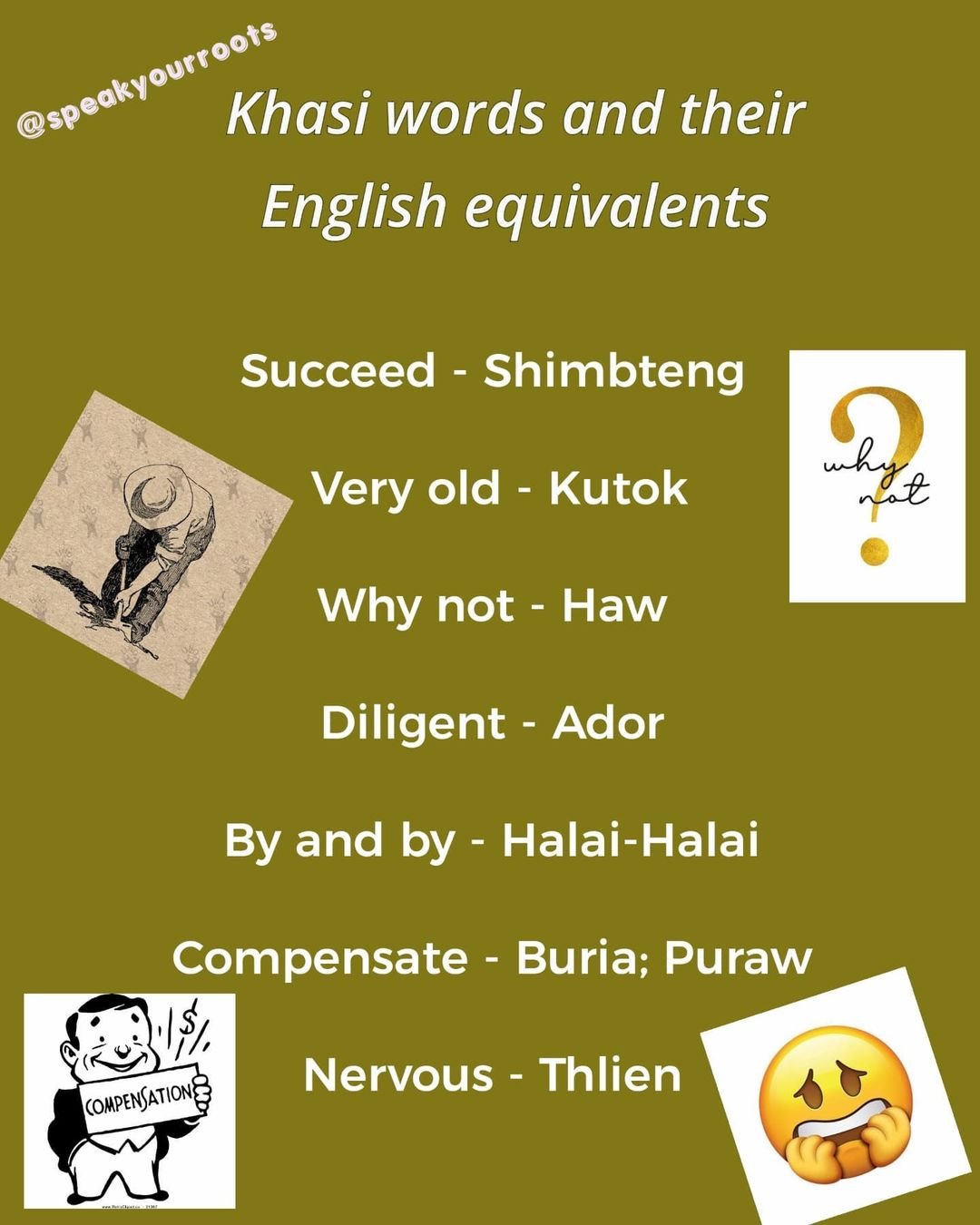
    Succeed – Shimbteng

    Very old -Kutok

    Why not – Haw

    Diligent – Ador

    By and by – Halai-Halai

    Compensate – Buria; Puraw

    Nervous – Thlien

    Here is another list of Khasi words with their English equivalents 🤓🤓

    #habaimkaktienimkajaitbynriew

    A people are alive when their language is alive!

  • Ki ‘Sai Tynrai

    Here is another segment from "Ki 'Sai Tynrai", a collaboration of @speakyourroots and #bigfm98.3 😀😀

    Khublei Shibun #bigfm98.3 for a great and effective video about the Khasi New Year and the Khasi calculation of months! 😄🙏

  • Ki Rukom Kren Ba Pher/Different Ways of Speaking, Part II

    "Kren padan" ka dei kaba kren pakhang ktien ba kiwei kin ym ïoh kren/ to speak in a way that obstructs others from getting a chance to speak.

    "Kren 'nam ksiar 'tien ksiar" ka dei haba kren ïa ka jingbha ban da ïa ka hok ka burom ha ka pyrthei/ to speak for the good of others or about goodness, for the protection of rights, dignity and honour in the world (or in human life).

    "Kren Ikhit" ka dei kaba kren kumba ïathuh bniah ïa ki skid ne sker ki bym larkam/ to speak or relay in detail about all sorts and kinds of things but in a useless way.

    "Kren saidlah" ka dei kaba kren said ban pynïeng la ka nia ne dáw wat la lah shah pyndem ha ka jingïatainia/ to speak in order to support one's argument or reason even though the argument or reason has been weakened or criticised in a debate.

    Sa shi hud ki rukom kren ha ka Khasi 😀🗣️

    This is Part Il of the different ways of speaking in Khasi. May the words we speak empower us and those who listen to us! 💫💫

    🟡 English translation by @speakyourroots

  • Duhai sngi ïa nga

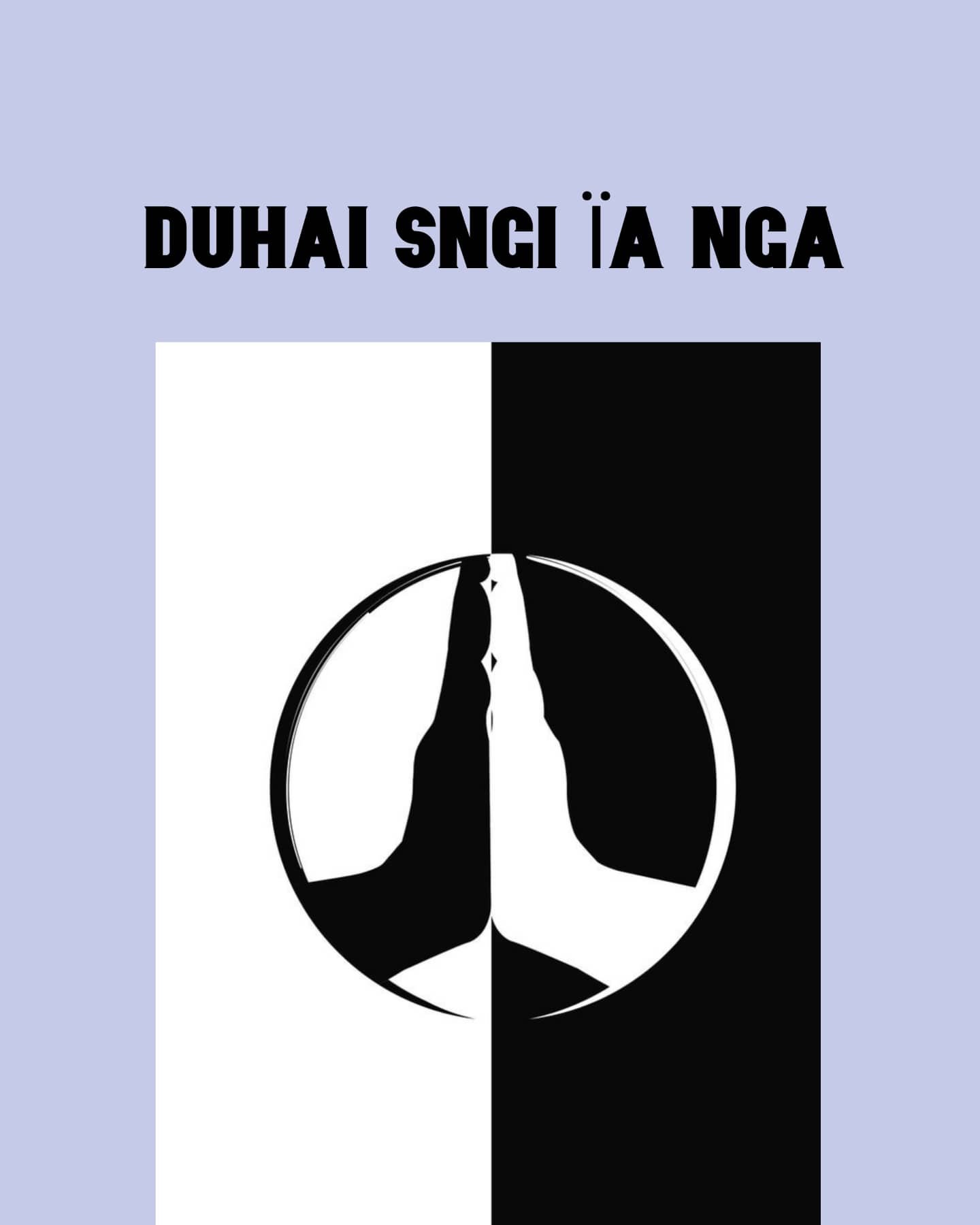
    "Duhai sngi ïa nga" ka dei ka jingkyrpad ne ka jingduwai Blei ba ka sngi kaba sniew kan nym lap ha la ka jingim.

    "Duhai sngi ïa nga" is a request, a plead, to beseech or a prayer to God that a day of misfortune will not fall on one's life.

    "Duhai Sngi Ïa Nga" a Khasi prayer for protection 🙏🙏🌈🌈

    🟡 English translation by @speakyourroots

  • Khalish

    Kane ka thew ïa ngi baroh 🤭🤭😂😂😅😅

    Bun na ngi, ngi khleh lang ïa ka ktien Khasi bad ka ktien phareng haba ïa kren ne ngi shu ïa kren beit tang da ka phareng suda ruh.

    Kaei kaba ngi dei ban sngew ka long ba ngi dei ban pyrshang ban kren tang da ka ktien lajong lada ngi don para ma ngi. Ngin lap ba kin don bun ki ktien kiba ngim tip ha ka Khasi. Ngin lap ruh ïa ka jingshongkhia, ka bor bad ka jingïar kaba don ha ka ktien la jong haba ngi kren ïa ka.

    Kito kiba sah sha jngai na la ri, ki lap ba katno kata jingkwah ban kren da ka ktien la jong. Bad ba da lah ïoh ban kren, ki da sngew hun shisha! Ka ktien ka pynjan ïa ngi sha ki lyer, ki lum ki wah, ki dieng ki siej bad ka pynskhem ruh ïa ki thied tynrai bad ki nongrim longbriew manbriew jong ngi! 💚🙏

  • Leh Piat

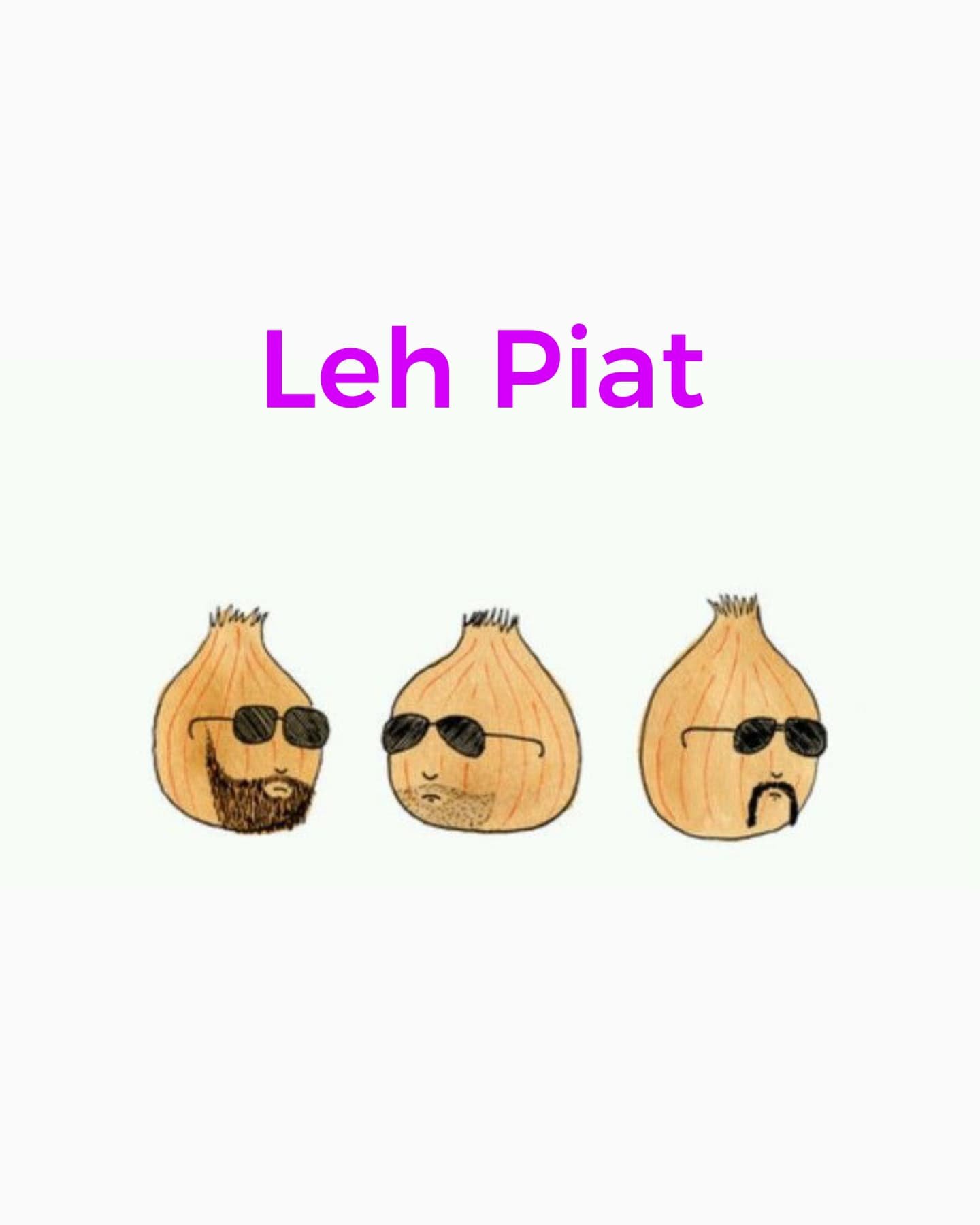
    The Khasi colloquialism/ phrase "leh piat" or sometimes "ba piat bha" is used to describe a person who may be seen as a jack of all trades. He or she seems to be seen everywhere, meeting and conversing with people. Thus, the phrase is a way of describing the popularity of a person.

    An onion is one of the most important ingredients in Khasi recipes. Therefore the metaphor of an onion implies that a "piat" person is usually popular and is invited to (or attends) functions and events.

    The persons who are described as being "piat" or "leh piat" may also be extroverts, they are talkative, outspoken or opinionated, having a large circle of acquaintances.

    According to Ka Dienshonhi: The Khasi Encyclopaedic Dictionary the word "piat" can also be used as an adverb which means: Da kaba mut skhem ne ka jingkut jingmut shaphang kaei kaei, kum "nga shong piat ban pule, ban bam, ban trei bad kiwei-kiwei".

    This means that the word "piat" can be used to descibe the firm determination (or decision) of a person to do anything.

    The phrases "Leh Piat" or "Ba Piat Bha" are amusing, sarcastic and definitely interesting 😄😂 Whoever coined this phrase is a master of wit! 🌰🌰

    Khublei Shibun @_.natalie_kharkongor._ ba phi phah ïa kane! 🙏🙏😀

    🟡 Expanded by @speakyourroots

  • Ki Rukom Kren Ba Pher/ Different Ways of Speaking, Part 1

    "Kren bhoh" ka dei kaba kren ha ka rukom kumba kren khroh ïano ïano bym kwah kren/ to speak so as to coax someone who does not want to talk.

    "Kren jyrwit jyrwat" ka dei kaba kren kyllaiñ khlem pynshai/ to speak in circles or to beat around the bush without any effort at being clear.

    "Kren lyngkut" ka dei ka jingkren ka bym bunktien hynrei kaba eh bad kaba ngam shaduh shyieng/ to speak using less words but they are harsh words whose effect sinks deep into the bones.

    "Kren phrak" ka dei kaba kren khlem buhrieh ne tyngkai; kaba kren laitluid bad shai/ to speak without hiding anything or without reserve; to speak freely and clearly.

    "Kren saidda" ka dei kaba kren ban ïada ïalade lane ïa kiwei pat/ to speak in order to protect oneself or to protect others.

    The power of the spoken word 🗣️🗣️🗣️ There are an array of words to describe different ways of speaking in the Khasi language. Here are a few of them 😄

    🟡 English translation by @speakyourroots

  • Ka Tlang Kaba Pynim (A Winter That Revives) by Badondor Diengdoh

    U briew, u symbai, u jingthung,

    da u lah tynneng palat,

    u jynrat hi naduh tyllong

    dalade ïalade.

    Nga ïohi ia u lyoh khyndew

    u ba ju ïai wan sop ïa ka

    longrynïeng jong nga

    bad man ba u leit phai pat,

    u shim noh shi dkhotmet

    na ka syrngiew jong nga.

    Haba ka tlang ka la sdang ban

    wan siaw na sha lyndet ki kynroh,

    da kaba sem artat da ki lai rong

    jong u sohmynken khnai-

    Hangta keiñ ngan sa ïohi

    biang ïa ka dur

    briew jong ki sur bad ki khana

    kiba ju ïai ksaid ban im,

    ynda ki mih biang pat

    na ka met jong ki

    'riewhyndai kum ka jynhaw.

    Haba u 'sai ka duitara u

    sdang ban slor-

    hato ngi bujli bad kylliang ïa u

    da ki sur nongwei?

    -Badondor Diengdoh

    A man, a seed, a plant,

    in desperation to ape others,

    uproots his own self from

    the source.

    I watch the mist

    who always arrives to cloak

    my being,

    and every time it departs

    it carries away a part of my body

    from my shadow.

    When winter starts to whistle

    from beyond the walls

    dressed in the

    three colours of u sohmynken khnai

    It is there that I see once again

    the human face

    of songs and stories

    who struggle to remain alive,

    when they rise from

    the body of ancestors like vapour.

    When the thread of the duitara

    begins to wither-

    do we change and replace it

    with foreign songs?

    -translated by Daiarisa Rumnong

    "Ka Tlang Kaba Pynim ("A Winter That Revives") is an original Khasi poem by Badondor Diengdoh.

    When winter arrives will we understand the change it brings? Will we return to what rooted us since the beginning? The poem is an evocative response emerging from a depth of experience. Khublei Shibun for sending your poem!