Tag: speakyourrootschallenge

  • Khasi Waterlore by Margaret Lyngdoh

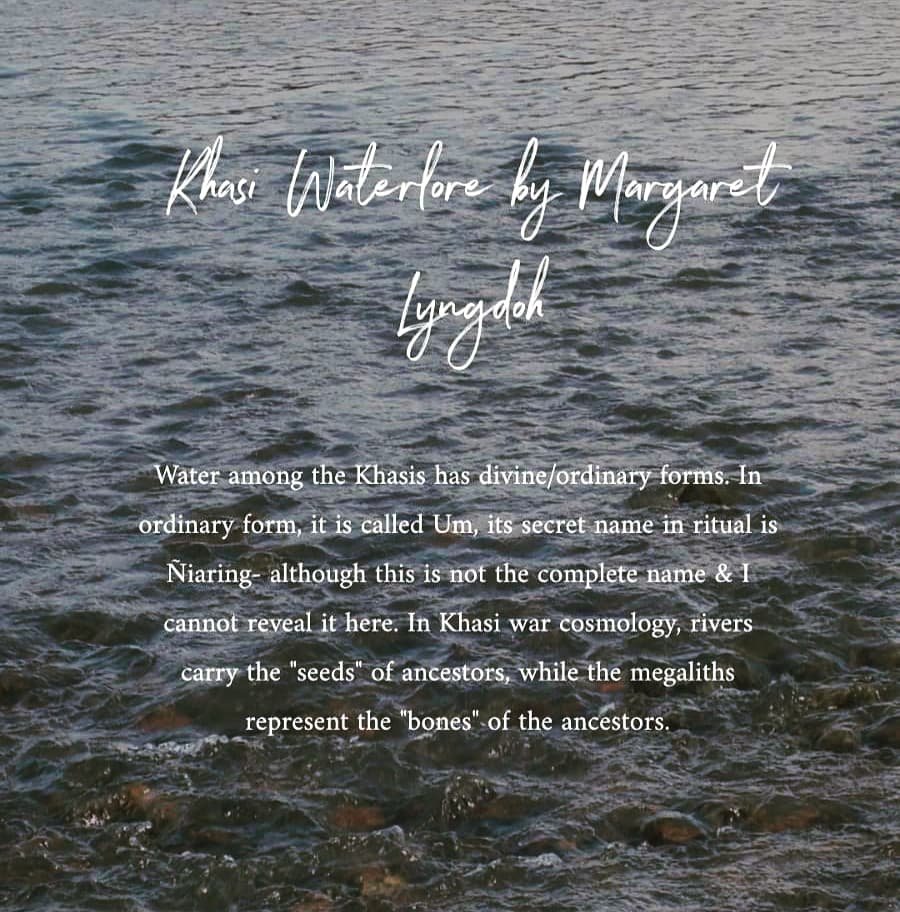
    Water among the Khasis has divine/ordinary forms. In ordinary form, it is called Um, its secret name in ritual is Ñiaring- although this is not the complete name & I cannot reveal it here. In Khasi war cosmology, rivers carry the "seeds" of ancestors, while the megaliths represent the "bones" of the ancestors

    Ha ki Khasi, ka um ka don ka jingkyntang kaba na u Blei bad ka don ruh ka jinglong kum kiwei kiwei ki jingthaw ha ka pyrthei. La khot ïa ka, ka "um" bad la khot ruh ïa ka ha ki jingleh niam kum ka 'Ñiaring”. Ha ki Khasi, ïa ka jingbatai shaphang ka jingpynlong ïa ka pyrthei la ngeit ba ki wah ki dei ki symbai jong ki longshuwa bad ki mawbynna ki dei ki shyieng jong ki longshuwa.

    Among the Nongtrai, Lyngngam, & Muliang Khasi, the divine form of water is Ñiangriang. Among Khynriam Khasi, U Sangriang Um is said to be the father of Thlen. But in northern Khasi hills, in Jhare name magic, water is Ñiaring. The following narrative is recorded from deceased hare practitioner Marcus Lapang.

    "In the olden days, the true name of water was Ñiaring. The older sister of air, Ñiaring was confined to one place by the supreme being. In her place of confinement, her sorrowful cries could be heard.

    The Council of the Supreme Being was convened and there it was decided that Ñiaring should be freed to flow into all the earth. So the Riew Ramhah, or Pantia, appointed by the gods began to clear the earth thereby making channels for Ñiaring to flow into the world. They were created solely for this task. Neither human, nor spirit, the supreme being never made any other use of them and we don't know where they are today. The Khasi lands as we know them today are so hilly & uneven because Ñiaring had to be allowed to flow out into the world. After she was freed, Ñiaring tied a Jutang or a covenant, whereby she agreed to help mankind in any way that she could and she could go where she was needed in Khasi lands.

    Ñiaring made the promise that she would cleanse and purify from illnesses, that may be caused by beings whom she contains & nurtures. In return, mankind agreed not to be cruel or violate her. Water came before Lukhmi, the spirit of paddy (rice grain). When Ñiaring became free, the sounds of her sorrow turned into music & joy as she flowed over the rocks & mountains, which then became her musical instruments. Every water body is the road, the pathway of the Ryngkew (guardian deity of a place in nature) and Basa (the deity of water). We see the water flowing by, but we never see it return. But it returns & it goes back. Ñiaring has 30 kinds of entities, including fish, which live inside her and she offered to cleanse any human being afflicted by any of the entities who live inside her.

    The Puri, or water nymph/ spirit is one of the entities belonging to Ñiaring. Ñiaring also harbours inside her, evil spirits, & other non-human entities (ki ksuid ki khrei). This is the reason why Jhare magical practioners, using Ñiaring to heal illness caught from water. It is necessary to sacrifice to Ñiaring, a female white chicken, or white she-goat in times of necessity. But this sacrifice should never be performed continuously, but only when the Jhare practitioner tells you to do so.

    "Khasi Waterlore" by Dr. Margaret Lyngdoh @lieng_makaw. Thank you so much for sending an in-depth and insightful entry! 🙏🙏😃😃

    This entry is contributed by Dr. Margaret Lyngdoh, University of Tartu. Design and layout has been done by Talilula @thelazyscribbler

    Khasi translation by @speakyourroots

    No part of this material may be reproduced in any form without the consent of the author. All material for this content has been collected through primary fieldwork.

  • Ka Mieng

    "Ka Mieng" ka dei ka kynja jingput ba la thaw na ki lyngkhot siej, kaba shu kbum ha ka shyntur bad kaba pynmih sur kat kum ka jingkyan mynsiem. 🎶🎵

    "Ka Mieng" is a unique traditional Khasi muscial instrument which is made from shreds of bamboo. It is placed between the lips and the sound is made when the musician strums it against his lips. They pucker the lips into different shapes to evoke different sounds. 🎶🎵

    "Ka Mieng" is also a sonnet which is a poem of fourteen lines.

    Khublei Shibun @apkyrment_adm for the picture of "Ka Mieng" and @lapdiangsyiem too for your help! 🙏🙏

  • Tura nga!

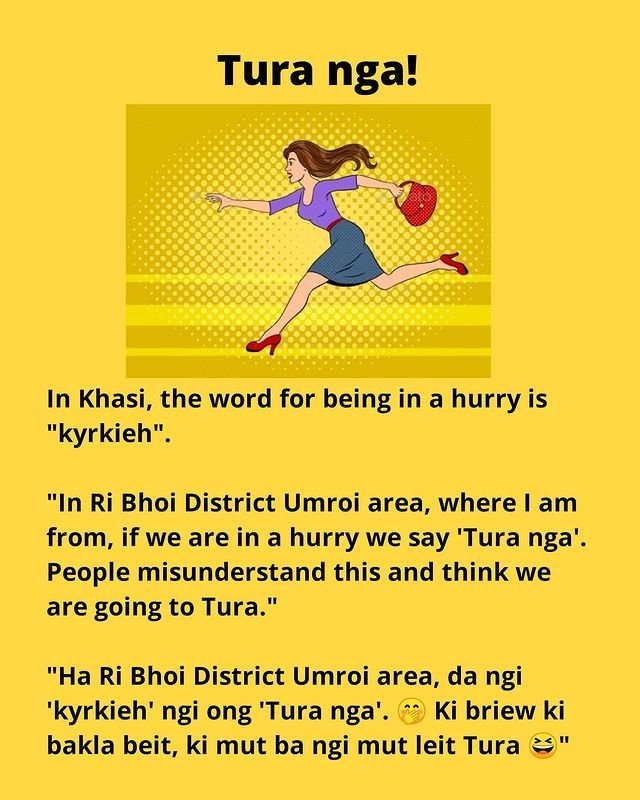
    In Khasi, the word for being in a hurry is "kyrkieh".

    "In Ri Bhoi District Umroi area, where I am from, if we are in a hurry we say 'Tura nga'.

    People misunderstand this and think we are going to Tura."

    "Ha Ri Bhoi District Umroi area, da ngi 'kyrkieh' ngi ong 'Tura nga'. Ki briew ki bakla beit, ki mut ba ngi mut leit Tura.

    "Tura nga" sent by @adele__miss_dreamy 🏃🏃🏃 for when you are in a big hurry!!

    There are so many dialects present among the Khasi people. This is one from Ri Bhoi District. 😀 In this instance, people think it means "Tura" in the Garo hills. Thank you @adele__miss_dreamy for sending this!

  • Ka pah chyrpang

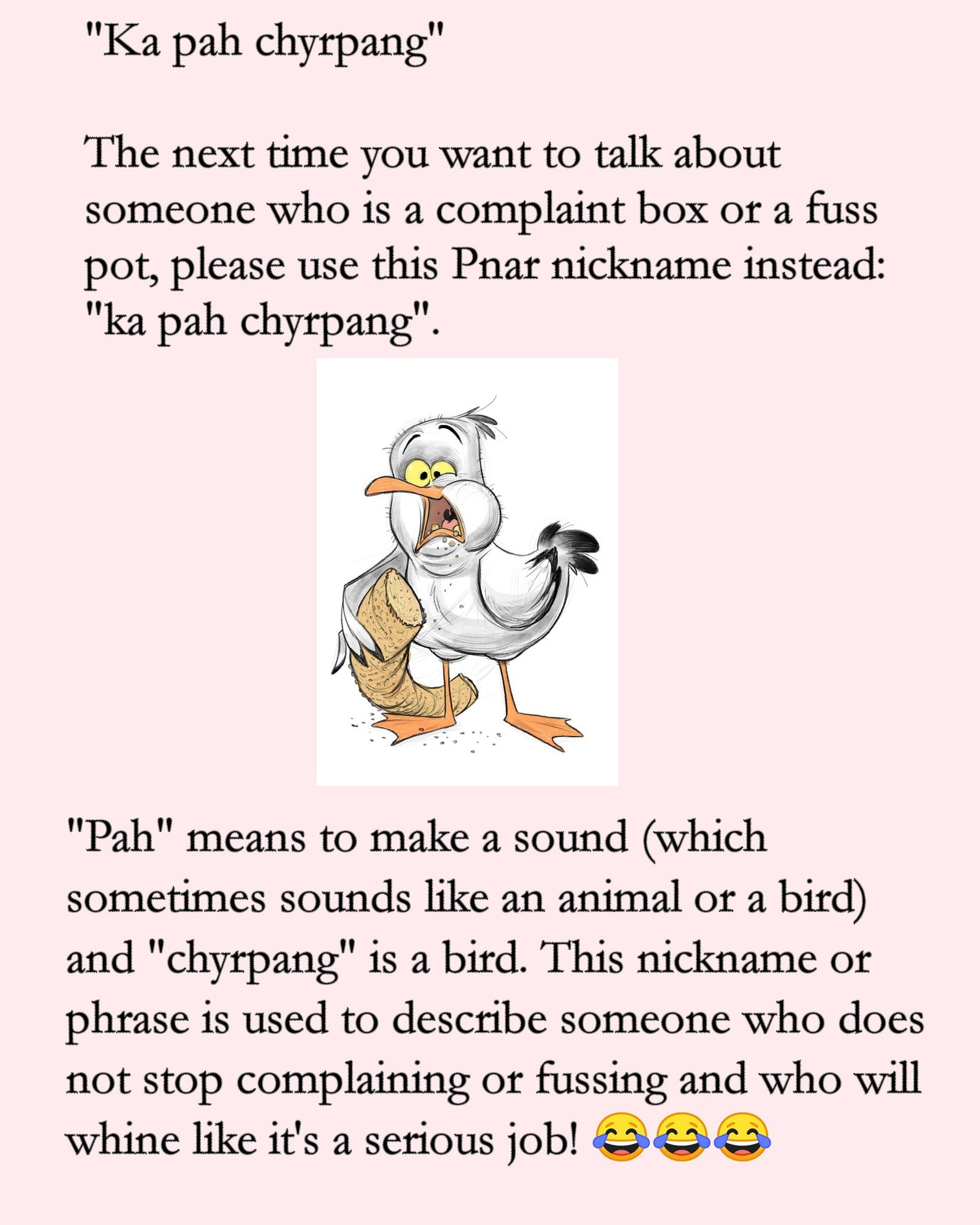
    The next time you want to talk about someone who is a complaint box or a fuss pot, please use this Pnar nickname instead: "ka pah chyrpang".

    "Pah" means to make a sound (which sometimes sounds like an animal or a bird) and "chyrpang" is a bird. This nickname or phrase is used to describe someone who does not stop complaining or fussing and who will whine like it's a serious job!

    Once again @laloorisa has sent another Pnar nickname: "Ka pah chyrpang" 😅😅😂😂

    This phrase is used to describe someone who annoys us by their constant complaining! Thank you @laloorisa for these witty and humourous nicknames 🤡🤡

  • U Sangot

    "U Sangot" u dei u nong pyrta shnong na kliar na them haba don kano kano ka jingjia ha shong ban pyntip paitbah. Kum haba don ka jingïapbriew ha shong, ki jingïalang dorbar bad kumta ter ter. U sangot u pyrta beit da ka tyngam lajong khlem kano kano ka jingïarap ki kor ki bor.

    Ha shong jong ngi mynshwa nga kynmaw u sdang kumne ko shong, (u sngap shwa tok) ko thaw, to ïa sngap…”

    "U Sangot" is a Khasi version of a town crier. "U Sangot" is a person employed to make public announcements in the streets or the marketplace of a town. We hear "U Sangot" when there are deaths or "dorbar" meetings and so on. He states his announcements in a loud booming voice without the help of microphones and speakers.

    "U Sangot will always start with "Ko shnong, (pause) ko thaw, to sngap…”

    "U Sangot" is a Khasi town crier who has a characteristic way of declaring his announcements. We might not hear "U Sangot" so much in Shillong but the practice is definitely still prevalent in smaller towns and villages. 🔊🔊🔊🔊 Thank you @same_omega for sending this entry!

    If you know more about "U Sangot" please share in the comments section!

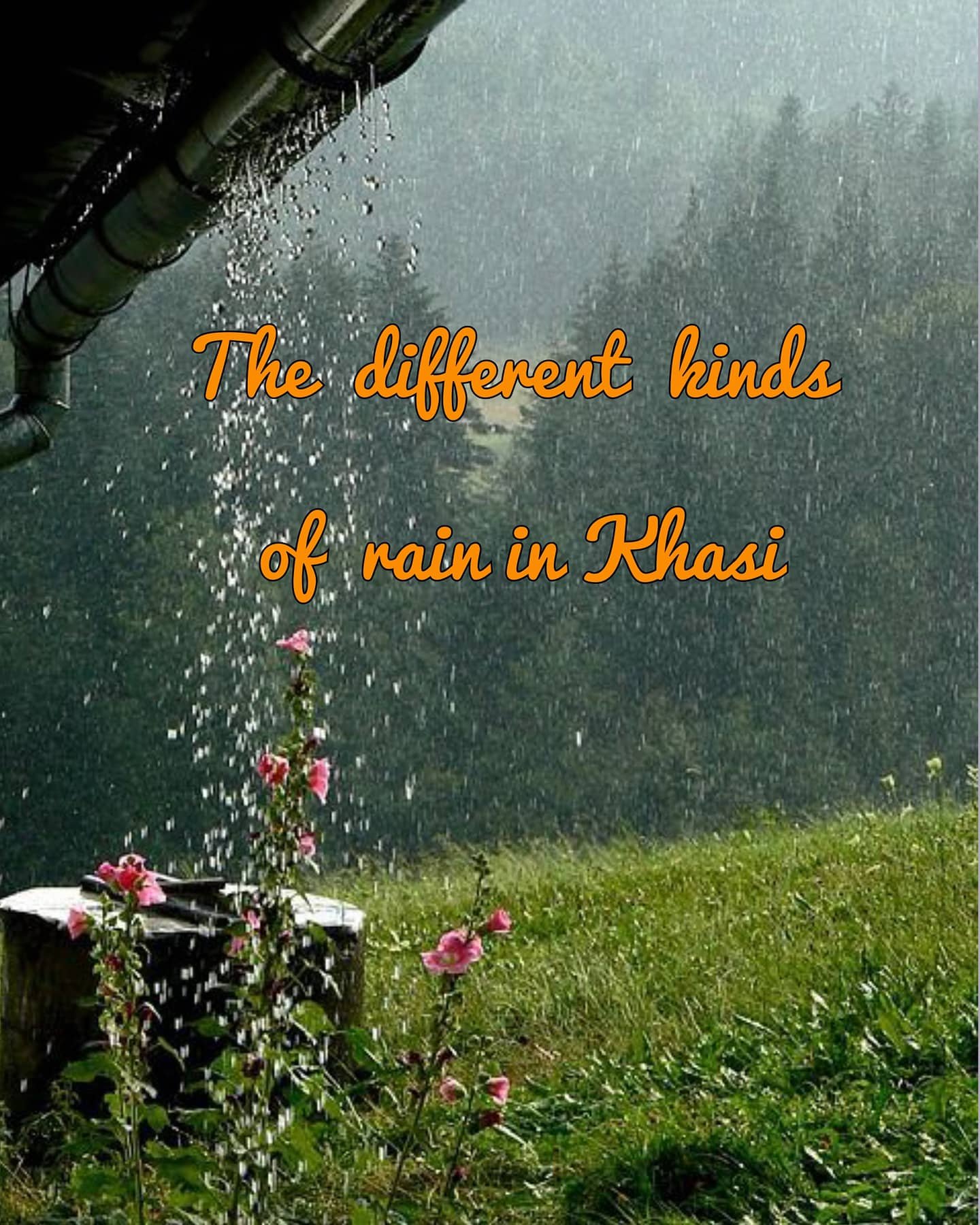
  • The different kinds of rain in Khasi

    " 'lapbah" is heavy rain

    " 'lap bñiup bñiup" is a drizzle

    " 'lapkyrtiah" is a rain storm with strong wind

    " 'lap praw" is a sudden shower

    " 'lap mynsaw" is sudden rain in the midst of a bright and sunny day. This rain causes the rapid flooding of rivers.

    " 'lapbehmrad" is rain that comes at the beginning of Spring. It is said that this rain helps hunters to identify the tracks of animals.

    " 'lapshiliang" is rain that falls only in certain areas.

    " 'lap Sohra" is the heaviest rain in the world that falls in Sohra (Cherrapunji).

    Belonging to the place with the heaviest rainfall in the world, the Khasis have different names for different kinds of rain 🌦️🌧️⛈️🌨️🌩️

  • Ñiangkongwieng khlem snier

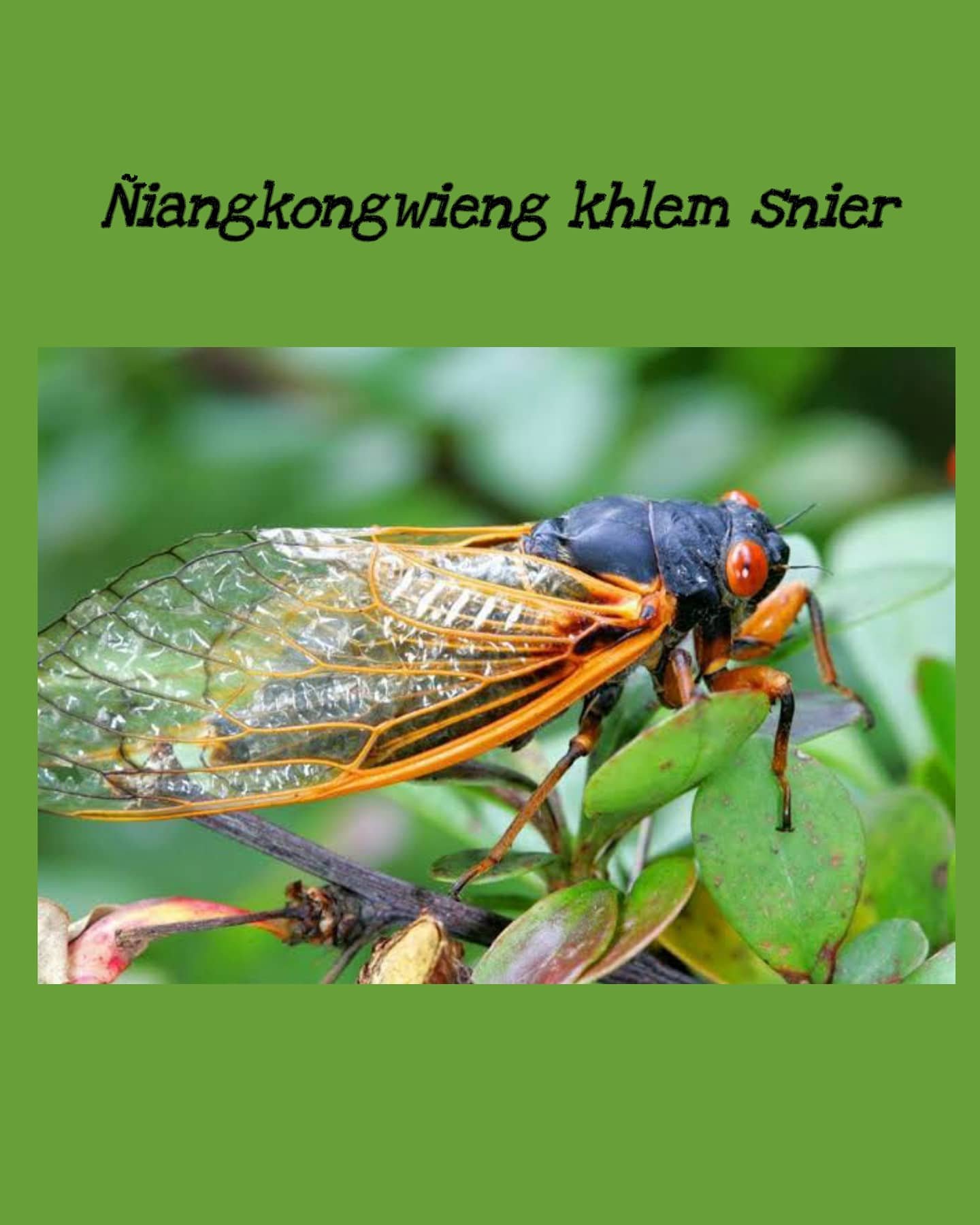
    Ka jingong Khasi "ñiangkongwieng khlem snier" ka ring jingmut na ka jingpah kaba mih na ka kpoh jong ka ñiangkongwieng kaba dap da ka lyer, hynrei kaba lah ban pah baroh shi sngi. Kane ka jingong ka thew ïa u briew uba heh tang ka tyngam bad ka khlem kam; u briew uba put ronsing ïalade tangba ubym larkam eiei ruh.

    In Khasi "Ñiangkongwieng" is the cicada and "Snier" are the intestines. The phrase above describes the cicada's body, in particular the abdomen because they breathe through "Spiracles" which are small holes in the abdomen. These spiracles are responsible for the sound of the cicada.

    This Khasi phrase focuses on the loud sound emanating from the porous abdomen of the cicada, to describe a person who is a big talker but never accomplishes anything. He likes to blow his own trumpet but in reality, he is useless and has no substance.

    "Ñiangkongwieng khlem snier" is a Khasi phrase which describes a big talker, whose arrogance is as loud as his voice when he talks of himself. 🗣️🗣️

  • U Niang Raja

    In the past, in the Jaiñtia Hills there was the Kingdom of Sutnga. Besides the Kingdom of Sutnga, there was also the smaller kingdom known as the Kingdom of Madur Maskut which was ruled over by the Malngiang kings. The Malngiang king was Mailong Raja. Mailong Raja had a brother called Niang Raja who was a most trusted aid and adviser to the king. Niang Raja was also strong and brave, being extremely skilled in the art of warfare.

    The King of Sutnga was afraid of Niang Raja's prowess and wanted to kill him. A group of his soldiers had captured Niang Raja, cut his body into pieces and threw it into a gorge but the next day, Niang Raja was seen walking as if nothing had happened to him. Nobody knew the secret to Niang Raja coming back to life and this disturbed the King of Sutnga. Finally, after much deliberation, his ministers and him devised a plan to lure Niang Raja by using a beautiful woman. Thus, a search was undertaken to find the most beautiful maiden in the land. When they found her, the King of Sutnga promised that if she was able to discover the secret of Niang Raja then she would be gifted with money and her family would also be gifted with land. The maiden was dressed in the finest silk and gold, so that she would catch the attention of Niang Raja.

    Sure enough, one day when Niang Raja was in the market, he saw the beautiful maiden and was besotted by her. He sent his men to ask her who she was and where she came from but she would not tell them. Finally, Niang Raja talked to her himself, praising her beauty and as they talked he fell in love with her. Consequently, Niang Raja and the woman were married and she fulfilled all her duties as wife to a prince. Niang Raja loved his wife deeply and trusted her completely. She started to notice that he never took a bath at home and would go on long walks that stretched for hours.

    One day, she told him of her fear that he walked around with no attendants or soldiers with him. She then started to weep inconsolably. Seeing his wife in distress, Niang Raja told her that he went on his walks so that he could bathe in the river and when he did he would take out his intestines to wash them and dry them on the rocks. He told her that his power and the secret of his life lay in his intestines. So, with the knowledge of Niang Raja's secret, the men of the King of Sutnga waited for Niang Raja to arrive at the river. This would be Niang Raja's last bath. While the prince was in the river, they chopped his intestines, killing Ning Raja in the water instantly. Thus, with Niang Raja out of the way the King of Sutnga conquered Madur Maskut and the kingdom came to be known as Sutnga-Madur Maskut.

    The story of U Niang Raja tells of ambition, intrigue, the supernatural and betrayal. The events of the story capture the imagination and we are engrossed by the secrets of the past.

    Reference: 'Khasi Myths, Legends and Folktales' by Bijoya Sawian (2010).

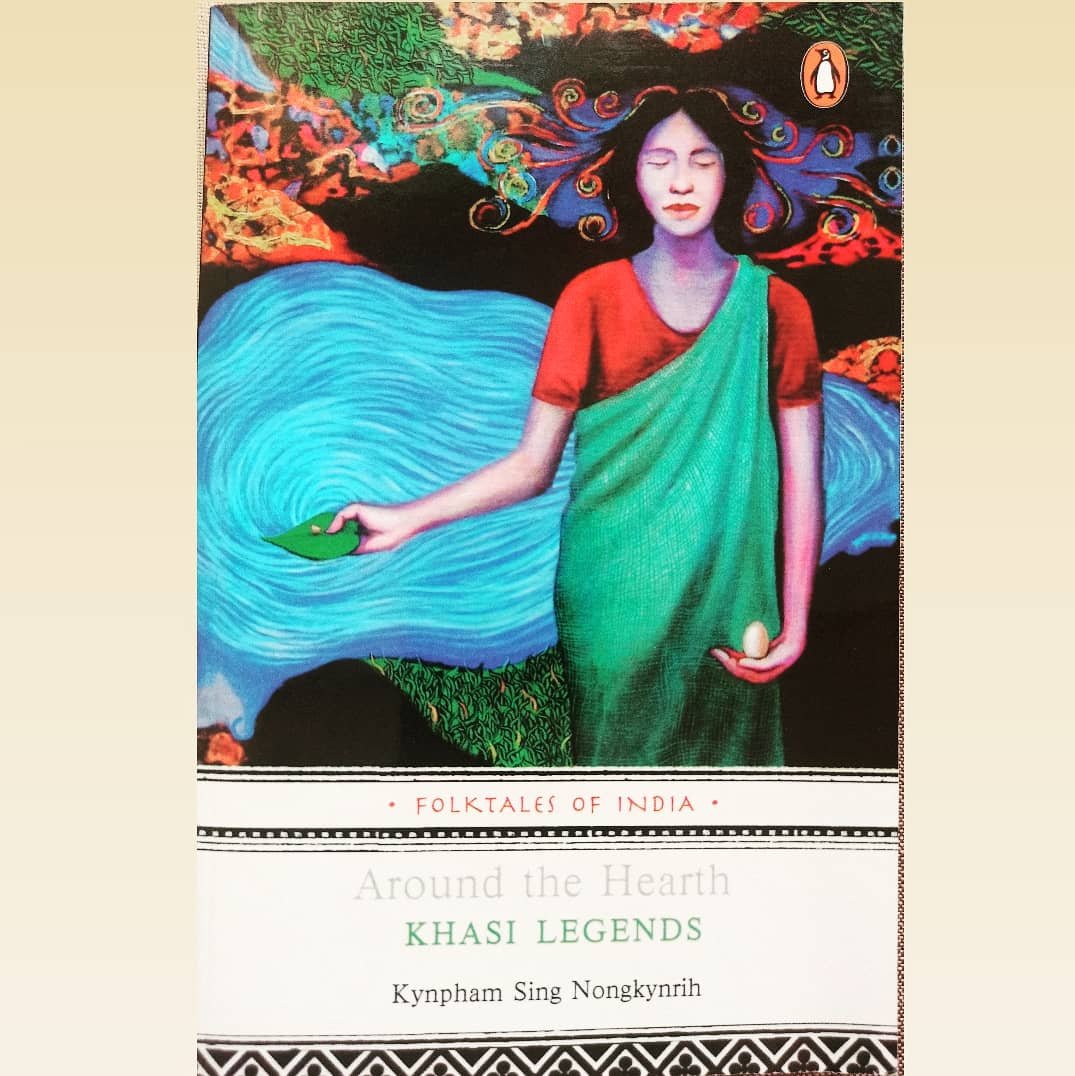
  • Around the Hearth: Khasi Legends (Folktales of India) by Kynpham Sing Nongkynrih

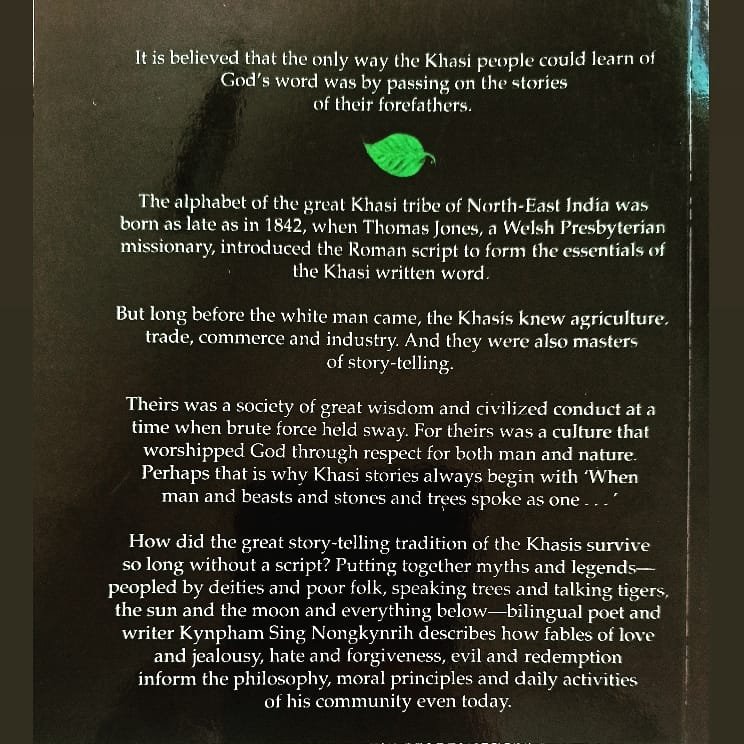
    The back cover of Around the Hearth: Khasi Legends (Folktales of India) reads thus:

    "It is believed that the only way the Khasi people could learn of God’s word was by passing on the stories of their forefathers. The alphabet of the great Khasi tribe of North-East India was born as late as in 1842, when Thomas Jones, a Welsh Presbyterian missionary, introduced the Roman script to form the essentials of the Khasi written word. But long before the white man came, the Khasis knew agriculture. trade, commerce and industry. And they were also masters of story-telling.

    Theirs was a society of great wisdom and civilized conduct at a time when brute force held sway. For theirs was a culture that worshipped God through respect for both man and nature. Perhaps that is why Khasi stories always begin with ‘When man and beasts and stones and trees spoke as one…'

    How did the great story-telling tradition of the Khasis survive so long without a script? Putting together myths and legends peopled by deities and poor folk, speaking trees and talking tigers, the sun and the moon and everything below—bilingual poet and writer Kynpham Sing Nongkynrih describes how fables of love and jealousy, hate and forgiveness, evil and redemption inform the philosophy, moral principles and daily activities of his community even today."

    Around the Hearth: Khasi Legends (Folktales of India) written by Kynpham Sing Nongkynrih (2007) is an important and significant book which documents Khasi folktales in English. With the publication of this book, the Khasi oral tradition can now reach a larger audience in India and all over the world.

    Published by: Penguin Books India

    Cover painting: @benedictskhemlang

    Illustrations: Pankaj Thapa

    👉The book is available online on amazon.in

  • U miaw wa synñiam dakharang

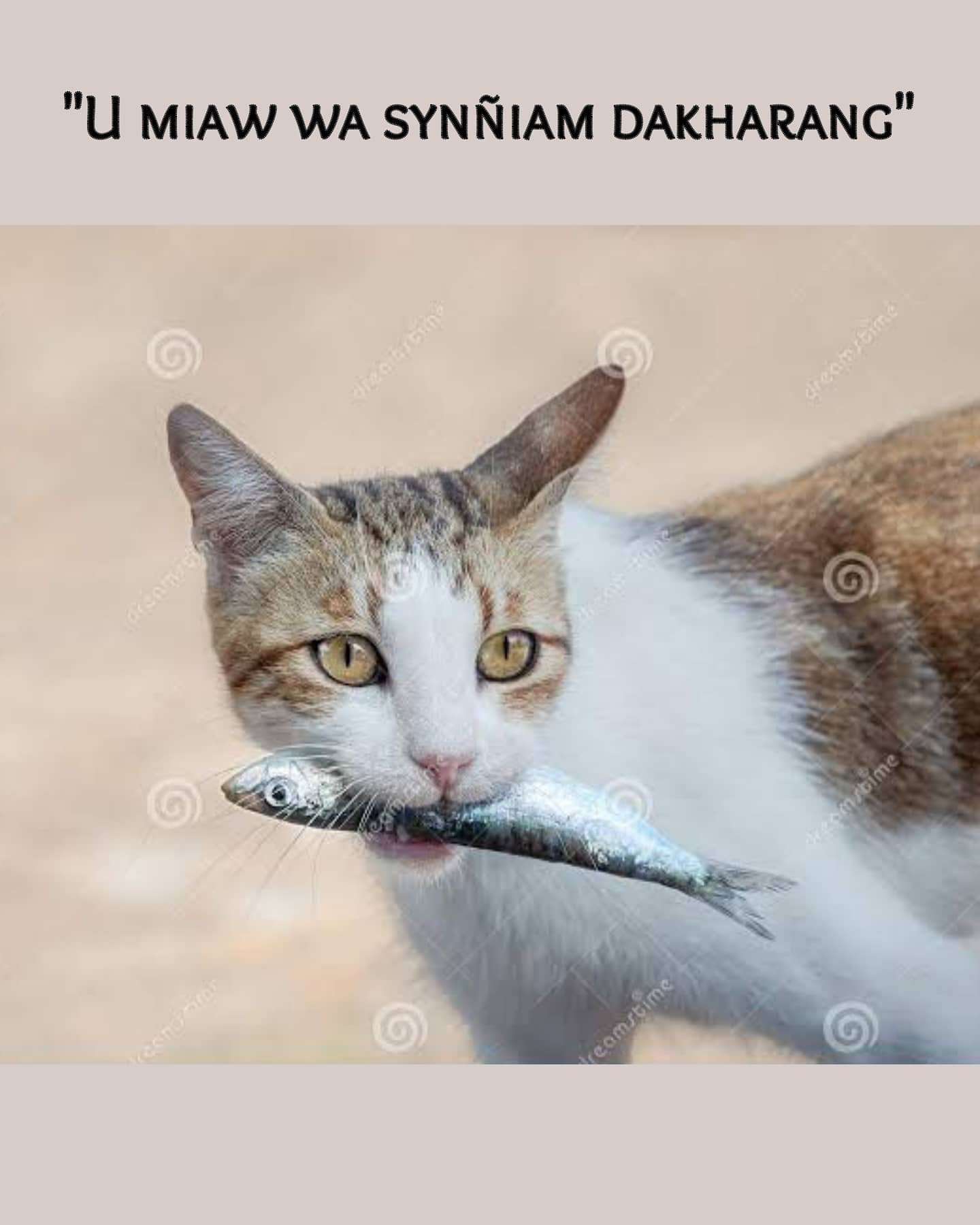
    U miaw wa synñiam dakharang" is a Pnar phrase to describe men who are very good at making romantic advances towards women.

    "Miaw" means cat, "dakharang" is fish that has been smoked and "synñiam" may be translated as an opportunist waiting for the right time. The phrase describes the cat who has been waiting for the right time to steal the fish.

    Imat ki long thik kum u miaw ba pyrshang ban tuh dakharang haba ki pyrshang ban pynbiej kynthei, na kata ka daw ki sa khot ia ki da kata ka kyrteng.

    The men resemble the cat in its eager attempt to get the fish, in the way they woo women. That's why they have been given this nickname.

    "U miaw wa synñiam dakharang" is a Pnar phrase used to describe men who are expert "wooers" of women 😅😅😂😂 This post is dedicated to all you Don Juans and Zorros! 🤭😜

    Thank you @laloorisa for sending this! 😁😁