Tag: talklocal

  • Dried fish chutney

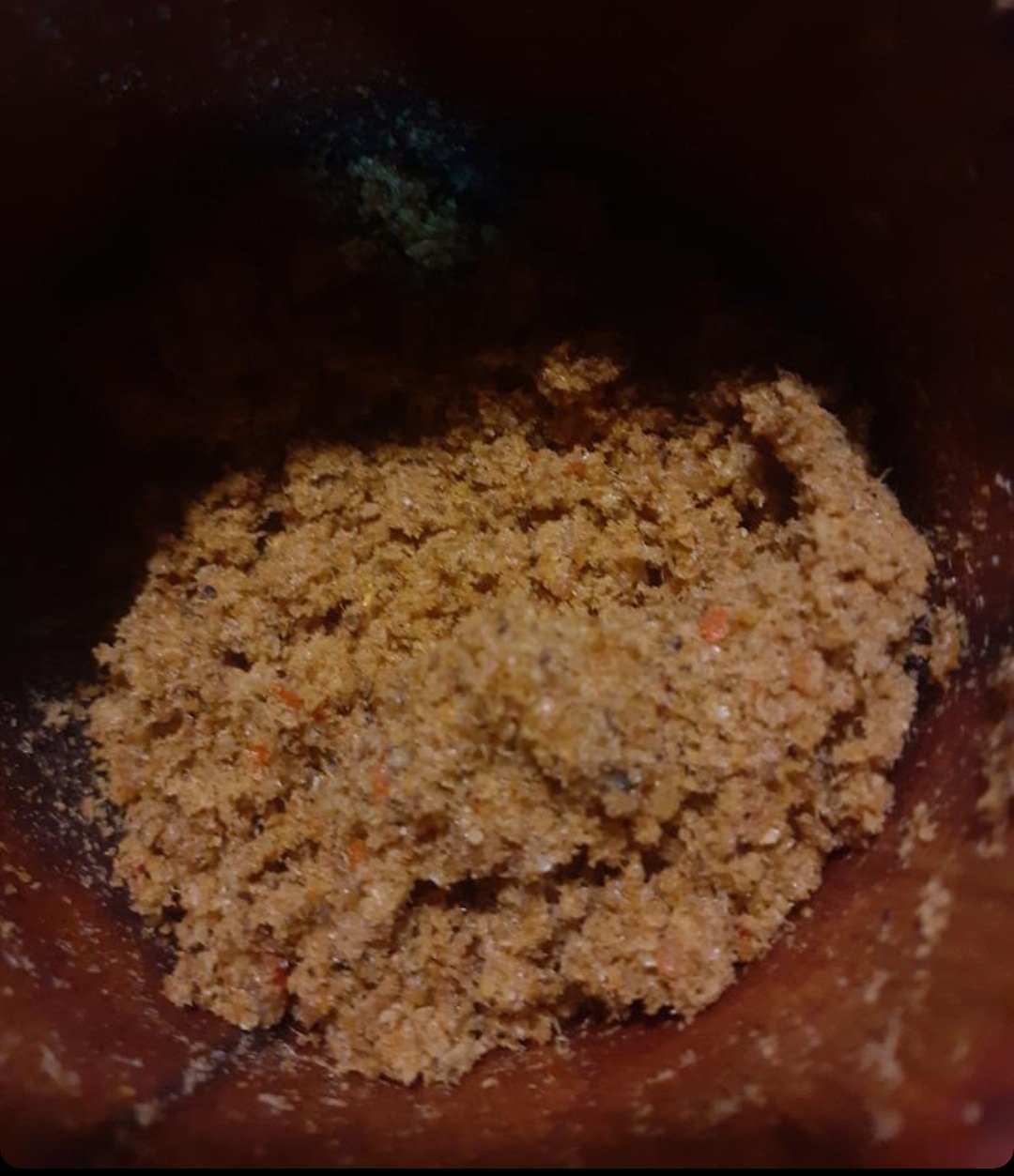
    Dried fish chutney from @bada_boombam 🤩🤩🤩 Thank you for a picture of this mouth-watering chutney! 😋😋😋

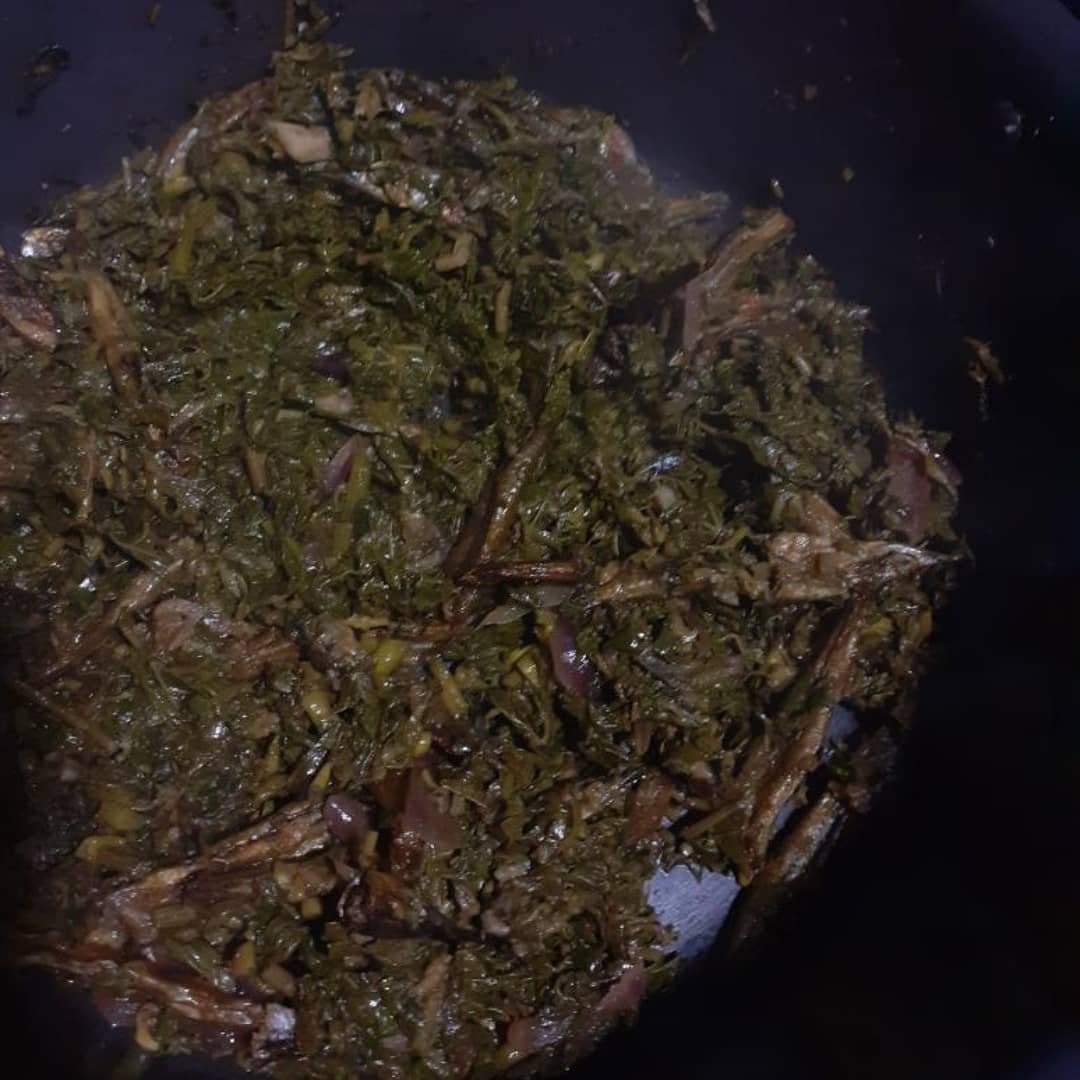
    She says: My favourite ktung chutney. It's a marriage of ktung Bombay, dried bird's eye chillies, ginger and szechuan pepper. The trick to that perfect taste lies in how much ginger you add.

  • Ktung and Jaraiñ

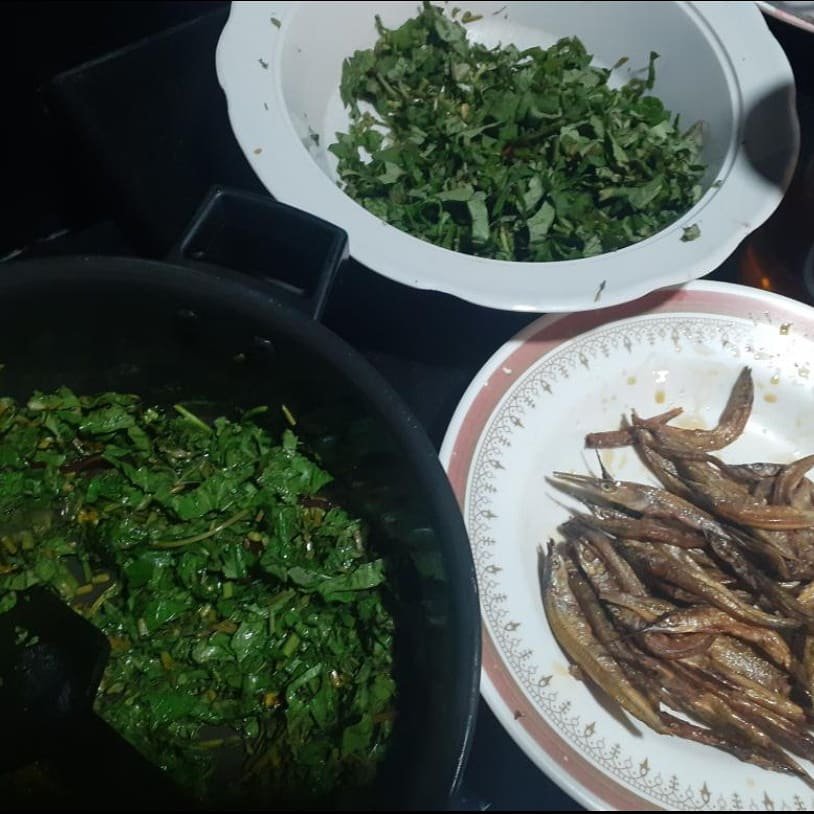
    This post is about "Ktung and Jaraiñ" 😋😋 Thank you @bada_boombam for sending this delicious reminder! 😀😀

    She says: Jaraiñ and ktung is a dish loved by many, the Umami flavour of the dried fish and the sour and lightly bitter taste (you can barely sense it) of the jaraiñ just makes this dish that comfort lockdown food. It can be had as a side dish or even as "jingtah" (as curry eaten with rice). I think the Bhois cook it in bamboo which further adds to flavour because of the smokiness.

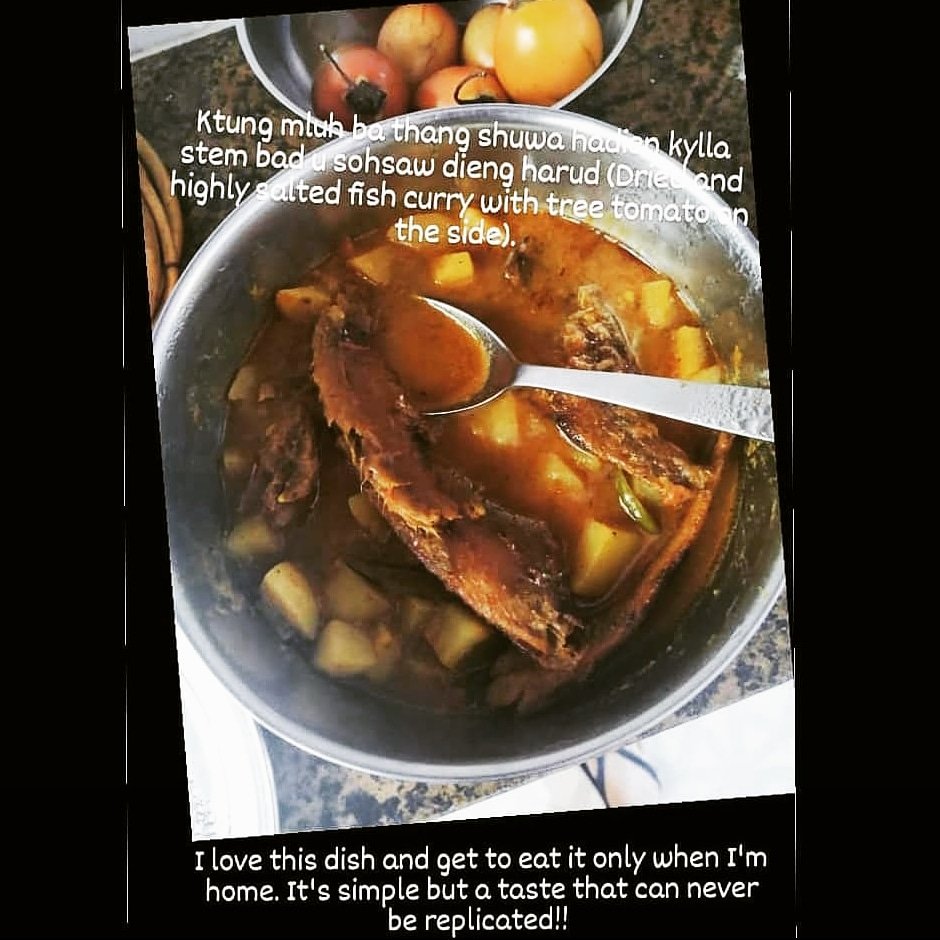
  • Ktung mluh bad u sohsaw dieng

    Ktung mluh ba thang shuwa hadien kylla stem bad u sohsaw dieng harud (Dried and highly salted fish curry with tree tomato the side).

    I love this dish and get to eat it only when I'm home. It's simple but a taste that can never be replicated!!

    ​​

    "Ktung mluh bad u sohsaw dieng" 😋😋😋 yum yum! Thank you @lapdiangsyiem for sending this!

  • Mei Mariang Ngan ym ïeh ia phi da i Daohi Manar

    Ko lyer ba beh jai jai

    Pha pynlung ïa mynsiem jong nga

    Pha beh khlem don jingkhuslai keiñ shirta!

    Khublei, A ko lyer pha la pyntngen ïa nga

    Kumno keiñ mynta ba ngan ïada?

    Ha la marwei, nga ïam pangnud, nga da jaw ki ummat

    Ïa Mei Mariang haduh katne

    Khun bynriew "Kim pyrkhat!"

    Pyrthei Mariang ba itynnad

    B'u Blei u ai kyrpang

    Ka shong ha ngi, tang ha nga bad ha phi

    Ïa Mei- Ramew ba ngin sumar ngin ri

    Ki um ba shngiam ba sngur

    Ba ramew la dep pynwandur

    Da khmat ba sngewdiaw, nga peit ïa pha

    Shaei, pat mynta jaka ban rieh: ïa nga

    Ïathuh keiñ shaei "Ngan ïoh jaka?"

    Kjat sngi ba tyngshaiñ, ki wan doh ïeid ïa nga

    Jingkyrmen nga don, ba pham duh ïa jingjyrngam

    Ngan um ïeh ïa phi, keiñ noh….khun, wat ïam!

    Ka ri khlem jingsheptieng, ko ri ki Blei

    Ba dap da jingshngaiñ, Ri Tipbriew-Tipblei

    To kular ïa nga ba phin kamai hok ha pyrthei

    Ïa nga, to sumar-kyndong

    Sa shisien ha phi keiñ nga ong.

    "Mei Mariang – Ngan ym ieh ïa phi"

    – Daohi Manar

    An original Khasi poem by @xdtnoahjupejackllthmanar

    Thank you for sending this poem! The message that man and nature are intricately connected has to be reiterated!!
  • Phok

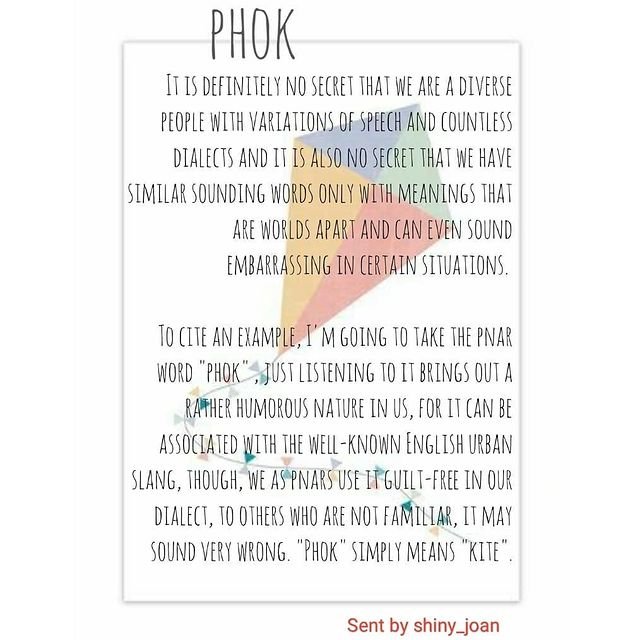
    It is definitely no secret that we are a diverse people with variations of speech and countless dialects and it is also no secret that we have similar sounding words only with meanings that are worlds apart and can even sound embarrassing in certain situations. To cite an example, I’m going to take the pnar word "Phok". Just listening to it brings out a rather humorous nature in us, for it can be associated with the well-known English urban slang, though, we as Pnars use it guilt-free in our dialect, to others who are not familiar, it may sound very wrong. '"Phok" simply means "kite”.

    The word "Phok" in the Pnar language means "Kite". Thank you @shiny_joan for sending this! 😄😄

  • Ñiuma

    Ka ktien "Ñiuma" ka dei ka ktien kaba pyndonkam haba mut ban ong ym lei lei ne koit. Kum haba ong “Ñiuma, nga mynjur ïa kaei kaba phi batai".

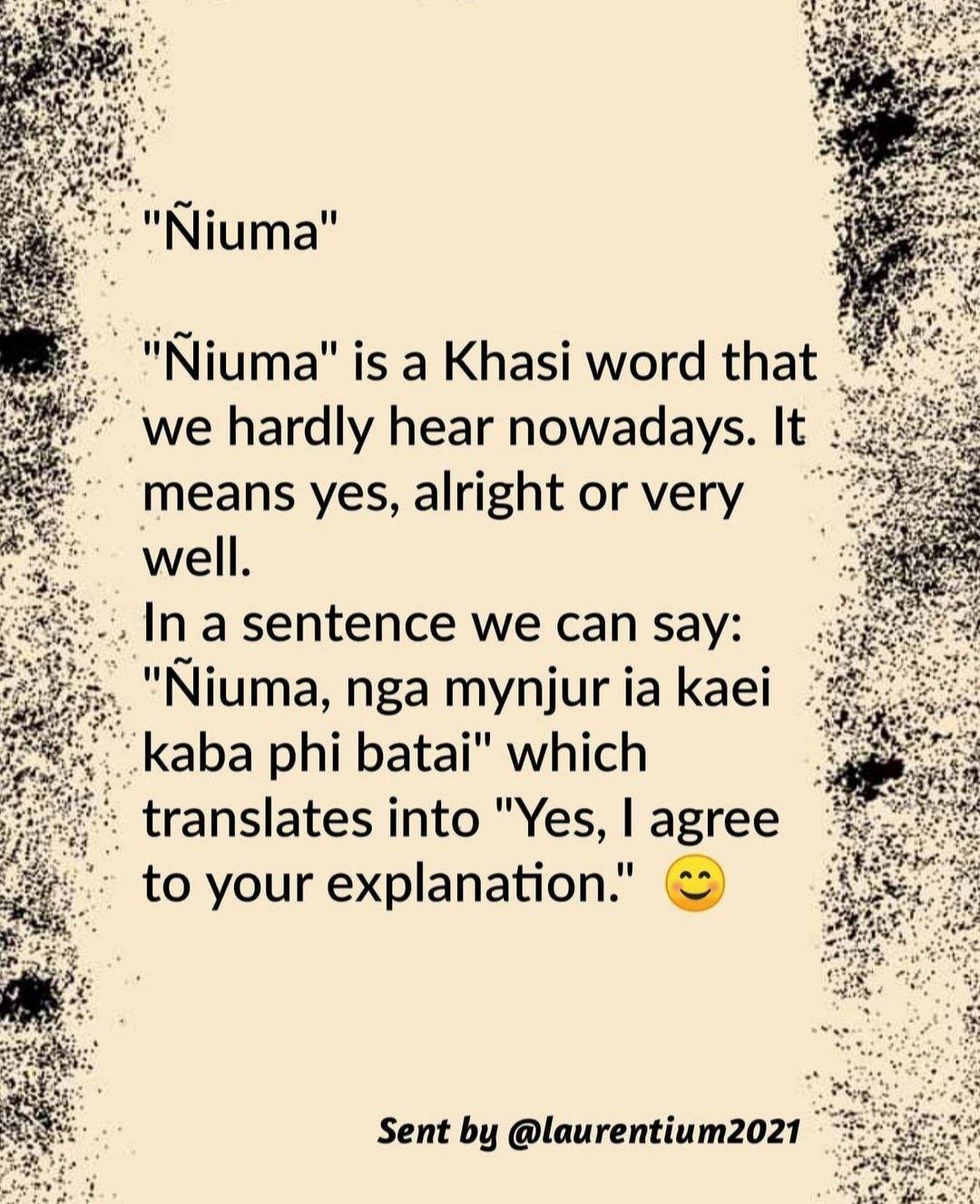
    Ñiuma is a Khasi word that we hardly hear nowadays. It means yes, alright or very well. In a sentence we can say: “Ñiuma, nga mynjur ïa kaei kaba phi batai" which translates into "Yes, I agree to your explanation."

    Ñiuma" sent by @laurentium2021 😄 Thank you!

  • En

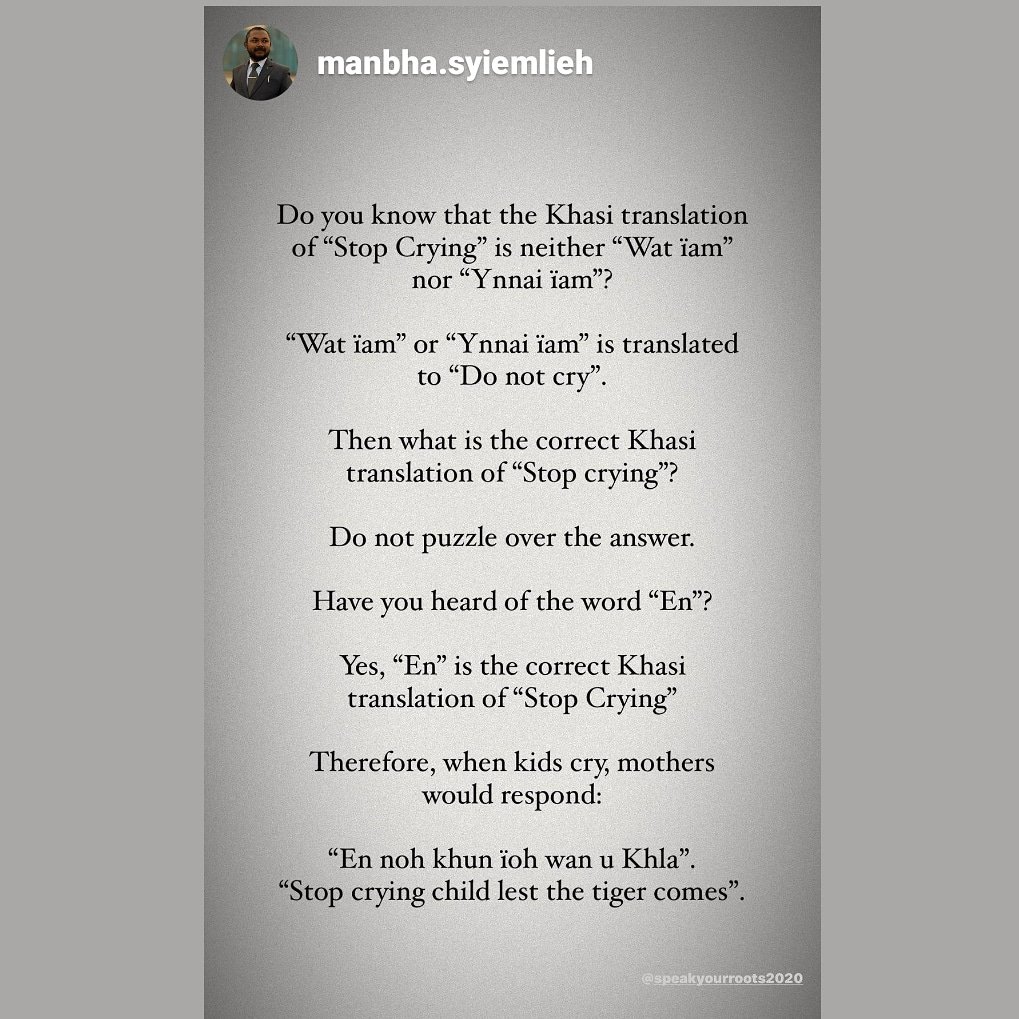
    Do you know that the Khasi translation of "Stop Crying" is neither "Wat ïam" nor "Ynnai ïam"? "Wat ïam" or "Ynnai ïam" is translated to "Do not cry". Then what is the correct Khasi translation of "Stop crying"? Do not puzzle over the answer. Have you heard of the word "En"? Yes, "En" is the correct Khasi translation of "Stop Crying" Therefore, when kids cry, mothers would respond: "En noh khun ïoh wan u Khla". "Stop crying child lest the tiger comes".

    "En" sent by @manbha.syiemlieh Khublei Shibun for an interesting entry! 😄

  • Ieid Thep Mynsiem

    The Khasi phrase "ieid thep mynsiem” translates to a love which literally keeps someone safe in one's very own soul. It is a phrase used to describe familial love, love amongst the closest of friends, or even lovers.

    "Ieid thep mynsiem" sent by @laia.naomi 💜💜💜 Khublei Shibun!

  • Ka Shad Suk Mynsiem

    Wallam says:

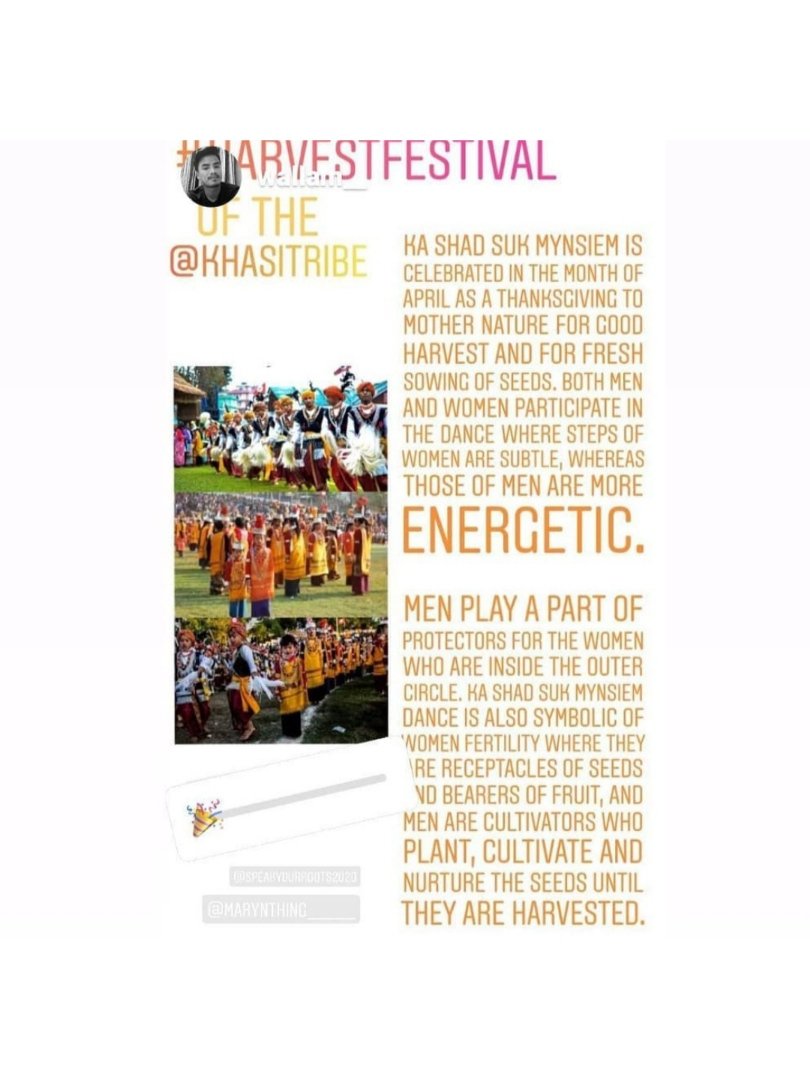
    Ka Shad Suk Mynsiem is celebrated in the month of April as a thanksgiving to mother nature for good harvest and for fresh sowing of seeds. Both men and women participate in the dance where the steps of women are subtle, whereas those of men are more energetic. Men play a part of protectors for the women who are inside the outer circle. Ka Shad Suk Mynsiem dance is also symbolic of women's fertility where they are receptacles of seeds and bearers of fruit, and men are cultivators who plant, cultivate and nurture the seeds until they are harvested.

    Ka Shad Suk Mynsiem sent by @wallam__ Khublei Shibun!

  • Laiphew

    The connotation or the Khasi term "Laiphew" which literally means thirty, as a limit ordinal is without a successor and it is a marker of a process of constitution of a community. It is not just a representation of the number 30, but it is supposed to be an idiolect of 'all types'. For example, "Laiphew Syiem'' means many chiefs; "Laiphew Mrad" means many animals. Philosophically speaking the Khasi concept of all and many as a generic concept is simultaneously concrete and general. Concept of numbers to instantiate all or many are place markers within the structure of all or many, which is simultaneously predicative and impredicative. Such predicative and impredicative application of linguistic concepts in describing the constitution of Khasi society is a narrative construction of Khasi selfhood.

    "Laiphew" sent by @manbha.syiemlieh Thank you! An extremely interesting entry! 😄😄

    Idiolect: the language or speech pattern of one individual at a particular period of life.