Category: Book Excerpts

  • Excerpt from “Ka Jaitbynriew Ha Tmier Jong Ka Riat” by Barnes Mawrie SDB

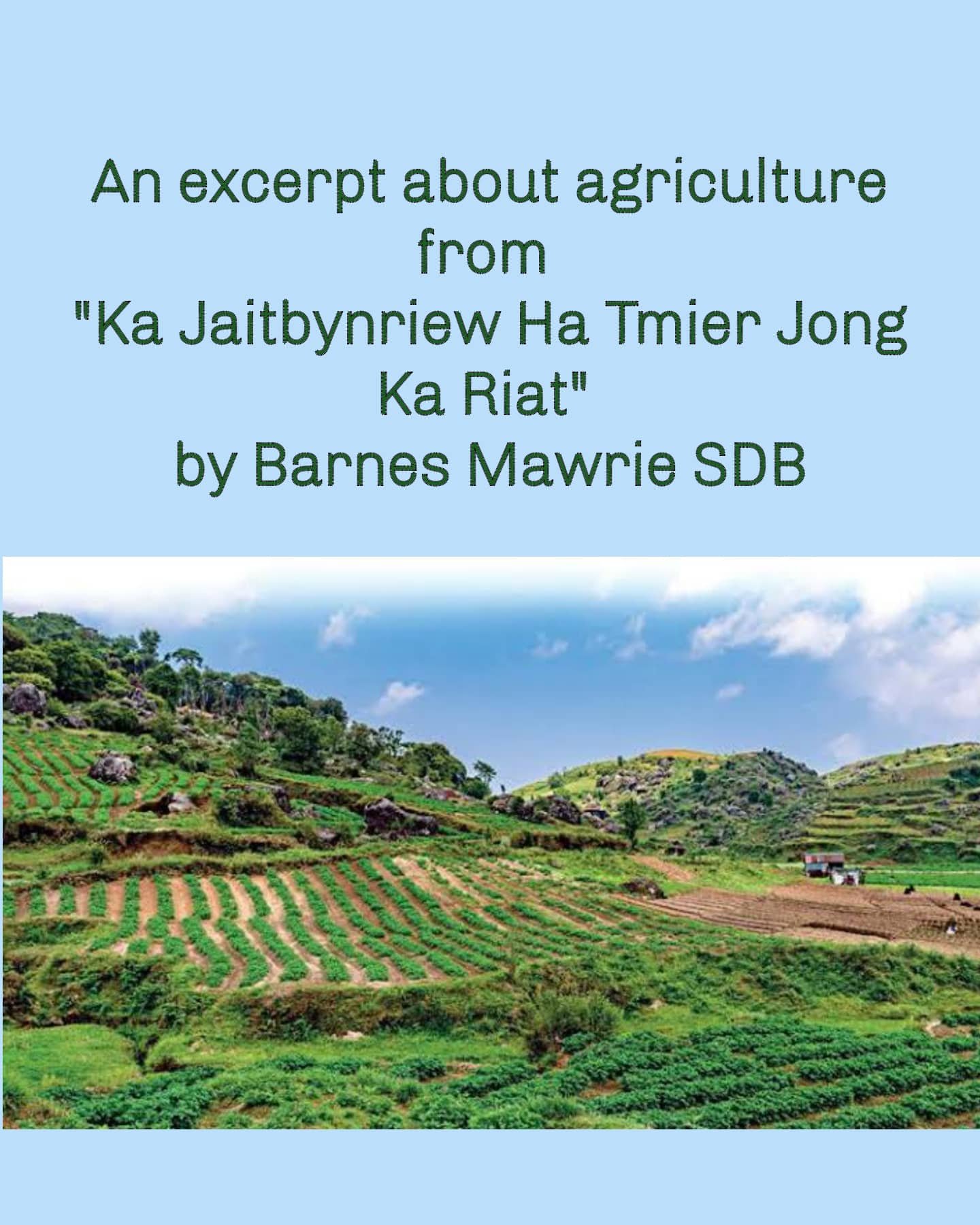
    Kawei na ki jingbakla jong ka jaitbynriew jong ngi kaba la wanrah ïa ka jingma ïa ka lawei jong ngi, ka dei ka jingiehnoh ïa ka rep-ka riang khamtam ha nongkyndong…Ka khanatang jong ki hynñiewtrep hynniewskum ruh ka ong ba u Blei u la phah ïa ki sha pyrthei khnang ba kin rep-ki riang hapneh ka mei mariang. Kumta ngi dei ban sngewthuh ba ka rep-ka riang ka dei ka kam ba u Nongthaw hi u la buh-la mang na ka bynta ki briew. Baroh ki jaitbynriew ki burom bad tyngkai ïa kane ka kam, hynrei ma ngi ki Khasi pat ngim kheiñkor shuh ïa ka. Ha kane ka rukom ngi ïaidlait ïa ka hukum ne saiñdur jong u Blei bad deihok keiñ ba ngin ym ïoh jingkyrkhu na u. Ki longshuwa jong ngi ki la im da ka rep-ka riang bad ki la pahuh ka bam-ka sa, hynrei ha kane ka juk mynta pat, ngi hap wanrah jingbam na kiwei pat ki jylla.

    Ha ri Europe, ki briew kiba riewspah tam dei ki nongrep ym ki nongtrei sorkar, hynrei hapdeng jong ngi pat ka long markhongpong. Balei ka jia kumne? Ka daw ka long ba ki khyndiat ki nongrep ki basah mynta ki dei ki briew ki bymnang-bymstad bad ki rep beit da ka rukom ka barim khlem lah shuh ban pynheh-pynroi ïa ka rep-ka riang jong ki. Hynrei lada ki samla kiba la nangla stad pat kin rep, kan pher shibun namar maki kin wad da ki rukom rep ka juk mynta bad khlempep kin lah ban pynkiew ïa ka rep-ka riang. Ha u snem ba ka Israel ka la ïoh ïa ka jinglaitluid bad la ka jong ka ri, u Ben Gurion u nongïalam banyngkong jong ki u la ong ïa ki paid Israel "ngi long ka jaitbynriew bathymmai bad baduk mynta bad ngi donkam ïa ka jingïaraplem jong kiwei pat ki ri, hynrei ngin khrong na ki na ka bynta kiwei pat ki jingdonkam hynrei ym ïa ka bam." Dei nangne ba u ïa sdang ïa ka Green Revolution ha Israel ha kaba ka ri Israel ka la lah ban pynkylla lyngkha rep ïa ka ri shyiap bad ka la lah ruh ban pynmih ïa ka bam-ka sa ban pyndap-pynbiang ïa ka jingdonkam ka ri.

    One of the mistakes that we have made that can be a danger to our future is the abandoning of the practice of agriculture especially in the villages. Our folklore says that God had sent mankind to earth with the main purpose of living in the lap of nature by practicing agriculture. So we should understand that tilling the earth and planting crops is a God-given duty. All races and communities respect and value agriculture highly but sadly we seem to not have a high esteem for it. In this way, we move away from the command and mould of God and rightly, we lose his blessings. Our ancestors survived through agriculture and prospered by it, but in this generation, we have to bring in food and commodities from other places.

    In Europe, the wealthiest people are farmers and not those working in the government, but with us it is the other way round. Why has this happened? The reason is the farmers do not have the knowledge and are using old ways of agriculture, which will not increase their yield. But if the youth who possess the knowledge and means for agriculture can practice it with modern tools and aids, there will be change and it will improve the quality and yield of agriculture. In the year when Israel gained it's independence (14th May 1948), Ben Gurion, the country's first Prime Minister said: "we are a new race and poor right now and we need the help of other countries, yet we will ask for help in other things but not for food." It was from here that Gurion was able to start the Green Revolution in Israel, where Israel was turned into fertile ground from a desert and it was also able to produce enough food for the needs of the whole country.

    Farming and tilling the earth is something that we feel is not for us. But if we care about what we eat, if we question the cost of food and commodities, maybe we should start to feel the earth under our hands and sow and nourish what we take into our bodies. It's true gardening and farming requires a lot of work and effort but the rewards we reap are priceless for our mind, body and soul. Even if it's a small kitchen garden, you are taking care of yourself and the earth 💚💚💚

    🟡 English translation by @speakyourroots
    🟡Picture:https://www.google.com/amp/s/www.indiatoday.in/amp/magazine/state-of-states-conclave/story/20181203-striking-deep-roots-1393767-2018-11-24
  • Ki Thylliej Ding (Flames) from “Ka Ding Bad ki Deiriti U Hynñiewtrep Ha Ka Meirisawkun”

    Ki Thylliej Ding

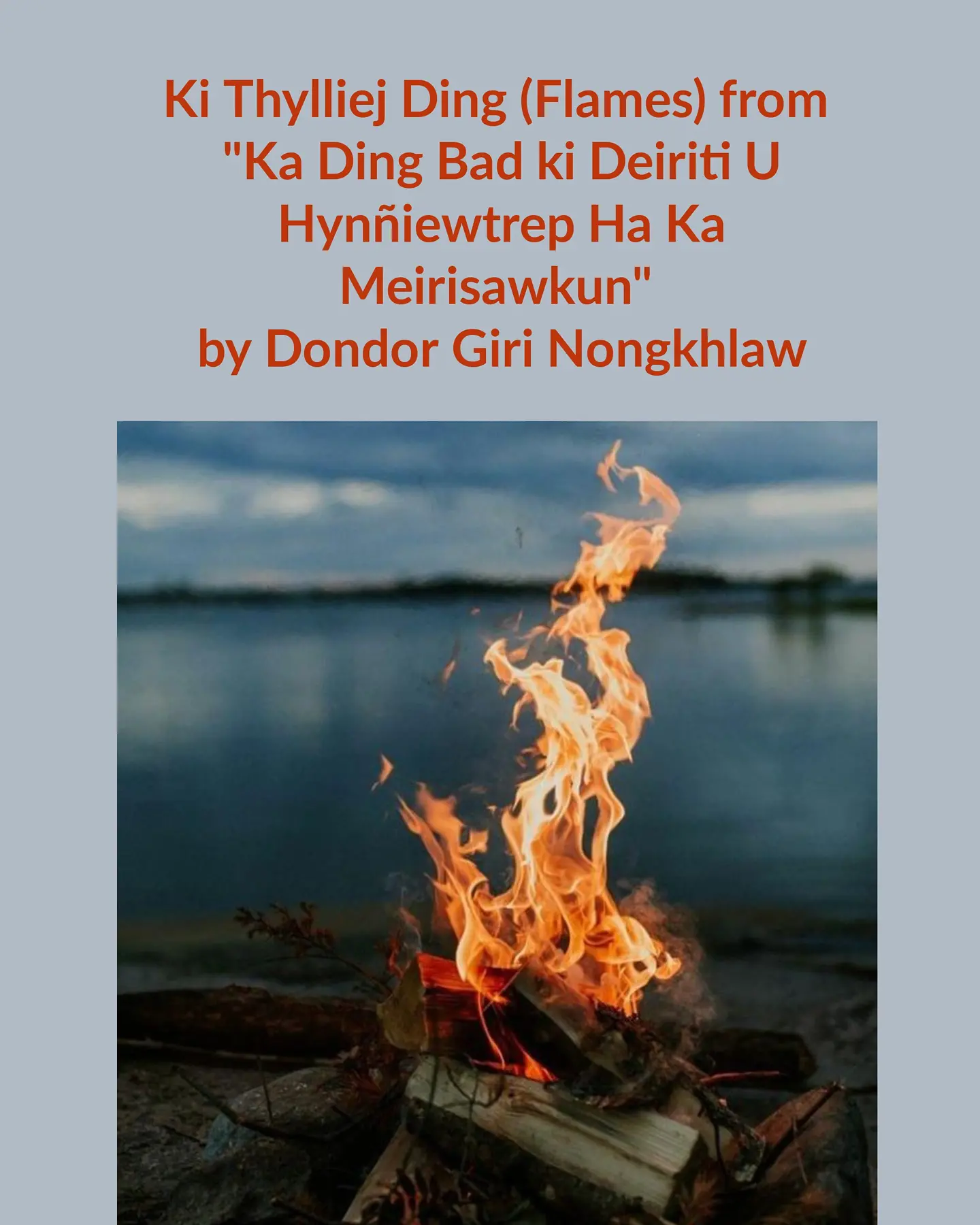
    Haba ka ding ka meh bad pyning ïa ki tyllaw ka pynmih ïa ka jingkhaleh kaba ki ong ki thylliej ding. Kine ki thylliej ding ki don lai rukom ki rukom khaleh ba la tip kum ka pyning, ka lap lap bad ka jliah.

    Ka Pyning: Kane ka long u thylliej ding ba pyning ïa ki tyllaw. Ka dei ka bording banyngkong ba pyning ïa ki tyllaw.

    Ka Laplap: Kane ka long ka bynta ba ar jong ki thylliej ding kaba ai lad ïa ka pyning ban ïaineh ding ha ki tyllaw.

    Ka Jliah: Ka long ka bynta ba ha khlieh duh jong ka ding kaba shuiñ ïa ka lyer na trai khiew ba shet jingshet bad ka long ka bynta kaba lah ban pur ding sha kiwei ki tyllaw.

    Types of Flames

    When a fire alights and touches a firebrand, it grows in degree and produces what we call flames. Flames have three ways in which they function and intensify. These are Ka Pyning, Ka Laplap and Ka Jliah.

    Ka Pyning is the first flame that burns a firebrand.

    Ka Laplap is the second part of a flame which allows Ka Pyning to sustain the fire in the wood.

    Ka Jliah is the topmost part of a flame which touches the air, which strikes the bottom of the pot while cooking. Ka Jliah is also the part of the flame that will spread the fire to other pieces of wood.

    Have you ever stared into a fire? How it is made up of so many flames…the element which gave many civilisations the thrust to empower themselves 🔥🔥🔥

    Dr. Dondor Giri Nongkhlaw is a Geomorphologist who has written several books in Khasi which discuss the elements of the environment and their strong bond with Khasi life and culture.

    🟡 English translation by @speakyourroots

  • U Diengbah Ïam Briew (Excerpt from “Ka Jingphylla Ka Ri” by Sumar Sing Sawian)

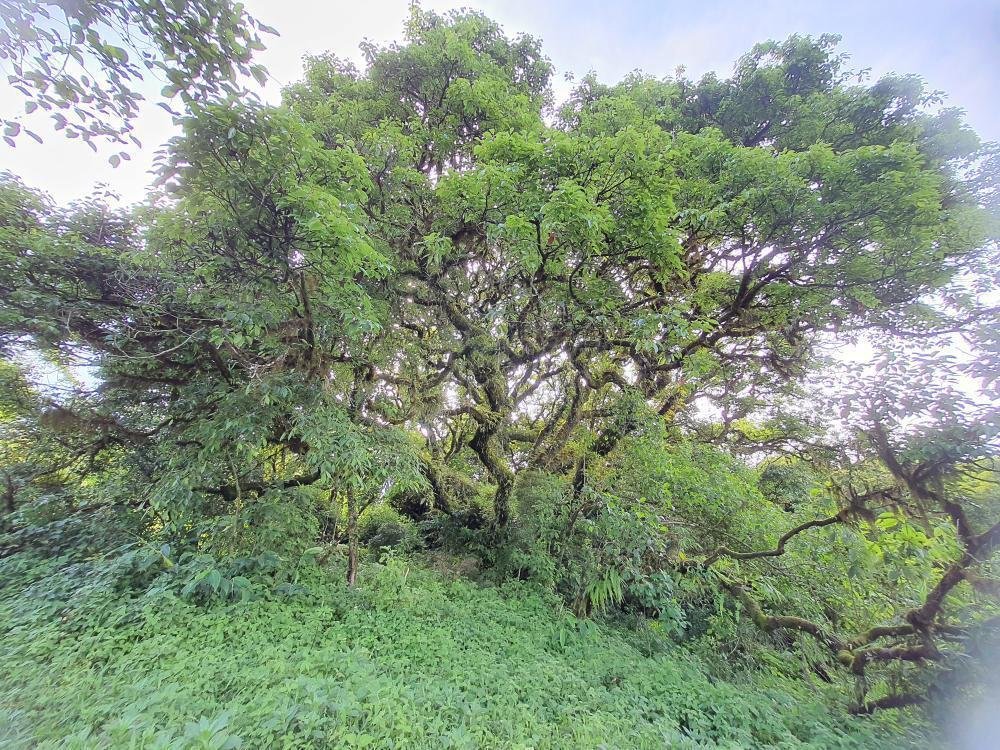
    Ha ka shnong Nongkynrih ha Hima Khyrim, u ïeng uwei u dieng bah dieng san uba la rim bha. Haduh kine ki sngi ba mynta une u dieng uba la tip kum u dieng "Sping Wait", ju mih ka sur bad ka jingsawa kumba ïam briew, lada don kano kano ka jingïap briew tymmen lane kano kano ka jingïap mynsaw jong ki nongshong shnong. Ïa kane ka jingsawa ïam briew kaba mih na ka jngkhynñiuh jong ki sla jong une u dieng, ju ïohsngew da baroh kawei ka shnong.

    Ki ong ba ym ju bit ban pynthut ïa une u dieng ne pynmong ïa u. Ka la don ka sien, ba uwei u briew uba la sngew nang sngew stad, u la ong ba kane ka long tang ka jingngeit bieit. Kumta u la rah da ka wait bnoh bad khet ïa uwei na ki jyrmi kiba kyllaiñ ïa une u dieng. Hadien kane, la ïathuh ba uta u briew um shym la lait shuh ban leit pynjhieh, wat la u sam tyngeh. Kane ka la pynpisa bad pynlynga ïa uta u briew haduh katta katta, haduh ba um lah shah shuh, bad um banse ban leit pan map, na uta u dieng, bad u sa lait na kata ka sohsat kaba shyrkhei.

    In the village of Nongkynrih in Hima Khyrim, there stands a massive tree known as a "Sping Wait" tree, whose age is said to be very old. To this day, the voice and the sound of a weeping human being can be heard from it. This can be heard when there is the death of an elderly person or if there is a death caused by injury, with these persons being residents of the village. The weeping sound produced by the trembling leaves of the tree can be heard throughout the village.

    They say that the tree should not be disturbed nor hurt. There was once man who felt he had enough knowledge and know-how, so he declared the belief about the tree to be superstition. He took a "wait bnoh" which is a large bladed knife with a crooked head with the aim of cutting off one of the creeping plants that spread and grew on the tree. After this happened, it was told that this man could not urinate even when he desperately needed to. The man suffered horribly, that ultimately, he was forced to go to the tree and apologise to it so that he would be free of the affliction.

    "U Diengbah Ïam Briew" or "The Weeping Tree" feels like a cautionary tale of what can happen if we feel more powerful than nature. 🌲🌳

    The picture is of U Diengbah Ïam Briew located in Nongkynrih, Hima Khyrim. Khublei Shibun @bashngainrynjah for sending the picture!

    🟡 English translation by @speakyourroots

  • Primary Education in the Khasi and Jaintia Hills: Its Socio-Cultural Roots and Early History (1993)

    Here is an excerpt from the Introduction of the book Primary Education in the Khasi and Jaintia Hills: Its Socio-Cultural Roots and Early History (1993) written by E. Weston Dkhar. Dkhar is a prolific author of several books focusing on Khasi folklore and history.

    E. Weston Dkhar says: "Documents and maps indicate that the Khasi territory once extended to the Brahmaputra to the North and the greater part of the Surma Valley to the South. Kamakhya hills, where the Kamakhya temple stands, was known to the Khasis as "U Lum ka Meikha" or "The Grand Aunt's Hillock' (to mark the boundary) and many of the towns in the Kamrup District, Nowgong & District and Sylhet District like Kiew-hati (modern spelling Gauhati or Guwahati) meaning, "to ride on the elephant" or "to begin the journey by riding on elephant": Bordwar, Padwa, Jaintiapur, Shati (Chuttack), Shella-bari (Sylhet) and others were once the principal towns of the Khasis or their chief trading centres. The Lake Shati where the town of Chuttack stands belonged to Ka Shati, the wife of U Khang of Mustoh village, the founder of that village sixteen generations from hence."

    The excerpt discusses the borders of Khasi territory that stretched from the Brahmaputra river in the north to the Surma Valley in the south. The Surma River is a major river in Bangladesh, part of the Surma-Meghna River System. It starts when the Barak River (as it is known in Manipur) from Northeast India, divides at the Bangladesh border into the Surma and the Kushiyara rivers.

    Nowgong District is what we know as Nagaon District. Sylhet district was established on 3rd January 1782, and until 1878 it was part of Bengal province. In that year, Sylhet was included in the newly created Assam Province, and it remained as part of Assam up to 1947.

    It is intriguing to know that Khasi territory was much larger than we know it today. We definitely need to find out more about this! If anyone knows more please feel free to tell us in the comments section 😃😃

    Additional source: Wikipedia

  • “Ka Um Bad Ki Deiriti Ha Ka Meirisawkun” (Water and Culture In the Environment) (Volume II, 2008)

    Ïa kine la sot na ka lynnong "Ka Um bad Ka Tynrai ki Kyrteng Kur" (Water and Origin Of Clan Names) na ka kot Ka Um bad ki Deiriti ha ka Meirisawkun by Dondor Giri Nongkhlaw (2008):

    Katkum u Spiton Kharakor (1981) ha ka kot jong u "Ki Khun ki Ksiew a Hynñiewtrep" la shem ba don ki kur ba la ïoh kyrteng na ka um, ka wah, ka myn bad ka am.

    Ki kur ba la sdang da ka 'um' na khmat ki don khadlai kur bad kine ki long ka kur Umbah, Umblah, Umdong, Umdoh, Umdor, Umdung, Umyiap, Umladkur, Umlong, Umsong, Umsohbar, Umthlu bad Umwai.

    Ki kur ba la sdang da ka ktien 'wah' ki don khaddar kur bad kine ki long ka kur Wahksi, Wahksing, Wahlang, Wahlang mawleiñ, Wahlang pahsyntiew, Wahlang ryntathiang, Wahrait, Wahrih, Wahrit, Wahshah, Wahshrieh bad Wahspeh.

    Ki kur ba la sang da ka 'am' na khmat ki don shiphew kur bad kine ki long ka kur Amkhlaw, Amkhlow, Amksang, Amkoi, Amded, Amdep, Amora, Amse bad Amwai.

    Nangta sa ki kur ba sang da ka 'myn' ki don jin haduh arphew hynñiew kur bad kine ki long ka kur Mynbah, Mynbon, Mynkseh, Mynieng, Mynjar, Mynnar, Myniar, Mynrap, Mynriang, Mynrieng, Mynriem, Mynring, Mynsang, Mynskut, Mynsni, Mynso, Mynso-shangpung, Mynsong, Myntdu, Mynteng, Mynthang, Mynthliang, Mynthlong, Mynthlu, Mynthong, Mynthui bad Myntlang.

    Ban sngewthuh ïa kane ka jingïasnoh ka kyrteng kur bad ki jnit ka mariang bad ruh bad ki deiriti ngin ïa shim tang kawei ar tylli ki kur kum ka nuksa.Tharai, lada ngi shim da ka kur Amkhlaw, Umyiap, Wahksing bad Mynthlong ka biang ban ïa batai bad pyni nia.

    Kat kum ka tyllong kyntien ka kur Amkhlaw ka long ka kyntien ba la oh na ka 'am' bad 'khlaw'. Kane ka pyni ba ka kur ka don jingïadei bad ka um bad ka khlaw. Baroh ar, ka um ne am bad khlaw, ki dei ki jnit ka meirisawkun, kaba mut, lehse, ba ka kur Amkhlaw ka long ka kur kaba la buhai nyngkong ha ka jaka ba jan ka um bad ka khlaw.

    Ka kur Umyiap, katkum ka tyllong kyntien, ka thew ka um bad u shyiap kiba baroh ar ki long ki jnit ka meirisawkun, ha kaba lah ban long ba kine ki kur ki la buhai nyngkong ha ki jaka ba don ka um bad u shyiap.

    Nangta, ka kur Wahksing, katkum ka tyllong kyntien, ka long ka kur ba la ïoh kyrteng na ka wah bad ka ksing. Hangne, ka wah ka long ka jnit jong ka meirisawkun, katba ksing pat ka dei ka bynta jong ka deiriti. Kumta kane ka kur ka la oh kyrteng kur na ka wah bad ka ksing. Hangne ksing ka thew ïa ka deiriti put deiriti tem.

    Nangta ka kur Mynthlong, ka pyni ba ka kur ka long kaba pyndonkam um, kaba pyndonkam thlong ruh. Hangne thlong ka thew ïa ka deiriti dung kum ka dung kba, dungnei, dungsoh bad ter ter. Namarkata ngi donkam ban nang ïaleh ban wad ban thud ïa ki kyrteng, ïa ki jingmut bad thymmei ki kyrteng kur.

    The following is taken from the chapter entitled "Ka Um bad ka Tynrai Ki Kyrteng Kur" (Water and Origin of Clan Names) from the book Ka Um bad ki Deiriti ha ka Meirisawkun by Donor Giri Nongkhlaw (2008).

    Nongkhlaw cites Spiton Kharakor (1981) from his book Ki Khun Ki Ksiew u Hynñiewtrep where he discusses how some clans received their names from the words "um", "wah", "myn" bad "am".

    The clan names that start with the word "um" are 13 in number and some of them are Umbah, Umsong, Umyiap and Umthlu.

    The clan names that start with the word "wah" are 12 in number and some of them are Wahlang, Wahrait, Wahshrieh and Wahksing.

    The clan names that start with the word "am" are 10 in number and some of them are Amkhlaw, Amkoi, Amdep and Amksang.

    Finally, the clan names that start with the word "myn" are 27 in number and some of them are Mynring, Mynsong, Mynrieng and Mynthlong.

    To understand the connection between the clan name and the elements of nature, Nongkhlaw looks at four clans to discuss this.

    The clan name Amkhlaw comes from the words "am" and "khlaw". This shows that this clan must have settled near "um" or "am" which is water and "khlaw" which is forest.

    The clan name Umyiap refers to "um" that is water and "shyiap" which is sand. This shows that the clan must have settled in a place which has water and sand.

    The clan name Wahksing comes from the words "wah" which means river and "ksing" which means drum. "Wah" is connected to the environment and "ksing" is related to the tradition of music.

    Finally, the clan name Mynthlong comes from the words "myn" which is connected to the use of water and "thlong" which is the traditional mortar for pounding and grinding used by the Khasis. The mortar is a symbol for the traditions of pounding rice, sesame seeds, fruits and others.

    Ka Um Bad Ki Deiriti Ha Ka Meirisawkun (Water and Culture On the Environment)(Volume II, 2008) by Dondor Giri Nongkhlaw is such an interesting book with great information on the intrinsic value of water and the environment to Khasis! 🌅🌅

    🟡 English translation by @speakyourroots

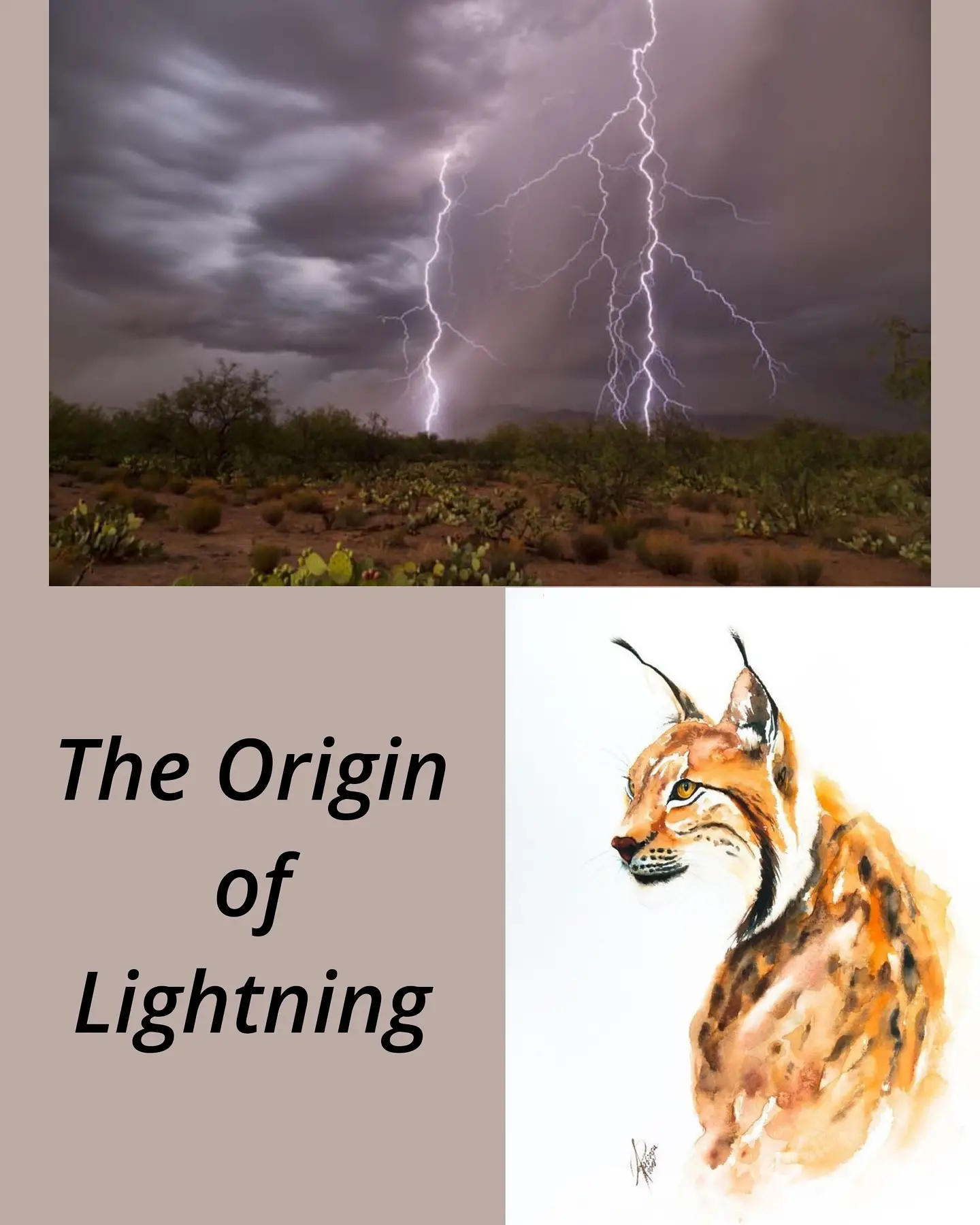
  • The Origin of Lightning

    Mynhyndai eh, mynba ki sim-ki-doh, ki khniang ki puit, ki mrad ki mreng baroh ki dang ïakren bad ïasngewthuh kawei ka ktien, la don ka hima-bah jong u laiphew mrad laiphew mreng baroh. Baroh ki ïashong ïa-im ha ka suk ka saiñ, ka jingïaieid ïabha bad ki ïaleit ïawan ruh ryngkat. Kim tip kata ka ïashun ïapen, ka ïakajia majia, ka ïadait ka ïapyniap para ki hi.

    Ha kawei ka sngi, u Shakyllia, u Diengkhied bad u Risang haba ki dang ïa ïaid knmih shnong khmih thaw, ki wan poi hajan kawei ka lympung, ha kaba u khun bynriew u ïashad ïamastieh shisien shisnem. Kine baroh lai ki la sngew shohmynsiem ïa kata ka leh u bynriew bad ki la ïapyrkhat ba kan long kaba sngewbha bad itynnat lada kin lah ban pynlong kum kata hapdeng u laiphew mrad baroh. Kumta haba ki la leit phai, u Diengkhied bad la ka shaw-shaw, u Shakyllia bad la ka tangmuri, u Risang bad la ka ksing, ki la ïaput ïatem haduh ba la sawa ka khlaw baroh kawei.

    Kane ka tem ka put basngewtynnad, ka la pynkhih ïa u laiphew mrad baroh ban wan ïapeit bad ïasngapkai. Katto katne na ki, ki la ïaong ba haba ki la don ki nongput nongtem kiba kum kita, balei ba kim lah ban pynlong sa ka shad ka kmen, kumba leh lem u bynriew?

    Kumta ki la ïabuh ïa uwei uba kham-nang kham tip ka talat kam shane shatai, bad uba kham tbit ruh ha ki kam sngewbha. Une u long u Pyrthat. Ma u pat, ban leit pyntip ïa ka hima sima baroh kawei ban long kum kata ka phur ka siang, u la shna kawei ka nakra kaba lah ban ïohsngew shaduh jngai bah, bad u la tied da kata kyndung shi kyndung bad step bad sngi. Ynda kata ka ïa ka la poi, u laiphew mrad phew mreng baroh u la ïawan poi ha ka lympung kaba la khreh lypa hangta ha khlaw. Baroh ki la ïa riam ïa beit da ki kup-ki-sem tyngkai, ki ïarkhie bad iphuhmat.

    Ka Shrieh ka la pynsad pynkhyllong bha ïa la ki khun bad ka la rkhie phuhmut phuhmat haduh ba ka dam sa ka khmut ka khmat. U Sñiang ruh u la sum la sleh jriang bad u la ïaid wiat-samrkhie haduh ba la ang shynded sa ka khmut, kum ka shata. Ka Dkhoh ka la sad la khyllong bha, bad ka la nap tang ka peit ït haduh ban da plaid ki irmat bad byrie. Bad u Dkhan pat uba la rkhie ïap-ang ïap-ler ïa ka, u la dam la rit sa ki khmat. U 'Labasa bad u 'La-thapsim, ki la sei da ki khor ki khriam bad ki la kup la deng baroh shirynïeng.

    Te, haba la sdang ka put ka tem, ka ksing, ka tangmuri, ka lympung ka la shit ir. Ka kmen ka risa kum kata ym pat ju don. Ha kata ka por la wan pol u Kui, u phong u kup da ka khor ka khriam khyrwang, kaba phyrnai na khlieh ha kjat bad u la rah ruh la ka waitlam rupa kaba u la phah shna khnang na ka bynta ka shad ka kmen. Tang shu poi tiap ha lympung, u mastieh ir, u pynshad wait sha kadiang bad sha kamon haduh ba u paid peitkai u la shoh biej thiaw bad u ïarisa shaw shi shaw. U Kui pat u la sngewsarong sngewmeng haduh bym lah ong shuh.

    Haba la shong thait u Kui, u Pyrthat u la ïapankai ïa ka wait jong u ba un khalai kai shipor. U Kui u la sngewbynnud ban ai, ïoh u Pyrthat un shad kham bha ban ïa u bad ïoh baroh kin ïaroh. Kumta u la kren da rapjot da kumne kumtai, hynrei um banse ban ai, haba baroh baroh ki ban ia u ba u dei ban ai, namar ka jingheh jingkhraw jong kata ka shad ka kmen ka long na ka jingtrei shitom jong u Pyrthat. Te u Pyrthat, u tang shu ïoh ïa kata ka wait, u king-u-mastieh, haduh ba la i biria hi khait. Baroh ki la ïarisa bad ïaroh ia u.

    Hynrei hapdeng kata ka jingïarisa, u Pyrthat u tied u talaiñ shane shatai ïa kata ka wait haduh ba u laiphew mrad baroh bad baheh bad barit u la sheptieng ym don pyrthei shuh bad u ïaphet sakma. Hapdeng kane ka jingkulmar, u Pyrthat, u kiew de soit sha sahit bneng, u rah jyndat bad ksing bad wait. U Kui u la sngewsih shibun ba u la duh noh ïa la ka wait, bad u ïai pyrshang ban ïoh kiew sha sahit ban ïoh knieh biang na u Pyrthat uba la shukor ïa u.

    Naduh kata, sa mih ka jingïashun ïabitar hapdeng u laiphew mrad baroh.

    In the early days of the world, when the animals fraternised with mankind, they tried to emulate the manners and customs of men, and they spoke their language. Mankind held a great festival every thirteen moons, where the strongest men and the handsomest youths danced “sword dances” and contested in archery and other noble games, such as befitted their race and their tribe as men of the Hills and the Forests—the oldest and the noblest of all the tribes.

    The animals used to attend these festivals and enjoyed watching the games and the dances. Some of the younger and more enterprising among them even clamoured for a similar carnival for the animals, to which, after a time, the elders agreed; so it was decided that the animals should appoint a day to hold a great feast.

    After a period of practising dances and learning games, U Pyrthat, the thunder giant, was sent out with his big drum to summon all the world to the festival. The drum of U Pyrthat was the biggest and the loudest of all drums, and could be heard from the most remote corner of the forest; consequently a very large multitude came together, such as had never before been seen at any festival.

    The animals were all very smartly arrayed, each one after his or her own taste and fashion, and each one carrying some weapon of warfare or a musical instrument, according to the part he intended to play in the festival. There was much amusement when the squirrel came up, beating on a little drum as he marched; in his wake came the little bird Shakyllia, playing on a flute, followed by the porcupine marching to the rhythm of a pair of small cymbals.

    When the merriment was at its height U Kui, the lynx, arrived on the scene, displaying a very handsome silver sword which he had procured at great expense to make a show at the festival. When he began to dance and to brandish the silver sword, everybody applauded. He really danced very gracefully, but so much approbation turned his head, and he became very uplifted, and began to think himself better than all his neighbours. Just then U Pyrthat, the thunder giant, happened to look round, and he saw the performance of the lynx and admired the beauty of the silver sword, and he asked to have the handling of it for a short time, as a favour, saying that he would like to dance a little, but had brought no instrument except his big drum. This was not at all to U Kui's liking, for he did not want any one but himself to handle his fine weapon; but all the animals began to shout as if with one voice, saying “Shame!” for showing such discourtesy to a guest, and especially to the guest by whose kindly offices the assembly had been summoned together; so U Kui was driven to yield up his silver sword.

    As soon as U Pyrthat got possession of the sword he began to wield it with such rapidity and force that it flashed like leaping flame, till all eyes were dazzled almost to blindness, and at the same time he started to beat on his big drum with such violence that the earth shook and trembled and the animals fled in terror to hide in the jungle. During the confusion U Pyrthat leaped to the sky, taking the lynx’s silver sword with him. U Kui was very disconsolate, and has never grown reconciled to his loss. It is said of him that he has never wandered far from home since then, in order to live near a mound he is trying to raise, which he hopes will one day reach the sky. He hopes to climb to the top of it, to overtake the giant U Pyrthat, and to seize once more his silver sword.

    The Khasi folktale about the origin of lightning has for its protagonists the animals of the forest participating in a dance that would change their lives. The Khasi and English versions that have been used here have been abridged from Ki Khanatang u Barim by H. Elias, S.D.B and Folktales of the Khasis by Mrs. Rafy.

  • U Ryngkew and Khlaphuli

    The following has been quoted and summarised from Essays in Khasi Folkloristics by Dr. Desmond L. Kharmawphlang (2016).

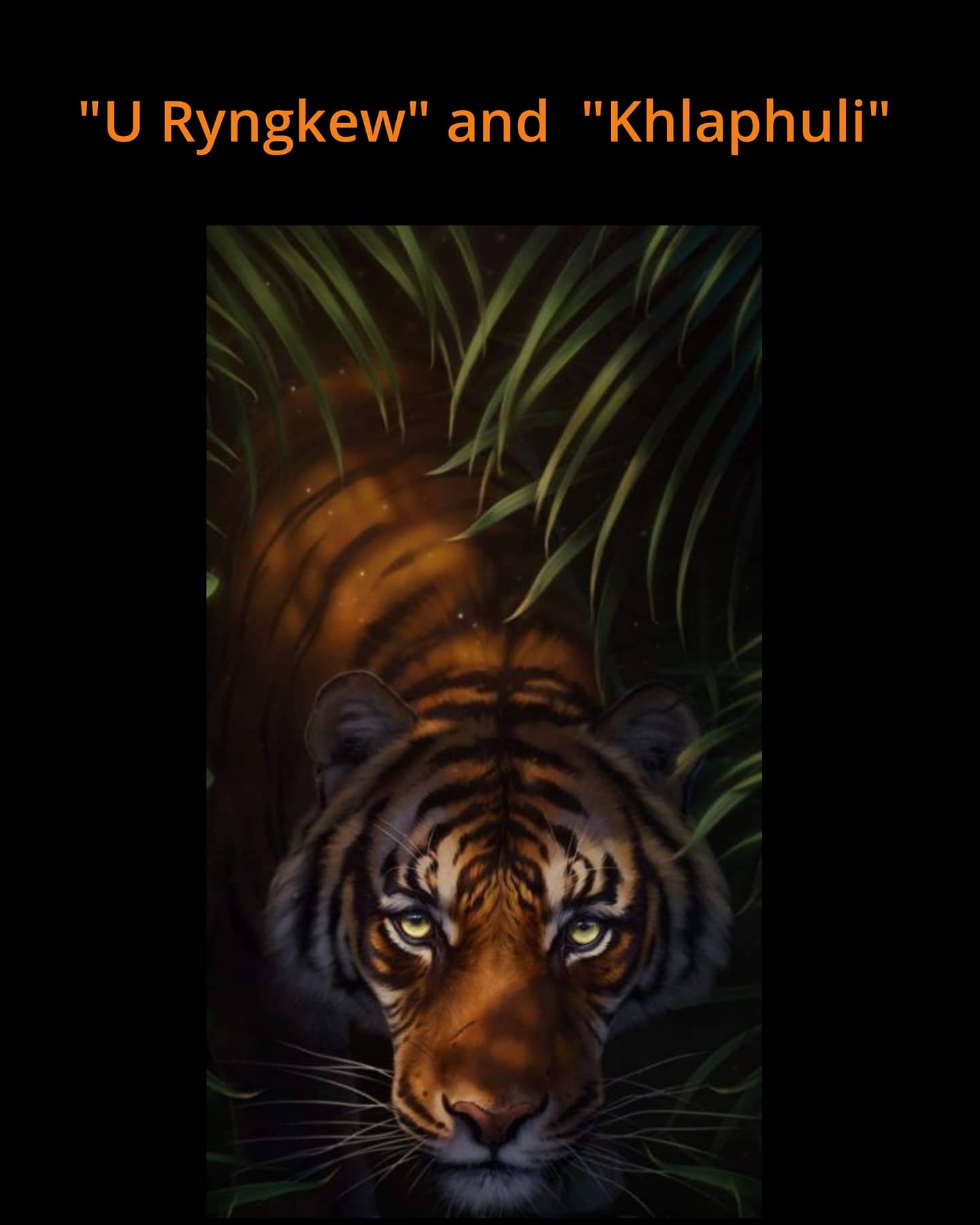
    In Khasi belief, the sacred forests are protected by a "spiritual tutelary deity called U Ryngkew U Basa" who makes himself visible in the form of a tiger. Thus, 'U Ryngkew' is the tiger spirit who safeguards the sacred forest. After the chaos that ensued in the felling of the 'Diengiei' the gods sent 'U Ryngkew' to "stay forever in forests, mountain tops and places of wilderness revealing himself, whenever he does, as a tiger."

    Related to the significance of the tiger in Khasi myth and folklore, is the belief in "Khlaphuli" or the Weretiger. The Khlaphuli is a man or a woman who has the ability to change into a tiger with "this power being an attribute of their 'rngiew'…The Khasi belief in the 'ka rngiew' is so strong that it is regarded as an essence, a power which shapes and determines most of man's actions, thoughts and motivation, it gives shapes to his dreams and visions and charts the course of his life. It is imperishable and immutable. In the Weretiger tradition, it is the 'rngiew' that is directly responsible for men and women to possess the power to become weretigers or 'khlaphuli' as it is known in local parlance. This transformation from human to tiger is closely associated with aspects of religious and social practices."

    The belief in "U Ryngkew" and "Khlaphuli" form intrinsic aspects of Khasi spirituality and religion. They are also necessary to understand the effort to conserve our sacred groves and forests. 🏞️🏞️🌄🌄

  • Ki Phawar

    "The Khasis have evolved and developed their own indigenous poetic creations called "Ki Phawar" which are often employed in story-telling. The Phawar are used in festivals, community work, and gatherings, hunting and fishing expeditions, games and archery. The presence of an audience in a Phawar recitation is imperative. It is a performance per se. The Phawar master is a performer, and hence, an actor, acutely conscious of the effect he has on the audience. He responds with enthusiasm to the reactions and applause of the audience, especially in contests. The performance is heavily dependent on the performer/ audience reaction, which provides scope for the development of the call-and-response or leader-choral antiphony. This is the most salient feature of the Phawar tradition. Needless to say, it is a dimension difficult to recreate in print."

    – From Essays in Khasi Folkloristics (2016) by Dr. Desmond L. Kharmawphlang

    Here are two popular Phawar:

    "Ohhhhh

    Dohkha ha Nan Palok,

    Dohkha ha Nan Palok.

    Ki їa beij ia u shana

    Kynmaw ho paralok

    Wat їa biej ia ka tyngka.

    Hoi kiw!

    Hoi kiw!"

    "Ohhhhh

    'Lang tylli lang teh

    'Lang tylli lang teh

    Ba la teh h'u mawbynna!

    Nga phah kylli pham treh

    Pha la duh ka deng khaila.

    Hoi kiw

    Hoi kiw!"

    Ka jingshongshit haba sngap їa ki Phawar ka dei kaba sngewbang shisha!

    The creation and the singing of "Ki Phawar" is a sure way to excite any crowd. We may take the liberty of describing them loosely as poetic chants, who sometimes contain humour and satire to name a few. 😄😄

    If you know some Phawar, please do type them down in the comments section! Hoi kiw!

  • A Glimpse of Tirot Sing: “A Memoir of the Late David Scott, Esq.” written by Major Adam White (1831)

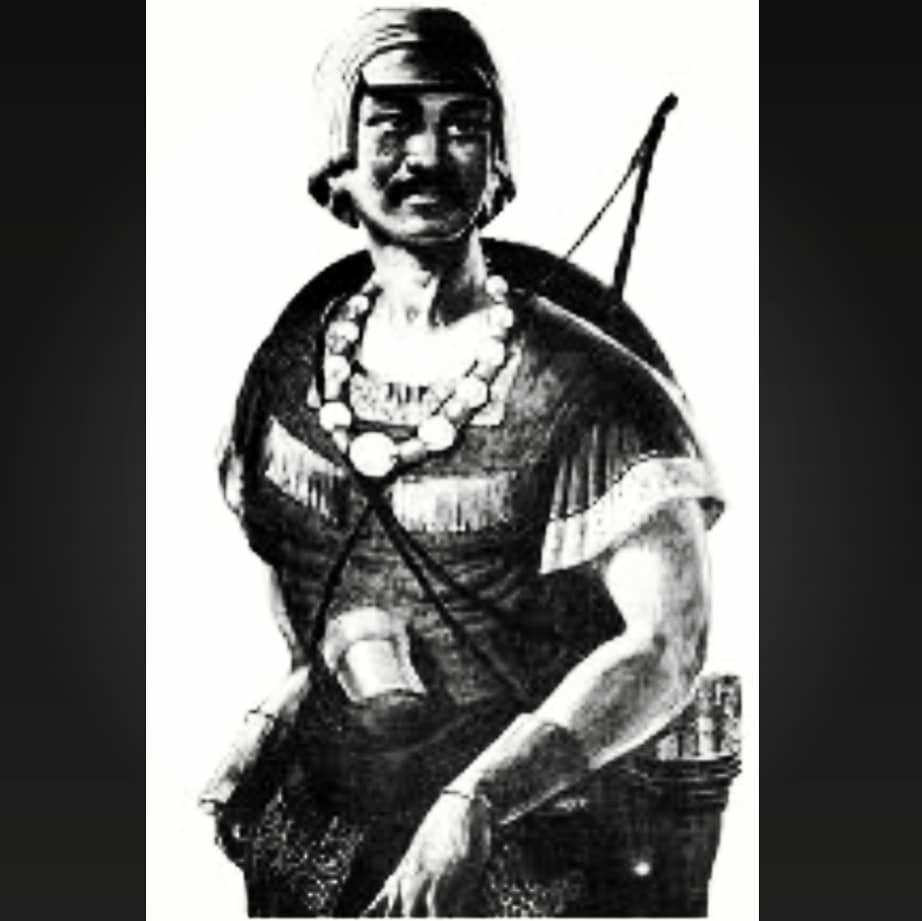
    On the occasion of the death anniversary of U Tirot Sing, the 17th of July, here is "A Glimpse of History–U Tirot Sing Syiem" sent by @carey_lynz

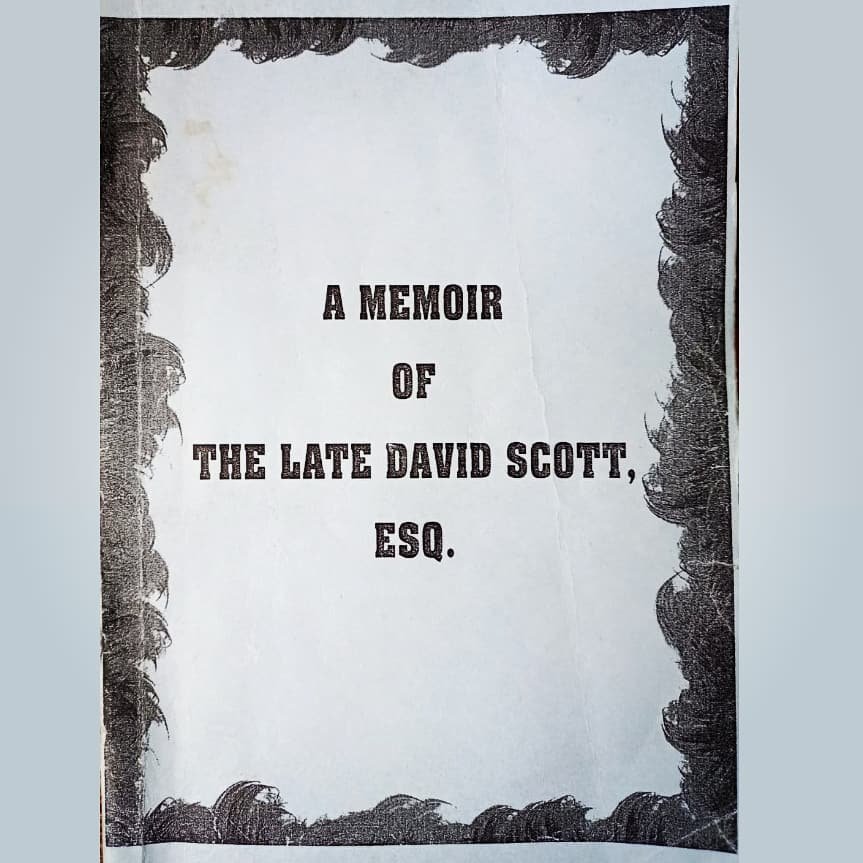
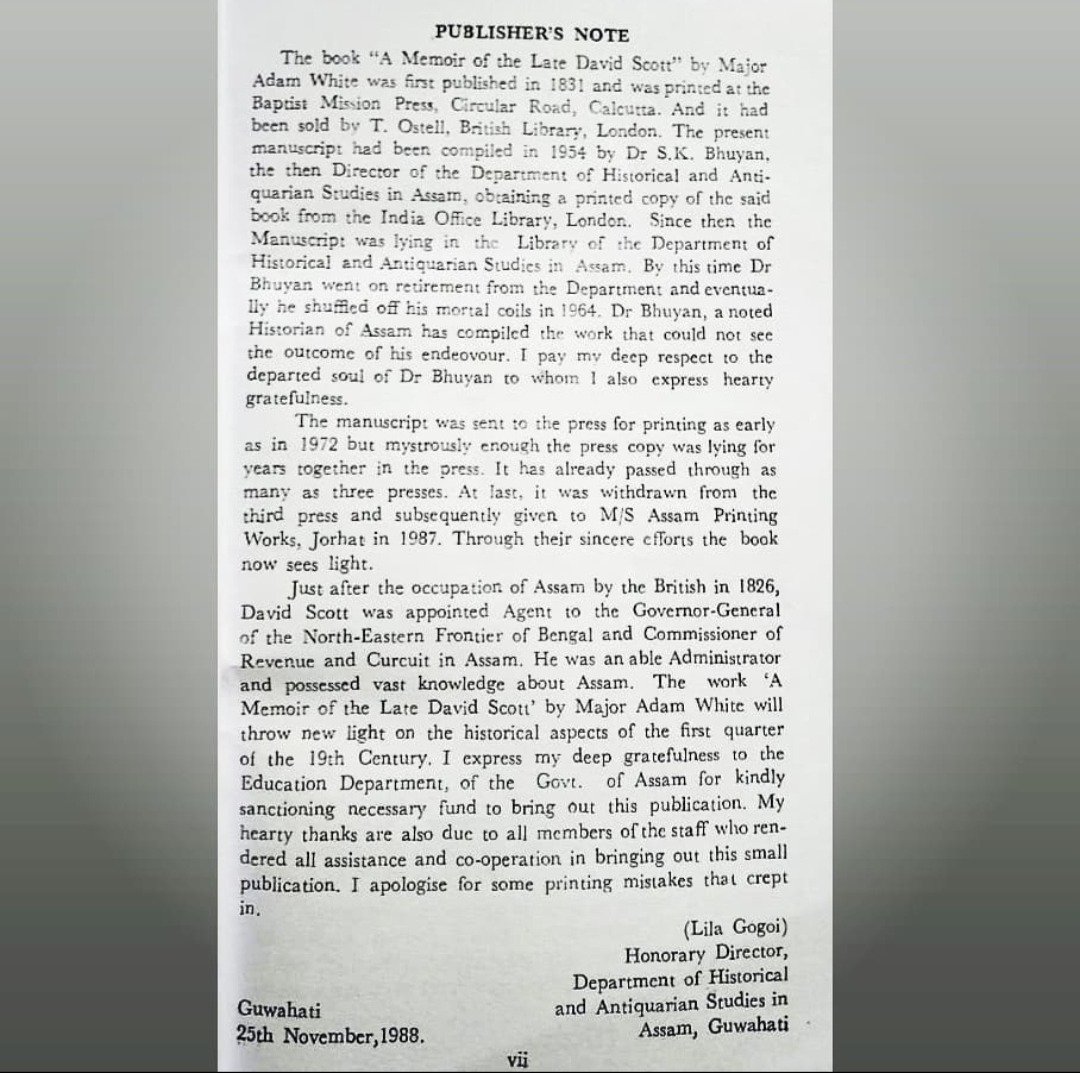
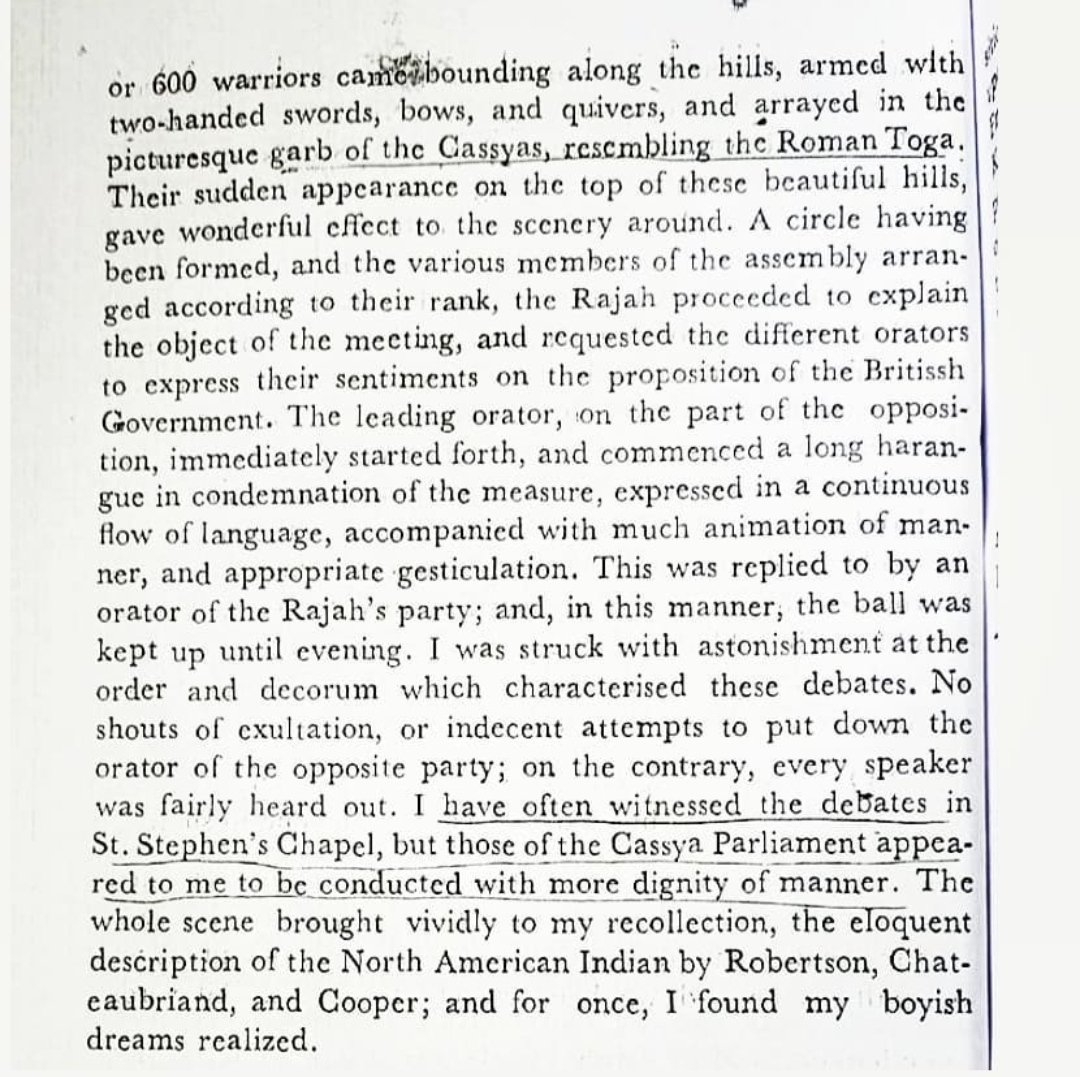
    In the book A Memoir of the Late David Scott, Esq., written by Major Adam White (1831, 1st edition), White narrates how David Scott took intense interest in the newly discovered region that is, the North East Frontier. White narrates how he had personally witnessed the "Cassya states" (Khasi States) and the beautiful hills which reminded him of the South of Scotland. At this time, the territory under Hima Nongkhlaw was not under British control. It so happened that Tirot Sing wanted to rent some areas in Assam from the Assamese Raja. David Scott said that he would be happy to oblige, if Tirot Sing would allow the British passage through his territory to go to Sylhet.

    This led Tirot Sing to call for an Assembly in order to discuss Scott's request. The British witnessed a very impressive meeting in Nongkhlaw. The Assembly sat in a circle according to their ranks. What struck the Britishers was the "order and decorum of the debators". There was respect for the opponent in the debate and the orator of each party was given a fair chance to speak. This continued for a long time. Growing impatient, David Scott sent a "dozen of bottles of rum" to the Assembly in the hope that the debate would end but the rum was returned.

    From these events, we come to know how the Khasis were a people who honoured each others' word and respected each others' opinion. Therefore, as we commemorate the life of U Tirot Sing Syiem, may we remember the value and power of our words like our forefathers before us. Lest we forget, let's remind ourselves of who we truly are.

    The above-mentioned events have been summarised from the book written by Major Adam White. The contributor, Dr. Naomi C. Nonglait is an Assistant Professor in the Department of English, St. Mary's College, Shillong.

    Picture 1: Google, Picture 2, 3 and 4 sent by @carey_lynz

  • Literature and education among the Khasis: Excerpt from E. Weston Dkhar

    The following are two excerpts from the introduction of the book Primary Education in the Khasi and Jaiñtia Hills: Its Socio-Cultural Roots and Early History (1993) written by E. Weston Dkhar and published by Sevenhut S. Enterprise, Shillong.

    Regarding the education of the people we have but one traditional version explaining why the ancient Khasis failed to possess a written literature. According to tradition, the Khasis had a book or literature. While crossing the river to meet God for instruction in certain rites and duties, the man of the Plains or U Dkhar (as the Khasis generally call him), tied the book on the crown of his head, while the Khasis swallowed it to preserve it in his belly and that was the simple reason why he did not have a written literature. This version has close resemblance and similarity to the traditional version of the Tribes of Rwong and Lisu inhabiting the North-Eastern part of Indo-Burma, adjacent to the Red Chinese, who had long been isolated from the rest of the world by mountain barriers and thick forests. In explaining why they failed to possess a written literature, they too relate that long ago they had had in possession a book written on cow-hide; but it was eaten up by a hungry dog while an old man, the custodian, was drying it in the sun: and that explains why they failed to have any literature at all.

    Some writers assume that this entire absence of literature clearly suggest a long period of isolation from more civilized races. The statement in all probability holds little truth: for, the Khasis since time immemorial had intermingled with other civilized races of India either through commercial activities or political contacts. The absence is absolutely due to the fact that the Khasis believed wholeheartedly that it was just the same thing for him to have the book in his belly as in his hand. Moreover, our forefathers had a peculiar belief that "We Khasis are a special people: others must read to understand, while we have an infallible guidance from within.'' They went also to the extent that “We Khasis need no education, as we have 'Swallowed' all knowledge.”

    The Khasis had for a long long time acquainted themselves with the knowledge of many different branches of arts and sciences. with the handicap of not knowing about the art of writing and reading they yet marvellously advanced in the science of astronomy, medicine and metallurgy. Regarding astronomy, the Khasis of yore created a number of interesting stories about the stars and heavenly bodies like the sun and the moon. The story of the Sun and Moon and their subjugation to periodical eclipse, is one of the most interesting. Naming of some stars was also attempted at, for example, U Lur Mangkara – Pole Star, U Lur Step – Morning star, U Lurdihduma – Comet, U Lur Ruhsyiar – The Great Bear, Ka Lynti Phan – Milky Way, U Lur Tynriew – Little Bear etc. Sometimes they forecast the weather with the help of some stars as their barometer. In the field of medicine they discovered many wild herbs and natural substances which cured many kind of diseases. Besides, they knew the art of weaving and spinning, and the art of erecting monuments, monoliths, memorial stones and cromlechs.

    Since time immemorial the Khasis were highly advanced in monographic literature. One can witness the monographic pictures on the rock at Dainthlen Falls where the Khasis are believed to have killed a huge demoniac python long time ago which had created a great havoc in the history of the Khasi race. At the Durbar (Assembly) at Synrang Jyrteh, believed to be the meeting place of, many nations and nationalities, it was decided to cut the python into pieces and each one would eat his allotted share of the python's flesh so that the creature instantly died according to an oracle. To celebrate the victory they carved on the rock pictures of that grand occasion, which remains intact even today.

    Continuing with the story of how the Khasis lost their script, here are excerpts from the introduction of the book Primary Education in the Khasi and Jaiñtia Hills: Its Socio-Cultural Roots and Early History (1993) written by E. Weston Dkhar and published by Sevenhut S. Enterprise, Shillong.

    The excerpts discusses the significance of the story of the lost script and the innate knowledge and wisdom of the Khasis, with monographic pictures appearing on the rock at Daiñ Thlen Falls, Sohra.

    E. Weston Dkhar is a prolific author of several books focussing on Khasi folklore and history.