Category: Customs, Practices and Festivals

  • Understanding the Significance of the Megalithic Remains of the Mawphlang Sacred Grove by N. Lyngdoh

    The research article by @naphi_lyngdoh entitled:
    "Understanding the Significance of the Megalithic Remains of the Mawphlang Sacred Grove" has been published in Heritage: Journal of Multidisciplinary Studies in Archaeology 8.2 (2020): 920-940 📝⛏️⚒️📏

    🟡 Please click on the link below to read the research article

    http://www.heritageuniversityofkerala.com/CurrentIssue.aspx?VID=82

    🟡 No part of this article may be reproduced in any form without the consent of the author. If used for citing in research, proper acknowledgement and citation which is accepted should be adhered to. All material for this content has been researched by @naphi_lyngdoh

    The article is a wonderful and interesting read on the megalith culture of the world famous Mawphlang Sacred Grove. Congratulations on your hard work. We wish you more success in the future! 👏👏

    Ngi sngew kmen bad sngew sarong ba ki khun samla jong ngi ki la khih la ksar ban nang pynïar ïa ka jingtip shaphang ka histori bad ka jymbriew la jong 😄🙏

    Naphibahun Lyngdoh is continuing with her research and work. She has completed her Master's in Archaeology and Bachelor's in History. Naphibahun is an alumna of St. Mary's College, Shillong, Meghalaya.

  • Ka Chad Sukra: The Happiest and Joyous Dance of the Heart

    Ka Chad Sukra: The Happiest and Joyous Dance of the Heart

    Hachua u li hiar rep, hachua u bet u thung, kiwa heh nûnde da pûnjōh ki dei e ngooh e dem, i leh warm, deilang i kûrpad kûrpōn nau tre ki rot (Blai). Ka Chad Sukra toh ka chad e ngooh ya ka Bei rymaw, man ko ka chad e warom ya i kyrkhu-kyrdoh yong u tre kirot, u Blai (God) wa hakhlieh tam. Ka Chad Sukra man ko ka chad kûrpad na u kûnrad heiwõw ker-da ya u sûmbe yoh u man miat man bha, yoh u dap u thiar-u dap u túllu.

    Ka kûntien "Chad" (dance) mut ne thaw ko ya i ka-it, iwa em hapoh mûnsien yong uwi pa kawi. Ka kûntien "Sukra" yæ u phiah ha ki ar bûnta, "Suk" (Happy) thaw ko yei sñauhun ne i sñausuk ha i mûnsien hadien wa da pûnkhreh pûnkhrum ya ki tiar emkaam hei wõw rep wõw riang. Katwa "Ra" (Joy) mut ne thaw ko yei emkaam hei wõw rep wõw riang. Katwa "Ra" (Joy) mut ne thaw ko yei sñaukara-sñauchait yong i doh i pran hadien wa da dep thung dep bet yow sûmbe u kba. Ha ka juk wa katni, yæ u pûnyahap waka Chad Sukra toh ka chadkmen ka wau lait nei niawliar-niawtang yong i pûrkhat-pûrdaiñ, kamjõh na i chah teh-chah kdoh, i eh i khõ wa yatakhõh hei jingim wa man ka sngi. Man ko ka chad wõw pûnka-it-kasar yei mûnsien, dei wa suk-wa kara, dei sñau-laitlooid!

    "U kdup-pûllang, yei wa hikai nûnde,

    Hapoh ki thawaner ka Seinraij da kune".

    Ka "Chad Sukra" ka dei ka shad ai burom ïa u Blei Nongbuh Nongthaw, ka dei ka shad ai burom ïa ka Meiramew. Ïa kane ka shad la ju pynlong man la u snem ha ka jingkhmih jong ka Seiñraij, kaba dei ka seng jong ki khun ki paid u Hynñiiew trep-Hynñiew skum, kiba dang bat ïa ka tynrai jong u Pnar. Ka jingmut jong kane ka shad ka long ban pan ban nguh ban dem na u Blei (Tre-kirot) ba un da un ri ïa u symbai ha shuwa ban leit thung leit tep sha ki pynthor ki hali.

    "Chad" mut ban shad ban kmen, katba ka kyntien "Sukra" pat lah ban bynta ha ki ar bynta. "Suk" ka thew ïa ka jingkmen kaba don hapoh dohnud hadien ba la dep pynkhreh ïa ki tiar donkam ha ka ban rep ban riang. Katba ka kyntien "Ra" ka thew ïa ka jinghun ka dohnud, ka jingsngew shait sngew khlaiñ ka met ka phad, hadien ba la dep bet dep thung. Ha ka juk ba mynta ngi lah ban ong ba ka "Chad Sukra" kam mut eh tang ban shad ai nguh ïa ka Mei-mariang, ka dei ruh ka shad laitluid jong ka mynsiem, da kaba klet ïa ki jingeh, ki jingtynjuh kiba ngi ïa kynduh ha ka jingim ba man ka sngi. Ka dei ka jingshad jong ka mynsiem ban klet ïa ki jingeh ba lah dep bad ban sdang da ka jingim ba thymmai. Ba ngin bet da u symbai ba thymmai, ba ngin roi ngin par, ngin man miat man bha ha ki sngi ki por kiba dang wan.

    Ka Chad Sukra wa suk wa kmen ya phi waroh! 🌤️🌤️🌈🌈 Khublei Chiboon @xdtnoahjupejackllthmanar for sending this 🙏🙏

    🟡 Note: This work is based solely on the understanding of the writer.
    🟡 Khasi translation by @xdtnoahjupejackllthmanar

  • Lai Li Nam

    "Lai Li Nam" toh i lai mih cha yung yap bru hadien wa da pûndep yei niam yei rukom yow pûntngen ne pûnchngaiñ ya kiwa ha yung ha sem yong kiwa da khlad. I ni toh i wa lai li kûnmo tûmpang, yei nam yei warom wa khroo yong u ne ka wa yap, dei wa em i sneiñ i kroo na ki waheh. Ki Pnar kheiñ ki ka ya ka "Lai Li Nam" kam ka rukom kawa emkam bha ha ka imlang sahlang.

    "Lai Li Nam" ka dei ka jingong Pnar kaba mut ka jingleit mih sha ïing kiba ïap briew, hadien ba la pyndep ïa ki niam ki rukom ban ai ka jingpyntngen bad jingpynshngaiñ ïa ki bahaïing bahasem jong kiba la khlad. Kane ka dei ka jingleit kynmaw tympang ïa ka nam ka burom jong u ne kaba ïap. Ka don ruh ka jingsneng ka jingkraw na kiba lah rangbah. Ki Pnar ki kheiñ ïa ka "Lai Li Nam" kum kawei ka rukom kaba donkam bha ha ka imlang sahlang.

    "Lai Li Nam" is a Pnar phrase which is a visit to a bereaved family after the completion of funeral rites and rituals, to offer solace and comfort to the members of the affected family. This visit is a way of remembering the good name and reputation of the individual who passed away. In this visit, there is also the dispensing of wise teachings by elders. The Pnar community hold "Lai Li Nam" as an important custom in society.

    "Lai Li Nam" is a custom practised by the Pnars, which is a way of memorialising an individual who has passed away. 🙏🙏🕯️🕯️

    Khublei Shibun @xdtnoahjupejackllthmanar for helping with the creation of this post 😄🙏

    🟡 Khasi and English translation by @speakyourroots

  • Ka Jingduwai Blei U Khasi/ The Prayer of The Khasi

    Ka Jingduwai Blei U Khasi, The Prayer Of The Khasi

    from U Khasi Hyndai (1959) written by Rash Mohon Roy Nongrum

    Naduh mynhyndai ba la mih la don ki symbai bynriew halor snieh i Mei Ramew, ma ngi ki Khasi haba ngi duwai ngi kyrpad ha ki pokjat U Pa Blei Trai Kynrad U Nongthaw Uba dap lut baroh sawdong, Uba ïohi lut baroh sawdong, ngi phai ka khmat sha mihngi bad la ki kti baroh arti, ngi dem khrup bad ngi duwai kyrpad ba Un ai ka jingkyrkhu ka jingisynei halor jong ngi ki symbai bynriew. Im ju dei ban phai khmat sha sepsngi.

    Kane ka long naduh kiba mynhyndai ba ki riewtymmen jong ngi haba ki duwai, ki phai khmat sha mihngi, haba ki jer kyrteng ïa i khunlung iba dang kha ba in koit in shait bha, ki duwai ha ki pohjat U Pa Blei Kyurad U Nongthaw da kaba phai sha mihngi. Ma ngi ki Khasi ngi ong ba kaba sang ban thaw dur ne ban mane ïa ka maw ka dieng ne ïa u para briew ba dang thaw dang buh hi U Pa Blei Trai Kynrad.

    Ngi leh bad ngi tip tang ka duwai da ka ktien kaba khuid kaba sugur ha U Pa Blei Trai Kynrad ka long kaba dei kaba biang.

    Since time immemorial with the existence of human beings on Mother Earth, we Khasis pray to God the Father the Creator who fills all space, who sees all things, by facing towards the east, with folded hands, bending and kneeling down, beseeching for blessings and mercy over humanity. It is forbidden to face the west while praying.

    This has been established since ancient times with elders facing the east while praying. During the naming ceremony for a baby too, performed for the health and well-being of the child, prayers are delivered at the feet of God the Father the Creator by facing towards the east. Khasis deem it sacrilegious as well as forbidden to create idols and to worship stones or trees or other fellow human beings created by God the Father the Creator. What is done and known by the Khasis is that, the words of a prayer are honest and pure, that this is right and deserving to be expressed to God the Father.

    An earnest prayer lightens the heart and clears the mind 😌✨ Many cultures and religions face the east while praying and this is found among the Khasis too 🙏🌞☀️🌄

    Ka jingduwai ka mih na ka mynsiem kaba sngew nguh, kaba dap da ka jingieit bad ka jingkyrmen 🙏✨

    🟡 English translation by @speakyourroots

  • Pyngrei

    "Pyngrei" ka dei ka jinglehniam leh rukom kum ha kaba pynïapoikha ïa ka mynsiem jong kiba ïap samla (kynthei bad shynrang) ha ka por miet (khamtam shiteng synñia) shuwa ban leit thep ïa ki shyieng sha u mawbah.

    Ki khot ar ngut ki kynja tymmen, ki ai da ka nong ïa u shynrang bad ïa ka kynthei. Uta u shynrang un long u tnga ïa ka suidïap kynthei bad ka kynthei kan long ka tnga ïa u suidïap shynrang. Nangta ki pynïaknieh bam ïa ka ja snaïap bad ki pynryngkang thlong ïa u shynrang bad pynryngkang synrei ïa ka kynthei.

    Ïa kane ka jinglehniam kim ju leh shuh mynta ha kine ki por.

    "Pyngrei" is a ritual of the indigenous Khasi faith in which the spirits of a single man and a single woman are married. The ritual is usually performed at night, especially during midnight, before the bones are placed into "u mawbah", which are the monoliths used as bone chambers or bone depository of a clan. An elderly man and an elderly woman are hired to be in the ritual. The man will be the husband for the female spirit and the woman will be wife for the male spirit. They are made to contend for rice meant for the spirits, with the man jumping over the traditional mortar and the woman jumping over the traditional pestle.

    This ritual is not performed anymore in the present day.

    Rituals at the time of death or at a funeral form an interesting and unique aspect of many communities in the world.

    "Pyngrei" is one such Khasi practice that bridges life and death. In a way, what could not be completed in life, is completed in death.

    Khublei Shibun @duwaki9 for helping to know more about this practice 😄🙏

    🟡 English translation by @speakyourroots

  • Ki Sngi Ïew or Khasi Market Days by Farlando Diengdoh

    Ki Sngi Їew

    Ka rukom kheiñ taïew jong ki Khasi ka ïapher na ka rukom jong ki phareng. Ka shi taïew ha ki Khasi ka dei phra sngi. Bad la kheiñ ïa ki sngi jong ka taïew da ki sngi ïew. Ki ïew ha Ri Khasi ki don man la ki thaiñ, kata ki Ri Lum Pnar, Ri Lum Mihngi, Ri Bhoi bad Ri Lum Sepngi. Ka don ruh ka jingpynbeit ryntih ïa ki ïew heh da kaba shim na baroh ki thaiñ. Hangne ha rum ngan pyrshang ban buh ryntih ïa ki Sngi ïew Khasi.

    Ha kitei ki jingkdew, ngi lah ban ïohi ba ha ka sngi Їew Duh ka dei ruh ka sngi Ïew Laban/ Langkyrdem ha Ri Lum Mihngi, ne ka Borkhat/Nongjngi ha Ri Lum Pnar, Umshohphria ha Ri Bhoi bad Rangblang/ Maweit ha Ri Lum Sepngi. Te ka jingkylli mynta ka long kumno ngin tip kum mynta ka sngi ka dei ka sngi ïew aiu?

    Lada phi tip kawei ka sngi, phin suk ban tip ïa kiwei de. Nuksa ha ka 1 tarik Kyllalyngkot 2022 ka dei ka sngi ïew heh Mawlong/ Nongpoh. Ka 2 tarik kan dei ka sngi ïew heh Rynghep/ Jowai/ Їawmusiang bad kumta ter ter.

    The way in which the Khasis calculate their week is different from the West. The Khasi week has eight days and this results from the calculation of market days. There are different markets which exist in the Khasi hills. These markets are the Ri Lum Pnar (Jaiñtia/ Pnar hills), Ri Lum Mihngi (Eastern hills), Ri Bhoi (Bhoi region) and Ri Lum Sepngi (Western hills). There is also a proper arrangement for the markets considering the fact that they occur in different areas. The second slide is the sequence of the different market days.

    In the sequence of market days, we see that the day of Їewduh is also the day of Laban/ Lyngkyrdem in Ri Lum Mihngi, or Borkhat/ Nongingi in Ri Lum Pnar, Umsohphria in Ri Bhoi and Rangblang/ Maweit in Ri Lum Sepngi. The question is how do we know which market day falls on which day?

    If we know one market day it will be easy to know the other market days too. For example, on the 1st of January 2022 it was Їew Mawlong/ Nongpoh. The 2nd of January 2022 will be the Їew Rynghep/ Jowai/ Їawmusiang and so on and so forth.

    "Ki Sngi Ïew" or the Khasi market days sent by @fdphy 🍉🍍🧅🌽🏞️
    Khublei Shibun for this comprehensive and valuable contribution! 💚🌲🙏😀

    🟡 You can download the digital calendar of the Khasi market days from https://www.fdiengdoh.com/2022/01/ki-sngi -iew-khasi.html?m=1

  • “Ki Mawbah”

    "KI MAWBAH"

    AN EXCERPT FROM KI DIENJAT JONG KI LONGSHUWA" FROM THE CHAPTER

    KI MAWBYNNA, KI MAWNIAM BAD KI KOR

    WRITTEN BY REV. FR. J. BACCHIARELLO, S.D.B.1974.

    Ki mawbah ki long ki mawthep shyieng jong ka kur, shisien lano, haba kata ka kur ka sngewdonbor. Ka jingheh jong u mawbah ka long kat kum ka jingheh jong ka kur. La ker kut baroh sawdong da ki maw, bad la tap na jrong da uwei u mawlyngknep ba la shah pynbiang sbak. Ïa ki mawbah ym ju don ba nud leh dusmon, namar ki Khasi ki burom bha ïa ki nongïap. Nalor kata ki tieng artat ïa ka snaïap ne ïa ki 'suidïap ba ki ju khot.

    "Mawbah" are stones that are erected as bone chambers of a clan, when the clan deems it suitable or possible to do so. The size of "Mawbah" is decided according to the size of the clan. Smaller stones form a surrounding circle which are then covered by a bigger flat stone called "u mawlyngknep", which is properly fitted as a cover. No one vandalises "Mawbah" because Khasis respect their dead and also because of the belief in spirits and ghosts.

    "Ki Mawbah" serve a significant purpose in Khasi belief 🙏🕯️ Khublei Shibun @sooki65 for sending this excerpt! 😄

    Photo credit: @sooki65
    Location: Nartiang

    English translation by @speakyourroots

  • Ka Jaiñ Banat/ Ka That Wanat

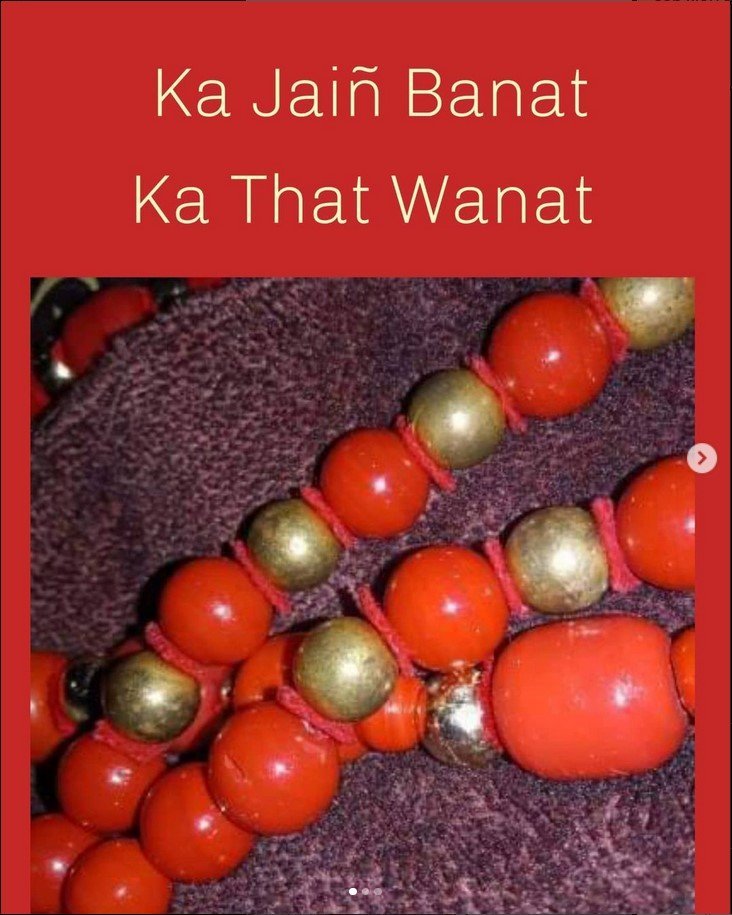
    La pynïakhlad ïa u kpieng sop ksiar na u paila, da i jaiñ banat basaw. Ine i jaiñ banat saw ym tang ba i shat pynitynnat haba peit hynrei i ïada ruh ba u paila un ym kyrshut bad pynkhoh phler ïa ka 'siarsla ba la sop ha u kpieng ksiar.

    Da pyngkhlaad ya'u kpieñ ksiar na u paila, da ka wanat waso, kani ka wanat ym toh du kat u pynyoo suk eh ko hawa pait, pyllait haroh ko na i khoi wa ya kyrchut u paila wa i ksiar.

    The gold bead is separated from the coral bead (paila) by a red piece of red cloth called "ka jaiñ banat basaw" in Khasi and "ka that wanat waso" in Pnar. Not only does the banat/ wanat cloth bring beauty but it also prevents the friction between the "paila" and the gold bead.

    "Ka jaiñ banat basaw" (Khasi) or "ka that wanat waso" (Pnar) is the red cloth that forms a separation between the paila (coral beads) and the golden beads that form the Khasi Paila necklace.

    Thank you @xdtnoahjupejackllthmanar for sending this interesting post about the Paila necklace! 😄🙏
    Khublei Chiboon Anvil wa pûnïarap phi u pûnkylla cha ka ktien Pnar ya kani ka post 🙏😄

    🟡 Photo credit: @xdtnoahjupejackllthmanar
    🟡 Khasi excerpt: Kong Sweetymon Rynjah
    🟡 Pnar translation: Anvil Laloo
    🟡 English translation is by @speakyourroots

  • U Dak Lai, The Number Three

    U Khasi u don ka rukom pyrkhat kaba kham kyrpang ha ka jingïadei bad ki dak "Lai". Haba thung mawbyrsiew, u pynïeng lai tylli ki maw ban shet jingshet. Haba phah khubor na kawei ka jaka sha kawei pat, u pyndonkam lai tylli ki ksah ne kyrwoh. Haba jer khun shynrang, u pyndonkam lai tylli ki kyrteng bad lai tylli ki khnam. Haba thang briew, u pyndonkam lai tylli ki 'nam tympem ban siat ha ka kpep ha ka por thang briew. Haba pyrta shnong, u pyrta lai sien lai wat. Haba thung mawbynna kur, ki thung lai tylli ki mawbynna na ka bynta u kñi bad ar ngut ki pyrsa. Haba poikha poiman lane haba iap briew, ki ap lai sngi lai miet ban trei ia kiwei pat ki kam.

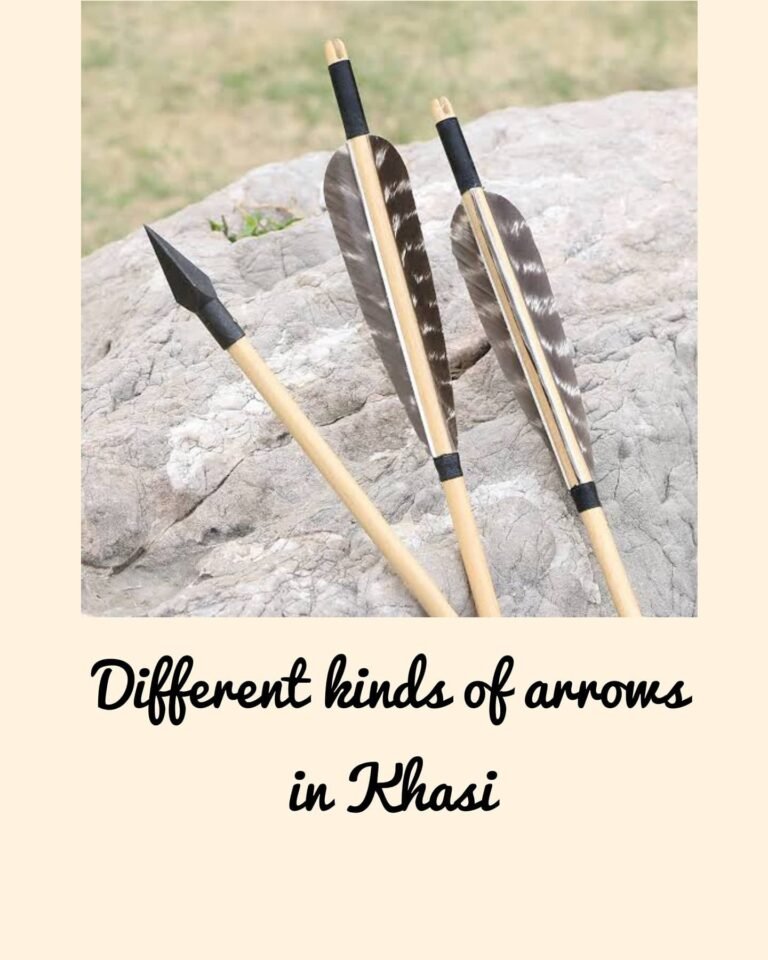
    The Khasis have a unique perception and regard for the number "3" When they erect a "mawbyrsiew" which is the stone used as support for cooking in the hearth they use three stones. When they send a message or news from one place to another, they use three "ksah" or "kyrwoh" which are rings made from threads of bamboo. When they choose a name for a son during the name ceremony, they choose from three names and also keep three arrows. At the cremation, the Khasis shoot three arrows called " 'nam tympem" in the place belonging to a specific clan for cremations. When there is a public announcement, the "sangot" addresses the people three times before making the actual announcement. When they erect the clan moniliths, there are three moniliths: one for the maternal uncle and the other two for his nieces or nephews. When there is a wedding or a funeral, the Khasis wait for three days to perform other work.

    The number "3" has a significance that is wide ranging for Khasis and Pnars. Here is an excerpt from U Khasi Bad Ka Mariang by Rev. Dr. Ïarington Kharkongor. 3️⃣3️⃣3️⃣

    🟡 English translation by @speakyourroots

  • Kamai Nong Khynraw

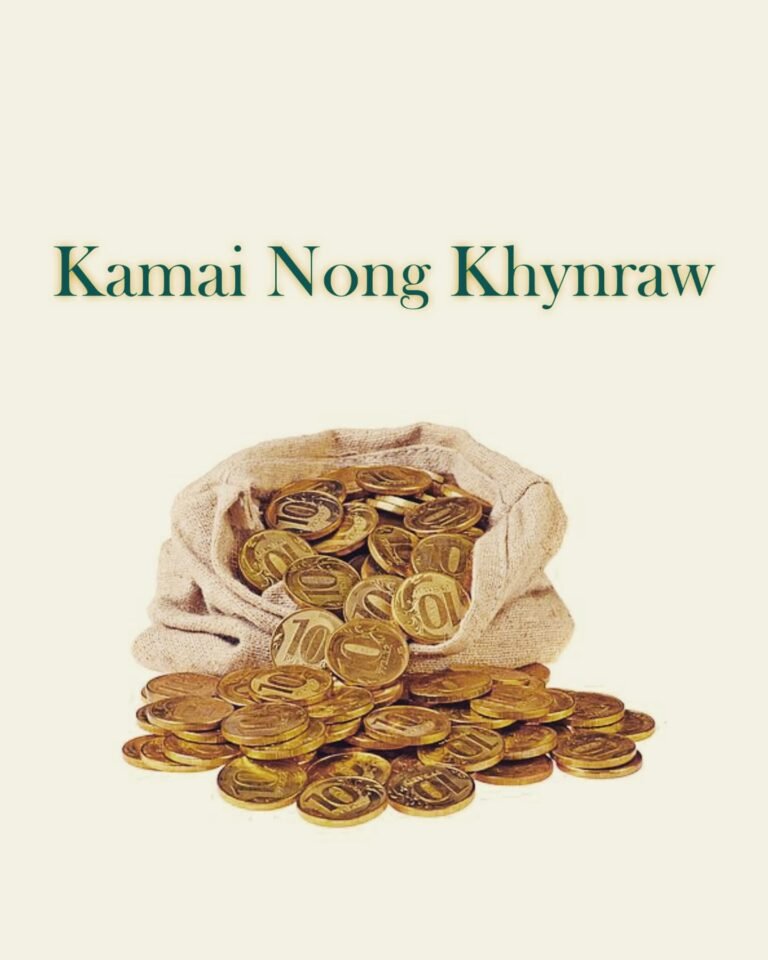
    Ka "kamai nong khynraw" ka dei ka spah ka phew ba u kamai u briew katba u dang samla ha la ïing kur, shuwa ba un leit ïing briew. la kane ka spah ka ïoh ka kmie lane ka kur kynthei kaba khadduh jong kata ka ïing.

    "Kamai nong khynraw" is the money and wealth earned by a man while he is still single and unmarried. This money and wealth goes to his mother or "khadduh", the youngest sister of the man.

    "Kamai nong khynraw" is one of the many duties that a young Khasi man fulfills towards his family before marriage. This support to his own family is valued and cherished. 🙏💚

    🟡 Source: Primrose Gatphoh

    🟡 English translation by @speakyourroots