Category: Customs, Practices and Festivals

  • U Thuïa or The Feathery Crest

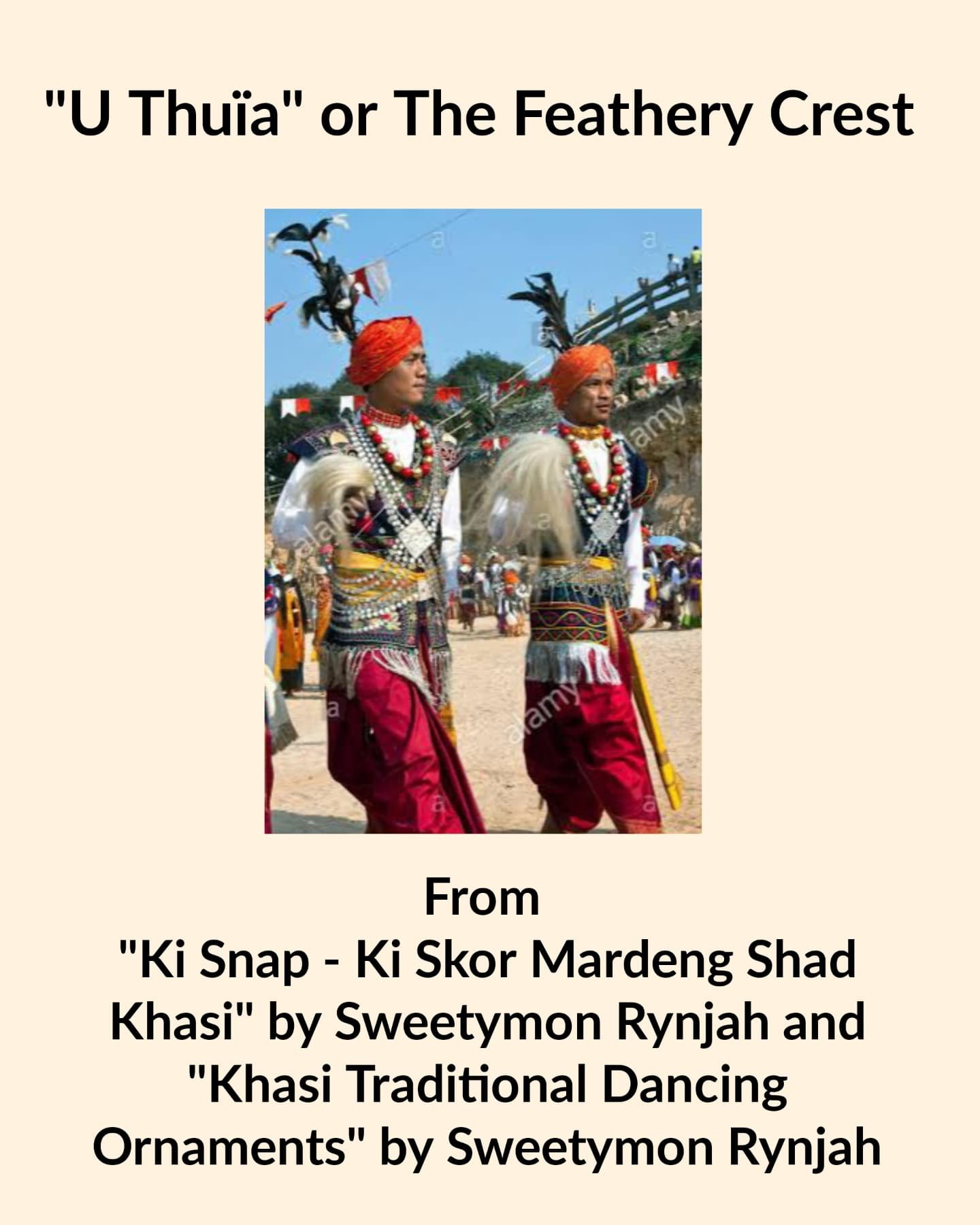
    "U Thuia" or The Feathery Crest

    From Ki Snap – Ki Skor Mardeng Shad Khasi by Sweetymon Rynjah and

    Khasi Traditional Dancing Ornaments by Sweetymon Rynjah

    U Thuïa

    Ka jaiñspong ha ka riam Khasi ka ïoh ïa ka bynta ba kongsan eh ha ka riam u rangbah Khasi. Ka pynphuh ïa ka maiñ rangbah bad ka ïoh la ka longsan ha ka jingpynkup burom ha kino kino ki kam bad jingleh burom kat kum ka rukom Khasi…Tangba ha ka shad ka kmen khamtam ka shad ainguh, la sieh bad pyndait pat sa ïa u Thuïa. Kumta u Thuïa u shim ïa ka bynta kaba kongsan bad ba khlieh tam ha ka riam shad shynrang jong ngi ki Khasi.

    Ïa u Thuïa la sieh tyngkhap ha ka jaiñspong na shadien khlieh jong u nongshad bad la teh pynskhem da ki arliang ksai jong u bad pynskhem ha ka jainspong. Une u Thuïa, ym tang ba u pynphuh pynphieng ïa ka maiñ ki long shynrang, hynrei la bsap ruh ïa ki jingmut barieh, kiba ki longshuwa manshuwa ki la pynkup ha u, kum ki dak ki shin ban pynpyrkhat bad ngam jylliew ban khyllie pat ïa kita ki syrtap ba la pynkap bad pynshat ha u dur jong u. Hynrei kam long kumta ha ka pyrkhat bad pynshong kaba ka sain pyrkhat pynneh dustur bad pynsah riti jong ki longshuwa jong ngi.

    La shna pynbit pynbiang ïa u thuïa na ki sner jong ki sim ki doh. Ki sner kiba kham heh ki long kiba ïong, ïa kine la teh pyndait ha i dieng ba la khrud pyllon bad teh pynskhem bha, ban da pynwandur kyrphum ba kham ïar na sha trai bad nang kham rit khyrphum katba nang kiew sha khar jong u. Ha kine ki sner kiba ïong pat, la teh pyndait ïa ki sner lung balieh, kiba la teh synrop kumba saw ne san tylli bad pynkhreh kyrpang shuwa ban teh ha ki sner ba ïong, ba la pynskhem ha i dieng pyllon ba la pai pynjlih pynrit ban rung ha ka tyngkhap syrtap jaiñspong u nongshad.

    Ki kpa tymmen jong ngi ki ju kham pyndonkam da ki sner u sim Rynñiaw. Une u sim u phong u kup da ki sner kiba ïong ha met katba na shadem haduh tyngkhap kjat, ki sner ki long lam bthuh-lieh. Ha u tyndai dong jong u, u don artylli ki sner kiba kham jrong na baroh kiba shat ïa ka rong thwei ïong, rong lir syriem ïa ki sner jong u klew. Ha ki puriskam purinam Khasi ïa u sim Rynñiaw la pynkap kum u khun binong bishon, uba don ka akor bad kup da ker la ka burom, uba wan na ka longïing longsem kaba bha ba miat. Ha une u sim la pynïasoh ïa ka jingshlur bad shynrang mynsiem bad la pynkup ruh ha u, ïa ki nuksa jong ka jinglong shynrang jingmut ha la ka jingthmu…La pynïasoh ruh bad une u sim kum u shynrang ka wait ka stieh kaba mut ba thew ïa u briew uba kloi ban len ïalade na ka bynta kiwei pat lane na ka bynta la ka hok.

    The Feathery Crest/ U Thuïa

    Thuïa is the feathery crest or plume attached to the "spong khor" of a Khasi male dancer. "Spong khor" is a head-dress or turban, called "jaiñspong" in Khasi. This "jaiñspong" does not only give a manly appearance to a Khasi male but also enhances his stature and look. This Khasi head-dress has become a way of honouring and glorifying any important personage, by presenting and entwining the same on his head on any occasion of festivity. It has also become an integral part in the consecrating ceremony of the chosen Khasi Syiem. The "Spong khor" is entwined on the head of the chosen Syiem as a mark and symbol of instrumental authority after completion of all the religious ceremonies.

    We also witness in the Khasi Thanksgiving Dance of "Ka Shad Suk Mynsiem", all male dancers dressed with turbans of dhara, muga or ka "Spong khor". This "Spong khor" is a hard strong mixture of silk, known in assamese as "Gumchen", specially made with geometrical designs or animals motifs in red with a background of yellow. On the back of this turban, a feathery crest or plume called "U Thuïa" is attached. It is fastened to the turban, its two threads, which passed through the layers of the turban before fastening and knotting.

    "U Thuïa" is prepared from the feathers of birds. The bigger feathers are of black colour, which are fastened and tightened to a small stick, prepared for this purpose. The lower portion of the stick has been thinned out to enable to pass through the layers of the turban. On the tips of these black feathers, a small bunch of white soft feathers in a cluster of four to five, prepared separately are fastened and tied to the black feathers. "U Thuïa" gives a conical shape broader at the base and narrower while ascending to the top.

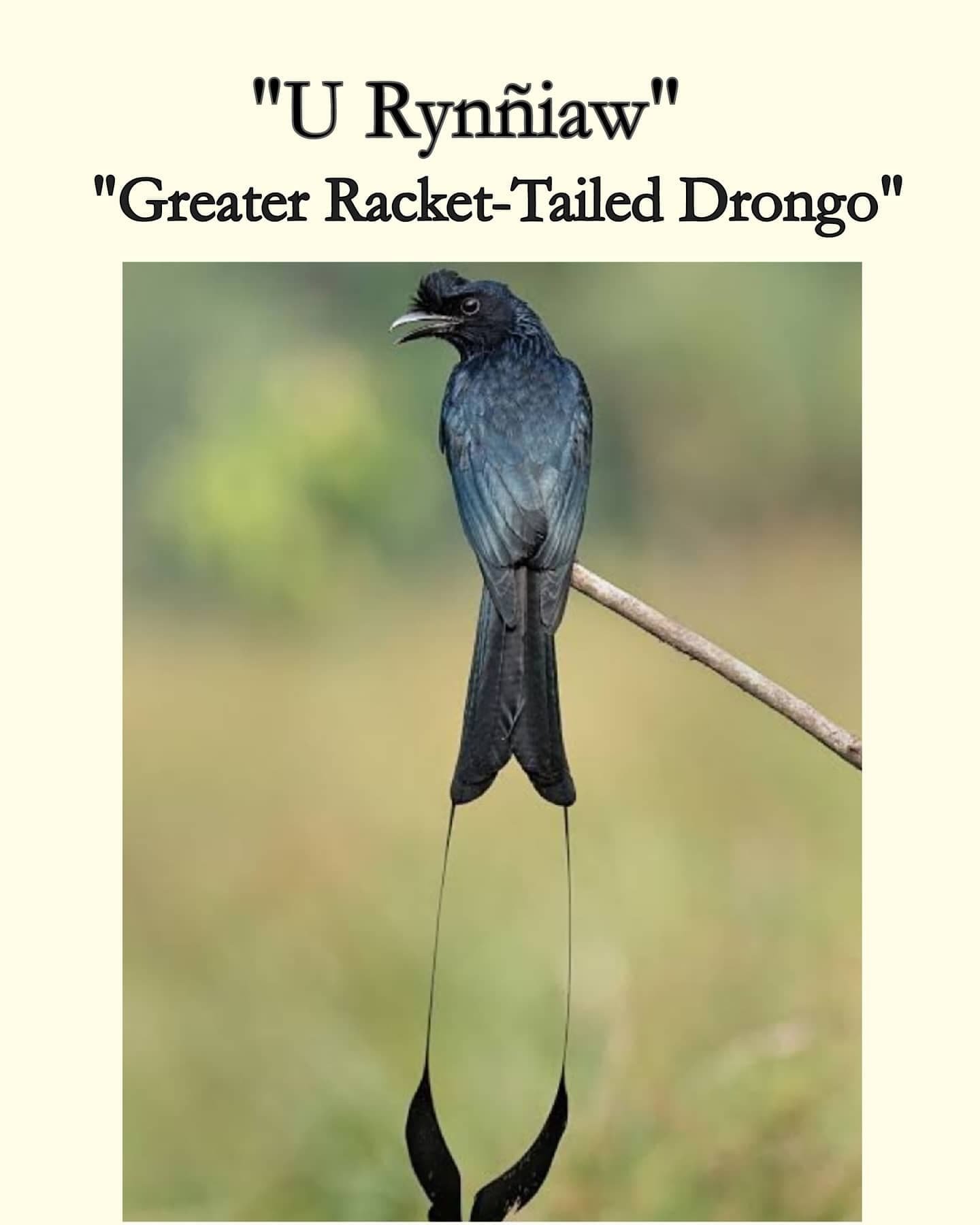
    It has been orally told by Khasi elders that our forefathers used the feathers from the bird, called "Rynñiaw" while preparing "U Thuïa". It is a bird with black feathers on its body, while on its chest, the feathers are soft and cloudy white. This bird has two feathers on its tail with shades of blue, tinted with indigo like that of a peacock. In the Khasi fable of "U Rynñiaw", the bird is personified as a nobleman, well brought up in good etiquette and behaviour, with good qualities and moral values. Courage and chivalry are also embodied in this bird, being an example of a man with strong will and determination, who girdled his will power, in whatever, he aimed at, without scarificing his manly honour and prestige. "U Rynñiaw" was also assimilated as a champion for a noble cause of peace and harmony, at the cost of his own mental agony and lamentation. Hence, he can mortify himself for others for a righteous cause.

    The traditional Khasi attire of men in "Ka Shad Suk Mynsiem" contains a deep significance. Thanks to Kong Sweetymon Rynjah we understand the beauty and symbolism behind "U Thuïa" or the Feathery Crest of "Ka Spong Khor".

    "U Rynñiaw" is the bird from the fable "U Rynñiaw bad ka Sohlyngngem".

    🟡 Abridged and translated by @speakyourroots
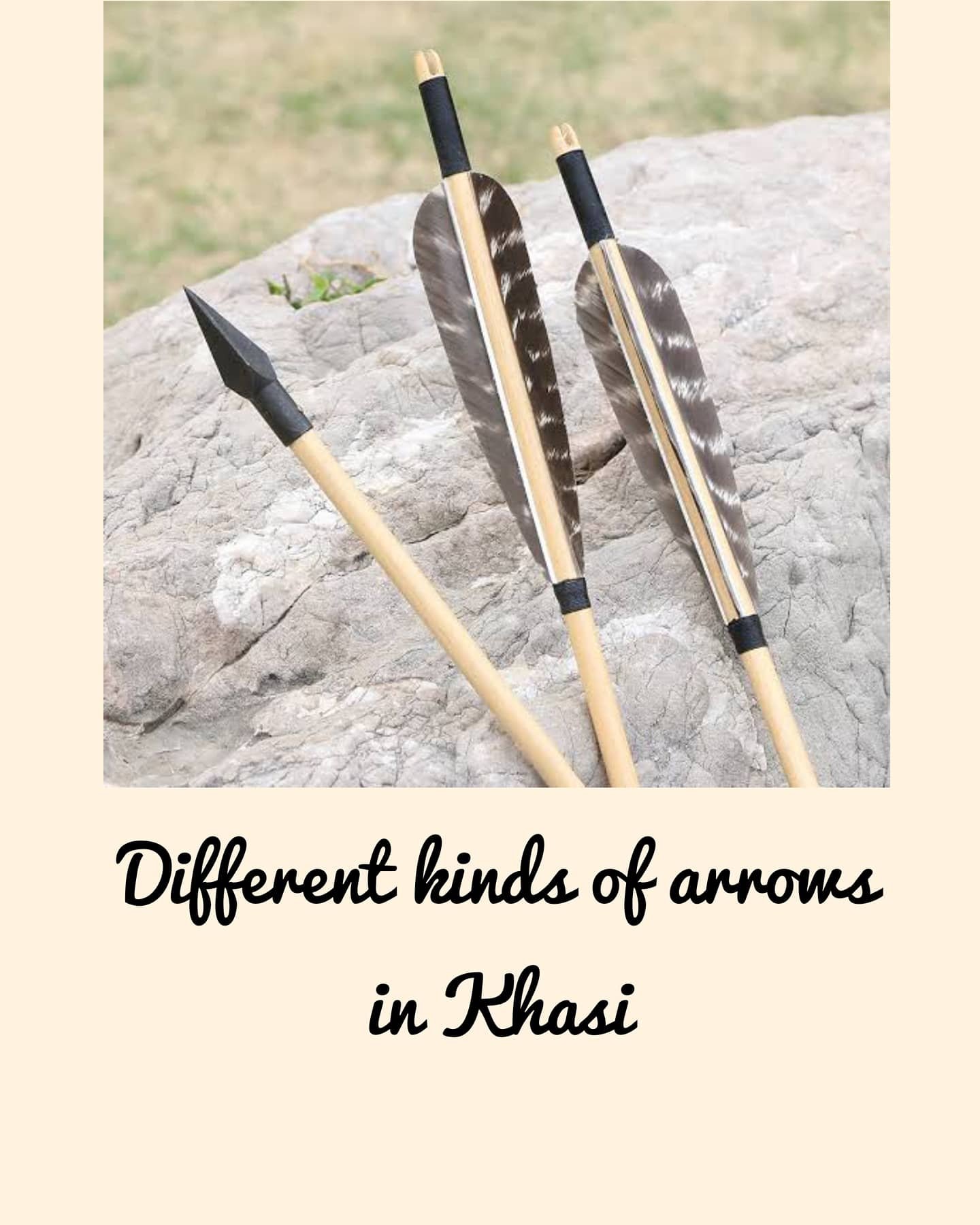
  • Different kinds of arrows in Khasi

    "U 'nam-ïong" u dei u khnam ba don dak ïong ha ki sner jong u (An arrow with a black mark on its feathers/fletching).

    "U 'namlang" u dei u khnam 'langtylli; u khnam kdait (An arrow made from a kind of reed).

    "U 'namphiah" u dei u khnam shiliang sner bad bunsien la ju pyndonkam da ki khynnah (An arrow having feathers/ fletching only on one side and is mainly used by children).

    "U 'namphong" u dei u jait khah uba la ju pyndonkam kum u khnam na ka bynta ban siat sim (Reed that is used as an arrow when shooting birds).

    "U 'namtabla" u dei u khnam pynbúd uba dei ha ka met jong u mrad. Ïa uno uno u briew uba ïoh pynban khnam kumta bad ynda ki la ïoh ïa ka mrad ki ai ka siang tyrpeng ïa u (The arrow that triggers the pursuit of a hunt. The person who is responsible for this is prized with the shoulder blade of the animal).

    "U 'namthang" u dei u khnam bym don sop ba la shu syang pynrkhiang haduh ban da eh bha tnaw. (An arrow without an arrowhead which has only been dry-roasted over a fire till it is very hard).

    "U 'namtohrih" u dei u jait phlang uba long kum u khnam (a kind of grass or reed which is like an arrow and can be used as one).

    "U 'nampliang" u dei u khnam sngáb; u khnam sop. U sngáb u dei u kynja jingpynwoh ha u khnam. La ju pyndonkam bunsien tang ha ka thma bad kaba siat mrad (An arrow with a bard; an arrow with an arrowhead, which is used only during wars and animal hunts).

    "U 'nampur" u dei u khnam sner (A feathered arrow).

    U 'namsop u dei u khnam uba ka dur jong u sop ka long kum ka khoh. La ju pyndonkam ha kaba ïa siat thong. (An arrow whose arrowhead resembles the cone-shaped "khoh". It is used during archery competitions).

    "U 'namtympem" u dei uwei na ki lai tylli ki khnam ba siat na ka kpep ha ka por thang briew. Ïa uba nyngkong ki siat shaphang shatei; ïa uba ar sha sepngi bad ïa uba lai pat shathie. Kane ka rukom ka long ban beh ïa ki ksuid kiba wan thap ban pynbakla lynti ïa ka mynsiem u nongïap. (One of the three arrows shot from the funeral pyre. The first arrow is shot towards the north, the second arrow is shot towards the west and the third arrow is shot towards the south. This protects the spirit of the deceased from being led astray).

    Arrows form an important part of many tribal cultures. They are used for hunting, in games and competitions and during wars. Here are different names of arrows in Khasi! ⬆️↗️➡️↘️⬇️⬅️↖️↪️↩️

    🟡 Source: Rev. Dr. Ïarington Kharkongor

    🟡 English translation by @speakyourroots

  • The Thirteen Months in the Khasi Calendar: A look at U Lber, U Pynram and U ‘Nai-it

    Ki nongrep Khasi ki kheiñ ba don khatlai (13) bnai ha ka shi snem. Baroh ki bnai ki don arphew phra (28) sngi lait noh ha ka Snem Ryngkoh (leap year), kata man ka saw snem don arphew khyndai sngi ha u Rymphang. Ka kyrteng ki bnai ki long: U Kyllalyngkot ne Kyllalyngkhot, U Rymphang, U Lber bad U Pynram, U Ïaïong, U Jymmang, U Jylliew, U 'Naitung, U 'Nailur, U 'Nailar, U 'Nai-it, U Risaw, U 'Naiwieng bad U Nohprah. Baroh kitei ki bnai ki don la ka jong ka jong ka dor bad ka jingmut. Ki nongrep haba ki ai kyrteng ïa kitei ki bnai, ki don ka jingmut ban pynïadei ïa ka rukom rep bad ka mariang.

    U Lber bad u Pynram

    U Lber, u bnai uba lai jong ka snem, u dei u bnai pyrem. Ha une u bai don ar tylli ki kyrteng – u Lber bad u Pynram. Baroh ar kine ki kyrteng ki don mar khatsaw sngi; kata ka mut naduh ba mih haduh ba pyllun bnai u dei u Lber bad naduh ba pyllun bnai haduh ba sep bnai u dei u Pynram. Haba kheiñ lang ïa ki sngi jong u Lber bad Pynram ki long arphew phra. Ar taïew na ki-ka taïew kaba nyngkong bad ka taïew kaba ar, ki hap ha u Lber, bad ar taïew pat, uba lai bad uba saw, ki hap ha u Pynram. Baroh saw tylli ki taïew ki ïaryngkat sngi kawei ïa kawei pat.

    U 'Nai-it

    U 'Nai-it u dei u bnai uba shiphew jong ka snem, u dei u bnai uba ar jong ka Synrai. Une u bnai u don saw taïew lane arphew phra sngi. Une u bnai u wan long kyrteng na ka jingpah u kbeit bad kiwei pat ki jait sim kiba her ha suiñ bneng. Ha une u bnai haba u kbeit u swait ha suiñ bneng ban kem sim ne kem khnai u ju pah "it it-it it". U long u bnai ba ki sim laiphew jait ki sngewtynnat ban her suwari ha suiñ bneng ban kem khnai ne khñiang. Baroh ki jait khñiang, ki dkhiew bad kiwei pat ki kynja ba im ki sngewtynnat ban paw pyrthei ha une u bnai. Ki ïa mih na la ki jong ki jong ki trep ban ïalehkai bad rynsied sngewbha ha sla khyndew namar ka bneng ka la rang itynnat bad u kba u la sang saw doh.

    Khasi farmers calculate that there are thirteen (13) months in a year. All the months have 28 days except for a leap year. The names of the months are: U Kyllalyngkot or Kyllalyngkhot, U Rymphang, U Lber bad U Pynram, U Ïaïong , U Jymmang, U Jylliew, U 'Naitung, U 'Nailur, U 'Nailar, U 'Nai-it, U Risaw, U 'Naiwieng and U Nohprah. All these months have their own value and meaning. When farmers give names to these months, there is a connection between agricultural activities and the environment.

    U Lber and U Pynram

    U Lber (which may be March) is the third month of the year which is a Spring (Pyrem) month. In this month there are two names – U Lber and U Pynram. Both have fourteen days each; meaning from the new moon to the full moon is U Lber and from the full moon to the waning crescent is U Pynram. When calculated the total number of days is twenty-eight. The first two weeks belong to U Lber and the third and last weeks belong to U Pynram. All four weeks follow the same day pattern.

    U 'Nai-it

    U 'Nai-it is the tenth month of the year and it is the second month of Autumn. This month has four weeks or twenty-eight days. This month gets its name from the chirping of a bird called u kbeit (which the Khasi dictionary calls "a kind of hawk") and other kinds of birds. During this month u kbeit while hunting smaller birds and rats makes an "it it-it it" sound. Different types of birds go around flying everywhere during this month to hunt rats and insects. Many kinds of insects, ants and others like to emerge during this time. Animals and insects enjoy this time of the year as the weather is sunny and paddy also begins to redden.

    The Khasi way of calculating the number of months is very interesting! 😀😀 It goes hand in hand with the phases of the moon 🌕🌓🌔🌖🌘

    🟡 English translation by @speakyourroots

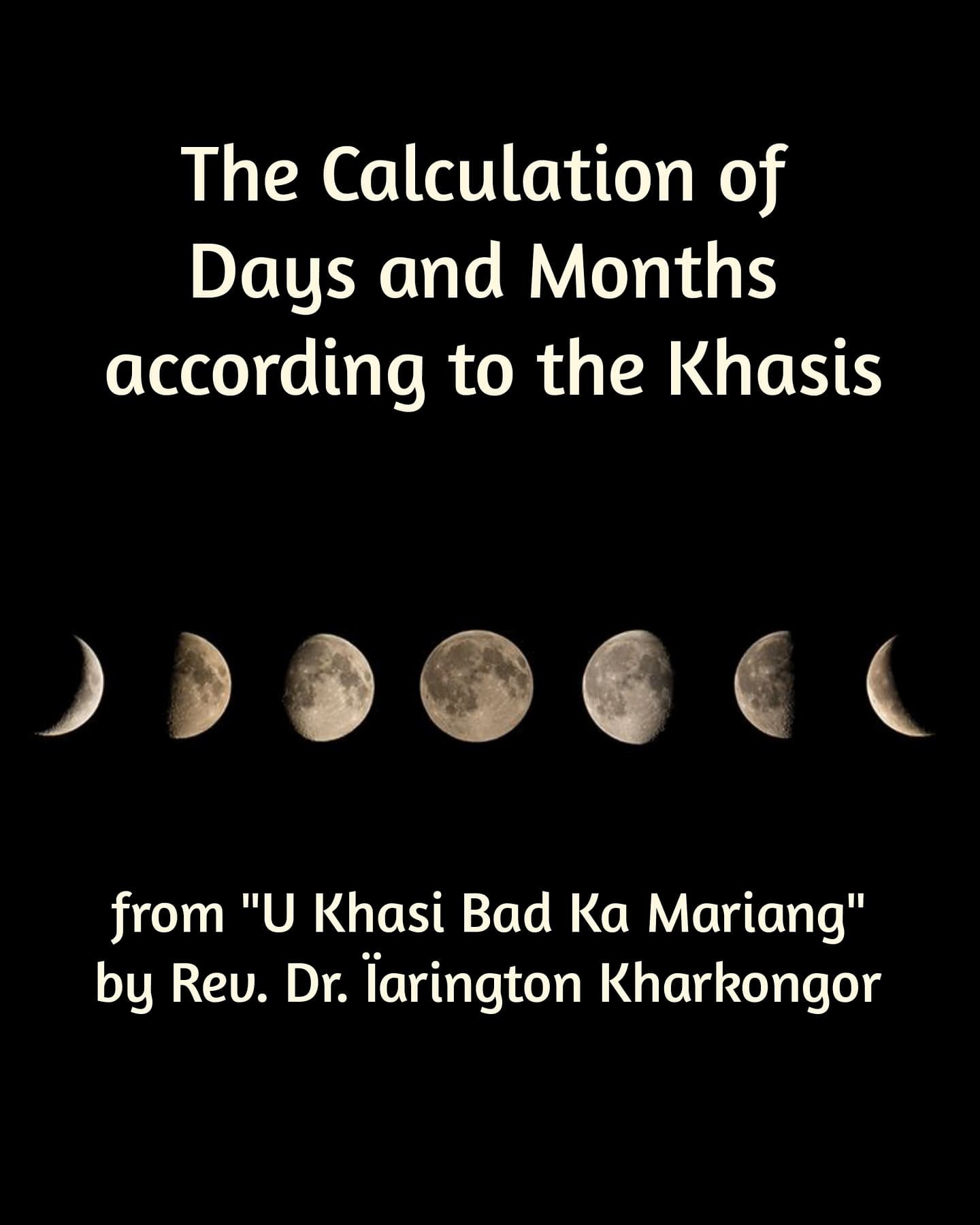
  • The Calculation of Days and Months according to the Khasis

    Ka rukom kheiñ tarik u Khasi ka long ba u Khasi u kheiñ ïa ka jingsdang bad jingkut bnai na ka jingmih bad jingsep u bnai ha sahit bneng (moon calendar).

    Haba u Khasi u ong "Lung bnai" ka mut ka taïew kaba nyngkong; haba u ong "Pyllun Bnai" ne "U 'Nai Khatsaw Synñia" ka mut ka taïew kaba ar; haba u ong "Ngen Bnai" ka mut ka taïew kaba lai bad haba u ong "Sep Bnai'" ka mut la kut bnai. U Khasi khamtam u nongrep u sngewthuh ba don tang arphew hynñiew sngi shiteng ne arphew phra sngi (27½ ne 28) ha ka shi bnai.

    The way in which the Khasis calculate days or months is by looking at the phases of the moon, from the beginning to the end (moon calendar).

    When the Khasis say "Lung Bnai" this refers to the first week; when they say "Pyllun Bnai'" or "U 'Nai Khatsaw Synnia" this means the second week; then "Ngen Bnai" refers to the third week and finally, "Sep Bai" means the end of the month. Especially the farmers, they understand and calculate that a month has 27½ or 28 days.

    It's a full moon today guys! 🌕 The September full "harvest" moon is here so enjoy the "Pyllun Bnai" while it lasts 💛🤍💛🤍

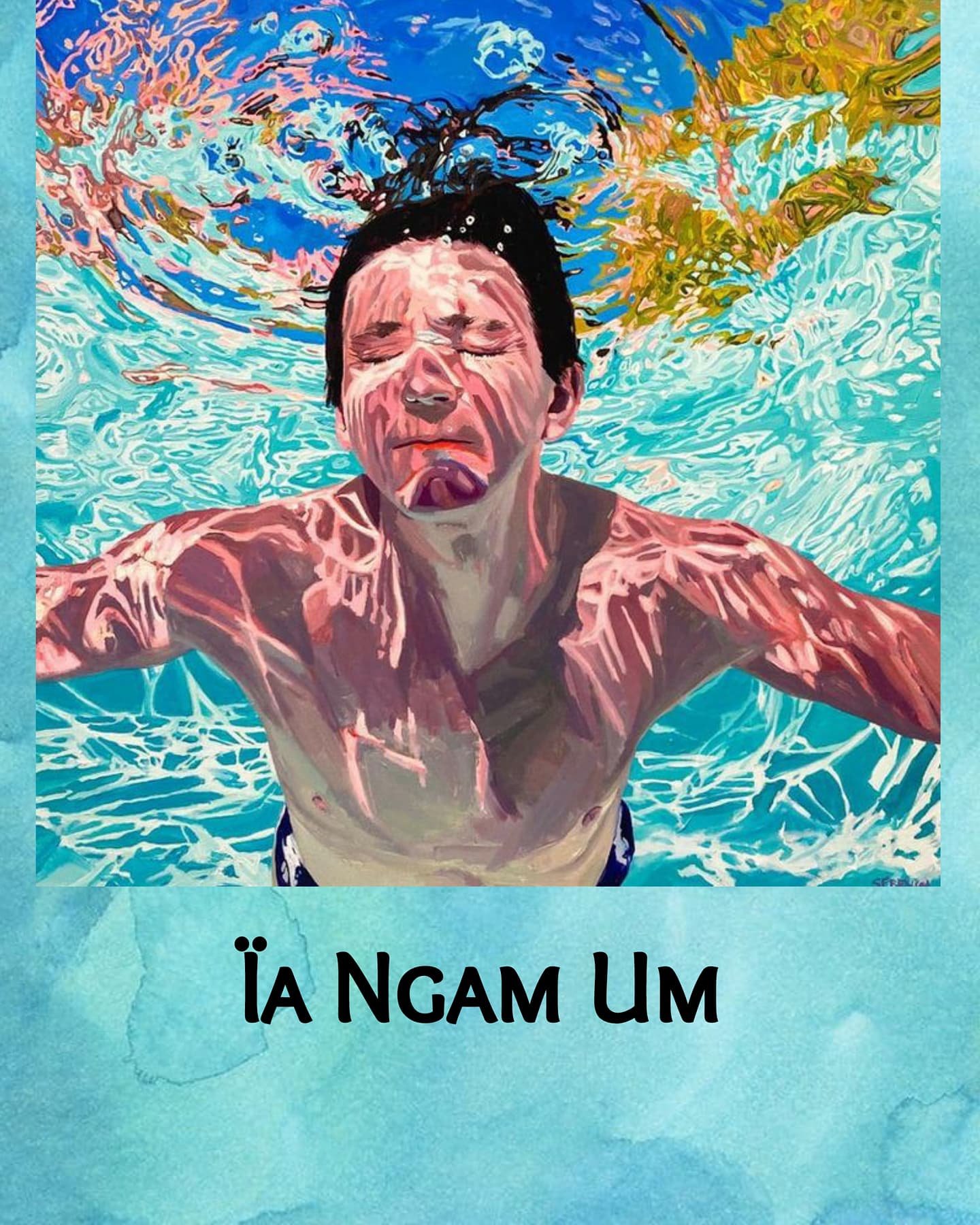
  • Ïa Ngam Um

    Ha ki por hyndai, haba don ka jingïakajia majia hapdeng ki arliang mamla kaba ma kaba lah ban kad ne khih ka hima ban rai ryngkew, ki ïapynhiar noh da ka ngam-um ha khmat u Syiem bad ki myntri korbar-ri baroh. Ki mamla ki sei la ki ksih bad ka liang jong uta uba kan slem, ka jop. Ym ju don shuh ka ïaphoi ïapeit pyllew khmat namar ki kheiñ ba ka long ka rai blei. Ïa kito ki briew kiba ïangam um ki khot ki ksih bad ka ju don ruh ka ïapung ïathong da ka tyngka ne ka ksiar para nongïaleh ne hapdeng ki arliang mamla bad kat uba jop u ïoh ïa ka.

    In the olden days, when there was a quarrel between two parties which could lead to a dangerous situation, even to division or unrest in a kingdom, in order to reach an agreement or compromise, a competition called "Ïa Ngam Um" would be held. "Ïa Ngam Um'' was a competition where divers would hold their breath under water and the one who could hold his breath the longest would be the winner. After the winner was declared, there was no offense taken, no anger or grudge held as the result of the competition was taken as a divine resolution. The competitors were called "ksih" which is the Khasi word for otter and the ksih or two parties would bet on money or gold, which the winner would claim as his prize.

    "Ïa Ngam Um" was a competition whose results ended all dispute. 🏊🏊 What a great way to end discord!

    🟡 Sources: Rev. Dr. Ïarington Kharkongor and Primrose Gatphoh

    🟡 English translation by @speakyourroots

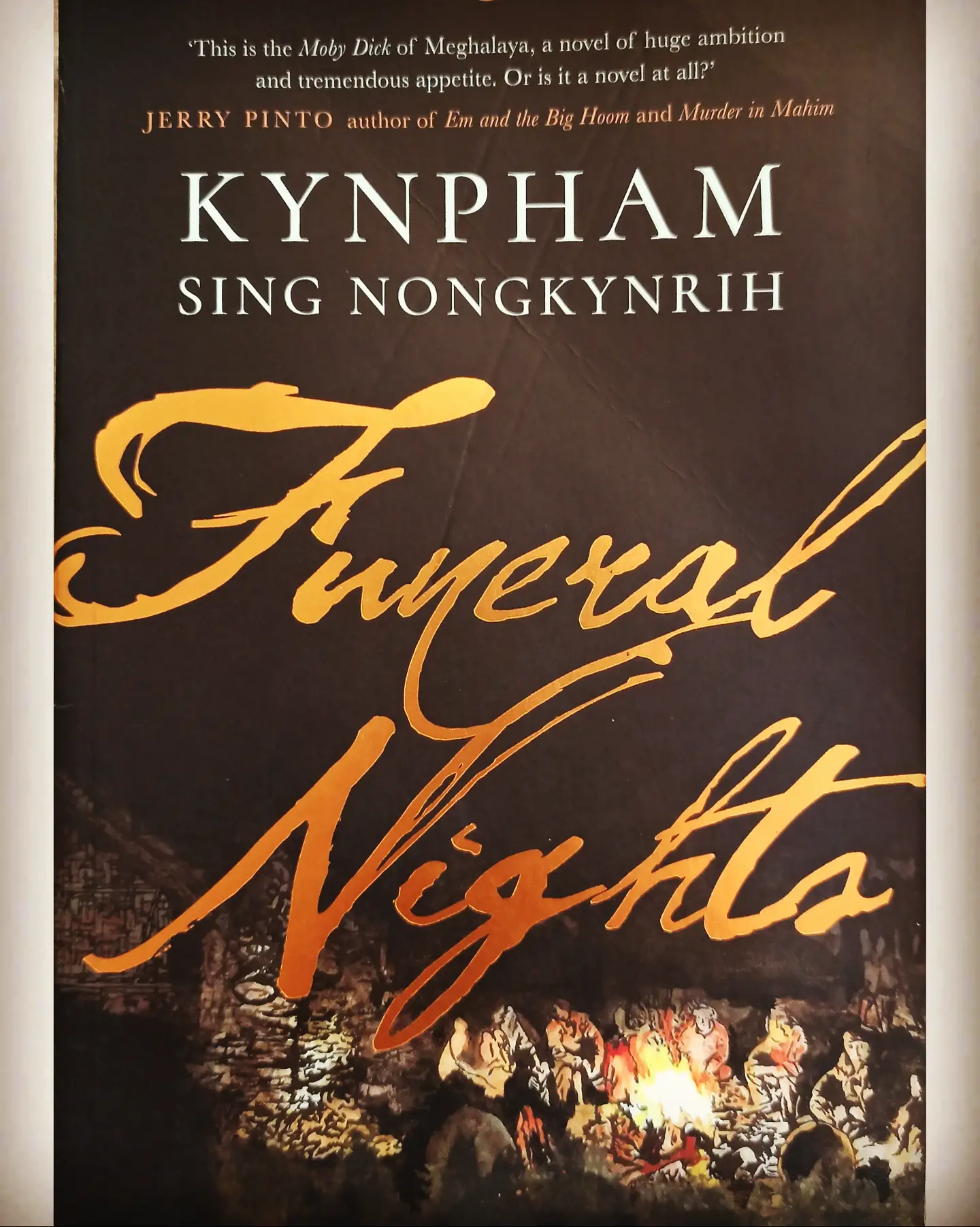
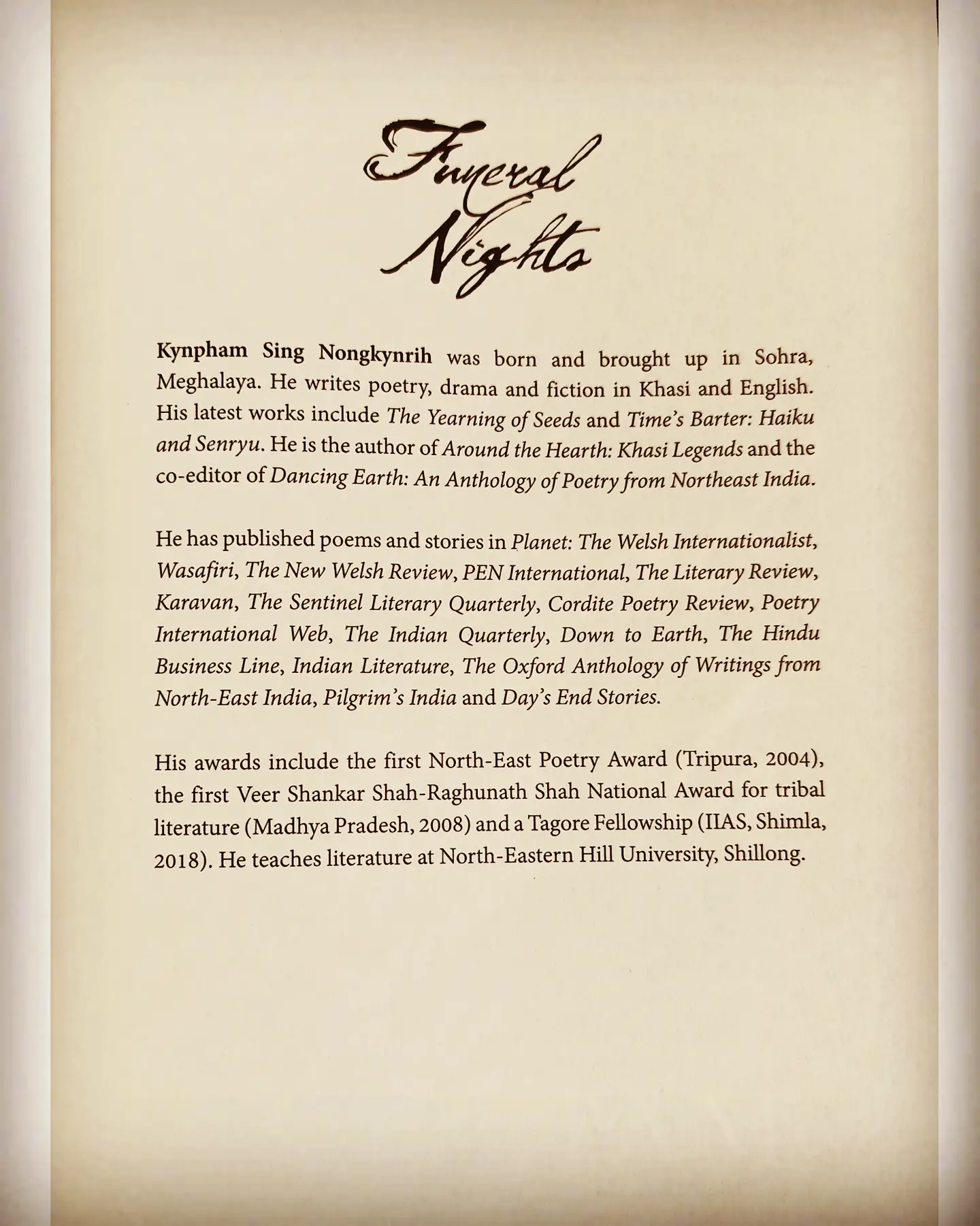
  • “Funeral Nights” by Kynpham Sing Nongkynrih

    Funeral Nights by Kynpham Sing Nongkynrih has been receiving wonderful reviews by writers as well as readers 😀😀

    The book is based on "Ka Phor Sorat" which is a funeral ceremony which was performed in the village of Nongshyrkon. We are so excited to read this book! It is available on amazon.in

    Dr. Kynpham Sing Nongkynrih is currently a Professor in the Department of English, North-Eastern Hill University, Shillong.

  • Sawdong ka Lyngwiar Dpei

    "Sawdong ka Lyngwiar Dpei" or "Around the Hearth"

    "Sawdong Ka Lyngwiar Dpei" ka dei ka jingong ne ki kyntien kiba ngi ju pyndonkam ban batai ïa ka por kyrpang ha man ki thliew ïing jong ka jaitbynriew Khasi ha kaba baroh shi ïing shi sem ki ju ïa shong harud ding, ban ïa sngap ban ïa khana. Dei ha kane ka por ba ki khanatang bad ki puriskam u mynbarim ki khie im lyngba ki riew rangbah ne ki riew tymmen kiba dei ki nongkren nongkhana. Ha kane ka por ruh, ki tymmen ki ju shim ïa ka kabu ksiar ban sneng ban kraw, khamtam eh ïa ki khun ki ksiew ki ban dang san ki ban dang samla, namar ba baroh shi ïing shi sem ki ïa don lang ha kane ka por.

    Katba ngi dang jam sha ka ïa jong ka pyrthei stad pyrthei thymmai, kata ka ding lane ka lyngwiar dpei jong ka ïing kum ban shu ong noh ka lah sang ban jah noh namar bun na ngi, ngi la ïa tei da ki ïing ki ban ïahap bad ki por mynta, kumba ngi ïohi ha ki phlim, ha ki TV, ki magazine bad kumta ter ter. Kuma, ngi la hap ban shu mutdur noh ïa kata ka ding lyngba ki dur ne haba ïohsngew ha ki khana. Te kumno ngin pynim ban pynneh biang ïa kata ka ding kaba la sdang ban duh noh-Ka ding kaba wanrah ïa ka jingsngew shngaiñ, sngew shongshit haba ngi sngap ïa ki khanatang, ki puriskam bad ki jingsneng-jingkraw kiba shongñia, kiba shong nongrim bad lehse bun na ngi, ngi lah duh noh ïa ka da kaba im tynneng kum ki nongwei.

    Hooid lehse ngi dang lah ban pynim ïa kane ka ding jong ka lyngwiar dpei kaba dei ka rukom tynrai jong ngi da kaba ïalum shi ïing shi sem, shi paralok ban ïa kren ïa phylliew jingmut shaphang ka jymbriew, ka histori bad ka ktien ka thylliej. Ngi hap ban shim ïa kane ka sienjam wat lada dei tang harud ka miej bamja, haba ïa shong dih sha, haba ïa shong pyllun ïa ka shawla ne ha kano kano ka por wat lada kam don shuh kata ka ding ne ka lyngwiar dpei, hynrei kan ïai rhem hapoh jong ngi lada ngi pynneh ïa ka rukom ïathuhkhana bad ïa sneng ïa kraw ha ki por kyrpang kiba sngewbit ha man la ki longïing.

    Ma ngi hi shimet ngi dei kita ki lyngwiar dpei ki ban pynpaw ïa ka jingstad bad jingshemphang jong ki longshuwa-manshuwa jong ngi.

    "Sawdong ka Lyngwiar Dpei" or "Around the Hearth" are words that are used to describe the time in a Khasi family when family members would sit around the hearth, the flames giving them warmth and light. It is at this time that stories are told, our oral tradition becomes alive, from the words and expressions of an elder of the family.

    As we move into the first quarter of the 21st century, the physical hearth has gone absent from our modern homes and we are left to imagine the embrace of the warm flames of a hearth from pictures or from books. How do we recreate that atmosphere, that feeling of being together almost as one breath and one mind as we listen to folktales, legends, myths and ponder on teachings which contain truths that we may have lost in our rush into globalisation?

    Perhaps we can recreate the hearth by gathering our family and friends to talk about our culture, history and language. Because we need to revive the interest and love for what is our own, for what we belong to. We may not have our physical hearth but we can create a symbolic "lyngwiar dpei" by talking, by listening, by reading, by understanding with clear hearts and minds. A clear heart and mind with a need to know who I am and what am I going to become?

    In a way, we are the hearth, we are the "lyngwiar dpei", we are a walking talking hearth who emanate the light of our ancestors' knowledge and wisdom.

  • Pashat ‘Wáidong

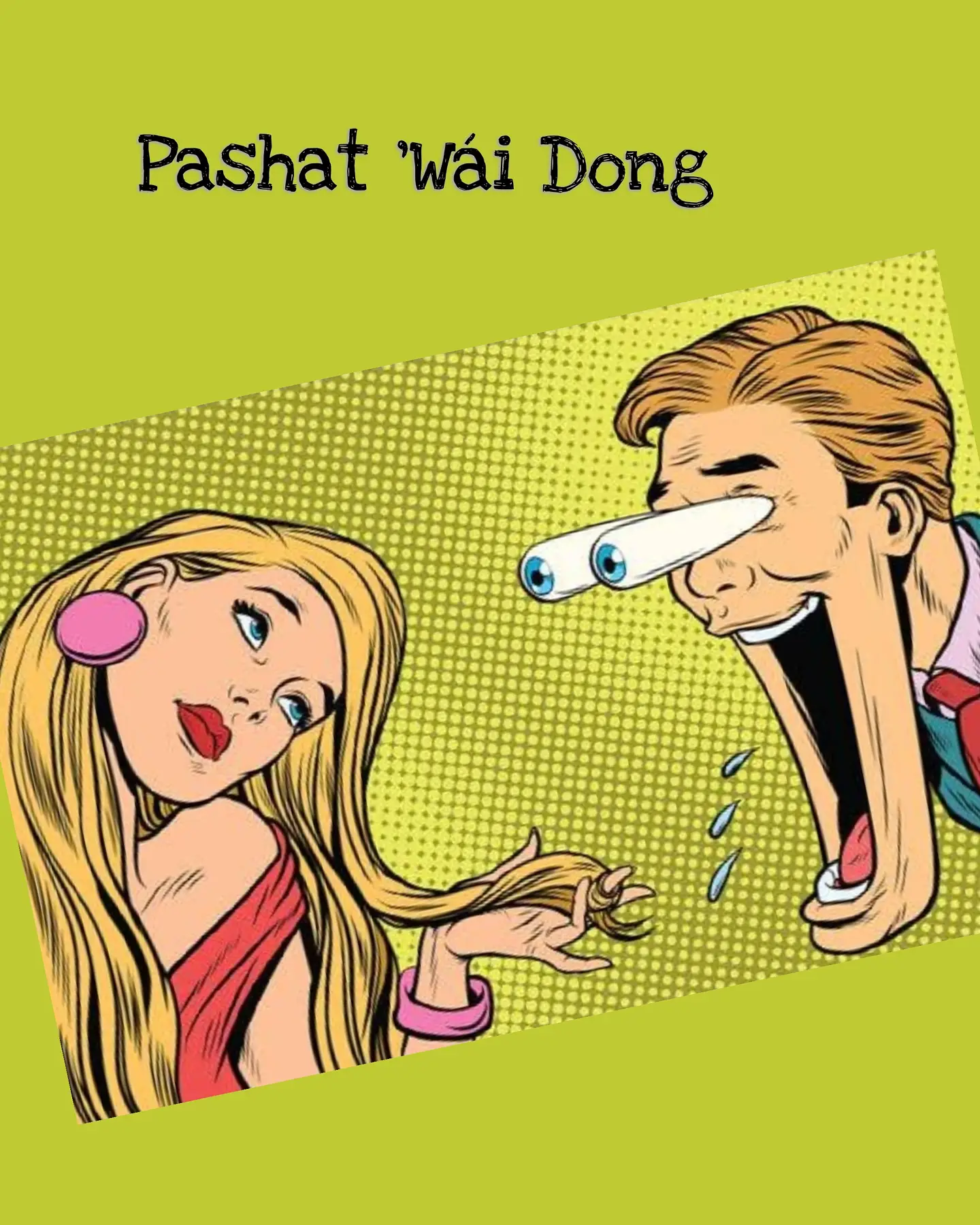
    Pashat 'waidong ka dei ka jingaidak ka samla kynthei ïa u samla shynrang da kaba ai 'wai dong. Ka long ka rukom ai sngewbha ka samla ïa u briew uba ka ïapmat. Ïa kane la ju leh da kiba khraw bad ki syiem hyndai.

    "Pashat 'waidong" is an old practice where the woman gives betel nut that has been cut and rolled with betel leaf to the man with whom she is enamoured. This indicates her liking of him. The 'waidong is presented as a gift from the woman to the man and this was mainly practised by royal and noble families.

    "Pashat 'Wáidong" is an old Khasi practice (which may be described as a courtship practice) where the woman chooses and shows to all the man whom she is besotted with. 😁🤩😁🤩

    Te haba kumta phei ki Thei ba stad to pynkhreh noh u 'wáidong haba phei lah iohi ia u Rang ba biang nadong shadong 😂😂 Phei ki Rangkynsai roh, donbok phin ia ioh u 'wáidong ba kynsai kum ma phei! 😄😄

    Source: Ka Dienshonhi: The Khasi Encyclopaedic Dictionary by Rev. Dr. Ïarington Kharkongor

  • U Sangot

    "U Sangot" u dei u nong pyrta shnong na kliar na them haba don kano kano ka jingjia ha shong ban pyntip paitbah. Kum haba don ka jingïapbriew ha shong, ki jingïalang dorbar bad kumta ter ter. U sangot u pyrta beit da ka tyngam lajong khlem kano kano ka jingïarap ki kor ki bor.

    Ha shong jong ngi mynshwa nga kynmaw u sdang kumne ko shong, (u sngap shwa tok) ko thaw, to ïa sngap…”

    "U Sangot" is a Khasi version of a town crier. "U Sangot" is a person employed to make public announcements in the streets or the marketplace of a town. We hear "U Sangot" when there are deaths or "dorbar" meetings and so on. He states his announcements in a loud booming voice without the help of microphones and speakers.

    "U Sangot will always start with "Ko shnong, (pause) ko thaw, to sngap…”

    "U Sangot" is a Khasi town crier who has a characteristic way of declaring his announcements. We might not hear "U Sangot" so much in Shillong but the practice is definitely still prevalent in smaller towns and villages. 🔊🔊🔊🔊 Thank you @same_omega for sending this entry!

    If you know more about "U Sangot" please share in the comments section!

  • “Panur” (War) and “Diñ Kum” (Pnar)

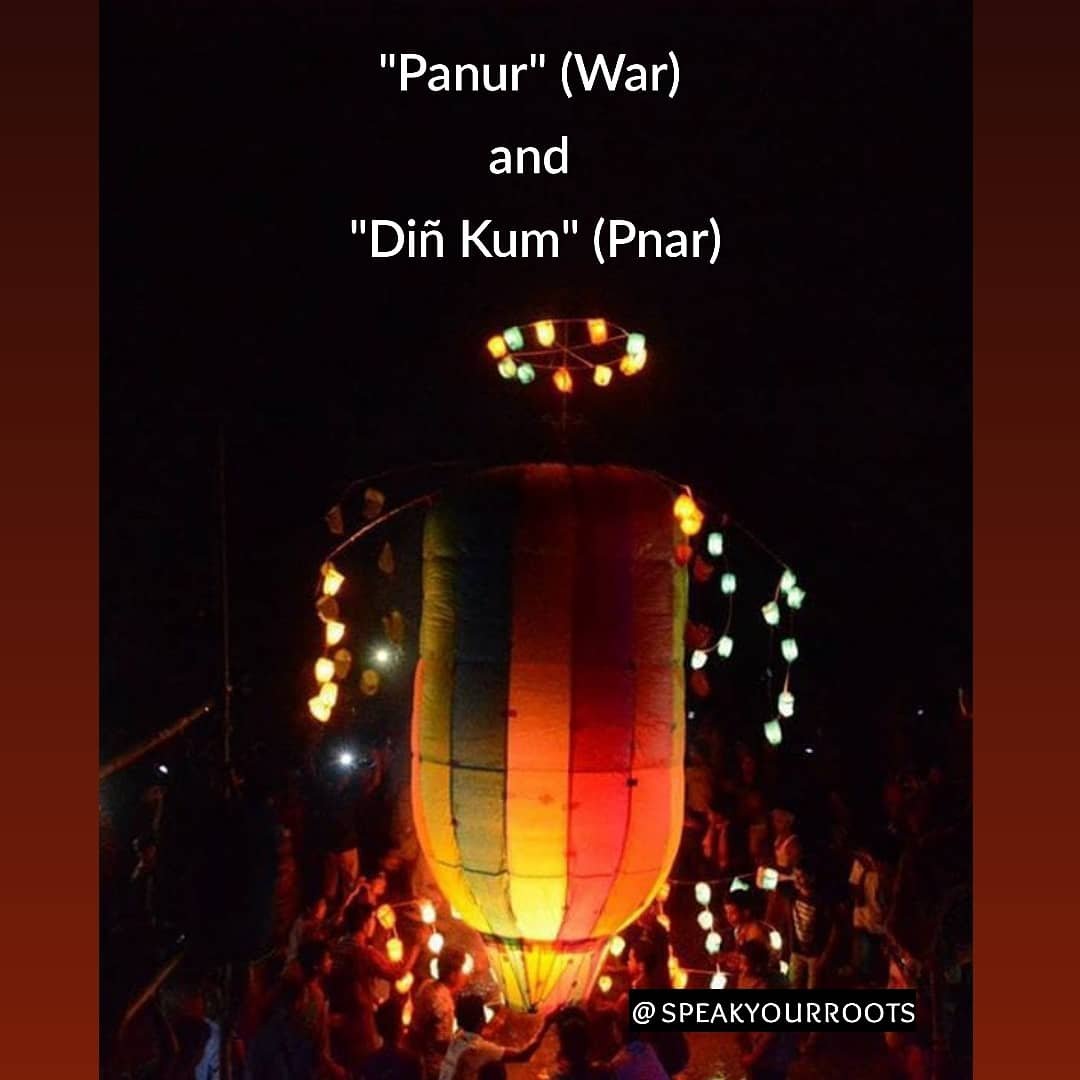
    "Panur" (War) and "Diñ Kum" (Pnar) are traditional sky lanterns made by the War and Pnar communities. These particular sky lanterns are however different in appearance from the usual sky lanterns.

    "Panur" and "Din Kum" are long and cylindrical in shape and are made of many rectangular pieces of kite paper joined together. The main lantern is called "Ka Kmie" (mother) and there are smaller lanterns called "Ki Khun" (children) as shown in the picture. "Panur" and "Diñ Kum" are made when there are festivals or any festive occasion. Alighting and flying them is done with great fervour and excitement.

    "Panur" (War) and Diñ Kum (Pnar) are traditional sky lanterns that are painstakingly made by the members of the community. They look beautiful when they are lighted up and create a feeling of oneness and belonging, accompanied with chants and "phawar".🎈🎈🎈

    Picture credit: @speakyourroots. Location: Nongjri, East Khasi Hills District.