"Ka jaiñ-it" ka dei ka jaiñ bah ïa ki khyllung ne ki khun rit; ka dei ruh ka jaiñ kaba pynskhem haba bah ne kit.
Ka jaiñ-it ka dei ka jaiñ ba pyndonkam da ki Khasi ha ka por ba ki bah ïa ki khunrit. Lah ban ong ba ka dei ka jaiñ ba jrong lynter ba la thaiñ na ki sai kynphad balieh bad don ruh ki jingthaiñ da ki ksai ba saw sha tduh jong ka jaiñ. Ha kylleng sawdong ka Ri Khasi bad Jaiñtia, ki longkmie ki ju pyndonkam da kane ka jaiñ ban kit ne bah ïa ki khyllung ne khunrit hadien met khnang ba kin lah ban trei ban ktah ruh ha kajuh ka por-lada dei hapoh ïing ne shabar, khlem da pynsepei ïa ka por.
Ki kynthei Khasi ki dei kiba smat bad bunsien ngi ju ïohi ïa ki longkmie kiba bah khun da kaba pyndonkam ia ka "jaiñ-it" ha ka por ba ki trei ïa kano kano ka kam: lada dei ka kam shet, kam sait, kam khlieng ne haba ki leit sha la ki bri ban trei kam rep kam riang. Ka jaiñ-it ka dei ruh kaba ju ai sngewbha da ka Meikha ïa ki ksiew. Kane ka dustur ka dang im sah haduh ki por mynta ruh, tangba lehse ka jingpyndonkam ïa ka jaiñ-it ka lah kham duna ha ki thaiñ sor.
Ïa ka jaiñ-it lah ban pyndonkam baroh shi snem lynter bad ka kham ïarap khamtam eh ha ki por tlang ha kaba i khyllung i ïohthiah ha syndah ka met jong ka kmie bad i ïoh ruh ka jingsyaid na ka met jong ka. Ki pyndonkam ruh sa da ka jaiñ-kup ha kaba ka kmie ka kup ïalade da katei ka jaiñ ban sop syaid ia i khyllung iba ka bah.
"Ka jaiñ-it" is a traditional baby sling-wrap used by Khasis and Pnars which may be described as a long strip of cotton cloth made from big strands of white thread with red stripes at the ends. In the Khasi and Jaiñtia hills, mothers use this cloth to carry a baby on their backs, so as to be able to perform work in the house or outside.
Khasi women are never idle sitters. We see mothers carrying babies securely and safely fastening them with the jaiñ-it while they go about their daily work, be it cooking, washing and sometimes tilling the field.
The jaiñ it is traditionally gifted by the paternal grandmother to her grandchildren. This practise is still alive and well. However, the use of the jain-it is lessening in the urban areas. The jain-it can be used all year round and is particularly handy in the winter months when the baby is snugly fastened and then a "jaiñ-kup" (flannel shawl) is wrapped around the baby to keep it warm.
Most of us have a picture of ourselves tied by a "jaiñ-it" on our mother's back when we were babies ☺️☺️
Kudos to our mothers for being the symbolic "jaiñ-it" who bind our families together with their unconditional love 🧡🧡🧡
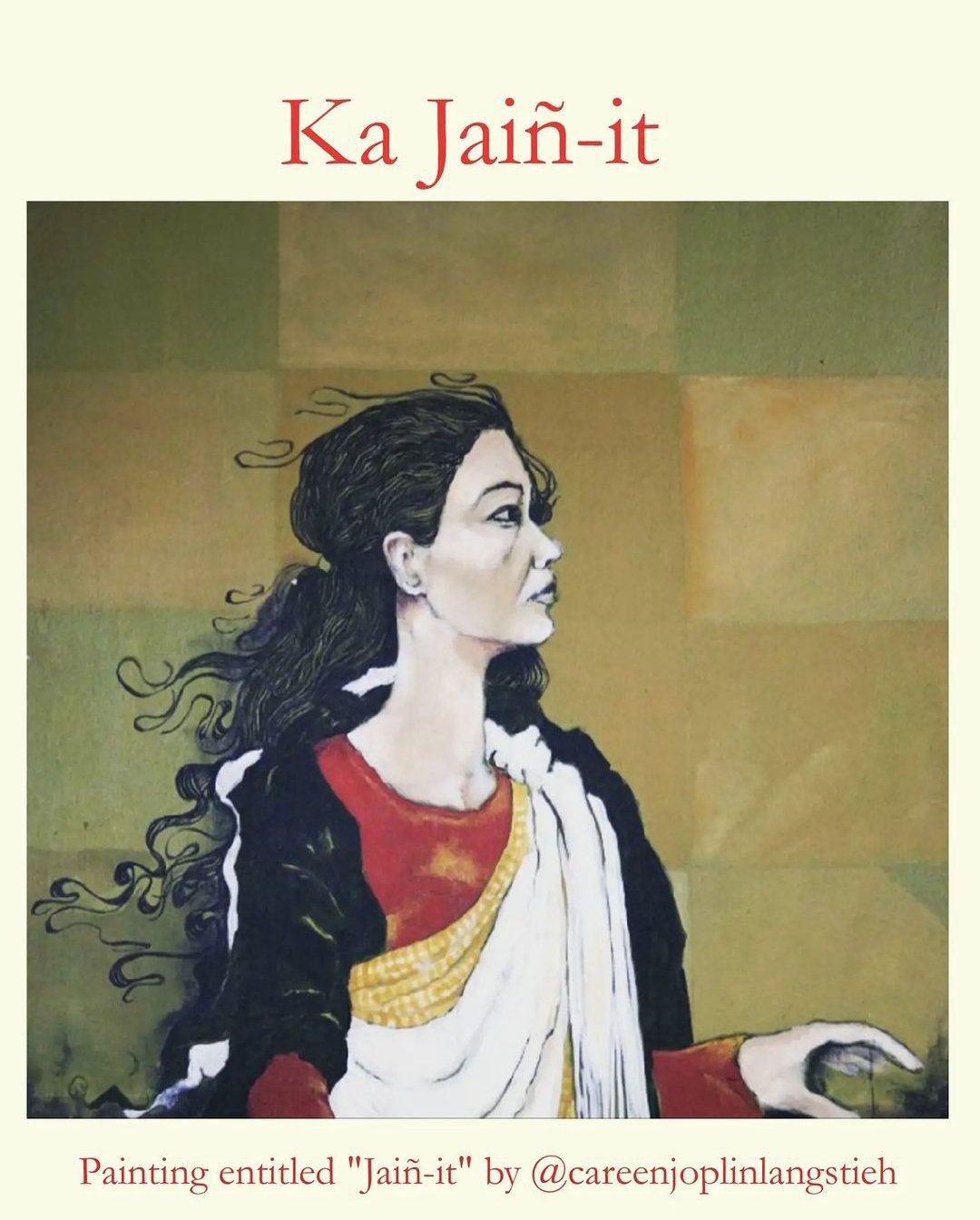
Thank you Kong @careenjoplinlangstieh for allowing us to use your artwork! 🙏🙏