Blog

  • Ka Ktien by Careen J. Langstieh

    International Day of the World's Indigenous Peoples 2023

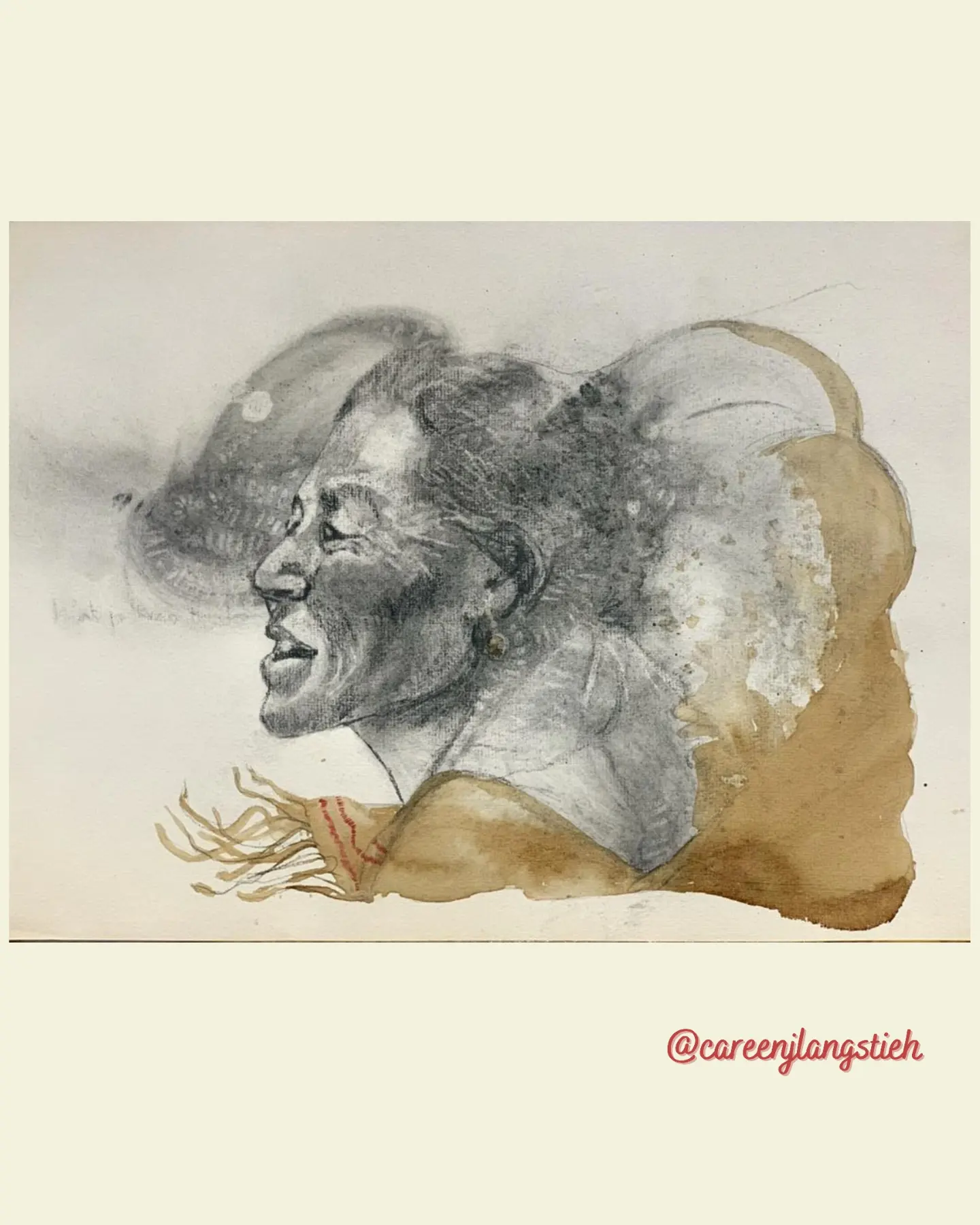
    Khublei Shibun Kong @careenjoplinlangstieh na ka bynta ka jingdro dur rnga kaba itynnat bad ka jingthoh kaba pynpuson shaphang ka ktien kaba ngi khlei man la ka sngi ha ki parabriew. 😄🙏

    Thank you Kong @careenjoplinlangstieh for this thought-provoking charcoal art and also your grandmother's teachings on the power of the spoken word. The belief in the value and effect of the spoken word is well-held by the Khasi community. 😄🙏

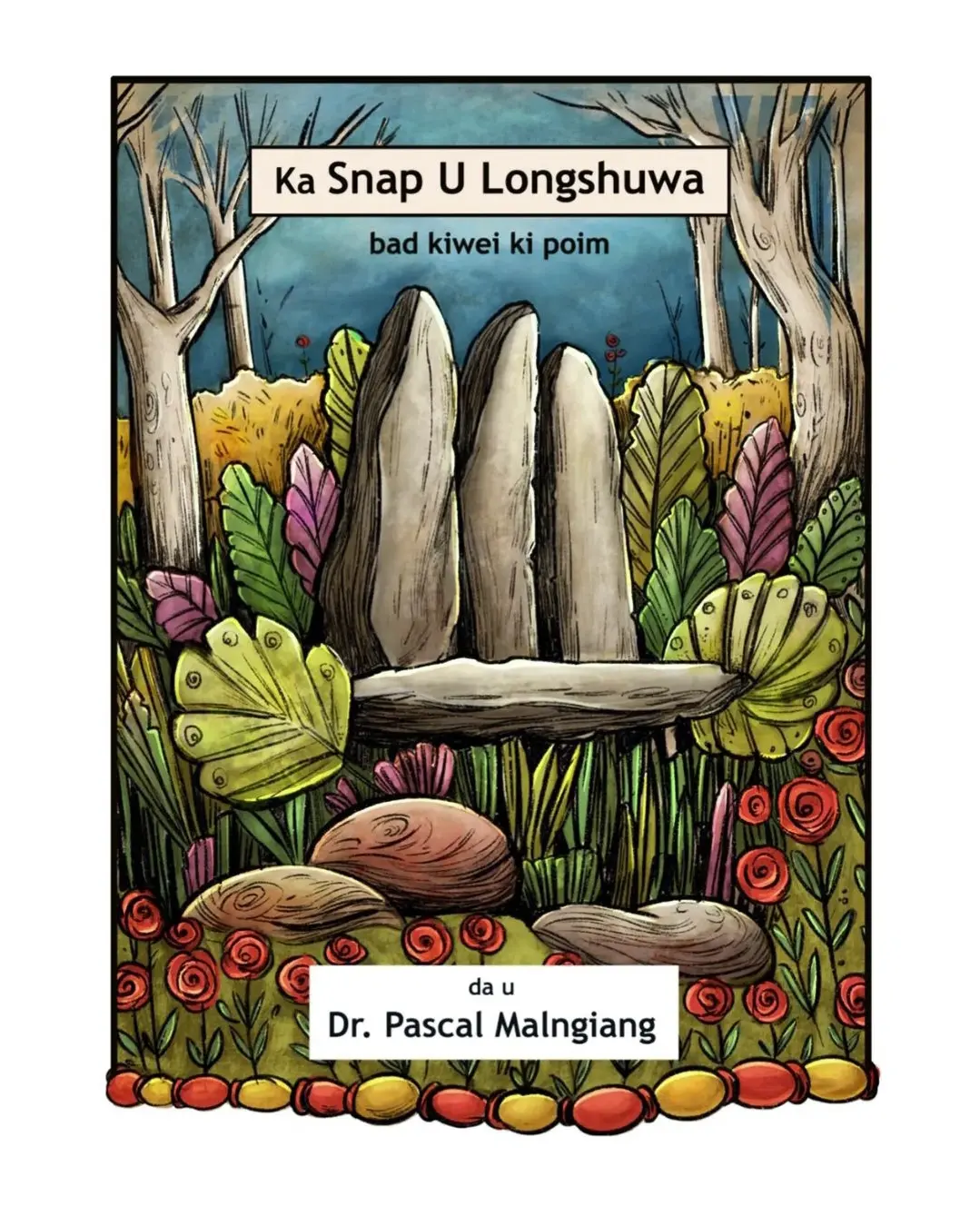
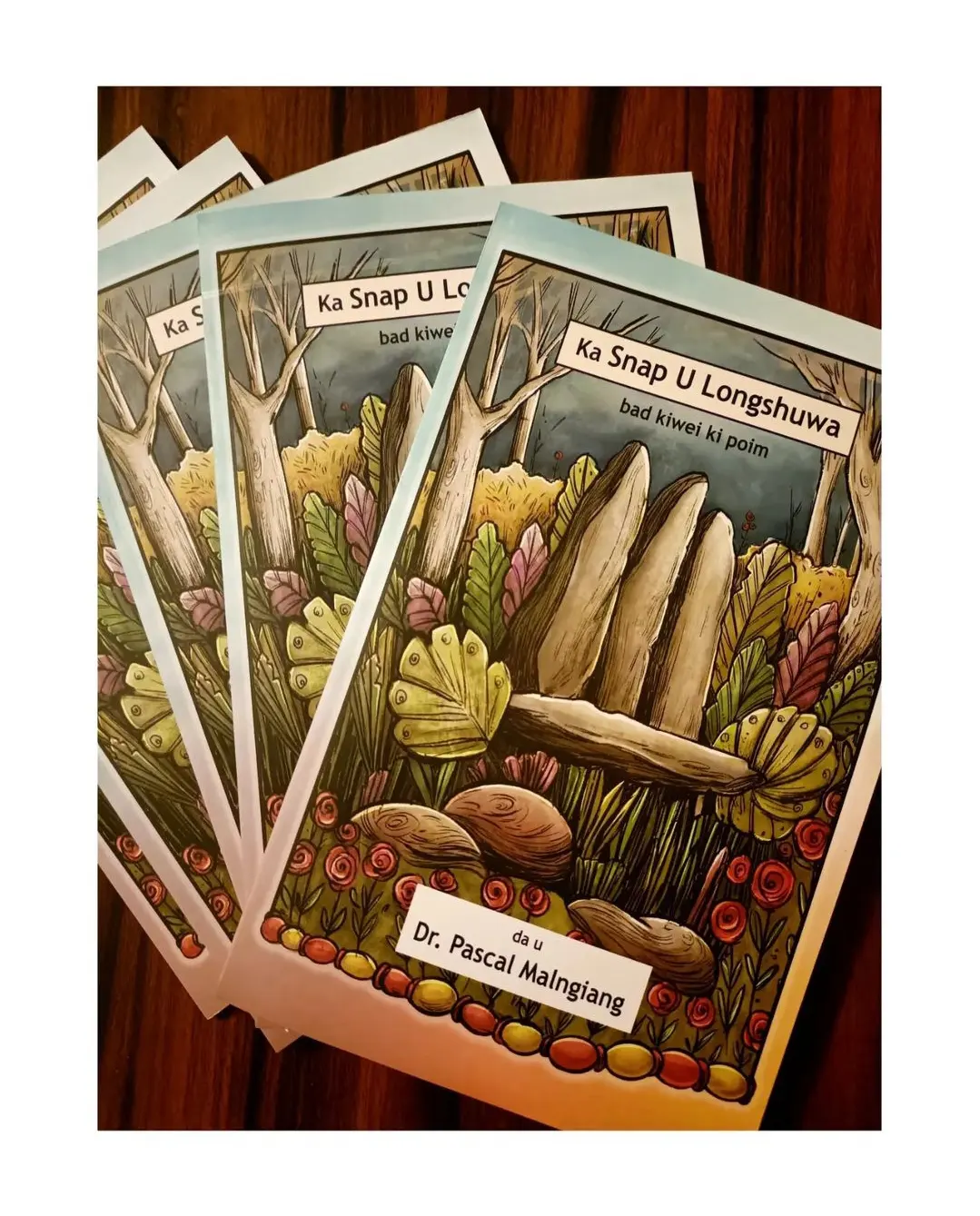
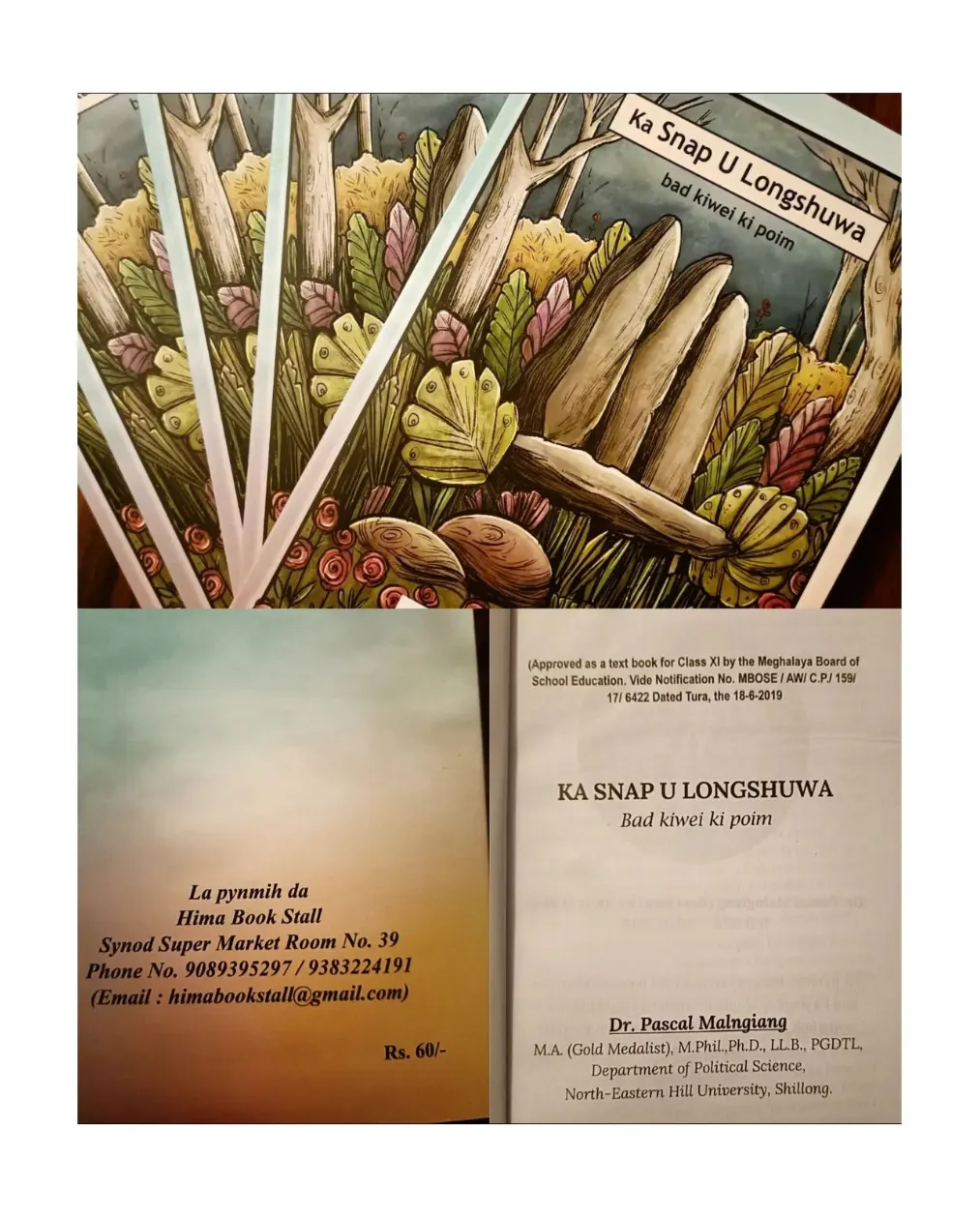
  • Ki Snap u Longshuwa bad kiwei ki poim da i Dr. Pascal Malngiang

    Khublei Shibun @mario_pathaw ba phi la phah ïa kine ki dur jong ka kot "Ki Snap U Longshuwa" ba la thoh da i Dr. Pascal Malngiang.

    Mario says: I illustrated one of my father's books "Ka Snap u Longshuwa". It has been approved as a text book for class XI by The Meghalaya Board of School Education. Published by Hima Book Stall, Synod Super Market, Motphran.

  • Herbarium Sheet Series 1: Tree Tomato/ Sohsaw Dieng/ Sohbaingon Dieng

    HERBARIUM SHEET SERIES 1

    by @micromotives

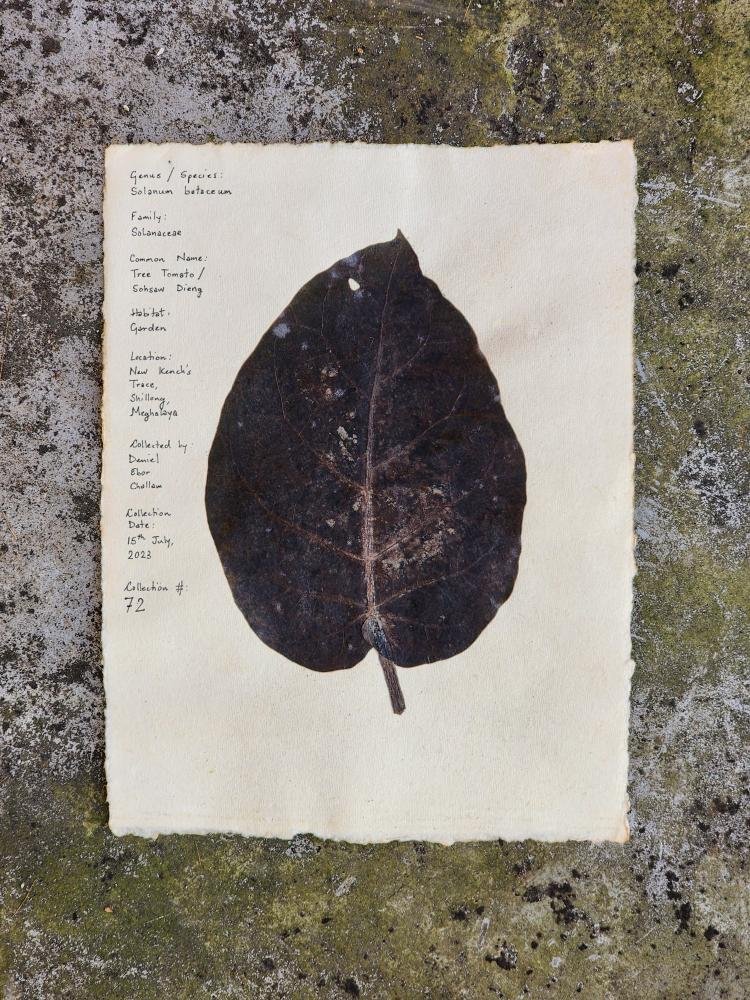
    Kum shi bynta jong ka jingrakhe ïa ka International Day of the World's Indigenous Peoples, kane ka dei ka herbarium sheet jong u sla Sohbaingon dieng ne u Sohsaw Dieng. Une u dei u jhur ba baroh ngi ju bang ban bam, uba ju ïoh ha ki bnai Risaw bad Naiwieng. 😄😋

    Genus/ Species: Solanum betaceum

    Family: Solanaceae

    Common Name: Tree Tomato/ Sohsaw Dieng

    Habitat: Garden

    Location: New Kenche's Trace, Shillong, Meghalaya.

    Collected by: Daniel Ebor Challam

    Collection Date: 15th July, 2023

    Collection#: 72

    Khublei Shibun @micromotives ïa kine ki herbarium sheet ki ban sa post ha kane ka taïew! 😃🙏🌱🍃

    As part of the celebration of International Day of the World's Indigenous Peoples, this is a herbarium sheet of the leaf of Tree Tomato or Tamarillo sent by @micromotives. The Khasi community eats tree tomato as a salad with onion and chilli after roasting it over the fire. It is usually available in the months of October and November.

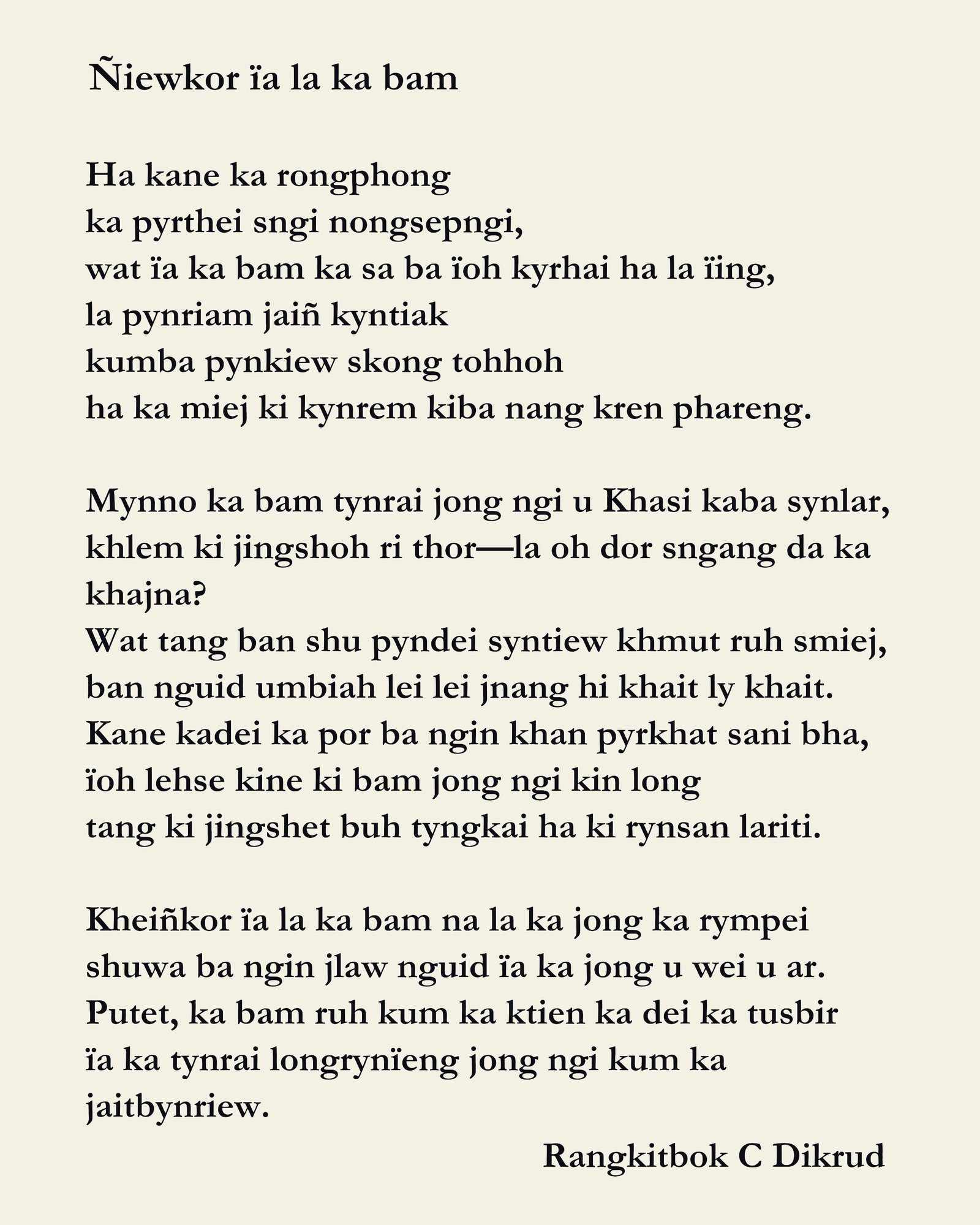
  • Ñiewkor ïa la ka bam da i Rangkitbok Dikrud

    Ñiewkor ïa la ka bam

    Ha kane ka rongphong

    ka pyrthei sngi nongsepngi,

    wat ïa ka bam ka sa ba ïoh kyrhai ha la ïing,

    la pynriam jaiñ kyntiak

    kumba pynkiew skong tohhoh

    ha ka miej ki kynrem kiba nang kren phareng.

    Mynno ka bam tynrai jong ngi u Khasi kaba synlar,

    khlem ki jingshoh ri thor—la oh dor sngang da ka khajna?

    Wat tang ban shu pyndei syntiew khmut ruh smiej,

    ban nguid umbiah lei lei jnang hi khait ly khait.

    Kane kadei ka por ba ngin khan pyrkhat sani bha,

    ïoh lehse kine ki bam jong ngi kin long

    tang ki jingshet buh tyngkai ha ki rynsan lariti.

    Kheiñkor ïa la ka bam na la ka jong ka rympei

    shuwa ba ngin jlaw nguid ïa ka jong u wei u ar.

    Putet, ka bam ruh kum ka ktien ka dei ka tusbir

    ïa ka tynrai longrynïeng jong ngi kum ka jaitbynriew.

    -Rangkitbok C Dikrud

    Ha kane ka taïew ban poi sha ka International Day of the World's Indigenous Peoples kane ka dei ka poim Khasi kaba sngewtynnat!

    "Ñiewkor ïa la ka bam" ka dei ka poim Khasi ba la thoh da i @rangkitbok_c ✏️👏

    Ka dei ka poim kaba pher ha kaba ka phang pdeng ka dei shaphang ka bam Khasi bad ka jingpher bad jingkordor jong ka na kiwei pat ki jait bam. Lehse bun na ngi, ngi lah sngewbang ka bam Phareng tangba haba khatduh hi ka dei ka ja ïing i Mei kaba ngin wad 😄❤️

    Khublei Shibun @rangkitbok_c ba phi la ai lad ban sah dak ïa ka poim jong phi! U Blei un nang kyrkhu ïa ka sap ka phong jong phi!

    In the run up to the International Day of the World's Indigenous Peoples here is a relevant Khasi poem.

    "Ñiewkor ïa la ka bam" is an original Khasi poem written by @rangkitbok_c ✏️👏

    The poem speaks about the intrinsic value and worth of Khasi food in its simplicity and wholesomeness. Living in an age of instant food and fast food, our mouths may water with foreign cuisines but in the end we will search for home food made by our dearest Mei. 😄❤️
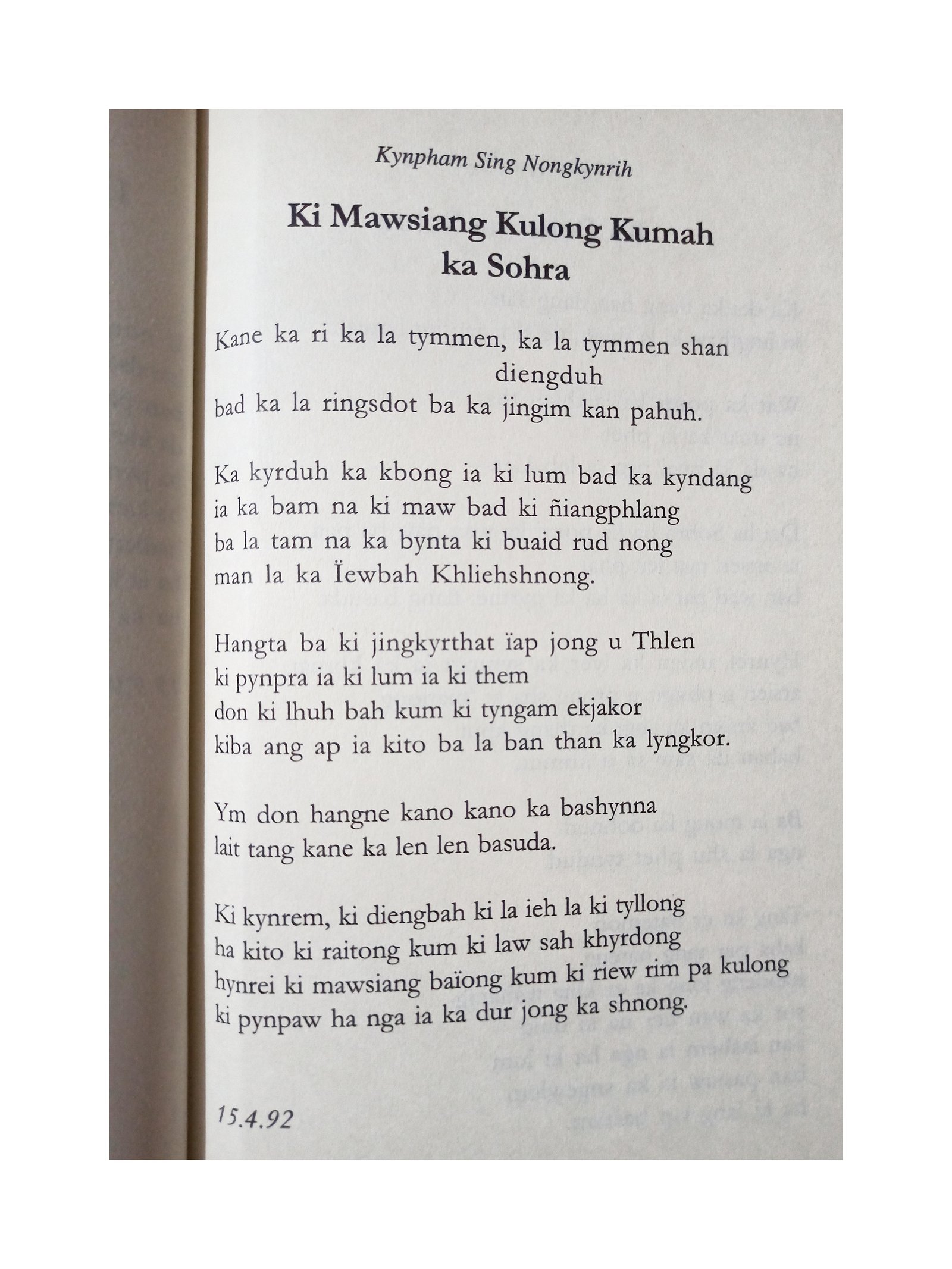
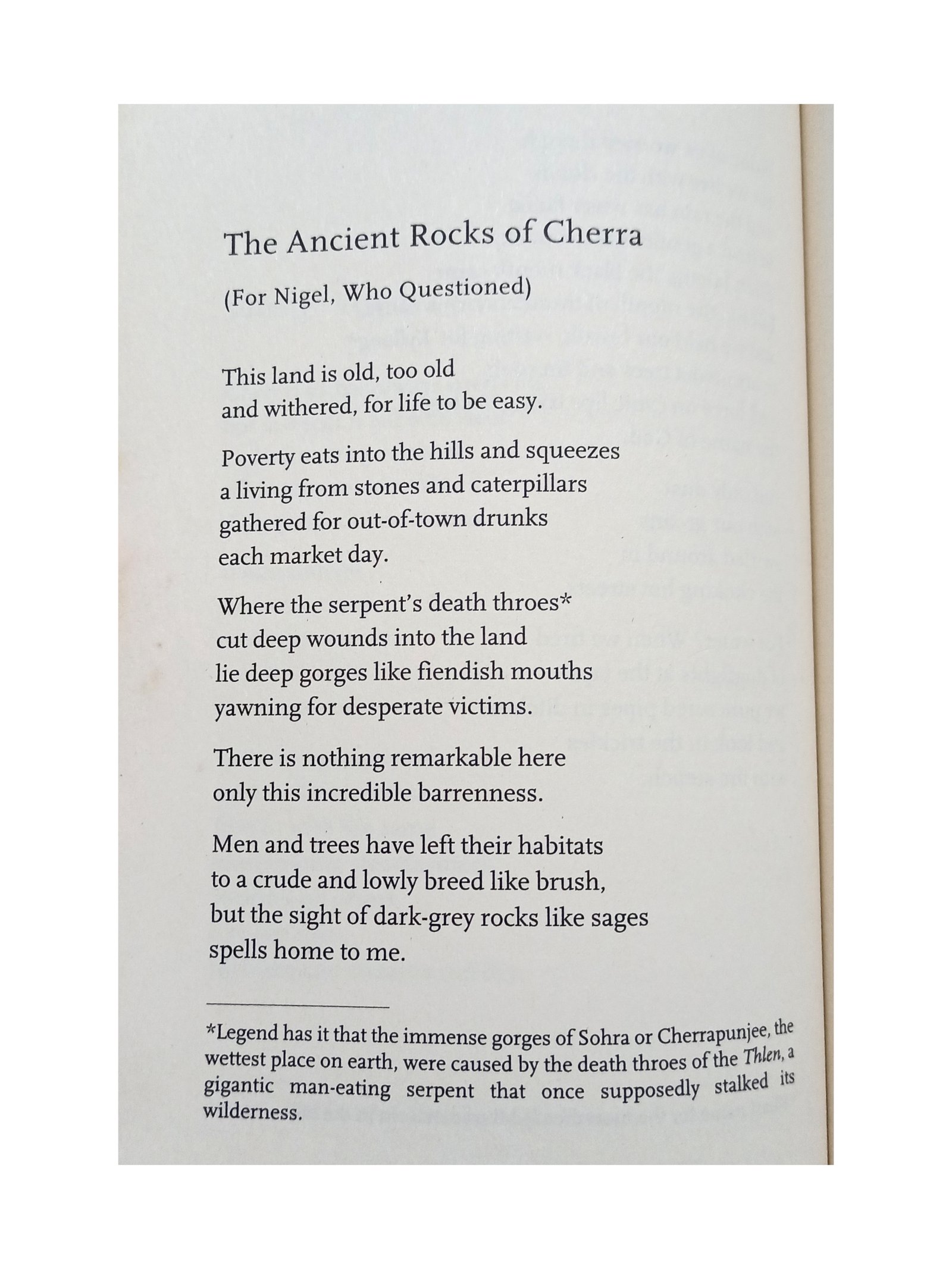
  • Ki Mawsiang Kulong Kumah Ka Sohra da i Kynpham Sing Nongkynrih

    Ka poitri "Ki Mawsiang Kulong Kumah Ka Sohra" na ka thup "Ki Mawsiang Ka Sohra" (2007) ba la thoh da i Babu Kynpham Sing Nongkynrih ka kren shaphang ka jingkylla kaba la wan ha ka shnong Sohra ha ki sngi mynta. Ki dei sa tang ki mawsiang ka Sohra kiba ïeng kynjreng kum ki dak ka jingkynmaw ïa ka ïing bad ïa ki por ki ïa kiba la leit.

    Ngi dap da ka jingsngewkmen ba ngin ïoh lad ban kren bad phylliew jingmut bad i Babu ha ka 2 tarik u Nailar ha @eveningclubshillong, ryngkat bad i @samuel.sawian bad i @daia.risa ban tip ïa ka jingïaid lynti jong i kum u nongthoh Khasi uba la pawnam ha ri India bad shabar ka ri India ruh.

    Khublei Shibun @pyrta.collective ba phi la pynkhreh kum ïa kane ka jingïakynduh! 😄🙏

    The poem "The Ancient Rocks of Cherra" from "The Yearning of Seeds" (2011) written by Kynpham Sing Nongkynrih speaks of the changes that Sohra/ Cherra has undergone in these present times. It is only the rocks and boulders of Sohra who stand constant as symbols of the memory of home and the days that have gone by.

    We are happy to be getting the opportunity to talk to Bah Kynpham Sing Nongkynrih on the 2nd of August in @eveningclubshillong together with @samuel.sawian and @daia.risa to know more about his journey as a Khasi writer who is well known in India and abroad too.

    Thank you @pyrta.collective for organising such an occasion! 😄🙏

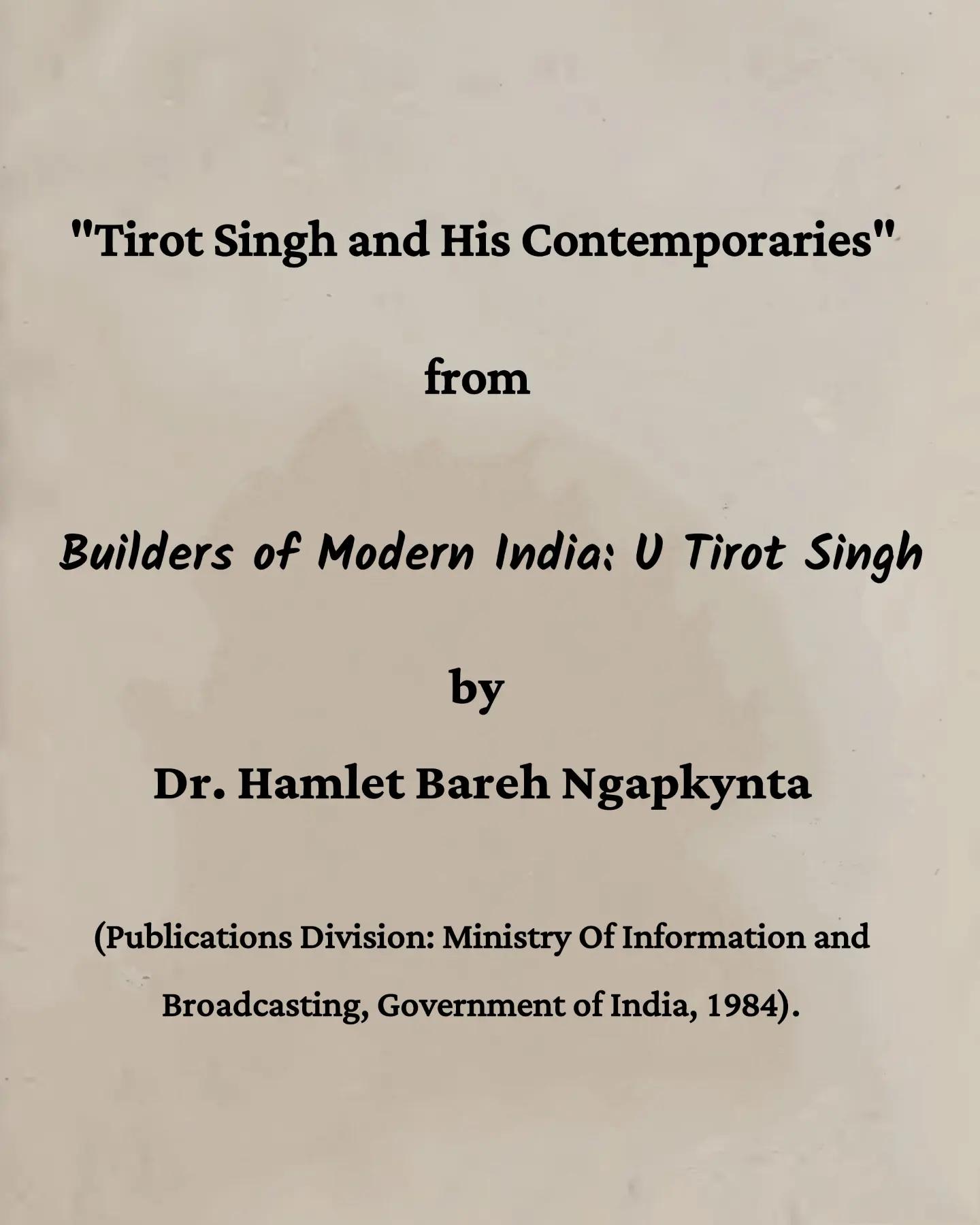
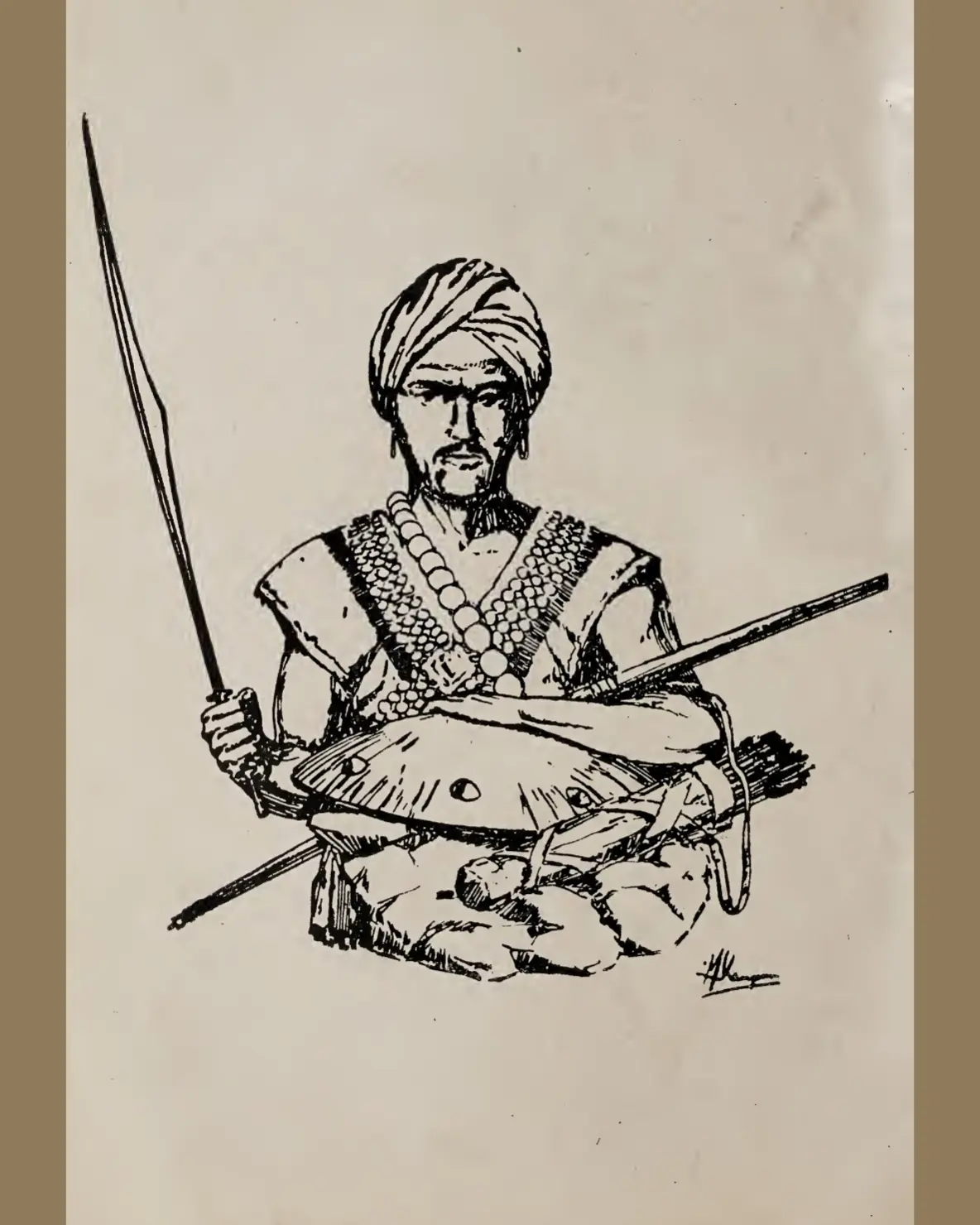
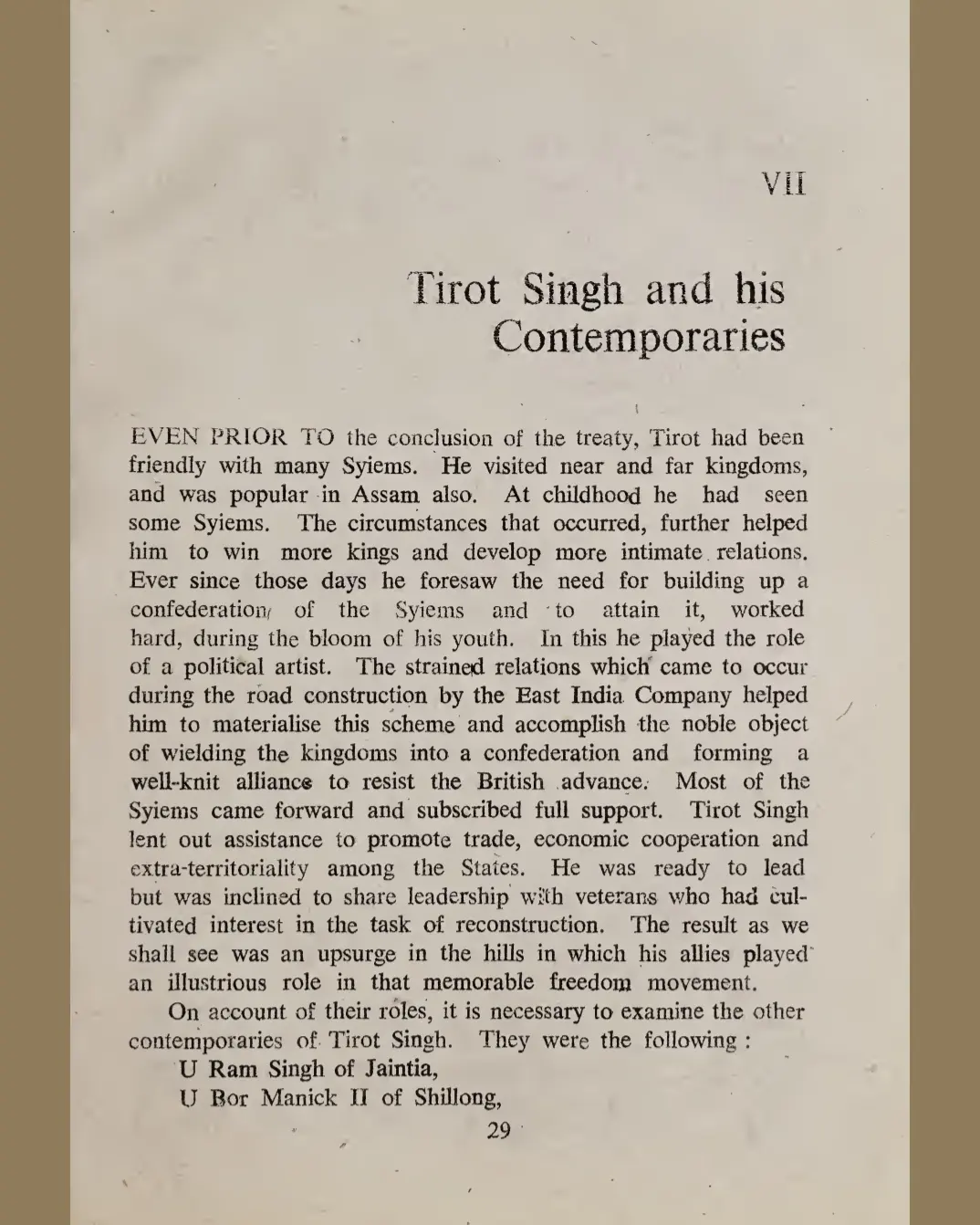
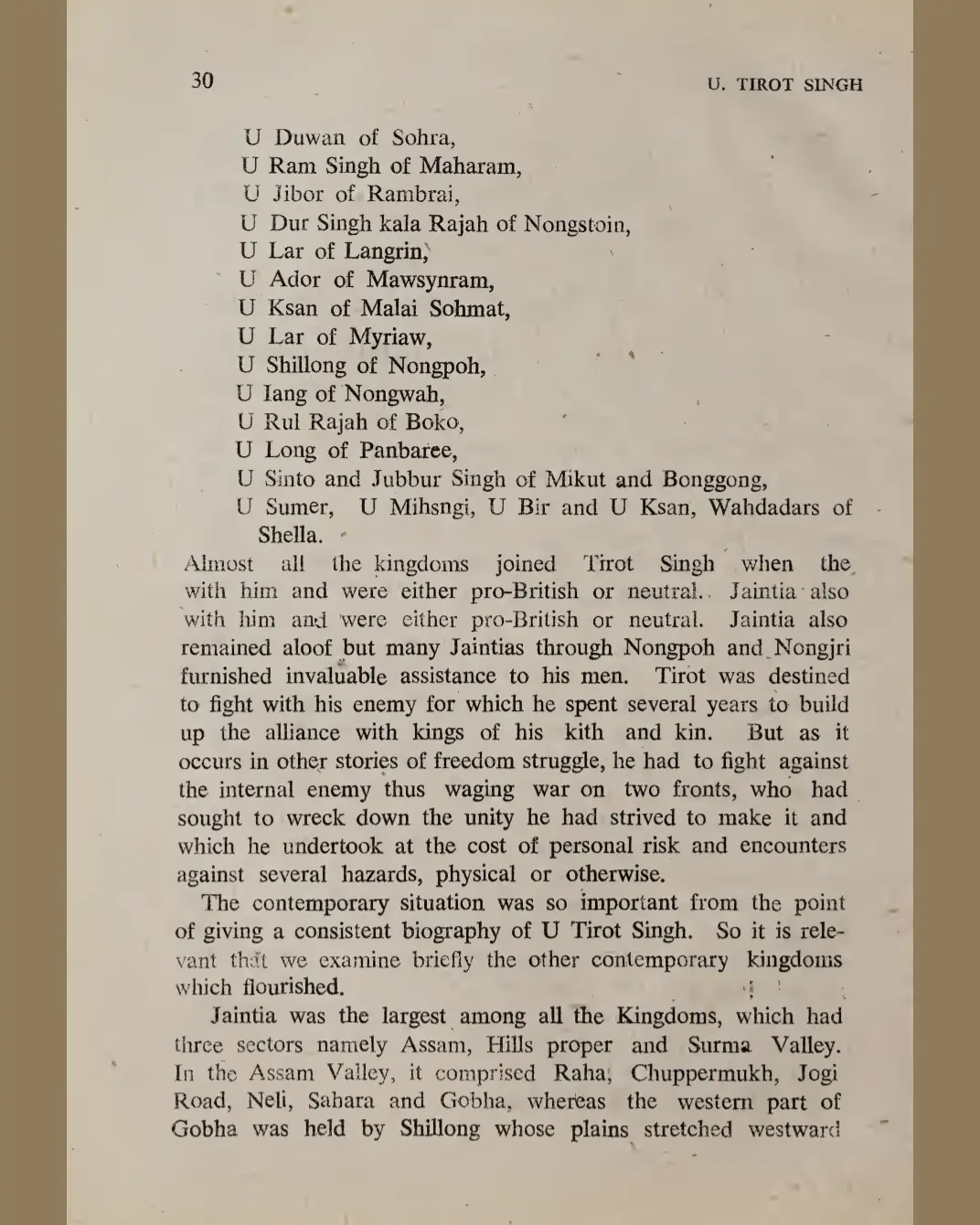
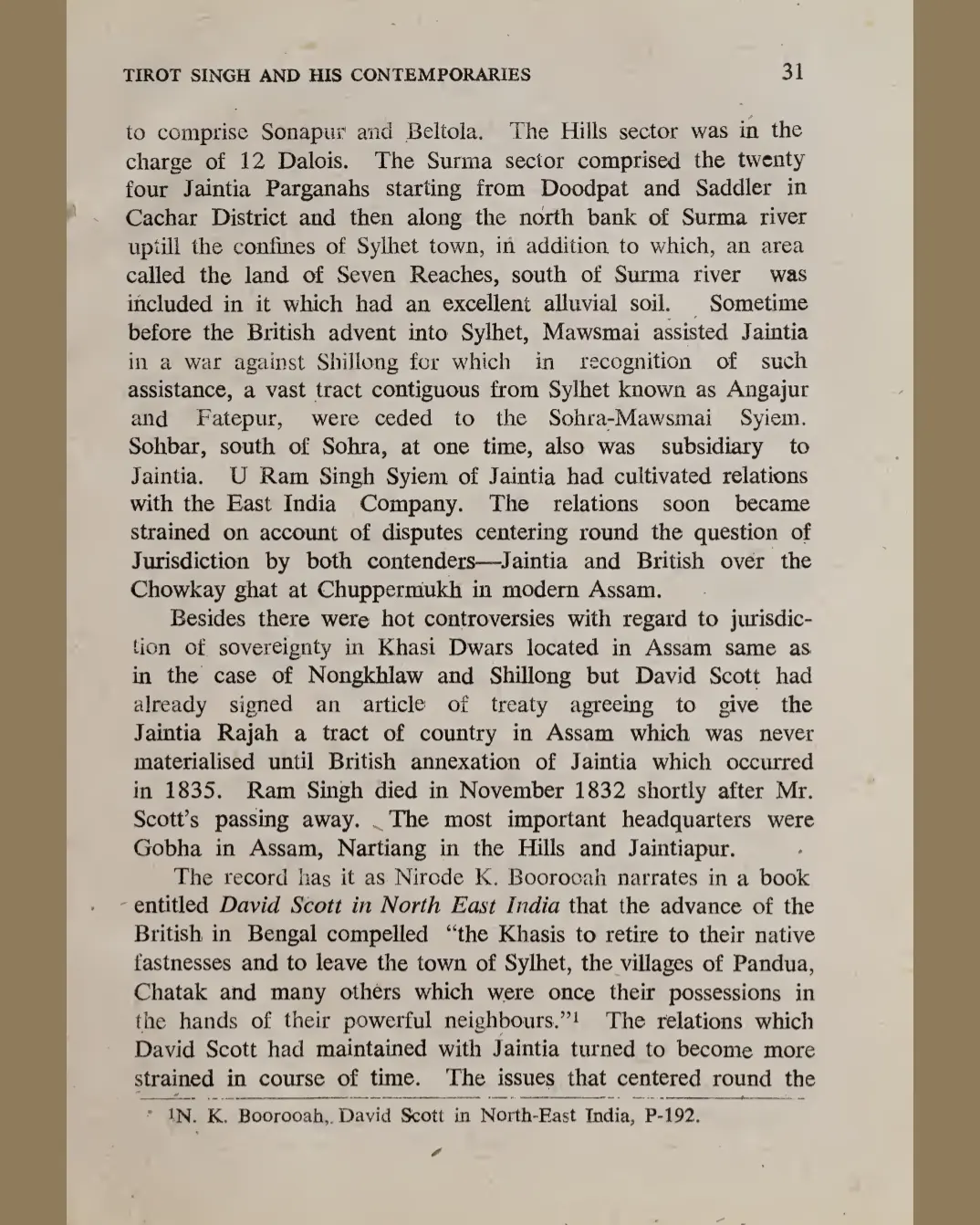
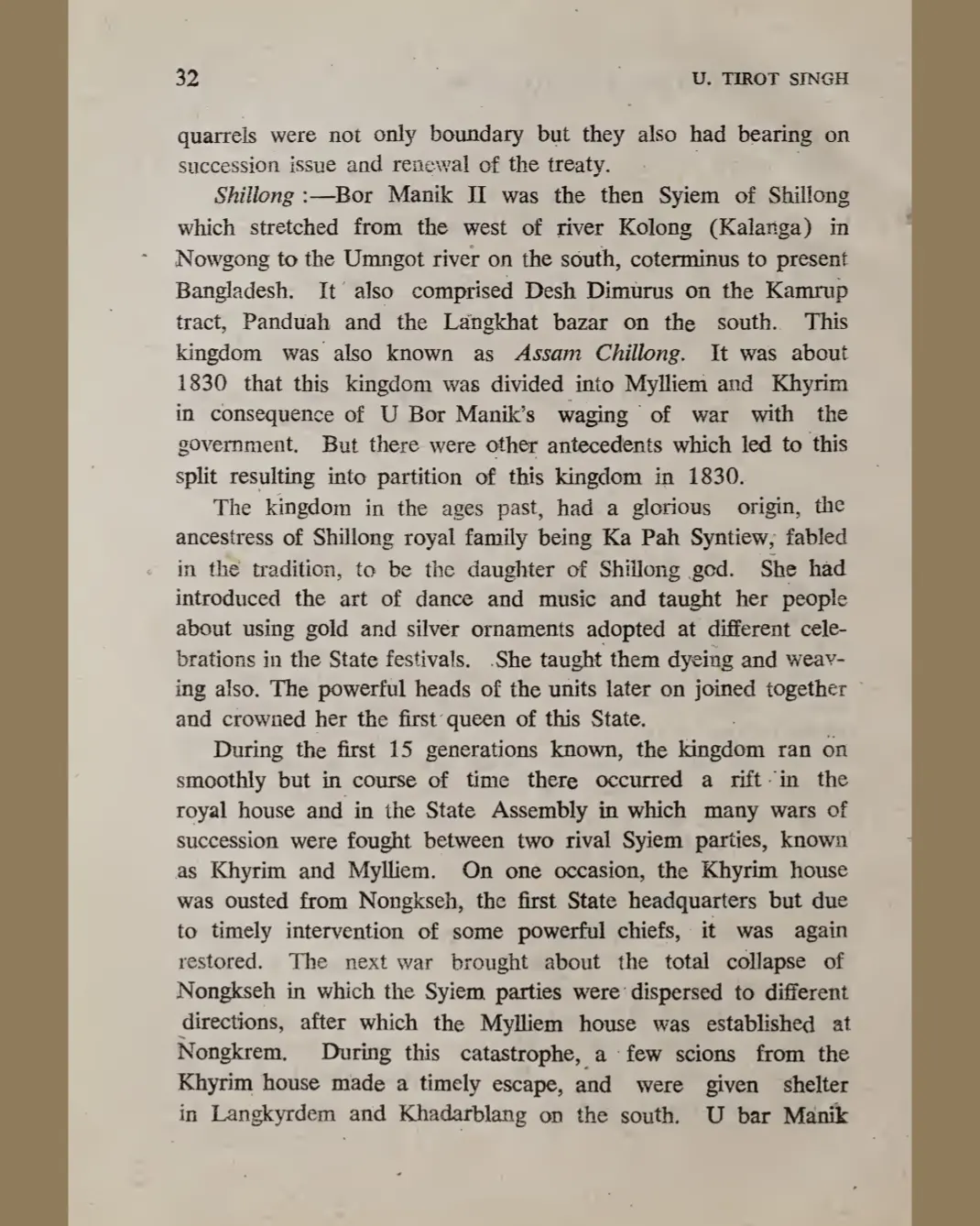
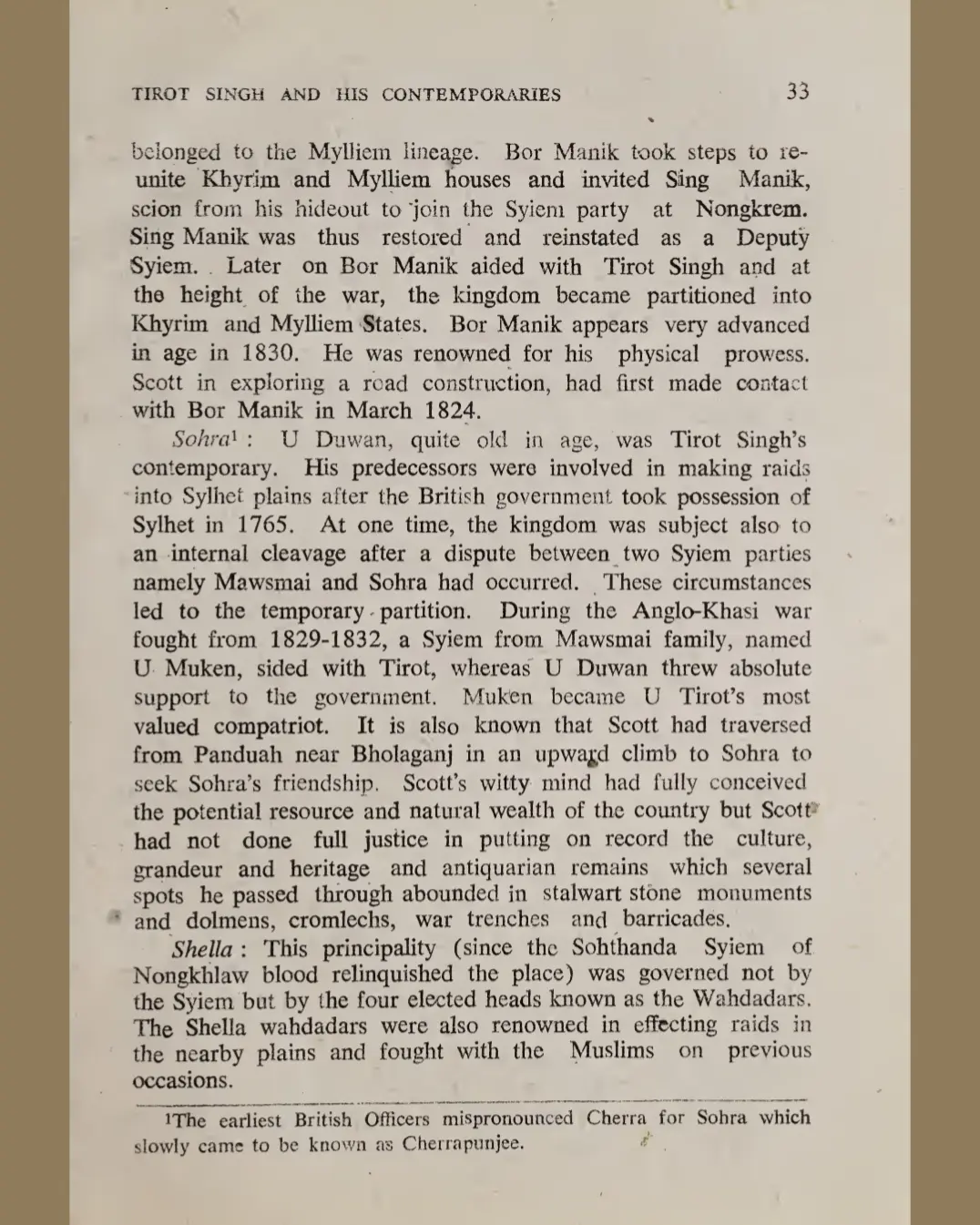
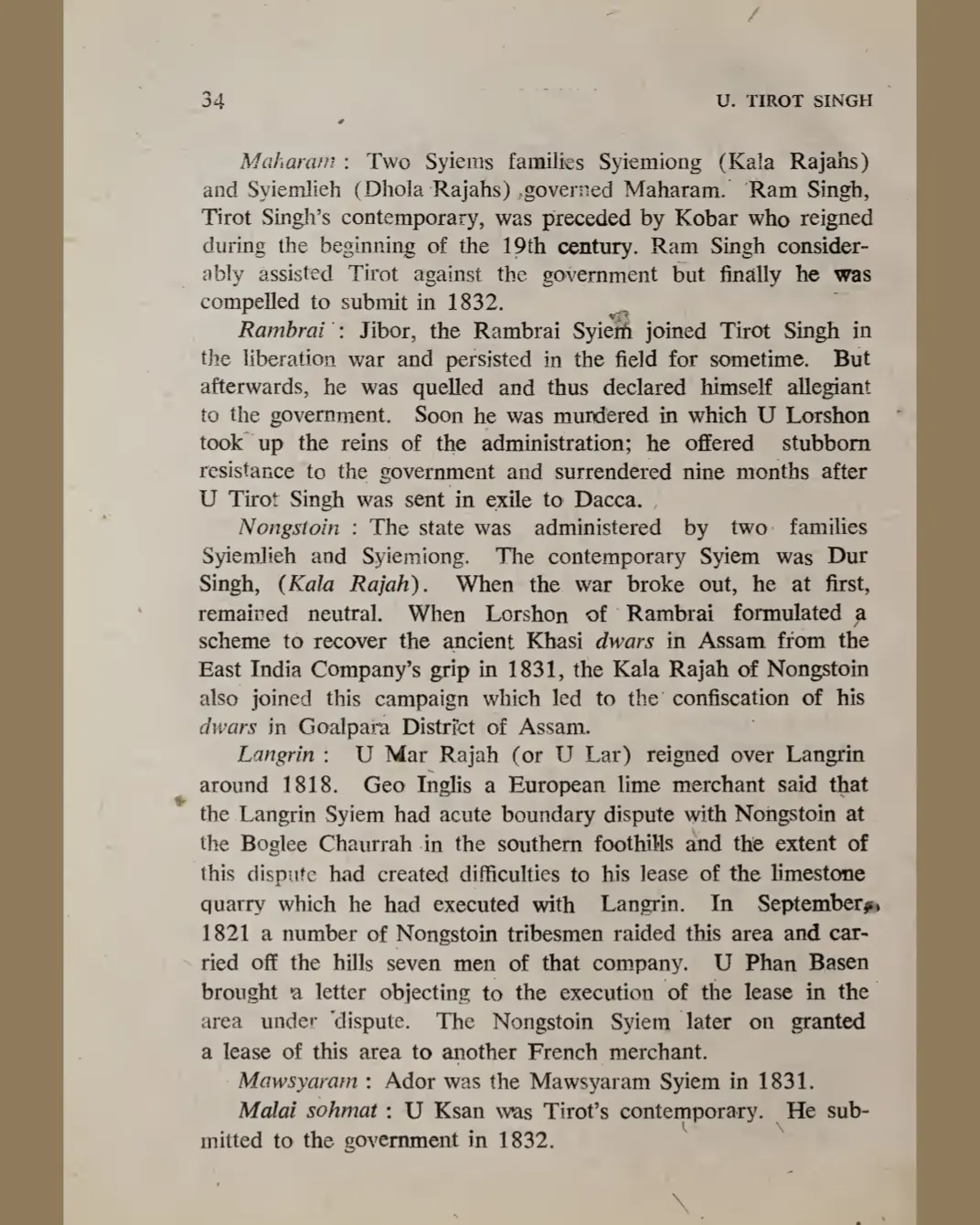
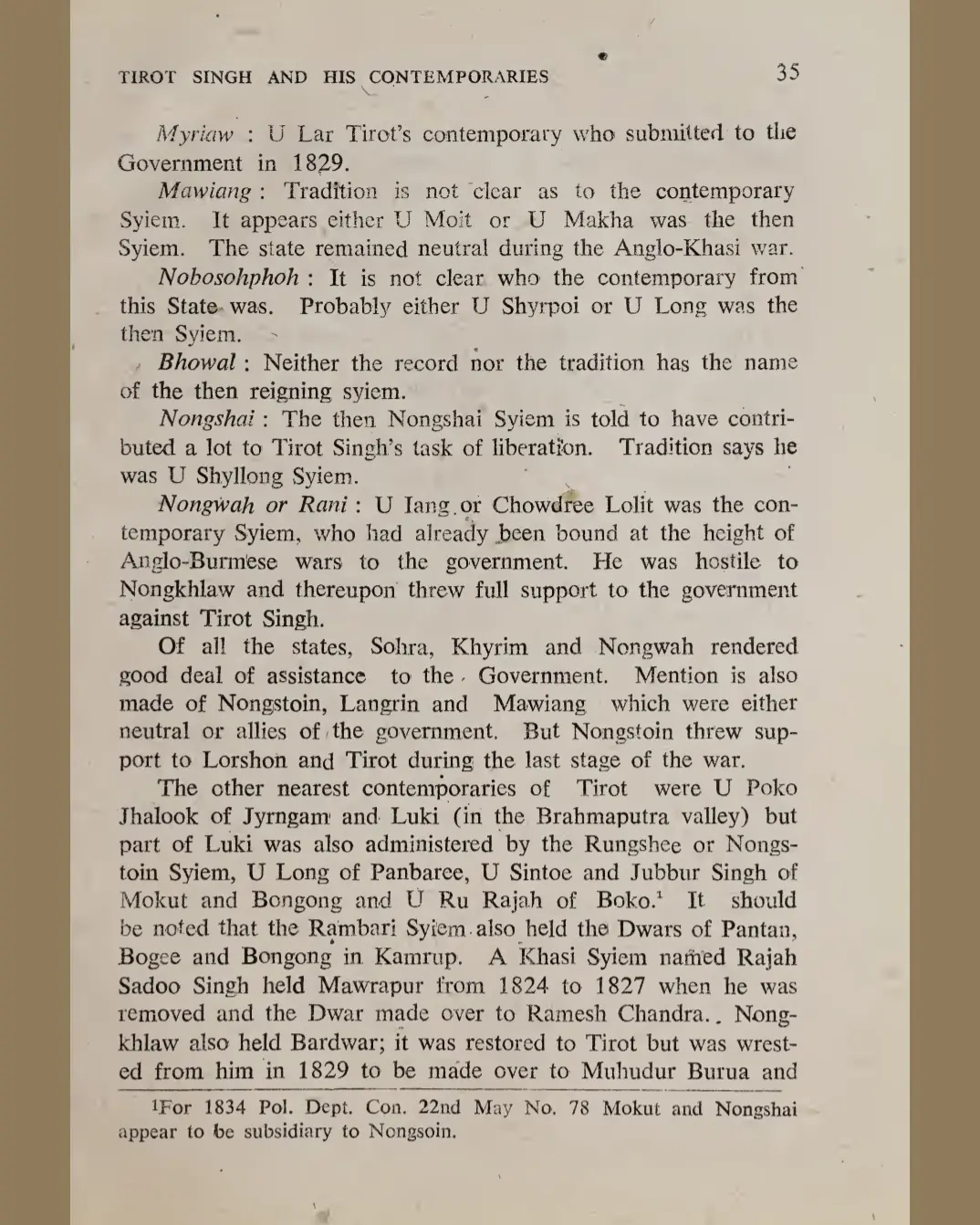
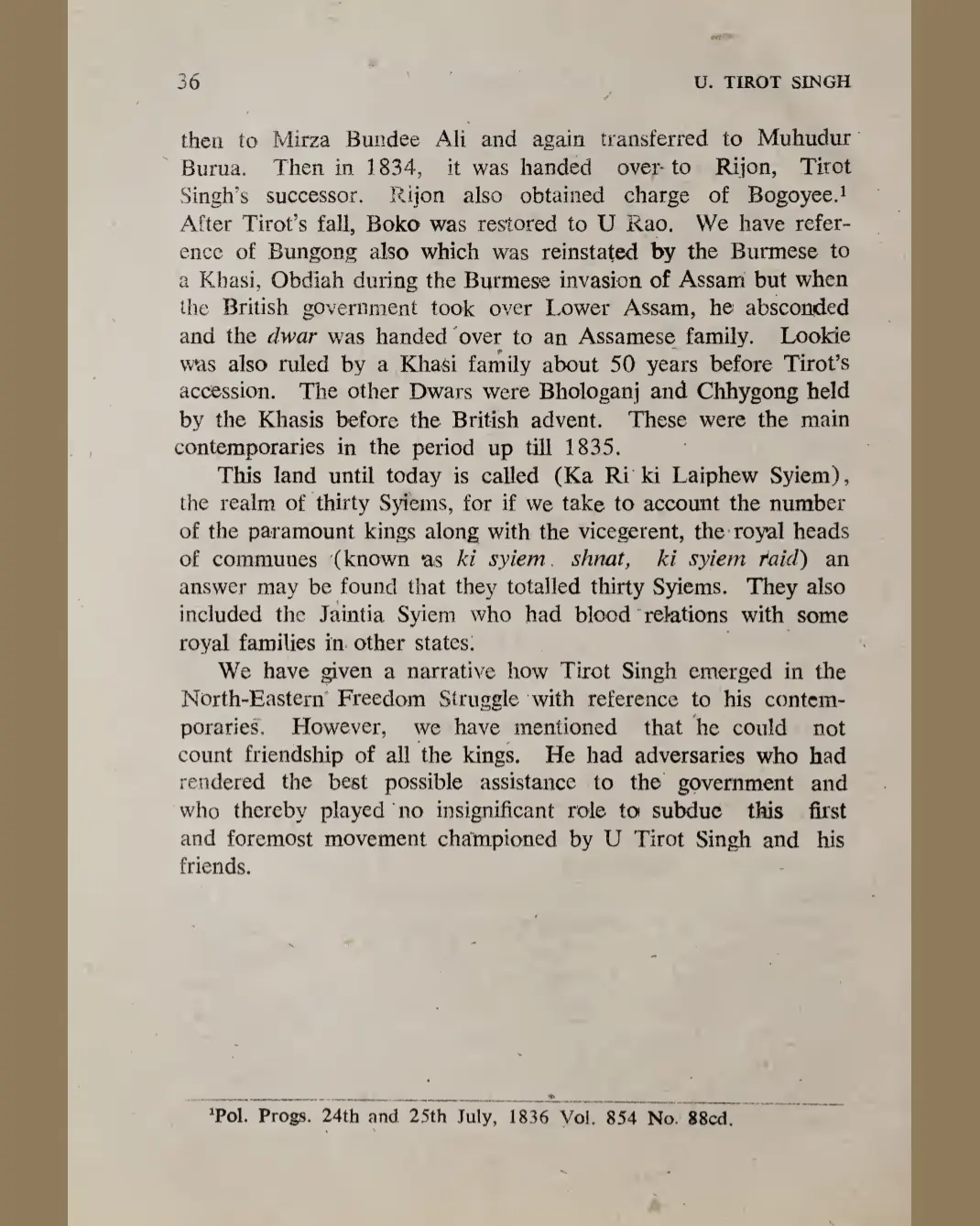
  • U Tirot Sing and his contemporaries by Dr. Hamlet Bareh Ngapkynta

    Mynta ka sngi ka 17 tarik u Naitung kaba dei ka lyngkhuh sngi ïap jong u Syiem Tirot Sing ngin pule ïa ka lynnong "Tirot Singh and His Contemporaries" kaba la sot na ka kot 𝘉𝘶𝘪𝘭𝘥𝘦𝘳𝘴 𝘰𝘧 𝘔𝘰𝘥𝘦𝘳𝘯 𝘐𝘯𝘥𝘪𝘢: 𝘜 𝘛𝘪𝘳𝘰𝘵 𝘚𝘪𝘯𝘨𝘩 (1984) ba la thoh da i Dr. Hamlet Bareh Ngapkynta.

    Kane ka lynnong ka batai shaphang kiwei pat ki syiem kiba im ha kajuh ka por bad u Syiem Tirot Sing bad kumno ba don na ki kiba la ai jingïarap ïa u ha ka jingïaleh pyrshah ïa ka sorkar Phareng.

    Ka long kaba sngewtynnat bad sngewbynnud ruh ban tip shaphang ki hima jong ki Syiem Khasi-Jaiñtia ha kito ki por, ba ki pud jong ki, ki poi shaduh ka jylla Assam shatei bad shaduh ka ri Bangladesh shathie.

    .

    .

    .

    .

    .

    Today the 17th of July, which is Tirot Sing Day, we read the chapter "Tirot Singh and His Contemporaries" from the book 𝘉𝘶𝘪𝘭𝘥𝘦𝘳𝘴 𝘰𝘧 𝘔𝘰𝘥𝘦𝘳𝘯 𝘐𝘯𝘥𝘪𝘢: 𝘜 𝘛𝘪𝘳𝘰𝘵 𝘚𝘪𝘯𝘨𝘩 (1984) written by Dr Hamlet Bareh Ngapkynta.

    This chapter talks about the other kings who were living at the same time with u Syiem Tirot Sing and how they lent their help and support to him during the resistance against the British empire.

    It is interesting and also sad to know about the kingdoms of the Khasi-Jaiñtia kings in those days, which extended to the state of Assam in the north and the country of Bangladesh in the south.

  • Khasi words related to housing and construction

    Pipe – U Ktangnar

    Carpet – Khalisha

    Balcony/ Veranda – Ka Batsha

    Ladder – Ka Parnon/ Ka Pyrnon

    Lever – U Jympor

    Plinth – Ka Shawrot

    Kine ki dei khyndiat ki kyntien kiba ïa dei bad ka shna ïing shna sem ne kano kano ka jingshna! 📐🪓🪜🏠 Ba ngin tip baroh kam dei pait, baranda, jingkieng bad karpet 😂😂

    Here are some Khasi words associated with housing and construction! 🏠🪜🪓📐

  • Tala Mylliem

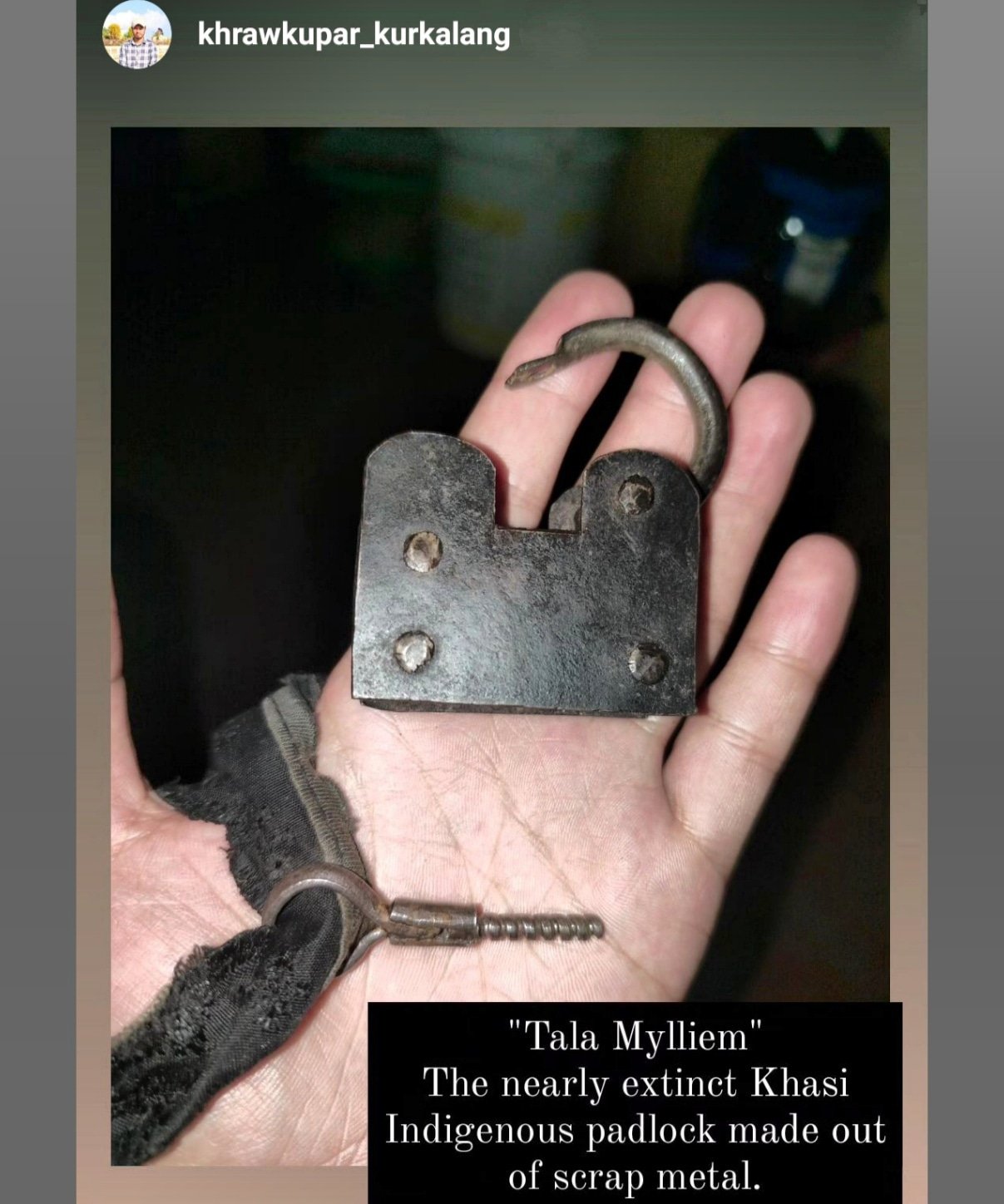
    Phi lah ju ïohi ne pyndonkam ïa ka "Tala Mylliem"? Kane ka tala ka dei ka tala kaba ju shna ha ri Khasi ha ka shnong Laitlyngkot, tangba mynta ym bun shuh kiba pyndonkam ïa ka. Ka Tala Mylliem ka pyni ïa ka jingstad bad jingtbit jong ki nongshna nar Khasi ha kaba pynwan dur ïa ka. Mynta kane ka tala ka la long kum ka jingbuh tyngkai ha ki ïing ki sem jong ngi. Shisha ka dei ka matti kaba kynsai jong ki longshuwa manshuwa jong ngi. ⛏️⚒️🗝️🔏

    Khublei Shibun @khrawkupar_kurkalang ba phi la phah ïa kane ka dur! 😄🙏

    "Ka Tala Mylliem" or the Mylliem Lock is an indigenous lock made from scrap metal. The lock with its particular look and coil-design key is testament to the skill and knowledge of Khasi ironsmiths. The lock which has its origins in the village of Laitlyngkot now adorns people's houses as a showpiece or a souvenir. This is another piece of the daily life of Khasis in the past which occupies a special position in our history. 🔏🗝️⛏️⚒️

  • Ïoh motion

    The phrase "Ïoh motion" is an example of a humorous Khasi colloquialism where the Khasi word "Ïoh" has been combined with the English word "motion".

    "Ïoh" means to get and "motion" (literally momentum) symbolically refers to the motivation for something. "Ïoh motion" may be described as a sense of enthusiasm and the impetus a person feels in order to do something. For instance, feeling happy and motivated after a good conversation or after having a delicious meal 😂😂 Thus, "Ïoh motion" is usually associated with doing and completing a task at hand.

    In a Khasi sentence, it may be used thus:

    "Ani hadien ba ïa kren bad i Pa, nga ïoh motion ban pyndep syndon ïa ka shna kali."

    "Ïoh motion" is an interesting example of "Khalish", the combination of English and Khasi, in a way that the English is modified to suit the Khasi language.

    It is interesting how the merging of indigenous languages with English is happening around the world and shows the development and evolution of language. For Shillong, Meghalaya this is present mainly in urban areas where people use English daily in their communication with others.

    Khalish in particular leads to funny phrases and jokes which have a distinct ring and flavour to them. Though there will be many critiques, this phenomenon is here to stay and seems inevitable in the evolution of language.

  • “Sait” – Khasi Thesaurus

    Ki Bun Jait Ki Sait

    Sait – Wash, mostly in terms of clothes

    Khlieng – Wash, mostly in terms of utensils

    Phler – Soap rinse

    Sawar – Plain water rinse

    Synreit – Sprinkle

    Sa shisien na ka Khasi Thesaurus ngin peit sa ïa ka ktien "sait" bad kiwei kiwei ki kyntien kiba ïahap jingmut bad kane ka ktien.

    Phi shait ïohsngew ïa ka kyntien "kabar" kaba syriem jingmut bad ka "sawar"? Ka dei ka ktien na ki thaiñ Smit bad Nongkrem.

    "Sait" or wash is another Khasi word which has synonyms which echo the use of water but in different ways.

    🟡 English translation by @speakyourroots