Tag: khasilanguageconservation

  • Dih ne nym dih

    Ha kawei ka sngi don uwei u briew na nongkyndong ba leit shim dawai sha sor. Ynda u doktor u la kynduh bad eksamin ïa u, u la batai ba u dei ban dih ynda la dep bam ja miet. Te uta u briew u la lyngngoh lyngaiñ ba kumno un dih da la dep bam ja ïoh um ïoh kali shuh. Katta ruh u sngap jar bad u shong beit hangta ha dukan dawai haba don u doktor. Te u doktor pat u peit lyngngoh ïa u namar ba um leit shuh katno katno ruh. Uta u briew u ong: "Ngan dih noh doktor?" U doktor u ong "Em dih da dep bamja". Phewse u bapli da ka ktien shnong lajong "dih" mut "leit noh". U doktor pat u sngewthuh ba dih mut ban dih noh ka dawai. Hangta ka jingthamula te ka bym nang batai namar u nongkyndong u ïeng ban mih noh u doktor pat u ong em wat pat dih.

    Ka dei na ka ktien shnong aïu ka kyntien "dih"?

    Khublei Shibun @czmylliem ba phi la phah ïa kane 😂😂

  • Kynmaw

    How do I explain the word? "Ka ktien".

    Say it. Out loud. Ka ktien. The first, a short, sharp thrust of air from the back of your throat. The second, a lift of the tongue and a delicate tangle of tip and teeth.

    For I mean not what's bound by paper. Once printed, the word is feeble and carries little power. It wrestles with ink and typography and margins, struggling to be what it was originally. Spoken. Unwritten, unrecorded. Old, they say, as the first fire. Free to roam the mountains, circle the heath, and fall as rain.

    We, who had no letters with which to etch our history, have married our words to music, to mantras, that we repeat until lines grow old and wither and fade away. Until they are forgotten and there is silence.

    How do I explain something untraceable? The perfect weapon for a crime. Light as pine dust. Echoing with alibis. Conjuring out of thin air, the ugly, the beautiful, the terrifying.

    Eventually, like all things, it is unfathomable. So, how do I explain?

    Perhaps it's best, as they did in the old days, to tell a story.

    ……………………….

    I was asked recently, what's your favourite word in Khasi? Usually, I find "favourite" questions very difficult–favourite book, song, movie. So many, I reply helplessly, it's impossible to pick just one. But not this time. It came to me easily, immediately, and while there are many delicious words in Khasi (rympei, the hearth; 'lap praw praw, rain on a tin roof), this one is closest to my heart.

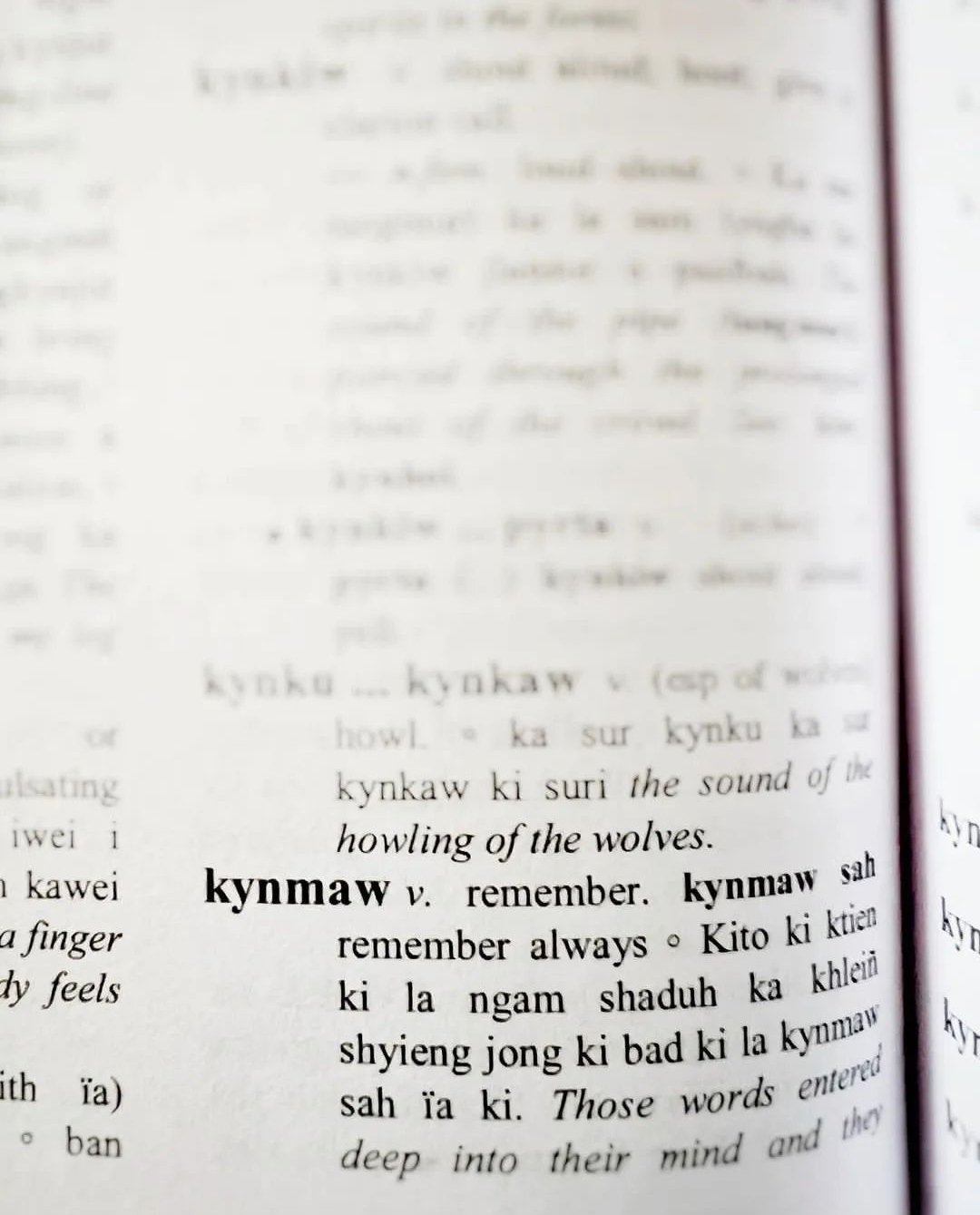
    Kynmaw.

    To remember.

    And not merely because of its rich and resonant meaning, but also because of its etymology. For the longest time, the people of these hills nourished an oral culture–one replete with song and story–and while there were attempts to "give" the languages here a script (using the Bengali alphabet), it was the British missionaries who succeeded. In particular a missionary named Thomas Jones, who travelled to Sohra in 1841, at a time when conversion to Christianity was at its slow beginning. What would help was to disseminate the word of God through the Bible–except how to publish an edition in a scriptless language?

    Today, in Meghalaya, is Thomas Jones Day. And so we remember him. For his diligence and good deeds, of which there were many–how complicated are our colonial histories!–but I choose to remember also how the languages here, at heart, are languages of the wind, the

    mountains, and waterfalls and forests. How they once sprung from land and tongue and remained untethered to page and pen and ink.

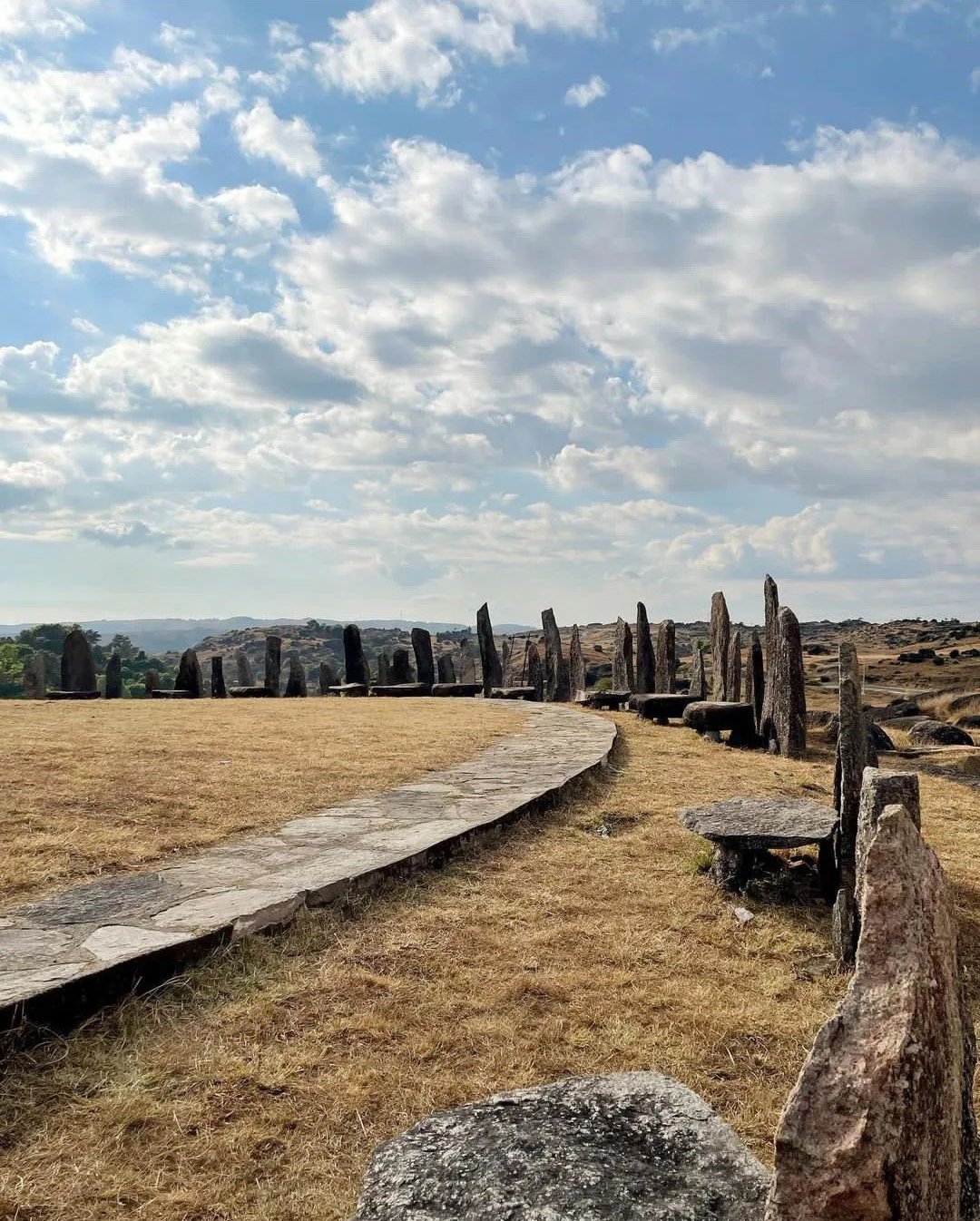
    How did we remember? Through song and story, of course, and stone. We computed our histories through stone–choosing to raise monoliths to mark lives and events and relationships. And so even our word for remember-kynmaw–means to "carry like stone". Here, remembering is not taken lightly. It is borne on our backs like stone–unwavering even in the face of (colonial) beliefs that the oral is light and frivolous and inauthentic. The spoken is as much true as the written. When we have no preservatory documents, remembering, to kynmaw, becomes all the more pressing, more important. The spoken does not forget."

    Khublei Shibun @janicepariat for your beautiful and profound thoughts! 🤗❤️🙏

    The era of the spoken word and of Khasi orality is vast, moving in the many sunrises and sunsets of history. This history which is our heritage pleads to be preserved as we move forward.

    As it is the course of things, we were given the Khasi alphabet by Welsh missionary, Rev. Thomas Jones. The Khasi alphabet has brought us to another chapter in Khasi orality, as our stories, teachings and values are transcribed onto paper. Yet as Janice Pariat has asserted, ban kynmaw ka long kaba kongsan, ban kynmaw ka long kaba kumba ngi dei ban long, namar ïa ka ktien la thaw, la shon nyngkong ha ki jylliew ka pyrkhat ka pyrdaiñ; la thaw la shon ïa ka ktien ha ki tyllun u thylliej bad ka shyntur. Kumba ki ong ki longshuwa, ka ktien kaba tam. Ka ktien ka long kaba maïan, ka ktien ka long kaba nylla!

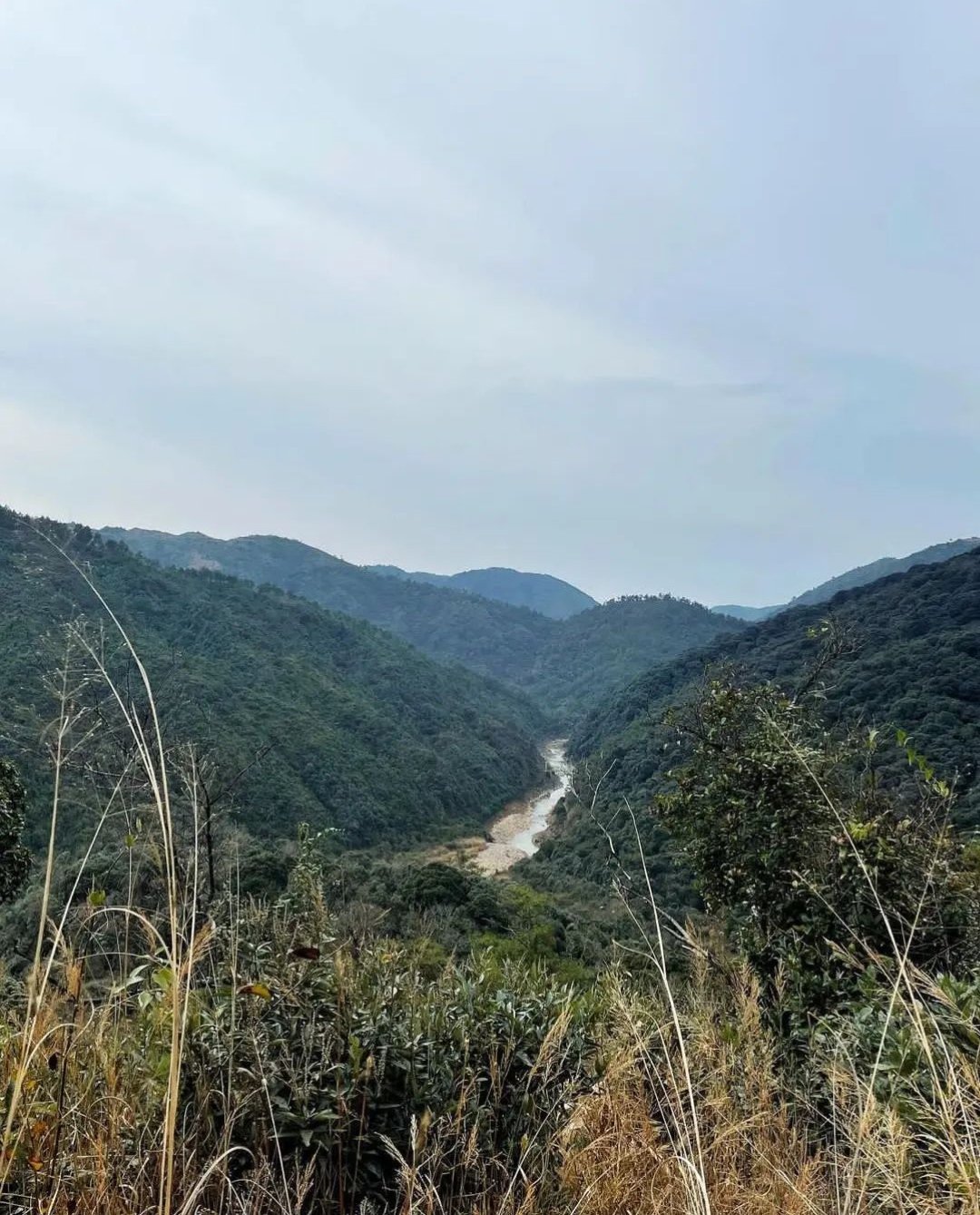
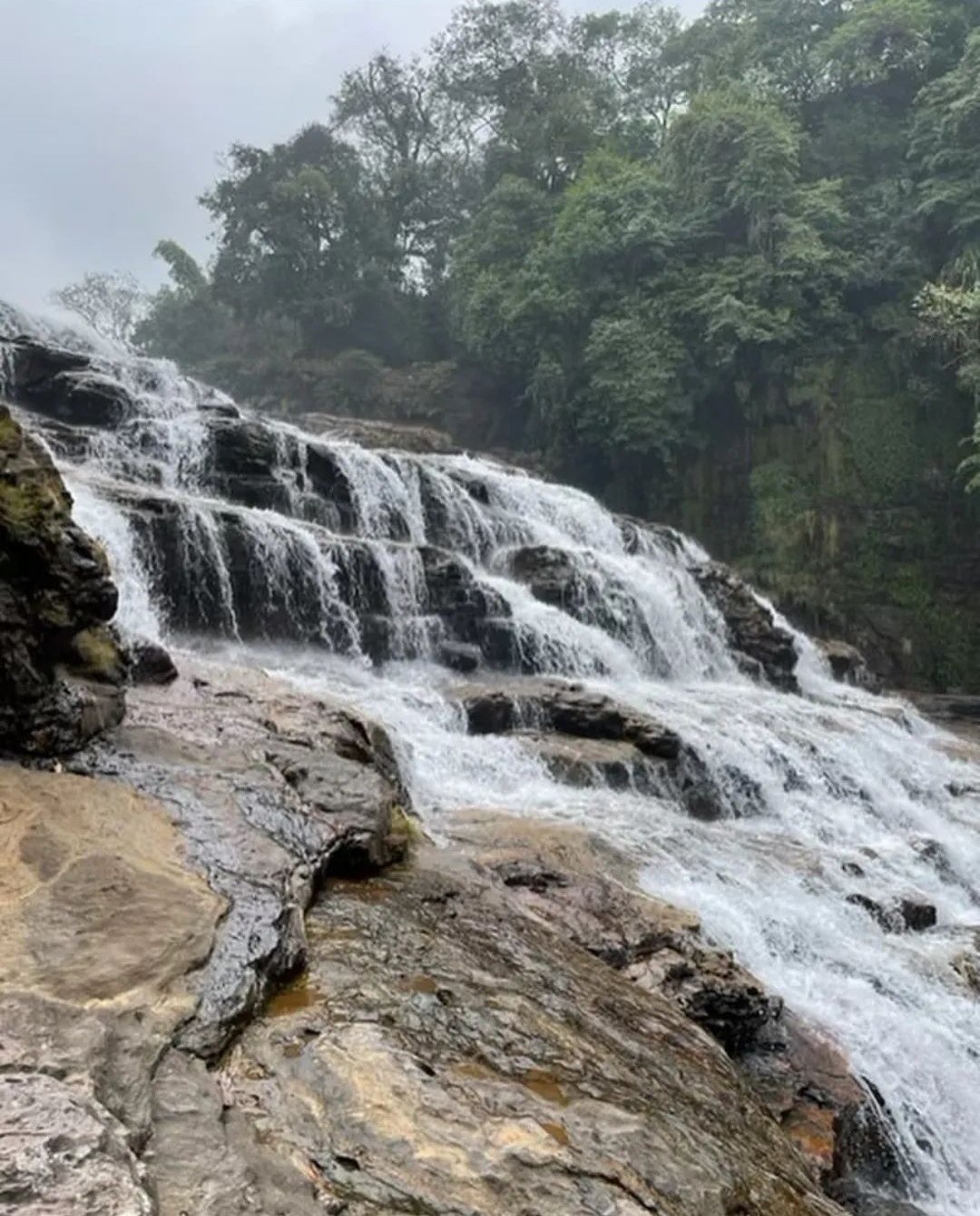
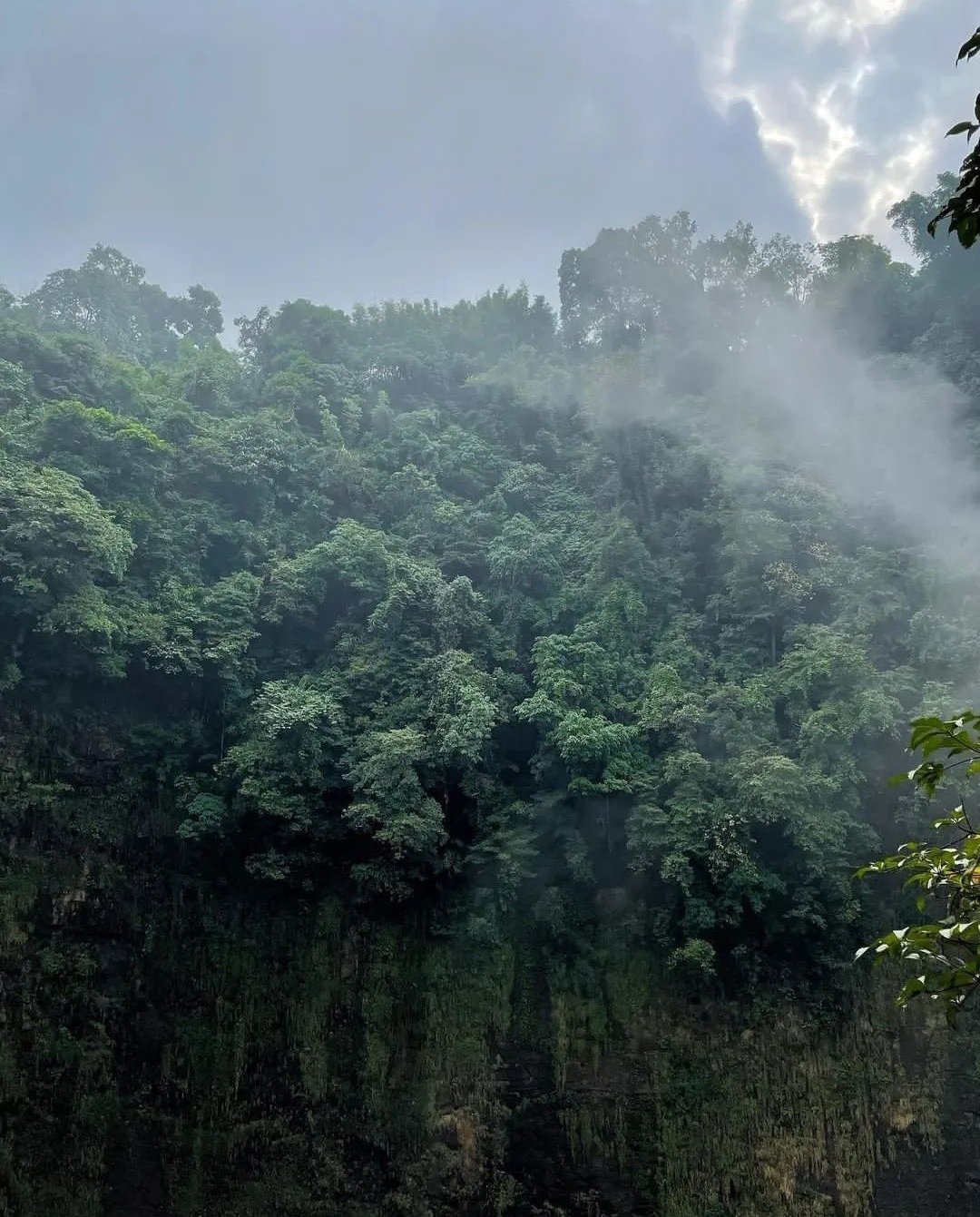
    📸 All photos are from @janicepariat 🙏
  • Ha ki thapniang basyaid i piam da i Kyrshan W. Mawlong

    Ha ki thapniang basyaid i piam

    Watla im pynpaw eh

    Jingieit i theh ba palat liam

    Dei i Pa baieid eh.

    – Kyrshan W Mawlong

    A Father's Day poem from @kyrshan_611 😄😄 But Father's Day should be everyday!

    Khublei Shibun @kyrshan_611 ! 🙏🙏

  • Nga ïaid hapdeng ka kper syntiew da i Mebatei L. Khongsti

    Nga ïaid hapdeng ka kper syntiew,

    Ïa phi nga khmih lynti,

    La jingiwbih ba bun ki wan,

    Nga kynmaw tang ïaphi.

    Man ka sienjam haba ïaid,

    Suki suki nga ïuh,

    Dohnud dik dik tang i ïaphi

    Thar shiah ruh ym sngew shuh.

    Haba ïaphi nga ïa kynduh,

    Ïanga phi kdup phi snoh,

    Jingieit janai ruh phi ïai ai,

    Phim klet khamtam ban doh.

    Jadu aïu sha ba phi don,

    Ba pynrah ïa mynsiem,

    Phi pynlong ba ngan shad mastieh

    Ka ong ka men tieng thliem.

    Ka poitri shoh jingieit ba phah da i @mebatei_l_khongsti 😄🤭🥳🥳 Dei ban phah kum kine keiñ ban kham ïa shongshit! 😁

    Khublei Shibun @mebatei_l_khongsti ba phi la phah ïa kine ki symboh pyrkhat jong phi 📝

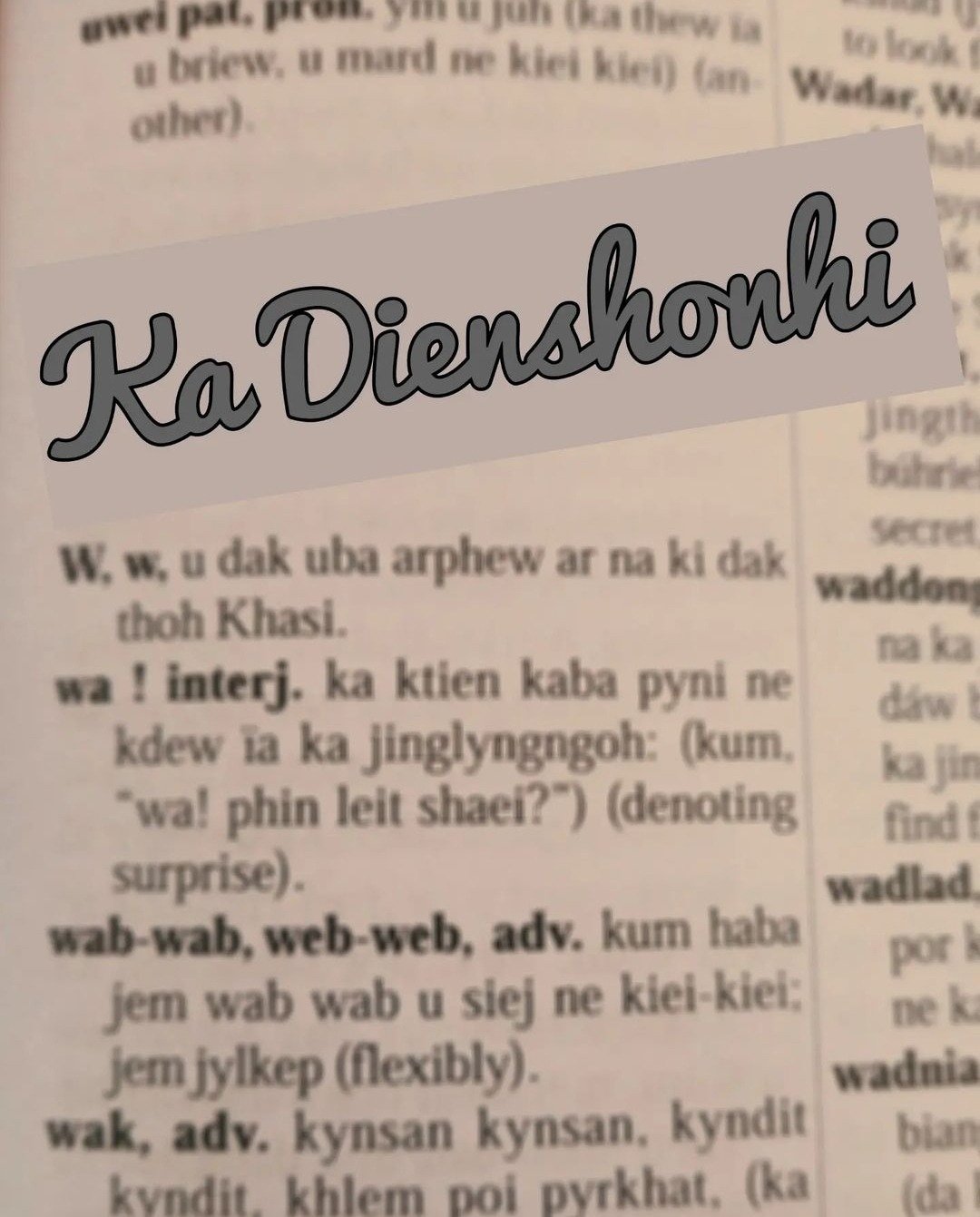
  • Ka Dienshonhi

    Ka kyntien "Dienshonhi" ka thew ïa ka "Dak-Thoh-La-Jong". Da lah phiah ïa ka, ka long kumne harum:

    Ka kyntien "Dien" ka mut ïa kano-kano kaba paw haba la ïuh ne kano-kano ka jingpynsah dak ïa kiba bud nadien khnang ba kin lait na ka jingshah ïalam bakla. Ka kyntien “Shon” ka wan na kaba pynskhem ban nym jah ka dien na kaba shim nuksa na ka dien ban dang ïai pynmih dien shuh. Ka kyntien “Hi” ka thew ïa uno-uno ne kano-kano kaba pynmih dien namar kata, ka wan ka ktien “Dien-Shon-Hi”.

    The Khasi word "Dienshonhi" refers to "Dak-Thoh-La-Jong" which may be translated as that which is written by oneself. When it is broken up it means as follows:

    The word "Dien" means something that is seen or formed like a footprint or any other imprint or a sign that is placed to help people not get lost. The word "Shon" means to press down on something to leave a permanent imprint. Thus "shon" will strengthen that which is imprinted, to avoid it being lost. "Shon" will also take the example of the imprint to produce more imprints in the future. The word "Hi" refers to anything or anyone who produces an imprint. Thus, the word "Dien-Shon-Hi" is coined.

    Ka Dienshonhi: The Khasi Encyclopaedic Dictionary by Rev. Dr. Iarington Kharkongngor

    Ka kyntien "Dienshonhi" ka dei ka kyntien kaba la sot bad pynsaiñ dur na laitylli ki kyntien, kita ka "Dien", "Shon" bad "Hi". La pynïamir jingmut ïa kine lai ban long kawei ka kyntien, khnang ban pynshynna ïa ka jingmut jong ka kyntien nongwei kaba long "Dictionary". Namar kata, ngi lah ban ong ba ka kyntien "Dienshonhi" ka long ka kyntien ïamir, ka kyntien saiñ ne kaba ki ong ha ka ktien nongwei "coinage".

    The word "Dienshonhi" is a word that has been coined from three words, that is, "Dien", "Shon" and "Hi". The three words have been blended and brought together to express one meaning, so as to make clear the meaning of the English word "Dictionary". Thus, we can say that the word "Dienshonhi" is a coined word or coinage.

    Coining new words is one sure way for a language to grow! 😃🗣️🗣️📝 Two Khasi words in the post above which have been coined to explain the meaning of the English word "coinage" are 🟢 "kyntien ïamir" and 🟢 "kyntien saiñ".

    #kyntienïamir #kyntiensaiñ

    La ha ka kren ne ka thoh, ngi lah ban pynwandur bad saiñ dur ïa ki kyntien ki ban pynroi bad pynïar ïa ka ktien Khasi 🙏😃🗣️📝

    🟡 Source: Rev. Dr. Ïarington Kharkongor

    🟡 Translation and further elaboration by @speakyourroots

  • Lets learn them!

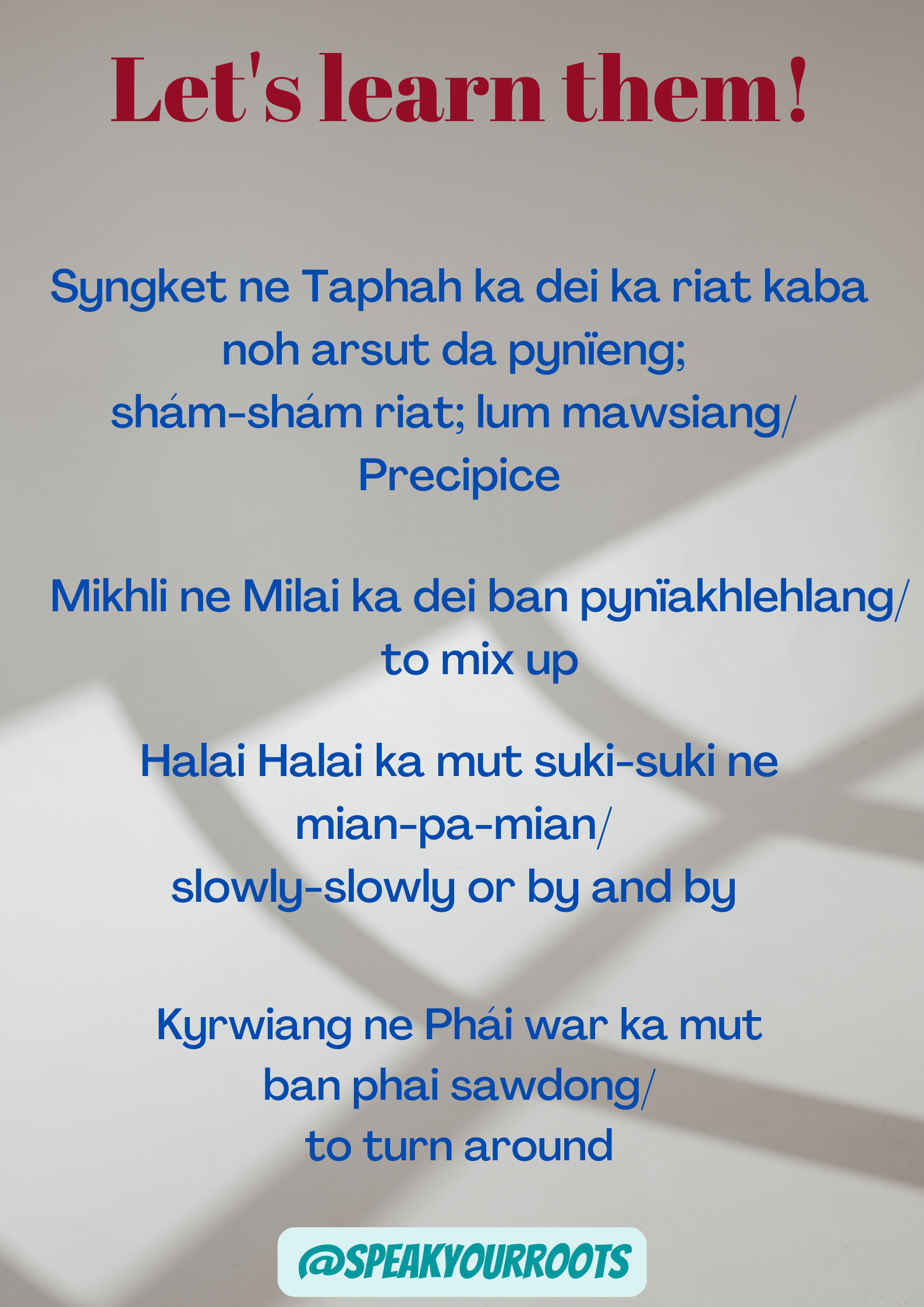
    Syngket ne Taphah ka dei ka riat kaba noh arsut da pynïeng; shám-shám riat; lum mawsiang/ Precipice

    Mikhli ne Milai ka dei ban pynïakhlehlang/ to mix up

    Halai Halai ka mut suki-suki ne mian-pa-mian/ slowly-slowly or by and by

    Kyrwiang ne Phái war ka mut ban phai sawdong/ to turn around

    Ngi hap ban ïa leh ban kren ne ban thoh da ki kyntien ki ban pynïar ïa ka ktien Khasi. Ki symboh kiba kynshew man ka sngi kin kyrbah ïa ka jingmut bad jingleh jong ngi 😄🙏

    Here are some Khasi words which we can try to use everyday. Grain collected everyday will sustain our thoughts and actions 🌾🌬️

  • Jylliew or June

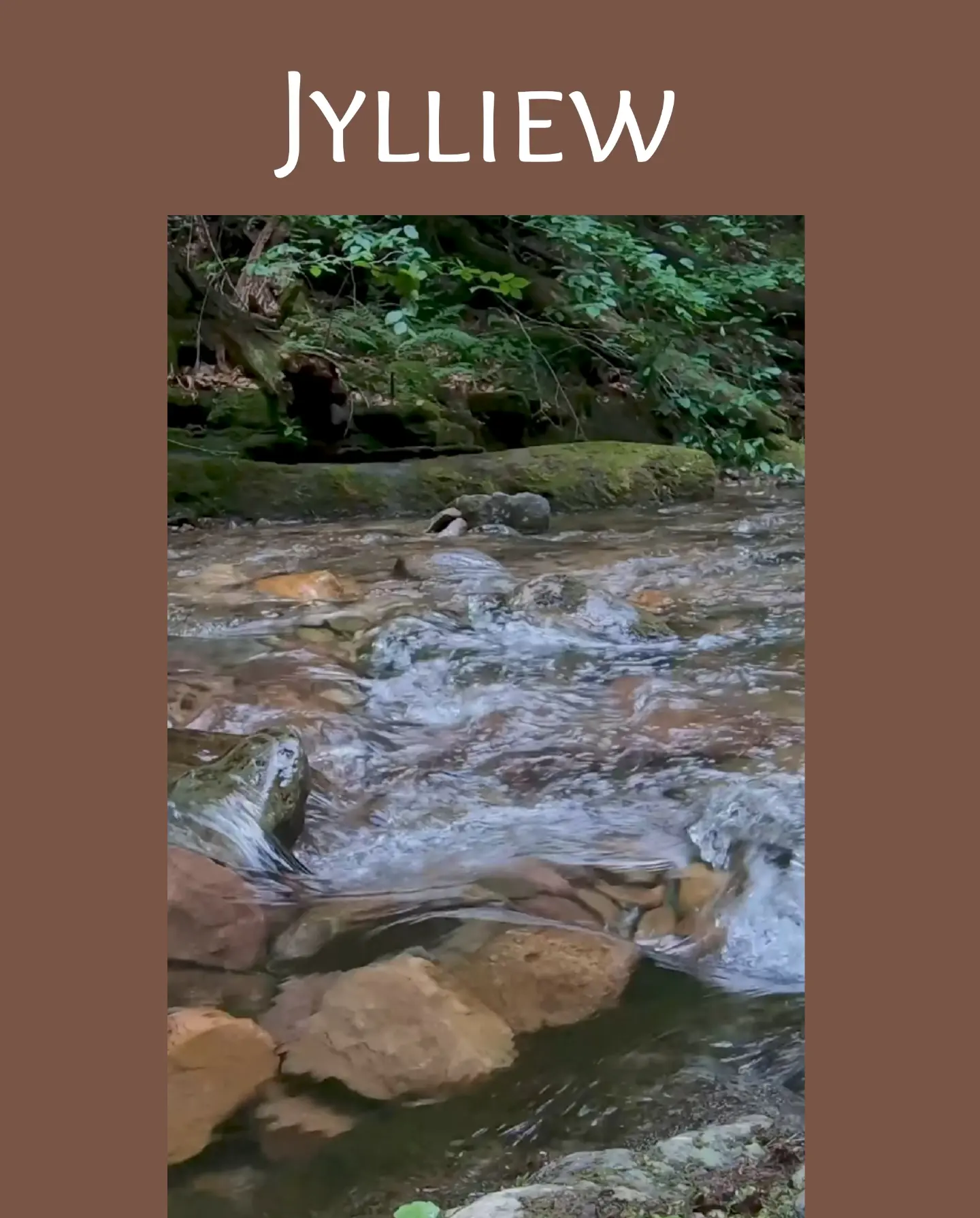
    “Jylliew" ka thew ïa ka jingdap miar ka um ha ki jylli jong ka wah. "Jyl" ka mut ka “jingjrong" bad " 'liew" ka mut ka "thliew" ne ka "them khohruh-khohram". Haba ong "jylliew" ka mut ba ka um ka la dap miar ïa ka them ne ka thliew khohruh-khohram. Nalor kata, ka ktien "jylliew" ka don ka jingïadei kaba jan eh bad ka "phylliew".

    "Jylliew" ka mut ka jingpyndap um da ka mariang ïa ka them ne thliew khohruh-khohram, katba ka ktien ‘phylliew’ ka mut ka jingpyndap um ha u khiew u bym don ne uba duna um da ka kti u briew ne da kano-kano ka tiar. Ha u Jymmang, ka um ka la sdang ban kiew ha ki jylli jong ka wah katba ha u Jylliew ka um ka la dap miar ha ka phudwah ne wah bah.

    The Khasi word "Jylliew" refers to the fullness of water in parts of a river. "Jyl" means the length of something and " 'liew" means a hole or uneven crevices. When we say "jylliew" it means that water is filled to the brim in a hole or crevice. Besides that, the word "jylliew" has a close connection to the word "phylliew" which means to pour water into a vessel.

    "Jylliew" means the filling up of water by Nature in valleys or uneven crevices, while "phylliew" means the filling up of a vessel with water by hand or using a mug or other utensils. In May, the water rises and fills in the circles of water, while in June water is full to the brim in river beds and rivers.

    This gives a new understanding of the Khasi word "Jylliew" which is the name of the month of June. 🌦️⛈️🌧️🏞️ Jylliew is the swirling depth of water that fills to the brim!

    🟡 Source: Rev. Dr. Ïarington Kharkongor
    🟡 English translation by @speakyourroots

  • Dapkynthei and Dapshynrang

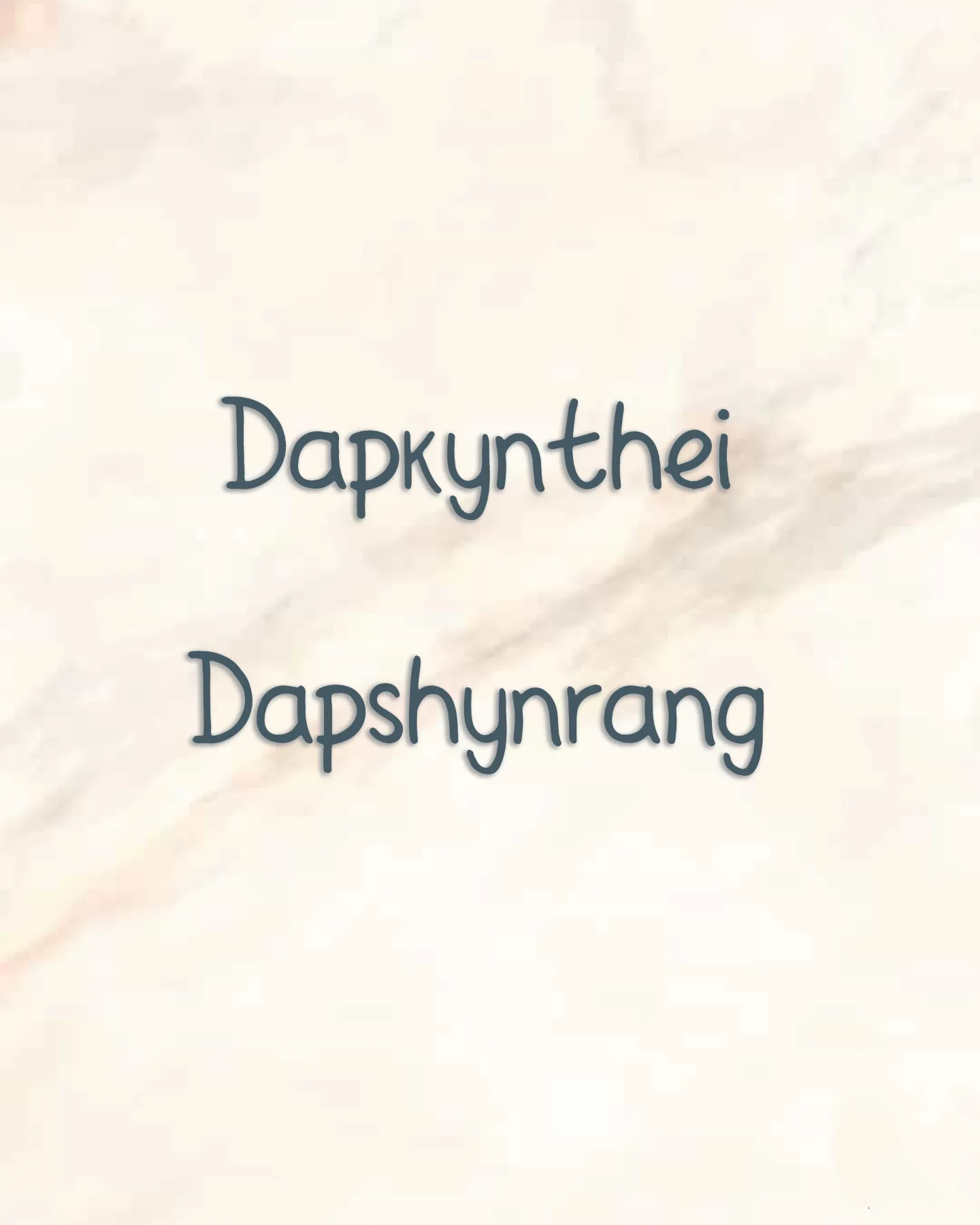
    Ki kyntien "Dapkynthei" bad "Dapshynrang" ki mut haba biang bad pura ka jinglong kynthei ne shynrang.

    Ngi lah ban bynrap shuh shuh da kaba ong ba ki kyntien "Dapkynthei" bad "Dapshynrang" ki thew ïa ka jinglong bad ka maiñ kynthei ne shynrang kaba dappura ha ka jingkoit jingkhiah, ka jingitynnad, ka jingshongkun bad met bad mynsiem.

    Ka dei ka jinglong jingman kynthei ne shynrang kaba pynpaw shynna ïa ka hok, ka bor bad ka jingstad jong ka kynthei ne u shynrang.

    The words "Dapkynthei" and "Dapshynrang" mean the full and ideal essence of being a woman or a man respectively.

    It may be added that the words "Dapkynthei" and "Dapshynrang" refer to an entirety of charismatic presence in health, in beauty and in the dignity of heart and mind. It is a state of embodying the essence of woman or man, in integrity, strength and wisdom.

    The Khasi words "Dapkynthei" and "Dapshynrang" build an image of a woman and a man both in physical, as well as emotional and mental terms. They imply the roles of woman and man in a distinct way, pointing to their well-being in Khasi society. ♀️♂️

    🟡 Khasi and English explication by @speakyourroots

  • Ut-shi-ut

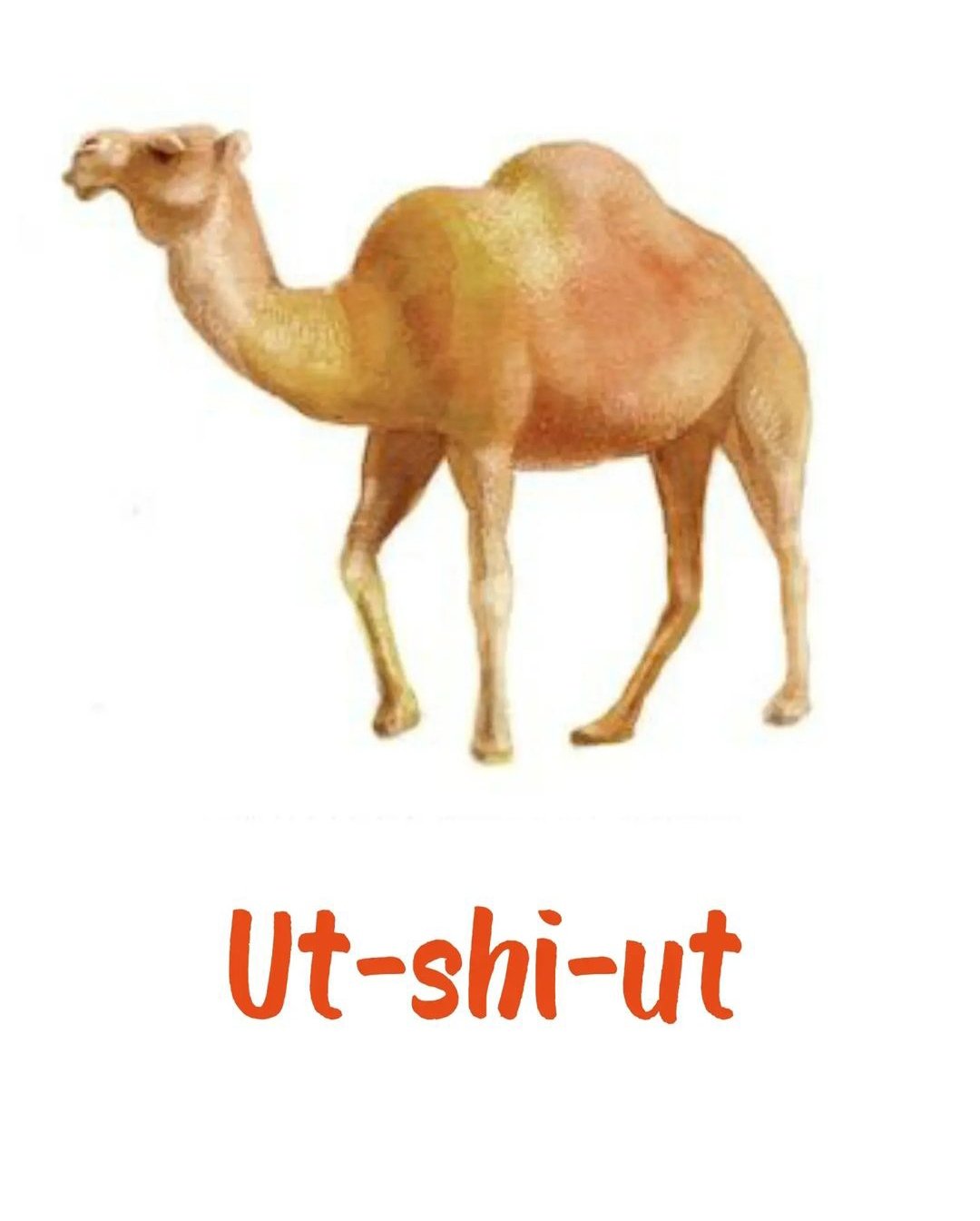
    "Ut-shi-ut" ka mut haba suki jai ne haba ïai buh teng. Ha ka senten ngin ong, "U trei ut-shi-ut ïa ka kam khlem dep shuh".

    "Ut-shi-ut" is an adverb which means someone who is slow and sluggish in doing things or someone who procrastinates.

    "Ut" also means "camel" in Khasi, so "ut-shi-ut" may be a reference to the rhythm and measured pace at which a camel walks.

    Khasi adverbs are witty and visually descriptive, along with an emphasis on the aural quality of words. 🗣️👌

    🟡 English translation by @speakyourroots

  • Ñiangkalaw

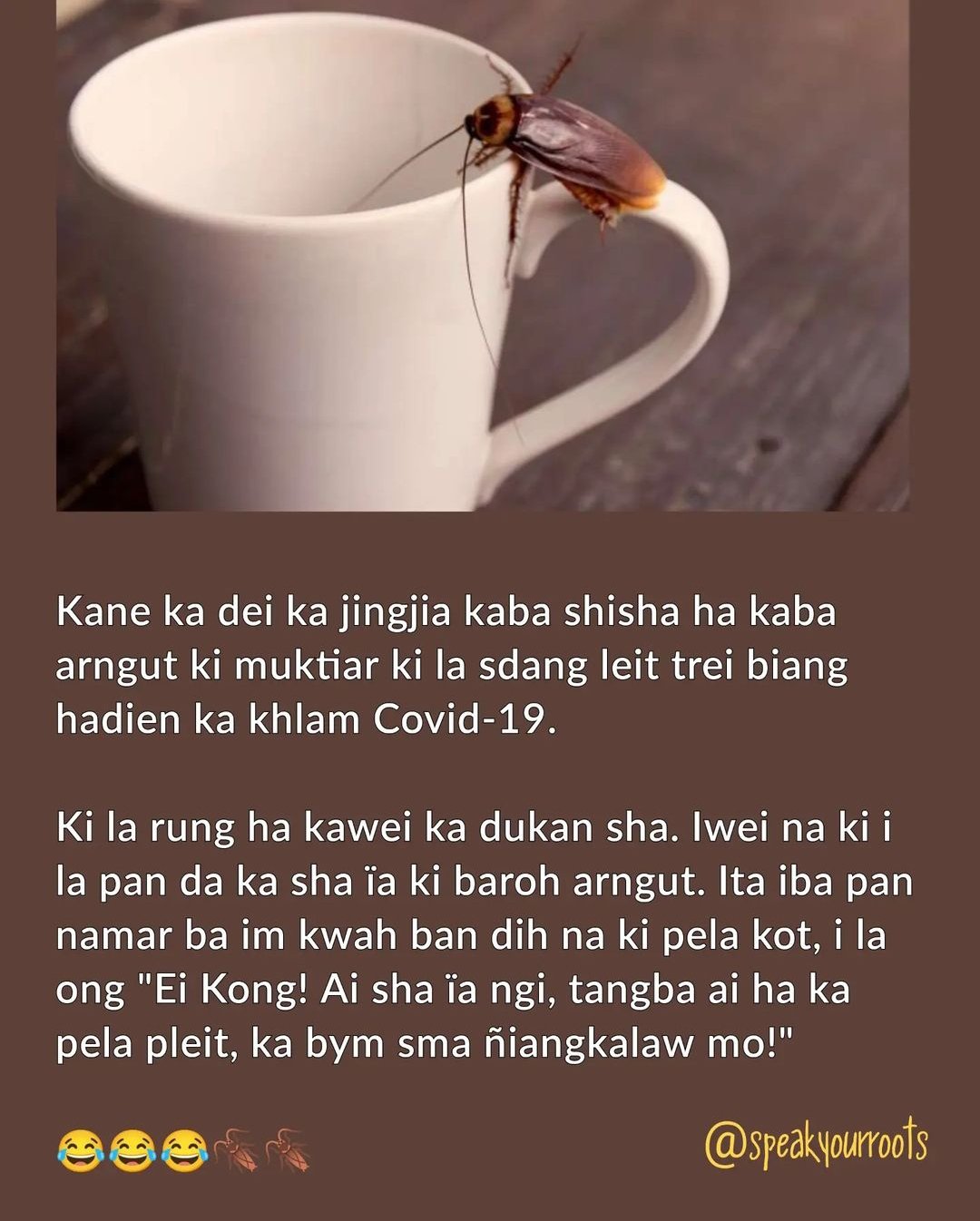
    Kane ka dei ka jingjia kaba shisha ha kaba arngut ki muktiar ki la sdang leit trei biang hadien ka khlam Covid-19.

    Ki la rung ha kawei ka dukan sha. Iwei na ki i la pan da ka sha ïa ki baroh arngut. Ita iba pan namar ba im kwah ban dih na ki pela kot, i la ong "Ei Kong! Ai sha ïa ngi, tangba ai ha ka pela pleit, ka bym sma ñiangkalaw mo!"

    Lada don ki paralok ba nang ban kren ban khana, ban biria birai katno ka jingsngewtynnat, ka jingsngew phuhmut phuhmat 😃😂

    Khublei Shibun @nisha_daphi ïa ki khana ñiangkalaw ki bym ju jlep! 🪳🪳🤡🤡😂😂

    Ym sngew kwah ban pynkylla sha ka ktien phareng ïa ka post namar kan nym sngewbang kumba sngewbang ha ka ktien la jong!