Tag: khasiliterature

  • Ki Kyrteng Sin Part I/ Khasi Nicknames Part I

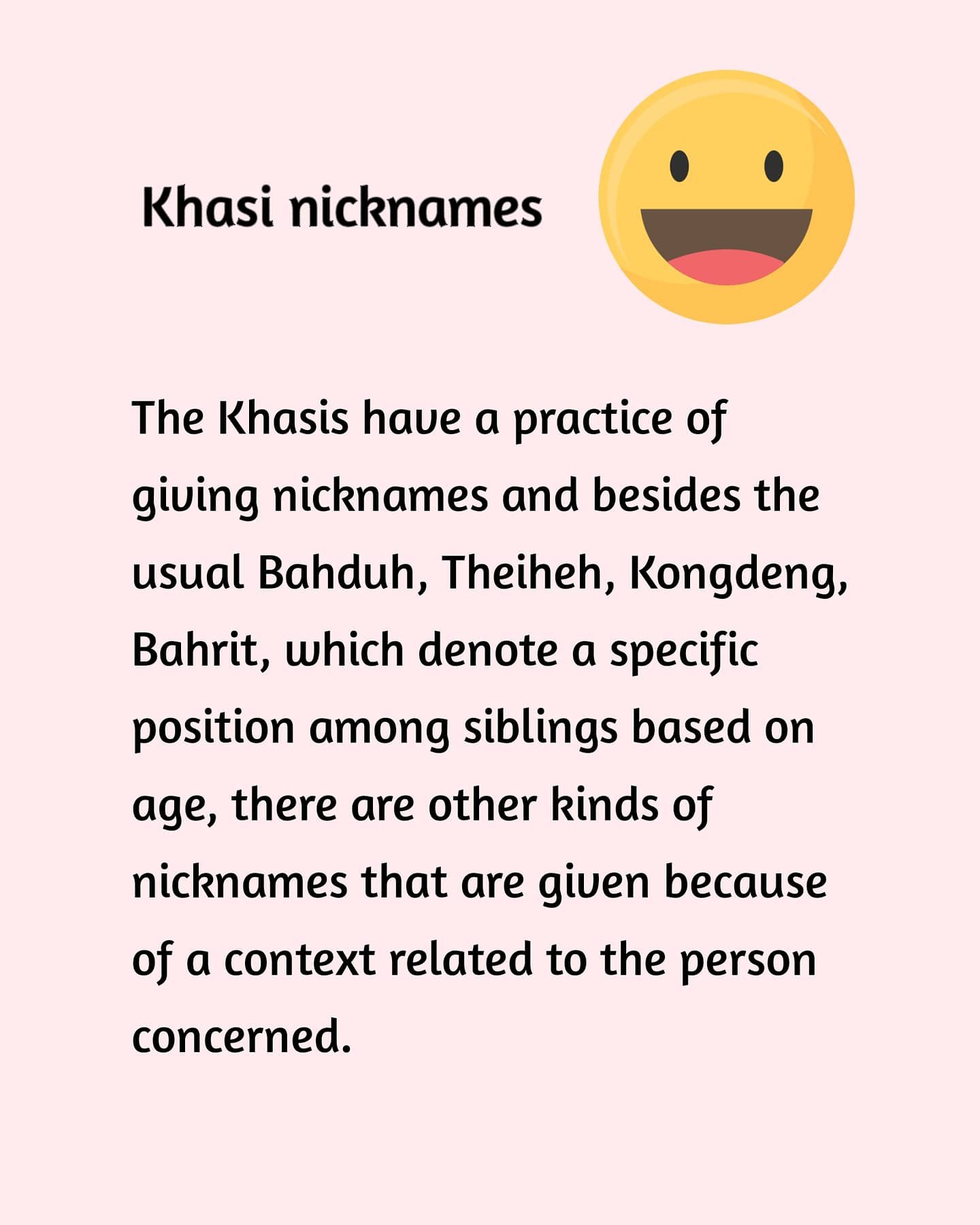
    The Khasis have a practice of giving nicknames and besides the usual Bahduh, Theiheh, Kongdeng, Bahrit, which denote a specific position among siblings based on age, there are other kinds of nicknames that are given because of a context related to the person concerned. Here are some:

    Ka Smaw (ba ïong, ba jaing/ being dark and dirty)

    U Satlew (ba heh bad khlaiñ/ big built and strong)

    U Ren (ba bun ka shang/ always going out)

    U Dum (as in lyndum/ bald)

    Ka Taiñtabul (for timetable)

    U Koted (like the air horn of Bedford buses)

    U Buit (rit, buittuh, shu shyit briew beit/ small, wiry, likes to pinch others)

    U Tamuiñ (saw ki khmat bad ka ïambait/ red eyes and a cry baby)

    U Lo (pronounced like the word Law)

    Ka Bon

    U Been Loons

    U Sahep Laitkor

    Ka Samap (raikhoh/ stang shñiuh/ skinny, limp hair)

    U Bring

    Ka Rai (namar ba bang Krai/ because she likes millet)

    Bah Ling Saphu (a girl's nickname because she was scared of a beggar with this name)

    U Ro

    Ka Thre (named after a woman obsessed with cleanliness)

    U Lui

    U Jon Snai (named after a man who stole roosters to make them fight)

    Shnuit

    Ïong (dark complexion)

    'Ngaid (sngaid/ fat)

    Bung

    Lew Lew (from Pyllew/ big eyes)

    Pit Pit (namar ba sympit/ small eyes)

    Mem Syndem (ba syndem/ flat nose)

    Dem (ba syndem/ flat nose)

    "Ki Kyrteng Sin" or Khasi nicknames

    Don't we love our nicknames?! 😄😄😄😂😂😂 Here are some Khasi nicknames contributed by @indariwarjri @carey_lynz @bibianaryntathiang. Thank you for sending them! 😄

    Some have a context and some don't, but please do enjoy them and come up with your own interpretation!

    Please tell us about your funny nicknames! 🤡🤡😎🤓😎🤠🤠

  • “Ki jingbishar na la tnum” da Vancouver Shullai

    Ha la ka tnum nga ïeng bam lyer.

    Nga artatien ïa ka jingkhuid jong ka,

    Haba ym sma shuh kum ka jingai sngewbha ka mariang,

    Hynrei, sma pynban kum ka jyntah sah-miet u paramarjan.

    Hapdeng ki ïing paki-dulan ka Laitumkhrah-

    Khlem dieng, khlem siej, khlem ñiut, khlem ñier:

    Nga 'i tang ki dongmusa u 'riewstad

    Ba phalang blar-blar khlem jingim.

    Kim pynshahshkor ïa ka lyer sah-miet

    Kaba kawut shane-shane, shatai-shatai.

    Ha khrum ka sahit bneng pat,

    Ïa kaba ki khlur ki ksoh

    Bad ki lyoh ki bitnah kum ka dpei jhieh-

    Sngew kumba ka don ka jingïatainia noh-shiliang.

    Ka khyndew ka kyrhuh da la ki kali, ki khiew-siaw, ki 'sew-lamwir,

    La sngew kumba ka khyllew sha ka bneng, "Kham riewspah manga!"

    Ka bneng pat, jai-jai ha la ka jingsngur,

    Ka sammut da ka 'leilieh hangne hangtai.

    Manga, tang kum u nongpeitkai,

    Ïa kata ka jingïatainia noh-shiliang;

    Nga lam biang sha ka jingsma ka jyntah sah-miet.

    Uei mo u ban shet 'tungrymbai hapdeng ka lyïur?

    Original Khasi poem "Ka Jingbishar Na la Tnum" written by @vancouvershullai 📜📜 Thank you for another fantastic entry! 🌌🏠🌩️🌥️

    Vancouver says: "Ki Jingbishar Na La Tnum" (which translates to "Judgements from the Roof") is a poem describing observations of the world around from a rooftop. The tranquillity of the sky and the cacophony of the earth under the sky, are interpreted as a one-sided argument, where the earth is loud and boastful of its disorganisation, while the sky only responds with occasional flickers of lightning, interpreted as indifferent grins. There is a deflection to the smell of Tungrymbai – almost as a surrender to the bigger powers of earth and soil that one could not possibly meddle with. The poem has environmental undertones that is left to the reader to discover and make meaning of."

  • Ko Pyrthei Shongbasa da i Vianney B. Nongrum

    Ko pyrthei shongbasa,

    ngam bynnud iapha.

    Ki riewshetkylla, ki

    riewharam, ki riew khwan

    lalot suda, nga lah i

    ngiah shisha.

    Sa tang ka jingpihuiñ,

    sa tang ka jingbishni,

    shisha la dap da ka jingijli.

    Mynsiem isynei,

    mynsiem ia tiplem,

    lah tyllep khlem

    jingsngewrem.

    Ah, ko jingim ioh pha ong

    ba nga bynnud ia ka pyrthei;

    Em hynrei nga puson ia

    kaei ba nga pynsepei.

    Ban ngan da ioh ban kheit

    ia kiei kiei ba nga lah duh;

    ngan Jin da kmen da jingsahuh.

    -Vianney B. Nongrum

    Original Khasi poem "Ko Pyrthei Shongbasa" by @vi.vianney_nongrum_b 😄😄😄 Thank you for this thought provoking poem!

    The poem talks about the world as a temporary home. How betrayal, ingratitude and selfishness has marred human existence. Compassion and conscience have disappeared. She says to life that she thinks about what is lost; if only she could get them back how happy she would be.

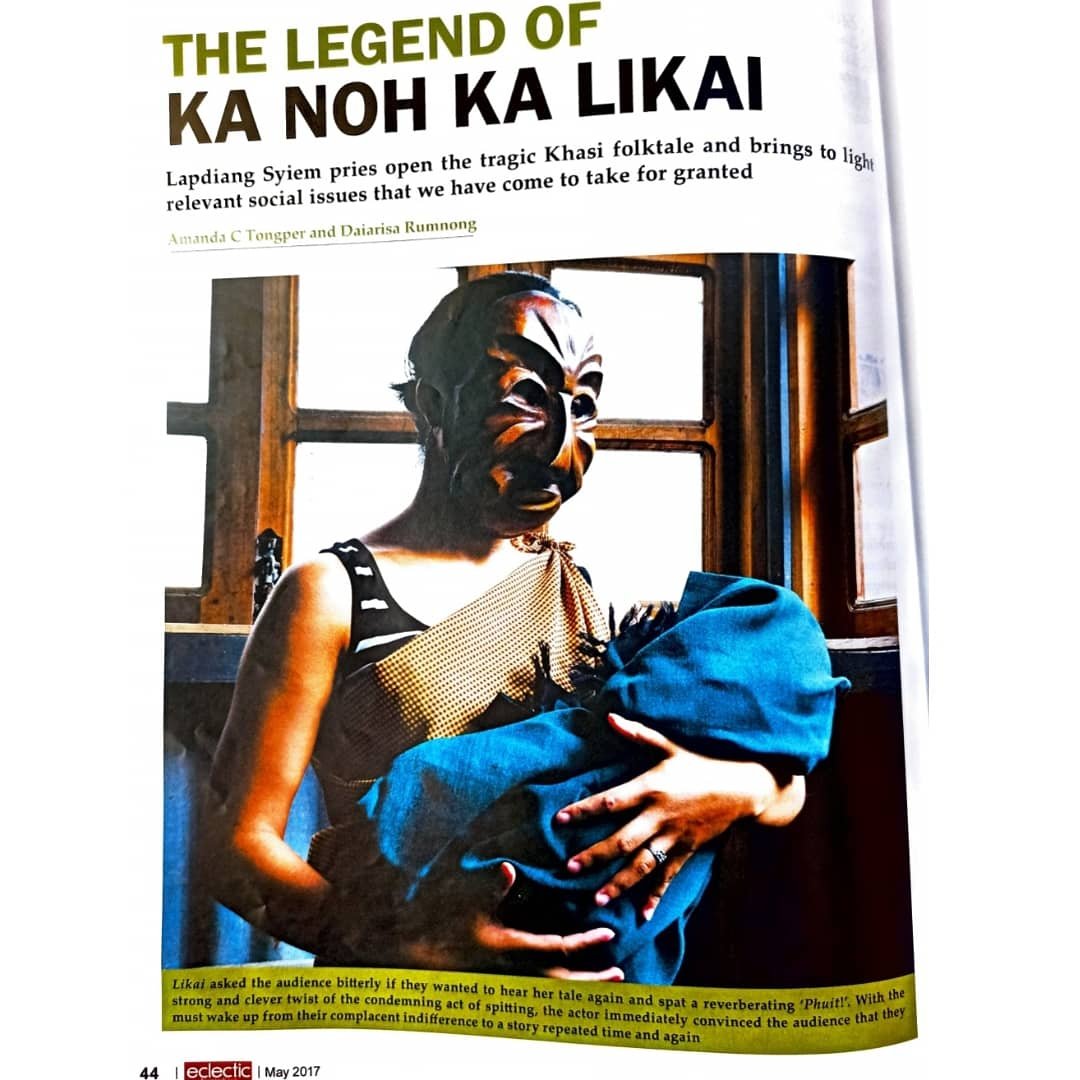
  • Review of “The Legend of Ka Noh ka Likai” by Lapdiang Syiem

    Lapdiang Syiem’s Dramatisation of The Legend of Ka Noh Ka Likai: A Review by Dr. Amanda C. Tongper and Dr. Daiarisa Rumnong

    Nothing prepared us for the phenomenon which is Lapdiang Syiem. As we were ushered in into the enclosed space at Dylan’s Café, we were greeted by a figure framed atop a mula, transfixed with a baby in her arms. We stopped for a second, looking for traces of life in that mannequin of a being even though we knew at the back of our minds, that it is the actor, Lapdiang Syiem.  The first achievement of the actor was accomplished in the very first seconds of the play, as we later realised that we did not just enter the room where the performance was to take place – we were pulled into the orbit of the actor with a grip that was to hold us for the rest of the performance. 

    Lapdiang, through the character of Likai, pried open the tragic story of Ka Noh Ka Likai that has been encapsulated in time and brought to light relevant social issues muted within a tale that we have come to take for granted. Likai asked the audience bitterly if they wanted to hear her tale told again and spat a reverberating “Phuit!” With the strong and clever twist of the condemning act of spitting, the actor immediately convinced the audience that they must wake up from their complacent indifference to a story repeated time and again. The spit cautioned the audience that in this re-telling, they cannot rely on their rote-memory of the story. The spit challenged the collective conscience of the audience who may have known the narrative of Ka Noh Ka Likai, but has never thought to understand the story of Ka Likai, the being with thoughts and emotions of her own.

    Lapdiang Syiem’s performance provokes a fresh look at the oft-told story of Likai. Entering the venue, the image of Lapdiang whose face was covered by a mask, holding a baby seemed to be suspended in purgatory, adrift in limbo. The image is at once a detonating symbol. It evokes the pre-conceived notion that a woman is pitiable, weak, unsettled on her own and a man is her only anchor. This notion that rises from a deep-seated, almost genetic conditioning remains such an inescapable factor even in this 21st  century stage of our lives. The orbit we were drawn into had a familiar ring to it. But were we looking hard enough to notice the reflection we should see of ourselves; of how much the motif of a woman jumping to her death actually echoes all those stories of violence, dispossession and death?  Why is it that a woman is expected to be tied to a man? Why does a part of a so-called “binary” cannot exist alone? In the performance of Ka Noh Ka Likai, Likai after living as a widow was told by other women in her community that she should marry another man. A man it appears embodies security. However, this “security” that society perceives as normal or good may actually lead to irrevocable despair.  

    The only device that aided Lapdiang’s performance was the music played by Apkyrmen Tangsong. Apkyrmen played original compositions on the maringud, ksing and besli. All three instruments moulded themselves into the performance, even eerily voicing out the muffled cries

    of Likai’s baby. The poignant and haunting pieces feel like the past knocking on our foreheads saying: “Don’t get too comfortable, too familiar with showing me off. Try to understand my relevance for the present and even the future!” The music, words and gestures of the performance swayed the audience, dug out tears, drawing us breathless with questions that perhaps are desperate to break free. It made us feel uncomfortable…in all the right places.

    In Lapdiang’s performance, there is a curious blend of acting and telling, so that one is compelled to say, the oral is still with us. One usually speaks of the oral tradition with a sense of

    nostalgia, as a thing of the papyral past. However, with Lapdiang’s performance, one witnesses that this form of communication has never really left us. We only have to engage with it once again. The gusts and ripples of ka Ka Noh Ka Likai echo everyday, do we listen?

    As the play came to its end, there was silence among the audience. It was a sacred moment to watch Lapdiang give Likai life with such heart, strength and intelligence.


    Lapdiang Syiem is a force to be reckoned with.  

    Lapdiang A. Syiem was born and brought up in Shillong. She is a graduate from National School of Drama, Delhi with a specialisation in Physical Theatre from the Commedia School, Copenhagen. In 2016, Lapdiang, along with Keshav Pariat and Juban Lamar founded an artistic commune called, The Unhinged Commune. They blog regularly at kinongbamsohlah.wordpress.com

    This is a review of a fantastic and heart-wrenching performance by @lapdiangsyiem of "The Legend of Ka Noh ka Likai" in 2017. Folktales transformed into theatre is something else! 💫💫💫

    The review was published in @eclectic_northeast magazine and has been written by Dr. Daiarisa Rumnong (Assistant Professor, St. Mary's College) and Dr. Amanda C. Tongper (Assistant Professor, St. Anthony's College).

    Thank you @lamar.juban for the beautiful pictures used in this review!

    Please send an email to speak.your.roots@gmail.com if you would like to read the review!
  • U Sier Lapalang by Janice Pariat

    Shall I tell you the story of Sier Lapalang? As with every folktale, there are many versions. My nanny's would be brief – "the young stag didn't listen to his mother and see what happened to him?" While others are infinitely more detailed.

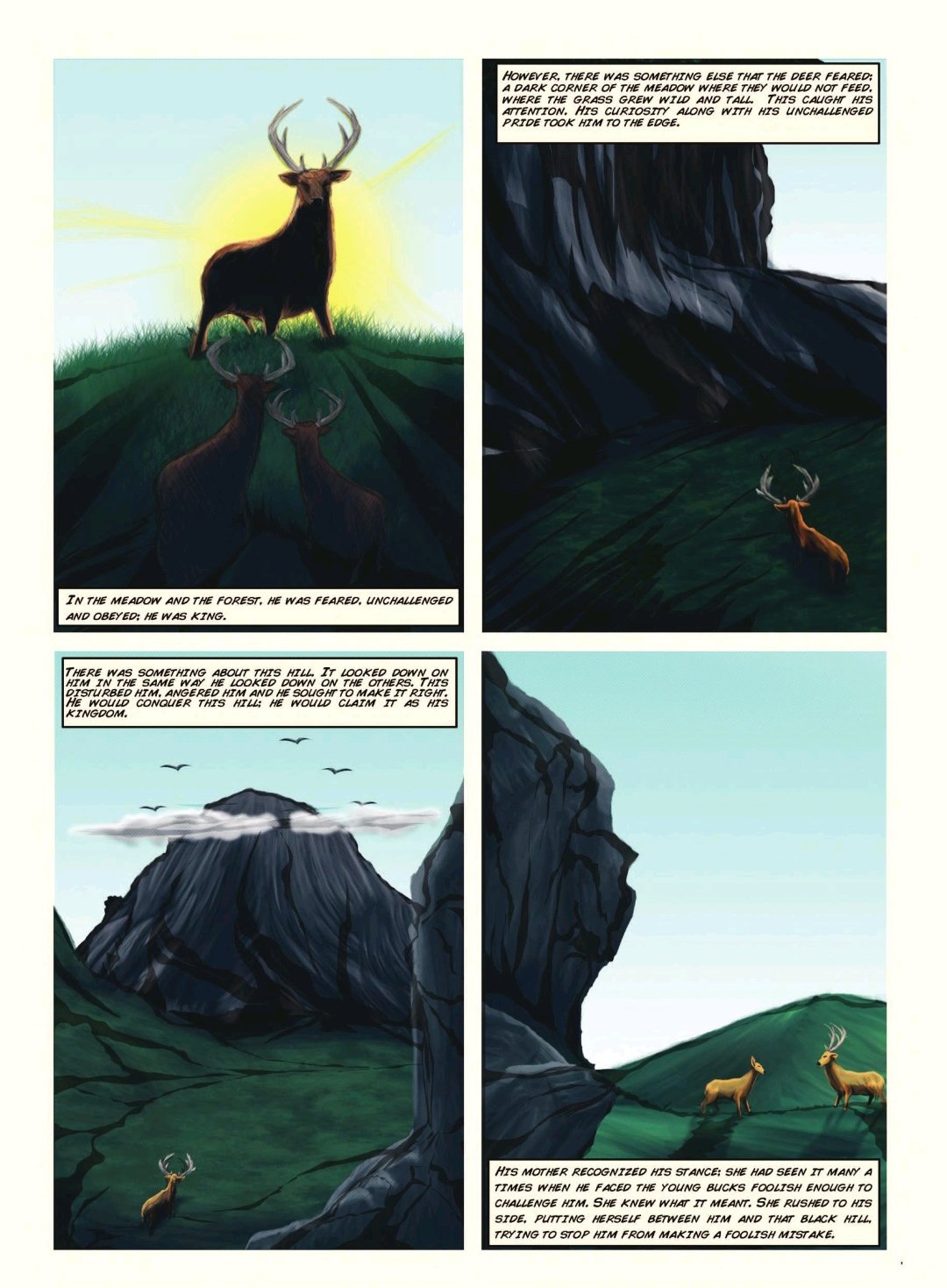
    At the foothills of Ri Khasi lived Sier Lapalang, noblest animal of his race, pride of his mother's heart. He grew up protected, loved, his every whim indulged, until one day he began to grow weary of the plains, and his mother's constant counsel. He wished to explore the hills, and find there his favourite delicacies. Despite all warning, of hunters and fierce warriors, Sier Lapalang left.

    At first, all went well. He wandered deep into the strange country, relishing the cool climate, the floral treats, until one day he stood in all his glory on the slope of Shyllong Peak, at the heart of Ri Khasi.

    His dallying caught the attention of cowherds grazing their cattle nearby. A stag, a stag! they called. Soon a hunt commenced, and though Sier Lapalang was swift and strong and fled from hill to hill, there were too many hunters in pursuit. He began to tire, and slowed and stopped; then an arrow-or a thousand-pierced his chest. He was strung up, amidst triumphant cries, and taken homewards with much rejoicing.

    The story could end here, but it doesn't.

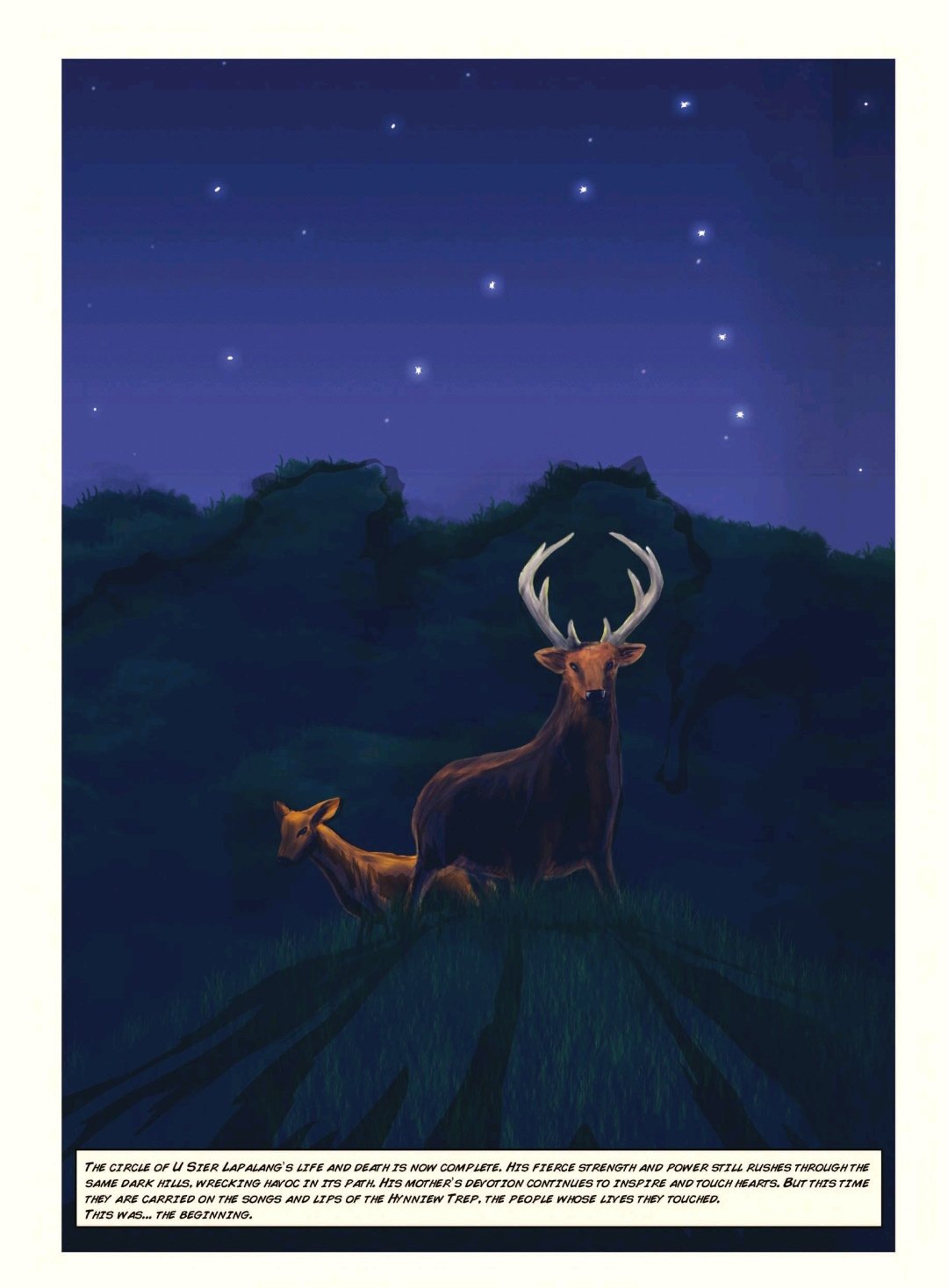
    The mother, ill with worry, leaves her home for the land of her enemies, roaming the hills, looking for her son, until she comes upon the hunting party, cheering their kill. She recognises her Sier Lapalang. And begins a lamentation so sorrowful that the world falls silent. Women swoon from the pain, men bow their heads in anguish. Not a hand is raised against her, not an arrow shot in her direction.

    The crowd of hunters stare mutely. They'd never heard such protestations of devotion and love. Their own manner of mourning for their dead was now without meaning. It is said, from her, the Khasis learned how to grieve.

    A profound and poignant retelling of the Khasi folktale "U Sier Lapalang" from poet and novelist @janicepariat ! Thank you so much Ma'am for your entry and for your interest in the page! 🙏🙏🙏

    Janice Pariat is an Indian poet and writer. She was born in Assam and grew up in Shillong, Meghalya. "Boats on Land" (Random House India, 2012) her debut collection of short stories, won the 2013 Sahitya Akademi Young Writer Award for the English language and the 2013 Crossword Book Award for fiction. Pariat is the first writer from Meghalaya to receive an award from the Sahitya Akademi for a work in English.

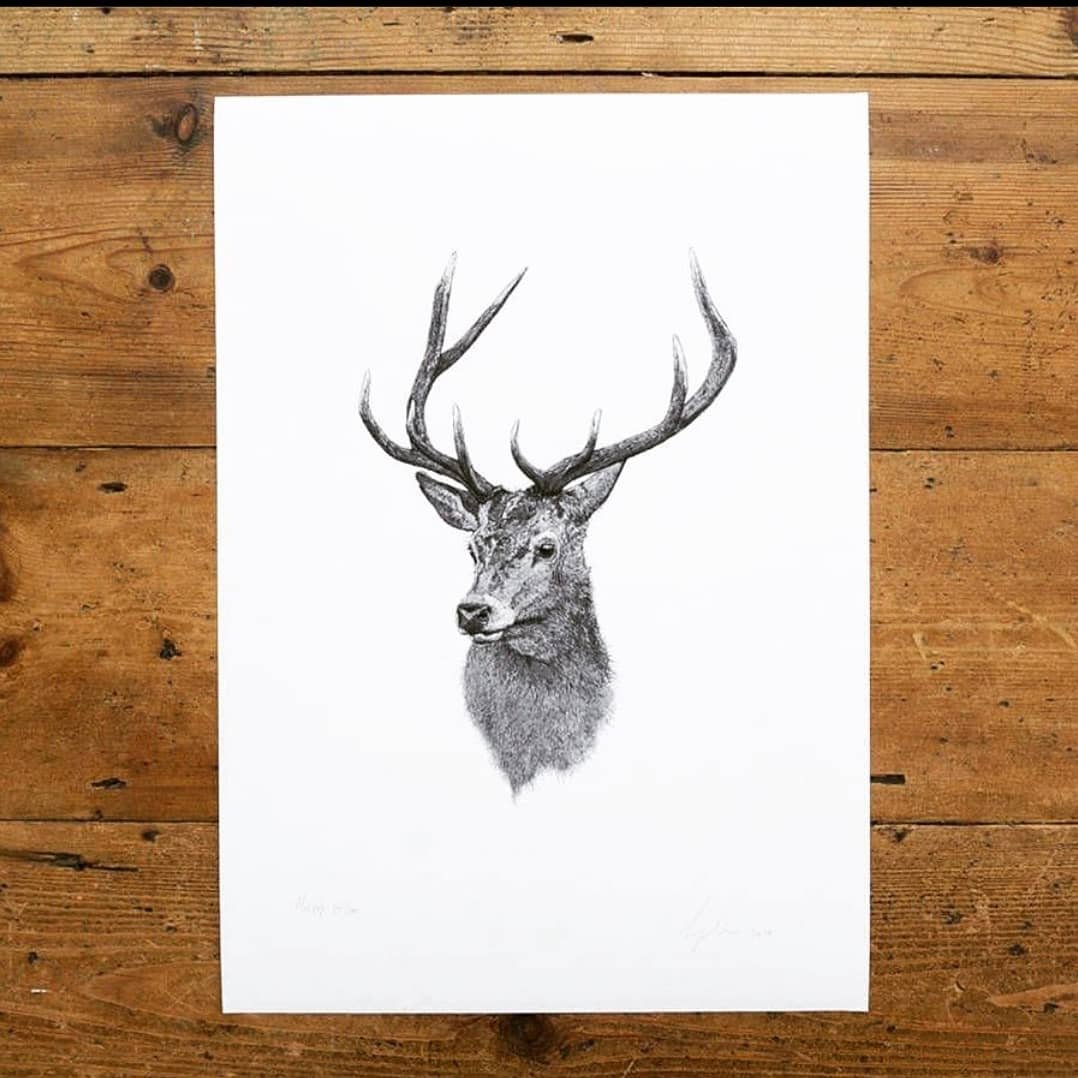
    Picture credit: @brillustrations

  • “Pa Baieid” da Sambynta kharbuki

    Ko pa ba ieid ko pa ba thiang

    kumno iaphi ngan siew kylliang

    naduh ba mih sha ka pyrthei

    nga dang iohi tang ia i mei

    Balei pa nanga phi jah

    nga duh iaphi na dang khynnah

    ynda mynta iaphi nga wad

    hynrei satang jing jaw ummat

    Ka jingieid na phi nga duh

    namar nga tip ngam lah shem shuh

    mynta nga sah tang bad i mei

    nga im khlem maphi ha pyrthei

    Ko pa phi lah mo ban wan phai

    to peit i mei i tlot i swai

    i trei shitom ah i bapli

    tang na kadaw bym don maphi

    Ha rngai ki jingphohsniew phi don

    mangi arngut mynsiem ngi shon

    I mei bapli bunsien i ong

    tip shuh kein khun kumno gin long

    Ko pa baieid to wan seh pa

    hangne iaphi nga iai pyrta

    hato kopa phi sngew ianga

    balei kumne kein ka wan jia

    Nga peit ki lok kyrhai ba bun

    ha shadem u kpa ki iohthiah hun

    nga pat hangne bad i mei

    i pa la khlad noh na pyrthei

    -Sambynta kharbuki

    Original Khasi poem "Pa Baieid" written by @samsan_yt 💟💟💟 Thank you for sending this personal and touching poem! 🥺🥺🥺

    The poem speaks about the value of a father. Sambynta longs to see his father and wishes he could be with his mother and him. Suffering and trials are known to us all but it is perhaps sharpened more painfully for those without a father. Thank you for having the courage to share this poem! 👏👏👏

  • “Ki jingsngew ha ka miet ba wan ka khlam” da Vancouver Shullai

    Sngew triem keiñ, para,

    Haba la poi ka Khlam ha phyllaw ïing.

    Sngew salia wat tang ban ring mynsiem ruh,

    Ïoh jia ba ka ïohsngew bad ka tip noh

    Hamar hangno ngi ïa rieh.

    Ka palong ha kaba la ju dem shiryta,

    Ka sngew pher mynta ka miet:

    Sngew eh ka tyrsok, sngew sohkyrdot ka rajai,

    Haba la khura kata ka Khlam ïa ka phyllaw ïing.

    Sngew artatien ban pyrta sha la ki marjan ruh

    Ban twad jingmut lem na ki,

    Ïoh jia ba ki la ïakynduh ïa kane ka nongshun

    Bad khah snam noh haba ïa khublei kti.

    Hynrei, para, nga pynkynmaw ïa phi,

    Ba ka step ruh kam jngai

    Bad ka Khlam kan sa phet sha la ka lynti

    Ynda thaba noh ka sngi ha phyllaw ïing.

    "Ki Jingsngew ha ka Miet ba wan ka Khlam" is an original Khasi poem by poet and singer @vancouvershullai ! 😄😄😄 Thank you for taking up the responsibility for writing in your own indigenous language! 🌲🌲

    As the pandemic rages on, all one can do is talk about how one feels to find solace. The current situation confronts us with our feeble mortal existence but it also teaches how faith, hope and courage can turn the weight of an overwhelming tide.

    Vancouver Shullai says of the poem: "This poem was written on the night the first COVID-19 positive case was detected in Shillong in the year 2020. An air of apprehension enveloped the entire town as soon as the news was reported. There was a very unusual sense of discomfort, I recall, an extremely foreign feeling no one was prepared for. I wrote this poem to document that calm yet fearful night."

    Thank you @vancouvershullai for documenting this experience in poetry!

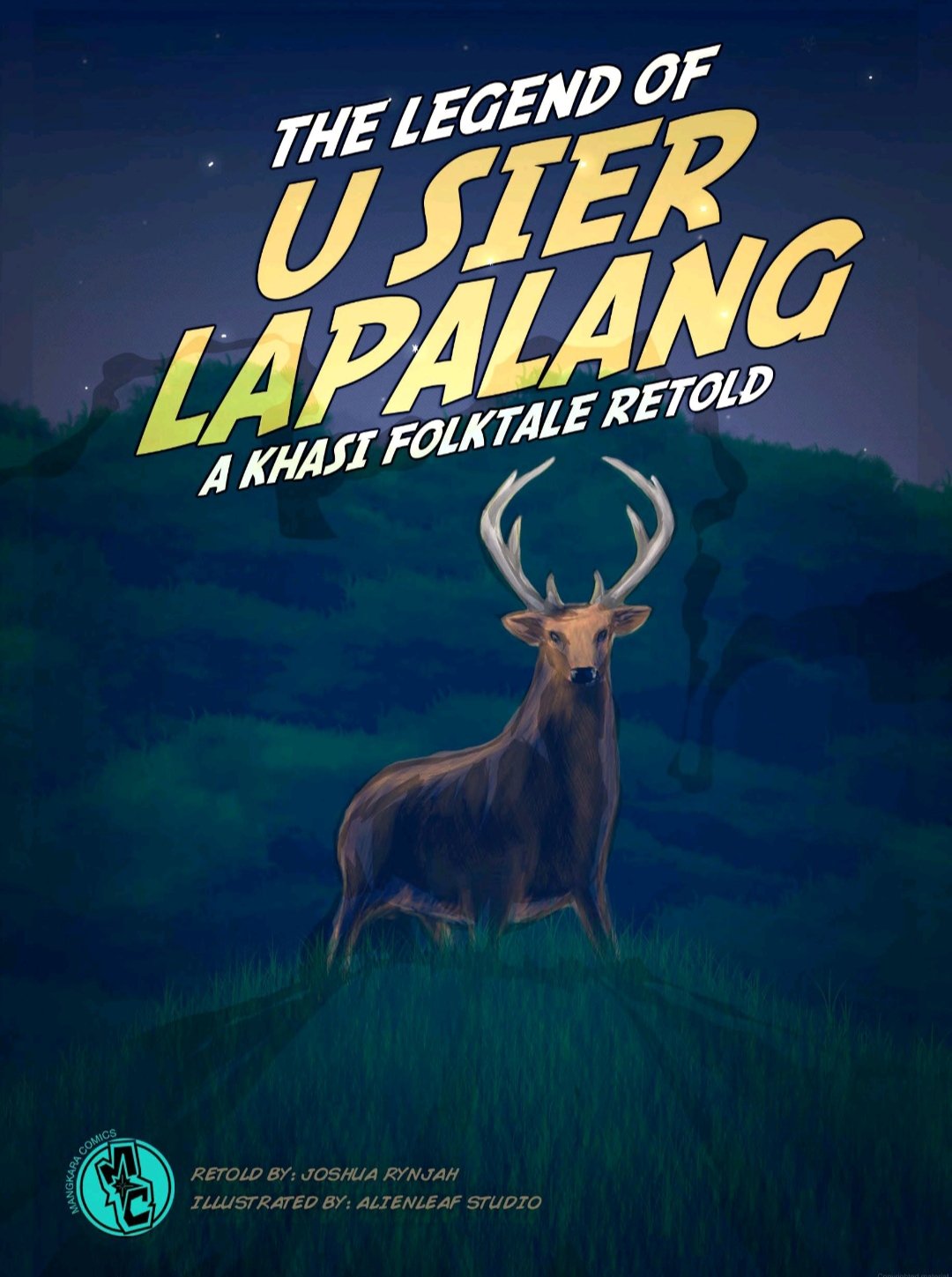
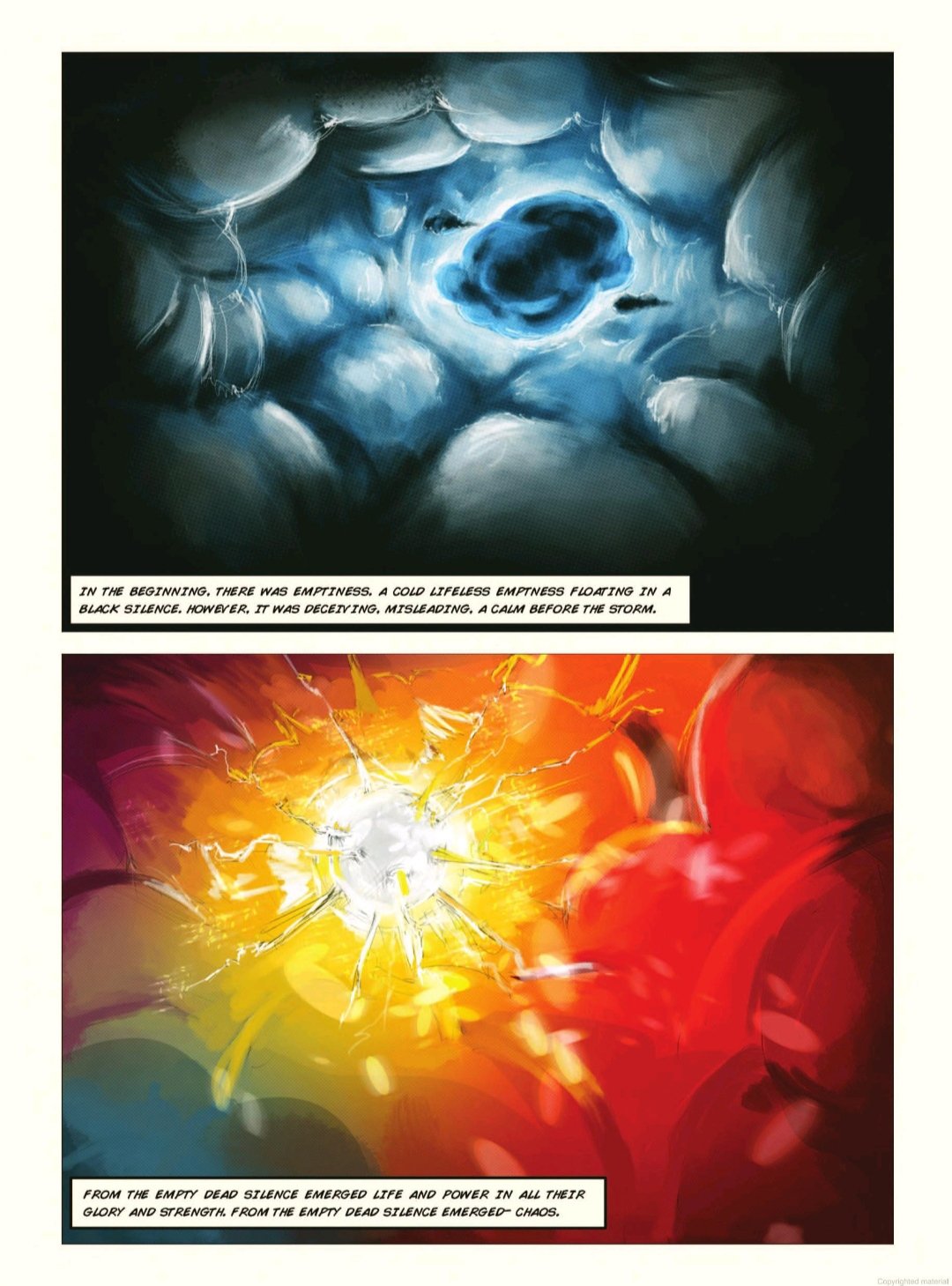
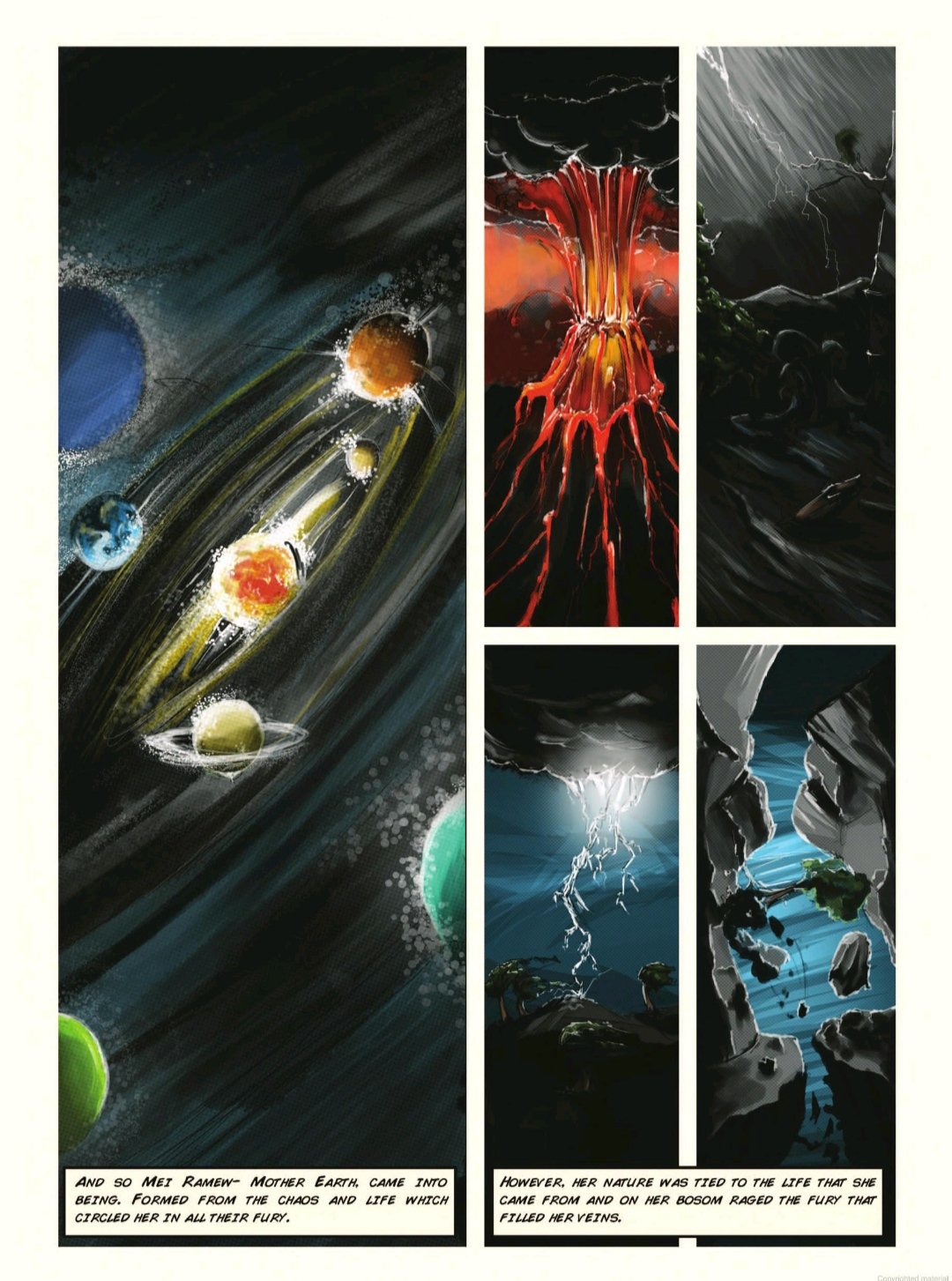
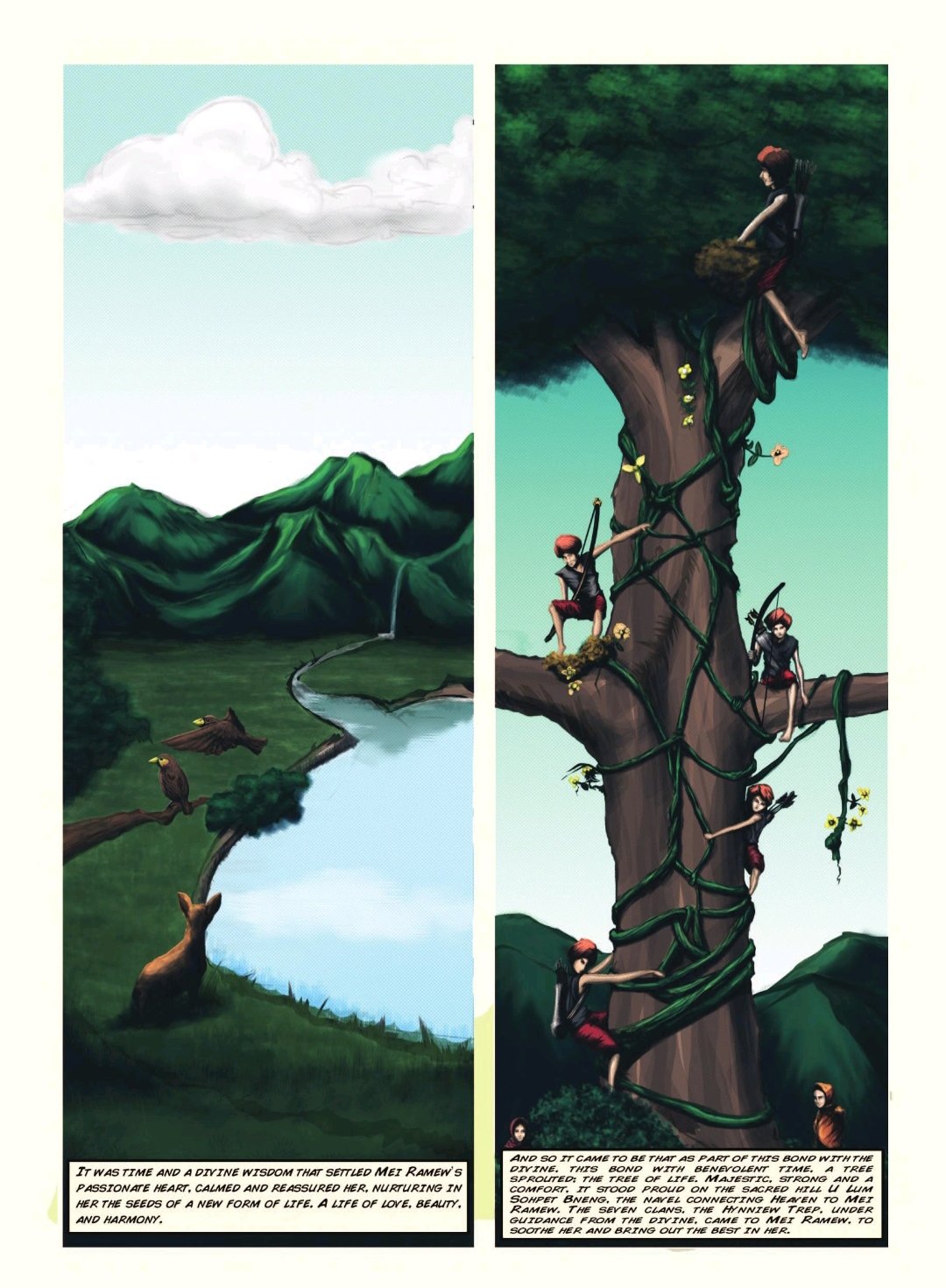
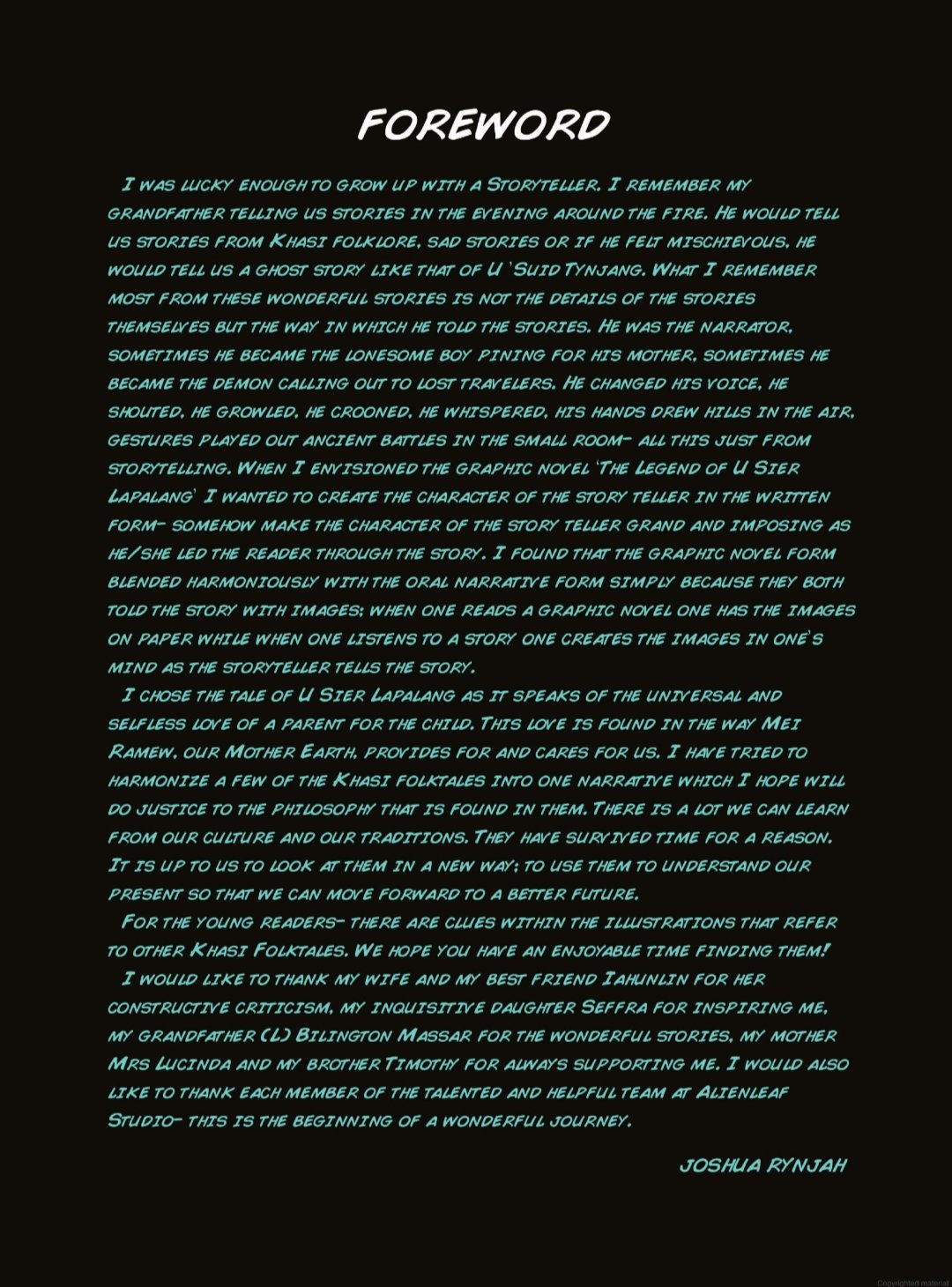
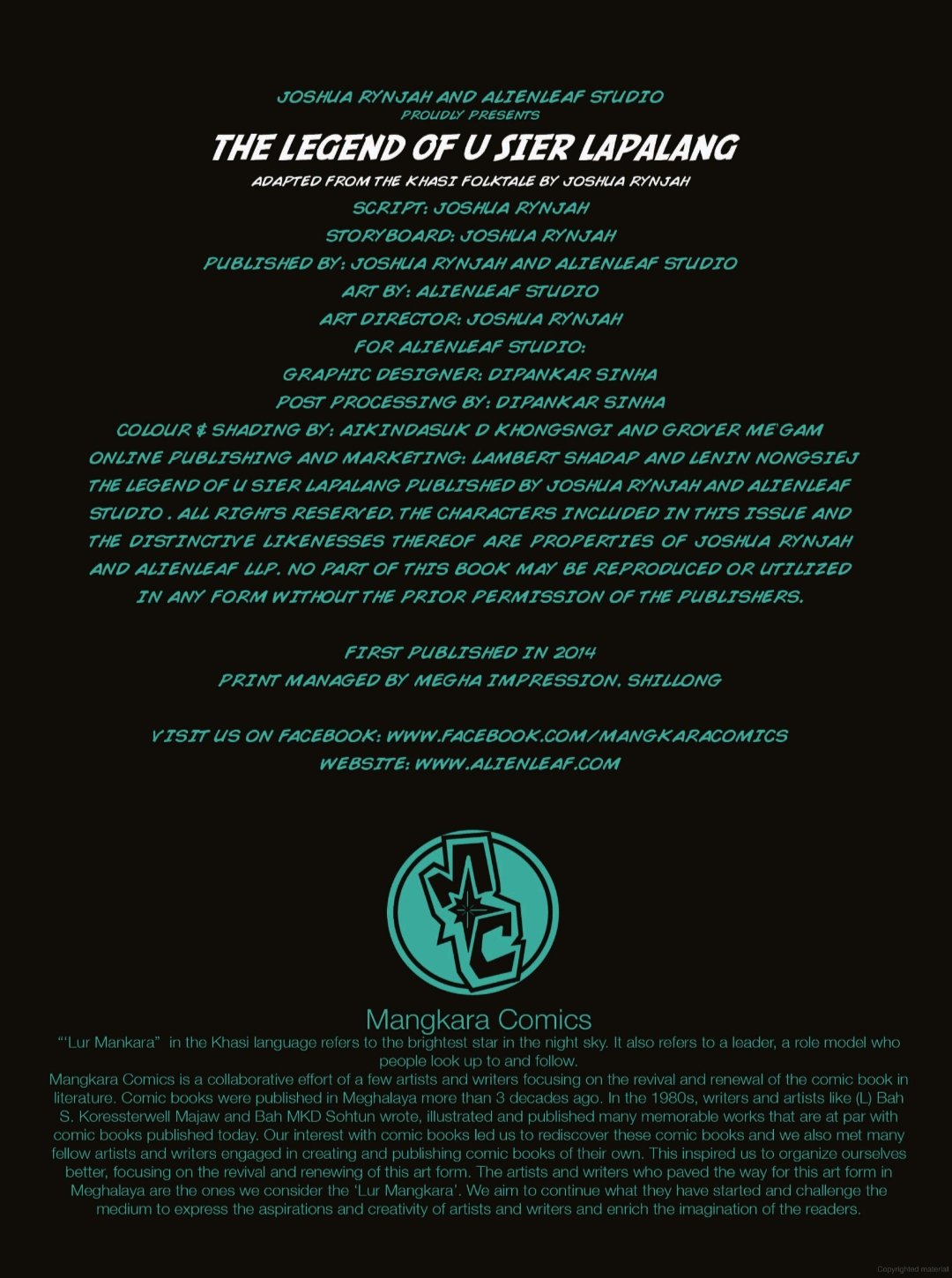
  • The Legend of U Sier Lapalang as a comic book!

    This comic book has been adapted from the Khasi folktale U Sier Lapalang by Joshua S. Rynjah. It was published by Joshua S. Rynjah and Alienleaf Studio in 2014.

    The book is available on Google Play Store as an e-book: https://play.google.com/store/books/details/The_Legend_of_U_Sier_Lapalang?id=e-y4BAAAQBAJ

    Script: Joshua S. Rynjah

    Storyboard: Joshua S. Rynjah

    Art: Alienleaf Studio

    Art Director: Joshua S. Rynjah

    Graphic Designer: Dipankar Sinha

    Post Processing: Dipankar Sinha

    Colour and Shading by: Aikindasuk D. Khongsngi and Grover Me'Gam

    Online Publishing and Marketing: Lambert Shadap and Lenin Nongsiej

    Joshua S. Rynjah is an Assistant Professor in the Department of English, St. Mary's College, Shillong.

  • Mei Mariang Ngan ym ïeh ia phi da i Daohi Manar

    Ko lyer ba beh jai jai

    Pha pynlung ïa mynsiem jong nga

    Pha beh khlem don jingkhuslai keiñ shirta!

    Khublei, A ko lyer pha la pyntngen ïa nga

    Kumno keiñ mynta ba ngan ïada?

    Ha la marwei, nga ïam pangnud, nga da jaw ki ummat

    Ïa Mei Mariang haduh katne

    Khun bynriew "Kim pyrkhat!"

    Pyrthei Mariang ba itynnad

    B'u Blei u ai kyrpang

    Ka shong ha ngi, tang ha nga bad ha phi

    Ïa Mei- Ramew ba ngin sumar ngin ri

    Ki um ba shngiam ba sngur

    Ba ramew la dep pynwandur

    Da khmat ba sngewdiaw, nga peit ïa pha

    Shaei, pat mynta jaka ban rieh: ïa nga

    Ïathuh keiñ shaei "Ngan ïoh jaka?"

    Kjat sngi ba tyngshaiñ, ki wan doh ïeid ïa nga

    Jingkyrmen nga don, ba pham duh ïa jingjyrngam

    Ngan um ïeh ïa phi, keiñ noh….khun, wat ïam!

    Ka ri khlem jingsheptieng, ko ri ki Blei

    Ba dap da jingshngaiñ, Ri Tipbriew-Tipblei

    To kular ïa nga ba phin kamai hok ha pyrthei

    Ïa nga, to sumar-kyndong

    Sa shisien ha phi keiñ nga ong.

    "Mei Mariang – Ngan ym ieh ïa phi"

    – Daohi Manar

    An original Khasi poem by @xdtnoahjupejackllthmanar

    Thank you for sending this poem! The message that man and nature are intricately connected has to be reiterated!!

  • “Mawbynna” by Esther Syiem

    You appear

    to have withstood

    time’s duress

    as you watch

    over a world

    of plastic clutter.

    Your sense of time

    is forbidding,

    but you keep intact

    our self respect.

    You have shut yourself

    in an aura

    that is yours alone.

    Your changelessness

    in flux

    is the only surety

    against the inquisition

    that assails you.

    You are the keeper

    of our past.

    Vertical guardians

    overseeing horizontal quiet –

    wayside offerings,

    arrested in a moment,

    away from passing history.

    Your commodity

    is your soul

    held still, in the

    imbroglio of time,

    as you provide

    shelter and rest

    for wayfarers,

    drawn by your etchings

    in their souls.

    This poem appears in Oral Scriptings: Poems by Esther Syiem (2005) published by Writers Workshop, Kolkata. Dr. Esther Syiem is a Professor in the Department of English, North-Eastern Hill University, Shillong.