Tag: talklocal

  • International Mother Language Day Quiz 1

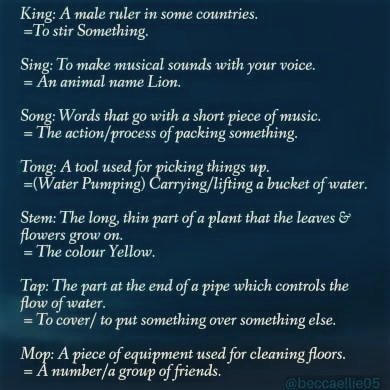
    Kum shi bynta jong ka jingrakhe ïa ka International Mother Language Day, ka Big FM Radio bad ka Speak Your Roots ki wallam ha phi ïa ka International Mother Language Day Quiz! 🗣️🗣️🗣️

    Phah ïa ka jubab jong katei ka jingkylli ba phin jop ïa ka Learner's Khasi Dictionary kaba la pynmih da ka Don Bosco Publications. Wat nym duh ïa kane ka lad ban ïoh ïa kane ka kot kaba kordor!

    Kin don 4 tylli ki jingkylli ha kane taïew haduh ka 21 tarik u Rymphang!

    As part of the celebration of International Mother Language Day, Big FM Radio and Speak Your Roots bring to you the International Mother Language Day Quiz! 🗯️🗯️🗣️🗣️

    Send your answers to the question to the phone number given in order to win the Learner's Khasi Dictionary published by Don Bosco Publications. Don't miss the chance of winning this well-researched and valuable book!

    There will be 4 questions this week leading up to the 21st of February!

  • Dialect Display #2 and #3

    Ngi lah ïoh ïa ki entry ba ar bad ba lai ïa ka Dialect Display! 🗣️🗣️

    Kaba nyngkong ka dei na Jowai, khublei shibun @xdtnoahjupejackllthmanar bad kaba ar ka dei na Mairang, khublei shibun Nangsan Basaiawmoit! 😃🙏

    We have our second and third entries from Jowai and Mairang 🥳🥳

    Ngi dang khmih lynti shuh ïa ki videos na ki ktien shnong ba pher ba pher ka ri Khasi Pnar!

  • Ka Sohra

    The following excerpt is from U Khasi Hyndai (1959) written by Rash Moon Roy Nongrum

    43. La don bun jait ki ktien ha kane ka Ri Khasi Ri Pnar jong ngi ba ngi ia kren hapdeng jong ngi bad ngim lah ban ia sngewthuh lut baroh ia ki ktien ba ki ia kren na kawei ka jaka ha kawei ka jaka.

    44. Na ka bynta ka jingbha ko jingbit jong ngi, U Pa Blei Trai Kynrad, U Nongthaw, U Nongbuh, U la pynmih ia kawei ka kynthei briew kaba la iathuh kyrteng ialade Ka Sohra. Kata Ka Sohra ka la wan poi ha lew Mawshohdoh. Kane ka shnong Mawshohdoh kaba don shi mail artet na Sohrarim.

    45. Kata Ka Sohra ka la kren tiak tiak, shliak shliak, ha ka sur ktien kaba jem jai jai. Ym don ba tip nangno ka wan poi hangta ha Shnong Mawshohdoh. Ka hikai ia ki briew baroh ban nang kren ia ka ktien Sohra. Ka riam ka beit ka kup ka sem ruh thabdiab kum ka nongsohra paka kaba mynta.

    46. Baroh ki para ba ia shong hangta ha Mawshohdoh ki la ia sngewbha bad sngewtynnad ban ia bud bad ban ia kren ka ktien kum kata Ka Sohra.

    Kata ka kynthei briew Ka Sohra ka la thaw la ka ïng ka sem bad ke la ker kper shaduh ki them ki phud wah ba leit hap haduh ka wah bah. Ka Nongrim
    Sohra ruh ka sah kyrteng haduh mynta.

    Naduh kata ka por ia ka Wah bah baroh shilynter ruh ki la khot Wah Sohra. Kata ka kyrteng Wah Sohra ruh ka la neh la sah kyrteng haduh mynta.

    47. Ki Sohra kiba la mih na Mawshohdoh mian pa mian ki la wan poi arsut pa arsut haduh ba kin da wan poi ha kane ka shnong Sohra kaba mynta, kaba dei Ka Sohra Thymmai. Ka Sohrarim te dei kaba la don la barim barim.

    48. Ki Sohra kiba la mih na Mawshohdoh ki la nang pynroi pynroi ia ka ktien Sohra. Haduh mynta ia ka ktien Sobra ki khot ka ktien Khasi paka.

    49. Ka ktien Sohra kaba hikai ban kren tang da ki ktien kiba don akor suda, lada ha ka iaid ka ieng ka ktien ka thyllieid dei ban kren tang da ka Akor kaba bha.

    50. Ka ktien Sohra ka hikai ban long kiba jemnud ha ka mynsiem ban nym long kiba bitar kiba khong khong.

    Ka ktien Sohra ka hikai ban nym kren ka ktien kaba iwtung lano lano lane iano iano.

    Ka ktien Sohra ka bikai ban tip ba ka Hok ka long kaba halor tam eh. Ka Hok ka jop ha kaba kut haba da iaineh ha ka Hok.

    Ka ktien Sohra ka hikai ban mane ban nguh ngon ban dem khrup tang ha la U Blei U Trai Kynrad U Nongthaw U Nongbuh ia lade.

    Ka ktien Sohra ka hikai ban mane ban burom la ki Kmie ki Kpa ki nongpun ki nongkha, ki nongpynsan pynrangbah.

    Ki Kmie ki Kpa ki long ki Mei Ïawbei Pa Thawlang.

    51. Baroh kiba mynta ki iathoh ki ia pule ruh tang ha ka ktien Sohra. Ka ktien Sohra kan sa phriang kylleng baroh ka Ri Khasi Ri Pnar. Hangta ngin sa long tylli baroh kawei ka Ri Khasi Ri Pnar.

    52. Ka Sohra ka shu jah noh haba ki briew ki la nang ban kren ia ka ktien Sohra. Ym don ba tip ba ka poi shano.

    53. U Khasi Hyndai um ju don ka ngeit bieit, namar ba u tip ba tang U Pa Blei Trai Kynrad hi, U long U Nongthaw U Nongbuh. Marwei hi U la thaw ia ki symbai bynriew. Nalor nangta ki thang ia ka met iap, kim ju tep hapoh thliew

    ia kiba iap, kiba tip ban thang ia ka met iap ruh dei tang ki briew. Namarkata ki ksuid ki tieng ki khaweit ia u Khasi Hyndai namar ba ka jingngeit bieit kam don ha uba hyndai u Khasi. U Khasi Hyndai u ong ba ka Hok ka long kaba kor tam bad kaba halor tam, namar ba uba hok um tieng iano iano ruh. U Khasi Hyndai u ong ba ka Hok ka jop ha kaba kut. Namarkata u Khasi Hyndai u ieng skhem tang ha ka Hok. U Khasi Hyndai uba ieit la ka Riti Khasi kaba neh ha ka Hok. U Khasi Hyndai uba kynshi uba isih eh ia ke Raibi kaba sniew eh.

    The following excerpt is from Funeral Nights (2021) by Kynpham Sing Nongkynrih

    At around this time, there was a fierce dispute between the people of Mawphu from the Khathynriew Shnong province and the people of Laitïam, in the south-east. The people of Laitïam were backed by two other villages, Ryngud and Sohbar. Both claimed ownership of a large tract of land bordering the heavily wooded River Umïong that extended up to another river called Risaw, north of Umïong. Soon, a protracted war broke out. The Mawphus killed the warrior leader of the Laitïams, called U Dei, near a place known as Nongsawlia; however, the LaitÏams retaliated and killed the Mawphus' warrior leader, called U Sohmen, not too far from where Dei had fallen. These places came to be known as Pomudei and Pomsohmen, that is, the hacking-of-Dei and the hacking-of-Sohmen. At this juncture, the founding clans of the new settlement of Sohra intervened. They talked to both parties about how futile and destructive the war had already been, and offered the idea of merging all their villages into a single hima, or state, comprising the provinces of Khatar Shnong, Khathynriew Shnong and Ki Lai Shnong–the three villages of Laitïam, Ryngud and Sohbar. The warring parties readily agreed, and a new state was born out of the war.

    The founding clans now began to look for a syiem, a king, who would be wholly responsible for the day-to-day administration. But nobody wanted a king from one of the other clans. They did not want to grant that kind of power and prominence to one who was not their own. It was when they were sitting in an open dorbar (council), trying to find a ruler, that a gentlewoman of divine grace mysteriously appeared out of nowhere and declared in front of the founding clans that her children would be the kings of the new state. When asked for her name, she said, 'Sohra, and when asked for her purpose, she said, 'My purpose is to teach grace and good manners to the people'.

    From that time, the new settlement was known as Sohra (for the settlement itself), Hima Sohra (for the state of Sohra) and Ri Sohra (for the country of Sohra). The names were given in honour of the mysterious woman, who, true to her word, tutored the people in the ways of civilised living and refined manners. It is for this reason that the community regards Sohra as the birthplace of Khasi etiquette and good conduct–'ka akor Sohra', a kind of savoir-vivre.

    But though the woman was accepted as divine, or at least as an agent of divine intervention, nobody thought of asking her what her name meant. It was only much later that people realised that she had chosen a name to reflect the most typical feature of the Sohra landscape. Since it is the wettest place on earth (I am sticking to this assertion because, although Mawsynram, the other East Khasi Hills village, has recorded higher precipitation now and then, the matter is far from settled–rain being a notoriously whimsical thing) and has a gently sloping tableland overlooking the plains of Bangladesh, Sohra has no topsoil. All of its topsoil has been washed away, either to the fertile and heavily forested gorges at the foot of the tableland, known as Ri War (where the War people live in their bountiful jungle farms), or to the plains of Sylhet, which are transformed every summer by the pelting rain of Sohra into a gigantic inland ocean. It follows then that Sohra is a place where nothing grows. And that is the meaning of Sohra: fruitless. In a way, the name completely justifies the description of the place as the wettest desert on earth.

    These two excerpts are about "Sohra": the origin of the name "Sohra" and the origin of the Sohra Khasi which is now spoken as the standard Khasi. Besides that the two exceerpts talk about the teaching of Khasi grace and manners which are valuable lessons for our children today! Very interesting! 👍👍

    Picture credit: https://www.tripadvisor.com/LocationPhotoDirectLink-g668046-i84372639-Sohra_East_Khasi_Hills_District_Meghalaya.html

  • Dialect Display #1

    Ngi sngew kmen ba ngi lah ïoh ïa ka entry kaba nyngkong! 😀😀

    Kane ka video ka dei na i Bah Kestar Wahlang, iba dei na Mawsynram. Ha ka ktien Mawsynram ka long kumne harum:

    "To mut bha to krian beit bad to leh hok, Lada phi im phi ïap noh bæ syrtok, To ieid ïalahui, burom ïa ki bru, Bu phin suk ha pyrthei bu phin suk ha u Blei."

    Khublei Shibun Bah Kestar ïa ka jingkyrshan jong phi! 🙏🙏

    We are happy to have our first entry!

    This video has been sent by Kestar Wahlang who is from Mawsynram. You can read the Mawsynram dialect above. 👆

  • International Mother Language Day Big FM & SYR 2022

    Ka Big FM Radio bad ka Speak Your Roots ki ïa snoh kti lang ban rakhe ïa ka International Mother Language Day kaba dei ha ka 21 tarik u Rymphang. 🗣️🎙️📝🗯️

    🟡 Ïa katei ka dkhot ha ka video la shim na Ka Jingsneng Tymmen Shaphang Ka Akor Khasi Ha Ka Rukom Rwai Phawar, Part I ba la thoh da U Radhon Singh Berry Kharwanlang. Ka long kumne harum:

    "To mut bha, to kren beit bad to leh hok,

    Lada phi im phi ïap noh ruh syrtok;

    To ieit ïalade burom ïa kiwei,

    Ba phin suk ha pyrthei, phin suk h’'U Blei…”

    Ngi khmihlynti ïa ka jingïashimbynta jong phi ban pynsngew ïa ki ktien tynrai, ktien shnong jong phi ïa baroh! 😃😃

  • Namar ba ka dohnud u briew…

    "Namar ba ka dohnud u briew ka dei ka jaka kaba rit eh ha kaba ka jingsngew jong u ka shong; pynban, dei na kata ka jaka ba ka bor kaba synshar ïa ka jingim jong u kaba man ka sngi ka wan mih, bad ba kane ka bor ka pynproh ïa ka jabieng jong u haduh katta katta ba u lah ban ïohi ïa kiei kiei kiba phylla kiba don ha lyndet ka jingïohi ki khmat jong u…"

    – La shim na U Don Putit Bad U Khlieh Ka Khnap Masi (1978) ba la thoh da u Dewi Singh Khongdup

    "Because the heart of man is such a small space where his emotions dwell; yet it is from this space that the power and energy that rules over his life everyday emerges, and it is this power and energy which sharpens his brain, to the extent that he is able to see incredible and wonderful things which lie beyond the vision of his eyes…"

    -Translated from U Don Putit Bad U Khlieh Ka Khnap Masi (1978) written by Dewi Singh Khongdup

    The heart and the mind, "ka dohnud bad ka jabieng" as the passage says energise our existence. ❤️🧠

    The series of books on the character of U Don Putit by Dewi Singh Khongdup are entertaining and humourous and also contain valuable lessons for human life.

  • Bah Khasi

    This image is perhaps the quintessential Khasi Bah whom we see from time to time 😄 From the coat to the muffler-turban worn on his head.

    Ka don kyrteng katei ka rukom spong? Is there a particular name for this muffler-turban?

    Khublei Shibun @kronosynchronicity for sending this picture! 😀🙏

    Photo credit: @kronosynchronicity
    In frame: Bah Biam (authorised)

  • Orkyndok

    Kaei ka "orkyndok"?

    Ka orkyndok ka dei ka synduk buh jingpruid.

    "Ka orkyndok" is the matchbox.

    A small package housing many fires 😂😂🔥🔥 "Ka orkyndok" feels quaint and quirky somehow.

  • War Jaiñtia Dialect

    Ma – Mei – Mother

    Pa – Pa – Father

    Bua ji – Bam ja – To eat rice

    Deh cha -Dih sha – To drink tea

    Rhen – Lynti – Road

    Am -Um – Water

    Ïu-nga/ Shnga – Sngi – Sun

    Pnu – Bnai – Moon

    Jeprow – Briew – Person

    Derow – Samla – Youth

    U Pra – U Blei – God

    Hun – Khun – Son/ Daughter

    Jeme/ Dia – Jaiñ – Cloth/ Clothes

    Pdeng – Lum – Hill

    Phliang – Suiñbneng – Sky

    Lia -Leit – Go

    Hynbo – Khynnah – Child

    Sere – Lyer – Wind/ Air

    These are some words from the War Jaiñtia dialect sent by Sunrise Pohtam 🏞️🌲
    Khublei Shibun for sending this list of words! 🙏😄

  • Meghalaya Rivers by Joe Rea-Dickins, Dan Rea-Dickins and Zorba Laloo

    'This book does justice to the fabulous find that Meghalaya is for the global whitewater community. This is pretty much the best guidebook I have ever seen and it indeed has lived up to and beyond what I expected with this book.

    -Shalabh Gahlaut, pioneer of Indian whitewater

    'This guidebook is an awesome resource which has put Meghalaya on the whitewater world map. It is colourful, detailed and well-researched – both in content and photos. It is the Lonely Planet for whitewater in Meghalaya!'

    -Anvesh Singh Thapa, Expeditions India.

    'Good river guidebooks are a joy. They excite the reader with the possible, explain and describe the probable. They tell histories, both natural and personal. They inform and entice their readers without giving it all away. This guide to Meghalaya's whitewater satisfies all these prerequisites, and does it in colour with engaging maps too. It's enough to send any whitewater enthusiast to this tropical paddling paradise.

    -Roman Dial, author of Packrafting! An Introduction and How-to Guide

    'The' "must-get" guidebook for anyone going to Meghalaya. This guide is simply the best tool to discover the rivers of this magical whitewater territory that is Meghalaya. Culture, flora, fauna, medical hazards, history and rivers, of course–it is all in there!'

    -Philippe Doux, publisher, Kayak Session magazine

    Praise and Reviews for "Meghalaya Rivers"

    A joy of a guidebook; on the rivers, it tells you just enough so as to leave you that feeling of exploring and off the rivers, it answers the questions you will want to ask. Add to this anecdotes, descriptions of descents, tales of terror and exhilaration and sections on the botany, geology, geography, wildlife and culture folktales of Meghalaya and you have the complete works.'

    -Dave Manby, pioneer of whitewater exploration

    'Much more than just your typical kayak guidebook: an immersion in Indian culture with many interesting and useful facts both on and off the river. These three individuals have worked very hard finding and documenting these river gems. The knowledge they have in the area is unmatched by anyone and I am stoked to see all their work put together in this epic guidebook of Meghalaya.'

    -Aniol Serrasolses, 2016 kayak world champion

    Author Profile: Zorba Laloo

    After his studies in Shillong and Darjeeling, Zorba worked with independent documentary film-makers for the BBC, National Geographic, and other leading Indian and European television. He was researcher and cameraman for the "Darjeeling Himalayan Railway", a documentary that received an award from the Royal Television Society, UK, in 2010. As a crew member for the Swiss-owned expedition company Ribexpeditions, he completed several source-to-sea expeditions under the tutelage of seasoned leaders. Inspired by rivers, he started paddling in Meghalaya and Northeast India with friends for sport and exploration. They were the first in India, and among the first in Asia, to start using packrafts. In 2012, he received the 'Golden Paddle Award' from the American Packrafting Association for his contribution in promoting paddlesports and river conservation. Disappointed by the lack of opportunities for students to experience the outdoors in Meghalaya, Zorba co-founded Campfire Trails, which has, to date, catered to almost 2000 students. Campfire Trails also works closely with villages to help design and develop sustainable eco-rural tourism projects, for which, it received the NEDFi Award for social entrepreneurship in 2015.

    Author Profile:

    Dan Rea-Dickins Dan has worked as a river guide in Scotland, Kenya, Uganda, Iceland and Switzerland. He has some notable descents to his name, the first and only descent of Charnia Falls in Kenya, being a safety kayaker and photographer for the first commercial rafting descent of the Murchison section of the White Nile and he also crossed Iceland by traversing the Vatnajökull glacier and packrafting the Jökulsá á Fjöllum river. Dan achieved all of this in between seasons in India. He has now shifted his focus and is training to be a paramedic in Liverpool, enjoying regular laps on the rivers of North Wales during his time off.

    Author Profile:

    Joe Rea-Dickins At age eighteen, Joe headed to India to work as a journalist for the New Indian Express, and with that his love affair with India began. After a second gap year, Joe moved to Aberystwyth, a secluded Welsh town to study international politics. In his second year of studies he was selected for the British Universities Kayak Expedition team and travelled to Venezuela for his first taste of expedition kayaking. In the years since graduating from university, Joe has spent almost as much time in South Asia as he has in Europe. Joe has raised money for women's education in Northern Pakistan through the release of two British-made kayak films "High" and "Too High'. He has worked in Delhi as a video editor for the Outdoor Journal, India's first international active-lifestyle and adventure magazine. Joe shot, edited and directed "The All India Kayak Expedition", a six-month rolling expedition to explore many un-paddled rivers in India. In 2016, Joe was part of a team that kayaked the Panjshir river in Afghanistan. They paddled around 130 km of whitewater and since the trip, he has raised awareness about the unique and often-misunderstood region. Now in the UK, Joe runs an aerial-photography business while formulating grand plans for more exploratory trips to far-flung locations.

    About the book:

    East India is the small culturally rich hill state of Meghalaya. Meghalaya receives the heaviest rainfall anywhere on Earth and all this water creates rivers that are some of the steepest and most powerful on the planet. Its rivers are steeped in a folklore that was shared over campfires and hearths back in a time when its people had no written word. These rivers are the bedrock of folklore and are surrounded by diverse natural beauty. This wild frontier has recently caught the attention of whitewater paddlers from all over the world. Six years of research by international and local paddlers has culminated into this one-of-a-kind book. More than just a guidebook, Meghalaya Rivers shares previously unpublished folk stories, personal accounts from river descents, detailed maps, insights into the unique culture, history, flora, fauna, environment and geography of this enchanting part of the globe. Not only is this book full of breathtaking photography from some of the most difficult-to-reach corners of Meghalaya, it is also packed with all the information needed to take you to these wild places. Now all you need to do is go and see them for yourself.

    "Meghalaya Rivers" (2018) is a valuable book that everyone of us should have! 🏞️

    Khublei Shibun @z.meghalaya for sending this! 😄🙏

    Ki um ki wah ka ri Khasi ki long ki jingai ba kordor bad ba kyrhai jong ka mariang kiba la pynphuh bad pynim ïa ka jymbriew, ki riti ki dustur, ki khanatang, ki khanaparom bad ka rukom im jong ka jaitbynriew hi baroh kawei.

    Ki dei ki kot kum ka "Meghalaya Rivers" kiba la pyni sha ka pyrthei ïa ka jingriewspah jong ka mariang ha ka ri Khasi. Ki dei kine ki thied jingim kiba ngi dei ban ri ban sumar na ka bynta ka mynta bad ka lawei ruh kumjuh. Kumba la lam lynti ha ka kot, ngi dei ban sngewthuh ïa ka jingkynsai jong ki um ki wah jong ngi. Ka shong ha ngi ban pyrshang katba lah ban pynman pynneh ïa ki ym tang kum ki jingitynnad jong ka mariang, hynrei kum ki jingmyntoi kiban kyrshan ïa ki shnong ki thaw ha kiba kine ki wah ki tuid.