Category: Phrases

  • Ksan Rympei, Rem Dorbar and Khraw Jutang

    Ksan Rympei Rem Dorbar

    U briew uba heh ka nia ka jutang tang ha kyndong bad ha rieh, hynrei uba suhjer ban ang shi kyntien ha khmat ka dorbar, ne ka jingïalang.

    An individual who is a big talker with a few, where not many can hear him or her, but who is afraid to even utter a word in a gathering or in front of people.

    Khraw Jutang

    U briew ne ka briew kiba khlei ïa ka ktien kaba long ka soskular, ka jingïasaid bad ka nia kaba man skhem bad shisha.

    An individual who gives his or her word of honour, possessing promise and a well-grounded argument, bearing strength and truth.

    The Khasi phrases "Ksan Rympei, Rem Dorbar" and "Khraw Jutang" may be said to be opposites of each other.
    Khublei Shibun @kakhadduh for mentioning this. You had said this some time ago 😄😄

    🟡 Khasi and English explication by @speakyourroots

  • Kyntem ñiuhmat

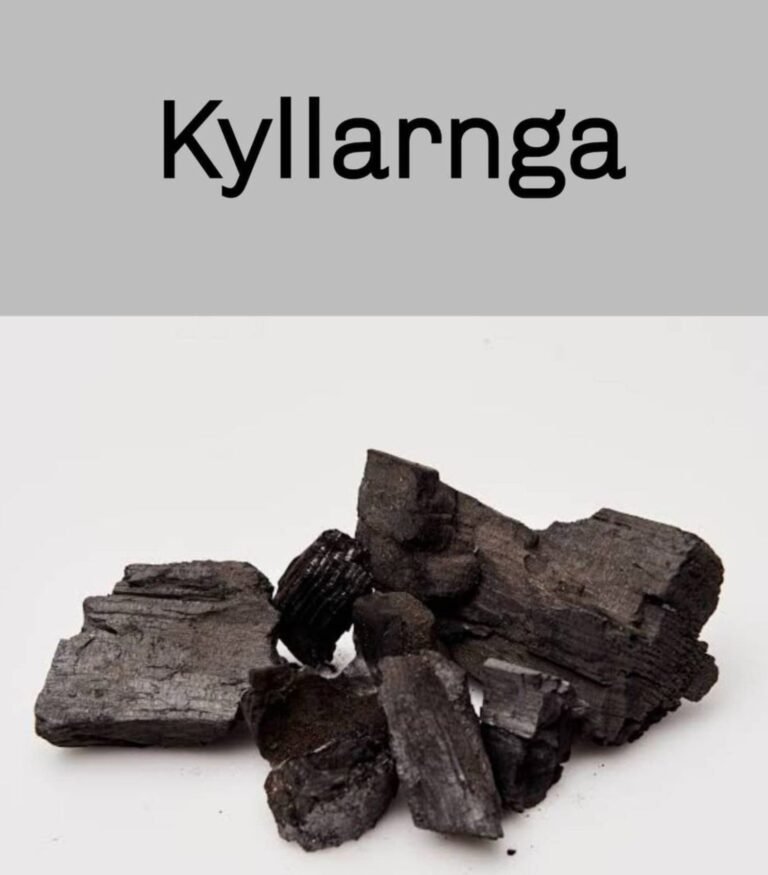
    Ka ktien Khasi "kyntem ñiuhmat" ka mut haba ïa u briew uba i jaipdeh ne haba ka jingjaituh la ithuh na ka jingnoh bad jinghiar u ñuihmat shapoh khyndew. Lah ban ong ruh ba ka "kyntem ñiuhmat" ka pynwan ïa ka jingnoh jaituh jong ka dur bad ka met baroh kawei. Kam don ka jingsngew smat sngew sting bad kam don ka jingkyntu nalade ban leh eiei.

    The Khasi phrase "kyntem ñiuhmat" refers to instances when the laziness and indolence of a person is evident in the downward bend of the eyebrows or in long drooping eyelashes. It may be said that "kyntem ñiuhmat" creates an image of a lethargic and sluggish person. There is no spring of activity and there is also no motivation to do anything.

    "Kyntem ñiuhmat" is a Khasi description of a facial expression that we have all made 😄😅 Hopefully "kyntem ñiuhmat" is only a temporary phase 😜

    Ha ka Khasi ngi lah ban ong: "U la kyntem ñiuhmat haba u la ïohi ïa ka lyngkha ka bym pat dep puh."

    🟡 English translation by @speakyourroots

  • Blooh Tayaw

    "Blooh tayaw" toh i rukom klam yong ki Puar iwa mut ya iwon iwon i kám iwa u bru sñiawsuk u u leh, kat kam i jingsñiaw yong o.

    Ye i u ong kamni: "I lai khwe tœ toh i blooh tayaw wot u sœ!"

    Tanqwa toh u kûnmo wa klam ki ki ini i ktien du hawa klam ke hi eh.

    "Blooh tayaw" ka dei ka jingong Pnar kaba lah ban pynkylla sha ka Khasi kum ka "Mluh taïew". Kane ka mut ïa kano kano ka kam kaba u briew u sngewtynnat ban leh kat kum ka jingsngew jong u.

    Ngi lah ban pyndonkam kumne: "Ka leit khwai te ka dei ka blooh tayaw jong u keiñ!"

    Tangba dei ban kynmaw ba kane ka jingong ka dei tang ka rukom kren kai bad haba kren biria.

    "Blooh tayaw" is a Pnar phrase which means any task or hobby a person is fond of and likes to do. It is literally translated as "a weekly salt".

    We can say for instance that if someone is fond of angling, then that is his "blooh tayaw".

    It should be remembered that this phrase is used only in colloquial and casual conversation and not in formal speech.

    Here is a Pnar phrase which is a witty way of referring to a person's hobby or something that he likes to do 🚴⛹️💃🤹 "Blooh tayaw" thus becomes a significant part of someone's way of life and personality. 😄😄

    🟡 Pnar, Khasi and English explication given by @speakyourroots

  • Ut-shi-ut

    "Ut-shi-ut" ka mut haba suki jai ne haba ïai buh teng. Ha ka senten ngin ong, "U trei ut-shi-ut ïa ka kam khlem dep shuh".

    "Ut-shi-ut" is an adverb which means someone who is slow and sluggish in doing things or someone who procrastinates.

    "Ut" also means "camel" in Khasi, so "ut-shi-ut" may be a reference to the rhythm and measured pace at which a camel walks.

    Khasi adverbs are witty and visually descriptive, along with an emphasis on the aural quality of words. 🗣️👌

    🟡 English translation by @speakyourroots

  • Tep eit miaw

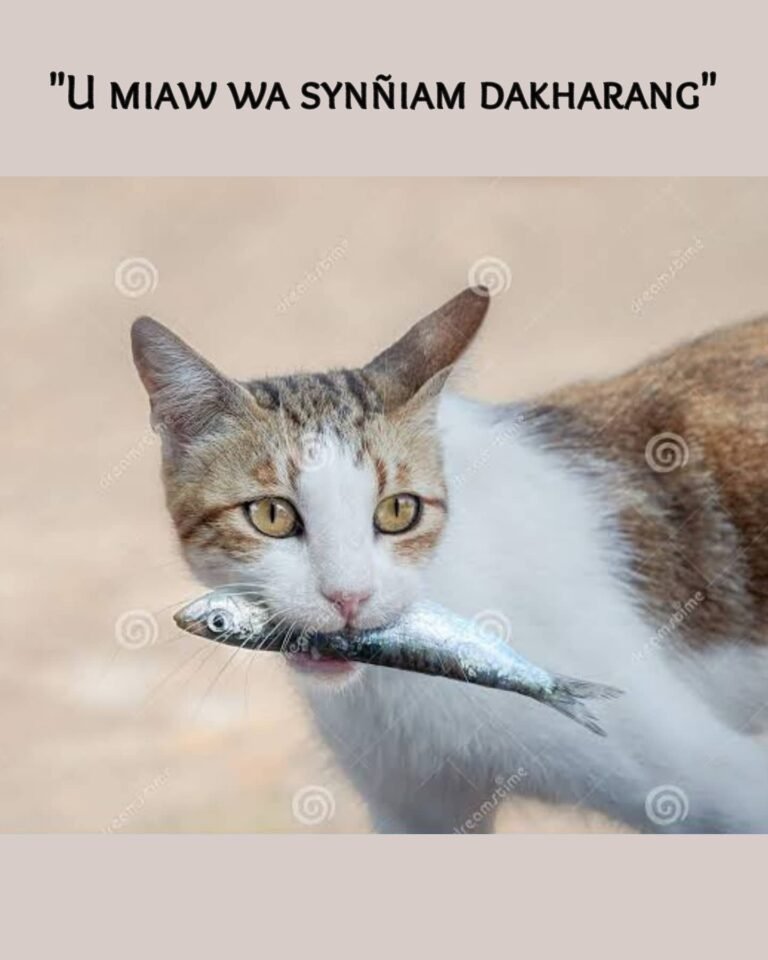
    Ka jingong "Tep eit miaw" ka don ar jingmut.

    Ka jingmut kaba nyngkong ka long ban leh klet ïa kaei kaei.

    Ka jingmut kaba ar ka long kaba pyrshang ban tap noh ïa ka jingshisha jong kaei kaei da kaba pyni daw da kumne kumtai.

    The Khasi phrase "tep eit miaw" has two meanings.

    The first meaning is to pretend to be forgetful of something.

    The second meaning is the attempt to cover up the truth about something with frivolous reasons or excuses.

    "Tep eit miaw" is a Khasi phrase that literally means to bury cat poop 😸💩 Love the graphic imagery of Khasi phrases! 😂

    We've all definitely been in such a situation 😂😅 And there's nothing like indigenous sayings to drive home a point.

    🟡 English translation by @speakyourroots

  • U ‘Wai Sohlaper Pep Ïew

    U 'Wai Sohlaper Pep Ïew

    U 'wai sohlaper u dei u sohkwai khlaw uba rit khria-khria bad ïa une u kwai kim ju leit die ha ïew.

    Ka jingong "u 'wai sohlaper pep ïew" ka thew ïa ki briew kiba ïai buh teng ïa ka kam haduh ban da dier ka por bad ban da pep artat.

    "U 'wai sohlaper" is a small variety of betel nut eaten for its good taste, but it is not sold in the market.

    The phrase "u 'wai sohlaper pep ïew" refers to a person who procrastinates, leaving work incomplete until it is too late and ultimately abandoning it.

    The Khasi phrase "U 'Wai Sohlaper Pep Ïew" reminds one of Hamlet and his long-drawn procrastination 😄😅 This phrase is quite apt in the sense that 'wai laper is not sold in the market, so going to market is left for another day 😅

    Photo credit: @nongkyndong_lens
    Khublei Shibun! 😄🙏 Lah ïoh pyndonkam biang ïa ka dur jong phi.

    🟡 English translation by @speakyourroots

  • Lehraiñ uba peit ïa uba eit!

    Kane ka jingong ka thew ïa kano kano ka kam kabym i dei satia ban leh, kaba sngew lehraiñ, kaba i jli ban peit ne kaba lah palat ïa u pud. Ka lah ban long ruh ha ki khep ba la kren ïa ki ktien ki bym dei.

    Ïa ki nongpeit ne nongsngap kane ka wanrah ïa ka jingjahburom ne ka jingbudnam ïa uta u briew. Tangba une u briew u leh beit khlem ka jingsngew mynraiñ na ka bynta ïalade bad kam don ka jingsyier ha ka jingïatiplem jong u ruh.

    This Khasi phrase literally translates into the shame and embarrassment felt by the onlooker instead of the one defecating, when he sees this happening 😅😅😆😆

    Symbolically, the phrase describes the shame, embarrassment or disgust that arises in onlookers, from something wrong that should not be done, from something that crosses a limit or upon hearing inappropriate words that should not be said.

    This situation brings dishonour or questions the integrity of a person. However, the person committing the act is least bothered and feels no prick of his conscience.

    "Lehraiñ uba peit ïa uba eit" is an apt Khasi equivalent to those face palm moments that will not end!! 😆😆😂😂

    This is one of those phrases that defy translation, whose sense will only be understood if expressed in the indigenous language 🤌🤌🤌

    Sngew met da ka ktien la jong hi! 😄😄

    🟡 Khasi and English explication by @speakyourroots

  • Langwarku Sang Khyndew

    Langwarku Sang Khyndew

    (Ka Langbyrkaw ne Ka Langwarku)

    Ïa ka "Langbyrkaw"/ "Langwarku" ju ïohsngew ïa ka ba ka pah wat la ka long kaba kham ñiar ban ïohi ha ki lawbah lawsan. Kane ka sim kam ju kham hiar sha khyndew.

    Ïa ki briew kiba juh ban shong bad pynlut por ha la marwei bad kiba salia ban ïashem ïakynduh ïa kiwei la ju sin ka "langwarku sang khyndew".

    The "Langbyrkaw" or the Blue Throated Barbet is heard in deep forests even though it is difficult to be sighted. This bird never sets foot on the ground.

    If there are individuals who like to be alone and to spend time by themselves, not wanting or liking to meet other people, they are nicknamed "langwarku sang khyndew".

    Kane ka dei ka "Langbyrkaw" ne "Langwarku" 😄😄

    In English it is called the Yellow-footed Green Pigeon. This is corroborated by H. O. Mawrie in his book "The Khasi Milieu" (1981).

    The Yellow-footed Green Pigeon has a bright coloration and possesses yellow legs and an orange-yellow neck. It can be identified by its gray-colored strip present on each shoulder. Both males and females look similar to each other. This bird is not really vocal, but it gives cooing whistles on occasion. (Source: https://kidadl.com/animal-facts/yellow-footed-green-pigeon-facts)

    Photo credit: https://ebird.org/species/yefpig1

    Khublei Shibun @longnamkharpuri ba phi la ïarap ban ïoh ïa ka dur bad ïa ka jingtip kaba dei 🙏🙏 Khublei Shibun @duwaki9 ïa phi ruh 😄

  • Ngai-ly-ngai

    "Ngai-ly-ngai" ka dei ka adverb kaba mut kum haba hap arsut najrong, kum haba ong "ka wah ka tuid ngai-ly-ngai na u lum".

    Bunsien haba ngi pyndonkam ïa ki ktien "ngai-ly-ngai" ka dei ban thew ïa kane ka jingsngew ne ka jingïohi kumba noh arsut najrong.

    Shuh shuh, ngi pyndonkam ïa ki ktien "ngai-ly-ngai" ban pynpaw ïa ka jingbun jong kiei kiei, kum haba ong "ki syntiew ki phuh ngai-ly-ngai ha ranab lum".

    The adverb "ngai-ly-ngai" is used to mean to fall from a height. To use it in an English sentence: "a river flows ngai-ly-ngai from a hill"

    Often when we use "ngai-ly-ngai" to describe the feeling, sensation or the sight of falling or descending downwards from a height.

    Further, "ngai-ly-ngai" is also used to denote the multitudinous number of something, as in a mass of flowers blooming on the side of a hill.

    Ki don ki ktien kiba ngi ju pyndonkam man la ka por bad ngi sngew kumba ngi tip ïa ka jingmut jong ki. Tangba da lah dei ban batai ïa ka jingmut jong ki ngi lap ba ka pher na kaba ngi ju pyrkhat. "Ngai-ly-ngai" ka dei kawei na kine ki ktien 😄

    Khublei Shibun @bah_komiks ba phi la pynkynmaw ïa kine ki ktien 🙏🙏

    There are words which we use all the time and we think we know their meaning but when it comes to giving a proper definition of them, we find that their meaning is very different from what we had thought. "Ngai-ly-ngai" is one such example 😄

    🟡 English translation by @speakyourroots

  • Some Pnar Phrases

    Pnar phrases

    "Ka buit ïyrngam"

    "Ka buit ïyrngam" is a cunning idea that a person thinks of.

    "I kam wasmet"

    "I kam wasmet" is a good cause that will help and benefit people and bring a promising future.

    "Sing chylliah"

    "Siang chylliah" is to breathe one's last breath.

    The books of (L) Mrs. P. P. Pasleiñ are a precious find! 😃 Here are some Pnar phrases from her book The Depth of Thwai Syiem (2001) 🍃🌱