Category: Phrases

  • Rangbah Joit

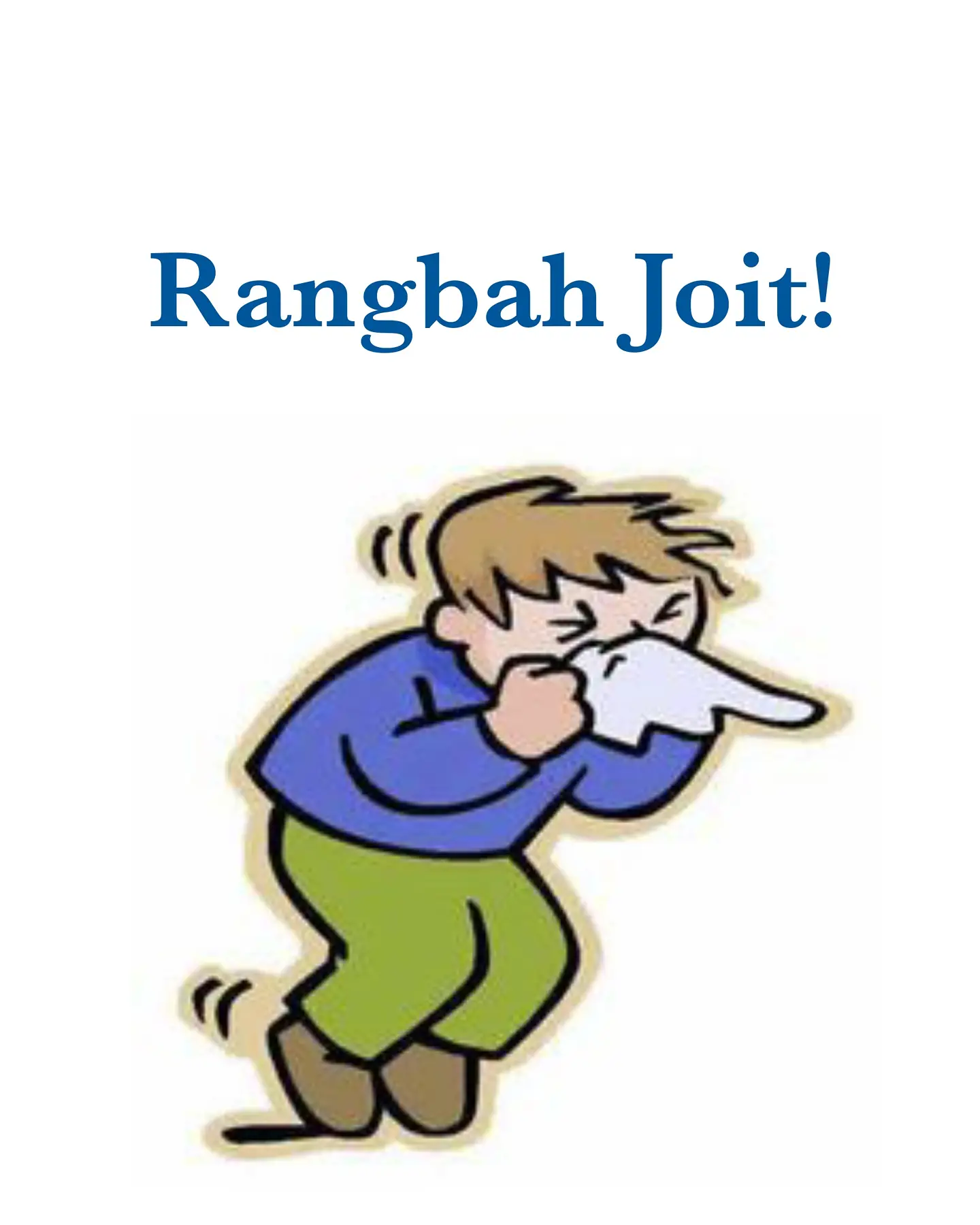
    Ngi ju ong "Rangbah Joit!" haba ki khynnah ki synriah. Kane ka rukom kren ka long kum ka jingkyntu ïa ki hep barit ba kin heh kin san, ba kin koit kin khiah.

    The Khasi word "Rangbah" means an adult or a grown up. The word "joit" means to do (or act) something immediately or quickly and also implies the motion of standing or moving up. Together the words form a phrase that is said when a child sneezes. When said after a child sneezes, the phrase is a kind of exhortation for the child to grow and develop in good health and spirit, without obstacles.

    Here are some responses to sneezing from different countries:

    In Dutch they say "Gezondheid" which means "Health!", the equivalent of "Gesundheit" as said in English or if the person has sneezed three times "(Drie keer) morgen mooi weer" which means "(Three times) the weather will be nice tomorrow."

    In Albanian they say "Shёndet" (shuhn-det) which means "Health!".

    In Assamese they say মঙ্গল হওক (môngôl hôwk) which means "May good happen."

    In Bulgarian they say "Наздраве" (Nazdrave) meaning "To your health" or "Cheers".

    In Cambodian they say សុខភាព (sokhpheap) which means "Health".

    In Hawaiian they say "Kihe", "a mauli ola", or simply "Ola" meaning "Sneeze, and you shall live", or simply "live"

    "Rangbah Joit!" is an expression in Khasi that is said when a child sneezes. It echoes a sense of comfort and well-being that is a great way to make a child feel! 🧍🧍🌻🌻
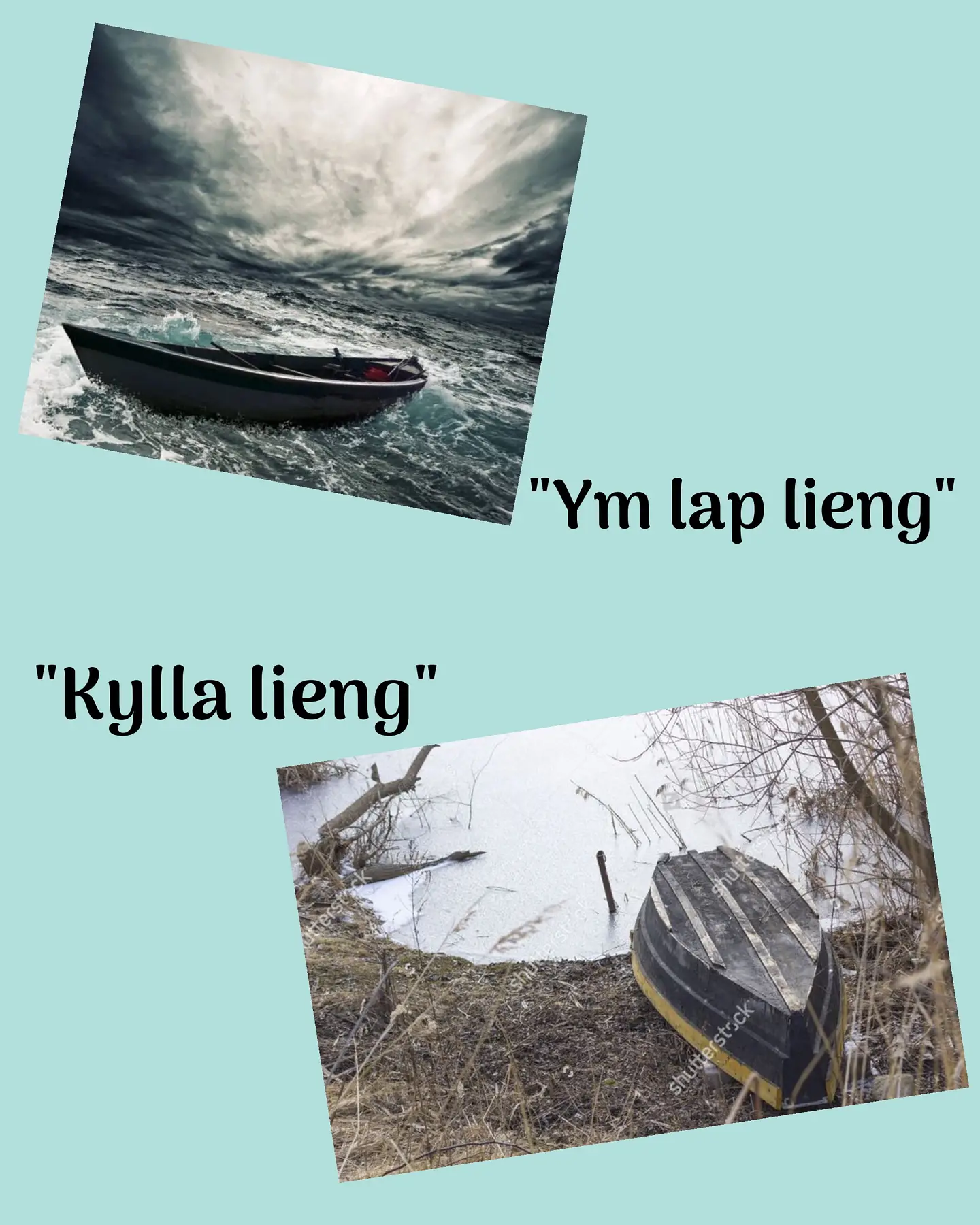
  • Ym lap lieng and Kylla lieng

    Kylla lieng

    Ka jingong "kylla lieng" ka thew ïa ka jingwan shoh tyndep ka pyrthei nemsniew ban pynduk pynshitom ïa u ba don ba em. Ka dei ruh ka jingkylla khongpong ka jingim na ka im suk im saiñ sha ka kordit tam. Shuh shuh, kine ki kyntien ki batai ïa ka jingshah lynshop ha ka jingsniew bok, ba wan ban ka jingpang jingshitom haduh ba u briew um lah bteng shuh ïa ka kam ba u la pyrshang.

    The Khasi phrase "kylla lieng" is the harrowing arrival of famine or an epidemic causing suffering and poverty for even those who are well-to-do. The phrase also refers to the reversal or the turning upside down of an easy life to calamity and ruin. Further, the words also mean to be wracked by bad luck, that is caused by illness to the point that a person cannot continue with his work.

    Ym lap lieng

    Ka jingong "ym lap lieng" ka batai ïa ka jingkyrkieh kum bym don por ne lap briew shuh. Ka kren ruh ïa ka jingsheptieng ba ïoh shah iehnoh bym lap kem shuh ïa ka lieng.

    The Khasi phrase "ym lap lieng" is to be in so much haste that we are out of time or we cannot find the people we need to meet. The phrase also talks about the fear that one experiences in case they don't arrive on time to reach the boat.

    "Ym lap lieng" and "Kylla lieng" are two Khasi idioms using a boat as the metaphor ⛵🚤🛥️

    🟡 Sources: Rev. Dr. Ïarington Kharkongor and by Primrose G. Gatphoh.

    English translation by @speakyourroots

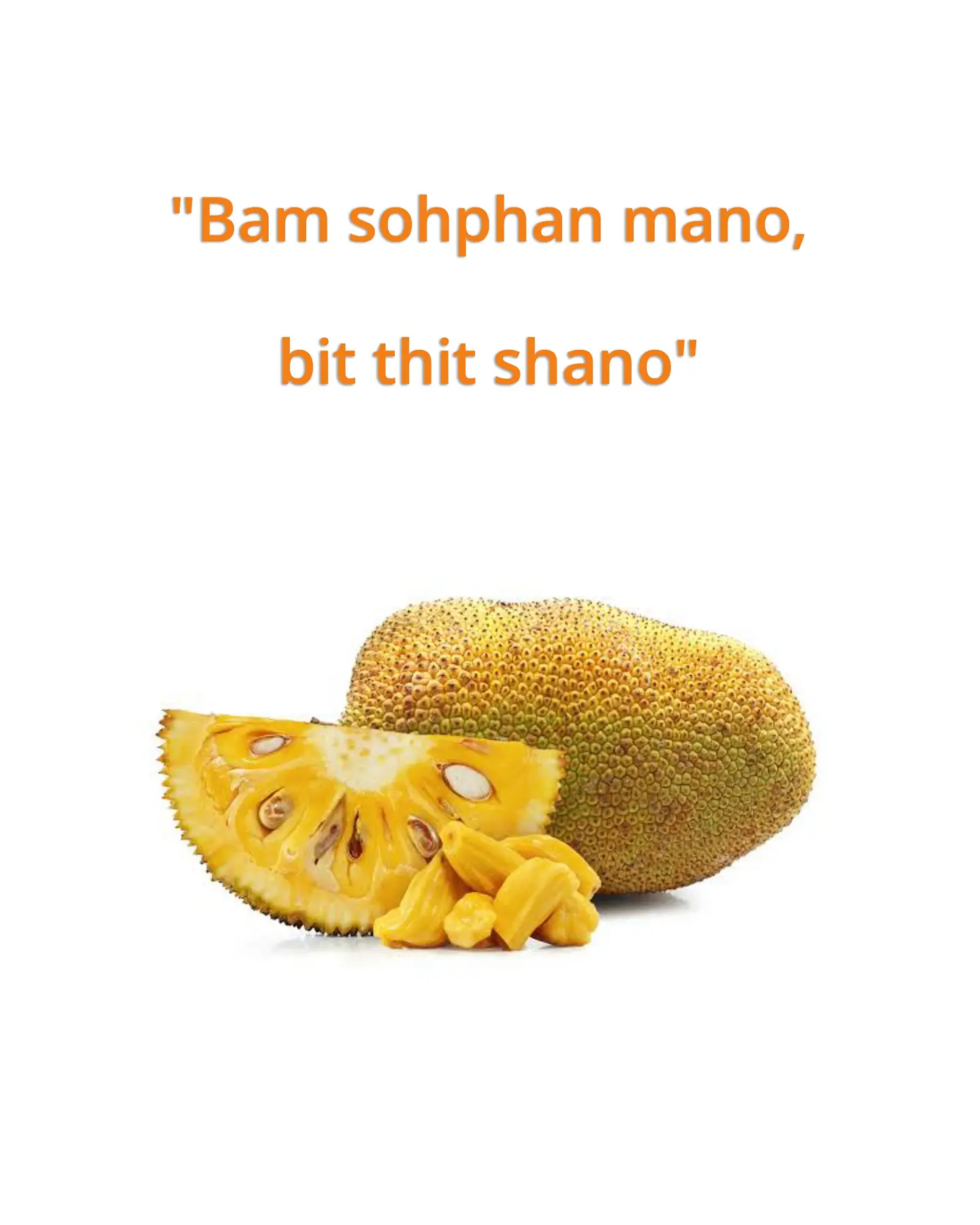
  • Bam sohphan mano, bit thit shano

    Ka jingong "Bam sohphan mano, bit thit shano" ka mut ba ïa u sohphan nang bam hun sha lade bad nang kyllan ïa ka thit sha kiwei. Kane ka long ka ktien mynthi kaba mut ba nang leh kiwei bad nang shah kynnoh ki bym dei; kiba leh ki ïoh ka ïaroh bad ki bym leh ki shah ka kynnoh.

    The Khasi phrase "Bam sohphan mano, bit thit shano" literally means the one who hogs the jackfruit wipes off the jackfruit glue (birdlime) onto other people. This is an ironic statement that refers to the culprit who does not own up or confess to a wrong doing, letting the blame fall on others. Thus, this describes the unjust situation of being wrongly accused of something while innocent.

    The Khasi saying "Bam sohphan mano, bit thit shano" is dripping with irony and sarcasm that is typical of Khasi sayings 😅😅

    Source: Primrose G. Gatphoh

    English translation by @speakyourroots

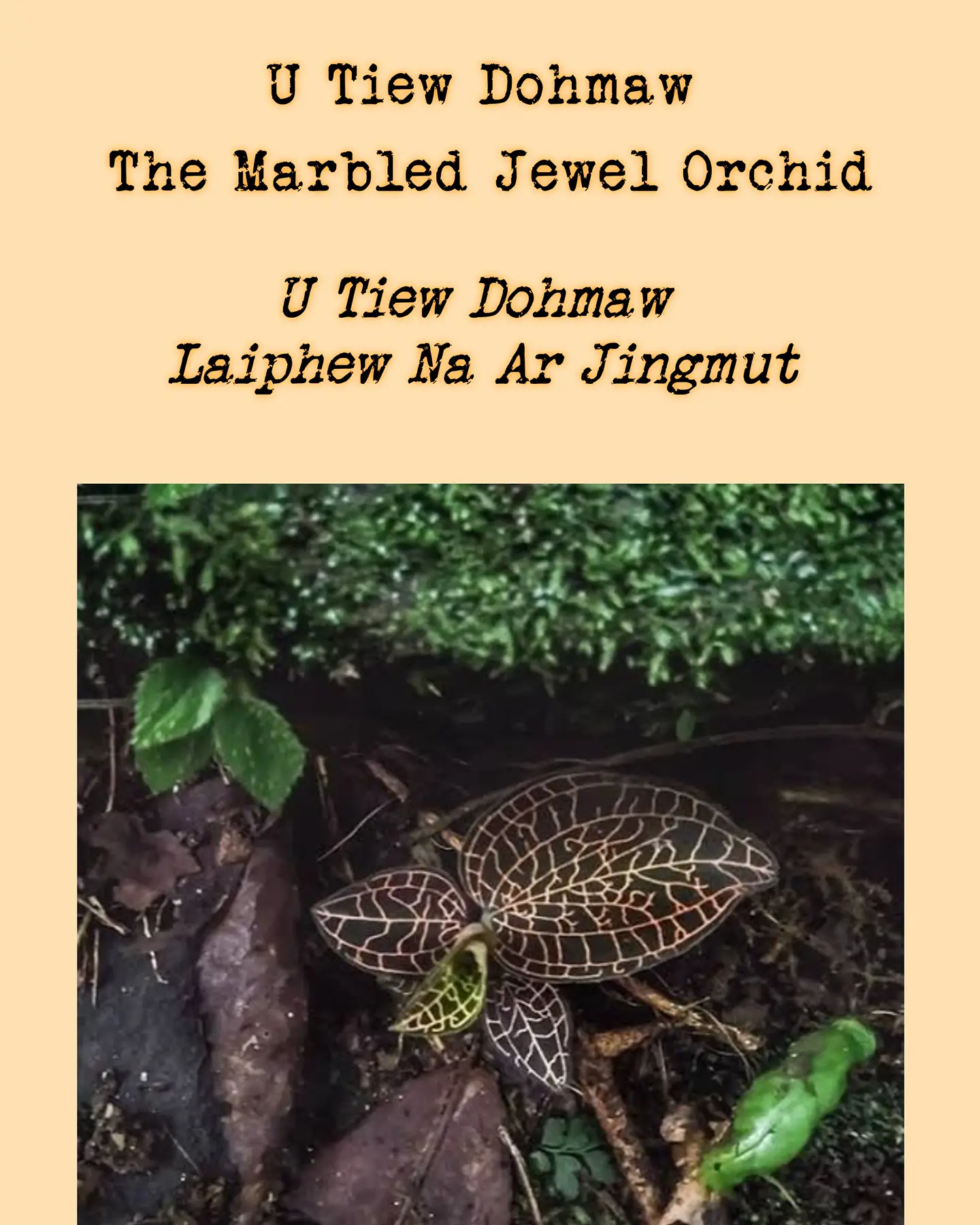
  • U Tiew Dohmaw or The Marbled Jewel Orchid: Tiew Dohmaw Laiphew Na Ar Jingmut

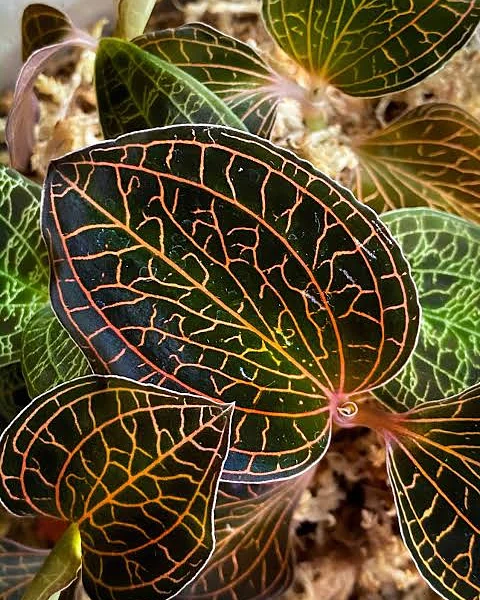
    U Tiew Dohmaw u dei u kynja tiewsla uba proh itynnad ki jingthoh ha ki sla jong u. U dei u syntiew uba rit bha, ki sla ki lam jngum ka rong bad thoh rong ksiar. Ka scientific name jong U Tiew Dohmaw ka dei Anoectochilus brevilabris.

    U Tiew Dohmaw or the Marbled Jewel Orchid is a small flower which is dark green in colour with contrasting goldenish marks like veins on it. The scientific name of U Tiew Dohmaw is Anoectochilus brevilabris.

    U Tiew Dohmaw grows under the shade of trees which is typical of where orchids grow and has to be searched for properly if we are to find it. Its beauty is a rare treasure. U Tiew Dohmaw has been mentioned by Khasi Poet Laureate U Soso Tham and by popular Khasi singer and composer (L) Skendrowell Syiemlieh.

    Ka don ka jingong ha Khasi kaba ong "U Tiew Dohmaw laiphew na ar jingmut". Kane ka thew ïa u briew uba khraw pyrkhat, uba proh jabieng, uba stad bad shemphang bad uba long ruh uba sngewrit bad kham rieh na ka pyrthei. Namar kata kum une u jait briew u syriem ia U Tiew Dohmaw.

    There is a Khasi phrase which goes "U Tiew Dohmaw laiphew na ar jingmut". The saying symbolically refers to a person who is a great thinker of high intelligence and wisdom but who is humble and unassuming at the same time, thus resembling U Tiew Dohmaw.

    U Tiew Dohmaw or the Marbled Jewel Orchid 💛💚💛💚💛💚 A rare and beautiful flower, it is found in Meghalaya, Sikkim, Assam, Nepal and Vietnam.

    It is an orchid with a saying of its own in Khasi: "U Tiew Dohmaw Laiphew Na Ar Jingmut".

    🟡Slide 1: https://www.picuki.com/tag/natureitsbest

    🟡Slide 5: https://www.doodlebirdterrariums.com/listing/753798713/free-shipping-terrarium-plant-jewel

  • Beiñ kiwa beiñ

    "Beiñ kiwa beiñ.

    Roh kiwa roh.

    Ïei їong kiwi,

    ym їe i u pyntoh."

    "Let those who criticise, criticise.

    Let those who praise, praise.

    Other people's opinions,

    cannot be catered to."

    Here's what may be described as a Pnar quote or chant sent by @laloorisa 😎😎😎 (translated by @speakyourroots)

    The lines urge us not to let people's words, either praise or criticism, affect us. Lest we fall prey to pride or feelings of inadequacy. We should just march to the beat of our own drum and do what makes us happy! 🌬️🌬️🌻🌼🌾

    Ham pynsñiaw ai ki! Wat pynsngew eh ia ki!

  • U Wah Sdai/ Sdie

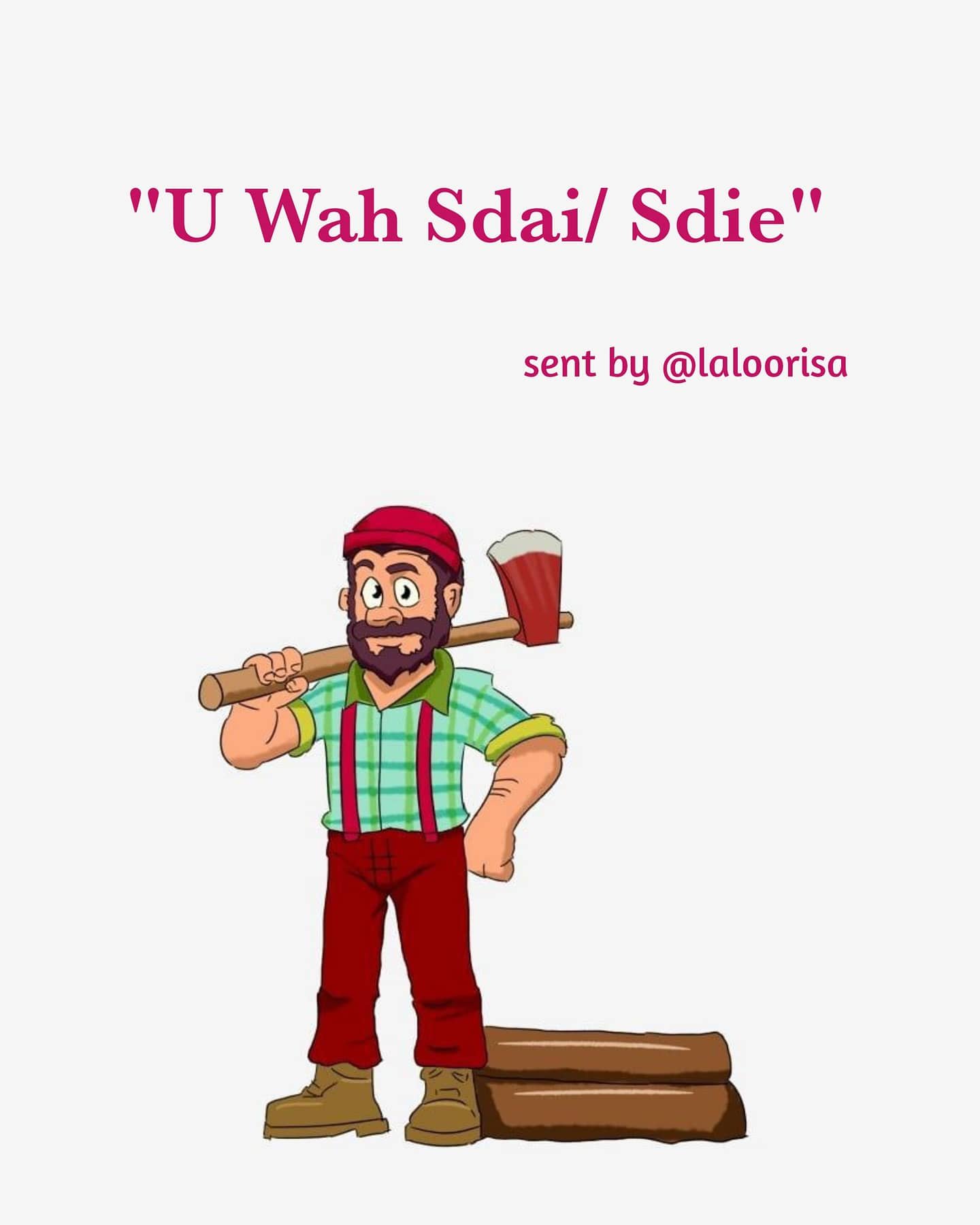
    "U Wah sdai/sdie" u dei nongrep na shnong Jowai, uba trei shitom hynrei uba klet biej. Ha kawei ka sngi, u thlieh dieng baroh shisngi. Hadien katto katne por, u shong thait bad u bam kwai. Ynda u la mut ban bteng biang їa la ka kam, um lap shuh ïa u sdie jong u. U la pyrshang ban kynmaw hangno ba u la buh їa u ruh, um lah kynmaw satia. Khatduh ki paralok kiba їa trei lang bad u haba ki їohi ba u їai wad kumne kim banse ban kylli, "Phi wad aїu kumto naduh mynne khlem lap shuh?" "Nga wad їa u sdie" u la jubab. "Phi khlem їohi hangno nga la buh?" Kita ki paralok ki la їa rkhie їa u bapli namar u sdie jong u, une lydui ha ka tyrpeng jong u hi. Namar ba kane ka wan jia barabor ha une u paralok, na kata ka daw u sa ioh їa ka kyrteng sin kum "U Wah sdai/ sdie". Na kane, їa kum kine ki briew kiba klet biej khamtam haba ki klet jaka buh їa kano kano ka tiar, ka sa kylla long ka rukom ban khot їa ki da ka kyrteng sin "U Wah sdai/sdie".

    There once was a farmer from Jowai who was hard working but quite forgetful. One day he had been cutting wood for a long time. So he sat down to rest and have some kwai. When he stood up to continue with his work, he couldn't find his axe. He couldn't remember where he kept it, even though he tried hard to remember where he left it. Finally, when his friends saw him searching, they asked him what he was looking for. He replied that he was searching for his axe. "Did you see where I left it?" he asked. His friends burst out laughing because the poor man did not realise that his axe was hanging from his shoulder. So because of his forgetfulness being a regular occurrence, his friends gave him the name of "Wah sdai/ sdie". For this reason those who easily forget where they keep things, are given the name "Wah sdai/ sdie".

    "Wah" means to hang something.

    "Sdai" (Pnar) and "Sdie" (Khasi) means axe.

    The Pnar nickname "U Wah Sdai/ Sdie" 🪓🪓 Another story about a nickname sent by @laloorisa 😄😄

    Khublei Chibun wa phah phi kini ki pyrtuit siñ! You've become our regular supplier of them! 😂😂

  • Biah Phongrai

    Ka "Biah Phongrai" ka dei ka pylleng ba kha u skaiñ ha ka kynja doh.

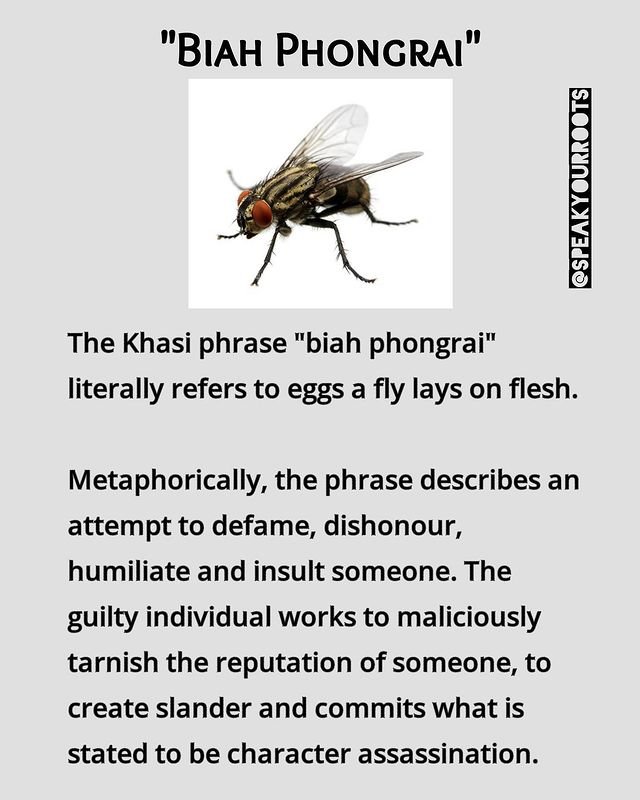
    The Khasi phrase "Biah Phongrai" literally refers to eggs a fly lays on flesh.

    Ka jingong "Biah Phongrai" ka dei ka jingpynbud nam sniew, jingpynjah burom bad ka jingleh ñiewbeiñ ïa uno uno u briew da u riewpoh, da kaba pyndonkam da ki ktien khlem akor bad ki ktien lamler.

    Metaphorically, the phrase describes an attempt to defame, dishonour, humiliate and insult someone. The guilty individual works to maliciously tarnish the reputation of someone, to create slander and commits what is stated to be character assassination.

    "Biah Phongrai" is a Khasi phrase which means to taint someone's reputation with malicious slander. Thank you @pyndap_r for bringing this up. 😊😊

  • Ring ‘sai phla

    Ka jingong "Ring 'sai phla" ka thew ïa ka jingïakylli markhmat haduh ban da shem ïa ka jingshisha. Kaba "ring 'sai phla" ka dei kaba pynskhem ïa ka jingïathuh da kaba pyni ïa u sakhi u ban long kum u ksiang.

    The Khasi phrase "Ring 'sai phla" means to meticulously ask a thread of questions in order to arrive at the truth. The phrase implies a direct confrontation and interrogation with the aim of extracting the truth. Furthermore, the answers to the questions are corroborated by witnesses who represent the roles of a judge or a mediator.

    When truth is the most valued of possessions 💡🔦🖊️📃🔍

    "Ring 'sai phla" is a Khasi phrase describing a detailed process of questioning to know the truth.

  • Ka pah chyrpang

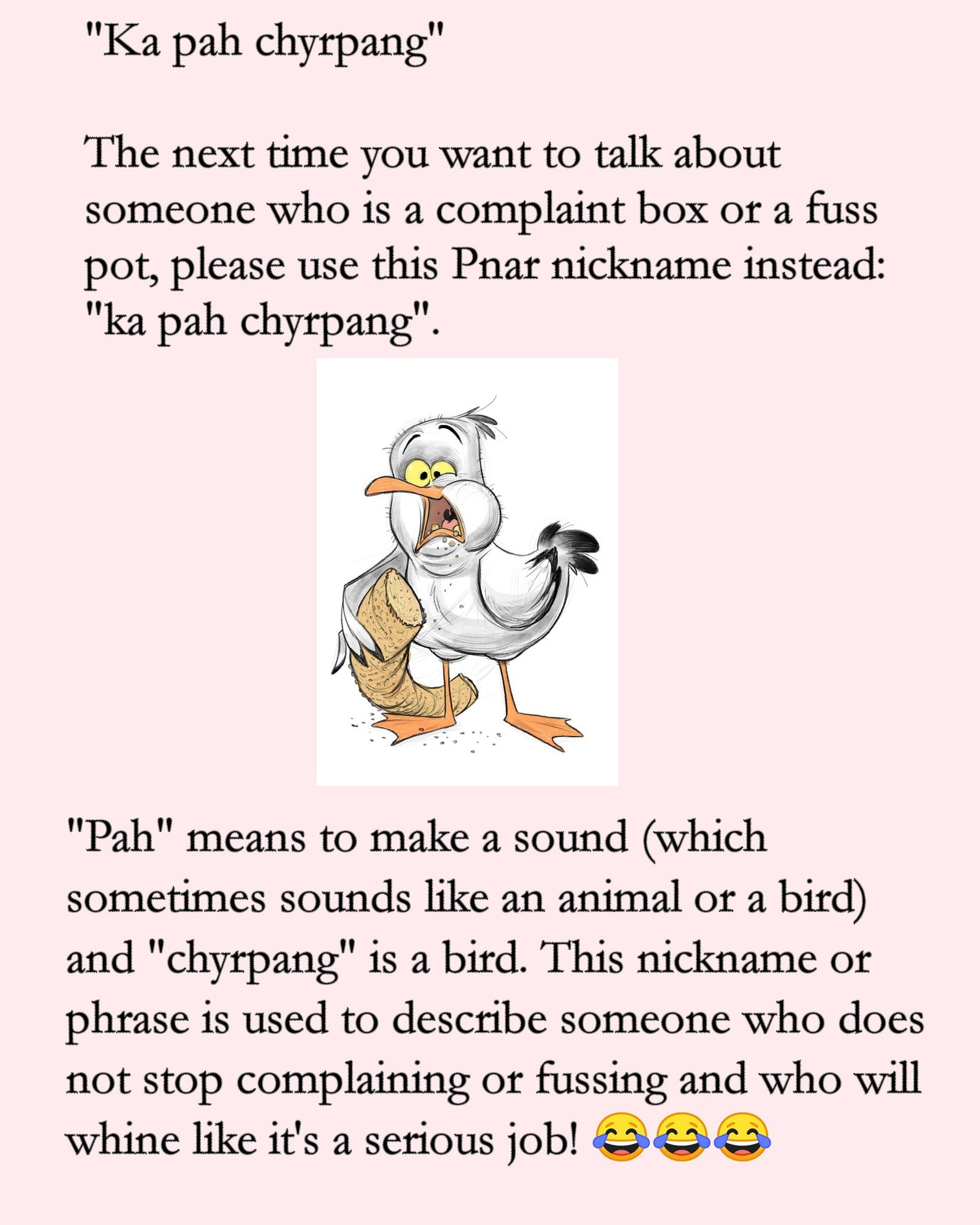
    The next time you want to talk about someone who is a complaint box or a fuss pot, please use this Pnar nickname instead: "ka pah chyrpang".

    "Pah" means to make a sound (which sometimes sounds like an animal or a bird) and "chyrpang" is a bird. This nickname or phrase is used to describe someone who does not stop complaining or fussing and who will whine like it's a serious job!

    Once again @laloorisa has sent another Pnar nickname: "Ka pah chyrpang" 😅😅😂😂

    This phrase is used to describe someone who annoys us by their constant complaining! Thank you @laloorisa for these witty and humourous nicknames 🤡🤡

  • Ñiangkongwieng khlem snier

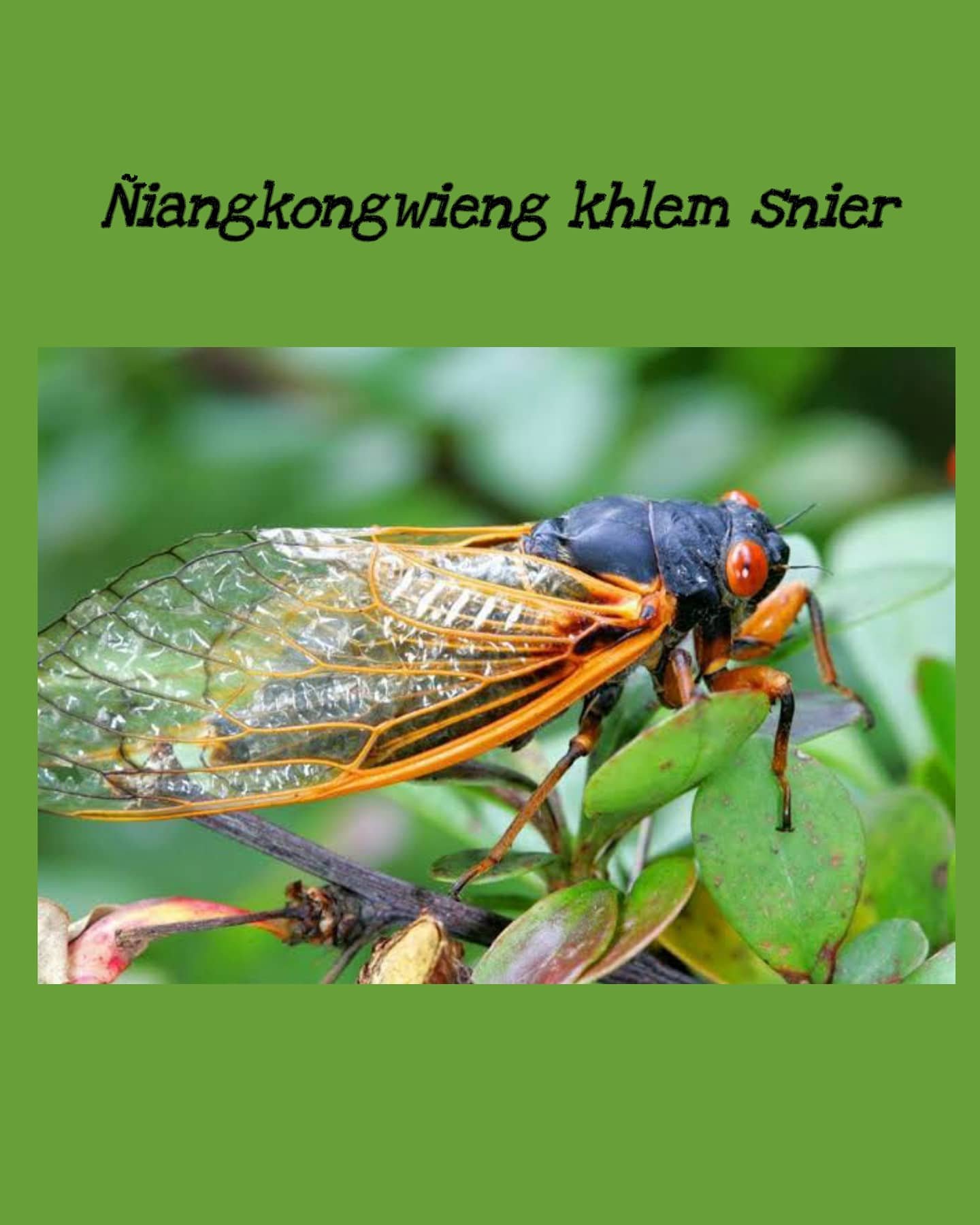
    Ka jingong Khasi "ñiangkongwieng khlem snier" ka ring jingmut na ka jingpah kaba mih na ka kpoh jong ka ñiangkongwieng kaba dap da ka lyer, hynrei kaba lah ban pah baroh shi sngi. Kane ka jingong ka thew ïa u briew uba heh tang ka tyngam bad ka khlem kam; u briew uba put ronsing ïalade tangba ubym larkam eiei ruh.

    In Khasi "Ñiangkongwieng" is the cicada and "Snier" are the intestines. The phrase above describes the cicada's body, in particular the abdomen because they breathe through "Spiracles" which are small holes in the abdomen. These spiracles are responsible for the sound of the cicada.

    This Khasi phrase focuses on the loud sound emanating from the porous abdomen of the cicada, to describe a person who is a big talker but never accomplishes anything. He likes to blow his own trumpet but in reality, he is useless and has no substance.

    "Ñiangkongwieng khlem snier" is a Khasi phrase which describes a big talker, whose arrogance is as loud as his voice when he talks of himself. 🗣️🗣️