Category: Poetry

  • Bood Late da Daohi Manar

    PARA KHYNROO, KHYNTHAI NE CHYNRANG,

    ALAE! CHIRUP HAM CHAH CHAKAE NE CHAH PHALANG

    NUKSA WA BHA TOA CHDOOH TOA ÏAH,

    ÏOW LY'OH WADOOM, HAM IEH U WAN KAH.

    ÏOW PHOOHÏOW PHEIÑ I HEI MANBRU;

    HAM ÏYNDONG I SNIAW,TO PYRKHAT YLLU.

    LA KA MYRIED, U SEINDUR NADUH MYNTU,

    ALAE! DUHAI ÏOW LEIT NEI CHAH BEIÑ NE CHAH MYNTHU,

    SAJIAR-SYNDONG, NA KI KAM THALA,

    PYNCH’KEH KI TYRPAIÑ PYNEH KI TYMPHA.

    NEI KYIAD, U BHANG WÖW DROK WÖMHOI;

    HEI MIAT I BHA, TE IOH I U POI.

    KYLLA I POR, NEI WARIM CHEI THYMME

    ALAE! ÏEI SIH HAM BOOD ÏONG TON HAM BOOD LATE,

    PYN-NA PAN, PYN-NA WA YEIÑ, PYN-NA TOH,

    CHA KA BHAH KA NASIB HAM KYNNOH.

    HAM KHLOT HA WA SNIAW, NE THLAH HA WA ÏOO;

    ÏEI SNEIÑ I KROO KA BEI U PA, TOA KSOH-KYNMOO.

    HA JAR JAIT KI RONG,DA BOOH U WA NAJRONG,

    ALAE! ÏEI BUROM AKOR TOA RI KYNDONG,

    JINGEH HEI JINGIM U ÏEIN IALEH,

    I DIÑ WA R’HI, HAM ÏEH U PLEH.

    PEIT TOA BOOD, ÏEI MAN I LONG U TKHU;

    HAM KDAW KTI PARA I, TOA IA SNEIÑ IA KYNTU.

    PYRCHANG ÏONG I, IM SNGI DU HEI BHA,

    PANCHNIAT I BUROM, U KUP U DEIÑ WAROH CHI RTA

    -DAOHI MANAR

    Daohi says about the poem:

    "Today the 26th June, the whole world is observing the International Day against drug abuse and illicit trafficking.

    The poem "Bood late" simply means 'imitating'. This poem reminds us not to get influenced by evil or allow bad examples to influence us. Follow only what is good. In general, this poem reminds us that drug use, drug dependency and drug abuse was and is a silent killer in our society. This poem encourages everyone especially youth to not take drugs or any toxic substances, to not get influenced by such bad examples.

    As we are aware, cases of HIV/AIDS are high in the Jaiñtia region and Meghalaya is also one among leading states in Northeast India. So, to stop and prevent that, the poem encourages us to abstain and avoid any form of drug consumption and selling of these substances.

    For example the lines "Ham ya kdaw kti para i toa ya sneiñ ya kyntu" means let's not judge or point fingers at others, we can help one another to come together to unite, so that we can overcome or fight against this silent killer in our society. This poem aims to educate people about drugs and also steps to eliminate drugs and illicit trafficking to save lives."

    An original Pnar poem "Bood Late" by @xdtnoahjupejackllthmanar 👏👏 Khublei Chiboon @xdtnoahjupejackllthmanar for the poem! 👍👍
  • “Ka Ktien Khasi Jong Ngi” da Labianglang Diengdoh

    Ha sla pyrthei la kha ia nga,

    Nga san longbriew, nga im pura;

    Ryngkat jingieid i mei i pa,

    Ha la ka ktien ba ngan kren bha.

    Ym tang ban kren kumta la biang,

    Hynrei ban thoh te ba ngan nang;

    Kumta jingstad sawdong ka phriang,

    A-B, ka jinghikai ka sdang.

    Ka ktien khasi shisha ba iar,

    Ha ri khynriam bad ha ri pnar;

    'Sohra'- Ka ieng 'tien salonsar,

    Ban ia biang lang, ban ym kulmar.

    U Thomas Jones na ri sepngi,

    U la wanlam dak thoh khasi;

    ia jait bynriew ban lam lynti,

    Ban ym sah dum bynriew khasi.

    I'u la tip haduh kine ki sngi,

    Kum u kpa ki dak thoh khasi:

    Khlem don ma u ba prat lynti,

    Ngi lah sah dum ha la ka ri.

    Ki longshuwa da buit ba iar,

    Lyngba jingeh ki khih ki ksar;

    Ban roi ban iar ka thoh ka tar,

    Ban ym sah bieit, sah dum jynjar.

    Rai-eh Rai-dam, hei! ka bym kai,

    Kam dei ka mutdur pyrkhat rngai;

    Kat ban sawar ka ktien shongsbai,

    La ha ka kren khana ne rwai.

    Maitang! haram kam dei ho phi,

    la longshuwa baieid jong ngi;

    Burom shi junom bhor Ia ki,

    Shikit-iapar kam long na ngi.

    Kumne Ia la ka ktien ngin ieid,

    Ngin kren ngin thoh te khlem jingriej;

    Nangne pateng kan khih kan smiej,

    Sha jngai kan phet ka dum ka bieit.

    -Labianglang Diengdoh

    Original poem: "Ka Ktien Khasi Jong Ngi" written by @_i_g_d_r_e_a_m_e_r_

    Thank you for sending this entry! 🎉🎉

    Speaking, reading and writing in our indigenous language may be described as a persistent and consistent act of resistance to forces that may endanger it.

  • “Ki jingsngew ha ka miet ba wan ka khlam” da Vancouver Shullai

    Sngew triem keiñ, para,

    Haba la poi ka Khlam ha phyllaw ïing.

    Sngew salia wat tang ban ring mynsiem ruh,

    Ïoh jia ba ka ïohsngew bad ka tip noh

    Hamar hangno ngi ïa rieh.

    Ka palong ha kaba la ju dem shiryta,

    Ka sngew pher mynta ka miet:

    Sngew eh ka tyrsok, sngew sohkyrdot ka rajai,

    Haba la khura kata ka Khlam ïa ka phyllaw ïing.

    Sngew artatien ban pyrta sha la ki marjan ruh

    Ban twad jingmut lem na ki,

    Ïoh jia ba ki la ïakynduh ïa kane ka nongshun

    Bad khah snam noh haba ïa khublei kti.

    Hynrei, para, nga pynkynmaw ïa phi,

    Ba ka step ruh kam jngai

    Bad ka Khlam kan sa phet sha la ka lynti

    Ynda thaba noh ka sngi ha phyllaw ïing.

    "Ki Jingsngew ha ka Miet ba wan ka Khlam" is an original Khasi poem by poet and singer @vancouvershullai ! 😄😄😄 Thank you for taking up the responsibility for writing in your own indigenous language! 🌲🌲

    As the pandemic rages on, all one can do is talk about how one feels to find solace. The current situation confronts us with our feeble mortal existence but it also teaches how faith, hope and courage can turn the weight of an overwhelming tide.

    Vancouver Shullai says of the poem: "This poem was written on the night the first COVID-19 positive case was detected in Shillong in the year 2020. An air of apprehension enveloped the entire town as soon as the news was reported. There was a very unusual sense of discomfort, I recall, an extremely foreign feeling no one was prepared for. I wrote this poem to document that calm yet fearful night."

    Thank you @vancouvershullai for documenting this experience in poetry!

  • Mei Mariang Ngan ym ïeh ia phi da i Daohi Manar

    Ko lyer ba beh jai jai

    Pha pynlung ïa mynsiem jong nga

    Pha beh khlem don jingkhuslai keiñ shirta!

    Khublei, A ko lyer pha la pyntngen ïa nga

    Kumno keiñ mynta ba ngan ïada?

    Ha la marwei, nga ïam pangnud, nga da jaw ki ummat

    Ïa Mei Mariang haduh katne

    Khun bynriew "Kim pyrkhat!"

    Pyrthei Mariang ba itynnad

    B'u Blei u ai kyrpang

    Ka shong ha ngi, tang ha nga bad ha phi

    Ïa Mei- Ramew ba ngin sumar ngin ri

    Ki um ba shngiam ba sngur

    Ba ramew la dep pynwandur

    Da khmat ba sngewdiaw, nga peit ïa pha

    Shaei, pat mynta jaka ban rieh: ïa nga

    Ïathuh keiñ shaei "Ngan ïoh jaka?"

    Kjat sngi ba tyngshaiñ, ki wan doh ïeid ïa nga

    Jingkyrmen nga don, ba pham duh ïa jingjyrngam

    Ngan um ïeh ïa phi, keiñ noh….khun, wat ïam!

    Ka ri khlem jingsheptieng, ko ri ki Blei

    Ba dap da jingshngaiñ, Ri Tipbriew-Tipblei

    To kular ïa nga ba phin kamai hok ha pyrthei

    Ïa nga, to sumar-kyndong

    Sa shisien ha phi keiñ nga ong.

    "Mei Mariang – Ngan ym ieh ïa phi"

    – Daohi Manar

    An original Khasi poem by @xdtnoahjupejackllthmanar

    Thank you for sending this poem! The message that man and nature are intricately connected has to be reiterated!!

  • “Mawbynna” by Esther Syiem

    You appear

    to have withstood

    time’s duress

    as you watch

    over a world

    of plastic clutter.

    Your sense of time

    is forbidding,

    but you keep intact

    our self respect.

    You have shut yourself

    in an aura

    that is yours alone.

    Your changelessness

    in flux

    is the only surety

    against the inquisition

    that assails you.

    You are the keeper

    of our past.

    Vertical guardians

    overseeing horizontal quiet –

    wayside offerings,

    arrested in a moment,

    away from passing history.

    Your commodity

    is your soul

    held still, in the

    imbroglio of time,

    as you provide

    shelter and rest

    for wayfarers,

    drawn by your etchings

    in their souls.

    This poem appears in Oral Scriptings: Poems by Esther Syiem (2005) published by Writers Workshop, Kolkata. Dr. Esther Syiem is a Professor in the Department of English, North-Eastern Hill University, Shillong.

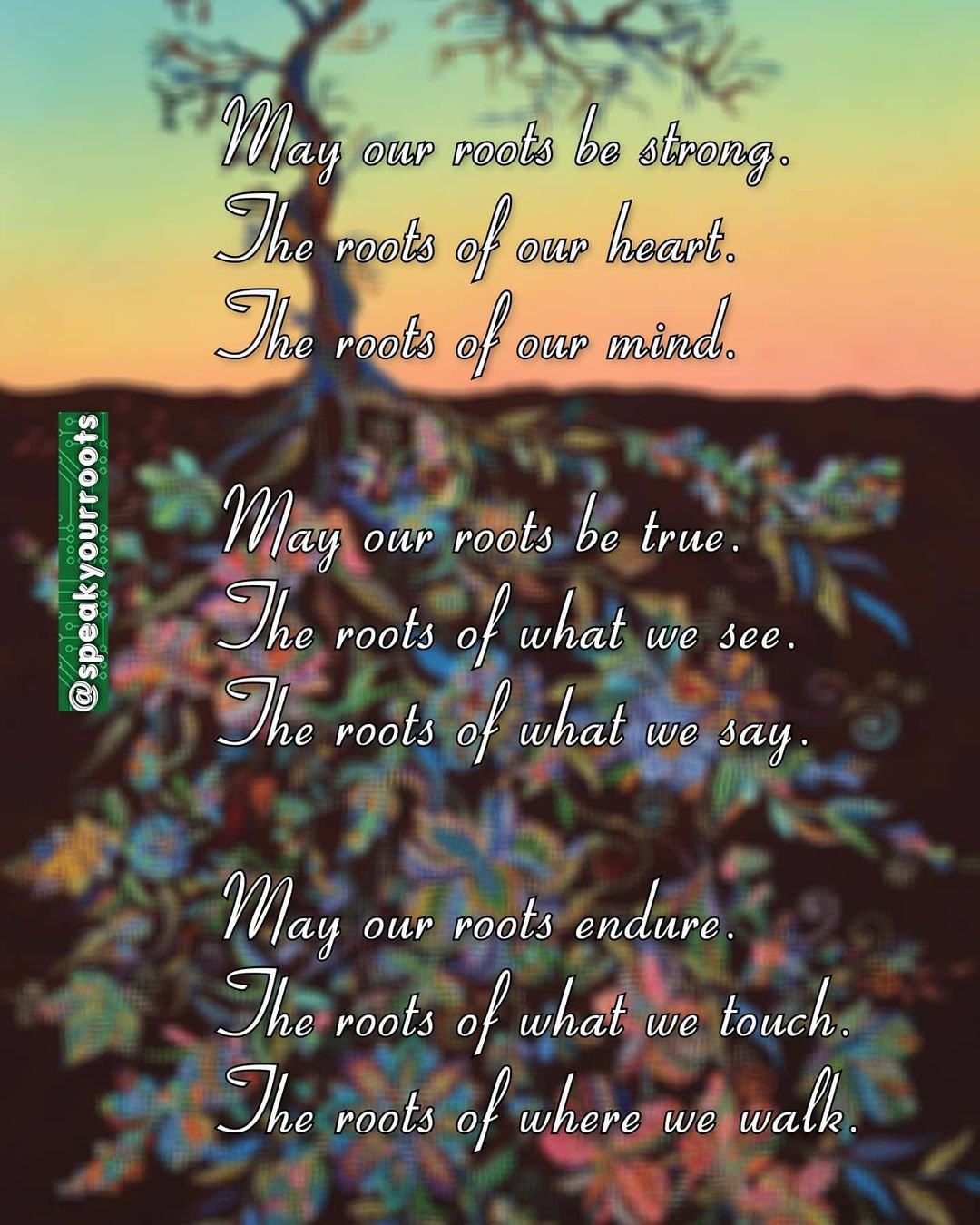
  • “May our roots…”

    May our roots be strong.

    The roots of our heart.

    The roots of our mind.

    May our roots be true.

    The roots of what we see.

    The roots of what we say.

    May our roots endure.

    The roots of what we touch.

    The roots of where we walk.

    -@speakyourroots

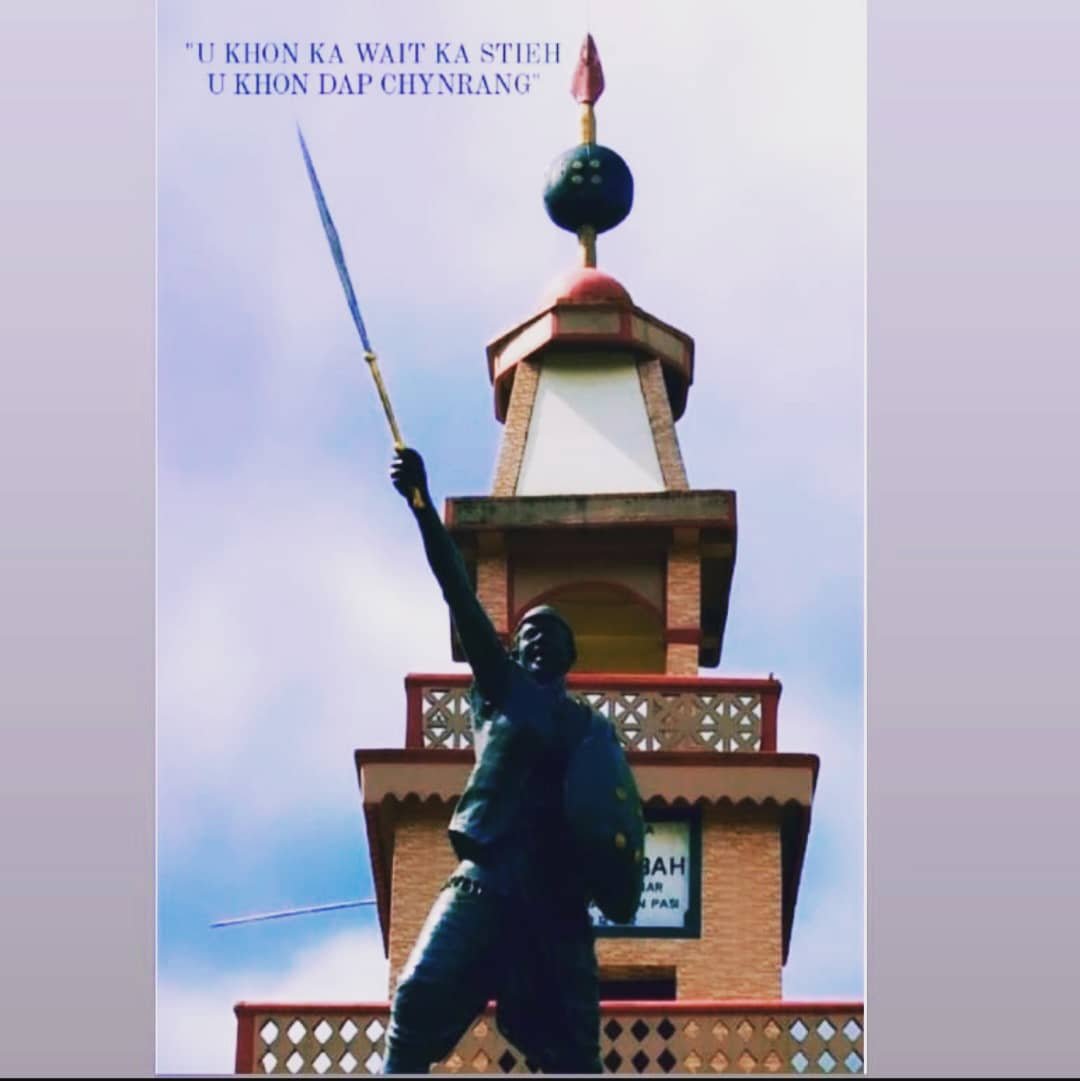
  • U Kiang Nangbah

    "U KHON KA WAIT KA STIEH

    U KHON DAP CHYNRANG"

    Da u mot sahnam da pynïein ha

    madan-madiah kmai Blai

    Na khlieh riat ka Kiang, U peit katwon wa

    ïoo kynjai

    Khlem artatien, katni chityllup pyrthai datip

    ia me

    Ïei chlur, Wei Maya ri, da sai mi ki buit,

    Da pynioo mi katwa ïe

    Im i pyrtuid, sah i nam

    Da pynsabut mi da ki kyntien, wa da ki kam

    Woh Kiang Nangbah ia me u kynmoo

    tympang

    Kam u Khon ka wait-ka stieh,

    U khon dap chynrang

    Nuksa wa bha, ia ka pateiñ me da pynioo

    Ha ka Ri ïong i dahi,

    Umkhmat wom hoi u tlor u joo.

    On the occasion of the death anniversary of U Kiang Nangbah, a freedom fighter of the Jaiñtias, a Pnar poem by @xdtnoahjupejackllthmanar is featured. Chihajar Ngooh! 🙏🙏

    U Kiang Nangbah was a freedom fighter from the Jaiñtia Hills, who led an uprising against the British. He was later hanged by the British publicly at Ïawmusiang in Jowai town, in West Jaiñtia Hills District, on 30th December 1862. A postage stamp was issued by the Government of India to commemorate Kiang Nangbah in 2001. Kiang Nangbah Government College was also established in Jowai in 1967 in his honour.

    The Kiang Nangbah monument has also been erected at Madan-Madiah Kmai Blai, Syntu Ksiar, Jowai. (This is featured in the picture)

  • “Ki Arngut Shipara” da Garmylo Pdang

    The younger took one with a prayer

    Lord make me an instrument of your peace

    "Shim bahbah, to jied hi ma phi," ong u hynmen

    Ki don ki ba stang, ki don ki ba rben.

    "Haduh katno baje phin shong hangne?" nga shu kylli

    Haduh ban da lut ong u hynmen

    "Ngi hap ban die lut, la da ka miet kan ap slem

    Lym kumta, ka pisa ban thied khaw, kam dap, ba u rem."

    "Phi shong phi sah ha ei?" Nga kylli biang

    Ha Wahingdoh u hymen u jubab

    "Ani ka jngai balei phi wan die shane?"

    "Ba bun ki khynnah riewspah ba pule."

    "Ko hep," u ong u hymen, "hatei to khie leit tyrwa,"

    "Hatei ha jan jingkhang ka dukan ja

    Wat peit shapoh ba ioh mai ki briew

    Da husiar ar tad ioh hap ka pisa."

    Slimmed they stood next to the restaurant

    Bookmarks were on their hands

    A black hat on the eldest' head

    On the younger, a sweater that's red

    Their faces shone the Bosco Square

    Amidst the gloomy, happy faces of the students' there

    Two rupees for one, and 5 for three

    To the younger child crying they gave one for free

    Their pants torn and hair unkempt

    On the younger's sweater, his mom's jainsem

    The pure floral tradition scent

    Their mom bought long before the season of sullen.

    Ko bah, "shim kawei seh tang ar tyngka

    To shim seh bah", u barit u ban

    "Lada phi shim, ngin ai san! san tyngka

    To shim ban bah," u hymen run u ban

    "Ap shwa khyndiat nga kwah ban ia kren," nga ong

    "Em bahbah," u hymen u ong, "don bun ba dang sah

    "Tang san minit, ka por, dei ba kordor bahbah,

    Tang san minit, nga kular," bad ha dew bilat ngi shong.

    "Phi leit skul ne em?" Nga sdang kylli

    Ki nguh ka khlieh, bapli ki rangli

    "Ani balei, ka jia aiu ia phi

    Ngim don ka pisa ban siew ka skul fee."

    U pa u trei kaei, nga kum lorni

    Ngim tip, lah lai snem mynta, u ieh ia ngi

    I mei pat i trei jingtrei aiu?

    I mei i thiah ha iing ba i ioh pang TB.

    Garmylo says:

    "The poem is based on a real experience with the two boys (who are brothers) who were selling bookmarks at Don Bosco Square in Laitumkhrah, Shillong. It's about how we often forget to look at the other side of us, which is the spirit of humanity. We are so busy with the clanging of the world that our sights are limited to "The Us, We and I".

    "Ki Arngut Shipara" is original bilingual poem by @_gar_my.lopdang . Thank you for this touching poem! ❤️

    It is a narrative poem about two brothers who at a very young age become bread earners for their family. This is because their mother had been diagnosed with TB and their father on knowing about it, left her and the two sons.

  • “Pahsyntiew” by Indari S. Warjri

    I heard of your beauty

    Blushing daughter of the deities

    Sheltered in your cave of chastity

    No man dare explore.

    A dark cascade rises from

    your shoulders

    But a tender lily

    Should not be bruised by

    hostile rocks.

    Your slender hand will stretch

    Towards the flower in the man's hand

    For in his hand man hold

    Unnamable delight.

    And you became mine,

    sweet maiden.

    O be the mother of my sons!

    But also the warm nest for

    my love.

    O children, may you be noble

    May you possess the

    strength of rocks

    May you protect the weak

    May you be suckled on knowledge

    For the celestials beckon

    And I must return.

    The sons became men, royal in stature

    Having wisdom gifted by the gods

    They came to rule the misty hills;

    To dwell in pinewood mansions

    Where carpets of clouds

    And cloaks of rain

    Conserve the forests of the Khasi hills.

    O mother, giver of life,

    See your sons-the syiems.

    "Pahsyntiew" by @indariwarjri based on the legend of Ka Pahsyntiew 🌹

    Indari S. Warjri (Associate Professor) is Head of the Department of English, St. Mary's College, Shillong.

    The Legend of Ka Pahsyntiew has been published in English, in the book Around the Hearth: Khasi Legends (Folktales of India) by Kynpham Sing Nongkynrih. The book is published by Penguin Books.

  • “Jar I hok – Jngai nei thok – Kamai ia ka hok” da Daohi Manar

    Phet jngai na ka bamsap, phet jngai na ka bamsap

    Ileh Cha kamni, sa du i wöm ioo tipsap-tiptap?

    Jar jar lei hok, u ia k'bai-kyrha

    Ileh Cha kamni, dap da ki jingeh suda?

    Kylli oa pûn na nga

    Wa angnood iei jingkylla…

    Chirup u ieiñ tylli, Myllin noh i sniawpher u wi ia ka wi

    U rah iei roi i par, thrang i hei jingim

    Ka wait iong i tip i stad, kani toh u chim

    Ham sniaw salajong, Toa iyn-ia pûnku pûnkynrong

    Khlem niaw, Wei khlem da thaw

    U wa lieh, wa stem, wa soo ne wa u iong

    "Jar I Hok, Jngai nei Thok, Kamai ia ka Hok" is an original Pnar poem by @xdtnoahjupejackllthmanar

    The poem speaks of bringing about a change in society, through truth, unity and a thirst for knowledge. A change that is for the greater good of all. A change that creates an awareness of not only our rights but also our duties as a community and as citizens of the state and country.