Blog

  • “Jingim ha Nongkyndong” da Sam @nongkyndonglens

    Ha ka mei ramew jong u nongthaw,

    Ha ki kjat sngi, phyrnai jong u lap praw.

    Ha u dieng soh ha tmier riat ngin pyneh,

    Sha lum sha wah ngin ia krih, ia mareh.

    To lum ki dieng, phriang u synsar,

    Jingim kynjai ha bri khlaw.

    Sawdong ha ka lyngwiar dpei,

    La ki khana to ia pa-shat ia-sei.

    Ka rep ka riang, u soh u pai.

    Ki jingkyrkhu b'la theh kyrhai..

    Jingeh ngi mad sawdong ka thwei,

    Hynrei tylli ngi ia long lang kawei.

    Jingsuk mynsiem ka kmen ka palei.

    Ha ing i Pa i Mei.

    Ha la shnong, ha la shnong…

    Ha nongkyndong.

    On this World Poetry Day we have another original Khasi poem called "Jingim Ha Nongkyndong" written by @nongkyndong_lens 😄🌽🌲 The poem portrays the activities and rhythm of country life ❤️💚

    Khublei Shibun @nongkyndong_lens ba phi phah ïa ka poitri jong phi! 🙏🙏

  • Pod shi Pod da Mebatei L. Khongsit

    La jlep u rum la jlep u neng,

    U thie rek rek tynruh lalot,

    "Imat u la kwah poi bneng kloi,

    Ha pdeng surok u kwah tei mot."

    La sngew kyllut sha pod shi pod,

    Ka horn bapli ruh la shohtlot,

    La arkynta sahkut ha juh,

    Wat tang shi pruh khlem khih hi tdot.

    "La duh shong klas ka phas period,"

    "U dkhar la phone ong jaldi aw,"

    "Lah dom ka dost ba ïa kut date,"

    Ki pasenjar ki ïa bynñiaw.

    Ka sdang nangno ka kut shano,

    La king khlieh u sahep pyniaid,

    Ki leh dohiap ban thir sani,

    Kane ka sohkyrdot ban lait.

    Ïano hi pat ba ngin kynnoh,

    Naduh ki por kali kulai,

    Kali la kum ka blang nang roi,

    Surok katjuh kumba myndai.

    On this World Poetry Day we have "Pod shi pod" which is an original Khasi poem by @mebatei_l_khongsti 😄😄 He has humorously portrayed the perpetual traffic jams of Shillong 🚗🛻🚐🚚🚛🚜😅😅

    Khublei Shibun @mebatei_l_khongsti ïa ka poitri jong phi! 😄🙏

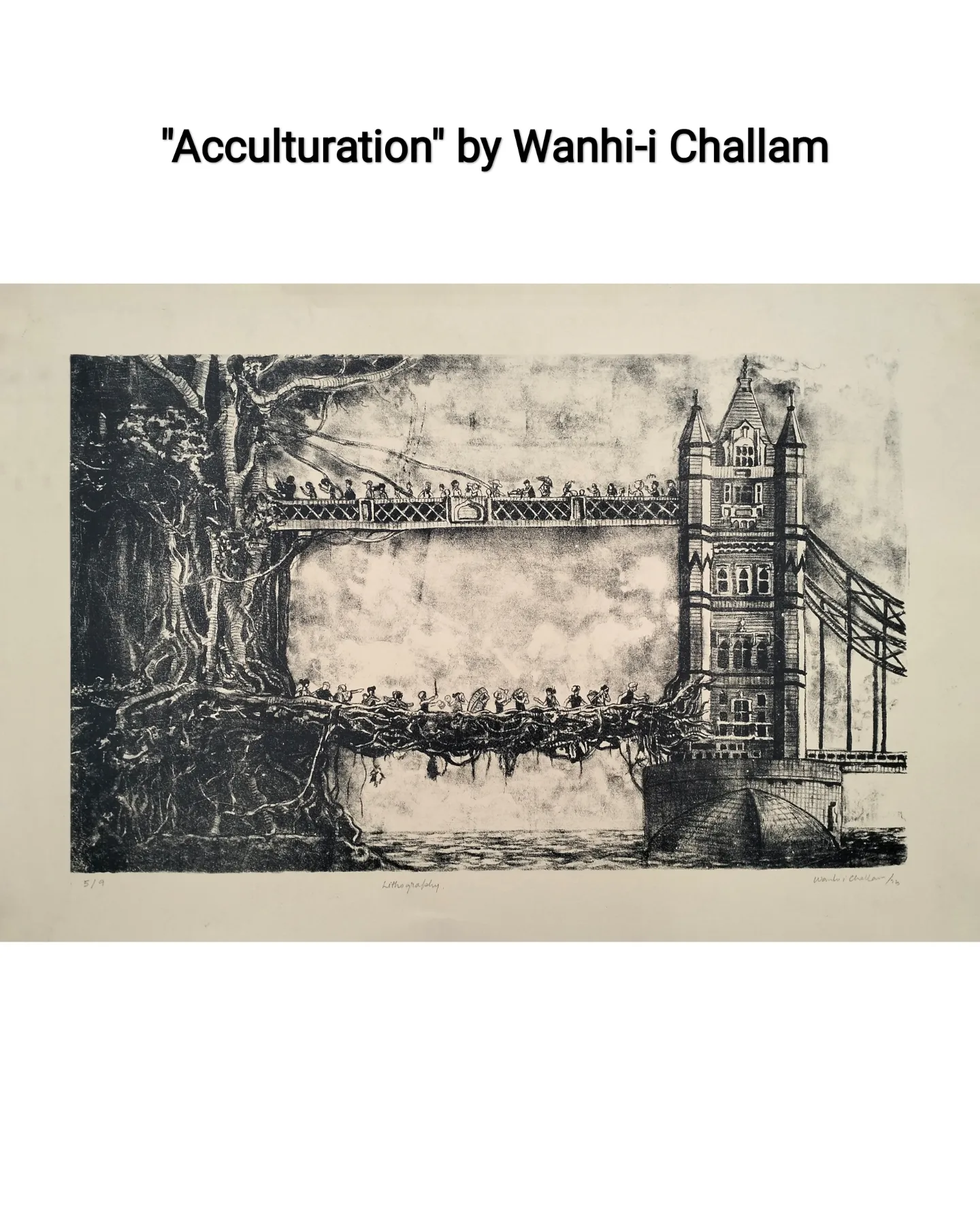
  • Acculturation by Wanhi-i Challam

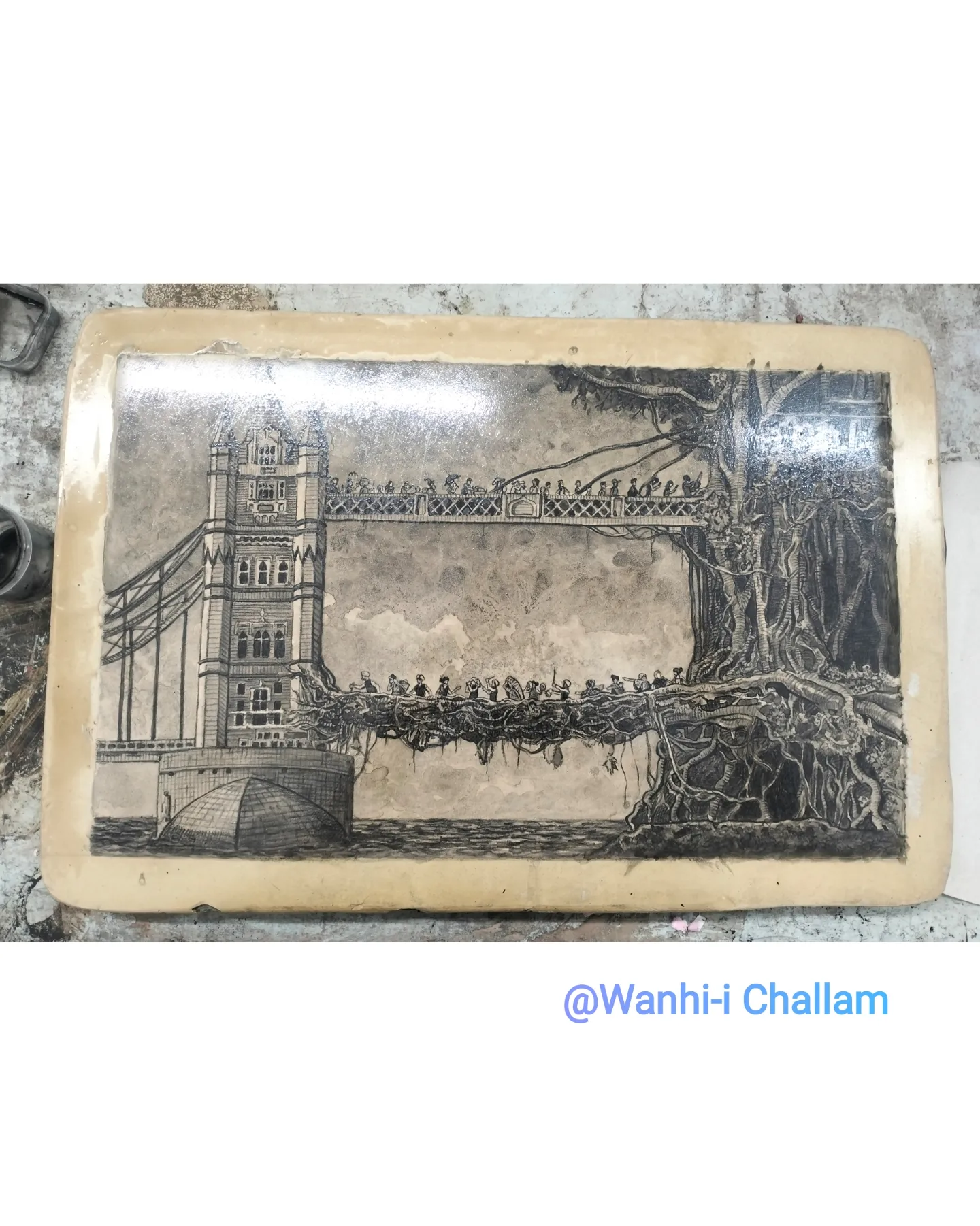
    "Acculturation" is a lithography print by artist Wanhi-i Challam

    He says:

    The work is a lithography print that explores the effects of cultural assimilation and acculturation on the traditional values, language, religion, plants, animals, and ethnic values of the Khasi people. The print depicts two bridges – the root bridge of Nongriat representing Khasi origins, the relationship between Khasi culture and nature, metaphorically it also represents the "tangnoob tangjri" (as it is believed from the folklores that the Khasi people descend to earth through the golden ladder) and the Tower Bridge of the UK representing Western culture and lifestyle and the other cultures of the world, and also the effect that the Britishers brought on the Khasi culture and tradition when they ruled India. Bridges symbolize connections and, in this case, it symbolizes the connection between two different cultures and the impact of one on the other. There is no significant reason behind why I chose those two bridges specifically, instead I chose them because I found the structure and appearance interesting and used just as a representation of my idea.

    Joining the two bridges through this composition I try to portray how the Khasi people have adapted to Western culture and other cultures by adopting their lifestyle, values, religion, and language. If observed closely one can see the details where the indigenous people tread towards the tower bridge wearing their cultural dress, moving in the order from the most elderly folks, younger generation and then to the youngest daughter. As they move forward entering the tower bridge, some carry indigenous items and crafts with them, others perform cultural dance, and activities. When coming back from the tower bridge to the root bridge, everyone is dressed in western fashion, the order of their movement is random, the first person carries with him a chainsaw, symbolizing the harm caused to nature due to the demands of urbanisation and civilisation. Some are looking down at their phones as they walk back, while others carry with them the luxuries the western culture offers.

    Society brings people of different cultures together, and for them to live in harmony, it is crucial to have practices that facilitate such harmonious living. In fact, history shows that adopting elements from other cultures has always been present from generation to generation. It has happened in the past and is happening in the present, with or without our consciousness and it will continue to happen in the future too and we can't help to change that because the world is constantly changing. Each generation develops new lifestyles, technology grows exponentially, knowledge doubles, and culture also changes. Acculturation and assimilation will always occur, and nothing stays the same.

    But should we neglect the importance, values and essence of our own culture? To me the loss of culture, cultural practices and tradition is the loss of identity and origin and that is concerning if we don't even know about our origin and about our own people. The Khasi culture emphasizes a deep respect for nature and a strong sense of place and belonging, which aligns with modern notions of nature conservation and sustainable use of natural resources. From a philosopher point of view there are infinite ways to live our life, and yes, we can choose any path we want.

    However, our culture's perspective on life is one of the most compelling and admirable ways of living. It is crucial to be aware of how much we are influenced by other cultures and adopt their ways of life, but we should strive to preserve the essential values and essence of our own culture that have been passed down through generations.

    The beauty and significance of "Acculturation" by Wanhi-i Challam is deep and multi-layered, embodying crucial lessons for the Khasi-Pnar community.

    Khublei Shibun @wanhii.psd ba phi la ai lad ban post ïa kane ka kam jong phi kaba itynnat bad kaba kit jingmut haduh katta katta 😄🙏

    Wanhi- i Challam is an artist from Jowai, Meghalaya. Currently, he is pursuing his Bachelor of Fine Arts at Kala Bhavana, Visva Bharati in the Graphics Arts/ Print Making Department.
  • U Khaw na Ïing

    Contributing explanations from followers:

    1. "Ha ka jingmut i meiieid jong nga te i ong ba ki shait leh kumne khnang ban eh daw eh rngiew bad ban shai ka jingmut haba iaid ba ieng khamtam lei haba don ha lynti syngkien."

    2. "U Khaw Eh Rngiew! Ka kmie barabor haba mih ki khun ban leit jingleit jngai na la ïing ka ju pynkham bad ai hala ki khun ia une u khaw bad ha une u khaw ka shong ka jingngeit lymne ka bor ba maïan haka kmie ba une u khaw un long u nong sumar bad nong pyneh rngiew iaki khun sha kat kaba ki don haba ki jngai na la ïing jngai na la ka kmie!"

    3. "Ngi ki ba dang bat ia ka niam Khasi ngi shait thep khaw beit ha ki pla la ngi leit jan ne jngai. Ba I Mei I Pa ki shait ai ia ngi ba ngin lait na kiei kiei baroh ban bit ban biang ha ka leit ka wan ban da ban kiar u Sohkhaw Blei ia ngi. Ngam nang bha ban batai tang I ne hi."

    4. "Ha nga ka jingmut ka long ba kine ki symboh khaw ki long symboh sohkhaw Blei. Ban eh ka rngiew ka rwiang, u khaw eh khaw shan un ri un da un ker na ka lait ka thiem na u nongshun nong dusmon un pynbha ka bok ka nusib ban lait na ka tyrsaw tyrsain…"

    5. "Sha ngi ki Pnar, ka rukom leh kumtei ka mut ban eh ka bok ka nusib khnang ban poi suk wan suk sha iing. Ban da na ki nongkhap shniuh thlen. (low eh i maiń i kun)."

    6. "Ban eh ka bok ka rngiew, ym dei ban lah bha ia ka eksam, hynrei ban nym pang nym shitom, ban nym don ki jingpynwit ne jingpynthut ba kan iaid beit iaid ryntih."

    7. "Ka Kyrkhu Kyrdoh na ing na sem ba ngin poi suk poi saiñ sha ka jaka ba ngi thmu ban leit."

    8. "Ka iing kan don beit bad phi kat shaba phi leit. Kaei hi ba dei na la ka ing ka long ka ba khraw."

    9. "Batai iong pnar mo: U khoo pynkham juh ong ki heiwa wa pynkham manda lai cha jngai lane hei lai ialeh eksamin ter ter. low ni u khoo da e da ka nongrim heiwa u chim le chyien u khoo te kiap iow wiar i tiensar i sorsa i mynsien hawa lai wa wan hawa thoh wa tar. Man u kam ka dak iow pynskem yei mynsien yei pyrkhat pyrdeiñ. (There are also many reasons.. this is one of it)."

    10. "Khaw eh rngiew"

    11. "Ban pyneh rngiew"

    12. "Ban eh ka rngiew ka rwiang ha lynti syngkien."

    13. "I Mei i ju ai ia u khaw eh khaw shan ban eh ka bok ka rngiew, ban kyrshan ia ka met, ka mynsiem ban lait na ka thngan ka jingit, ban lait na ka tyrsaw haba mih na la Iing ban leh kano kano ka kam."

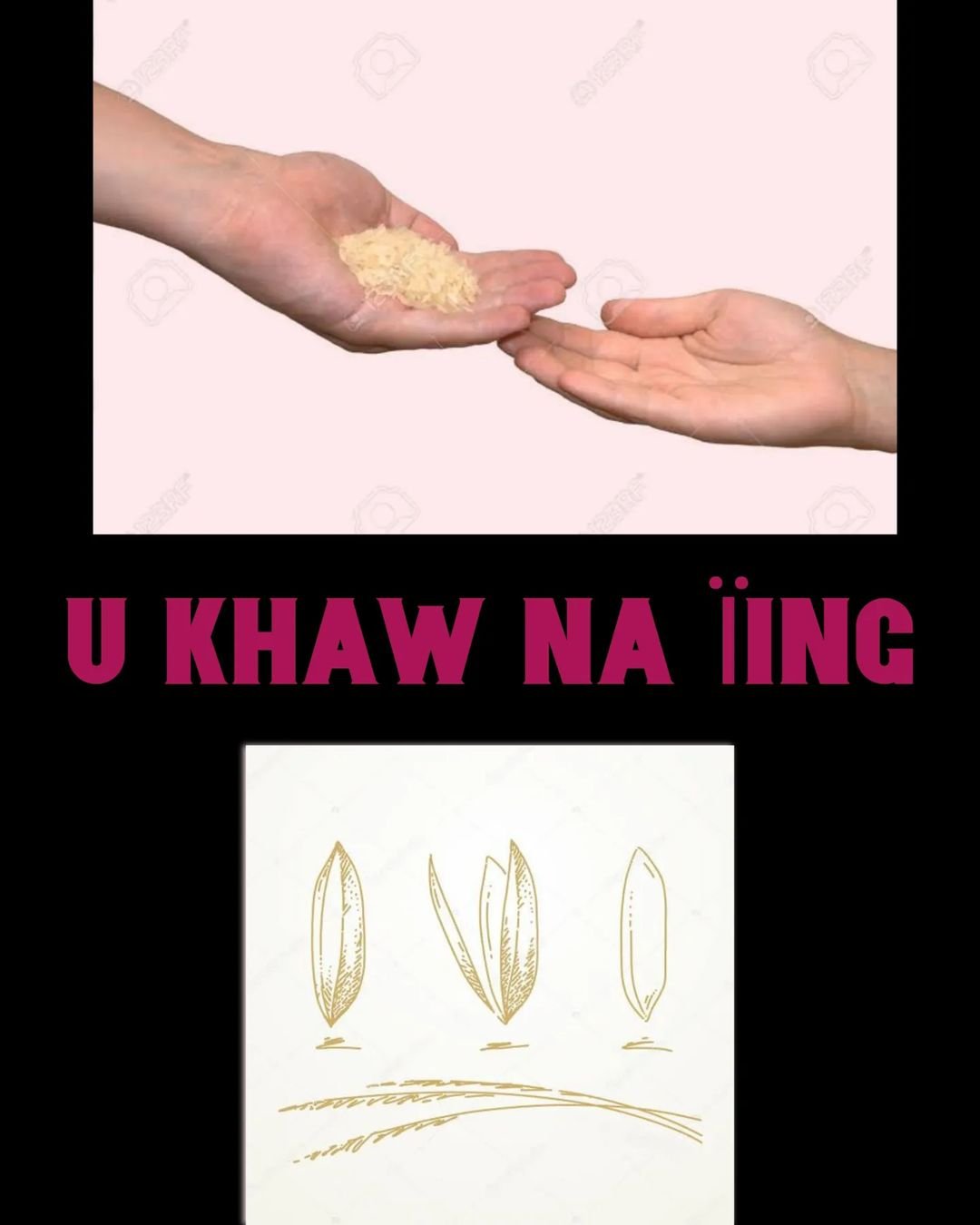
    "Khaw Eh Rngiew" and "Khaw Eh Khaw Shan" are a handful of rice grains given by a mother (or any member of the family) to a son or daughter (or anyone else in the family) who is about to embark on a journey, so that everything goes well without any problems. These rice grains serve as symbolic sustenance against hunger and thirst, protection from harm or ill-will and when chewed (some say only three grains) fear and apprehension (even shock from an accident) fade away.

    "Khaw Eh Rngiew" and "Khaw Eh Khaw Shan" imply the rice grains bless the one who possesses them with the strengthening of their essence/ personhood/ nature, preventing any misfortune that may befall them. It is also believed that the rice grains enhance the good fortune of a person and preserve their physical and mental health.

    Khaw Eh Rngiew" and "Khaw Eh Khaw Shan" are a handful of rice grains from home for your physical, mental and material well-being! 😃❤️🌾

    The Khasi belief in a handful of rice grains is rooted in culture and faith. Khublei Shibun @shillongftw for initiating this! 😄🙏

    Khublei Shibun ïa phi ruh baroh kiba la phah ïa ki jubab jong phi khnang ba ngin sngewthuh kham bha ïa kane ka dustur! 🙏🙏

    🟡 English explication by @speakyourroots

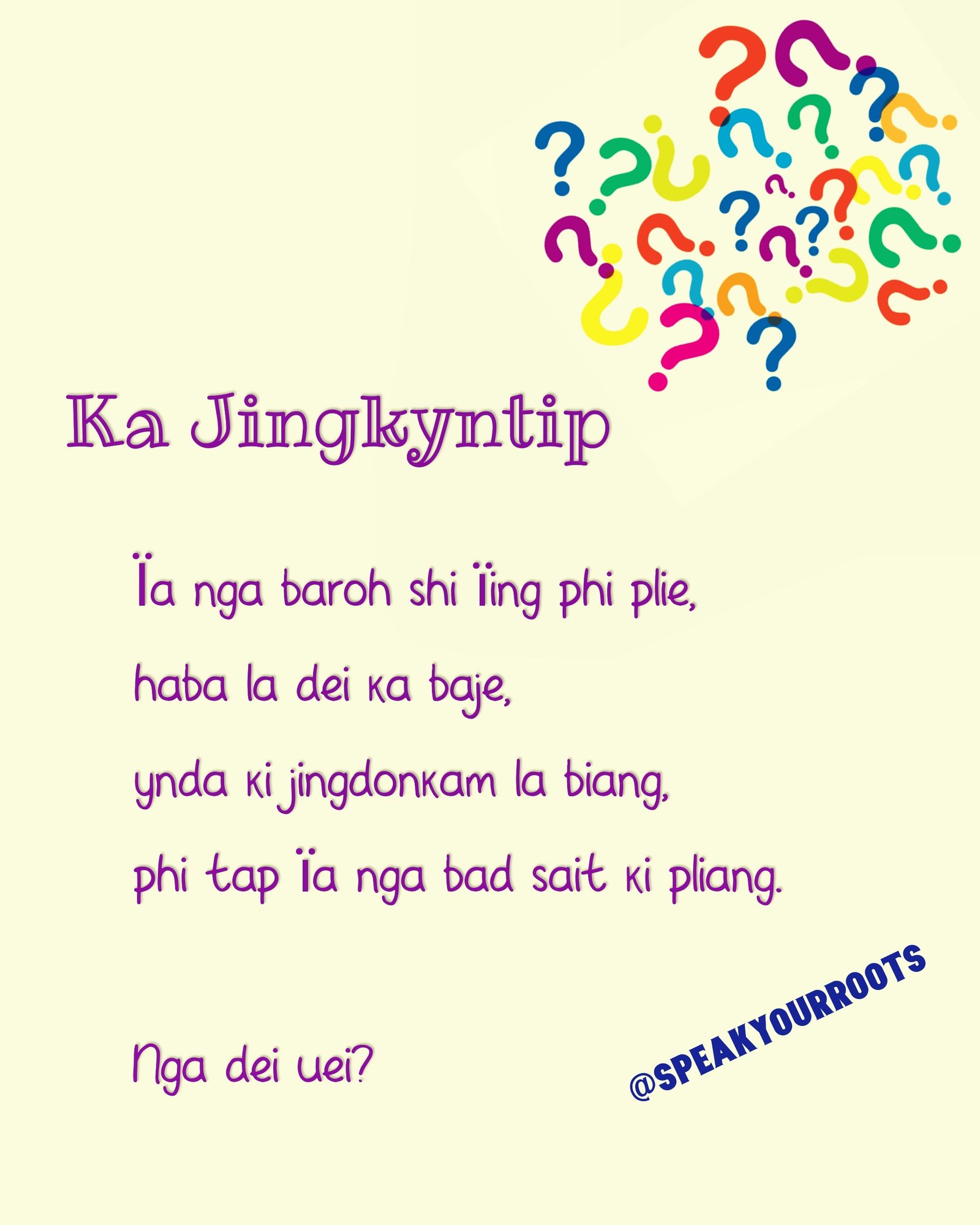
  • Ka Jingkyntip

    Ïa nga baroh shi ïing phi plie,

    haba la dei ka baje,

    ynda ki jingdonkam la biang.

    phi tap ïa nga bad sait ki pliang.

    Nga dei uei?

    Ngin ïa kyntip noh mo teng teng 😃😃 Sa comment lada phi tip ïa ka jubab jong ka jingkyntip!

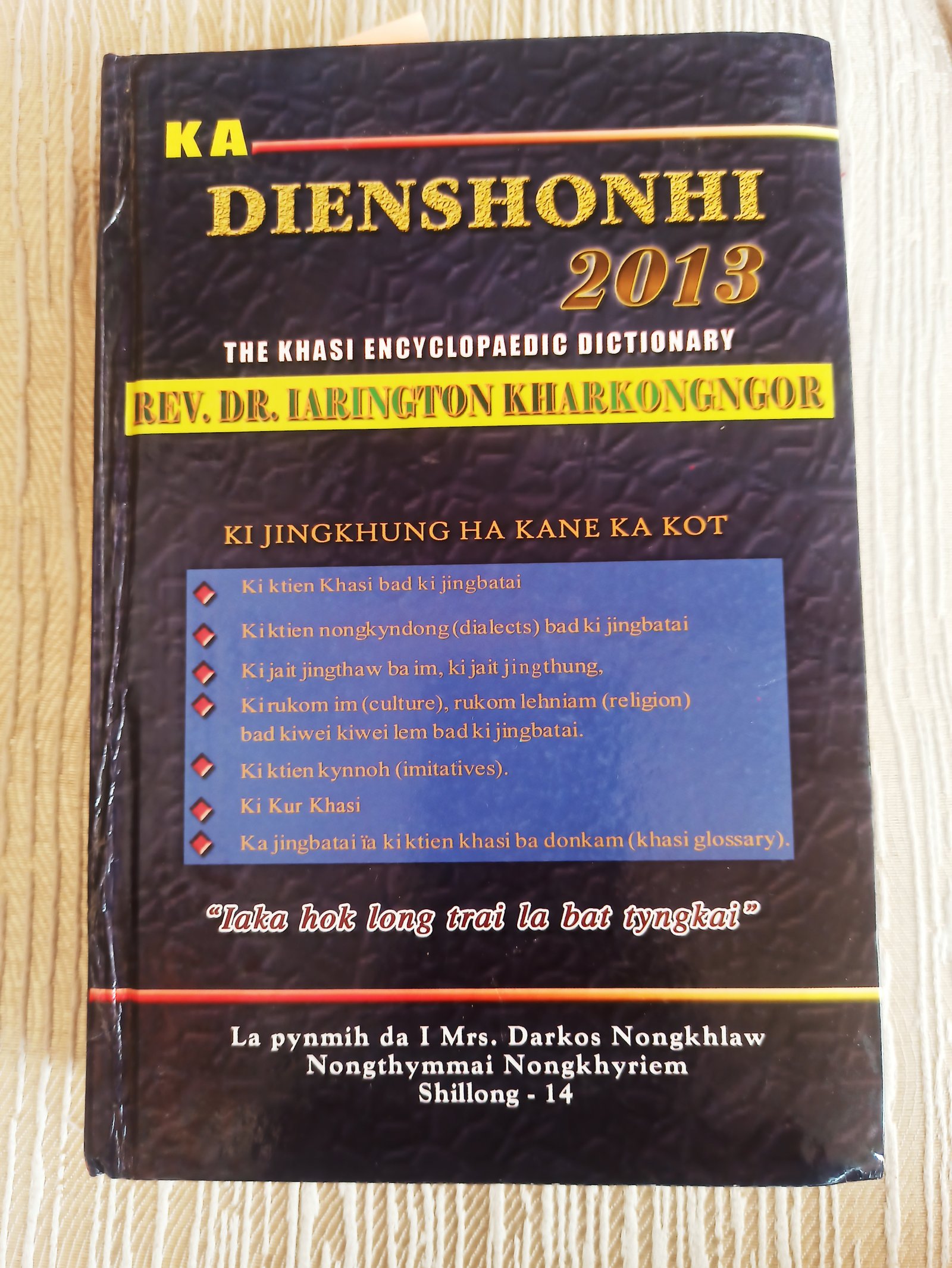
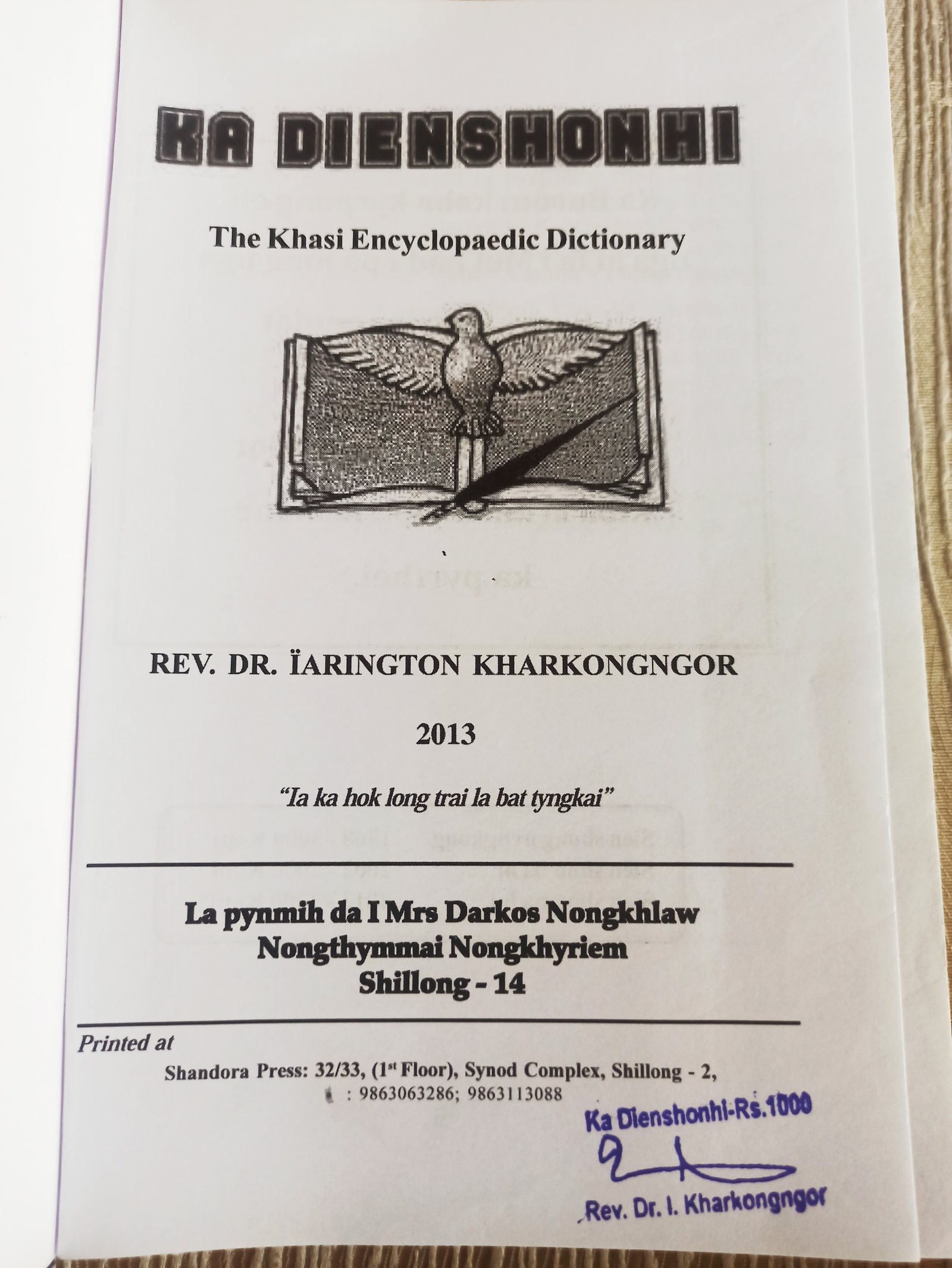
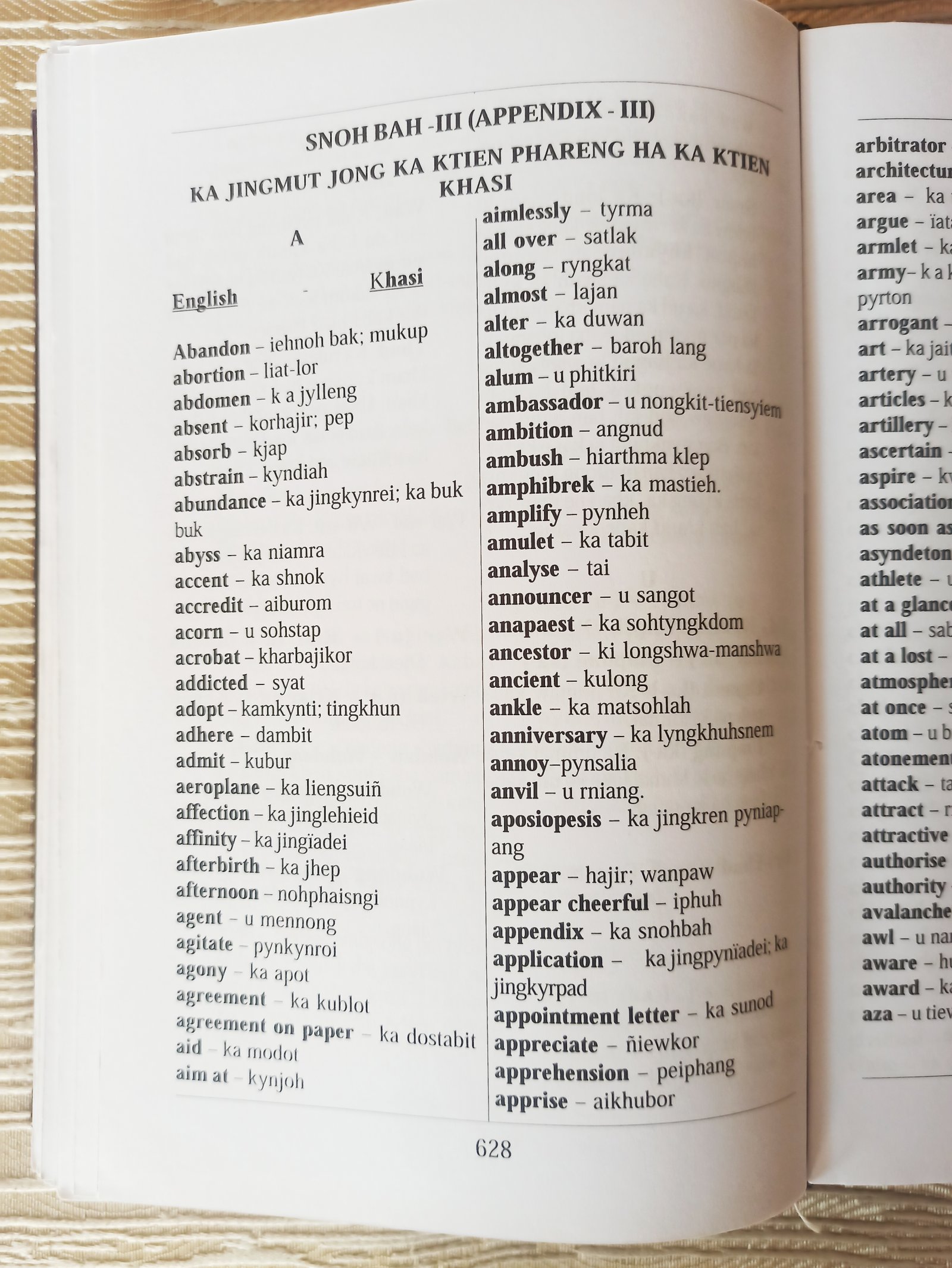
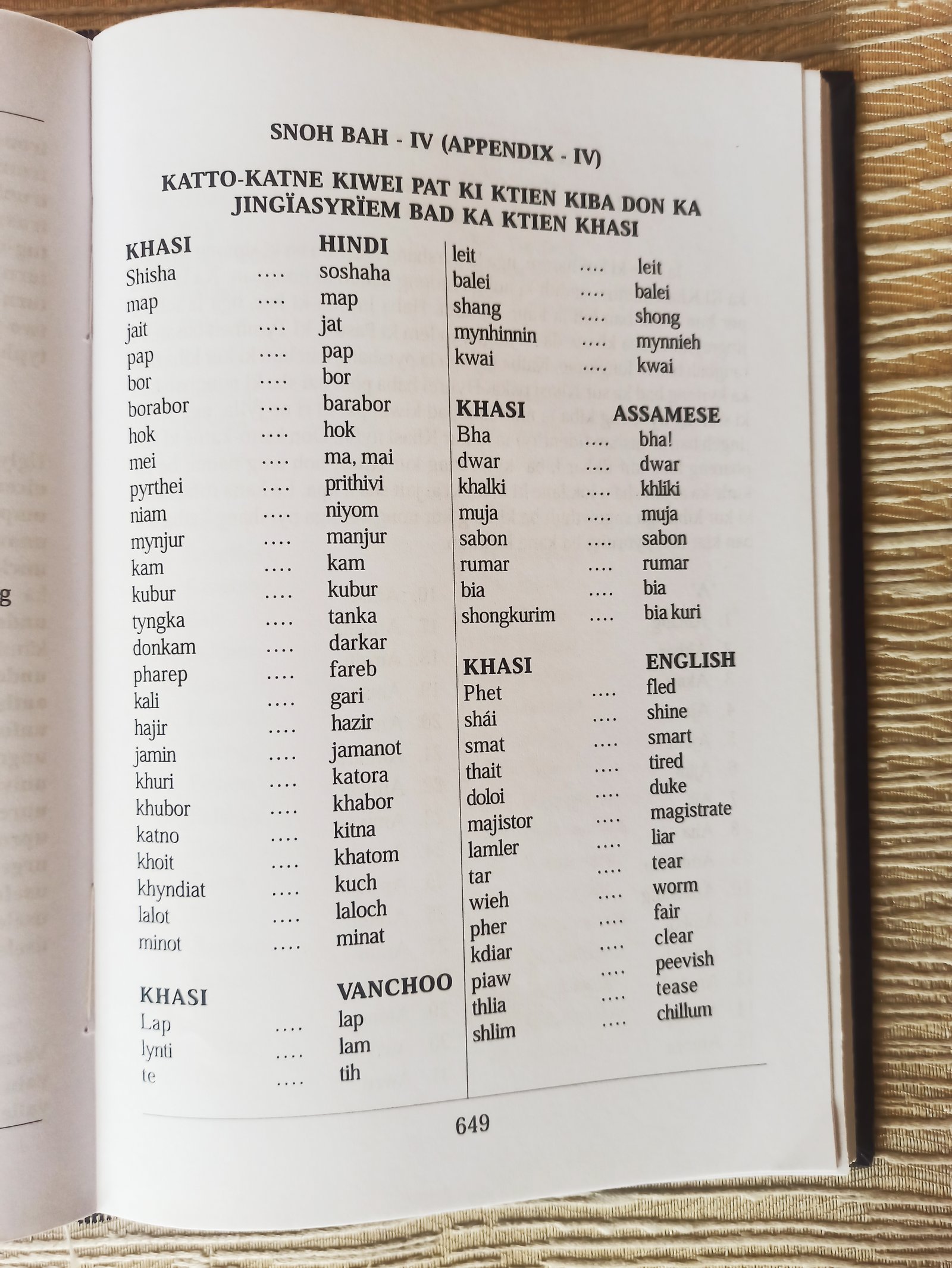
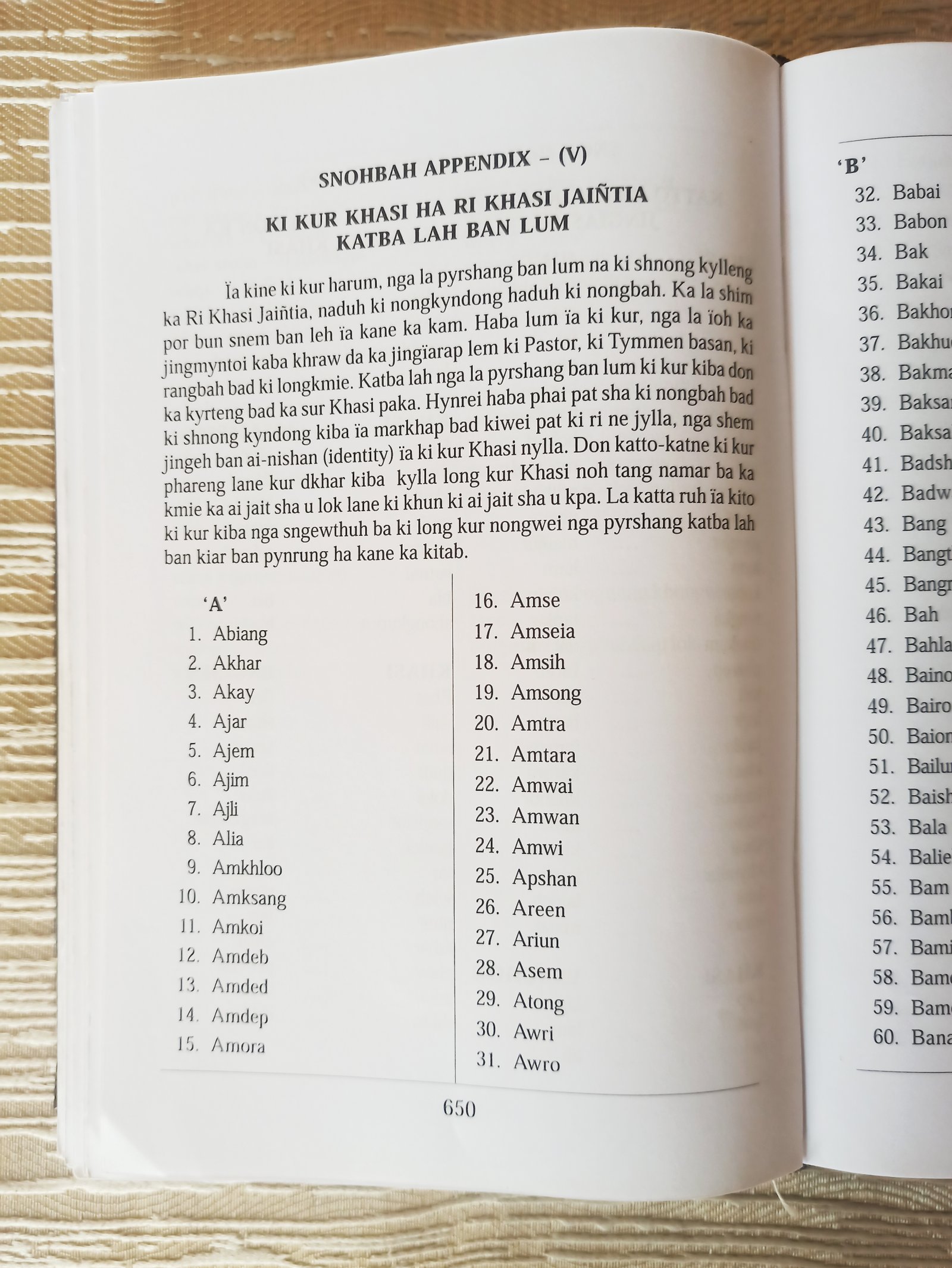
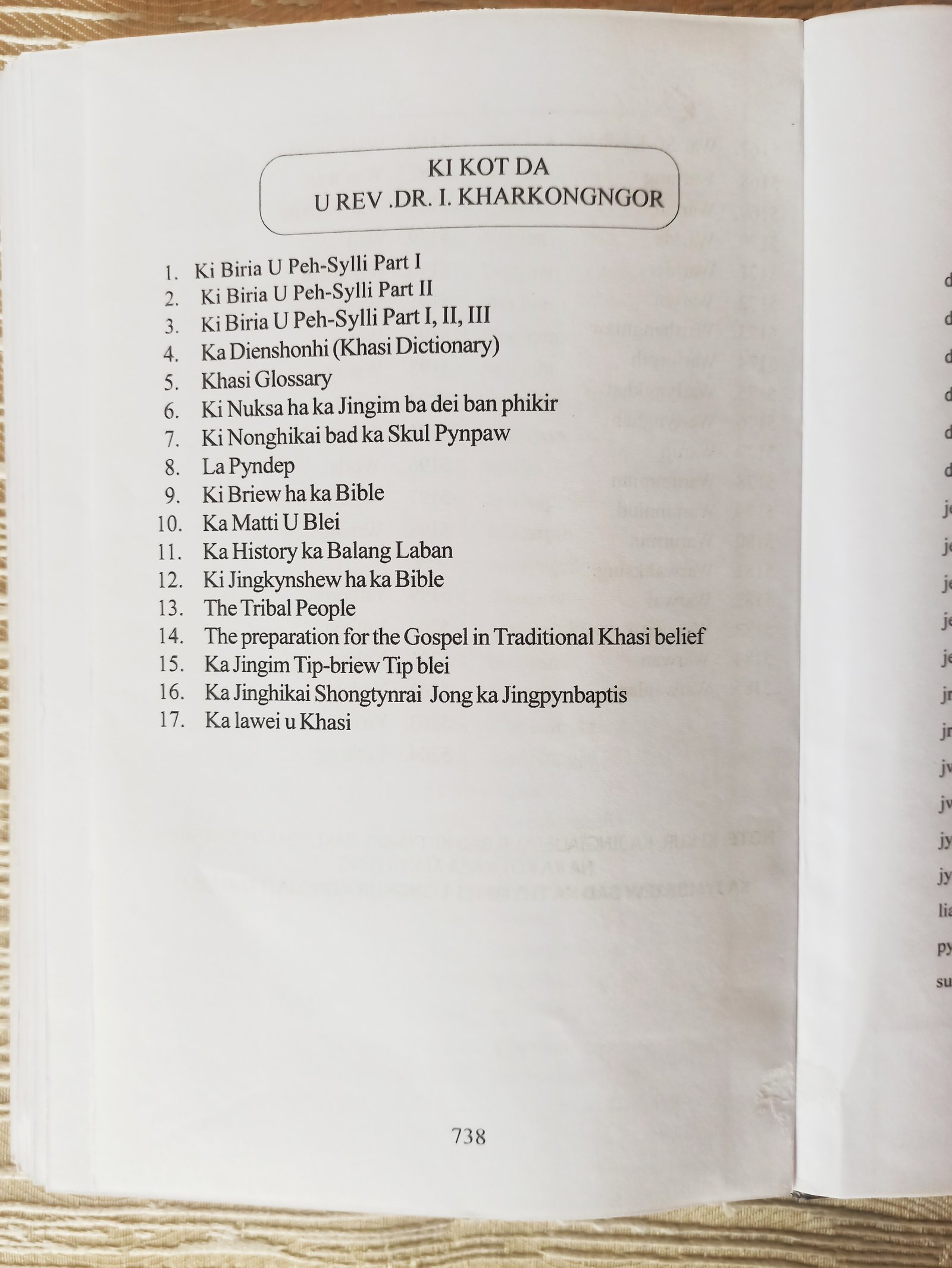
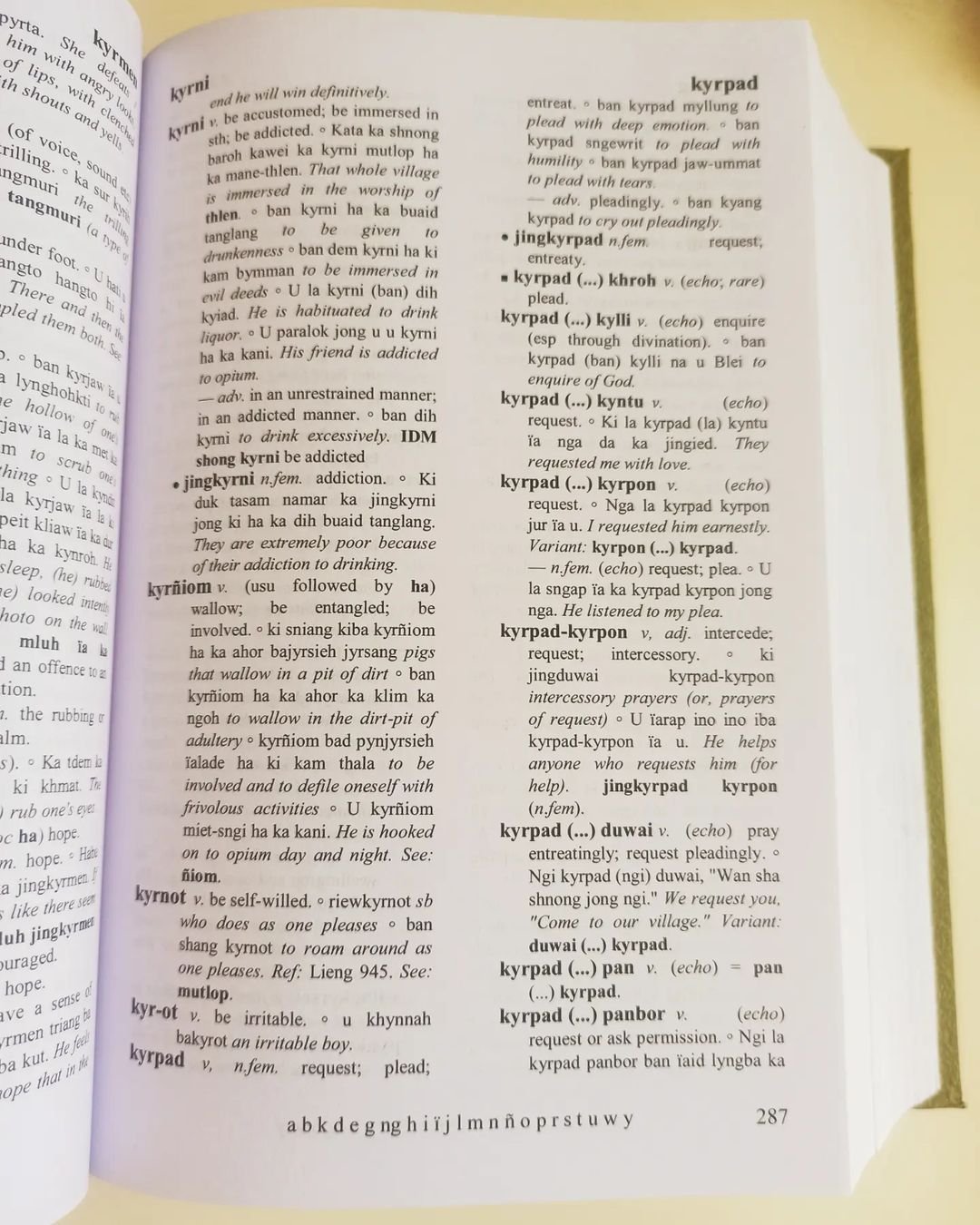
  • Ka Dienshonhi: The Khasi Encyclopaedic Dictionary by Rev. Dr. Ïarington Kharkongngor

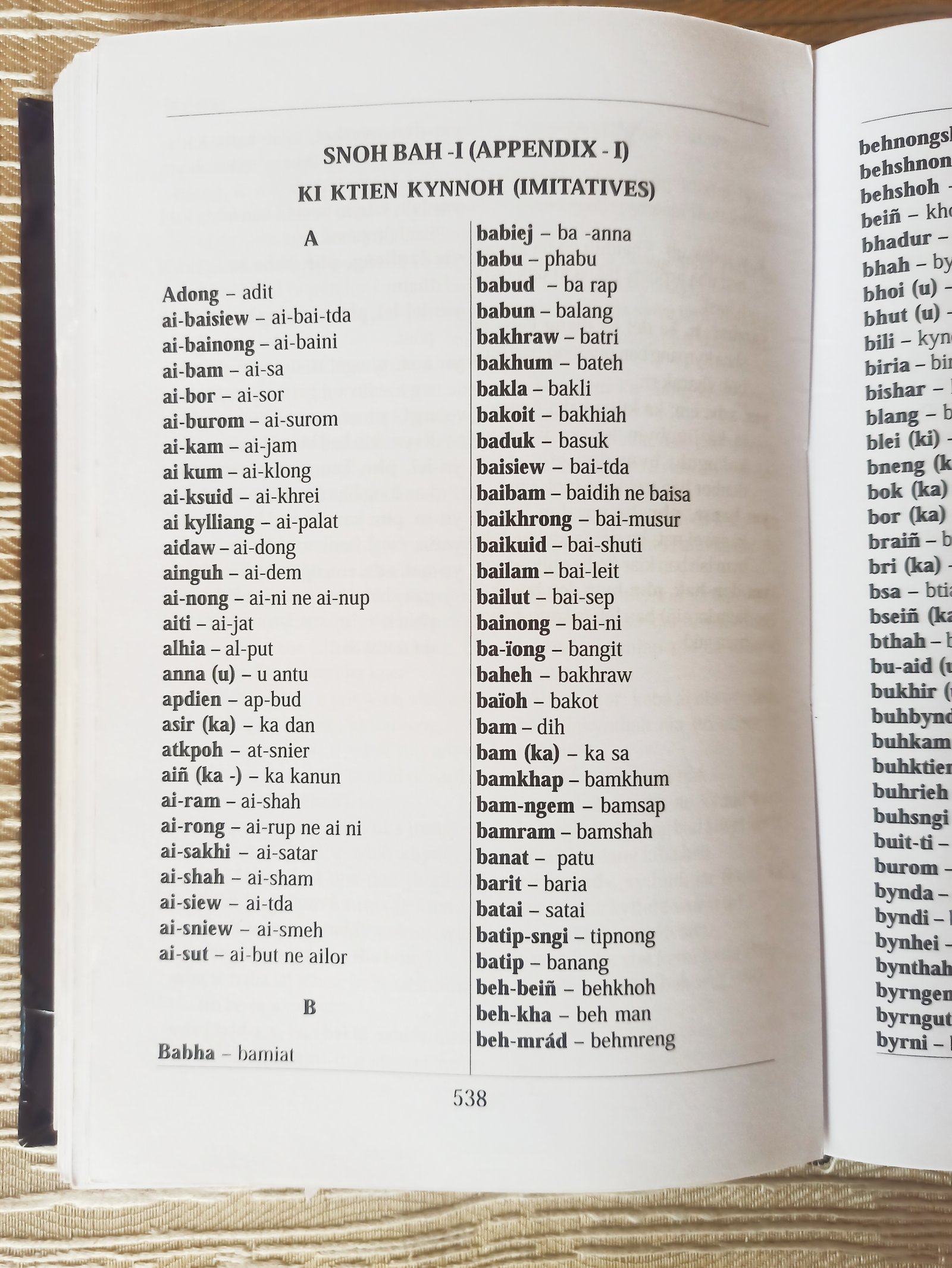
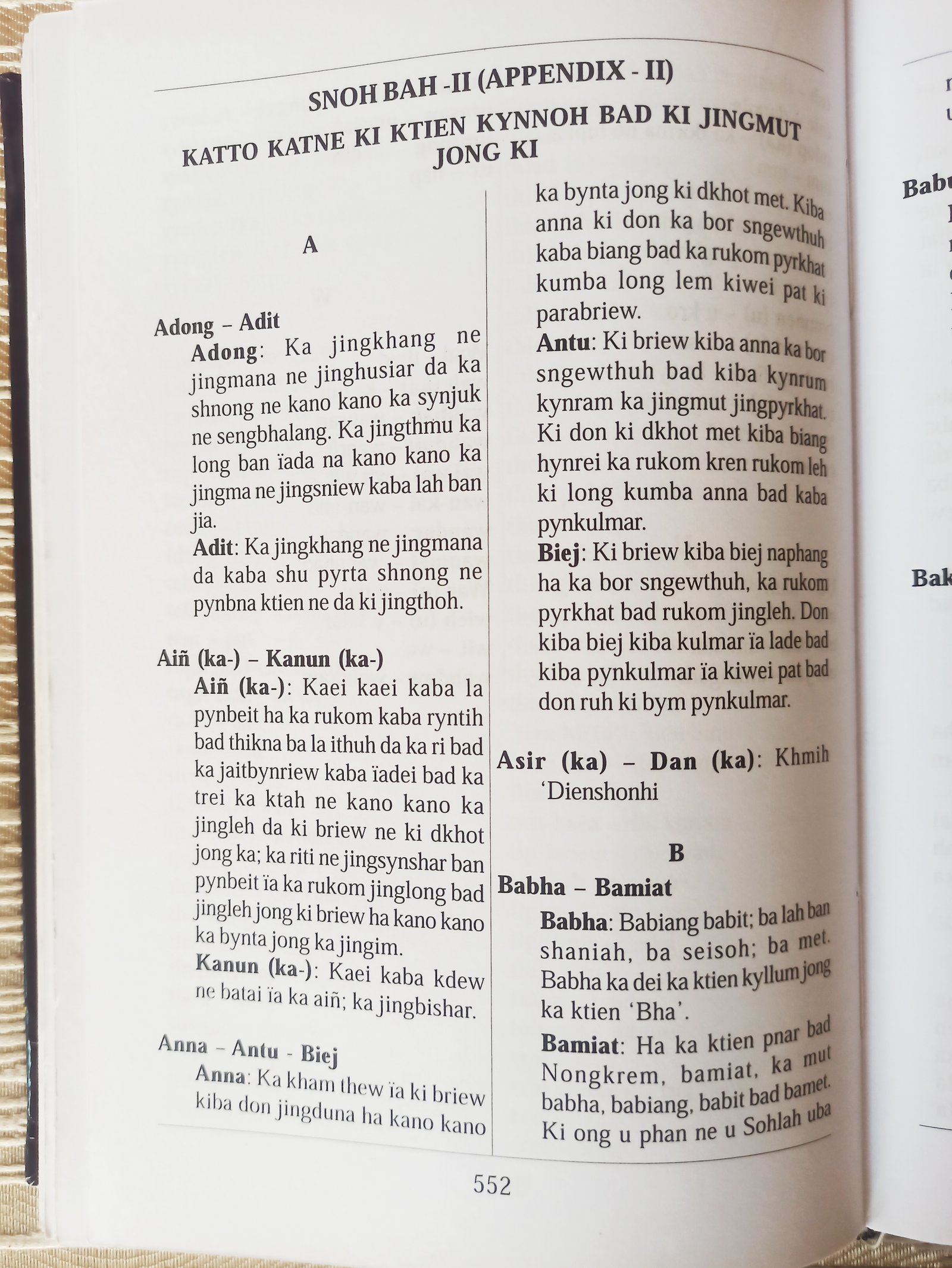
    Ka Dienshonhi: The Khasi Encyclopaedic Dictionary by Rev. Dr. Ïarington Kharkongngor is a Khasi to Khasi dictionary which is supplemented by 5 appendices as shown in the slides above. 🤓📚 This is the go-to book for many of us!

    The name of this Khasi dictionary has been coined by the author as "Dienshonhi" whose meaning is provided in the book 😃😃

    🟡 This book is sold in Ri Khasi Book Agency, Mawkhar, Shillong.

  • Ka Sngi Burom Ïa Ki Kynthei da Ibakyrmen Sohtun

    Ka sngi burom ïa ki kynthei

    Kumno ngan klet ïaphi keiñ Mei

    Ka sneng ka khraw phi theh kyrhai

    Ki long kham khraw ban ïa ki sbai

    Watla i pa i ieh khunswet

    Hynrei phim riej ban tur shaphrang

    Phi hikai jingstad ngin thwet

    Bad ba ngin nang kiew shaphrang

    Phi long ka riewkynthei ba shemphang

    Jingeh baroh phi thom naphang

    Ban ngin bit ba ngin biang

    Phi shah jingeh haban da biang

    Tarajur jingieid bym noh shiliang

    Hapdeng shipara phi hikai biang biang

    Kumno ba ngin ïa ieid markylliang

    Watla ngi long ki kup ki sem shiliang

    Haba nga ur phi khyllie ianga

    Haba nga iam phi khroh ianga

    Haba nga saitlah phi sneng ianga

    Haba nga kmen phi kmen bad nga

    Daei kein mei ngan siew kylliang

    Ia jingieid jingbha jong phi

    La ngin wad sawdong pyrthei

    Ngam Shem shuh jingieid Kum

    Jong phi Mei

    Khublei ko Mei Khublei

    Nang ioh kyrhai ki jingkyrkhu

    Nang im shongprah shongshang

    Nang ïai long nuksa babha iakiwei

    KHUBLEI ko MEI BAIEID

    -Ibakyrmen Sohtun

    Ngi la ïoh sa kawei ka jingthoh poitri shaphang ka kmie kaba la thoh @i_b_a_r_i_e_s 😄 Khublei Shibun @i_b_a_r_i_e_s ba phi la phah ïa ka jingthoh kaba sngew ieit bad sngew myllung ❤️❤️

  • “Mei” da Phuibirui

    Ka jingieid ba nyngkong phi ai ha nga,

    Ngan iai bat skhem baroh shyrta,

    Hapdeng ki jingeh ba bun,

    Phim ju ieh iala ki khun.

    Bunsien haba kut ki lad,

    Phim lah khlem da jaw ummat,

    Na ki khun phi kwah buhrieh,

    Phim kwah ia ki ban sngewsih.

    Ka pang ka shitom phim ju kheiñ,

    Ban biang ki khun phi kwah eh keiñ,

    U Blei un don ryngkat bad phi,

    Lynter ki sngi jingim jong phi.

    Ktien sneng ktien kraw jong phi Mei,

    Ngan ym shem ha sla pyrthei,

    Ka mynsiem jong nga ka hun,

    Ngan burom ia phi kum ka khun.

    Phi long ka nongsaiñdur ia ka jingim,

    Bad ruh ka nong ai mynsiem,

    Ngam shem shuh kum ma phi Mei,

    Ka jingieid phi theh sei.

    "Mei" or mother is an original Khasi poem written by @sur__nalade 💜💜 A mother is love, she is timeless and priceless!

    Khublei Shibun @sur__nalade ba phi la phah ïa kane ka poitri jong phi! 😃🙏

  • Lineage by Bala Kharngapkynta

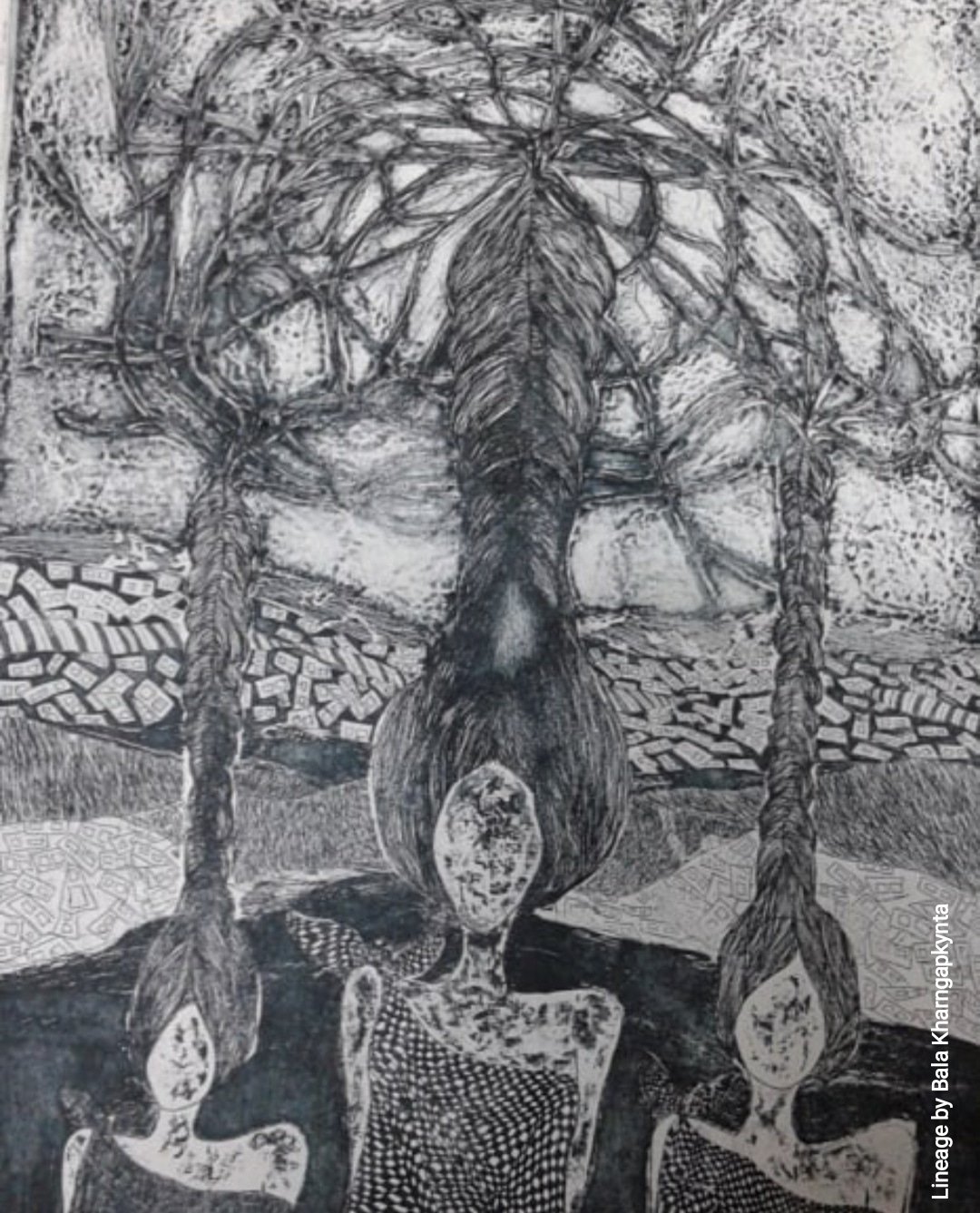
    "Lineage" is an original art piece by Bala Kharngapkynta. This piece speaks of Khasi matriliny and how it affects her.

    She says:

    My works explore the relationships in a matrilineal society. Coming from such a background and being the youngest daughter in the family plays an important role in my work. In our society the mother plays an important role in the family as the children inherit her surname and expand the clan but the head of the family is always the father.

    It is the general notion that the youngest daughter, that is the khatduh has it easy because she stands to inherit the majority of the family assets but with this comes great responsibility. Being a khatduh is not an easy journey. In most cases we even lose the opportunity to explore and be independent because we carry the title of khatduh consciously or subconsciously. Shared responsibilities with all daughters is common but in most cases it is the khatduh alone who carries the main load.

    In this piece there are three women, they represent myself, my mother and my sister. My mother being the matriarch who leads us in the centre and imparting important tasks to the two of us.

    Khublei Shibun @bala_kharngapkynta ba phi la ai lad ban sah dak ïa kane ka jingoh dur jong phi! ❤️😄🙏

  • Learner’s Khasi Dictionary With English-Khasi Index

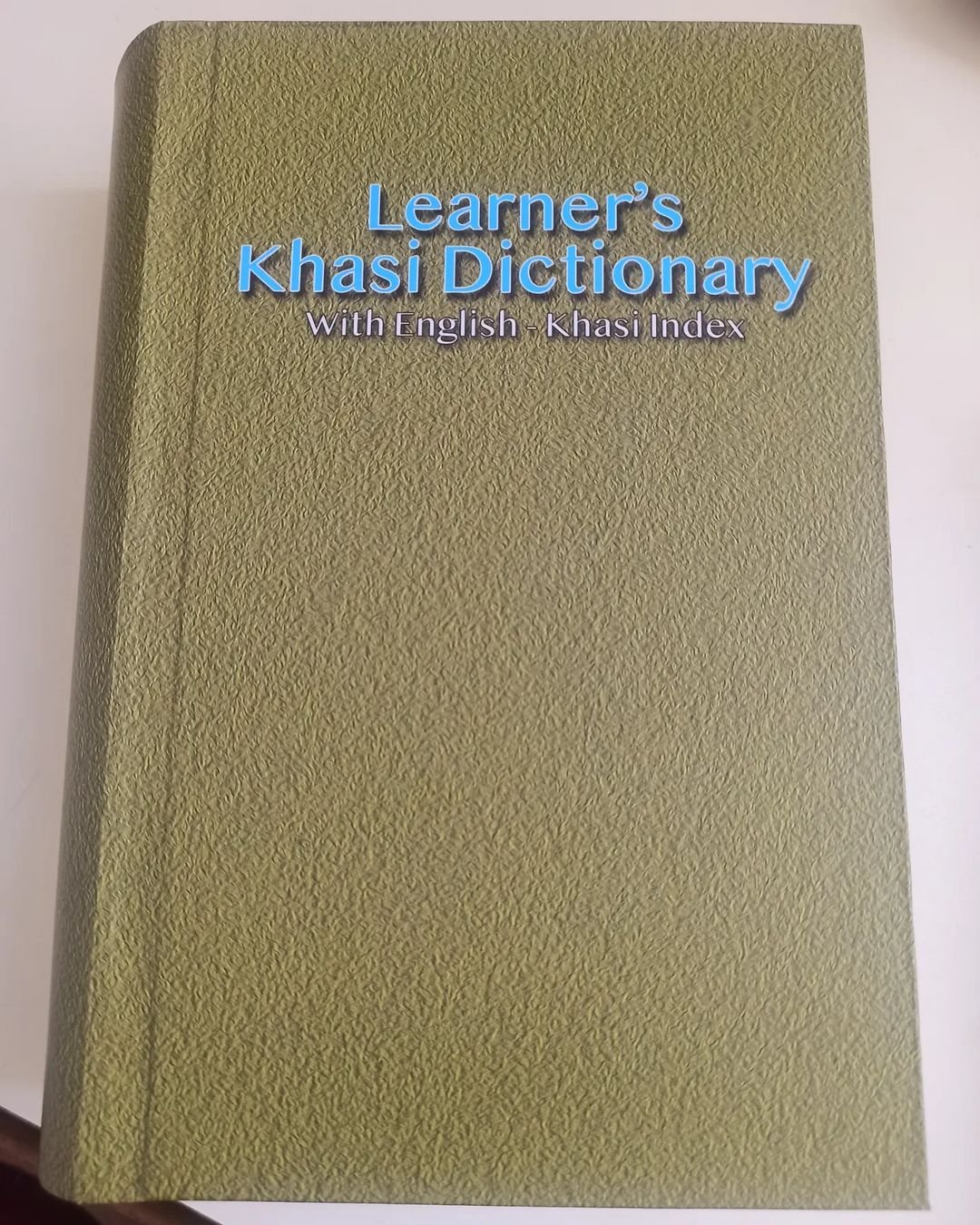
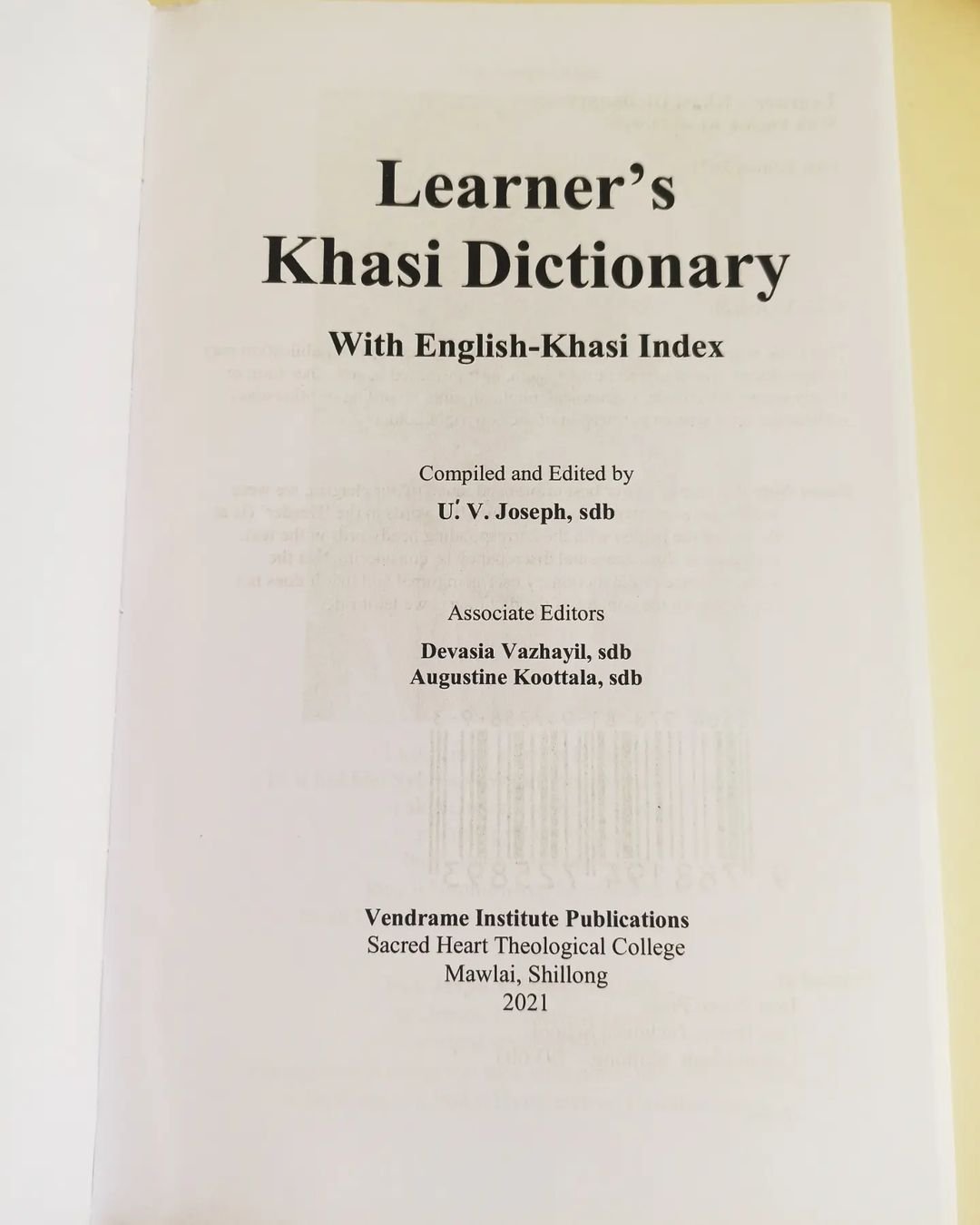
    The is the Learner's Khasi Dictionary (With English-Khasi Index) compiled and edited by U'. V. Joseph, SDB with Associate Editors: Devasia Vazhayil, SDB and Augustine Koottala, SDB and published by Vendrame Institute Publications, Mawlai, Shillong, 2021.

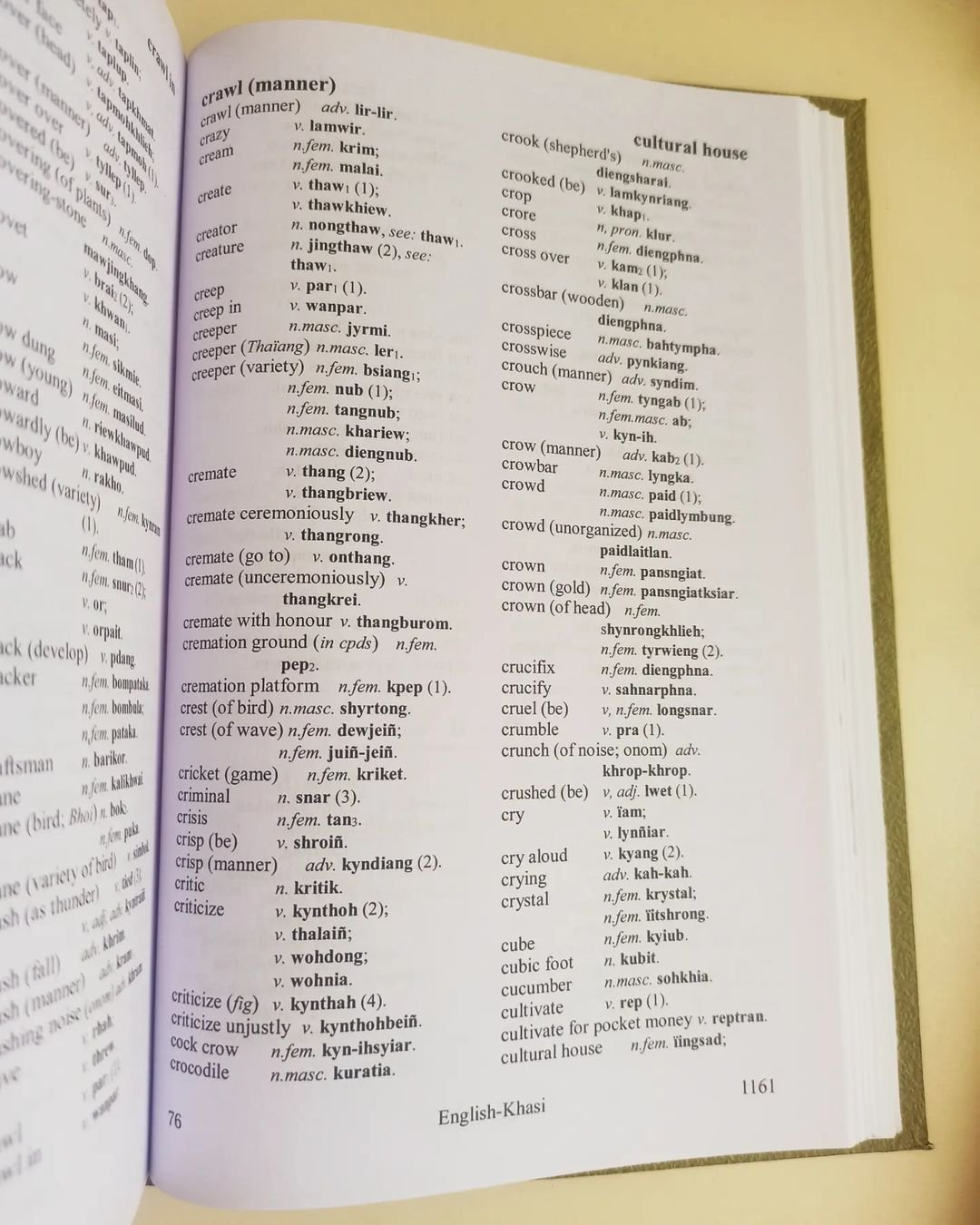
    This is another Khasi dictionary that we should add to our library because it has a vast collection of Khasi words whose meaning is explained in Khasi as well as English! 😃😃 In addition to this, there is an English to Khasi section!

    This dictionary will be beneficial for native Khasi speakers and non-native speakers too 👍👍 This dictionary was also the prize for the International Mother Language Day contests of 2022.

    🟡 The dictionary is sold in Don Bosco Book Shop next to St. Anthony's School in Laitumkhrah.