Tag: khasiliterature

  • Where is the dialect from? #4

    Khublei ïa phi baroh! Kane ka dei ka jingïakob halor ki ktien shnong (dialect contest) na ki bynta ba pher jong ka ri Khasi kum shi bynta fa ka jingrakhe ïa ka International Mother Language Day, kaba la wanrah sha phi da ka @speakyourroots bad ka Big FM 98.3 Shillong lyngba ka jingkyrshan jong ka @neindiaarchive !

    🟡 Kane ka dei ka jingkylli kaba khatduh!

    🟡 Lada phi tip ïa kane ka ktien la kren ha ka shnong ne ka thaiñ aïu, phah ïa ka jubab da ka text sha une u number 8798997511. Phin ïoh ïa ka khusnam kaba la pynkhreh kynsai!

    🟡 SNGEWBHA AI ÏA KA KYRTENG JONG KA SHNONG/ THAIÑ BAD KA KYRTENG KABA PURA KA JONG PHI RUH.

  • Interview with Freedyboy Majaw, International Mother Language Day 2023

    Ka Jingphohsniew da i Freedyboy Majaw

    Ha jingiabun briew nga iohi iaphi,

    Hangta habar phi shong syaid sngi;

    Ka dur jong phi ba phuh iskuiñ,

    Lem bad i dur khmat ba phi rymmuiñ.

    Nga wan ban kylli nga wan ban ktah

    Mei hato phin shongsah?

    Phi ong ianga, hooid ngan shong!

    Ngan long ruh hi kumba ju long.

    Hangta nga don ka jingsngewpher,

    Shi khyllipmat kane ka por kan sa her;

    Nga don ka bor te Mei iaphi ban beh,

    Na jingphohsniew sha jngai eh.

    Hynrei mynsiem jong nga ka pang,

    Nga pait dohnud ba bad phi ngam don lang;

    Nga jaw ummat nga iam hangta,

    Ba iaphi nga lah duh shyrta.

    “Balei ko jingphohsniew pha wan kumne,

    Kan suk lada pham pyni ianga hangne;

    Hynrei ngam beh iaphi Mei na jingphohsniew,

    Namar dei tang kane ba ngan kynduh khlem siew".

    Nga kyndit hangta na ri ki jingphohsniew,

    Nga pyrkhat hangta nga iam weibriew;

    Mei sawan ngan pdiang beit iaphi,

    Lada ym mynta hynrei kawei pat ka sngi.

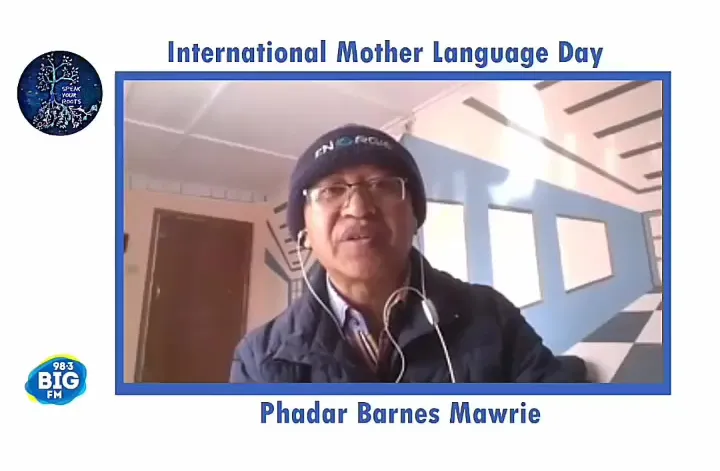
    Kane ka dei khyndiat ki symboh jingkren hapdeng jong i Freedyboy Majaw @its_me_fred_wc bad i @rj_bob_bigfm kum shi bynta jong ka jingrakhe ïa ka International Mother Language Day. Ki phang kiba ki ïa phylliew jingmut ka dei ka jingthoh poitri ha ka ktien Khasi, kumno ban pynkiew ïa ka ktien Khasi bad kiwei kiwei.

    Ïa kane ka jingkren lah dep ban pynsngew ha ka 13 bad 14 tarik u Rymphang ha ka Big FM 98.3.

    Khublei Shibun @its_me_fred_wc ! 😄🙏 Kane kan long ka jingbynrap kaba kordor ha ka page!

  • Myllung Ka Ri da i Dameshwa Rymbai

    Myllung Ka Ri

    Na Ri ki lyoh bad ki kshaid.

    Ka shnong ba la bna nam.

    U Khun phrangsngi u mih,

    Jong I Hat Tongper, I Lyngkien Tham.

    Khun shynrang marwei bad ba lai,

    Kumba la thoh shun U Blei najrong,

    H'u khatphra spah hynniew phew lai.

    U kit ryngkat ka sap ka phong.

    U nonghikai ba kat u nonghikai

    Ia ktien khasi ban kyntiew nam.

    Synniang kham kordor ia ki sbai,

    Haduh mynta ki dang kren jam!

    U khulom ksiar bad ka sia jingstad.

    Uba dang iai pruid haduh mynta.

    Kyntien kum waitlam kaba prat,

    Ki sei shibun ki riewkhraw na jylla

    Ah! Lada long da u Mahon-mala,

    Ba pynkup burom ia phi myllung

    Burom jong phi la kat u patsha,

    Uba kit ka jingstad shi khung.

    Ah! Ei ban bteng ia lyngkor jong phi,

    Ki ktien jingstad ba tei imlang sahlang

    Ban pynneh, pynjanai ia ktien khasi,

    Shaei ki samla, ki thei bad ki rang?

    Hato ngin shu kut tang ka khana,

    Shaphang U myllung ba khraw ka Ri?

    Mano ban leit wad mawlynnai mawhira

    Jinghikai kiba Myllung u hikai ia ngi.

    Ban shu kut tang ha ka jingpule,

    la ki jingthoh ba kit symboh jingstad.

    Donkam ia ngi ba ngin da sule.

    Ha man la ki khep, haba plie ka lad.

    – Dameshwa Rymbai

    Sa kawei ka jingthoh poitri ban kynmaw ïa ka lyngkhuh sngi ïap jong u myllung Soso Tham mynta ka sngi ka dei "Myllung ka Ri" ba la thoh da i @damechwarymbai410 📖✍️

    Sa shisien phi la phah ïa ki jingthoh ba shoh jingmut, ba shoh mynsiem. Khublei Shibun! 🙏🙏

    #usosotham #sosothamdeathanniversary #khasipoetry #khasiliterature #khasipoetryintranslation #speakyourroots #speakyourrootschallenge #talklocal

  • Ka Por da Naomi C. Nonglait

    "La biang katto," ka ong ka por,

    Haba u briew la lut ka bor,

    Jingim la ïaid man la ka sngi,

    Mynta la poi te sha sepngi.

    Ani! To ap shuwa ko por,

    Balei pha sei ïa la ka bor?

    Jingim ban shim noh hi bran bran,

    Ngim pat sngewthuh kumno ban san.

    Bunsien ngi beh ïa la ka kam,

    Ngi klet ïa kiba ngi ieid tam,

    Ngi ai pynban ka por kordor,

    Sha kita kiba shet shukor.

    Ki thaba ha ki khmat jong ngi

    Ki pynthame man la ka sngi,

    Khmih ko samla ïa ka lynti

    Ïoh dier noh pat ka por jong phi!

    "Ka Por" (Time) is an original Khasi poem by @carey_lynz who is a teacher and scholar 🤗❤️ Khublei Shibun @carey_lynz ba phi la phah ïa ka poitri jong phi kaba long ka jingpynkynmaw ba kordor 🕯️🪞🕜

    @carey_lynz says about the poem: "Time is a gift and yet a curse to one who does not know how to use it. This poem expresses how time can run out when we are in the rat race of becoming, or achieving or doing things which may not matter. But, while we hanker after the things of this world, they may not be important in another time as we may have lost our focus. For instance, if it is family it is not that we have forgotten them, but it is acts of thoughtfulness like making a phone call or saying kind words that makes a difference. Sometimes we need to look at the bigger picture beyond misunderstandings which may ultimately cost regret and pain. The poem issues a warning of the choices made or the path taken."

    Dr. Naomi C. Nonglait is an Associate Professor in the Department of English,
    St. Mary's College, Shillong, Meghalaya.

  • U Kba da i Rangskhembor Mawblei

    Kba u symbai

    u kba u soh,

    u khaw ka ïing

    man I'u symboh.

    Sara ne thung

    U ïeng hi joit,

    'dak ka pateng

    u briew u ïoh.

    Khyndew ka riew

    ba briew u doh,

    u long lang keiñ

    mariang ka snoh.

    La thaw kyrpang

    man I'u symboh,

    I'u stait la bret

    b'u met u soh.

    Ka dur b'u rah

    ïa u la ai,

    lada ngin peit

    ne bam kumjuh.

    Baroh ngin tip

    Ï'u kba lashai,

    ne mynta ruh

    u dak ka kpoh.

    "U Kba" is an original Khasi poem written by @rangskhembormawblei , who is a sculptor and installation artist. He teaches in Mairang Vidyajyoti Inclusive Secondary School. He completed his BFA & MFA from Visva Bharati University, Kala Bhavana, Santiniketan.
    Khublei Shibun @rangskhembormawblei ba phi la ai lad ban sah dak ïa ka poitri jong phi! 😄🙏

    U kba u dei uba ngi ithuh ha man la ka thliew ïing Khasi bad u long uba pyntyllun ïa ka jingim jong ngi bad ïa ki samoi ka mariang ruh. Ngi sngewtynnat ba kane ka poitri ka ai ka jingmut kaba jylliew, kaba ai ki symboh kba kiba kordor 🌾🌾🏞️

    Rice paddy is known to every Khasi household, it moves the circle of life and the circle of seasons too. We appreciate poetry like this because it gives us a depth of meaning, it gives in each paddy valuable seeds of thought. 🏞️🌾🌾

  • Jingim Por Tlang da i Mebatei L. Khongsit

    Jingim por tlang

    Jingkjam te long ba lah palat,

    Sngew ngih hi thui wat bin sait kjat,

    Ynñioh jaket ba rben samup,

    Lynjur lah hi da nge jaiñkup.

    Khongdong kum thred taïar JCB,

    Lait ksai lut khait muja bapli,

    Khohwah kum sleit tyrkhong khaw khaw,

    Da thoh abkd ruh paw.

    Syang ding na khmat daitthah sha dien,

    Syang ding na dien daitthah sha khmat,

    Keiñnoh lah bha ba ai da u keiñ,

    Tang ha jingthih hi beit jingkheiñ.

    Tang kynjat shai b'la wan ka step,

    Ka thma ba jur bin khyllie nep,

    Jingkhi la kat khaw shibyrni,

    Nga jop haduh bin da dei sngi.

    "Jingim Por Tlang" is an original Khasi poem written by @mebatei_l_khongsti 🥶🥶
    Khublei Shibun ba phah phi ïa nge ne nge jingthoh biria jong phi 😂😂 Nang sngew bang shuh ba thoh phi da ka ktien Laitlyngkot. Shisha sa tang nge jaiñkup hi bin syaid ka met ka phad! 🔥💯

    @mebatei_l_khongsti i ong: "Nga thoh ha ka dur ba biria da ka jingshem lajong bad nga ngeit ba baroh baroh hi ngi ïa shem kumne ha ka por tlang, khamtam kito kiba im sha ki shnong ba jur u thah kum sha shnong jong nga."

    Translation: "I wrote this poem in a funny way based on my own experience and I know most of us also experience the same things during the winter, especially those of us who stay in places where there is heavy frost like in my village."

  • Dukan kot Khasi

    😄😄 Ïathuh hok, bun na ngi ngim da tip bha naei ban ïoh ki kot Khasi 😆

    Ki kot Khasi ki bun, tangba dang duna ki nongpule. 📖✍️

    We need to develop and grow the reading culture in our indigenous language otherwise our language and literature will not stand the test of time. 🕐🕔 It's happening already. Many Khasi books are out of print. We applaud those who are trying to publish old editions again!👏👏👏

  • Hun hala ka bor da i Mebatei L. Khongsti

    Hun hala ka bor

    Ha pyrthei ba beh ïa shibun ki rong,

    Nga hun da i black and white,

    Ha ka juk pynstyle sñiuh bun rukom,

    Nga hun ban shu sad sha side.

    Ha ka juk ba beh ki bam bang restaurant,

    Nga hun da i jadoh ha basa,

    Ha ka juk ba ki ïa beh sha KFC,

    Nga hun da i dohmasi syrwa.

    Ha ka juk ba ki beh sha ki juti Adidas,

    Nga hun da i sneaker ba tad,

    Ha ka juk ba ki beh sha ki jaiñ branded,

    Nga hun da i second hand ban wad.

    Hun hala i jingkotbor,

    Wat prong sha kaba shu kot jubor,

    Pynleit jingmut ïa iwei pa iwei i mawjam ba rit sha ka thong,

    Badno badno ïalade wat ju nujor.

    "Hun ha la ka bor" is an original Khasi poem by @mebatei_l_khongsti ✍️✍️

    Teng teng ha ka jinglong briew ngi pyrshang ban kner ïa kaba ngim donkam. Ha kane ka rukom ngi ïaid lait noh na ka jingsyndong bad jingsan kaba kongsan ïa ka malade. 💆❤️

    This poem expresses a yearning to be content with what we have. In our rush to flow with the times, we may lose sight of what is essential to the nurturing and growth of our self. ❤️💆

  • Ka Liengmakaw da Jespil Syiem

    There was once an orphaned youth U Manik by name who had no living relative in the world. He was nicknamed U Manik Raitong, meaning the lonely one, absolutely bereft of all family support. So overcome was he with the loss that had struck him early in his young life, that he roamed the village like one mad. At night, however, he would put away his sackcloth and ashes, eat, bathe and dress himself up in ceremonial garb. Then he would take up his flute, and play the most compelling dirges on it. Unknown to him, U Syiem's wife who had often heard him, became completely magnetised by the tunes that he played on his flute. In the event of U Syiem having to leave her to attend to matters of state in nearby regions, she was left all alone and was therefore lonely. Besides she had only just been married to U Syiem. One night she felt compelled to come to Manik's hut, but was denied entry. She broke open the door in order to be able to hear him better. However much he tried to send her away she refused.

    It was thus that she came to him every night and as a result she became pregnant. However, never once did she disclose her identity to him. When U Syiem returned after long months of being away he found that Ka Lieng Makaw, his wife, had given birth to a son who was now a few months old. He was naturally angry when he found that his wife refused to disclose the identity of the father. He summoned his people and commanded all the men folk to assemble before him. Each was ordered to bring a bunch of bananas with him. On the assigned day he ordered each one of them to offer a banana to the baby boy in order to prove the boy's paternity. However, the baby boy refused each man's offer.

    Then, when U Syiem inquired if any man had been left out, general mention was made of U Manik Raitong. It was a known fact that U Manik Raitong lived a life that was no better than a dog's. U Syiem took no chances, however, and had him come to court with a bunch of bananas. When the baby boy was offered the fruit he reached for it as if familiar with U Manik Raitong. The father having been identified, it was now the turn of the people to be shocked. U Syiem's anger knew no bounds and he ordered that U Manik Raitong be beaten to death as a criminal. U Manik Raitong, however, pleaded before the king to be allowed to choose death by burning.

    On the assigned day U Manik Raitong dressed in all his finery, made his way backwards to the funeral pyre, all the while playing on his flute. The people had already set the pyre alight. When he reached it he walked round three times but before jumping into the burning pyre, he stuck his flute upside down into the ground. The queen too who was indeed agitated beyond control and who had also dressed up as U Manik Raitong had done, watched every development from her room. But when she saw U Manik Raitong jump into the funeral pyre she rushed after him in order to join him in death. The funeral pyre was transformed into a gushing spring of water which exists even to this day, and if one were to visit Raitong one would discover that in the place where the flute had been planted upside down there grows a cluster of bamboos, whose leaves point downwards.

    Khublei Shibun Daohi Manar @xdtnoahjupejackllthmanar ba phi phah ïa kine ki dur jong kane ka kot 😄🙏

    U Daohi u ong: Ka kot Ka Lieng Makaw: Ka Ïam bynñiaw u Manik Raitong Shuwa Ba Un Shah Thang-Im ka dei ka jinglum lang jong ki jingrwai phawar kiba la rwai da i Bah Jespil Syiem. Kaba donkam ban tip ka long ba i Bah Syiem i khlem thoh ïa kine ki phawar, hynrei la lum lang hangne bad pynmih da ka Seng Kyrsei, jong ka Hima Raid UMden-Nongtluh, Ri Bhoi. Ïa kane ka kot la lah ban pynmih da ka jingimsngi bad jingduriap jong ka Vendrame Missiological Institute, Sacred Heart Theological College ka ba don ha Mawlai, Meghalaya.

    Kane ka kot ka batai bniah bha shaphang ka jingïam bynñiaw jong u Manik Raitong shuwa ba un shah thang-im bad ïa kane ngi lah ban sngewthuh lyngba ka jingpynwandur jong ki phawar. La thoh ïa kane ka kot ha ka rukom jong ki phawar. Ïa kine ki phawar la pynwandur da i Bah Syiem bad haba ngi pule ïa ki, nga sngew ki don ka bor ban pynmutdur ne pynpyrkhat ïa ka jinglong-jingman jong kata ka jingïam bynñiaw u bapli u Manik Raitong. Kaba myllung shuh shuh ka dei ka jingdon jong ki dur, kiba la pynwan katkum ki lynnong phawar.

    Daohi says: The book Ka Lieng Makaw — Ka Ïambynñiaw u Manik Raitong Shuwa Ba Un Shah Thang-im is a compilation of "phawar" sung by Jespil Syiem published by Seng Kyrsei, jong ka Hima Raid Umden-Nongtluh, Ri Bhoi. It is important to note that the phawar in the book have not been written by Mr. Syiem, as he has only sung and performed them. The book has also been released through the efforts of Vendrame Missiological Institute, Sacred Heart Theological College ka ba don ha Mawlai, Meghalaya.

    The book contains elaborate details of the sorrow and pain of "U Manik Raitong" before his burning and this is brought to us through the compositions of the "phawar". The story of "U Manik Raitong" and "Ka Lieng Makaw" is delivered through the singing of the "phawar". They have been composed in such a way as to express the despairing cries of "U Manik Raitong". What makes it even more evocative are the pictures that have been drawn according to the chapters of the "phawar".

    The English translation of the story is taken from "U Manik Raitong, Icon of Love and Creativity: An Appraisal" in the book The Oral Discourse in Khasi Folk Narrative by Dr. Esther Syiem.

  • Da lah pule kot Khasi…

    Wow ko sohsat sohjew lada ka eh ka kot Khasi 😅🥵
    Tharai bun na ngi kiba pule ngin sngew kumne 😂😂

    Kaei ka kot Khasi kaba phi sngew eh ban pule?