Tag: speakyourrootschallenge

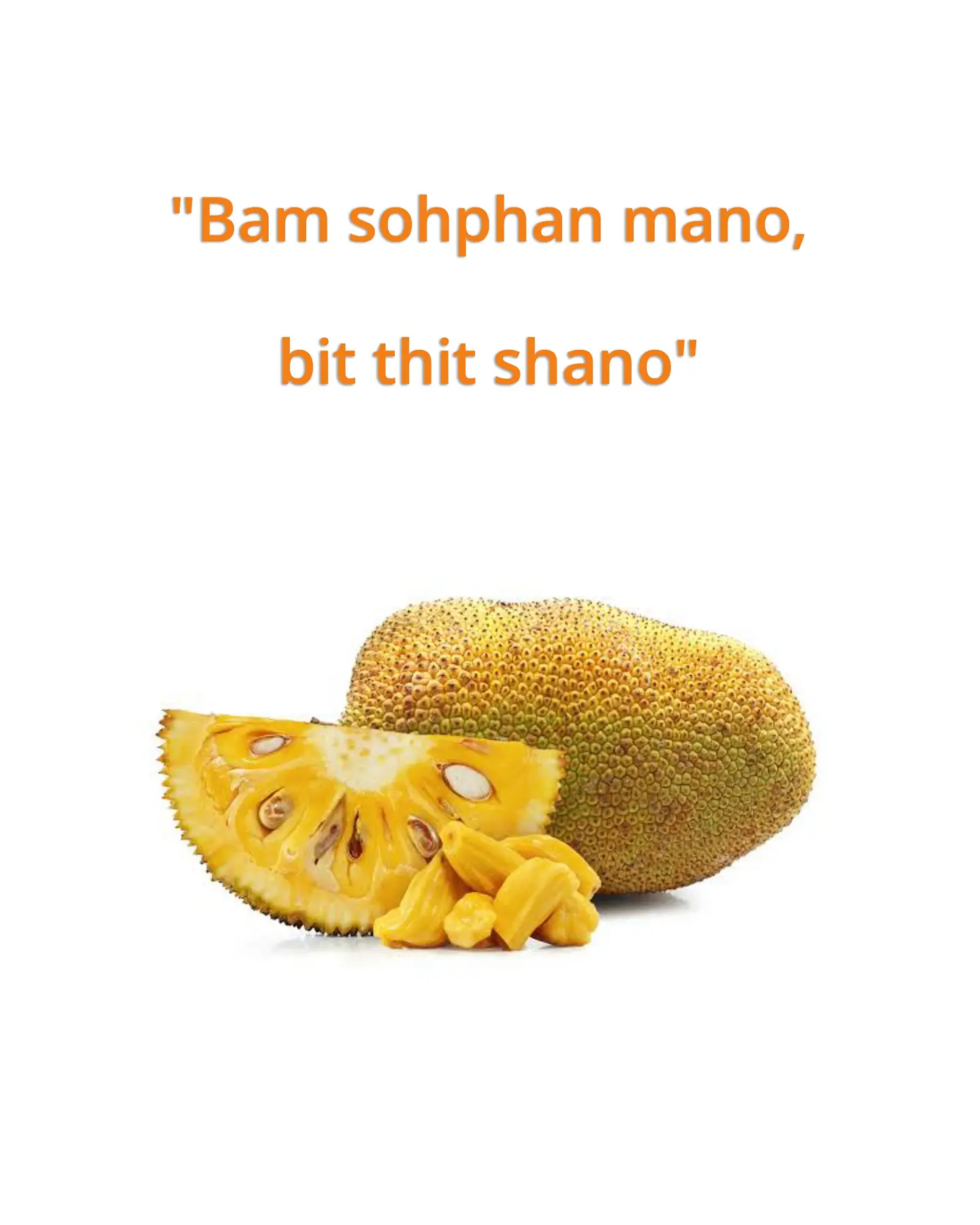
  • Bam sohphan mano, bit thit shano

    Ka jingong "Bam sohphan mano, bit thit shano" ka mut ba ïa u sohphan nang bam hun sha lade bad nang kyllan ïa ka thit sha kiwei. Kane ka long ka ktien mynthi kaba mut ba nang leh kiwei bad nang shah kynnoh ki bym dei; kiba leh ki ïoh ka ïaroh bad ki bym leh ki shah ka kynnoh.

    The Khasi phrase "Bam sohphan mano, bit thit shano" literally means the one who hogs the jackfruit wipes off the jackfruit glue (birdlime) onto other people. This is an ironic statement that refers to the culprit who does not own up or confess to a wrong doing, letting the blame fall on others. Thus, this describes the unjust situation of being wrongly accused of something while innocent.

    The Khasi saying "Bam sohphan mano, bit thit shano" is dripping with irony and sarcasm that is typical of Khasi sayings 😅😅

    Source: Primrose G. Gatphoh

    English translation by @speakyourroots

  • The river Phot

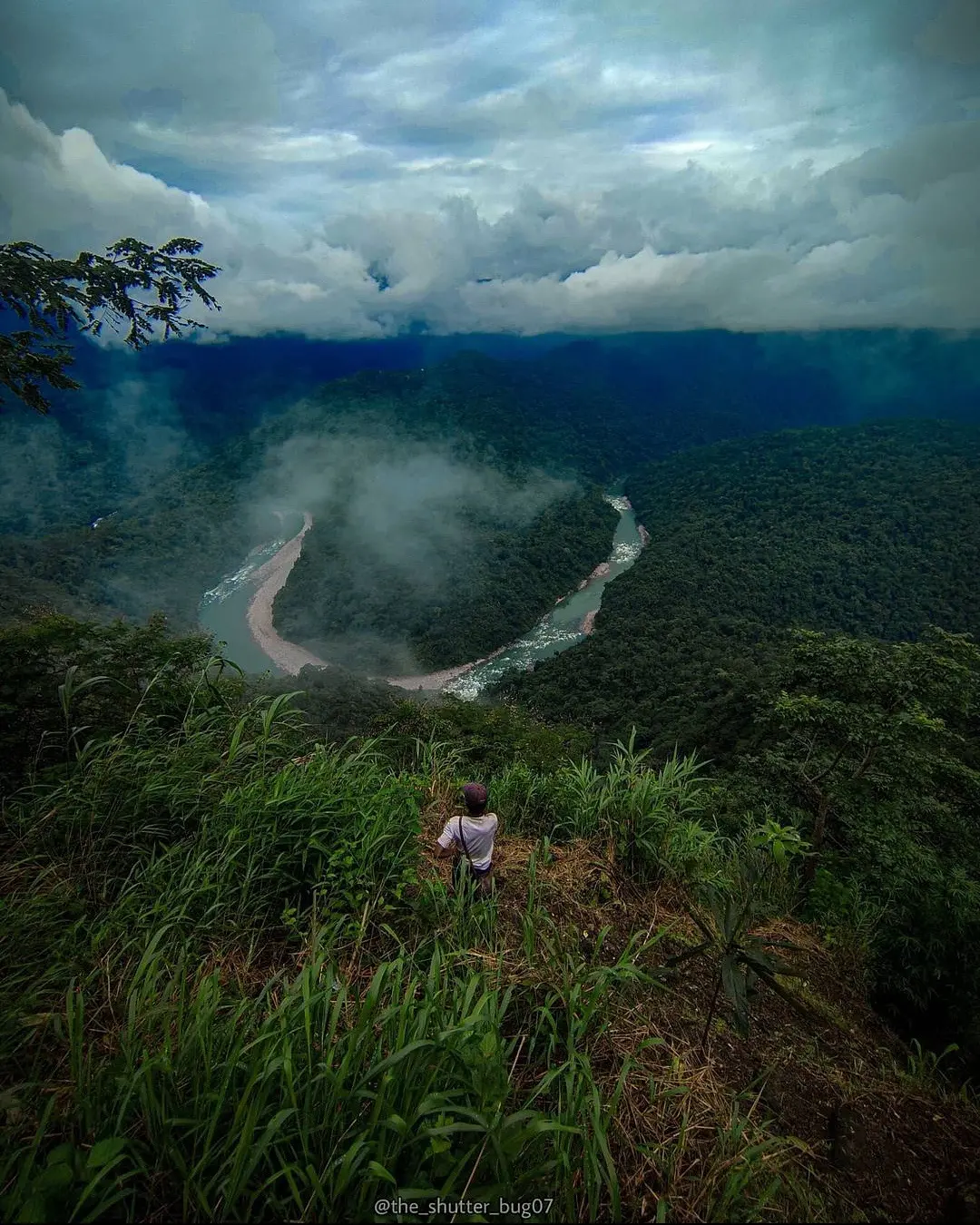
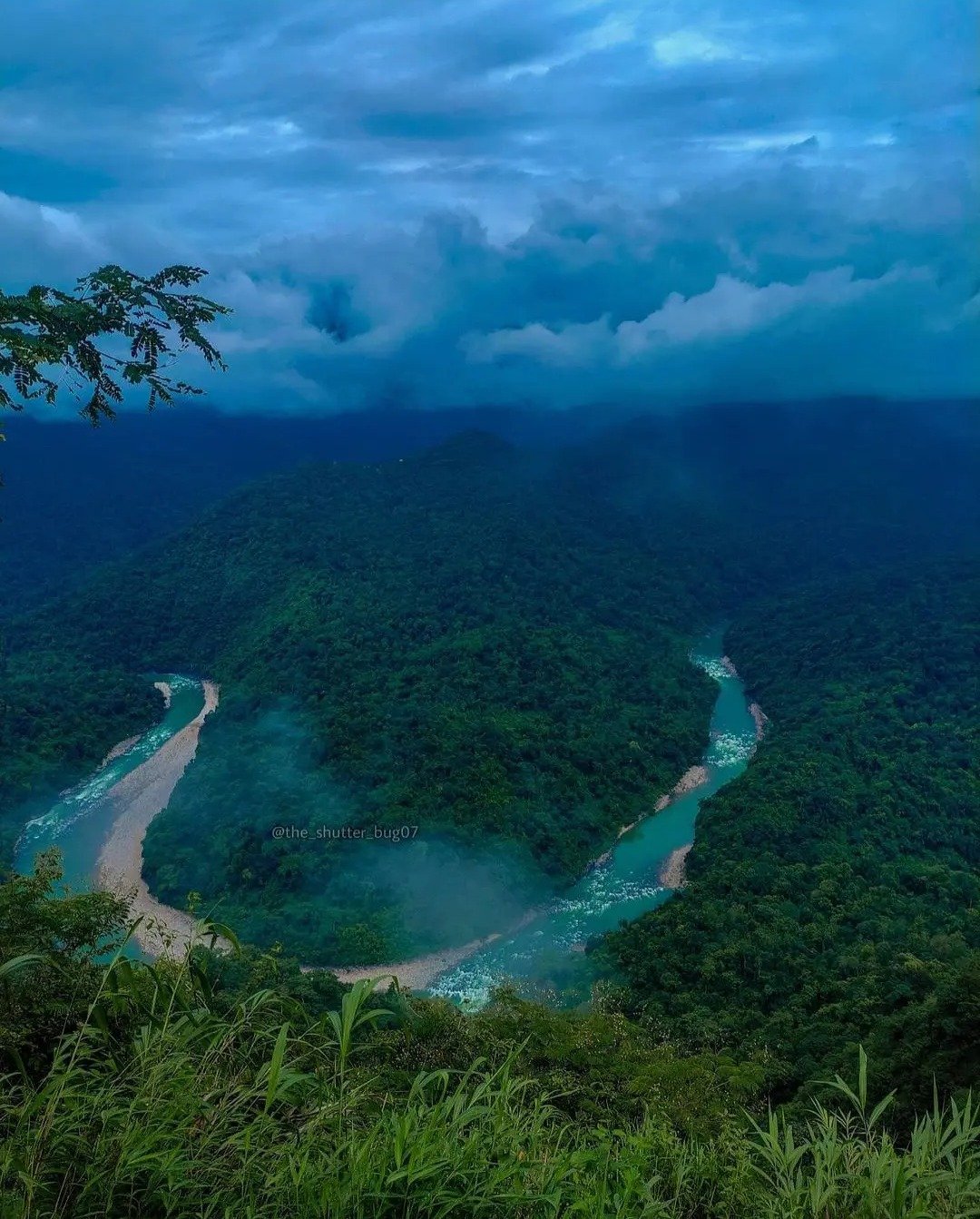
    These beautiful pictures have been sent by @the_shutter_bug07 😃😃 Thank you!

    He says about the river: "Ngi shait ong ka Phot. Ka dei ka wah ba wan na Mawsynram, na Nohkalikai, Daiñthlen…lai pateng khohsiew. Ka iaid lyngba ka shnong Nongriat bad ka poi ha kjat Nongwar bad ka leit mih sha Shella."

    "We call the river Phot. It comes from Mawsynram village, from Nohkalikai and Daiñthlen falls…It passes through the village of Nongriat and then Nongwar and finally flows to Shella."

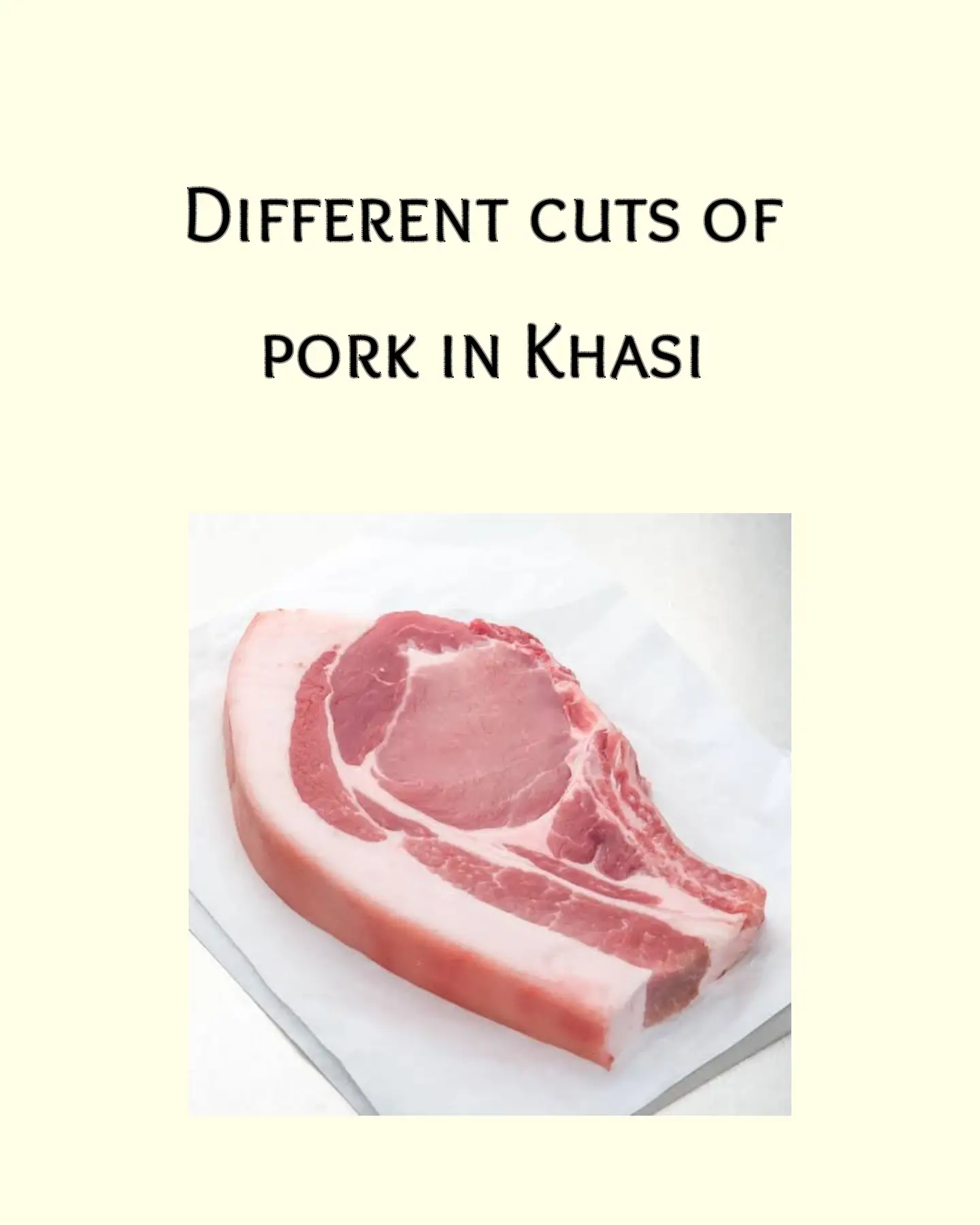
  • Different cuts of Pork in Khasi

    Doh Tdong – Ham/ Leg

    Doh Krung – Ribs

    Doh Ryndang – Pork Butt and Pork Shoulder

    Doh Kjat – Trotters

    Doh Khlieh – Head

    Jabieng – Brain

    Thied jabieng – Spinal Cord

    Doh Jem – Liver, intestines and doh saw dkhot

    Doh sawdkhot – Liver, kidney, spleen, heart

    'Nierbah – Stomach or Large intestine?

    'Nier Dong – Small intestine?

    'Nier Pyllon – Small intestine?

    Doh Snam – Blood sausage

    Don't we love our dohsniang? Pork constitutes a significant part of the Khasi diet from the head to the trotters 😅😂🐷🐷

    Dohjem and dohsnam are mouth-watering delicacies that are well-known!

    Please let us know about the large and small intestines. We've kept question marks against them. 😄

  • U Sawathang

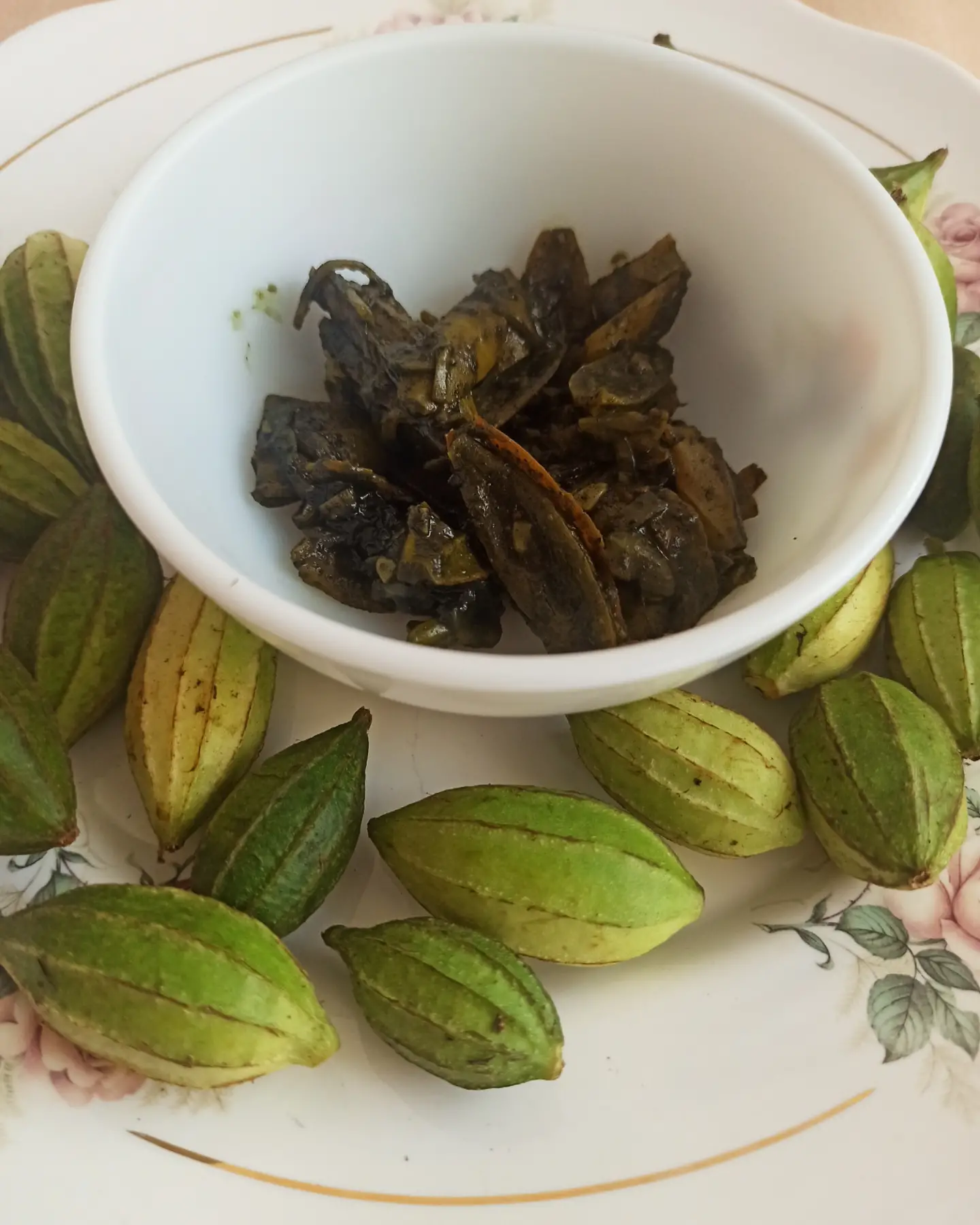
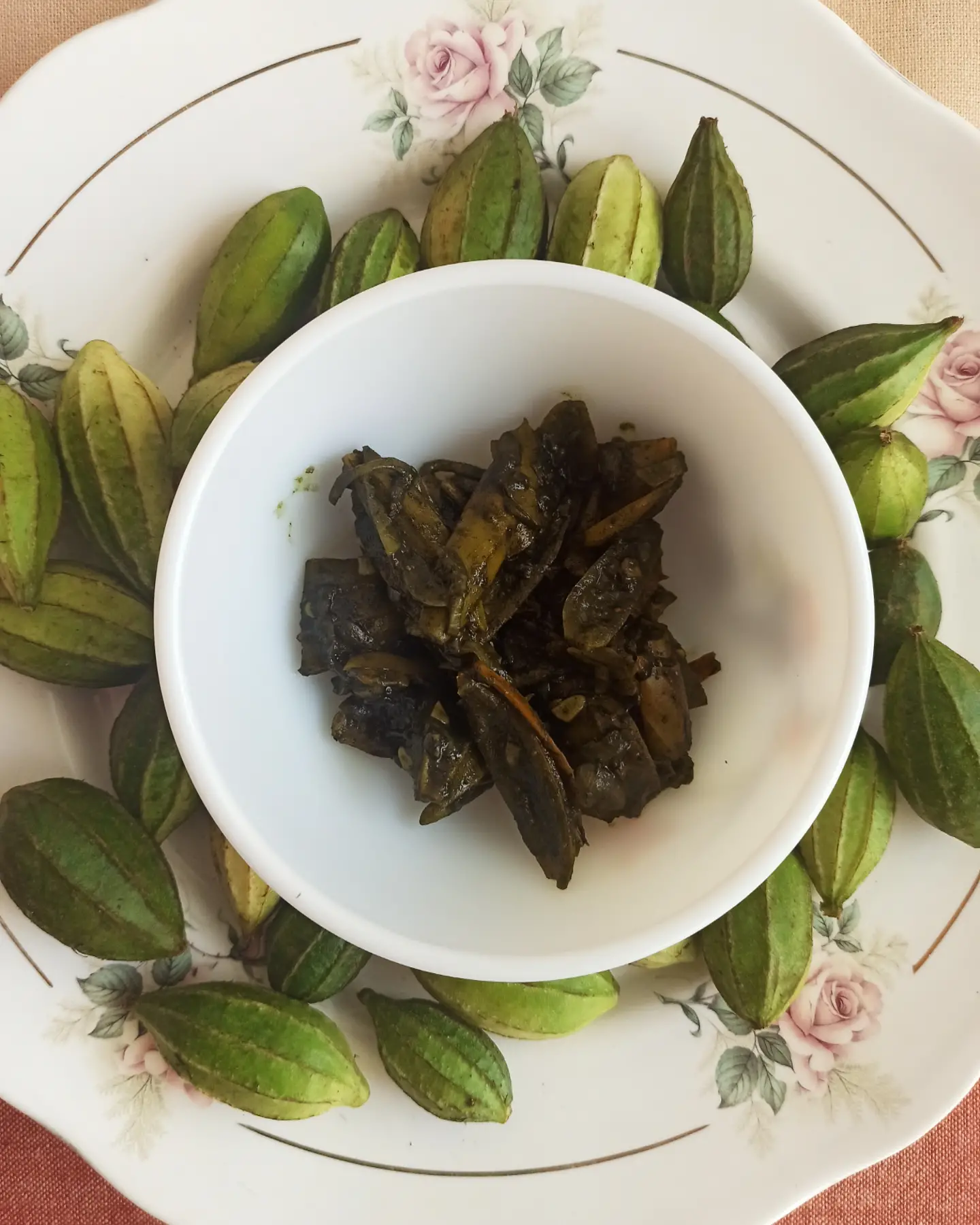
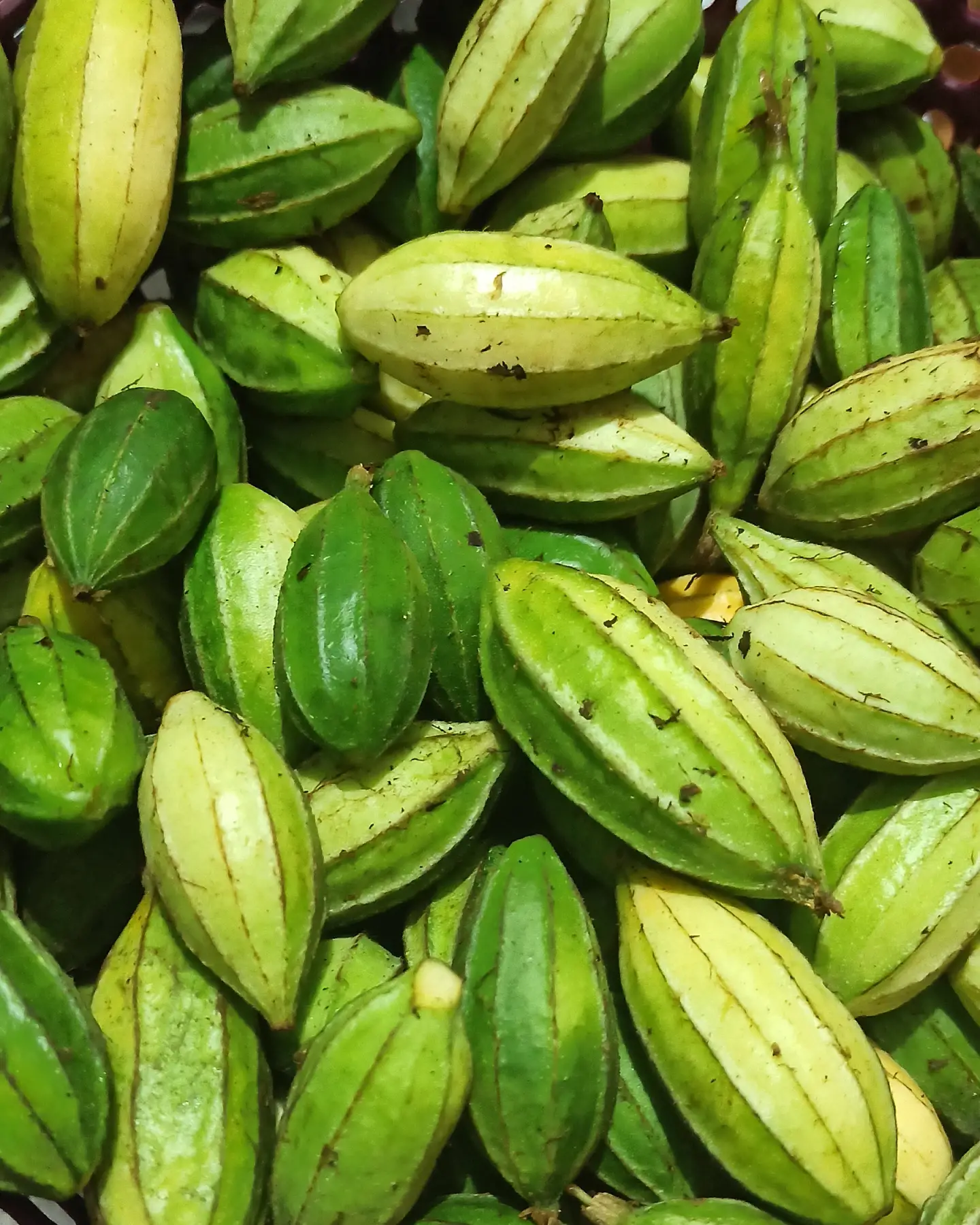
    "U Sawathang" is a Pnar vegetable that has now become common and is widely eaten among the Khasis too. It is so bitter that you have to throw away the first batch of water that is used to boil it. It's like a mini Karela/ Bitter Gourd with a 100 times more punch!

    Wow ka jingkthang, phin shu kyrngah ngang ngang! 😂😅

    It is cooked with black sesame seed on its own. Sometimes pork is added to it or it is also cooked with tungrymbai (fermented soya bean).

    If there are any ethno-botanists who can tell us the scientific name or the English name of "U Sawathang" it will be great! 😃

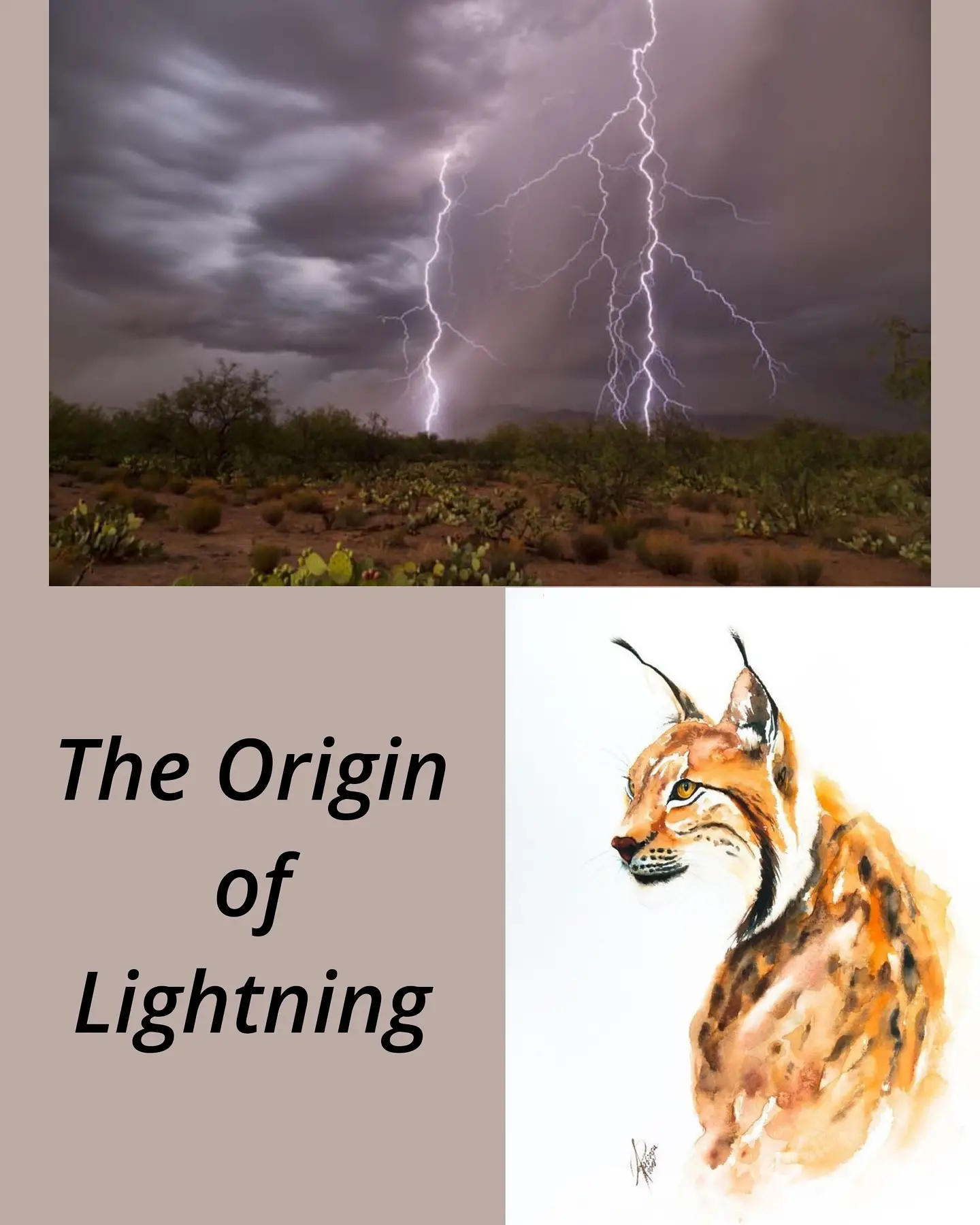
  • The Origin of Lightning

    Mynhyndai eh, mynba ki sim-ki-doh, ki khniang ki puit, ki mrad ki mreng baroh ki dang ïakren bad ïasngewthuh kawei ka ktien, la don ka hima-bah jong u laiphew mrad laiphew mreng baroh. Baroh ki ïashong ïa-im ha ka suk ka saiñ, ka jingïaieid ïabha bad ki ïaleit ïawan ruh ryngkat. Kim tip kata ka ïashun ïapen, ka ïakajia majia, ka ïadait ka ïapyniap para ki hi.

    Ha kawei ka sngi, u Shakyllia, u Diengkhied bad u Risang haba ki dang ïa ïaid knmih shnong khmih thaw, ki wan poi hajan kawei ka lympung, ha kaba u khun bynriew u ïashad ïamastieh shisien shisnem. Kine baroh lai ki la sngew shohmynsiem ïa kata ka leh u bynriew bad ki la ïapyrkhat ba kan long kaba sngewbha bad itynnat lada kin lah ban pynlong kum kata hapdeng u laiphew mrad baroh. Kumta haba ki la leit phai, u Diengkhied bad la ka shaw-shaw, u Shakyllia bad la ka tangmuri, u Risang bad la ka ksing, ki la ïaput ïatem haduh ba la sawa ka khlaw baroh kawei.

    Kane ka tem ka put basngewtynnad, ka la pynkhih ïa u laiphew mrad baroh ban wan ïapeit bad ïasngapkai. Katto katne na ki, ki la ïaong ba haba ki la don ki nongput nongtem kiba kum kita, balei ba kim lah ban pynlong sa ka shad ka kmen, kumba leh lem u bynriew?

    Kumta ki la ïabuh ïa uwei uba kham-nang kham tip ka talat kam shane shatai, bad uba kham tbit ruh ha ki kam sngewbha. Une u long u Pyrthat. Ma u pat, ban leit pyntip ïa ka hima sima baroh kawei ban long kum kata ka phur ka siang, u la shna kawei ka nakra kaba lah ban ïohsngew shaduh jngai bah, bad u la tied da kata kyndung shi kyndung bad step bad sngi. Ynda kata ka ïa ka la poi, u laiphew mrad phew mreng baroh u la ïawan poi ha ka lympung kaba la khreh lypa hangta ha khlaw. Baroh ki la ïa riam ïa beit da ki kup-ki-sem tyngkai, ki ïarkhie bad iphuhmat.

    Ka Shrieh ka la pynsad pynkhyllong bha ïa la ki khun bad ka la rkhie phuhmut phuhmat haduh ba ka dam sa ka khmut ka khmat. U Sñiang ruh u la sum la sleh jriang bad u la ïaid wiat-samrkhie haduh ba la ang shynded sa ka khmut, kum ka shata. Ka Dkhoh ka la sad la khyllong bha, bad ka la nap tang ka peit ït haduh ban da plaid ki irmat bad byrie. Bad u Dkhan pat uba la rkhie ïap-ang ïap-ler ïa ka, u la dam la rit sa ki khmat. U 'Labasa bad u 'La-thapsim, ki la sei da ki khor ki khriam bad ki la kup la deng baroh shirynïeng.

    Te, haba la sdang ka put ka tem, ka ksing, ka tangmuri, ka lympung ka la shit ir. Ka kmen ka risa kum kata ym pat ju don. Ha kata ka por la wan pol u Kui, u phong u kup da ka khor ka khriam khyrwang, kaba phyrnai na khlieh ha kjat bad u la rah ruh la ka waitlam rupa kaba u la phah shna khnang na ka bynta ka shad ka kmen. Tang shu poi tiap ha lympung, u mastieh ir, u pynshad wait sha kadiang bad sha kamon haduh ba u paid peitkai u la shoh biej thiaw bad u ïarisa shaw shi shaw. U Kui pat u la sngewsarong sngewmeng haduh bym lah ong shuh.

    Haba la shong thait u Kui, u Pyrthat u la ïapankai ïa ka wait jong u ba un khalai kai shipor. U Kui u la sngewbynnud ban ai, ïoh u Pyrthat un shad kham bha ban ïa u bad ïoh baroh kin ïaroh. Kumta u la kren da rapjot da kumne kumtai, hynrei um banse ban ai, haba baroh baroh ki ban ia u ba u dei ban ai, namar ka jingheh jingkhraw jong kata ka shad ka kmen ka long na ka jingtrei shitom jong u Pyrthat. Te u Pyrthat, u tang shu ïoh ïa kata ka wait, u king-u-mastieh, haduh ba la i biria hi khait. Baroh ki la ïarisa bad ïaroh ia u.

    Hynrei hapdeng kata ka jingïarisa, u Pyrthat u tied u talaiñ shane shatai ïa kata ka wait haduh ba u laiphew mrad baroh bad baheh bad barit u la sheptieng ym don pyrthei shuh bad u ïaphet sakma. Hapdeng kane ka jingkulmar, u Pyrthat, u kiew de soit sha sahit bneng, u rah jyndat bad ksing bad wait. U Kui u la sngewsih shibun ba u la duh noh ïa la ka wait, bad u ïai pyrshang ban ïoh kiew sha sahit ban ïoh knieh biang na u Pyrthat uba la shukor ïa u.

    Naduh kata, sa mih ka jingïashun ïabitar hapdeng u laiphew mrad baroh.

    In the early days of the world, when the animals fraternised with mankind, they tried to emulate the manners and customs of men, and they spoke their language. Mankind held a great festival every thirteen moons, where the strongest men and the handsomest youths danced “sword dances” and contested in archery and other noble games, such as befitted their race and their tribe as men of the Hills and the Forests—the oldest and the noblest of all the tribes.

    The animals used to attend these festivals and enjoyed watching the games and the dances. Some of the younger and more enterprising among them even clamoured for a similar carnival for the animals, to which, after a time, the elders agreed; so it was decided that the animals should appoint a day to hold a great feast.

    After a period of practising dances and learning games, U Pyrthat, the thunder giant, was sent out with his big drum to summon all the world to the festival. The drum of U Pyrthat was the biggest and the loudest of all drums, and could be heard from the most remote corner of the forest; consequently a very large multitude came together, such as had never before been seen at any festival.

    The animals were all very smartly arrayed, each one after his or her own taste and fashion, and each one carrying some weapon of warfare or a musical instrument, according to the part he intended to play in the festival. There was much amusement when the squirrel came up, beating on a little drum as he marched; in his wake came the little bird Shakyllia, playing on a flute, followed by the porcupine marching to the rhythm of a pair of small cymbals.

    When the merriment was at its height U Kui, the lynx, arrived on the scene, displaying a very handsome silver sword which he had procured at great expense to make a show at the festival. When he began to dance and to brandish the silver sword, everybody applauded. He really danced very gracefully, but so much approbation turned his head, and he became very uplifted, and began to think himself better than all his neighbours. Just then U Pyrthat, the thunder giant, happened to look round, and he saw the performance of the lynx and admired the beauty of the silver sword, and he asked to have the handling of it for a short time, as a favour, saying that he would like to dance a little, but had brought no instrument except his big drum. This was not at all to U Kui's liking, for he did not want any one but himself to handle his fine weapon; but all the animals began to shout as if with one voice, saying “Shame!” for showing such discourtesy to a guest, and especially to the guest by whose kindly offices the assembly had been summoned together; so U Kui was driven to yield up his silver sword.

    As soon as U Pyrthat got possession of the sword he began to wield it with such rapidity and force that it flashed like leaping flame, till all eyes were dazzled almost to blindness, and at the same time he started to beat on his big drum with such violence that the earth shook and trembled and the animals fled in terror to hide in the jungle. During the confusion U Pyrthat leaped to the sky, taking the lynx’s silver sword with him. U Kui was very disconsolate, and has never grown reconciled to his loss. It is said of him that he has never wandered far from home since then, in order to live near a mound he is trying to raise, which he hopes will one day reach the sky. He hopes to climb to the top of it, to overtake the giant U Pyrthat, and to seize once more his silver sword.

    The Khasi folktale about the origin of lightning has for its protagonists the animals of the forest participating in a dance that would change their lives. The Khasi and English versions that have been used here have been abridged from Ki Khanatang u Barim by H. Elias, S.D.B and Folktales of the Khasis by Mrs. Rafy.
  • Different Cuts of Beef in Khasi

    Khmat Lbong – Thigh

    Tdong rben – Rump

    Tdong stang – Sirloin/ T-bone

    Syntai – Hump

    Lamjew – Chuck

    Shyieng sohkhia- Brisket

    Bung – Leg/ Calf

    Tdong kaweh – Oxtail

    Shyieng krung – Ribs

    Pyllon – Round

    Thylliej masi – Tongue

    Khlieh masi – Head

    Dohnud – Liver

    Doh klong – Heart

    Khyllai – Kidney

    Dohlab – Spleen

    Doh tawel /doh khu – Tripe

    Nier khyndai syrtap – Part of the intestine with nine layers

    Beef or "Doh masi" constitutes an important part of the Khasi diet 🥩🥩 There are stews, soups and curries which are oh so yum! Here are the different cuts of beef in Khasi 😃😃

    Ban kham tip, kham suk ka leit ïew da lah lait lashai 😁😁

  • Pashat ‘Wáidong

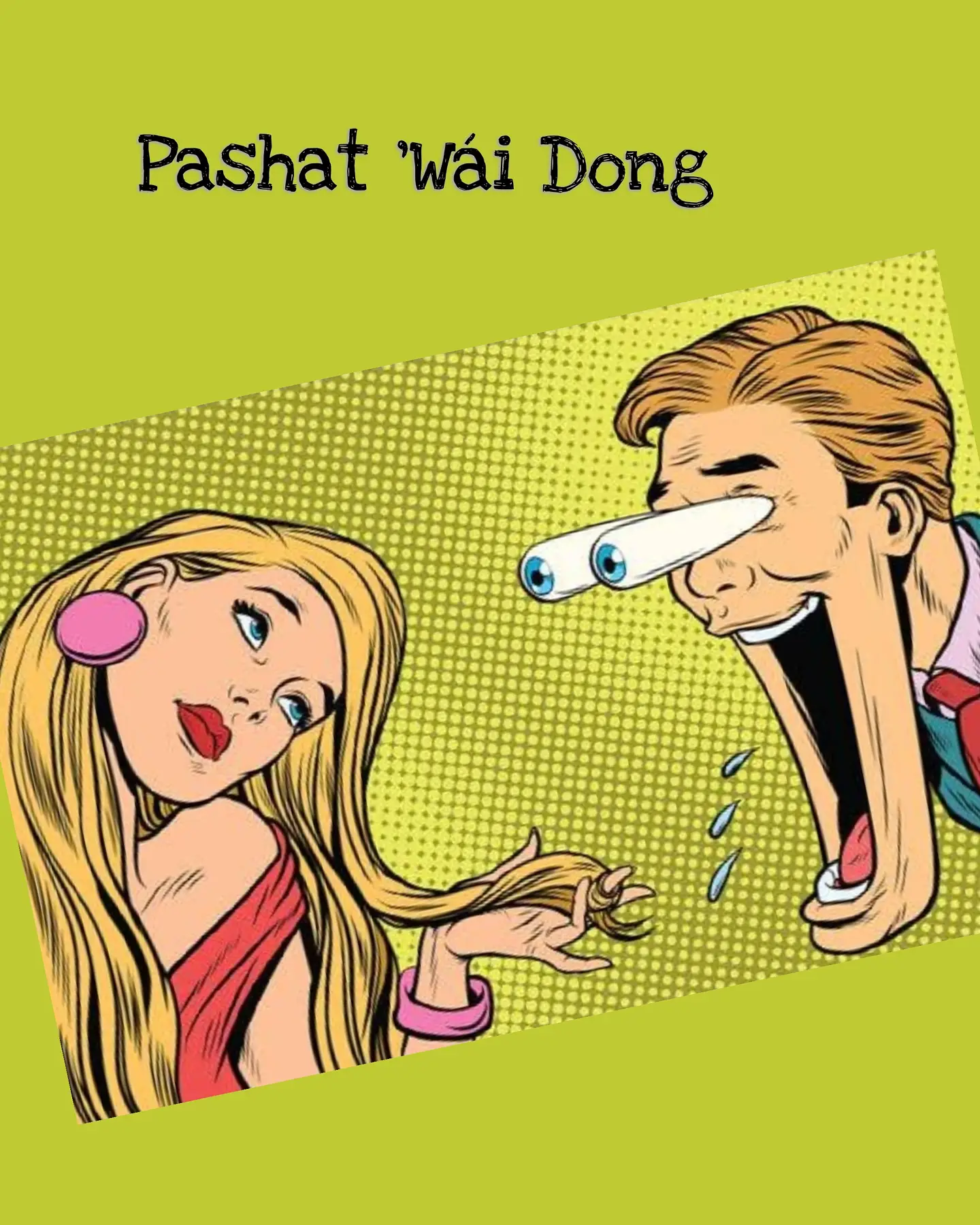
    Pashat 'waidong ka dei ka jingaidak ka samla kynthei ïa u samla shynrang da kaba ai 'wai dong. Ka long ka rukom ai sngewbha ka samla ïa u briew uba ka ïapmat. Ïa kane la ju leh da kiba khraw bad ki syiem hyndai.

    "Pashat 'waidong" is an old practice where the woman gives betel nut that has been cut and rolled with betel leaf to the man with whom she is enamoured. This indicates her liking of him. The 'waidong is presented as a gift from the woman to the man and this was mainly practised by royal and noble families.

    "Pashat 'Wáidong" is an old Khasi practice (which may be described as a courtship practice) where the woman chooses and shows to all the man whom she is besotted with. 😁🤩😁🤩

    Te haba kumta phei ki Thei ba stad to pynkhreh noh u 'wáidong haba phei lah iohi ia u Rang ba biang nadong shadong 😂😂 Phei ki Rangkynsai roh, donbok phin ia ioh u 'wáidong ba kynsai kum ma phei! 😄😄

    Source: Ka Dienshonhi: The Khasi Encyclopaedic Dictionary by Rev. Dr. Ïarington Kharkongor

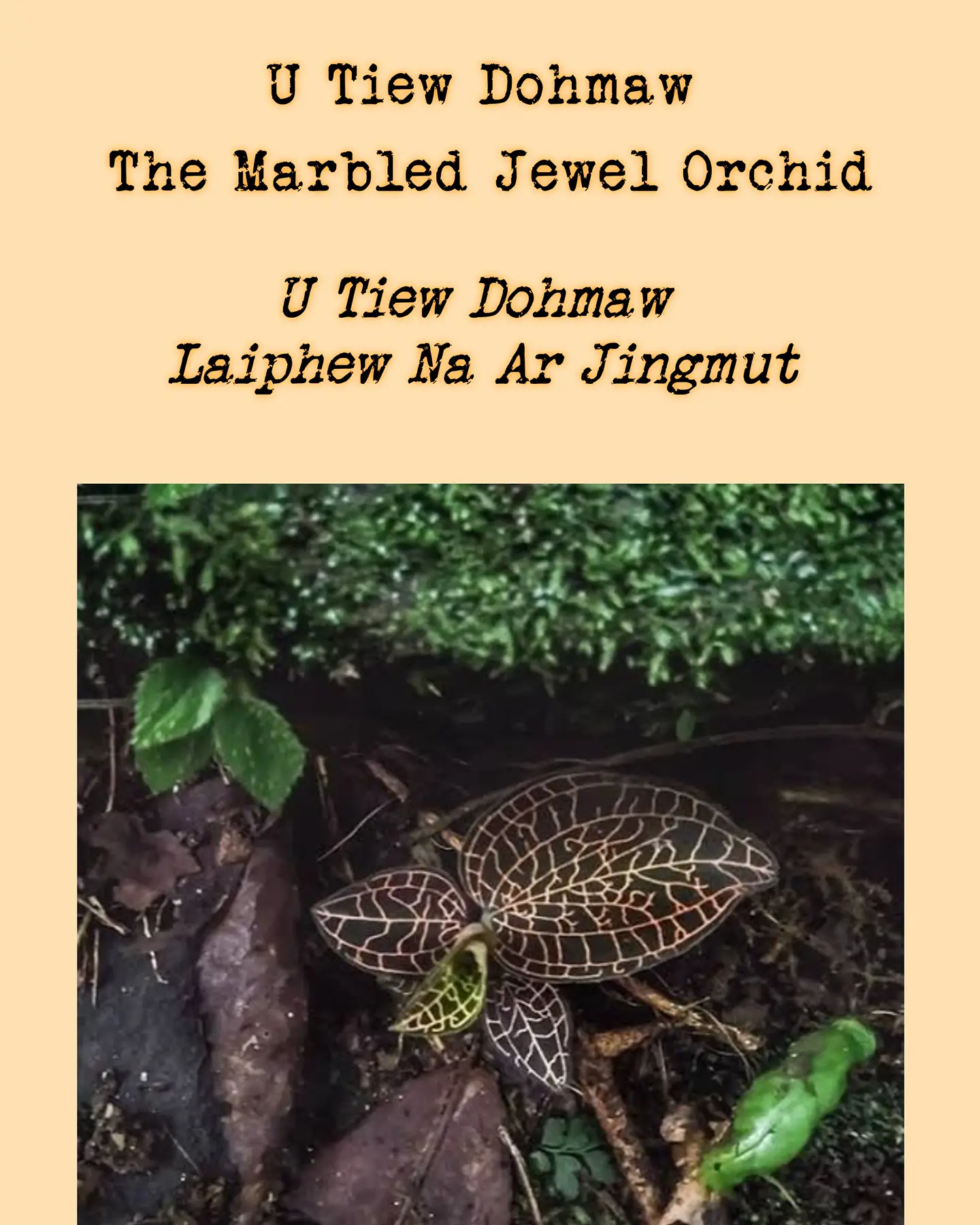
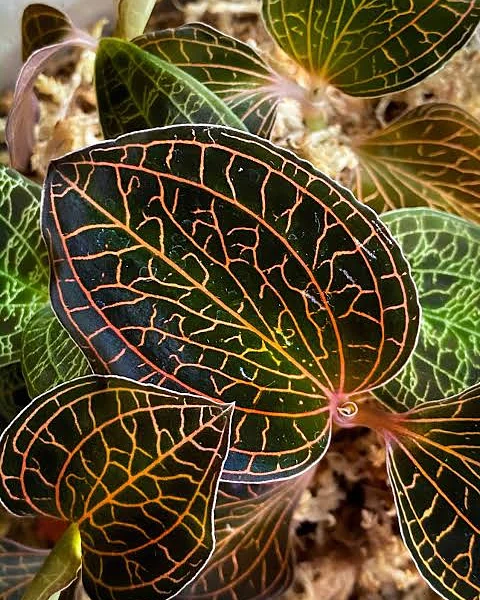
  • U Tiew Dohmaw or The Marbled Jewel Orchid: Tiew Dohmaw Laiphew Na Ar Jingmut

    U Tiew Dohmaw u dei u kynja tiewsla uba proh itynnad ki jingthoh ha ki sla jong u. U dei u syntiew uba rit bha, ki sla ki lam jngum ka rong bad thoh rong ksiar. Ka scientific name jong U Tiew Dohmaw ka dei Anoectochilus brevilabris.

    U Tiew Dohmaw or the Marbled Jewel Orchid is a small flower which is dark green in colour with contrasting goldenish marks like veins on it. The scientific name of U Tiew Dohmaw is Anoectochilus brevilabris.

    U Tiew Dohmaw grows under the shade of trees which is typical of where orchids grow and has to be searched for properly if we are to find it. Its beauty is a rare treasure. U Tiew Dohmaw has been mentioned by Khasi Poet Laureate U Soso Tham and by popular Khasi singer and composer (L) Skendrowell Syiemlieh.

    Ka don ka jingong ha Khasi kaba ong "U Tiew Dohmaw laiphew na ar jingmut". Kane ka thew ïa u briew uba khraw pyrkhat, uba proh jabieng, uba stad bad shemphang bad uba long ruh uba sngewrit bad kham rieh na ka pyrthei. Namar kata kum une u jait briew u syriem ia U Tiew Dohmaw.

    There is a Khasi phrase which goes "U Tiew Dohmaw laiphew na ar jingmut". The saying symbolically refers to a person who is a great thinker of high intelligence and wisdom but who is humble and unassuming at the same time, thus resembling U Tiew Dohmaw.

    U Tiew Dohmaw or the Marbled Jewel Orchid 💛💚💛💚💛💚 A rare and beautiful flower, it is found in Meghalaya, Sikkim, Assam, Nepal and Vietnam.

    It is an orchid with a saying of its own in Khasi: "U Tiew Dohmaw Laiphew Na Ar Jingmut".

    🟡Slide 1: https://www.picuki.com/tag/natureitsbest

    🟡Slide 5: https://www.doodlebirdterrariums.com/listing/753798713/free-shipping-terrarium-plant-jewel

  • Different colours in Khasi, Part I

    Orange – rong sohñiamtra/ rong khleh saw khleh stem

    Red – rong saw

    Scarlet – rong saw kyrang/ rong saw haiñ haiñ

    Maroon/ Plum – rong saw bthuh

    Crimson – rong saw syngiang

    Indigo – rong lir

    Blue/ Azure – rong suiñ bneng

    Navy blue – rong jngum synñia

    Dark blue – rong thwei

    Pink/ Magenta – rong saw jngum

    Purple/ violet – rong sohbaingon/ rong saw jngum

    Grey – rong bthuh/ rong dpei

    Green – rong jyrngam/ rong tympew

    Yellow – rong stem/ rong khangai pylleng

    Peach – rong sohphareng

    Brown – rong ktieh/ rong dumasla

    Silver – rong rupa

    Gold – rong ksiar

    Black – rong iong/ rong iong synñia

    White – rong lieh

    Coral – rong paila

    Beige/ Khaki – rong skei

    Bronze/ Copper – rong tama

    There are so many colours we can name in English, so here they are in Khasi. 🌈☔🌄🌧️

    Please feel free to mention more colours in Khasi if you know them! 😀

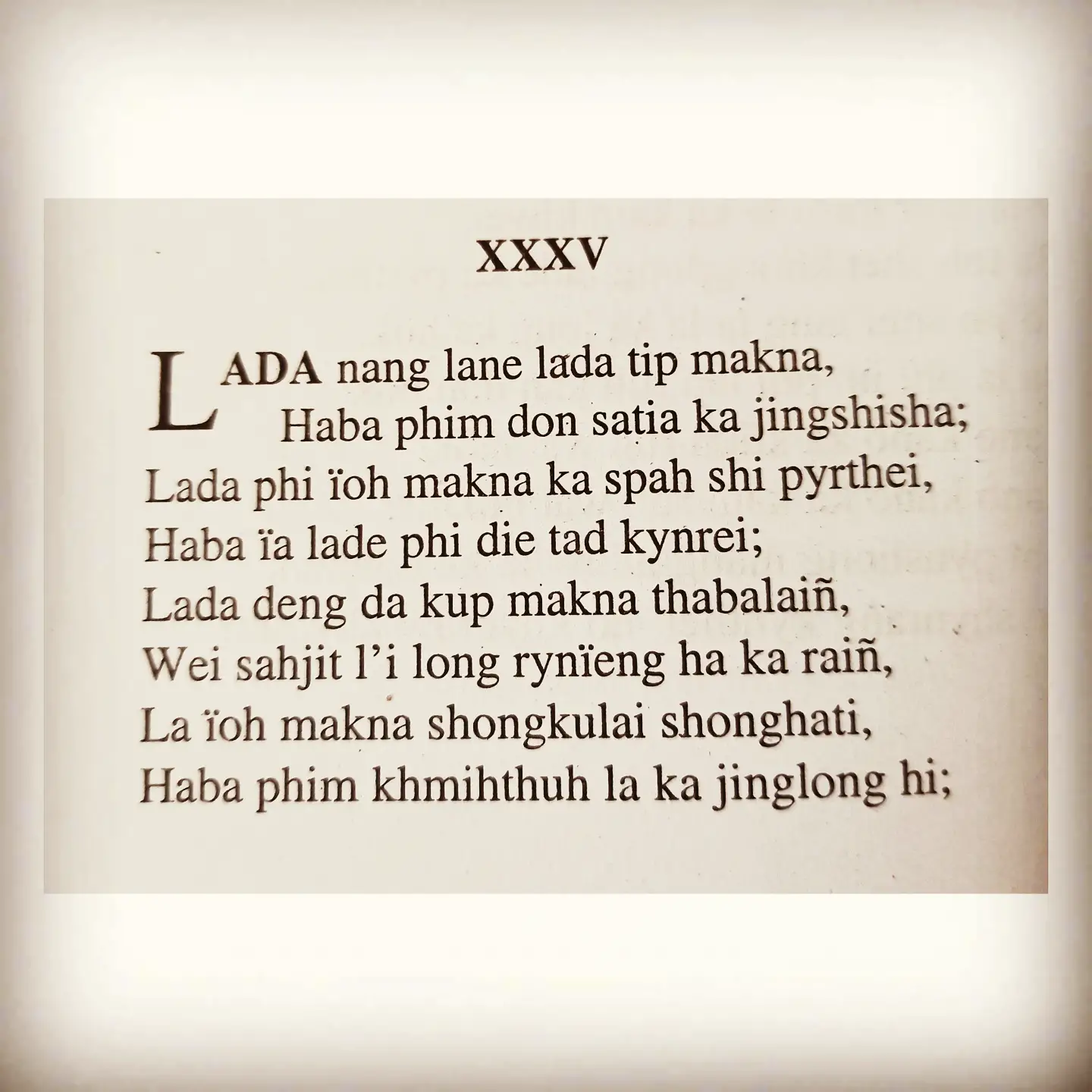
  • “Ka Jingsneng Tymmen Shaphang ka Akor Khasi ha ka Rukom Rwai Phawar”, Part I (1902) & Part Il (1903)

    Lada nang lane lada tip makna,

    Haba phim don satia ka jingshisha;

    Lada phi їoh makna ka spah shi pyrthei,

    Haba їa lade phi die tad kynrei;

    Lada deng da kup makna thabalaiñ,

    Wei sahjit l'i long rynїeng ha ka raiñ,

    La їoh makna shongkulai shonghati,

    Haba phim khmihthuh la ka jinglong hi;

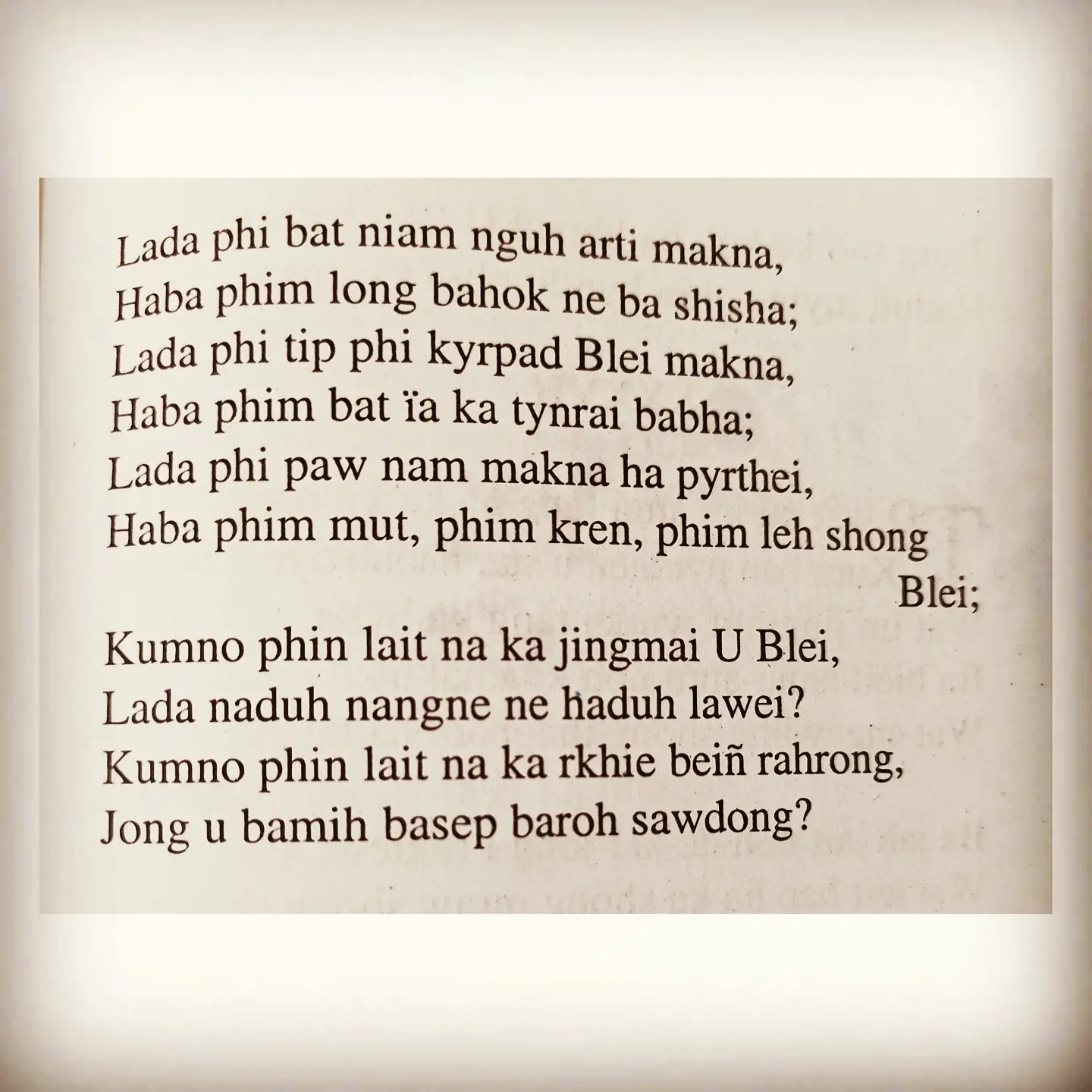
    Lada phi bat niam nguh arti makna,

    Haba phim long bahok ne ba shisha;

    Lada phi tip phi kyrpad Blei makna,

    Haba phim bat їa ka tynrai babha;

    Lada phi paw nam makna ha pyrthei,

    Haba phim mut, phim kren, phim leh shong Blei;

    Kumno phin lait na ka jingmai U Blei,

    Lada naduh nangne ne haduh lawei?

    Kumno phin lait na ka rkhie beiñ rahrong,

    Jong u bamih basep baroh sawdong?

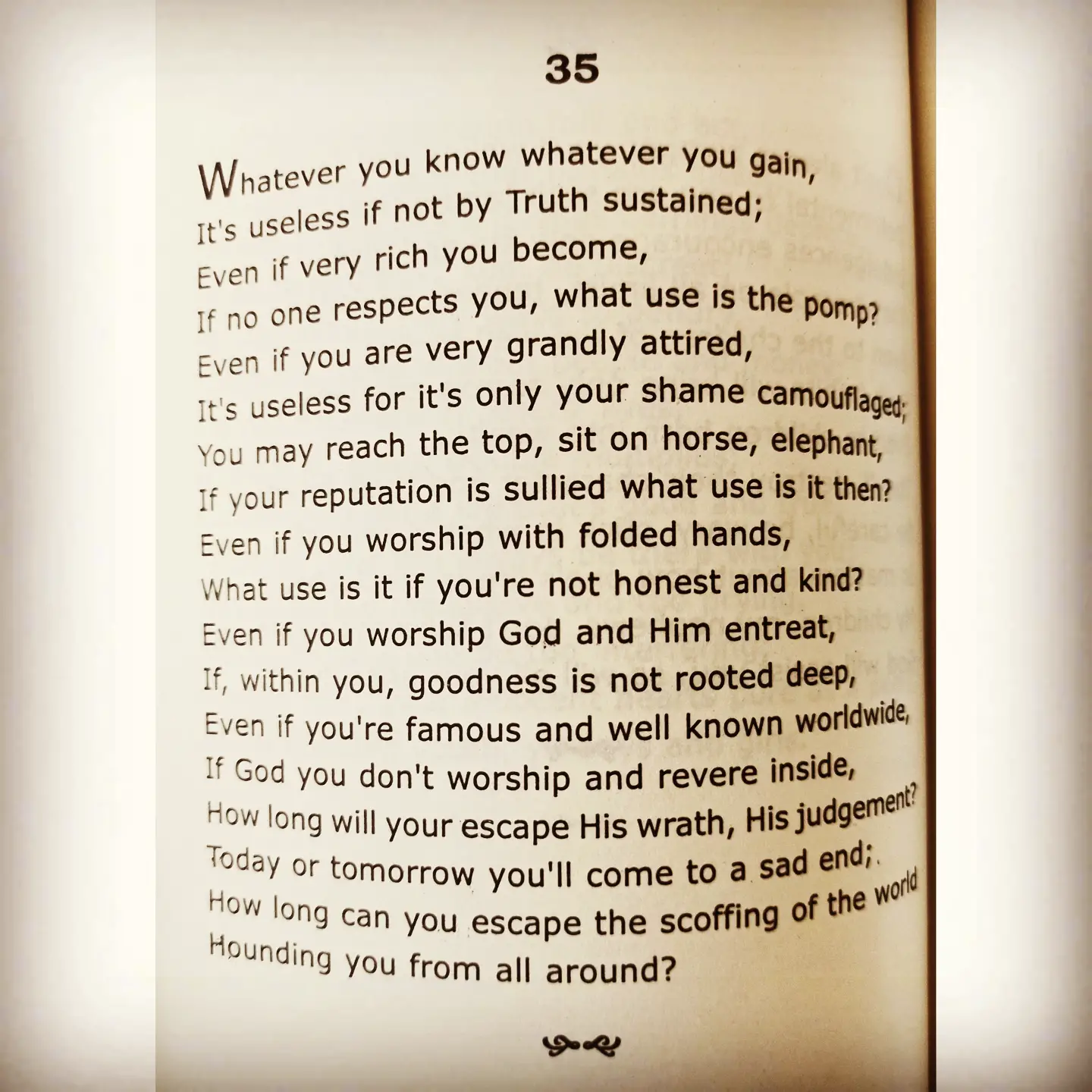
    Whatever you know whatever you gain,

    It's useless if not by Truth sustained;

    Even if very rich you become,

    If no one respects you, what use is the pomp?

    Even if you are very grandly attired,

    it's useless for it's only your shame camouflaged:

    You may reach the top, sit on horse, elephant,

    If your reputation is sullied what use is it then?

    Even if you worship with folded hands,

    What use is it if you're not honest and kind?

    Even if you worship God and Him entreat,

    If, within you, goodness is not rooted deep,

    Even if you're famous and well known worldwide,

    If God you don't worship and revere inside,

    How long will your escape His wrath, His judgement

    Today or tomorrow you'll come to a sad end;

    How long can you escape the scoffing of the world

    Hounding you from all around?

    Ka Jingsneng Tymmen Shaphang ka Akor Khasi ha ka Rukom Rwai Phawar, Part I (1902) & Part Il (1903) by Radhon Sing Berry Kharwanlang is a unique collection of valuable lessons and teaching on how to live a good and moral life. 🌻🌻

    The teachings are given in the form of "phawar” where two lines follow the same rhyme scheme, that is, aa bb.

    Both Part I and Part II have been translated into English by Bijoya Sawian @sawianbijoya in her book The Teachings of Elders: Ka Jingsneng Tymmen, Parts I and II (1997).

    Picture 1&2: Ka Jingsneng Tymmen Shaphang ka Akor Khasi ha ka Rukom Rwai Phawar, Part I (1902)

    Picture 3: The Teachings of Elders: Ka Jingsneng Tymmen, Parts I and II (1997).